
Did you know that over 60% of adults will develop some form of skin discoloration on their feet during their lifetime? These pigmentation changes often go unnoticed until they become more pronounced.
Foot discoloration occurs when melanin production increases in specific areas. This can create various shades and patterns across the skin surface. Many people dismiss these changes as minor cosmetic issues.
However, your skin serves as your body’s first warning system. Changes in pigmentation can sometimes signal underlying health conditions that need medical evaluation. Understanding the difference between harmless variations and potential concerns is crucial for proper foot care.
This comprehensive guide will help you identify different types of skin changes. You’ll learn about common causes and when to seek professional advice. We’ll explore both preventive measures and treatment options available today.
By the end, you’ll feel empowered to make informed decisions about your foot health. You’ll know when self-monitoring is sufficient and when dermatologist consultation becomes necessary.
Key Takeaways
- Skin discoloration on feet affects most adults at some point
- These pigmentation changes range from harmless to medically significant
- Your skin often provides early warnings about internal health issues
- Proper identification helps determine when medical attention is needed
- Understanding causes leads to more effective prevention strategies
- Early detection can improve treatment outcomes significantly
- This guide covers everything from basic monitoring to professional care
Introduction to Dark Foot Spots
Pigmentation changes on the feet are medically termed hyperpigmentation. This occurs when the skin produces excess melanin, the natural pigment that gives skin its color. These areas of concentrated pigment can develop for various reasons.
These markings are not uniform. They present in a wide array of appearances. Understanding their characteristics is the first step in identification.
- Size: They range from tiny, freckle-like specks to larger patches.
- Texture: Some lie flat against the skin, while others may be slightly raised.
- Color: Shades can include light brown, dark brown, black, gray, or even have reddish tones.
You can find these pigmented areas on any part of the foot. Common locations include the tops, soles, sides, and between the toes. People of all ages and skin tones can develop them.
While most are harmless, proper recognition is crucial. It helps distinguish normal changes from conditions that need a professional skin evaluation. Knowing what to look for empowers you to care for your health.
Identifying a Dark Spot on Bottom of Foot

Proper identification of skin markings begins with thorough visual assessment. Careful examination helps determine whether pigmented areas are harmless or require medical attention.
Benign markings like freckles and age spots typically show uniform coloration. They maintain regular borders and consistent texture. More concerning lesions often display irregular features.
When evaluating any pigmented area, check these key characteristics:
- Symmetry: Harmless markings are usually symmetrical in shape
- Borders: Regular, smooth edges suggest benign conditions
- Color: Uniform brown or black tones are generally less worrisome
- Size: Markings larger than a pencil eraser need closer monitoring
- Evolution: Changes in appearance over time warrant professional evaluation
The soles present unique examination challenges. This area isn’t easily visible during routine checks. Using a hand mirror or asking for assistance ensures proper inspection.
Any marking that bleeds, itches, or grows rapidly requires immediate medical consultation. Early detection significantly improves treatment outcomes.
Common Causes and Risk Factors
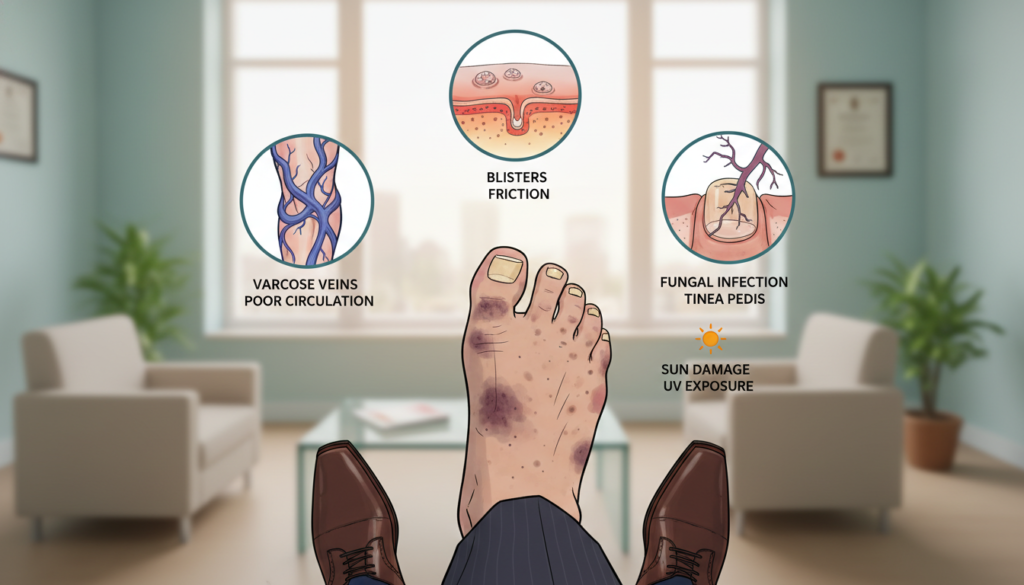
Several key elements contribute to the development of discolored areas on your feet. These causes range from everyday environmental exposures to inherited traits. Understanding these factors helps you identify potential triggers.
Some influences are within your control, while others require medical management. Recognizing the difference empowers better prevention strategies.
Sun Exposure and Environmental Effects
Ultraviolet radiation is a primary environmental cause of increased melanin production. Your feet receive significant sun exposure during warm weather activities.
This can lead to freckles, age spots feet, and other pigmentation changes. Friction from footwear represents another common environmental factor.
Repeated rubbing can trigger post-inflammatory hyperpigmentation. Even minor injury to the skin can stimulate excess pigment production during healing.
Aging, Genetics, and Medical Conditions
Natural aging processes affect melanin distribution in your skin. Genetic predisposition determines how your body responds to various triggers.
Certain medical conditions like diabetes can cause circulatory changes that affect foot pigmentation. Hormonal fluctuations represent another significant factor.
In rare cases, these markings might indicate serious conditions like melanoma. This makes understanding causes particularly important for early detection.
| Cause Category | Common Examples | Prevention Level |
|---|---|---|
| Environmental | Sun exposure, friction injuries | High prevention potential |
| Genetic/Aging | Family history, natural aging | Moderate prevention potential |
| Medical Conditions | Diabetes, hormonal changes | Requires medical management |
This comparison shows how different factors require distinct approaches. Some respond well to lifestyle changes, while others need professional care.
Recognizing Warning Signs of Skin Cancer

Certain skin changes require immediate medical evaluation to rule out serious conditions. While most pigmented areas are harmless, understanding the difference can be life-saving.
The ABCDEs of Melanoma on Feet
The ABCDE method helps identify potential melanoma. This system checks for specific characteristics that may indicate skin cancer.
A stands for Asymmetry. One half of the marking looks different from the other half. B refers to Border irregularity. The edges may be ragged or blurred.
C represents Color variation. Multiple shades like tan, brown, black, or red appear within one area. D is for Diameter. Markings larger than 6mm need attention.
E indicates Evolution. Any change in size, shape, or color warrants professional evaluation.
Indifiers to Seek Immediate Medical Advice
Some symptoms demand prompt doctor consultation. These red flags should never be ignored.
Bleeding or crusting without injury is concerning. Rapid growth or elevation changes also need assessment. Any marking that becomes painful or itchy requires evaluation.
New pigmented areas developing after age 40 deserve attention. Family history of skin cancer increases vigilance needs. Regular self-checks help catch these warning signs early.
When in doubt, consult a dermatologist. Early detection significantly improves treatment outcomes for all types of skin cancer.
Diagnostic Methods and the Dermatologist’s Role
Accurate diagnosis of skin markings requires both personal vigilance and professional expertise. Understanding this process helps you navigate from initial observation to proper medical assessment.
Self-Examination Techniques for Early Detection
Regular self-checks form the foundation of early detection. Set a monthly reminder to examine your feet thoroughly. Use good lighting and a hand mirror for hard-to-see areas.
Pay special attention to spaces between toes and the soles. Document any changes in size, color, or texture. This creates a valuable record for your doctor.
Benefits of Professional Skin Diagnosis
A dermatologist brings specialized training to skin evaluation. They use tools like dermatoscopes to examine markings more closely. This technology reveals patterns invisible to the naked eye.
Professional diagnosis distinguishes harmless spots from potentially serious conditions. In some cases, a biopsy may be necessary for definitive identification. Early detection of melanoma significantly improves treatment outcomes.
Your dermatologist can also identify the underlying cause of pigmentation changes. They develop personalized monitoring plans based on your specific risk factors.
Treatment Options: Home Remedies and Medical Treatments
Modern dermatology offers multiple pathways for managing hyperpigmentation, ranging from accessible remedies to sophisticated clinical interventions. The right approach depends on the specific type of pigmentation and its underlying cause.
Over-the-Counter and Home Remedy Approaches
Many people start with conservative treatment methods available without prescription. Topical creams containing ingredients like hydroquinone or kojic acid can lighten pigmented areas over time.
Natural remedies include lemon juice applications and aloe vera gel. These gentle options work gradually but carry minimal risk. Consistent application and proper skin care are essential for results.
Medical and Advanced Treatment Procedures
For persistent pigmentation, dermatologists recommend professional treatments. Laser therapy uses focused light to break down excess pigment. This approach targets specific areas with precision.
Chemical peels and cryotherapy represent additional clinical options. In cases where skin cancer or melanoma is suspected, surgical excision becomes necessary. Early detection improves all treatment outcomes.
“Choosing the right treatment requires understanding both the pigmentation type and individual skin characteristics.”
| Treatment Type | Effectiveness | Cost Range |
|---|---|---|
| Topical Creams | Moderate | $20-60 |
| Laser Therapy | High | $200-500 per session |
| Chemical Peels | Good | $100-300 |
Each treatment option carries different considerations for various pigmentation types. Consultation with a dermatologist ensures the safest, most effective approach.
Preventive Measures and Daily Foot Care
Building consistent protective habits can significantly reduce the risk of developing pigmentation issues. Effective prevention combines daily routines with professional guidance for comprehensive skin health.
Sunscreen, Protective Footwear, and Clothing
Regular sunscreen application provides essential defense against harmful sun exposure. Choose broad-spectrum formulas with SPF 30 or higher for your feet.
Protective footwear shields your skin from friction and environmental damage. Breathable materials reduce moisture buildup that can cause irritation.
Lightweight socks and appropriate shoes offer daily care for your entire foot surface. This includes special attention to the soles and other vulnerable areas.
Regular Skin Monitoring and Health Check-Ups
Monthly self-examinations help detect early changes in pigmented spots. Use mirrors to check all surfaces of each foot, including between toes.
Annual dermatologist visits provide professional assessment of any concerning markings. Early detection improves outcomes for conditions like melanoma and other skin cancer types.
Documenting changes creates valuable records for your health provider. This proactive approach represents the best form of preventive care.
Living with Dark Foot Spots: Tips for Confidence and Care
Living with pigmented areas on your feet involves both practical management and emotional well-being. Many people find that these markings are simply a part of their unique skin story.
A positive mindset is your first tool for confidence. Focus on overall foot health rather than just the appearance of specific areas.
Lifestyle Adjustments and Self-Care Strategies
Simple daily habits make a big difference. Choose comfortable shoes that minimize friction on each foot. Keep the skin moisturized, paying special care to areas between each toe.
When enjoying the outdoors, apply sunscreen to the tops of your feet. This prevents existing markings from darkening.
For many people, these spots feet are harmless. Connecting with others who have similar experiences can be empowering.
Staying Informed and Proactive About Foot Health
Knowledge is power when it comes to your skin. Stay updated on what normal changes look like for you. Understand when a condition might need a doctor’s opinion.
In rare cases, a new or changing marking could be a sign of melanoma. Regular self-checks of your feet and toes help you notice any changes early.
Proactive care is the best approach for long-term health. For more detailed information, learn about brown spots on feet from trusted sources.
| Focus Area | Action | Benefit |
|---|---|---|
| Daily Care | Moisturize & wear proper footwear | Maintains skin comfort and health |
| Sun Protection | Apply sunscreen to feet | Prevents worsening of pigmentation |
| Vigilance | Monthly self-exams | Early detection of changes, including potential melanoma or skin cancer |
Conclusion
The presence of pigmented markings on your feet marks an opportunity for proactive health management. While these areas often cause initial concern, most are harmless variations in your skin’s natural appearance.
Understanding the underlying causes—from sun exposure to natural aging—helps determine appropriate treatment approaches. Various options exist, from simple home remedies to advanced medical procedures for stubborn cases.
Prevention remains your strongest defense. Regular self-examinations and professional check-ups with a dermatologist ensure early detection of any concerning changes. While most markings are benign, certain warning signs require immediate evaluation to rule out serious conditions like melanoma.
Early detection dramatically improves treatment outcomes for all skin health concerns. With proper knowledge and vigilance, you can confidently manage your foot health while embracing your unique skin characteristics.