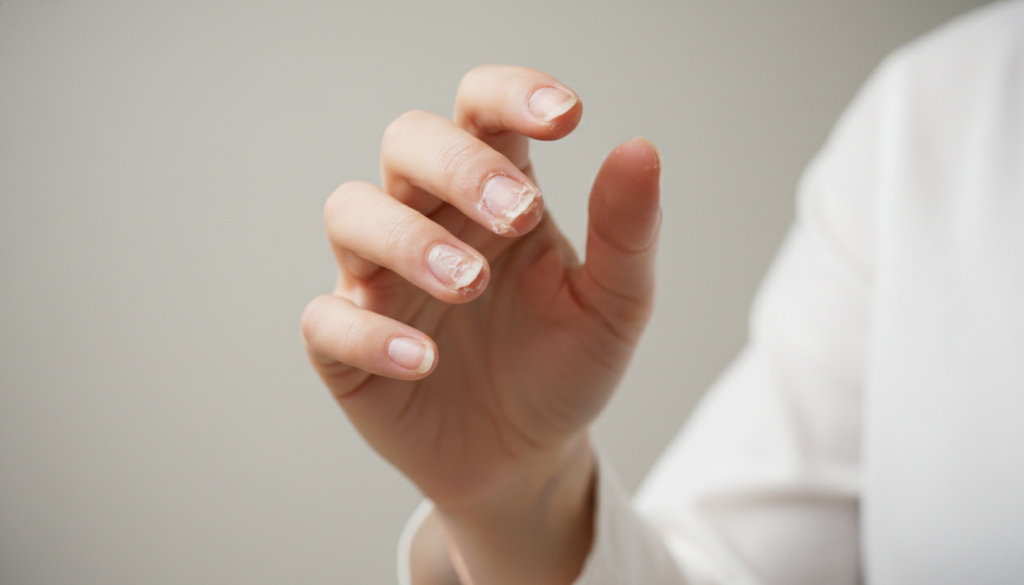
Did you know that nearly one in three people will experience troublesome flaking on their hands at some point? This common issue often starts subtly at the fingertips.
That frustrating feeling of ragged cuticles and uncomfortable dryness is more than a simple annoyance. It can be a signal from your body. Many factors contribute to this condition.
Everything from harsh weather and frequent hand washing to vitamin shortages can trigger the problem. Even daily habits and stress levels play a significant role.
Finding a real solution starts with understanding the root cause. This guide will provide clear, actionable information. We’ll explore the reasons behind the irritation and offer effective strategies for relief and prevention.
Most situations can be successfully managed with the right care. We will also help you recognize when it’s time to seek professional medical advice.
Key Takeaways
- Flaking near the nails is an extremely common issue affecting many individuals.
- This problem is often more than cosmetic and can indicate underlying health or lifestyle factors.
- Primary causes include environmental exposure, nutritional gaps, and daily routines.
- Identifying the specific trigger is the most critical step toward effective management.
- A combination of protective habits and targeted treatments can provide significant relief.
- Knowing when to consult a healthcare provider is essential for persistent or severe cases.
Introduction to Peeling Skin Around the Fingernails
Many people first notice a problem when the delicate tissue near their nails begins to feel tight and dry. This area is structurally unique, making it highly susceptible to irritation. Understanding this common complaint is the first step toward finding relief.
Overview of the Condition
The tissue surrounding the nail bed is thinner and more delicate than on other parts of the body. It contains a high concentration of nerve endings but fewer oil glands. This combination means it loses moisture rapidly and reacts strongly to minor changes.
Experiencing peeling fingertips is not unusual. It often happens when the body is dehydrated or exposed to extreme temperatures. This condition is rarely random and usually signals that something needs attention, either internally or from the environment.
Recognizing Symptoms and Early Signs
Early warning signs are subtle but important. You might notice increased sensitivity, slight redness, or a mild itch. Small white flakes may appear before more severe flaking develops.
The problem typically progresses from initial dryness to visible flaking. If ignored, it can lead to deeper cracks that may become painful. Recognizing these early symptoms allows for prompt action to prevent significant discomfort.
While occasional minor issues may be harmless, persistent or severe peeling warrants a closer look to identify the root cause.
Understanding the Causes of Skin Around Fingernails Peeling
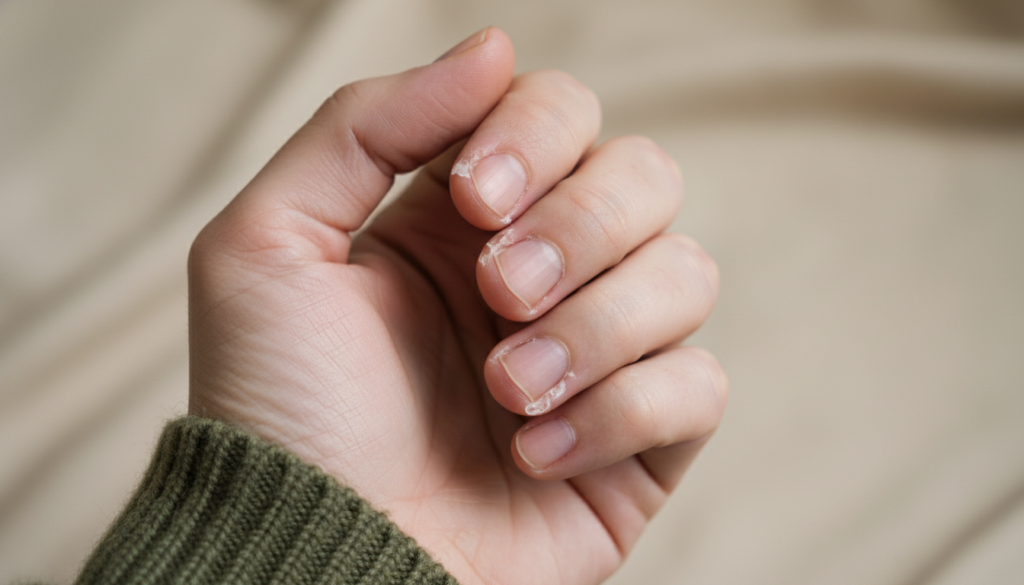
Seasonal changes often bring unexpected challenges for our hands. External factors frequently trigger the uncomfortable flaking many people experience.
Environmental and Weather-Related Triggers
Cold, dry winter air dramatically reduces moisture levels. This causes rapid dehydration of delicate tissue on fingers.
Indoor heating systems worsen the problem by removing humidity. Your hands struggle to retain essential lubrication.
Summer brings different concerns. Excessive sun exposure can cause burning on unprotected fingers.
This damage leads to tender, red areas that eventually shed. Even humidity and sweating can break down protective barriers.
Chemical Irritants and Allergic Reactions
Harsh chemicals in everyday products are common culprits. Strong soaps and cleaning solutions damage natural lipid layers.
Frequent hand washing strips away protective oils. Hot water accelerates this moisture loss significantly.
Contact allergies trigger inflammatory responses. Nickel jewelry, latex gloves, or certain nail products may cause reactions.
Identifying these triggers is crucial for effective prevention. Continued exposure undermines any treatment efforts.
The Role of Nutrition and Vitamin Imbalances in Skin Health
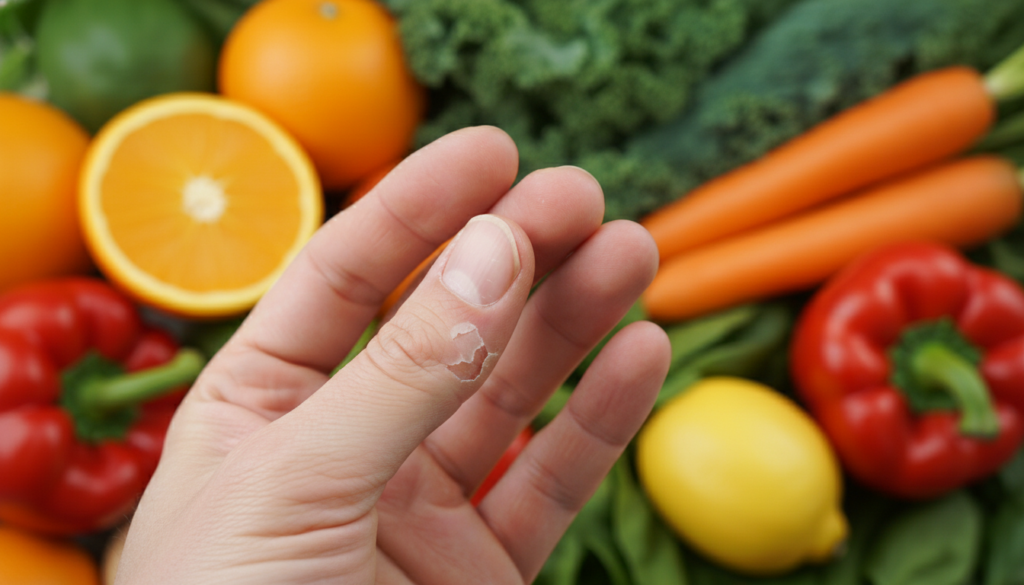
The food you eat directly fuels your body’s ability to maintain healthy tissue. Nutritional gaps can quickly become visible, especially in delicate areas. A vitamin deficiency often shows its first signs here.
Impact of Vitamin Deficiencies
Your body relies on specific nutrients for repair. A lack of Vitamin B3 (Niacin) weakens the tissue’s barrier. This can lead to dryness and flaking.
Vitamin C is crucial for making collagen. Low levels slow healing. The area becomes fragile and may split.
Similarly, not enough Vitamin E reduces protection from damage. Omega-3s keep cells flexible. Without zinc, repair processes struggle.
Dietary Adjustments and Nutritional Support
Eating the right foods may help correct these imbalances. For Niacin, enjoy tuna, chicken, and salmon. Eggs and nuts are great for Biotin.
Citrus fruits boost Vitamin C. Fatty fish provide Omega-3s. A balanced diet equips your body to heal itself.
If problems persist despite dietary changes, it’s wise to consult a professional. They can check for underlying issues like specific nail conditions.
Common Skin Conditions Linked to Fingernail Peeling
Chronic peeling around the nail area often points to underlying dermatological issues. These medical conditions require specific approaches for effective management.
Eczema, Psoriasis, and Contact Dermatitis
Hand eczema frequently affects people in occupations with regular chemical exposure. Healthcare workers, hairstylists, and mechanics are particularly vulnerable. Genetic predisposition plays a significant role in this condition.
This form of dermatitis causes redness, intense itching, and uncomfortable flaking. Common triggers include harsh soaps, detergents, and environmental allergens. Identifying personal triggers is essential for controlling symptoms.
Dyshidrotic eczema represents a more severe variant. It produces fluid-filled blisters on palms and finger sides. People with existing eczema or allergies have higher risk factors.
Psoriasis is an autoimmune disorder creating raised, scaly patches. Stress, infections, and certain medications can trigger flare-ups. The condition may cause significant discomfort on fingertips.
Contact dermatitis results from allergic reactions to specific substances. Nickel jewelry, latex gloves, or cosmetic products often provoke this response. Symptoms can appear immediately or develop over several days.
Proper diagnosis from a dermatologist is crucial for these persistent conditions. As noted by medical experts, professional guidance ensures appropriate treatment strategies.
Lifestyle Factors and Daily Habits Affecting Skin Integrity
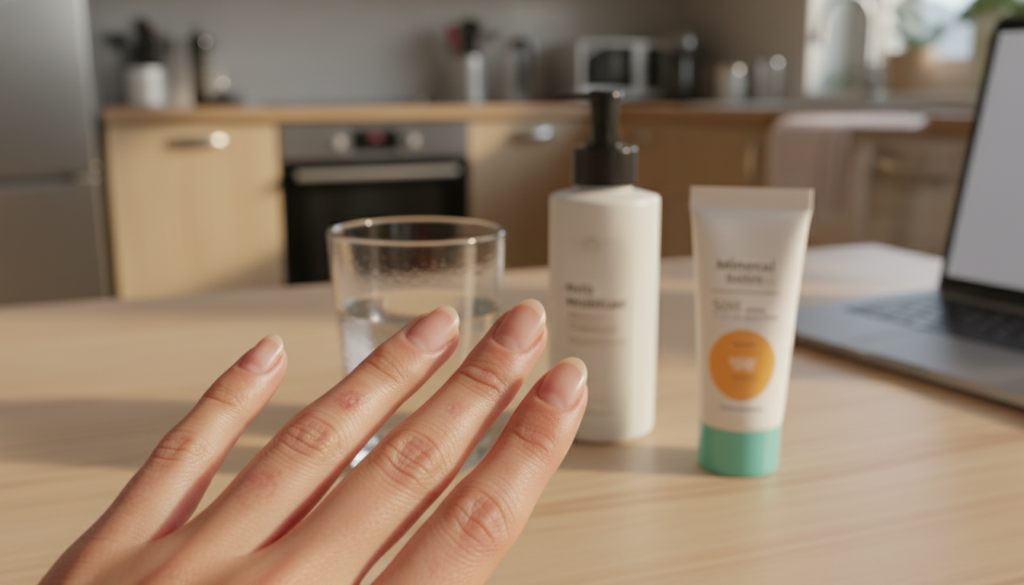
Simple actions we perform every day can silently compromise the delicate barrier protecting our hands. Many common routines, while necessary for hygiene, may also contribute to tissue damage over time.
Effects of Frequent Hand Washing and Drying
Regular cleaning is essential for health, but each wash strips natural oils. Using hot water accelerates this moisture loss significantly. The protective lipid layer becomes weakened with repeated exposure.
During the pandemic, many people experienced increased dryness from intensified hygiene practices. Alcohol-based sanitizers can be particularly harsh on delicate areas. Proper technique helps minimize damage.
Choose lukewarm water and gentle, fragrance-free products. Pat your hands dry instead of rubbing vigorously. Apply moisturizer while the surface is still slightly damp to lock in hydration.
Psychological habits like nail-biting or cuticle picking often worsen during stressful moments. This behavior creates a cycle where anxiety both triggers the habit and impairs natural healing processes.
Certain professions requiring frequent glove use or chemical exposure may also face challenges. Wearing appropriate protection during cleaning tasks helps maintain integrity. Being mindful of these daily factors is key to prevention.
Effective Home Remedies and Natural Treatments
You can find relief for irritated hands with simple ingredients from your kitchen. Many effective solutions use common household items that restore comfort and health.
These approaches focus on restoring your natural barrier. They provide gentle care without harsh chemicals.
Moisturizing Techniques and Topical Emollients
Apply rich cream immediately after washing while hands are damp. This locks in moisture effectively.
Look for products containing shea butter or glycerin. These ingredients offer deep hydration. Use them 2-3 times daily for best results.
Natural Solutions: Honey, Essential Oils, and Petroleum Jelly
Natural oil blends may help restore suppleness. Always dilute essential oils with carrier oils like coconut oil.
Honey acts as a natural humectant. Petroleum jelly creates a protective seal overnight. These simple treatment options are very accessible.
Preventative Measures for Everyday Protection
Wear gloves during cleaning tasks and in cold weather. Choose mild cleansing products over harsh soaps.
Use lukewarm water instead of hot when washing. Keep a small moisturizer with you for frequent application. These habits protect your fingertips from damage.
When to Consult a Dermatologist or Healthcare Professional
Knowing when to transition from at-home care to professional medical advice is crucial for long-term hand health. While most irritation improves with diligent moisturizing, certain symptoms indicate a deeper issue.
A dermatologist can provide a thorough assessment to identify underlying conditions that are not apparent. This step is essential for receiving the correct treatment.
Identifying Signs That Need Professional Attention
You should schedule an appointment if flaking persists despite consistent home care. Unexplained peeling without an obvious cause is another red flag.
Watch for signs of infection, like increased redness, swelling, or pus. A fever or chills accompanying the issue on your fingers suggests a systemic problem.
Other concerning symptoms include persistent itching, discoloration, or bleeding. If the protective barrier is severely compromised, the area may also become vulnerable to bacteria.
For chronic conditions like eczema or psoriasis, a dermatologist may also prescribe advanced options. These can include topical creams, light therapy, or injectable medications.
In rare cases, issues on the fingertips may also signal a systemic condition affecting the entire body. A professional evaluation ensures these are not overlooked.
Conclusion
The state of your fingertips provides valuable insights into your overall wellness. This common issue often serves as an early warning system.
A successful approach combines three key elements. Protect your hands from harsh chemicals and environmental factors. Nourish your body with proper nutrition and hydration. Modify daily habits that may cause irritation.
Most conditions respond well to consistent care using gentle products. Wear protective gloves during cleaning tasks. Apply moisturizer regularly throughout the day.
Listen to what your fingers communicate. Persistent symptoms warrant professional evaluation. Addressing root causes prevents complications and supports total health.