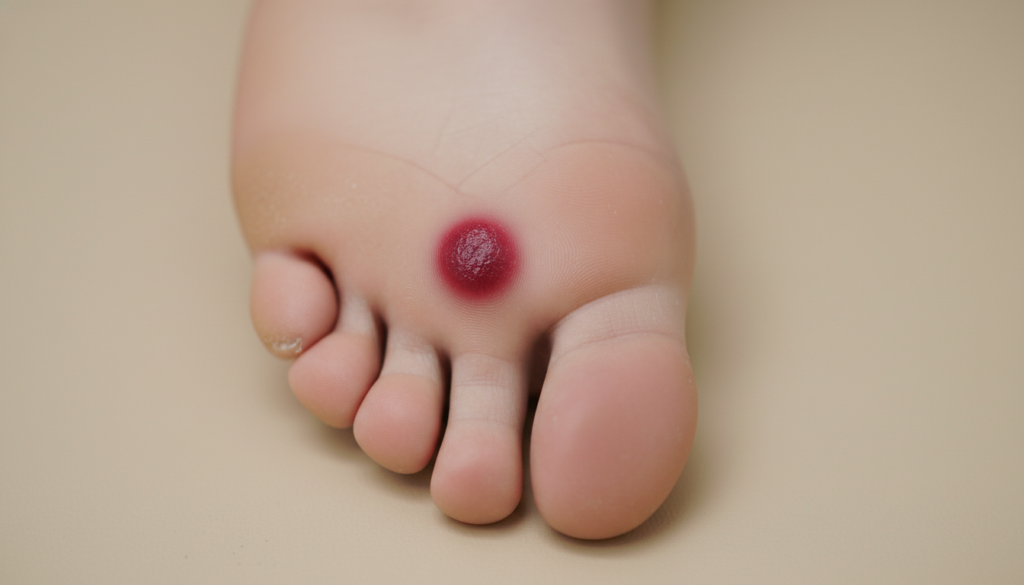
Did you know that the skin on your soles withstands pressure equivalent to several times your body weight with every step? This incredible durability also makes the area uniquely susceptible to various irritations and marks.
Discovering an unexpected mark on the sole can be concerning. These skin changes can appear for many reasons. The causes range from simple issues to more complex medical conditions.
Understanding the source is the first step toward effective care. This guide will help you identify potential causes. We will also explore appropriate treatment paths.
Your feet are in constant contact with different surfaces. This exposure, combined with friction and pressure, can lead to reactions. It’s important to pay attention to any changes in your skin’s appearance.
Most causes of these marks are not serious. However, some situations do require a doctor’s evaluation. Knowing the difference is key to maintaining healthy feet.
Key Takeaways
- The skin on the bottom of the foot is under constant pressure, making it prone to various conditions.
- Most causes of skin discoloration on the soles are minor and easily treatable.
- Accurate identification of the cause is essential for effective treatment.
- Common triggers include fungal infections, insect bites, and pre-existing skin issues.
- While many issues can be managed at home, some require professional medical diagnosis.
- Early attention to foot skin changes can prevent more serious complications.
Identifying “Red Spot on Bottom of Foot”: Signs and Symptoms
Understanding the full picture of symptoms that accompany foot skin changes helps distinguish between common irritations and serious conditions. A thorough self-examination provides valuable clues about what might be affecting your skin.
Common symptoms associated with these marks may include various sensations and visual changes. Pay attention to itching, burning feelings, or pain when walking. You might also notice scaling skin, swelling, or fluid-filled blisters.
Recognizing Common Symptoms and Warning Signs
Warning signs require immediate medical attention. These include marks that rapidly grow in size or develop irregular borders. Other concerning symptoms include fever, pus discharge, or severe pain that interferes with daily activities.
The skin on your feet can display different characteristics depending on the underlying condition. Fungal infections typically show flaky, itchy patches. Allergic reactions create swollen, inflamed areas while blisters appear as fluid-filled bumps.
Mapping Symptoms to Potential Underlying Conditions
Mapping your symptoms helps identify potential causes. Scattered small bumps often suggest insect bites. Concentrated patches between toes may indicate fungal infection. Symmetric patterns on soles could point to eczema or psoriasis.
Document when symptoms first appeared and any preceding activities. Note whether the condition worsens at specific times. This information helps healthcare providers make accurate diagnoses.
Persistent skin changes that don’t resolve within a few days should prompt medical consultation. Early attention can prevent complications and ensure proper treatment.
Common Causes of Red Spots on Feet
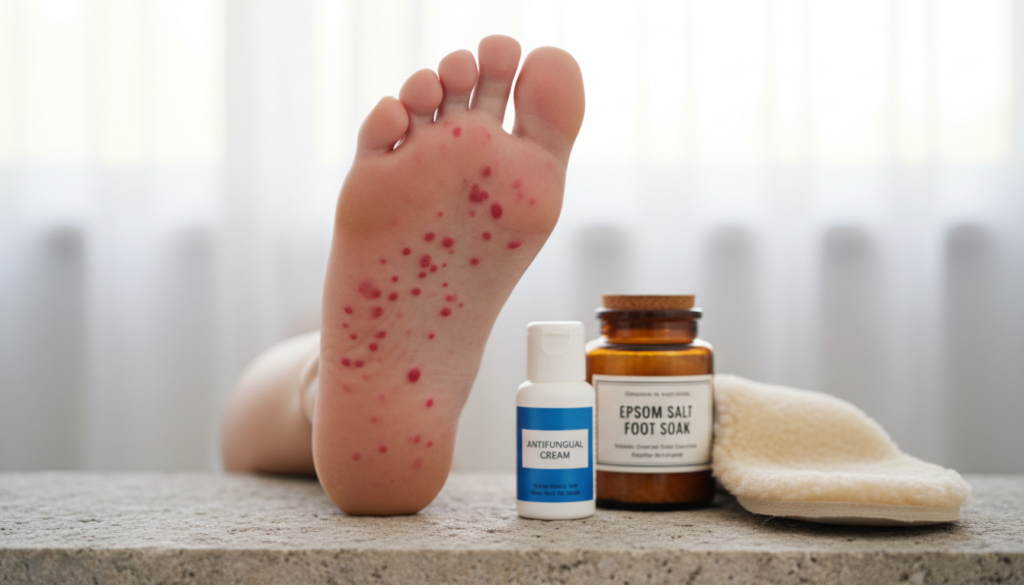
Several distinct factors can lead to skin discoloration on the soles. Understanding these triggers helps identify the appropriate treatment path.
Different conditions produce unique patterns and symptoms. This table shows key characteristics of major causes.
| Condition | Primary Symptoms | Common Locations | Contagious |
|---|---|---|---|
| Athlete Foot | Itching, flaking, blisters | Between toes, soles | Yes |
| Insect Bites | Single or multiple bumps | Any exposed area | No |
| Psoriasis | Thick, scaly patches | Soles, palms | No |
| Eczema | Itchy, inflamed skin | Various foot areas | No |
Fungal Infections and Athlete’s Foot
Athlete foot, medically called tinea pedis, thrives in warm, moist environments. This fungal infection commonly affects spaces between toes. It causes intense itching and peeling skin.
The condition spreads easily in locker rooms and pools. Proper footwear helps prevent transmission.
Insect Bites and Allergic Reactions
Outdoor activities barefoot can lead to insect bites. These create raised bumps that itch intensely. Allergic reactions to plants or chemicals cause similar symptoms.
Contact dermatitis develops from direct allergen exposure. The skin becomes red and swollen.
Autoimmune Conditions and Skin Disorders
Psoriasis speeds up skin cell renewal. This creates thick, scaly patches on soles. Eczema involves chronic inflammation and barrier problems.
Both conditions require medical management. Early skin cancer detection is crucial for suspicious changes.
Effective Treatments and Home Remedies

Various treatment paths exist for managing skin conditions affecting the plantar surface, ranging from pharmacy remedies to medical interventions. The right approach depends on your specific diagnosis.
Over-the-Counter and Prescription Medication Options
Many common issues respond well to readily available solutions. For fungal concerns, over-the-counter antifungal creams provide effective relief. More stubborn cases may require prescription-strength medication.
This table shows common treatment approaches for different conditions:
| Condition | OTC Options | Prescription Treatments |
|---|---|---|
| Fungal Infection | Antifungal creams, powders | Oral antifungals, strong topicals |
| Psoriasis | Moisturizers, coal tar | Topical steroids, vitamin D analogs |
| Eczema | Hydrocortisone cream | Immunomodulators, systemic drugs |
| Insect Bites | Antihistamines, cortisone | Prescription allergy medications |
Your doctor can recommend the appropriate treatment based on severity. Early intervention often leads to better outcomes.
Self-Care and Natural Remedies for Relief
Simple practices complement medical treatment. Keeping feet clean and dry prevents many issues. Regular moisturizing maintains skin health.
“Consistent foot care forms the foundation of effective treatment. Daily attention prevents minor issues from becoming major concerns.”
Many people find success with natural approaches to fungal care. These methods work well alongside conventional treatment.
Cool compresses reduce inflammation. Proper footwear minimizes friction. Avoid scratching to prevent damage.
Prevention Tips for Healthy Feet

Building consistent preventive habits offers the best defense against common foot conditions. Simple daily practices can significantly reduce your risk of developing various skin issues.
Maintaining Proper Hygiene and Moisture Control
Daily washing with soap and water removes dirt and bacteria. Pay special attention to areas between toes and on the soles. Thorough drying prevents moisture buildup where fungi thrive.
This table shows essential hygiene practices for different situations:
| Situation | Prevention Strategy | Frequency |
|---|---|---|
| After showers | Complete drying | Daily |
| Public showers | Protective footwear | Always |
| Sweaty feet | Antifungal powder | As needed |
| Sock changes | Immediate replacement | When damp |
Choosing the Right Footwear and Daily Care Practices
Select breathable shoes made from materials like leather or canvas. Avoid tight-fitting options that increase pressure and sweating. Rotate between different pairs to allow proper drying.
Regular foot inspections help catch early changes. Trim nails properly to prevent injuries. Apply moisturizer to prevent dry skin, but avoid between toes.
“Consistent preventive care creates a strong foundation for lifelong foot health. Small daily habits prevent major problems down the road.”
For comprehensive skin protection, consider a total body skin cancer exam to monitor any unusual changes. This is especially important for areas like the soles that receive less regular attention.
Conclusion
Empowerment in foot care comes from recognizing when self-management is appropriate versus when professional help is needed. Most skin changes on your feet respond well to simple treatments and lifestyle adjustments.
Regular monitoring helps ensure marks don’t worsen or develop concerning characteristics. Early attention prevents complications and protects surrounding tissue from damage.
While many conditions can be managed at home, persistent issues require medical evaluation. This is especially important for wounds that show signs of infection or don’t heal properly. For serious concerns like venous leg ulcers, prompt professional care is essential.
Combining knowledge with consistent preventive practices creates the foundation for lifelong foot health. Your awareness and proactive approach make all the difference in maintaining comfortable, healthy feet.