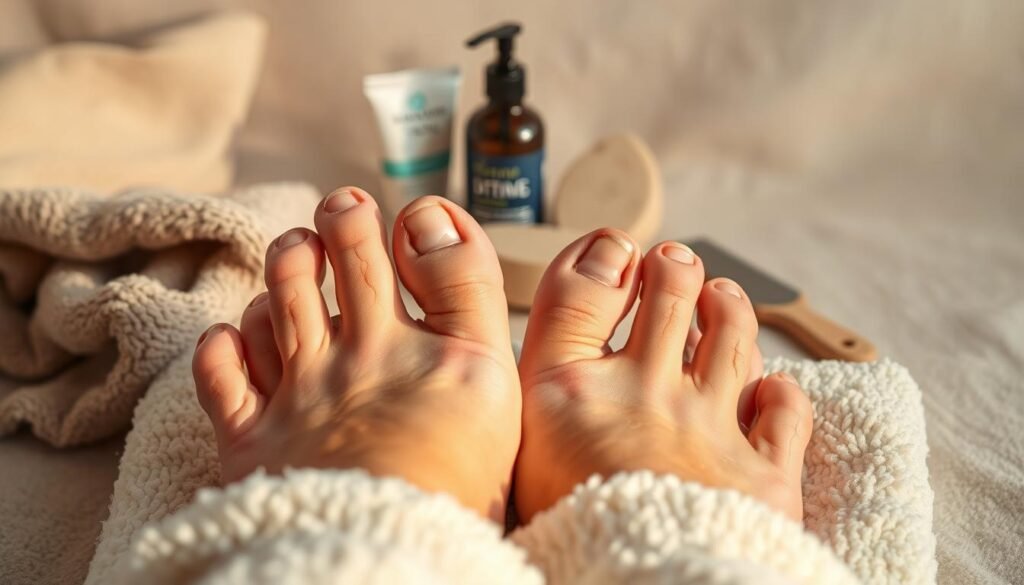
Have you ever wondered why your skin feels like sandpaper when temperatures plummet? As frosty air settles in, your body redirects warmth to vital organs – leaving your feet vulnerable. Blood vessels narrow to conserve heat, slowing natural oil production and starving skin of moisture. This chain reaction turns even smooth heels into rough terrain.
Indoor heating worsens the problem by sucking humidity from the air. Without proper care, dryness escalates to visible damage. The outer layer of skin loses flexibility, creating cracks that deepen with every step. Prevention proves easier than repair once these fissures form.
Your feet need different care in colder months. Thicker socks and closed shoes disrupt natural exfoliation cycles. Dead skin accumulates faster while moisture escapes quicker. This perfect storm demands targeted solutions – not just occasional lotion applications.
Key Takeaways
- Cold temperatures reduce circulation to extremities, weakening skin’s natural defenses
- Dry air from heating systems accelerates moisture loss in delicate foot tissue
- Preventive hydration works better than reactive fixes for severe dryness
- Layered protection combats both environmental and lifestyle factors
- Consistent care prevents minor irritation from becoming painful damage
Understanding Cracked Heels and Winter Challenges
When cold winds blow, our feet often pay the price of seasonal changes. The combination of indoor heating and outdoor chill creates a moisture-stripping environment where protective barriers weaken. This makes the lower extremities particularly vulnerable to visible damage.
Causes of Dry and Cracked Skin on the Heels
Heel fissures – their medical name – start when thickened skin loses flexibility. Factors like prolonged standing or tight shoes accelerate wear. Underlying health issues such as itchy skin conditions or thyroid imbalances often worsen the problem.
Body weight plays a role too. Extra pounds increase pressure on foot pads, while aging reduces natural oils. Nutrient gaps in vitamins C and E further hinder skin’s repair process, letting small splits become deep grooves.
How Cold Weather Affects Foot Health
Frigid air slows blood flow to extremities, starving tissue of hydration. Indoor heat worsens this by creating desert-like dryness. The result? Skin becomes brittle enough to fracture during normal movement.
Footwear choices matter more in cold months. Stiff boots restrict natural motion, causing dead cells to build up faster. Without daily care, this layered damage turns temporary roughness into stubborn calluses that crack under stress.
Cracked Heels Winter Treatment: Home Remedies and Expert Tips
Transform rough skin into smooth soles with targeted cold-weather strategies. Simple pantry staples and consistent routines can restore suppleness to damaged areas. These methods work best when paired with proper exfoliation and moisture-locking techniques.

Glycerin Foot Soak and Pumice Stone Routine
Revive tired feet with a hydrating soak. Mix 1 tsp salt, 2 tsp glycerin, and 2 tsp rosewater in warm water. Soak for 15-20 minutes to soften hardened skin. Use a pumice stone in gentle circles, focusing on thick patches. Rinse and apply a glycerin-rosewater blend before bed.
Vegetable Oil, Avocado Mask, and Petroleum Jelly Applications
Natural oils provide deep nourishment. Try this comparison:
| Treatment | Key Ingredients | Application Time |
|---|---|---|
| Overnight Oil | Vegetable oil | 5-minute massage + socks |
| Fruit Mask | Avocado & banana | 15-20 minutes |
| Barrier Cream | Petroleum jelly | Post-soak application |
For severe dryness, melt paraffin wax with coconut oil. Add lavender oil for extra healing. Cool slightly and brush onto clean feet. Always finish treatments with cotton socks to boost absorption overnight.
Home Care Strategies for Healthy, Moisturized Feet
Your feet work hard year-round, but seasonal shifts demand extra attention. Smart routines and product choices create lasting protection against roughness. Consistency proves more effective than occasional intensive treatments.
Daily Pedicure Practices to Combat Dryness
Start with a lukewarm soak using mild, fragrance-free soap. Limit sessions to 20 minutes to avoid stripping natural oils. Gently buff thickened areas with a pumice stone using light pressure – never scrub reddened or sensitive spots.
Pat skin dry thoroughly, especially between toes. Apply moisturizer within 3 minutes of drying to seal in hydration. For stubborn rough patches, urea-based formulas work best to dissolve dead cells without irritation.
Advanced Hydration Methods
Nighttime offers prime healing opportunities. Layer products strategically:
| Product Type | Key Components | Best Use Time |
|---|---|---|
| Water-Based Cream | Hyaluronic acid, aloe | Morning application |
| Oil Balm | Jojoba, marula | Pre-sock treatment |
| Occlusive Sealant | Petroleum jelly | Final nighttime layer |
Choose breathable cotton socks after evening applications. Supportive footwear with cushioned soles reduces friction – a key factor in foot health conditions. Inspect soles weekly for early signs of dryness, adjusting your regimen as needed.
Rotate between exfoliating acids and emollient creams every other day. This balanced approach maintains softness without over-processing delicate skin. Remember: hydrated feet start with smart daily choices, not just crisis interventions.
Conclusion
Maintaining soft, healthy feet in colder months doesn’t require expensive routines. Consistent hydration and simple preventive foot care strategies often prevent minor issues from worsening. Most people see improvement within days using methods like overnight oil treatments or glycerin-based soaks.
Monitor your progress closely. If rough patches persist after 7-10 days of home care, consult a specialist. Deep splits, unusual discoloration, or tenderness signal the need for professional assessment. Podiatrists frequently use safe debridement techniques to remove thickened areas causing discomfort.
For persistent cases, explore targeted solutions that combine medical expertise with daily moisturizing habits. Remember: foot health thrives on regular attention, not just seasonal fixes. Pair smart product choices with timely expert guidance to keep skin supple year-round.