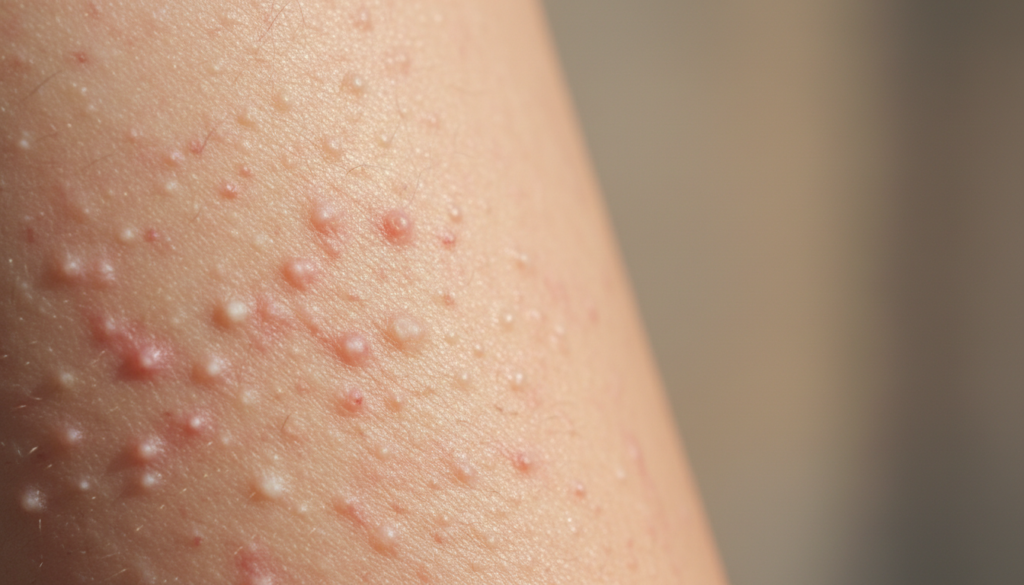
Did you know that up to 50% of the world’s population may experience the bumpy texture of keratosis pilaris? This makes it one of the most common skin conditions globally. Yet, many people who have it remain unaware of what it actually is.
Often called “chicken skin,” this condition is completely harmless and not contagious. It has nothing to do with personal hygiene. The bumps appear when a protein called keratin builds up and blocks hair follicles.
This guide will explore the biological reasons behind this keratin buildup. We will break down the science into easy-to-understand language. You will learn about practical strategies to manage its appearance effectively.
While there is no permanent cure, understanding the root of the issue is empowering. It allows you to make informed choices about your skincare. This knowledge can lead to a significant improvement in your skin’s texture and your confidence.
Key Takeaways
- Keratosis pilaris is an extremely common and harmless skin issue.
- The bumpy texture, often called “chicken skin,” results from keratin blocking hair follicles.
- This condition is not related to cleanliness and cannot be spread to others.
- Understanding the biological basis is the first step toward effective management.
- While not curable, the appearance can be significantly improved with the right approach.
- This guide provides clear explanations and actionable treatment strategies.
Understanding Keratosis Pilaris
A surprisingly common dermatological issue affects millions but remains poorly understood by many. This skin condition creates distinctive rough patches that often appear on arms, thighs, and cheeks.
Definition and Overview
Keratosis pilaris occurs when keratin protein builds up around hair follicles. This blockage creates small, rough bumps that feel like sandpaper. The condition is completely benign and doesn’t pose health risks.
It frequently appears during childhood and adolescence. Many adults also experience it, especially those with dry skin or eczema. Family history often plays a role in who develops these symptoms.
This dermatological concern is remarkably widespread. Studies suggest it affects 50-80% of teenagers and approximately 40% of adults worldwide. Despite its prevalence, many people don’t recognize what they’re seeing on their skin.
Common Misconceptions
Many mistakenly believe poor hygiene causes these bumps. This is completely false – the condition has no connection to cleanliness. It also cannot spread between people.
Some confuse keratosis pilaris with acne or allergic reactions. However, the biological mechanism is distinct. Unlike acne, it doesn’t involve clogged pores with oil and bacteria.
Another misconception involves expecting a quick cure. Management focuses on improving appearance rather than complete elimination. Understanding these facts helps set realistic expectations for treatment.
What is Keratosis Pilaris?
The “chicken skin” nickname for this condition comes from its unmistakable look and feel. Understanding the specific appearance of keratosis pilaris is key to recognizing it on your own body.
Characteristics and Appearance
These tiny bumps are usually 1-2mm in size. They cluster together in patches, creating a rough, sandpaper-like texture on the skin.
The color of the bumps can vary. They may be flesh-colored, white, red, pink, brown, or black. This depends on your natural skin tone.
Each bump is a single hair follicle plugged with keratin. A small, coiled hair is often trapped inside. Picking at these follicles is not recommended.
| Characteristic | Description | Common Misconception |
|---|---|---|
| Texture | Rough, like sandpaper or goosebumps | Caused by dirt or poor hygiene |
| Appearance | Clusters of small, pinpoint bumps | A form of acne |
| Location | Only on skin with hair follicles (arms, thighs) | Can appear on palms or soles |
Why It’s Known as “Chicken Skin”
The bumpy texture closely resembles the skin of a plucked chicken. It also looks like permanent goosebumps.
This “chicken skin” term helps people visualize the condition quickly. Doctors still use the formal name, keratosis pilaris, for diagnosis.
These bumps only form where hair grows. You will never find them on the palms of your hands or the soles of your feet.
Causes of Keratosis Pilaris
The development of those familiar bumps is rooted in a specific biological process. It primarily involves an overproduction of a key protein and how it interacts with hair follicles.
Multiple elements, from your genes to your environment, play a significant role. Understanding these factors is the first step toward effective management.
Excess Keratin Buildup and Hair Follicles
Keratin is a tough protein that normally protects your skin. In this situation, the body creates too much of it.
This excess keratin forms a hard plug within the hair follicles. It blocks the opening where a hair should grow out, creating the small, rough bump.
Genetic Factors and Underlying Skin Conditions
This condition often runs in families. If a parent has it, you are more likely to develop keratosis pilaris yourself.
It also frequently appears alongside other common skin conditions. These include eczema and atopic dermatitis, which share similar genetic pathways.
Role of Dry Skin and Environmental Triggers
Dry skin is a major aggravating factor. It makes the keratin plugs harder and more noticeable.
Low humidity and cold weather can worsen the issue. Hormonal shifts, like those during puberty, can also trigger or intensify symptoms.
| Contributing Factor | How It Influences KP | Management Focus |
|---|---|---|
| Genetic Predisposition | Inherited tendency for excess keratin production | Long-term skincare routine |
| Co-occurring Skin Conditions | Eczema or dermatitis can worsen follicular plugging | Treating the underlying condition |
| Environmental Dryness | Cold, dry air reduces skin moisture, hardening plugs | Aggressive moisturizing |
Recognizing Symptoms and Visual Appearance
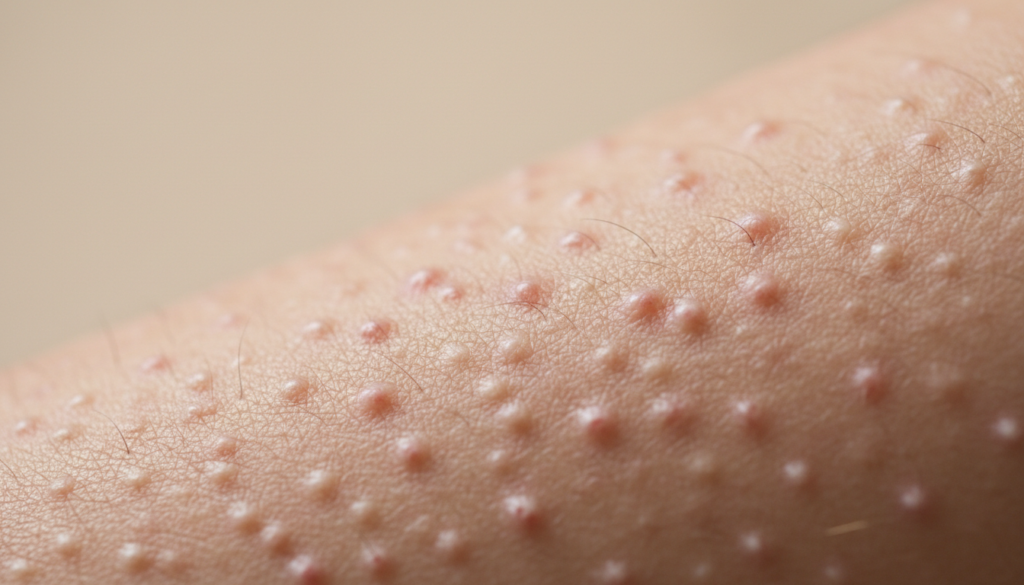
Spotting the characteristic markers of this dermatological concern requires recognizing specific textural and color changes. The condition presents with distinct patterns that help differentiate it from other skin issues.
Identifying Bumps and Texture Changes
The primary symptoms involve small, rough bumps that cluster together. These create a sandpaper-like texture when you run your hand over affected areas.
Each bump measures about 1-2 millimeters. They typically appear on the upper arms and thighs. The texture feels uneven and rough to the touch.
While generally painless, some people experience mild itching. This often occurs when skin becomes very dry. Friction from clothing can also increase discomfort.
Discoloration and Inflammation Patterns
Color variations are common with this condition. Bumps may appear flesh-colored, pink, red, or brown. The color depends on your natural skin tone.
Inflammation around individual hair follicles can create noticeable redness. As one dermatology resource notes,
“The appearance varies significantly between individuals, with some experiencing prominent redness while others have minimal color changes.”
| Symptom Type | Common Presentation | Body Areas Affected |
|---|---|---|
| Texture Changes | Rough, sandpaper-like feel | Upper arms, thighs, cheeks |
| Bump Appearance | Small, clustered bumps | Arms, legs, buttocks |
| Color Variations | Red, pink, or brown discoloration | All affected areas |
Understanding these symptoms helps with accurate self-assessment. For comprehensive information about this condition, visit the Cleveland Clinic’s keratosis pilaris resource.
Effective At-Home Skincare and Remedies
You can significantly improve your skin’s appearance with consistent daily care routines. Simple at-home strategies focus on hydration and gentle exfoliation. These methods help manage the texture without expensive treatments.
Moisturizing Techniques and Ingredients
Dry skin often worsens this condition. Apply moisturizer several times daily, especially after showering. Lock in moisture while your skin is still damp.
Look for products with specific beneficial ingredients. These include urea, lactic acid, and ceramides. These components help break down buildup while hydrating.
Exfoliation Methods Using AHAs/BHAs
Chemical exfoliants gently remove dead skin cells. Alpha hydroxy acids (AHAs) like glycolic acid work effectively. Salicylic acid (BHA) helps unclog hair follicles.
Limit exfoliation to 2-3 times weekly. Overuse can cause irritation. Always follow with moisturizer to protect your skin barrier.
Home Remedies: Apple Cider Vinegar and Coconut Oil
Natural options provide accessible care. Apple cider vinegar contains malic acid for gentle exfoliation. Dilute with equal water if you have sensitive skin.
Coconut oil offers moisturizing and anti-inflammatory benefits. Apply to damp skin after bathing. Consistency over time brings visible improvement.
Over-the-Counter and Prescription Treatments
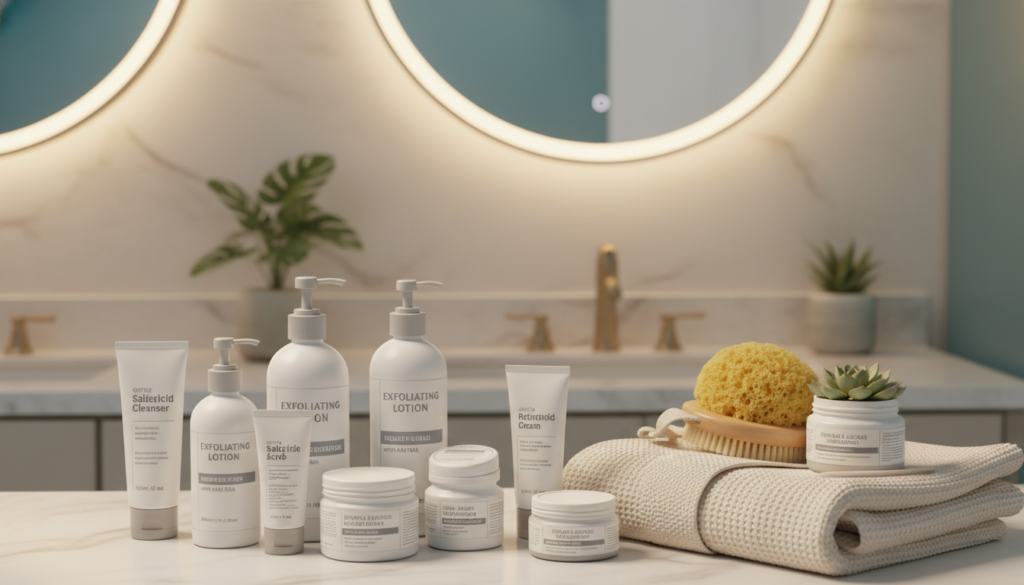
For those seeking more intensive solutions, both pharmacy-available and prescription-grade products deliver enhanced therapeutic benefits. These advanced options target the root issues more directly than basic moisturizers.
Moisturizers and Medicated Creams
Specialized over-the-counter formulations like AmLactin® and CeraVe SA® cream combine hydration with active ingredients. They contain ammonium lactate and alpha hydroxy acids to soften rough texture.
Prescription-strength options become appropriate when OTC products don’t provide adequate improvement after 6-8 weeks. These may include retinoids like Retin-A® that decrease keratin buildup.
Key Ingredients for Smoothing Skin
Effective ingredients work through different mechanisms. Urea breaks down excess protein while acting as a humectant. Alpha hydroxy acids like glycolic acid exfoliate dead skin cells.
Salicylic acid penetrates hair follicles to clear blockages. As one dermatology expert notes,
“The combination of exfoliating acids with moisturizing components creates a synergistic effect that significantly improves skin texture.”
| Treatment Type | Key Ingredients | Primary Action |
|---|---|---|
| OTC Moisturizers | Ammonium lactate, ceramides | Hydration & mild exfoliation |
| Prescription Creams | Retinoids, high-concentration urea | Cell turnover & keratin reduction |
| Acid Treatments | Glycolic acid, salicylic acid | Follicle unclogging |
Visible improvement typically requires 4-6 weeks of consistent use. Starting with lower frequency minimizes potential irritation. Sun protection is essential when using these active ingredients.
Professional Dermatological Treatments and Procedures
When self-care strategies fall short, dermatologists offer advanced interventions that target stubborn skin texture concerns. These professional treatments provide more intensive solutions for significant improvement.
Chemical Peels and Laser Therapy Options
In-office chemical peels use high concentrations of acids to deeply exfoliate. Glycolic acid peels remove dead cells and smooth texture. Salicylic acid peels penetrate hair follicles to clear blockages effectively.
Laser treatments address both texture and discoloration. Pulsed dye laser reduces redness and inflammation. Fractional lasers stimulate collagen to improve the skin’s surface over time.
These procedures typically require multiple sessions. They are customized for different body areas like arms, thighs, or cheeks.
When to Consult a Dermatologist
Seek professional help if home care fails after several weeks. Consult a specialist for persistent symptoms causing distress. A dermatologist can create a personalized treatment plan for your specific needs.
Professional evaluation is also wise if you notice signs of infection. For comprehensive medical guidance, review the Mayo Clinic’s treatment resource. These advanced options help many people achieve smoother, healthier-looking skin.
Lifestyle Approaches and Preventive Measures

Your everyday lifestyle choices play a crucial role in how your skin looks and feels. Simple adjustments to your routine can significantly improve texture over time.
Consistent habits support overall skin health and reduce irritation. These strategies work alongside medical treatments for better results.
Daily Skincare Routines and Product Choices
Gentle cleansing with fragrance-free products maintains skin barrier function. Moisturize immediately after bathing to lock in hydration.
Limit chemical exfoliation to 1-2 times weekly. Choose warm showers instead of hot water to prevent dryness.
Dietary Considerations for Healthier Skin
Omega-3 fatty acids from fish and nuts fight inflammation. Vitamins A and E support skin repair and regeneration.
Stay hydrated by drinking water throughout the day. Limit processed foods and excess sugar for better skin health.
Strategies to Avoid Irritation and Friction
Choose loose, breathable fabrics like cotton for affected areas. Avoid tight clothing on upper arms and thighs.
Change sweaty workout clothes promptly. Use fragrance-free laundry detergents to minimize chemical irritation.
| Lifestyle Factor | Recommended Approach | Skin Benefits |
|---|---|---|
| Clothing Choices | Loose cotton fabrics | Reduces friction on arms and thighs |
| Showering Habits | Warm water, brief duration | Preserves natural skin oils |
| Nutrition | Anti-inflammatory foods | Supports skin barrier function |
| Product Selection | Fragrance-free formulas | Minimizes risk of irritation |
Sun protection is essential when using exfoliating products. Apply broad-spectrum SPF 30+ daily to exposed skin areas.
These preventive measures help maintain smoother skin texture. Consistency brings the best long-term results for your skin care routine.
Managing Keratosis Pilaris During Different Seasons
Weather patterns play a crucial role in how your skin texture presents itself across different months. Many people notice significant changes in their condition as seasons shift.
Cold, dry winter air often worsens symptoms. Indoor heating systems strip moisture from your skin. This makes bumps on upper arms and thighs more noticeable.
Adapting Your Skincare Routine for Winter
Switch to heavier moisturizers during cold months. Apply them multiple times throughout the day. Use humidifiers to maintain indoor humidity.
Ointment-based products provide better protection than lotions. Layer your skincare to create an effective moisture barrier. This reduces the risk of winter flare-ups.
Seasonal Triggers and Maintenance Tips
Summer humidity often brings improvement for many people. Warmer conditions naturally hydrate your skin. However, continue your basic care routine.
Use lighter moisturizers in warm weather. Protect your skin from sun exposure. Consistency across seasons maintains long-term results.
| Season | Primary Challenge | Recommended Approach |
|---|---|---|
| Winter | Dry air and low humidity | Heavy moisturizers, humidifiers, frequent application |
| Summer | Sun exposure risk | Lighter formulas, sun protection, continued hydration |
| Transition Months | Changing conditions | Gradual routine adjustments, proactive care |
Conclusion
While keratosis pilaris may be cosmetically frustrating, it’s important to remember this condition is fundamentally harmless. Many people see natural improvement as they age, with bumps often becoming less noticeable by their mid-20s.
If you choose treatment to improve your skin texture, patience is essential. Results typically appear within four to six weeks of consistent care. Some individuals find excellent results from simple moisturizing routines.
Never pick at or try to pop these bumps, as this can lead to scarring. Focus on gradual progress rather than seeking to completely get rid keratosis pilaris. Your skin health matters more than perfection.
With the knowledge you’ve gained, you can make informed decisions about managing keratosis pilaris. This common skin issue causes no long-term damage and many achieve satisfactory results with time and consistency.