
Did you know that over 70 million people worldwide live with vitiligo? This surprising statistic highlights how common pigmentation changes can be. The body’s immune system sometimes attacks melanocytes, the cells responsible for creating our natural coloration.
When these cells stop working, distinctive white areas appear. These can be small spots or larger patches that become more noticeable on individuals with deeper complexions. The same process can affect hair in those regions, turning it white or silver.
Learning about these changes helps us understand their impact on daily life. Many people experience both physical and emotional challenges. Recognizing the signs early can lead to better management and support.
This guide explores the science behind these variations in appearance. We’ll examine what causes the differences and how they affect people across various backgrounds. Understanding leads to greater awareness and compassion.
Key Takeaways
- Vitiligo affects millions globally, making it more common than many realize
- The immune system’s attack on melanocytes causes loss of natural coloration
- These changes appear as white patches that vary in size and location
- Hair in affected areas may lose its original color
- The visibility differs based on a person’s natural complexion
- Early recognition helps with management and emotional well-being
- Understanding these variations promotes better support and awareness
Introduction to Skin Pigment Condition
The remarkable diversity of human coloration stems from a complex biological process involving specialized cells. These cells produce melanin, the primary determinant of our natural appearance. The body contains two main types: eumelanin and pheomelanin.
Human pigmentation shows incredible variation across populations. Genetics play the most significant role in determining baseline coloration. Environmental factors like UV exposure also influence melanin production.
Melanin serves as more than just a cosmetic feature. It provides crucial protection against ultraviolet radiation. This protective function explains why people from sun-intensive regions typically have darker complexions.
When changes occur in pigmentation, individuals may notice altered coloration patterns. These variations can appear as patches of different shades. Texture changes sometimes accompany these visible differences.
Understanding these biological processes helps explain why pigmentation varies. It also clarifies how external factors can influence our appearance over time.
The Science Behind Skin Pigmentation
The story of human coloration begins at the cellular level, where specialized pigment-producing cells orchestrate a complex manufacturing process. These remarkable cells work tirelessly to create the unique tones that distinguish each individual.
Melanin Production Process
Melanocytes, the specialized pigment cells, initiate coloration through melanogenesis. This biochemical pathway converts tyrosine into melanin using the enzyme tyrosinase. The activity level of this enzyme directly controls pigment output.
These cells package melanin into melanosomes, which transfer to surrounding keratinocytes. This distribution system ensures even coloration across epidermal layers. The entire process represents a sophisticated cellular collaboration.
Functions of Eumelanin and Pheomelanin
Eumelanin provides superior photoprotection by absorbing harmful UV radiation. This brown-black pigment acts as natural sunscreen, protecting deeper layers from DNA damage. Individuals with higher eumelanin concentrations experience significantly lower rates of sun-induced damage.
Pheomelanin creates red and yellow tones but offers minimal UV protection. This explains why people with predominant pheomelanin are more susceptible to sunburn. The MC1R gene controls the balance between these two pigment types.
Understanding these distinct functions reveals that coloration represents different levels of built-in environmental protection. The genetic variations determining this balance influence both appearance and health outcomes.
Genetics and Its Role in Skin Pigment Conditions
Scientific discoveries have uncovered that approximately 125 different genes contribute to our appearance. This genetic complexity explains the remarkable diversity of human tones across global populations. The blueprint for coloration begins with inherited factors.
Inherited Factors Influencing Skin Color
Genetic coding determines how many pigment-producing cells the body creates. It also controls their activity level and distribution efficiency. These inherited factors establish our baseline appearance.
About 20% of individuals with vitiligo have close relatives with the same condition. Researchers have identified over 30 genetic variants that increase susceptibility. This demonstrates the strong hereditary component.
Genes regulate the balance between protective eumelanin and lighter pheomelanin production. This explains why some people have naturally darker tones with better UV protection. Others have lighter coloration more vulnerable to sun exposure.
The interplay of multiple inherited factors creates each person’s unique profile. Children receive a combination from both parents. This genetic distinctiveness influences susceptibility to various pigmentation changes throughout life.
Impact of UV Exposure on Skin Color
Sunlight’s invisible ultraviolet rays trigger a remarkable defense mechanism in our bodies. When UV radiation penetrates the epidermis, it activates specialized pigment-producing cells to increase melanin output. This natural tanning process serves as our primary protection against solar damage.
The sun’s energy generates free radicals within cells, creating oxidative stress. This stress signals melanocytes to ramp up pigment production through enzymatic processes. The resulting darker coloration absorbs harmful radiation before it can damage cellular DNA.
Repeated sun exposure often leads to uneven pigmentation patterns. Dark spots, freckles, and age spots commonly appear on frequently exposed areas. The face, hands, and shoulders typically show the most noticeable changes.
People with lighter natural coloration face greater vulnerability to sun-induced alterations. Their baseline protection proves insufficient against intense ultraviolet exposure. Cumulative damage over years can permanently affect color distribution.
Understanding this relationship empowers better protection strategies. Consistent sunscreen use and limited direct sun exposure help prevent unwanted changes. These measures reduce the risk of more serious damage over time.
Common Skin Pigment Disorders
Clinical practice reveals two primary patterns of coloration disruption: excess and deficiency. These changes affect millions of Americans each year, creating visible alterations in natural appearance.
When melanin production becomes unbalanced, distinct symptoms emerge. Understanding these differences helps people recognize when to seek professional evaluation.
Hyperpigmentation vs. Hypopigmentation
Hyperpigmentation occurs when the body produces too much melanin. This creates darker spots or patches that stand out against surrounding areas.
Hypopigmentation represents the opposite problem. Here, melanin production decreases, leading to lighter patches that contrast with normal coloration.
| Feature | Hyperpigmentation | Hypopigmentation |
|---|---|---|
| Melanin Level | Excess production | Reduced production |
| Appearance | Dark spots or patches | Light areas |
| Common Examples | Melasma, age spots | Vitiligo, albinism |
| Primary Causes | Sun exposure, hormones | Autoimmune issues, genetics |
Identifying Early Warning Signs
Early detection improves treatment outcomes significantly. Watch for new patches appearing on previously uniform surfaces.
Changes in existing birthmarks or moles warrant attention. Gradual lightening or darkening over weeks indicates possible issues.
Seek medical evaluation for rapidly expanding areas or changes accompanied by itching. Irregular borders or texture alterations also require professional assessment.
Focus on Vitiligo: Causes and Effects
Vitiligo stands out as one of the most distinct presentations where the body’s natural coloration undergoes dramatic changes. This occurs when the immune system mistakenly targets melanocytes, the cells responsible for producing color. The result is characteristic white patches that can appear anywhere on the body.
While vitiligo affects people equally across all ethnicities, the contrast between affected and unaffected areas becomes more noticeable on individuals with darker natural tones. Most people first notice symptoms before age 30, with many cases appearing during childhood or young adulthood.
The exact vitiligo causes remain complex, but autoimmune factors play a significant role. Researchers believe the body fails to recognize its own pigment-producing cells as friendly. This leads to systematic destruction of melanocytes in specific areas.
| Type | Pattern | Prevalence | Progression |
|---|---|---|---|
| Generalized | Symmetrical patches on both sides | ~90% of cases | Often continues spreading |
| Segmental | One side or area only | More common in children | Usually stabilizes after 1-2 years |
| Focal | Small, isolated patches | Limited area | May remain localized |
| Universal | Over 80% of surface affected | Rare presentation | Extensive depigmentation |
When vitiligo develops in areas with hair, the follicles often lose their color-producing ability too. This can cause scalp hair, eyebrows, or body hair to turn white or silver. Understanding these variations helps distinguish vitiligo from other color changes.
“The unpredictable nature of vitiligo progression requires individualized approaches for each person living with this condition.”
Patches typically appear first on sun-exposed areas like hands, feet, and face. The progression pattern varies significantly among different individuals. Early recognition facilitates better management strategies and emotional support.
Tinea Versicolor and Related Fungal Conditions
Unlike autoimmune disorders like vitiligo, tinea versicolor results from fungal overgrowth rather than immune system issues. This common infection affects the surface when Malassezia yeast multiplies excessively.
The fungus interferes with normal melanin production in affected areas. This creates distinctive spots that may appear lighter or darker than surrounding tissue. These changes typically develop on the chest, back, and shoulders.
People in warm, humid climates face higher susceptibility. The yeast thrives in moist environments, making summer months peak season for outbreaks. Excessive sweating can also trigger this overgrowth.
| Characteristic | Tinea Versicolor | Vitiligo |
|---|---|---|
| Cause | Fungal overgrowth | Autoimmune response |
| Texture | Scaly surface | Smooth texture |
| Symptoms | Mild itching possible | No physical symptoms |
| Treatment Approach | Antifungal medications | Immunomodulatory therapy |
Effective treatment makes these patches resolve over time. Topical creams, shampoos, or oral medications eliminate the yeast overgrowth. After successful treatment, affected areas gradually return to their original color.
The repigmentation process can take several weeks to months. Accurate diagnosis is crucial since this condition requires different approaches than other pigmentation changes. Recurrence is possible if environmental factors persist.
Comprehensive Overview of Melasma and Chloasma
Melasma creates distinctive facial patterns that affect millions of women worldwide. This hyperpigmentation issue appears as brown or blue-gray patches on sun-exposed areas. The cheeks, forehead, and upper lip show the most frequent involvement.
Hormonal changes serve as primary triggers for this condition. Pregnancy, birth control pills, and hormone therapy can activate excess melanin production. This explains why women experience melasma much more frequently than men.
Chloasma represents the same condition under a different name. Historically called the “mask of pregnancy,” it develops in many expecting mothers. Elevated estrogen and progesterone levels stimulate melanocyte activity during this period.
Sun exposure dramatically worsens these pigmentation issues. Ultraviolet radiation further activates already-sensitive melanocytes. This makes the patches darker and more resistant to fading over time.
Age plays a significant role in melasma development. Most cases appear between 20 and 40 years old. The condition can persist for decades without proper management.
Treatment approaches must address multiple factors simultaneously:
- Topical lightening agents to reduce existing spots
- Strict sun protection to prevent worsening
- Hormonal management when appropriate
- Professional procedures for stubborn cases
Understanding this multifactorial nature leads to better outcomes. Comprehensive strategies prove more effective than spot treatments alone. The appearance of these patches often improves with consistent, multifaceted care.
Role of the Immune System in Skin Pigment Conditions

Our body’s defense network sometimes turns against its own pigment-producing cells, creating visible changes. This autoimmune response explains why vitiligo develops in many individuals.
Specialized immune cells called cytotoxic T lymphocytes mistakenly identify melanocytes as threats. They infiltrate the surface and target these color-producing cells for destruction.
Autoimmune Mechanisms and Melanocyte Destruction
The attack begins when immune cells recognize specific proteins on melanocytes as foreign antigens. This triggers a response that systematically eliminates pigment cells throughout the body.
Research suggests stress or trauma may initiate this process in genetically susceptible people. The precise mechanisms continue to be studied by scientists worldwide.
About 15-25% of individuals with vitiligo have additional autoimmune disorders. These include thyroid disease, type 1 diabetes, and rheumatoid arthritis.
Understanding this immune connection has transformed treatment approaches. New therapies now target specific immune pathways to prevent ongoing cell destruction.
Treatment Options: Oral Medications for Skin Pigment Condition
Systemic therapies administered orally represent a powerful alternative for individuals seeking comprehensive treatment for widespread pigmentation issues. These medications work throughout the entire body, reaching affected areas through the bloodstream.
Oral approaches often demonstrate greater potency than topical applications. They affect melanin production at the cellular level rather than just the surface.
Benefits of Tranexamic Acid and Isotretinoin
Tranexamic acid functions as a plasmin inhibitor that reduces melanin synthesis. Clinical studies show impressive results with this therapy.
Over 82% of people experience visible improvement within the first month of treatment. The medication works by inhibiting tyrosinase activity and altering cellular relationships.
Isotretinoin offers significant benefits beyond acne treatment. Patients report lighter, more even tone along with texture improvements.
Both medications require careful medical supervision due to potential side effects. Treatment decisions depend on individual needs and the extent of pigmentation changes.
Topical Treatments and Creams for Pigment Restoration
Topical formulations represent the frontline approach for addressing surface discoloration. These medications deliver concentrated therapy directly to affected zones with minimal systemic exposure.
Applied creams work through various mechanisms depending on the specific issue. Some reduce melanin production to lighten dark patches. Others stimulate color-producing cells to restore natural tones.
Use of Topical Steroids and Other Agents
Steroids like betamethasone and clobetasol serve as cornerstone treatments. They work through anti-inflammatory actions that may protect remaining cells. Clinical studies show promising results with these approaches.
Approximately 60% of patients achieve moderate to excellent improvement with proper use. Facial regions typically respond better than hands and feet. Consistent application over months yields gradual visible changes.
| Treatment Type | Primary Mechanism | Best For | Timeframe |
|---|---|---|---|
| Topical Steroids | Anti-inflammatory action | Vitiligo repigmentation | 3-6 months |
| JAK Inhibitors | Immune pathway blocking | Autoimmune conditions | 2-4 months |
| Hydroquinone | Melanin reduction | Dark spot lightening | 8-12 weeks |
| Retinoids | Cell turnover increase | Even tone promotion | 12+ weeks |
“The precision of topical applications allows targeted intervention while minimizing overall body exposure to medications.”
New JAK inhibitor creams represent major advancements in treatment. They specifically target immune pathways that destroy color-producing cells. This approach helps restore natural appearance in affected regions.
Combination strategies often yield superior outcomes. Using steroids with light therapy addresses multiple aspects simultaneously. Careful monitoring prevents potential side effects during extended use.
Emerging Therapies and Phototherapy Approaches
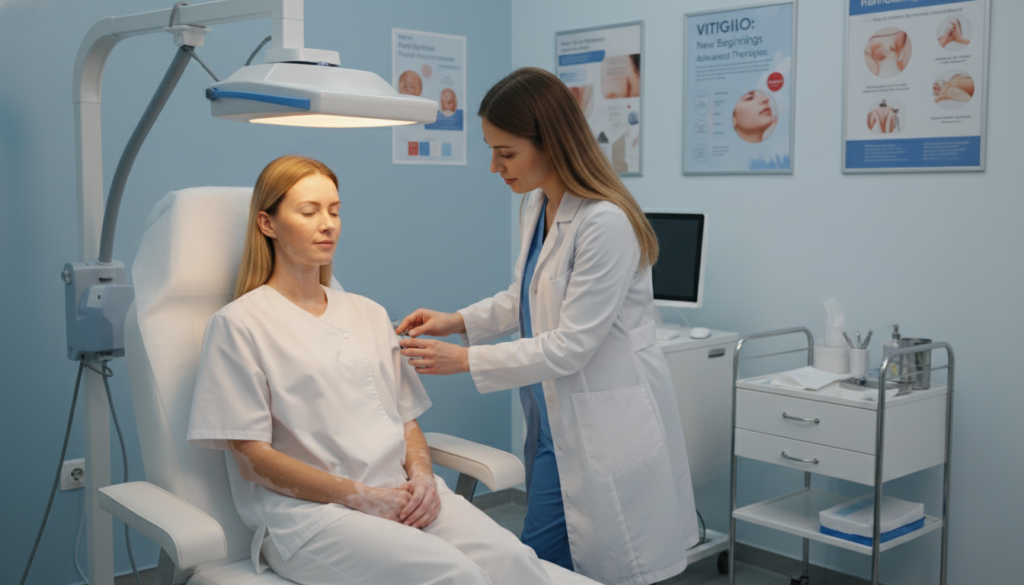
Modern phototherapy techniques represent a breakthrough in treating depigmented areas with precision and effectiveness. These light-based approaches stimulate natural color restoration through controlled ultraviolet exposure.
Narrowband UVB therapy has become the gold standard for widespread vitiligo. This treatment delivers specific wavelengths that optimally stimulate melanocyte activity without broader-spectrum risks.
The excimer laser offers targeted phototherapy for localized patches. It concentrates high-intensity narrowband UVB light on specific areas while sparing surrounding tissue.
PUVA therapy combines psoralen medication with UVA light exposure. This powerful approach works well for extensive vitiligo but carries higher side effect risks.
Combination strategies are emerging as particularly effective. Pairing light therapy with topical agents like vitamin D analogues enhances repigmentation responses significantly.
For people with extensive vitiligo affecting over 50% of body surface, depigmentation therapy offers an alternative approach. This treatment creates uniform appearance by removing remaining pigment.
Surgical options include melanocyte transplantation and skin grafting. These procedures transfer pigment-producing cells from unaffected areas to repopulate depigmented zones.
Newer protocols combine light exposure with JAK inhibitors or topical steroids. This synergistic approach enhances the repigmentation response to UV stimulation.
Preventive Measures: Skin Care and Sun Protection
Proactive protection strategies form the foundation for managing pigmentation changes effectively. While some conditions cannot be entirely prevented, understanding triggers helps people maintain stability.
Sun exposure represents the most significant risk factor for worsening existing issues. Depigmented areas lack natural UV defense, making them extremely vulnerable. Daily broad-spectrum sunscreen application proves essential for all exposed areas.
Physical barriers like protective clothing and wide-brimmed hats offer additional security. Seeking shade during peak sunlight hours reduces cumulative damage. Remember that UV rays penetrate clouds and windows.
Avoiding physical trauma prevents new patches from developing. Cuts, burns, and friction can trigger inflammatory responses. Gentle care routines maintain barrier integrity.
| Prevention Strategy | Primary Benefit | Key Implementation |
|---|---|---|
| Sun Protection | Reduces UV-triggered worsening | SPF 30+ daily application |
| Trauma Avoidance | Prevents new patch formation | Gentle skin care practices |
| Chemical Management | Reduces inflammatory triggers | Avoid harsh products |
| Stress Reduction | Limits autoimmune flares | Mindfulness techniques |
Chemical exposure prevention involves avoiding harsh products and environmental toxins. These substances can damage cells or trigger inflammatory responses. Choose gentle formulations for daily use.
Stress management may help prevent flares in autoimmune-related conditions. Psychological stress can activate immune responses. Regular follow-ups with professionals ensure early intervention.
Lifestyle and Environmental Impacts on Skin Tone
Beyond medical treatments, everyday choices and environmental factors significantly influence the stability of our body’s appearance. Dietary habits, stress management, and sleep patterns all affect melanocyte function. Environmental exposures like pollution and climate extremes can trigger or worsen pigmentation changes.
The psychological impact of visible variations extends far beyond physical concerns. Many individuals with vitiligo experience emotional challenges affecting self-esteem and social interactions. These feelings can be particularly intense when changes occur on highly visible areas.
Cultural attitudes toward uniform complexion create additional burdens in some societies. People with darker natural tones often face more pronounced distress due to greater contrast. This visibility can lead to increased social stigma and self-consciousness.
Support systems play essential roles in helping individuals cope with emotional challenges. Family understanding, peer groups, and counseling provide crucial emotional backing. Cosmetic camouflage offers many people confidence and control over their appearance.
Advocacy and education efforts help normalize diverse appearances and challenge narrow beauty standards. These initiatives create more inclusive environments where people experience less discrimination. Understanding these broader impacts leads to more comprehensive support approaches.
Future Directions in Pigmentation Research

Cutting-edge technologies are revolutionizing our approach to studying and treating variations in human appearance. Scientists are exploring vitiligo clinical trials for emerging treatment options that address root causes.
Advanced genomic studies identify genes involved in melanin production. This enables personalized approaches based on individual profiles. Immunotherapy research explores ways to “re-educate” the immune system.
Stem cell research holds promise for regenerating melanocytes in affected areas. Scientists investigate methods to culture precursor cells for transplantation. This could offer permanent solutions for depigmentation.
Novel delivery systems enhance therapy effectiveness while reducing side effects. Microneedle patches and nanoparticle formulations deliver compounds precisely. Artificial intelligence applications predict condition progression and match patients with optimal treatments.
Research into the melanocyte microenvironment reveals new therapeutic targets. Combination therapy studies test various pairings for better results. Clinical trials systematically evaluate these innovative approaches.
Patient-reported outcome research emphasizes quality of life alongside clinical measures. Future treatments will address the full spectrum of how these variations affect people’s lives. The focus shifts from just managing symptoms to providing comprehensive care.
Conclusion
As we conclude our exploration of appearance variations, it’s clear that millions worldwide navigate these changes daily. Vitiligo affects approximately 1% of the global population, representing just one facet of diverse pigmentation experiences.
While no cure exists for vitiligo, the treatment landscape continues to evolve dramatically. Current approaches focus on managing symptoms through various strategies. These include restoring natural coloration or helping individuals embrace their unique appearance.
Successful management combines medical interventions with comprehensive support systems. Each person’s journey with depigmentation requires personalized approaches. Treatment success depends on individual factors and personal preferences.
The future holds promise as research advances our understanding of these complex conditions. Combining scientific progress with compassionate care offers the best path forward for people living with vitiligo and related challenges.