Did you know that over 31 million Americans deal with skin irritation in the cold months? The cold air outside and dry air from heaters make it hard for our skin. This mix is a big challenge for keeping our skin healthy in winter.
Many skin problems look very similar. At first, changes in how our skin feels or looks might seem small. But as winter goes on, these signs get clearer.
This guide will help you spot early signs and symptoms. You’ll learn what causes these problems and how to tell them apart. Plus, you’ll find ways to manage your skin during the cold months.
Medical Disclaimer: This info is for learning and education only. It’s not medical advice. Always talk to a skin doctor or healthcare expert for advice that fits your needs.
Key Takeaways
- Cold weather and indoor heat make our skin more prone to irritation and discomfort.
- Spotting symptoms early helps manage and prevent problems better.
- Many skin issues look similar, so getting a doctor’s opinion is key.
- Things around us can make our skin more sensitive and react in winter.
- Seeing a board-certified dermatologist helps get a treatment plan that fits you.
- Using good skincare routines in winter can help avoid uncomfortable symptoms.
Understanding Eczema and Its Types
Eczema isn’t just one condition; it’s a group of related skin disorders. These conditions share symptoms like itching, redness, and dry patches. But each type has its own unique traits that help doctors find the best treatment.
Winter months can be tough for anyone with eczema. Knowing which type you have helps you spot flare-ups and take steps to prevent them.
Each eczema type has its own patterns and triggers. Let’s look at the three most common types that tend to flare up in the cold months.
Atopic Dermatitis
Atopic dermatitis is the most common form of eczema, affecting about 16.5 million adults in the U.S. It often starts in childhood but can last a lifetime. It has strong genetic links and involves an overactive immune system.
People with atopic dermatitis often have allergies or asthma in their families. Their skin barrier doesn’t work well, letting moisture out and irritants in.
The symptoms are intensely itchy, inflamed patches that can appear anywhere. Common spots include the inner elbows, behind the knees, and on the face and neck. In winter, the skin barrier gets even weaker, leading to more flare-ups.
Contact Dermatitis
Contact dermatitis happens when your skin reacts to substances it touches. It comes in two types: irritant and allergic contact dermatitis. Knowing the difference helps you avoid specific triggers.
Irritant contact dermatitis occurs when harsh substances damage your skin’s outer layer. Common culprits include detergents, soaps, and certain fabrics like wool. Cold weather makes your skin more vulnerable to these irritants.
Allergic contact dermatitis happens when your immune system overreacts to a specific substance. Nickel in jewelry, fragrances in personal care products, and preservatives in cosmetics are common triggers. Winter conditions make these reactions worse because dry, cracked skin lets allergens penetrate deeper.
Both forms create red, itchy, sometimes blistering rashes where contact occurred. The main difference is timing: irritant reactions happen quickly, while allergic responses may take 24-48 hours to appear after exposure.
Nummular Eczema
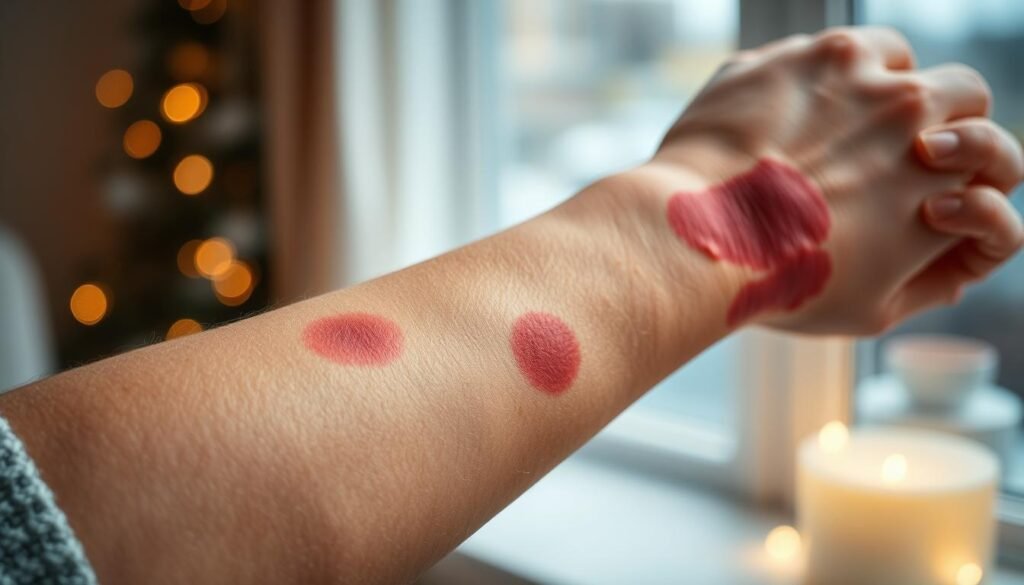
Nummular eczema is known for its round or oval-shaped patches, resembling coins. These patches typically appear on the arms, legs, hands, or torso.
This form of eczema is less common than atopic dermatitis but is more troublesome in winter. Dry air removes moisture from the skin, causing the patches to become inflamed, itchy, and sometimes crusty. The lesions can range from dime-sized to several inches in diameter.
Men experience nummular eczema more frequently than women, with symptoms often appearing in middle age or later. The exact cause is unclear, but dry skin, skin injuries, and poor blood circulation can contribute. Winter’s harsh conditions create the perfect environment for this type to worsen dramatically.
| Eczema Type | Primary Characteristics | Common Locations | Winter Aggravation Factors |
|---|---|---|---|
| Atopic Dermatitis | Intensely itchy, inflamed patches with genetic component | Inner elbows, behind knees, face, neck | Compromised skin barrier, increased moisture loss |
| Contact Dermatitis | Reaction to irritants or allergens, red blistering rash | Area of contact with trigger substance | Weakened skin barrier makes it vulnerable to irritants |
| Nummular Eczema | Coin-shaped circular lesions, crusty appearance | Arms, legs, hands, torso | Extremely dry air causes increased inflammation |
Knowing which type of eczema you have is the first step to managing it effectively. While all three types worsen in winter, each responds to different treatments. Getting a professional diagnosis ensures you get the right care for your specific condition.
Common Symptoms of Winter Eczema Flare-Ups
Winter eczema symptoms start quietly but grow over time. People often think minor skin changes are just dryness. But Winter Eczema Flare-Ups show clear signs as they get worse.
Spotting these signs early lets you use dry skin remedies before things get bad. At first, changes might seem small. But as winter goes on, they get more obvious. Knowing what to look for helps you tell if it’s just dry skin or eczema.
Rough, Reddened Areas
The first sign of Winter Eczema Flare-Ups is patches of skin that look and feel different. These areas are rough and inflamed. The skin loses its smoothness and looks irritated.
The color of these patches depends on your skin tone. Lighter skin might show pink to red patches. Darker skin might look purple, brown, or gray. The inflamed skin stands out against healthy skin.
These patches often show up on hands, arms, legs, and face in winter. The skin feels tight and uncomfortable, worse after washing or cold air. People say it feels like their skin is too small.
Without the right dry skin remedies, these patches grow and spread. What starts small can turn into big, irritated areas. Treating them early stops them from getting worse.
Persistent Irritation Sensations
The itching from winter eczema is hard to handle. It starts as a slight prickling that gets worse. What feels like a small itch can turn into a strong urge to scratch.
The itching gets worse at night, making it hard to sleep. This is because you’re more aware of your skin when you’re resting. Warm blankets can also make the itching worse.
Scratching damages your skin’s protective layer. It might feel good at first, but it makes things worse. This cycle makes Winter Eczema Flare-Ups get worse over time.
The itch can range from annoying to overwhelming. Some people feel like their skin is burning or crawling. Catching these symptoms early helps you treat them before they get out of hand.
Surface Breakdown and Texture Changes
As winter eczema gets worse, the skin’s texture changes a lot. You might see flakes and scales as the moisture barrier breaks down. These can be fine or big, depending on how bad it is.
Severe dryness can cause the skin to crack, leading to painful fissures. These cracks often appear on hands, fingers, and where skin flexes a lot. Cracked skin can let in infections.
Winter’s cold and indoor heating make moisture loss worse. Without the right dry skin remedies, the skin can’t hold onto moisture.
These advanced symptoms need quick attention. The broken skin barrier lets in irritants and bacteria. Treating cracks and scales early helps keep your skin healthy and prevents more problems.
Knowing how eczema progresses helps you act fast. Catching symptoms early and using the right treatments makes managing winter eczema much easier.
Environmental Triggers for Eczema
As winter comes, it’s key to know what makes eczema worse. The cold and indoor heat mix up in ways that hurt your skin. Knowing these factors helps you keep your skin safe all winter.
Things around you can really affect your skin. In winter, both cold air and indoor heat take away moisture. Using the right winter skincare tips can help a lot.
Cold Weather Effects
Freezing air is hard on skin with eczema. It makes your skin lose moisture fast. The outer layer of your skin, the stratum corneum, gets damaged because it can’t keep oils in.
Wind chill makes things worse. It pulls moisture from your skin and cuts off blood flow. This means your skin gets less oxygen and nutrients, making it harder to stay healthy.
Going from warm buildings to cold air stresses your skin. This stress can make eczema worse. Keeping your skin protected is very important in winter.
Indoor Heating and Humidity
Heating systems make your home very dry. They lower humidity to 10-20%, which is too low for healthy skin. This dry air takes moisture from your skin, making it dry and dehydrated.
Space heaters and fireplaces make the air even drier. They can drop humidity to almost zero in certain rooms. Being near these heat sources for a long time can make your skin dry and irritated.
Keeping humidity levels right is a key winter skincare tip. Use a hygrometer to check humidity levels. Here are some ways to manage humidity:
- Run a humidifier in bedrooms and often-used spaces to keep humidity at 30-50%
- Place water containers near heating vents to add moisture to the air
- Keep bedroom doors closed to keep humidity in
- Avoid overheating rooms, which makes the heating system run longer and dry the air more
Irritants and Allergens
Winter clothes can irritate your skin and make eczema worse. Wool, synthetic, and heavy fabrics rub against your skin and trap heat and moisture. This can cause itching and inflammation, mainly where clothes fit tight or rub.
Fragranced products are more of a problem in winter. People use them to moisturize, but they can actually make eczema worse. These chemicals can get into your skin and cause allergic reactions.
Indoor allergens are more common in winter. Dust mites and pet dander build up when homes are closed up. These allergens can get into your skin and cause inflammation.
Winter activities can also trigger eczema. Long, hot showers dry out your skin. Using harsh cleaners and eating certain foods can also make your skin react.
Knowing what triggers eczema in winter helps you avoid them. Making small changes at home, in your clothes, and in your daily routine can make a big difference.
How to Differentiate Eczema from Other Skin Conditions
It’s important to know the difference between eczema and other skin problems. Many conditions show similar signs like redness, scaling, and itching. This makes it hard for people to figure out what’s causing their winter skin issues.
Knowing the differences helps you talk better with doctors. But, these tips are not a substitute for a doctor’s diagnosis. Getting a professional evaluation is key because the wrong treatments can make things worse.
Many skin conditions look similar to eczema but need different treatments. Here are some key differences that doctors look for.
Thick Silvery Scales Signal Psoriasis
Poriasis has raised, well-defined plaques with thick silvery scales. These patches are different from eczema’s thinner areas. Psoriasis scales are more dramatic and layered than eczema’s flaky texture.
Poriasis often shows up on elbows, knees, lower back, and scalp. Eczema usually hits the inner elbows, behind knees, hands, and face.
Both conditions get worse in winter, but for different reasons. Psoriasis flares up with less sunlight and stress. Eczema gets worse with low humidity and cold. Knowing these patterns helps figure out which condition you might have.
Treatments for psoriasis and eczema are very different. Many remedies for eczema don’t help psoriasis plaques. This shows why getting the right diagnosis is so important before starting treatment.
Oily Yellow Scales Indicate Seborrheic Dermatitis
Seborrheic dermatitis has yellowish, greasy scales, unlike eczema’s dry patches. It mainly hits areas with lots of oil glands. The scalp, sides of the nose, eyebrows, ears, and upper chest are most affected.
Seborrheic dermatitis has waxy or oily flakes that stick to the skin or hair. Eczema makes dry, tight skin that cracks or oozes when very inflamed.
Facial involvement can confuse these conditions. Seborrheic dermatitis on the face shows up in specific patterns around the nose, eyebrows, and hairline. Eczema on the face affects broader areas like cheeks, eyelids, and neck.
Winter can make both conditions worse, but seborrheic dermatitis might get better with indoor heating. The dry skin remedies for eczema might be too heavy for seborrheic dermatitis.
Sudden Onset Marks Allergic Reactions
Allergic reactions show up quickly after exposure to a specific substance. This fast onset sets them apart from eczema, which develops over days or weeks. Hives, welts, or widespread redness often come with allergic reactions, along with intense itching.
Allergic reactions usually last only hours to a few days after the trigger is removed. Eczema lasts longer and has flare-ups and remissions.
Contact dermatitis, a type of allergic reaction, looks a lot like eczema. The main difference is knowing the specific irritant or allergen. Timing and location are key clues for figuring out if it’s an allergic reaction or an eczema flare-up.
Treatment for allergic reactions focuses on avoiding the trigger. Eczema treatment aims at keeping the skin barrier strong and controlling inflammation. The right treatment depends on accurate diagnosis.
Diagnosing skin conditions can be complex. What looks like winter eczema might actually be psoriasis, seborrheic dermatitis, allergic dermatitis, or a mix. Getting the right diagnosis is critical for effective treatment. Applying the wrong remedies can make things worse.
Recognizing Subtle Signs of Eczema
Eczema sends out early warning signs before the itching and redness get worse. These signs can appear days or weeks before a full flare-up. Spotting these changes early gives you a chance to use soothing eczema in winter strategies to prevent symptoms.
Many people think these early signs are just winter dryness or minor irritation. But, knowing the difference between normal dryness and eczema can protect your skin. Look for small, persistent changes that don’t go away with basic moisturizing.
It’s easy to miss small changes in your skin when you’re busy. But, these signs are the best opportunity for early management. Paying attention to your skin’s signals lets you act fast.
Texture Differences You Can Feel
Your fingertips can pick up on early eczema changes before you see anything. Affected areas might feel slightly rougher than the rest of your skin. This texture change usually happens before you see redness or obvious symptoms.
Regular skin checks can help you notice these changes. Gently run your fingers over areas prone to eczema. Look for any irregularities that last more than a day or two. You might find that certain patches feel tighter, like after bathing or in cold weather.
Skin may also lose its natural softness and flexibility as an early sign. Affected areas might feel stiff or less elastic when you move or stretch them. This loss of flexibility often means the skin’s moisture barrier is starting to break down.
These texture changes are often seen in common eczema spots:
- Inner elbows and behind knees
- Hands and fingers, specially between digits
- Neck and face areas
- Ankles and tops of feet
The feeling of tightness or discomfort may come and go at first. But, if these feelings get more persistent, it’s time to boost your moisturizing routine and other preventive steps.
Visual Changes in Skin Appearance
Color changes often signal the start of an eczema flare-up. Before the skin turns red, affected areas might look slightly different in color. These changes can be surprisingly subtle, even in the early stages.
You might see affected areas looking slightly darker, lighter, or having a faint pink tinge. These color shifts can change throughout the day, becoming more visible after hot showers or in warmer places. As the flare-up grows, these changes become more obvious and lasting.
It’s important to understand how color changes vary across different skin tones. On lighter skin, early eczema might show as faint pink or light red patches. But, on darker skin tones, inflammation can be very subtle.
People with medium to dark skin may notice these color changes:
- Purple or violet discoloration in affected areas
- Gray or ashen appearance on inflamed patches
- Brown or hyperpigmented regions
- Darker areas that don’t match surrounding skin tone
Noticing these color changes is key, as relying only on “redness” can lead to delayed recognition. Learning how eczema looks on your specific skin tone helps catch flare-ups early.
The edges of affected areas may also show subtle definition before the center becomes obviously inflamed. You might notice a slight border where the skin tone shifts, even if the difference seems small. These boundaries often become clearer as the flare-up progresses.
Tracking these subtle visual and textural changes over several days gives valuable insights. If you notice the same areas consistently showing these signs, using soothing eczema in winter techniques early can prevent symptoms from getting worse. Your skin’s early warning system works best when you’re paying attention.
Seasonal Patterns and Eczema
Winter eczema doesn’t just happen randomly. It follows patterns that change from person to person and place to place. Knowing when symptoms might get worse helps people take steps to prevent them.
Many people with eczema atopic dermatitis see their skin’s patterns in winter. By tracking these patterns, they find out what triggers their eczema. This helps them understand how to avoid flare-ups.
Preventing flare-ups in winter means knowing when and why symptoms start. By recognizing these patterns, people can start protecting their skin early. This can make winter eczema episodes less severe and shorter.
The Timeline of Winter Symptom Progression
Eczema symptoms often start in late fall as it gets colder. This is when skin loses moisture faster. Many notice their skin getting dry during this time.
By December and January, symptoms get worse. The cold air and indoor heat make it hard for sensitive skin. This is the toughest time for managing eczema.
Flare-ups can last into early spring. How long depends on where you live. Places with colder winters have longer flare-ups.
Knowing your eczema timeline helps you prepare to protect your skin before symptoms get bad.
Symptoms can get worse during cold snaps or dry weather. Watching your symptoms and the weather helps spot these changes. This way, you can act fast to prevent them.
Lifestyle Factors That Intensify Winter Eczema
Holiday stress can make eczema symptoms worse. The stress and activities weaken the skin’s defenses. Managing stress is as important as keeping skin moisturized in winter.
Diet changes during holidays can also trigger eczema. Foods high in fat, sugar, and alcohol can make symptoms worse. Being careful about what you eat helps keep your skin healthy.
What you wear can also affect your skin. Wool, synthetic fabrics, and layers can irritate sensitive skin. It’s important to choose soft, breathable materials, even when it’s cold.
Winter skincare tips include avoiding scented products. Candles, air fresheners, and perfumed gifts can irritate the skin. Limiting your use of these products helps protect your skin.
Traveling during winter can disrupt your skincare routine. Airplane air is dry, and different places have different climates. Having a travel skincare kit ensures you can take care of your skin no matter where you are.
Less exercise in cold weather can also affect your skin. Exercise helps keep the skin healthy by improving circulation. Staying active, even when it’s cold, is important for your skin.
Effective winter skincare tips involve understanding how environment, behavior, and symptoms interact. No single thing causes eczema. Knowing what triggers your symptoms helps you take better care of your skin.
Strategies for Managing Winter Eczema
Protecting your skin in winter is key to reducing eczema flare-ups. Cold weather makes eczema-prone skin more challenging. Adjusting your daily routine to retain moisture, cleanse gently, and wear protective clothing is essential.
Following winter skincare tips can significantly control symptoms. These strategies work together to shield your skin from harsh conditions. Adapting your routine to the cold months helps keep your skin healthy.
Effective Moisturization Methods
Proper moisturizing in winter is vital for managing eczema. The “soak and seal” method is effective. Apply moisturizer within three minutes of bathing to trap moisture in your skin.
Different moisturizers offer varying levels of protection. Ointments have the highest oil content and are best for very dry skin. Creams are easier to apply but may not be enough in harsh winter. Lotions provide light coverage but might not be enough.
Choosing the right ingredients in your moisturizer is important. Ceramides help restore your skin’s natural barrier. Hyaluronic acid attracts and holds moisture. Glycerin draws water into your skin, and petrolatum prevents moisture loss.
How often you moisturize is also critical. Dermatologists suggest moisturizing at least twice a day. Pay extra attention to dry areas and never skip moisturizing at night when your skin repairs best.
| Moisturizer Type | Oil Content | Best For | Winter Effectiveness |
|---|---|---|---|
| Ointments | 80% oil, 20% water | Severe dryness, thick skin areas | Excellent – maximum protection |
| Creams | 50% oil, 50% water | Moderate dryness, daily use | Very good – balanced formula |
| Lotions | 20% oil, 80% water | Mild dryness, large body areas | Fair – may need frequent reapplication |
| Balms | High oil with waxes | Hands, feet, targeted spots | Excellent – long-lasting barrier |
Choosing the right ingredients in your moisturizer is as important as selecting the right one. Avoid fragrances, alcohol, and harsh preservatives. Always test new products on a small area before using them widely.
Smart Bathing Approaches
Optimal bathing practices are key to managing eczema in winter. Use lukewarm water instead of hot showers. Limit your bath time to 5-10 minutes to prevent drying out your skin.
Choosing the right cleanser is important. Gentle, fragrance-free cleansers are best. Look for products labeled as soap-free or for sensitive skin.
Adding substances like colloidal oatmeal to your bathwater can soothe your skin. Bath oils create a protective film but can make your tub slippery.
How you dry your skin matters. Pat it gently with a soft towel instead of rubbing. Leave your skin slightly damp before moisturizing to lock in moisture.
Adjust your bathing frequency as needed. Some people bathe daily, while others bathe every other day to keep their skin moist.
Selecting Skin-Friendly Fabrics
Clothing choices affect your comfort with eczema in winter. Soft, breathable cotton is best for direct contact with your skin. It allows air circulation and warmth without irritation.
Layering your clothing is strategic. Wear cotton as the base layer, then add wool or synthetic materials. This keeps you warm without irritating your skin.
Loose-fitting clothes prevent heat and moisture buildup. Tight clothes can trap sweat and cause itching. Choose comfortable, loose-fitting clothes that allow air to circulate.
Washing your winter clothes requires special care. Always wash new clothes before wearing them. Use fragrance-free, hypoallergenic detergents and avoid fabric softeners.
Be careful with winter accessories. Scarves and gloves should be made of cotton or have cotton linings. This protects your skin from wool or synthetic materials.
Everyone’s skin reacts differently to fabrics. Some people tolerate bamboo or silk well, while others find them irritating. Pay attention to how your skin reacts and adjust your clothing choices.
Following these winter skincare tips consistently is key to managing eczema. Each strategy reinforces the others, creating multiple layers of protection. By focusing on moisturizing, bathing, and clothing choices, you can keep your skin comfortable during the cold season.
When to Seek Professional Help
Most people can handle mild eczema at home. But knowing when to see a doctor is key for your skin. Over-the-counter products and lifestyle changes help many. Yet, some cases need a doctor’s help.
Dermatologists and other specialists can give you stronger treatments. They can also check for complications that home care can’t handle.
Knowing the warning signs is important. Early professional intervention can stop problems from getting worse. This helps you know when to ask for medical help.
When Symptoms Won’t Go Away
If symptoms last more than two weeks, you might need a doctor. This is true even if you’ve been treating them at home. If your symptoms don’t get better or get worse, see a doctor.
There are specific situations that need a doctor’s attention:
- Expanding patches: Areas that keep growing despite moisturizing and avoiding triggers
- Severe itching: Itching that keeps you from doing daily activities, work, or sleep
- Treatment resistance: Symptoms that don’t respond to treatments that used to work
- Increased frequency: Flare-ups happening more often than usual
- Extended duration: Episodes lasting longer than usual for your condition
These signs might mean you need stronger treatments. Or, it could be another skin condition. Doctors can figure out if you need a change in treatment or something else.
Recognizing Infection Complications
Infected eczema is a serious problem that needs quick medical help. When you scratch, bacteria can get in and cause infection. Recognizing infection signs is key to getting timely treatment.
Watch for these signs:
- Increased pain or tenderness in affected areas beyond typical itching discomfort
- Warmth and swelling around eczema patches
- Oozing yellow or honey-colored fluid suggesting possible staph infection
- Crusting, scabbing, or pustules forming on damaged skin
- Red streaks extending outward from affected areas
- Fever or chills indicating systemic infection
- General feelings of illness or unusual fatigue
Bacterial infections in eczema-affected skin need quick antibiotic treatment. Without it, infections can spread and cause serious health problems. Any suspected infection should get immediate professional evaluation, as treatments alone can’t handle bacterial complications.
Finding the Right Professional Care
Knowing which healthcare provider to see is important for your care. Different specialists have different levels of expertise for skin conditions. Knowing the differences helps you make the best choice for your care.
Primary care physicians can give initial evaluations and basic treatments. They can prescribe mild topical medications and offer general advice. For simple cases, your family doctor might be enough.
Dermatologists specialize in skin conditions and offer detailed care for complex or persistent eczema. They provide advanced treatments, including stronger medications and specialized therapies. See a dermatologist when basic treatments don’t work.
Allergists are helpful when finding specific triggers is hard. They do tests to find out what’s causing your flare-ups. This helps you avoid those triggers.
Getting ready for your appointment helps make it more useful. Bring records of your symptoms, photos of flare-ups, and lists of treatments you’ve tried. This helps doctors understand your condition’s history and current state.
Questions to ask during your appointment include:
- What specific type of eczema do I have?
- Which winter eczema treatments do you recommend for my severity level?
- How long should I try each treatment before expecting results?
- What side effects should I monitor?
- When should I schedule follow-up appointments?
Emergency care becomes necessary for severe infection signs, widespread rash with fever, or intense pain. These situations need immediate help, not scheduled appointments. Most cases, though, allow for routine appointments.
Seeing a doctor gives you peace of mind and access to better treatments. They can confirm your diagnosis, rule out other conditions, and create a personalized plan. This partnership combines your self-care with medical expertise for the best skin health.
Treatments for Winter Eczema Flare-Ups
Finding the right treatment for winter eczema depends on several factors. These include how severe the symptoms are, where on the body they are, and how the person reacts to treatments. It’s also important to know if the goal is to manage a current flare-up or to keep eczema under control long-term. Effective treatments often tackle the underlying causes of eczema while also managing the symptoms.
Doctors tailor treatment plans to fit each patient’s needs. What works for one person might not work for another. This personalized approach helps ensure the best results for managing winter eczema.
Topical Corticosteroids for Inflammation Control
Topical steroids are often the first choice for treating moderate to severe eczema. They work by reducing inflammation and calming the immune system in the skin. People usually see symptom relief within a few days of starting treatment.
The strength of topical steroids ranges from mild Class VII to very potent Class I. Doctors choose the right strength based on how severe the eczema is, where it is on the body, and the patient’s age. For example, stronger steroids might be needed for thicker skin areas like the elbows, while gentler options are better for sensitive areas like the face.
Using topical steroids correctly is key to getting the most benefit while minimizing risks. Apply a thin layer to the affected areas only, following your doctor’s instructions carefully. Treatment usually lasts only as long as the flare-up does, not continuously.
There are concerns about side effects like skin thinning from using topical steroids. But, when used as directed by a doctor, they are both safe and effective. Many doctors recommend alternating steroid days with moisturizer-only days as symptoms improve.
Gradually switching to lower potencies helps keep eczema under control while reducing medication exposure. This approach prevents rebound flare-ups and protects the skin. Regular check-ups with your doctor ensure the treatment plan stays right for your changing needs.
Alternative Non-Steroidal Approaches
Non-steroidal options are great for those who can’t use steroids or need extra help. Topical calcineurin inhibitors like tacrolimus and pimecrolimus calm the immune system without steroid side effects. They work well on sensitive areas like the face and eyelids.
Crisaborole is another non-steroidal choice. This PDE4 inhibitor reduces inflammation in a way different from steroids. It offers mild to moderate symptom relief with few side effects for many people.
Over-the-counter options include colloidal oatmeal to soothe irritated skin. Moisturizers with ingredients like ceramides help repair the skin barrier. Mild hydrocortisone creams can handle minor symptoms without a prescription.
Antihistamines help with itching, but they don’t treat inflammation. Taking them before bed can help improve sleep during flare-ups. They work best as part of a complete treatment plan, not alone.
Combining treatments often leads to better results than using one alone. Pairing moisturizers with active medications addresses symptoms and skin barrier problems. This approach can reduce the need for treatments over time by preventing some eczema triggers.
Innovative Treatment Advances
New therapies are making a big difference in eczema care for tough cases. Dupilumab, a biologic injectable, targets specific inflammatory pathways in atopic dermatitis. It has greatly improved outcomes for moderate-to-severe cases not helped by usual treatments.
JAK inhibitors block inflammatory signals in different ways. Both topical and oral forms are available, giving flexibility in treatment. These medications quickly improve symptoms for many with persistent issues.
Phototherapy uses light to reduce inflammation in widespread eczema. It requires special equipment and sessions several times a week. It’s effective for those with extensive eczema who find it hard to use topical treatments.
Ongoing research is looking into new biologics targeting different inflammatory mechanisms. These studies promise more options for treatment-resistant cases. While not always the first choice, they offer important alternatives when standard treatments don’t work.
Clinical trials are also exploring new combinations of treatments and drug targets. Getting patients involved in research helps understand what works best for different types of eczema. These efforts are expanding the treatment options for future patients.
| Treatment Category | Mechanism of Action | Best Suited For | Administration Method |
|---|---|---|---|
| Topical Corticosteroids | Reduces inflammation by suppressing immune response | Moderate to severe flare-ups on body areas with thicker skin | Cream or ointment applied directly to affected areas |
| Calcineurin Inhibitors | Blocks inflammatory signals without steroid effects | Sensitive skin areas like face, eyelids, and ongoing maintenance | Topical cream or ointment for daily or twice-daily use |
| Biologic Medications | Targets specific inflammatory pathways in immune system | Severe cases resistant to conventional winter eczema treatments | Injectable medication administered every two to four weeks |
| JAK Inhibitors | Blocks multiple inflammatory signaling pathways simultaneously | Moderate to severe eczema requiring systemic control | Topical ointment or oral tablet depending on formulation |
Understanding your treatment options is key to managing winter eczema. Having open discussions with your dermatologist helps find the right approach for you. Regular updates about how you’re doing and any side effects ensures your treatment plan stays effective.
Managing environmental factors along with medication use can improve overall results. Addressing common eczema triggers like low humidity and harsh soaps can reduce the need for medication. This holistic approach supports healthier skin during the winter and beyond.
Conclusion: Staying Proactive with Eczema Care
Winter brings challenges to our skin that need constant attention and tailored plans. Taking control of eczema care turns reactive treatments into proactive steps.
Success lies in knowing your skin’s patterns and having a strong support network. Small daily habits lead to big improvements in your skin’s health.
Track Your Skin’s Winter Journey
Keeping a symptom diary is key to understanding your eczema. Note when flare-ups happen, what products you use, and any environmental changes.
This diary helps spot specific triggers for your skin. Regular tracking shows which winter prevention strategies work for you.
Check your skin daily for early signs. Catching small changes stops minor irritation from turning into big inflammation.
Celebrate your progress. Seeing improvements keeps you motivated through tough winter months.
Create Your Care Network
Share your eczema needs with your family. Explain why moisturizing is important in winter and how they can help.
Join online communities for tips from others. The National Eczema Association has forums and resources for support.
Find a dermatologist who gets your goals. Regular visits ensure your treatment plan keeps up with your needs.
Eczema management is an investment in your health. With knowledge on recognition and prevention, you can face winter with confidence and healthier skin.