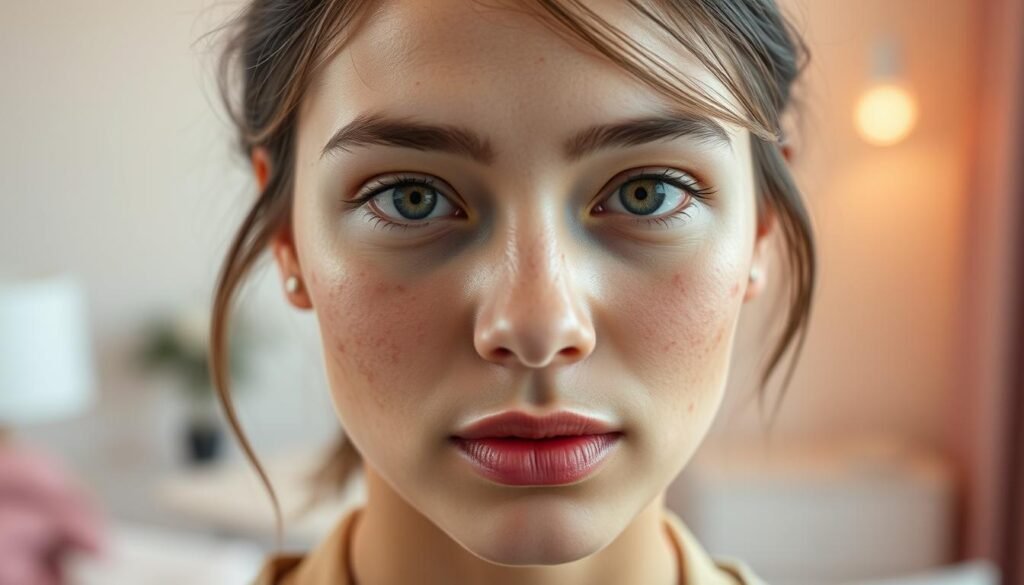
Nearly 85% of people with acne say stress is a big reason for their breakouts. This shows how much our feelings affect our skin. Stress doesn’t start acne, but it makes existing problems worse.
Your face often shows the first signs of stress. You might feel your heart racing and muscles tight inside. But stress acne is visible for all to see. A 2017 study found medical students’ acne got worse during exams when they were most stressed.
Stress and breakouts create a tough cycle. Stress makes your acne worse and healing slower, leading to more stress about how you look. Knowing this helps you take charge of your stress and skin health.
Key Takeaways
- Stress affects 85% of acne sufferers and can worsen existing breakouts
- Physical stress symptoms include rapid heartbeat, muscle tension, and visible acne on the face
- Stress-related acne creates a two-way cycle where breakouts cause emotional distress
- Medical studies confirm that high-stress periods directly correlate with increased acne severity
- Stress slows down your skin’s natural healing process, making breakouts last longer
- Understanding the stress-acne connection is the first step to breaking the cycle
Understanding Stress-Related Acne
Your skin tells a story about your inner state. When life gets overwhelming, your face might break out in ways that seem different from regular pimples. Stress-induced acne develops through complex biological processes that connect your mind and skin in surprising ways.
What is Stress-Related Acne?
Stress and acne share a direct relationship through your body’s chemical messengers. When you feel anxious or overwhelmed, your adrenal glands release cortisol into your bloodstream. This hormone affects multiple body systems including metabolism, blood sugar regulation, and sleep patterns.
Your skin responds to these changes by producing extra oil through sebaceous glands. Pores become clogged when this excess oil mixes with dead skin cells and bacteria. The result is inflamed bumps that appear during stressful periods in your life.
How Stress Affects Your Skin
Chronic stress creates a cascade of skin problems beyond simple breakouts. Your skin barrier weakens, making it harder to retain moisture and fight off infections. Wound healing slows down, meaning existing acne takes longer to clear.
Hormonal acne stress manifests through increased sensitivity and redness across affected areas.
The Role of Hormones in Acne Development
Stress triggers production of androgens, male hormones present in both men and women. These hormones stimulate oil glands and hair follicles to work overtime. The relationship between stress and acne intensifies when cortisol levels remain elevated for extended periods.
| Hormone | Effect on Skin | Result |
|---|---|---|
| Cortisol | Increases sebum production | Oily skin and clogged pores |
| Androgens | Stimulates oil glands | Enlarged pores and breakouts |
| Insulin | Affects cell turnover | Dead skin buildup |
Identifying the Symptoms
Understanding stress-related skin issues starts with knowing what they look like. Stress acne is different from regular acne. It’s more intense and often shows up suddenly when you’re stressed.
Common Symptoms of Stress-Related Acne
Stress acne is painful and inflamed. It feels tender to the touch. You might see many pimples at once, forming clusters of red spots.
These spots usually pop up on your forehead, cheeks, chest, back, and shoulders.
- Whiteheads – small bumps that stay closed under the skin surface
- Blackheads – open pores filled with debris that turn dark when exposed to air
- Papules – small, pink bumps that feel firm to touch
- Pustules – inflamed spots filled with white or yellow pus
- Nodules – large, solid lumps deep beneath the skin
- Cystic lesions – deep, pus-filled bumps that can cause scarring
Visual Signs to Look For
To spot stress acne, look for certain signs. The redness around each blemish is wider than usual. The skin looks more irritated, even where there are no breakouts.
| Symptom Type | Appearance | Common Areas |
|---|---|---|
| Inflammatory redness | Bright red, warm skin | Cheeks, forehead |
| Pustular breakouts | White-topped bumps | Chin, jawline |
| Deep nodules | Hard lumps under skin | Back, shoulders |
| Cystic formations | Large, painful swellings | Face, chest |
Spotting these symptoms early helps treat stress acne quickly. This prevents it from getting worse and reduces scarring risk.
Differentiating Between Acne Types
Not all breakouts are the same. Knowing the differences in acne types helps you figure out what’s causing your skin problems. Each type has its own signs that make it stand out. It’s key to know these differences to pick the best treatment and keep your skin healthy.
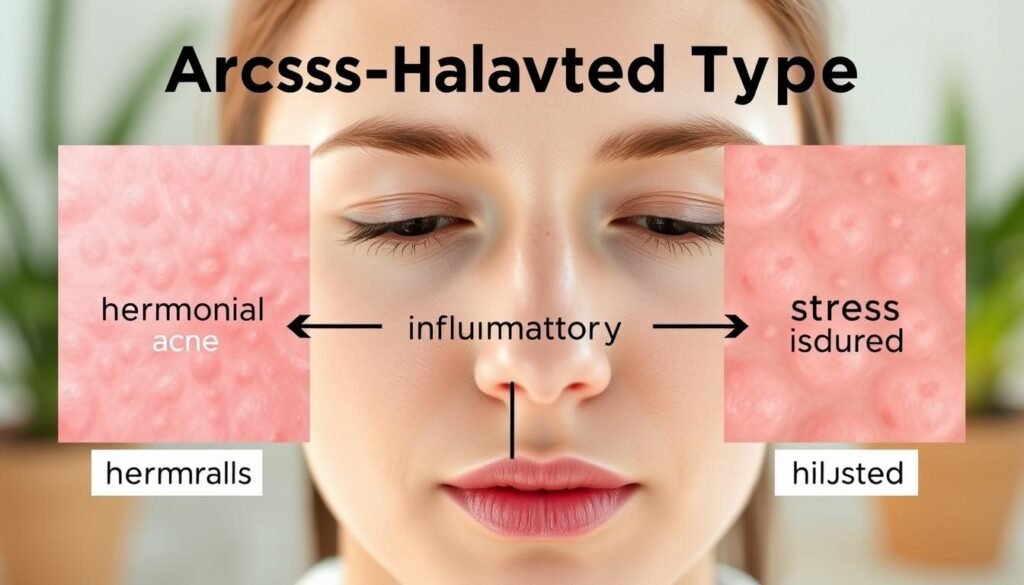
Stress-Related Acne vs. Hormonal Acne
Stress acne shows up as angry, inflamed bumps with lots of redness. It can appear anywhere on your face when you’re stressed. Hormonal acne, on the other hand, often pops up on the jawline and chin, during times like menstruation or pregnancy. Women on birth control might also see changes in their acne.
Stress-Related Acne vs. Cystic Acne
Cystic acne is more serious than stress acne. It forms deep under the skin, causing pain and pus. Stress can make it worse, but you need a doctor’s help to treat it. Stress acne, by contrast, is on the surface and heals faster.
Stress-Related Acne vs. Other Skin Irritations
Blackheads and whiteheads are milder than stress acne. Stress acne has more redness and swelling. Women, due to hormones and stress, get more stress acne than men. It’s different from allergic reactions or rosacea, which have their own signs and causes.
Key Triggers of Stress-Related Acne
Knowing what causes stress acne lets you control your skin better. Many emotional and lifestyle factors can lead to breakouts. By understanding these, you can find ways to manage stress and improve your skin.
Emotional Stress Factors
Things like personal relationships, work stress, and body image can affect your skin. Toxic friendships or feeling stuck at work can make your body produce more cortisol. This hormone makes your skin produce more oil.
Being on social media too much or watching scary news can also stress you out. This stress shows up on your skin, often around your jaw and chin.
Lifestyle Elements That Contribute
Not sleeping well or eating irregularly can lead to acne. Skipping meals or sleeping only four hours a night slows down your body’s healing. This makes it harder for your skin to repair itself at night.
Some foods, like dairy, can make acne worse. Dairy has hormones that make your skin produce more oil. Foods high in sugar, like ice cream, can also cause inflammation. Plus, family history and certain medications can make you more prone to acne.
*Stress-picking* is a bad habit that spreads bacteria and can scar your skin. To stop, you need to be aware of it and find ways to manage stress.
Importance of Skin Care Routine
Creating a consistent skincare routine is key to fighting stress acne. When stress makes your skin produce more oil and get inflamed, the right habits help a lot. A good routine protects your skin, helps it heal, and stops future breakouts.
Recommended Practices for Prevention
Begin with gentle cleansing twice a day using mild, non-comedogenic cleansers. Clean your face in the morning, evening, and after sweating from exercise. Lukewarm water is best – hot water can take away natural oils and make more oil.
Avoid harsh soaps, astringents, and rough scrub pads that can irritate your skin.
Regular hair washing is important if you have oily hair. Oil from your scalp can get on your face, mainly around the hairline and forehead. This simple step in your skincare for stress acne routine stops pores from getting clogged.
Products to Incorporate into Your Routine
Choose stress acne treatments with proven ingredients. Benzoyl peroxide kills bacteria and reduces oil. Salicylic acid and mandelic acid treat breakouts by unclogging pores and reducing inflammation. Retinoids calm inflammation, treat lesions, and prevent scarring.
Look for calming ingredients like lavender and chamomile for stressed skin. Products like CLEARSTEM’s HYDRAGLOW Stem Cell Moisturizer and CELLRENEW Collagen Stem Cell Serum fight acne and nourish the skin. CLEARITY mandelic acid treatment targets blackheads without harming sensitive skin.
When to Seek Professional Help
Many people handle stress-related acne with simple skincare and lifestyle changes. But, some cases need a doctor’s help. Knowing when to see a dermatologist can stop scarring and find the root cause of acne.
Signs Indicating a Need for Dermatologist Consultation
Your skin might be sending a message that it needs a pro. Look out for these signs that mean you should see a dermatologist:
- Deep, painful nodules or cysts beneath the skin surface
- Acne that leaves dark spots or scars after healing
- No improvement after 6-8 weeks of over-the-counter treatments
- Acne spreading to chest, back, or shoulders
- Emotional distress affecting daily activities
Importance of Professional Diagnosis
Board-certified dermatologists offer treatments not found in stores. They can give oral antibiotics like doxycycline to fight inflammation and slow bacteria growth. For severe acne, they might prescribe retinoids like isotretinoin (Claravis or Sotret), but women should avoid pregnancy during treatment due to birth defect risks.
Dermatologists might suggest hormone therapy for women with acne caused by hormone imbalances. They can also inject corticosteroids into painful cysts for quick relief. Each person’s skin responds differently, so a professional evaluation is key to finding the best treatment.
Lifestyle Changes to Reduce Stress
Making small changes in your daily life can help a lot. When you lower stress, your skin gets better too. Simple changes in your routine can improve your mental health and skin.
Stress Management Techniques
Deep breathing exercises can help when you feel stressed. Just breathe slowly and count to ten. This can lower the stress hormone that causes acne.
Meditation and yoga are great for stress. They mix physical activity with calmness. Even a few minutes of meditation in the morning can make your day better. Apps like Headspace or Calm can help you start.
Journaling can show you what stresses you out. The Five Minute Journal helps you be thankful and think about yourself. Writing before bed can clear your mind and help you sleep better.
The Impact of Exercise on Skin Health
Exercise changes how your body deals with stress and acne. It releases happy hormones and improves blood flow to your skin.
| Exercise Type | Stress Relief Benefits | Skin Health Impact |
|---|---|---|
| Morning Walks | Reduces cortisol naturally | Increases oxygen flow to skin |
| Swimming | Full-body relaxation | Gentle on sensitive skin |
| Strength Training | Builds confidence | Balances hormones |
Nature walks are good for both exercise and getting outside. They give you fresh air and sunlight. This boosts vitamin D and lowers stress hormones that cause acne.
Home Remedies and Natural Treatments
Natural stress acne treatments are gentle yet effective. Many kitchen or health store ingredients can calm inflammation and heal skin. They reduce redness, fight bacteria, and balance oil without harsh chemicals.
Soothing Ingredients to Try
Several natural ingredients are great for stress acne. Azelaic acid is a strong option that fights inflammation and unclogs pores. Fruit acids like glycolic and lactic acid gently remove dead skin cells.
Nicotinamide (vitamin B3) calms redness and strengthens the skin. Sulfur and zinc dry out pimples. Essential oils like lavender and chamomile reduce stress and smell great.
Studies show these scents help relax the mind and skin. They trigger relaxation responses in the brain.
DIY Masks for Stress Relief
Making your own face masks lets you control what touches your skin. These recipes target stress acne and promote relaxation:
| Mask Type | Main Ingredients | Benefits | Application Time |
|---|---|---|---|
| Calming Clay | Bentonite clay, chamomile tea | Draws out impurities | 10-15 minutes |
| Honey Oat | Raw honey, colloidal oatmeal | Soothes inflammation | 20 minutes |
| Green Tea | Matcha powder, aloe vera | Antioxidant protection | 15 minutes |
When picking skincare for stress acne, choose oil-free and noncomedogenic formulas. Water-based products prevent irritation. Botanical ingredients add extra soothing benefits.
The Role of Nutrition in Skin Health
What you eat is key to managing stress skin health. The right foods can calm inflammation or prevent breakouts. Choosing the right foods helps your body handle stress and supports clearer skin.
Foods That Promote Healthy Skin
Some foods act like internal skincare treatments. Fatty fish like salmon and mackerel have omega-3s that reduce inflammation. Sweet potatoes and carrots give beta-carotene, protecting skin cells. Green tea’s antioxidants fight stress-related skin problems.

Water is your skin’s best ally. Drinking eight glasses a day removes toxins and keeps skin cells hydrated. Fresh fruits and veggies give vitamins A, C, and E, repairing and boosting collagen.
| Food Group | Skin Benefits | Best Sources |
|---|---|---|
| Omega-3 Rich Foods | Reduces inflammation | Salmon, walnuts, chia seeds |
| Antioxidant Foods | Fights free radicals | Blueberries, spinach, dark chocolate |
| Probiotic Foods | Balances gut health | Greek yogurt, kimchi, kefir |
| Zinc-Rich Foods | Speeds healing | Pumpkin seeds, chickpeas, cashews |
The Link Between Diet and Stress
Sugar and processed foods raise blood sugar, leading to cortisol. This stress hormone increases oil and worsens acne. Cutting down on these foods and eating more whole grains keeps energy steady and skin clear.
Real Stories: How Stress Affects Skin
People dealing with stress-induced acne share their stories. Medical students in Jeddah saw how exams caused bad breakouts. This shows stress really affects acne.
Their experiences help others understand and handle their own stress-related acne.
Personal Experiences with Acne and Stress
CLEARSTEM CEO Danielle Gronich turned her acne battle into knowledge. She studied cellular biology and genetics. Now, she’s known as The Acne Guru®.
Her story shows how knowing the science behind acne helps find better ways to deal with it.
Adults also face acne due to stress. Work pressure leads to breakouts on the chin and jaw. Women see more acne during big life changes like moving or job changes.
These stories back up what doctors say: stress makes skin changes visible.
Tips Shared by Individuals Who Overcame It
Success stories offer useful tips:
| Strategy | Timeline | Results Reported |
|---|---|---|
| Cortisol-controlling supplements | 6-8 weeks | 70% reduction in breakouts |
| Setting work boundaries | 2-3 weeks | Less jaw tension and acne |
| Regular sleep schedule | 4 weeks | Calmer skin, fewer cysts |
Patience is key. Hormonal acne stress takes time to improve. Creating healthy boundaries helps protect emotional energy while skin heals.
Managing your expectations is also important. It prevents more stress that can make acne worse.
Conclusion: Finding Calm for Clear Skin
Managing stress-related acne takes time and understanding. Your skin shows how you’re doing inside. To get clear skin, you need to tackle stress and take good care of your skin.
Summary of Key Points
Stress acne happens when cortisol levels go up. This messes with your skin’s balance. Spotting symptoms early helps prevent worse breakouts.
Small daily changes can help a lot. Exercise, sleep, and a good skincare routine are key. Eating foods full of omega-3s and antioxidants also helps your skin.
Finding the right skincare and stress relief takes time. Some like tea tree oil or salicylic acid, while others need doctor’s help. Everyone is different. Try different things until you find what works for you.
Encouragement to Seek Help and Practice Self-Care
Your acne doesn’t define your beauty. Asking for help is a sign of strength. Dermatologists can give you a plan that works.
Mental health experts can help with stress. Apps like Headspace or Calm can help with meditation. Healing is slow, so be kind to yourself. With the right approach, you can get clearer skin.