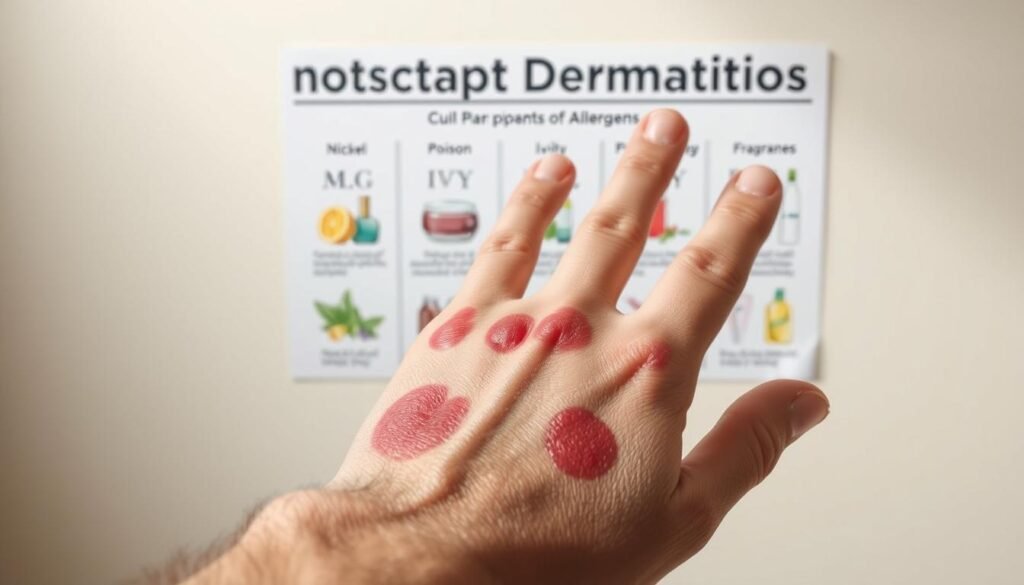
Nearly 15 million Americans get allergic reactions on their skin each year. Many find it hard to figure out what’s causing their skin issues. A skin rash can pop up suddenly or slowly over time.
Spotting early signs is key to feeling better and staying healthy. Subtle changes like a bit of redness or mild itching might seem small at first. But, these signs can get worse if not treated right away.
Seeing unexpected skin changes can be confusing. This guide will show you what to look for and when to see a doctor. You’ll learn about common symptoms, what might cause them, and how to handle skin irritation.
Medical Disclaimer: This content is for educational purposes only. It does not replace professional medical advice, diagnosis, or treatment. Always talk to a board-certified dermatologist or a qualified healthcare professional for the right advice and treatment.
Key Takeaways
- Approximately 15 million Americans develop allergic skin reactions annually, making early identification key for effective management
- Symptoms often start subtly with minor redness or itching before getting more noticeable
- Many skin conditions share similar traits, making self-diagnosis tricky
- Spotting early signs helps stop symptoms from getting worse and improves treatment results
- Getting a professional medical check-up is vital for accurate diagnosis and proper treatment planning
- Knowing common triggers and symptom patterns helps make better choices for your skin health
Understanding Contact Dermatitis and Its Causes
When your skin reacts badly to things like jewelry, makeup, or cleaning products, it might be contact dermatitis. This condition is common and affects many people. Knowing what causes it can help you avoid it.
Contact dermatitis happens when you touch certain materials or chemicals. It’s different from allergies that affect your whole body. This makes it easier to find out what’s causing your symptoms.
What This Skin Condition Really Means
Contact dermatitis is when your skin reacts to certain substances. This reaction is your body’s way of protecting itself. It can make your skin look different.
This condition affects the outer layers of your skin. Symptoms can show up quickly or take a few days. They can range from mild redness to painful blisters.
Substances that cause contact dermatitis break down your skin’s barrier. This lets inflammatory chemicals in. Your immune system or direct damage to your skin causes these symptoms.
Two Main Categories Explained
Contact dermatitis comes in two types. Knowing which one you have is important. Each type needs different ways to manage and prevent it.
Allergic contact dermatitis is when your immune system reacts to a substance. This happens after you’ve been exposed to it before. Your body becomes sensitized and reacts to it again.
Allergic reactions can happen suddenly, even after years of safe use. Common allergens include metals, fragrances, and rubber compounds. Even a little bit of the allergen can cause a big reaction.
Irritant contact dermatitis is different. It happens when chemicals or friction damage your skin. No immune response is needed. Harsh chemicals or repeated friction can cause it.
Irritant reactions happen faster than allergic ones. Things like strong acids, solvents, and detergents can cause it. People who work with their hands in wet environments are at higher risk.
The main difference is how they happen. Allergic reactions need prior exposure and involve your immune system. Irritant reactions can happen right away if the substance is harsh enough.
Substances That Commonly Trigger Reactions
Many everyday items contain substances that can cause contact dermatitis. Knowing what these are is key to managing your condition. Some substances are more common triggers than others.
Nickel is the most common metal allergen worldwide. It’s found in jewelry, belt buckles, eyeglass frames, and some foods. Many people get nickel sensitivity without knowing why they keep getting rashes.
Personal care products can also be triggers:
- Fragrances – found in perfumes, lotions, soaps, and cosmetics
- Preservatives – including formaldehyde-releasing agents and parabens
- Hair dyes – those with para-phenylenediamine
- Nail products – like acrylic monomers and hardeners
Latex rubber is another common allergen, mainly for healthcare workers. Natural rubber latex proteins cause allergic contact dermatitis. Synthetic alternatives are safer for many people.
Plant-based allergens are a big problem outdoors. Poison ivy, poison oak, and poison sumac have urushiol oil that causes severe reactions. Even a little bit can lead to big, itchy rashes that spread through touch.
Household and workplace chemicals also cause contact dermatitis. Cleaning products, industrial solvents, and adhesives damage skin. Without proper protection, repeated exposure increases your risk a lot.
Knowing what causes contact dermatitis helps you connect your environment to your skin symptoms. The next sections will show you how to recognize the signs of contact dermatitis.
Symptoms of Contact Dermatitis
Your skin sends clear signals when it reacts to allergens or irritants. These signs might seem minor at first. But recognizing them early helps you act before things get worse.
Changes in texture, color, or comfort may start subtly but become more obvious over time. What begins as slight roughness can turn into visible inflammation in hours or days. Knowing these signs helps you link them to possible triggers.
Visible Changes in Your Skin
The most obvious signs of contact dermatitis appear on your skin where you touched something problematic. Redness and inflammation usually show up first, making the area look pink or red. This color change often follows the exact pattern of where your skin touched the substance.
Dry or scaly patches develop as irritation gets worse. The skin becomes rough and flaky, sometimes with visible peeling. These patches may feel tight or uncomfortable, making it hard to move the affected area.
Small raised bumps or blisters can appear during acute reactions. These fluid-filled formations vary in size from tiny dots to larger bubbles. In severe cases, you might notice oozing or crusting when blisters break open.
Swelling of the affected skin adds another dimension to visible changes. The area may appear puffy or raised compared to surrounding skin. This swelling can make the skin feel stretched and sensitive to touch.
Recognizing patterns in your skin can give clues about the source of irritation. A linear rash suggests brushing against something like poison ivy. Circular redness on your wrist points to a watch or bracelet. Rectangle-shaped inflammation might indicate a reaction to a patch or bandage.
The Experience of Itching and Other Discomfort
Intense itching is the most bothersome symptom for most people with contact dermatitis. This sensation ranges from mild annoyance to severe disruption that interferes with sleep and concentration. The urge to scratch can become overwhelming, though scratching typically worsens the condition.
Burning sensations accompany many cases of dermatitis symptoms. Your skin may feel hot or stinging, similar to a mild sunburn. This discomfort intensifies when water, soap, or other substances touch the affected area.
Tenderness to touch makes everyday activities challenging. Clothing rubbing against inflamed skin causes pain or discomfort. Even gentle pressure from resting your arm on a surface can trigger unpleasant sensations.
A tight feeling develops as skin irritation progresses. The affected area feels constricted, as if the skin cannot move freely. This sensation becomes more noticeable around joints or areas that bend frequently.
Expected Timeline for Symptom Development
The timing of dermatitis symptoms depends on whether you experienced irritant or allergic contact dermatitis. Irritant contact dermatitis appears quickly, often within minutes to hours after exposure. Your skin reacts immediately to harsh chemicals, detergents, or other damaging substances.
Allergic contact dermatitis follows a delayed pattern, typically developing 24 to 48 hours after contact with an allergen. This delay occurs because your immune system needs time to recognize and respond to the triggering substance. Some people notice symptoms appearing even later, up to 72 hours post-exposure.
Symptom duration varies based on several factors. Most cases of skin irritation persist for two to four weeks when you successfully avoid the allergen or irritant. Continued exposure extends this timeline significantly.
Individual factors influence how long symptoms last. Severity of the initial reaction, your overall skin health, and treatment methods all play roles. Proper care and allergen avoidance help symptoms resolve more quickly.
| Symptom Type | Onset Time | Peak Intensity | Typical Duration |
|---|---|---|---|
| Irritant Reaction | Minutes to hours | Within 24 hours | 1-2 weeks with avoidance |
| Allergic Reaction | 24-48 hours | 3-5 days after exposure | 2-4 weeks with avoidance |
| Chronic Cases | Gradual over weeks | Fluctuates with exposure | Months without intervention |
| Acute Blistering | 12-48 hours | 48-72 hours | 2-3 weeks with treatment |
Understanding these timelines helps you gauge whether your condition improves as expected. Symptoms that persist beyond four weeks despite avoiding triggers warrant professional evaluation. Rapidly worsening dermatitis symptoms require medical attention to prevent complications.
How It Differs from Other Skin Conditions
Skin reactions can look very similar, but they have different causes. Many skin problems cause redness, itching, and irritation. It’s hard to treat them right without knowing the differences.
Knowing the exact condition is key. Each one needs a special treatment. What works for one might not work for another, even if symptoms look the same.
Distinguishing Contact Dermatitis from Eczema
Contact dermatitis is a localized skin reaction from touching something you’re allergic to. The rash only shows up where you touched the allergen. For example, if a necklace caused it, the rash will be right where the metal touched your neck.
Eczema is different. It often shows up in the same places like the elbows and knees. It looks the same every time it flares up.
Contact dermatitis happens fast, within hours or days. Eczema can flare up without a clear reason, like from stress or weather changes.
Eczema is more about your genes than contact dermatitis. If you have eczema, your family might have it too. Contact dermatitis is caused by things you touch.
How Psoriasis Differs from Contact Reactions
Psoriasis makes your skin thick and scaly. It looks different from the rash of contact dermatitis. Psoriasis skin feels dry and thick, not wet and blistered.
Psoriasis often shows up in the same places on both sides of your body. If you have a patch on your right elbow, you’ll likely have one on your left. Contact dermatitis doesn’t follow this pattern.
Psoriasis is caused by your immune system attacking healthy skin. Contact dermatitis comes from touching something you’re allergic to.
Similar Conditions That Cause Confusion
Seborrheic dermatitis looks like contact dermatitis but is caused by yeast. It shows up in oily areas like the scalp and face. It’s different because it’s about yeast, not allergens.
Fungal infections can look like contact dermatitis but have a clear border. They get better with antifungal treatments, not steroids.
Drug reactions can cause big rashes that look like contact dermatitis. But they cover more of your body and might include fever or swelling.
| Condition | Appearance | Location Pattern | Duration | Primary Cause |
|---|---|---|---|---|
| Contact Dermatitis | Red, itchy rash with possible blisters | Localized to contact area | Days to weeks with treatment | External allergen or irritant |
| Eczema | Dry, scaly patches with intense itching | Inner elbows, behind knees | Chronic with periodic flares | Genetic and environmental factors |
| Psoriasis | Thick silvery scales on raised patches | Elbows, knees, scalp (symmetrical) | Chronic autoimmune condition | Immune system dysfunction |
| Fungal Infection | Ring-shaped with raised border | Warm, moist body areas | Weeks without antifungal treatment | Fungal organism infection |
Seeing a dermatologist is key when you’re not sure about your skin. They use tests and their knowledge to figure out what’s wrong. This helps them give you the right treatment.
Trying to diagnose yourself can delay treatment. The wrong treatment can make things worse. Getting the right diagnosis is key to treating your condition.
Knowing the differences helps you notice important signs. This lets you give your doctor better information. They can then diagnose you faster and more accurately.
Identifying Potent Allergens
Finding out what causes your skin problems starts with knowing where these allergens hide. Many people unknowingly live with contact allergens that make their skin react. By tracking your exposures, you can find out what’s causing your skin issues.
Finding the cause takes time and careful watching. Most allergic reactions show up 12 to 48 hours after you come into contact with something.
Everyday Items That Trigger Reactions
Many things in your home, work, and personal care products can cause skin problems. Personal care items like shampoos, conditioners, and lotions often have fragrances and preservatives that can irritate your skin.
Cosmetics and makeup can also be tricky. Things like foundations, mascaras, and lipsticks might have nickel, cobalt, and other chemicals that can cause allergic contact dermatitis.
Metal allergies are common, with nickel being a big problem. It’s found in jewelry, watch bands, eyeglass frames, belt buckles, and clothes fasteners. Even a little bit can cause big reactions in people who are allergic.
| Allergen Category | Common Sources | Typical Reaction Sites | Exposure Frequency |
|---|---|---|---|
| Personal Care Products | Shampoos, soaps, lotions, cosmetics, perfumes | Face, hands, scalp, body areas where applied | Daily |
| Metals | Jewelry, watches, belt buckles, eyeglass frames, zippers | Neck, wrists, ears, waistline, behind ears | Daily to weekly |
| Occupational Chemicals | Latex gloves, hair dyes, cement, epoxy resins, cleaning agents | Hands, forearms, face (airborne exposure) | Daily (work-related) |
| Plants | Poison ivy, poison oak, poison sumac, chrysanthemums | Exposed skin with linear patterns | Seasonal or occasional |
| Household Products | Laundry detergents, fabric softeners, cleaning solutions, dishwashing liquid | Hands, body areas contacted by clothing | Daily to weekly |
Workers in many fields face skin problems due to their jobs. Healthcare workers often react to latex gloves and disinfectants. Construction workers are exposed to cement, adhesives, and epoxy resins that can cause allergic reactions.
Hairdressers and salon workers are often exposed to hair dye chemicals, like paraphenylenediamine. This chemical can cause severe allergic reactions in people who are sensitive to it.
Plant-based allergens can cause distinctive rashes. Poison ivy, poison oak, and poison sumac have urushiol oil that causes linear rashes. These rashes often show up in streaky patterns that reflect where the plant touched your skin.
Professional Testing for Allergies
Patch testing is the best way to find out what’s causing your skin problems. This test involves applying small amounts of possible allergens to your skin under adhesive patches. Dermatologists usually put these patches on your back, where they stay for 48 hours.
This process takes several visits to the doctor. At your first visit, the dermatologist applies a panel of common allergens. You need to keep the patches dry and avoid sweating.
After 48 hours, you go back for the first reading. The doctor removes the patches and checks your skin for reactions. A second reading happens 96 hours after the patches were applied to catch any delayed reactions.
Positive reactions show up as red, raised, or blistered areas under specific patches. These results tell you which substances are causing your allergic contact dermatitis. Your doctor will give you a list of things to avoid and suggest safer alternatives.
Some people need more tests, like expanded panels for specific work or personal care products. Bringing your own products to test can help find hidden triggers in your daily life.
Tracking Your Symptoms Systematically
Keeping a symptom diary is very helpful. It helps you figure out what’s causing your skin problems before or alongside professional testing. Start by writing down when your symptoms start, including the exact date and time.
Write down every product or material you came into contact with in the 48 hours before your symptoms started. Include personal care products, cleaning agents, foods you handled, plants you touched, and any new items you’ve added to your routine.
Also, note where on your body the reaction happened. This can give clues about what’s causing it. Reactions on your hands might mean cleaning products or work-related stuff. Facial reactions often point to cosmetics or things you breathed in.
Write down how long your symptoms lasted and what helped them go away. This helps tell if it’s an allergic reaction or just irritation. Irritant contact dermatitis usually gets better faster once you stop using the product.
Create categories in your diary to organize your information well:
- New products introduced: Any recently bought items, like cosmetics, detergents, or clothes
- Work-related exposures: Materials you handle at work or in hobbies
- Environmental factors: Plants, weather changes, or outdoor activities
- Dietary changes: New foods or supplements that might cause reactions through skin contact during preparation
- Medication changes: New topical or oral medications that could trigger sensitivity
Check your diary often to spot patterns. You might see that reactions happen after using certain products or doing specific activities. Share this info with your dermatologist to help with testing and treatment.
Take pictures of the affected areas. These photos help track how your symptoms change and how they react to avoiding certain things or treatments.
When to Seek Professional Help
Many cases of contact dermatitis get better with home care. But, some signs mean you need a doctor’s help. Knowing when to see a dermatologist is key to avoiding bigger problems and getting the right treatment. It’s about taking care of yourself, not overreacting.
Your skin’s reaction to allergens might be too much for home remedies. If your symptoms don’t get better or get worse, you need a doctor’s advice.
Recognizing Critical Warning Signs
There are times when you should see a dermatologist right away. Knowing these signs helps you take good care of your skin.
A severe or spreading rash needs a doctor’s attention. If it gets bigger in 24 to 48 hours, see a doctor.
If your symptoms last more than two to three weeks and you can’t find the cause, see a doctor. This means you might need stronger treatments than what you can buy over the counter.
See a doctor if blisters start oozing. Signs of infection like more pain, warmth, swelling, or pus mean your skin is in trouble. You need a doctor’s help.
Be careful if your skin reacts in sensitive areas. Contact dermatitis on your face, genitals, or big parts of your body needs a doctor’s care. These areas are very delicate.
- Symptoms that make it hard to do daily things or sleep
- Over-the-counter treatments not helping after a week
- Recurring reactions without knowing the cause
- Severe itching that makes you scratch all the time
- Thick, leathery skin from long-term inflammation
Value of Expert Medical Assessment
Dermatologists can give you a clear diagnosis. They use tests and exams to figure out what’s wrong. This helps them find the right treatment for you.
Doctors can find out what you’re allergic to with patch tests. This helps prevent future problems and improves your life a lot.
Doctors also check for other problems. Scratching too much can hurt your skin and let bacteria in. You need special treatment for that.
A dermatologist can tell if you have an allergic or irritant reaction. Knowing this helps them give you the best treatment.
Professional Care Options
Seeing a doctor opens up better treatment options than you can find on your own. Knowing what’s available shows how important professional care is.
Prescription-strength topical corticosteroids work better than what you can buy. They reduce inflammation and help your skin heal.
For very bad cases, doctors might prescribe stronger medicines. Oral corticosteroids or immunosuppressants might be needed for severe contact dermatitis.
Dermatologists can also offer special treatments for long-term problems. This includes phototherapy, wet wrap therapy, or new biologic medicines for tough cases.
Professional care means getting a plan made just for you. Your doctor will consider your allergies, lifestyle, and what you prefer. They’ll make a plan that works for you.
Doctors also keep an eye on how you’re doing and adjust your treatment as needed. This way, you always get the best care for your changing condition.
Getting professional help lets you take charge of your skin health. Early action can stop small problems from becoming big ones that need more treatment.
Treatment and Management Strategies
Identifying contact dermatitis is just the first step. Next, you need to find the right contact dermatitis treatment for your case. The right mix of treatments can help you feel better and prevent future problems. Knowing your options helps you work with your doctor to create a plan that’s just for you.
Topical Treatments for Relief
Topical medications are key in treating contact dermatitis. For mild cases, over-the-counter hydrocortisone cream can help. It reduces inflammation and itching when used as directed. This is a good first step for many people.
For more serious cases, your doctor might prescribe stronger corticosteroids. They come in different strengths for different areas of your body. This ensures the right treatment for your specific needs.
Calcineurin inhibitors like tacrolimus and pimecrolimus are good alternatives. They’re great for sensitive skin or long-term use. They fight inflammation without the side effects of long-term corticosteroids.
Barrier repair creams with ceramides help fix your skin’s protective layer. They support your skin’s natural defense. Using emollients and moisturizers often helps keep your skin moist and speeds up healing.
Cool compresses can also help right away. Just apply a clean, damp cloth to the affected area for 15-20 minutes. This can reduce inflammation and ease discomfort.
Oral Medications and Antihistamines
Antihistamines are important for managing symptoms. Sedating types can help you sleep better by reducing itching. They don’t cure inflammation but stop the itch-scratch cycle that can damage your skin.
For severe cases, your doctor might prescribe oral corticosteroids like prednisone. These powerful drugs are used for short periods to quickly control severe reactions. They work throughout your body to reduce inflammation.
Scratching damaged skin can lead to bacterial infections. If this happens, antibiotics are needed to clear the infection. Look out for signs like increased warmth, pus, or spreading redness.
Lifestyle Changes to Reduce Exposure
Making lifestyle changes can help your treatment work better. Wearing protective gloves when handling irritants can protect your skin. Choose gloves that match the substances you’re working with.
Switching to fragrance-free and hypoallergenic products can also help. Many products contain additives that can irritate sensitive skin. Always check the ingredient labels to make smart choices.
- Select jewelry made from surgical-grade stainless steel or other non-allergenic metals
- Use gentle, non-soap cleansers that won’t strip natural skin oils
- Avoid hot water that can further irritate inflamed skin
- Establish routines that minimize contact with identified triggers
- Apply moisturizer immediately after bathing to lock in hydration
Managing your body temperature is important. Hot showers and baths might feel good but can make inflammation and dryness worse. Using lukewarm water helps keep your skin’s moisture barrier intact.
Combining these strategies can help you feel better now and manage your condition long-term. Being consistent is key for the best results. Most people find that using a few methods together works better than one alone.
Preventative Measures to Consider
Protecting your skin from contact dermatitis can save you from a lot of discomfort. It’s smarter to prevent than to treat after the fact. Knowing your triggers helps you take steps to keep your skin healthy.
The key to contact dermatitis prevention is to know what to avoid. It takes some effort at first, but it becomes easier with time.
Eliminating Identified Triggers
Once you know what causes your skin to react, avoid it. This means changing your daily habits and surroundings.
Replace items that cause problems with safer ones. For example, switch to jewelry made from materials like surgical steel or titanium if nickel irritates you. Choose fragrance-free products to avoid skin irritation from fragrances.
Here are some common substitutions:
- Latex gloves with nitrile or vinyl alternatives in medical or cleaning situations
- Traditional cosmetics for hypoallergenic, dermatologist-tested ones
- Metal watch backs covered with clear nail polish or barrier tape
- Fabric softeners replaced with vinegar or fragrance-free dryer balls
- Standard detergents for dye-free and perfume-free ones
Cross-contamination is more important than you think. Even safe products can cause reactions if your hands are contaminated. Always wash your hands before touching your face or applying skincare.
Daily Habits That Protect Your Skin
Keeping your skin healthy makes it less likely to react to irritants. These habits should be part of your daily routine.
Use fragrance-free moisturizers often to keep your skin hydrated. This helps your skin resist irritants better. Look for products with simple ingredients like ceramides or glycerin.
Wear protective gear when handling chemicals or workplace irritants. Gloves are a good start, but make sure they don’t cause reactions. Use cotton liners under rubber gloves for extra protection.
Rinse your skin quickly if you think it’s come into contact with allergens. This can prevent or lessen reactions. Use lukewarm water and gentle, unscented cleansers.
Be gentle with your skin to avoid damaging it. Harsh products can make your skin more prone to irritation. Pat your skin dry instead of rubbing it vigorously.
| Protective Practice | Frequency | Key Benefit |
|---|---|---|
| Moisturizer application | 2-3 times daily | Strengthens skin barrier function |
| Protective glove use | During exposure tasks | Creates physical barrier to allergens |
| Immediate skin rinsing | After possible contact | Removes allergens before absorption |
| Gentle cleansing routine | Daily | Preserves natural skin protection |
Mastering Product Ingredient Lists
Learning to read labels helps you make better choices for your skin. This turns you into an active protector of your skin health.
Look out for common allergens in different forms on labels. Formaldehyde-releasing preservatives might be listed as quaternium-15 or DMDM hydantoin. Fragrances are often hidden under terms like “parfum,” “perfume,” or “fragrance” without listing specific chemicals.
Other ingredients to watch for include:
- Methylisothiazolinone (MIT) and methylchloroisothiazolinone (MCI)
- Parabens (methylparaben, propylparaben, butylparaben)
- Cocamidopropyl betaine in shampoos and cleansers
- Propylene glycol in cosmetics and medications
- Lanolin in moisturizers and ointments
Use resources like the American Contact Dermatitis Society’s allergen database to identify allergens. Many substances have multiple names, making it hard to spot them without help.
Download allergen-identification apps on your phone for quick checks while shopping. These apps let you scan barcodes or search ingredient lists to spot triggers before buying.
Prevention needs attention, but it gets easier with practice. Spending time on labels and making smart choices leads to healthier, clearer skin. You take control of your condition instead of being at its mercy.
Even “natural” or “organic” products can have strong allergens. Ingredients like tea tree oil or lavender can cause reactions. Never trust a product just because it’s marketed as safe.
Home Remedies for Mild Cases
For mild cases of contact dermatitis, several safe home remedies can ease discomfort and promote healing. These natural approaches work best when symptoms remain limited to small areas and cause minimal disruption to daily life. Understanding which remedies offer genuine benefits helps you make informed choices about self-care.
Home treatments should complement professional medical advice. They provide a first line of defense against minor reactions while you monitor your condition.
Natural Ingredients to Soothe Skin
Several natural substances offer relief from irritation without harsh chemicals. Colloidal oatmeal baths stand out as one of the most effective options for reducing inflammation and itching. Add colloidal oatmeal to lukewarm bathwater and soak for 15 to 20 minutes to experience its anti-inflammatory properties.
Aloe vera gel provides cooling relief when applied directly to affected areas. Choose pure formulations from fresh plant leaves or products without added fragrances or alcohol. The natural compounds in aloe vera support skin healing while reducing redness.
Coconut oil delivers excellent moisturizing benefits with mild antimicrobial properties. Apply a thin layer to irritated areas to lock in moisture and protect the skin barrier. People with coconut allergies should avoid this remedy entirely.
Cool chamomile tea compresses offer another gentle option for reducing inflammation. Brew chamomile tea, let it cool completely, then apply it to affected skin using a clean cloth. The soothing properties of chamomile can calm minor reactions effectively.
Important precaution: Always test any new substance on a small patch of skin first. Even natural ingredients can trigger reactions in sensitized individuals. Avoid apple cider vinegar on broken skin, as it may cause further irritation despite popular recommendations.
Lifestyle Modifications
Simple daily adjustments can significantly improve your comfort level and support healing. These changes create an environment where your skin can recover more quickly.
- Clothing choices: Wear loose, soft, breathable cotton clothing that doesn’t rub against affected areas
- Temperature control: Keep room temperatures cool as heat and sweating worsen itching
- Stress management: Practice relaxation techniques like deep breathing or meditation, as stress can exacerbate skin conditions
- Nail care: Keep fingernails short and clean to minimize damage from unconscious scratching
- Hydration: Drink plenty of water throughout the day to support overall skin health and healing
These modifications work synergistically with topical remedies. Creating a healing-friendly environment allows your body’s natural recovery mechanisms to function optimally.
Consider keeping a journal to track which lifestyle changes produce the most noticeable improvements. This information becomes valuable if you need to consult a healthcare provider later.
When Home Remedies Are Appropriate
Home approaches suit only specific situations involving mild reactions. Understanding the boundaries of self-treatment helps you recognize when professional intervention becomes necessary.
Appropriate scenarios include minimal symptoms confined to small areas, mild redness without severe swelling, and itching that remains manageable without significant sleep disruption. These conditions suggest a minor reaction that may respond well to home care.
Seek professional help if:
- Symptoms worsen or spread despite home treatment
- No improvement occurs within three to five days
- Signs of infection develop, such as increased warmth, pus, or fever
- The skin rash significantly impacts your quality of life or ability to work
- Facial involvement or reactions near eyes require immediate attention
Home remedies should never delay necessary medical care. They serve as a bridge for very mild cases while you monitor your condition carefully.
Trust your instincts about severity. If something feels wrong or symptoms seem disproportionate to the exposure, consulting a healthcare provider provides peace of mind and prevents complications. Self-treatment works best when combined with careful observation and realistic expectations about what home care can achieve.
Addressing Persistent Cases
Chronic skin inflammation from allergens needs a different approach than quick flare-ups. If symptoms last for weeks or months, despite treatment, it’s a complex issue. Persistent cases require patience and systematic investigation instead of giving up.
Understanding why allergic contact dermatitis becomes chronic is key. Several factors can keep your skin condition active, even when you avoid known triggers.
When Dermatitis Becomes a Long-Term Challenge
Some people keep getting reactions, even when they try to avoid known allergens. Ongoing low-level exposure to unknown substances often causes persistent symptoms. You might be getting small amounts of the allergen from products you didn’t suspect.
Having allergies to many substances makes avoiding triggers hard. If you’re allergic to several things, it’s tough to keep all of them out of your life. Each time you’re exposed, the inflammation starts again.
Your skin barrier might not fully recover from repeated inflammation. A weakened barrier lets irritants and allergens in more easily, creating a hard cycle to break. Hand dermatitis tends to be chronic because hands are always exposed to water, soaps, and irritants.
Some people develop “angry back” syndrome. This is when the skin becomes too sensitive after repeated exposure. Your immune system stays alert, reacting strongly to small amounts of allergens.
Finding the Right Medical Specialist
Complex cases need doctors who specialize in tough skin conditions. Dermatologists who focus on contact dermatitis have the skills to find unusual allergens and manage tough cases. They keep up with new allergens on the market.
Allergists do more testing than just patch panels. They check for other allergies that might affect your condition. Sometimes, allergies in the air or food can make your immune system more reactive.
Occupational medicine specialists deal with work-related allergies. They know about workplace rules and can suggest ways to protect you. These doctors help you talk to your employer about changes you need.
Tertiary care centers with specialized clinics offer the best care. They have a wide range of patch tests, including rare allergens. Expert advice at these centers can find triggers that standard tests miss.
Exploring Advanced Medical Treatments
When usual treatments don’t work, there are advanced options. Phototherapy uses light to reduce inflammation in chronic cases. It takes many sessions over weeks but can help a lot.
Systemic immunosuppressants are another choice for severe cases. Medications like cyclosporine or methotrexate calm the immune system. But, they need careful monitoring with blood tests.
- Phototherapy sessions reduce skin inflammation through controlled UV light exposure
- Cyclosporine suppresses immune system activity systemically
- Methotrexate decreases inflammatory cell production
- Biologic therapies target specific immune pathways
- Comprehensive occupational interventions modify workplace exposures
New biologic therapies are promising for severe cases. Researchers are looking into their use for atopic and contact dermatitis. These drugs target specific immune pathways, not just suppressing immunity.
Comprehensive occupational interventions do more than just protect you. They might include changing your job, work processes, or using safer materials. In rare cases where work exposures can’t be controlled, career counseling helps find new jobs.
Working with specialists gives you access to these advanced treatments and the knowledge to use them safely. Your healthcare team can create a plan that fits your specific situation and sensitization pattern.
The Psychological Impact of Skin Conditions
Living with persistent dermatitis symptoms can really affect your mental health. While we often talk about the physical signs like redness and itching, the emotional side is just as important. People with chronic skin issues often face mental challenges that impact their daily life as much as the rash.
Understanding these emotional effects helps validate your experiences. It encourages a more complete approach to managing your condition. Your mental health is just as important as your physical symptoms when dealing with any chronic condition.
The Emotional Toll of Living with Dermatitis
Visible skin reactions can cause real emotional challenges. When dermatitis shows up on your hands, face, or neck, you might feel self-conscious. This can make you avoid activities you love or stay away from social events.
The constant itching is also a big psychological burden. It can interrupt your work and disturb your sleep. Sleep problems then lead to fatigue, irritability, and mood changes that affect your relationships and work.
Many people feel frustrated and helpless when they have to stop using favorite products or hobbies because of allergies. The unpredictability of reactions creates ongoing anxiety about trying new things or going to new places.
When allergies develop to substances you used to tolerate, it can feel like your body is betraying you. This can make you feel like you’re “broken” or defective.
Research shows that chronic skin conditions are linked to higher rates of anxiety and depression. These emotional reactions are normal responses to real challenges, not signs of weakness or overreaction.
Building Strong Support Networks
Connecting with others who understand your challenges can make a big difference. Support systems offer practical help, emotional support, and a sense of not being alone.
Consider exploring these support options:
- Support groups: Both online and in-person groups connect you with others facing similar challenges
- Open communication: Share honestly with family and friends about how the condition affects you
- Family involvement: Get your household members involved in identifying and avoiding triggers
- Workplace accommodations: Talk to your employer or teacher about making adjustments to help you
- Healthcare partnerships: Find doctors who take your emotional concerns seriously
Don’t hesitate to talk about the emotional impact during medical appointments. Good healthcare providers understand that managing chronic conditions means addressing both physical and emotional needs.
Practical Strategies for Mental Wellness
Developing effective coping mechanisms helps you stay mentally balanced while managing your skin condition. These strategies work alongside medical treatments to improve your overall quality of life.
Cognitive behavioral techniques help you manage the urge to scratch and reduce anxiety about symptoms. These methods teach you to recognize and change thought patterns that increase distress.
Mindfulness and relaxation practices reduce stress that can worsen dermatitis symptoms. Simple breathing exercises, meditation, or progressive muscle relaxation take just minutes daily but provide big benefits.
| Coping Strategy | Application Method | Expected Benefit | Best Used When |
|---|---|---|---|
| Cognitive Restructuring | Challenge negative thoughts about your condition with balanced alternatives | Reduced anxiety and improved self-image | Feeling overwhelmed or socially anxious |
| Mindfulness Meditation | Focus on present moment without judgment for 5-10 minutes daily | Lower stress levels and better symptom management | Daily practice prevents stress buildup |
| Distraction Techniques | Engage hands in activities when itching becomes intense | Reduced scratching and skin damage | During flare-ups or healing periods |
| Gratitude Practice | List three positive aspects of life unaffected by dermatitis | Maintained perspective and emotional balance | When condition feels all-consuming |
Focus on the parts of your life that aren’t affected by your skin condition. This helps prevent dermatitis from defining your whole identity or dominating your thoughts.
Celebrate small victories in your management journey. Successfully identifying a new trigger, finding a safe product alternative, or making it through a social event without anxiety all deserve recognition.
If you’re feeling persistent sadness, loss of interest in activities, significant sleep disruption beyond itching, or thoughts of self-harm, seek professional help. Therapists experienced with chronic illness can provide specialized support for the unique challenges you face.
Managing contact dermatitis effectively requires attending to both your physical symptoms and emotional wellness. By acknowledging the psychological impact and actively building coping skills and support networks, you create a more complete foundation for living well with this condition.
Conclusion: Taking Control of Your Skin Health
Managing skin reactions starts with recognizing the signs and understanding your triggers. You now have the tools to identify and protect yourself from future flare-ups.
Essential Points to Remember
Contact dermatitis happens when your skin meets specific irritants or allergens. It shows up as red, itchy patches where contact occurred. Symptoms usually appear within hours or days of exposure.
Identifying your triggers takes careful observation. Sometimes, you need patch testing to find out exactly what causes it.
Preventing contact dermatitis means knowing what affects your skin. Reading product labels and keeping a symptom diary helps. Simple changes, like switching soaps or wearing protective gloves, can make a big difference.
Using Information to Your Advantage
Understanding your skin condition puts you in control. You can make informed choices about products and recognize when symptoms need attention. This knowledge helps you advocate for the right care and treatment.
Getting Professional Support
Skin specialists offer valuable expertise for persistent or severe reactions. Dermatologists provide accurate diagnosis, allergy testing, and personalized management plans. Seeking professional guidance shows wisdom, not weakness.
Your skin health affects your daily comfort and confidence. Taking steps to understand and manage contact dermatitis prevention improves your quality of life. Whether you start with simple avoidance strategies or schedule a medical consultation, each action moves you toward healthier skin.