
Up to 10% of hospital patients get a drug-related skin reaction. Many cases cause lasting color changes that are hard to spot at first. If you notice a new patch, streak, or spot that won’t fade, it might be from a drug. This guide will help you spot Skin Discoloration from Medications early and what to do next.
Medication-induced skin discoloration can show up as brown, gray, blue, red, or pale. It might follow a rash, hives, or peeling. In darker skin tones, signs can look darker or ash-gray, making them harder to notice.
Drug-related skin changes can start days to weeks after starting a new medication. Some reactions happen right away, while others appear long after the rash fades. Learning to identify drug-induced pigmentation means tracking when it started, noting color and texture changes, and checking if spots are in sun-exposed areas.
If you notice changing moles, fast-spreading patches, or painful blisters, get urgent care. Many rashes get better when the medication stops. But severe reactions might need epinephrine, diphenhydramine, or corticosteroids. Acting fast is key to protect your skin and health.
Key Takeaways
- New or changing patches after starting a drug may signal medication-induced skin discoloration.
- Color shifts vary by skin tone; gray or deep brown spots are common in darker complexions.
- Track timing: note when the drug began and when the discoloration appeared.
- Postinflammatory marks can linger after rashes, hives, or peeling resolve.
- Stop suspected triggers only under medical guidance; urgent symptoms need prompt care.
- Use United States skincare guidance to recognize medication-related skin discoloration early.
Understanding Skin Discoloration
Skin tone can change for many reasons. These changes need careful attention. In the United States, doctors say to see a doctor early if new skin changes appear.
Clear language and accurate definitions help people notice small changes early. This way, they can catch issues before they get worse.
What Is Skin Discoloration?
Skin discoloration is when the skin’s color changes. It can become darker, lighter, or change to red, brown, gray, blue, or violet. Changes can come from birthmarks, infections, inflammation, or tumors.
Rashes can also change the skin’s color and texture. In the United States, drug-induced skin discoloration is a common issue. It can cause redness, bruising, or patches that stay after the skin heals.
Types of Skin Discoloration
There are three main types: hyperpigmentation, hypopigmentation, and depigmentation. Hyperpigmentation makes areas darker. Hypopigmentation makes them lighter. Depigmentation means almost no pigment.
After rashes, the skin can stay discolored. In darker skin tones, redness might look dusky or purple. This makes it important to use good lighting and look closely.
- Transient changes: redness, hives, or dusky patches that fade as the trigger resolves.
- Persistent changes: lingering dark or light marks after inflammation settles.
- Severe outcomes: rare, extensive color loss after intense reactions.
Some discoloration is caused by medications. Medications can leave the skin gray, brown, or blue. These changes can happen on the face, shins, nails, or mucosa.
Causes Behind Skin Discoloration
Many things can cause skin discoloration. These include inflammation, immune reactions, infections, vascular changes, and tumors. Medications can also cause it, through allergic or nonallergic reactions.
Melanocytes, the cells that make pigment, can change in response to injury or inflammation. This is why rashes can leave dark or light marks. In the United States, it’s important to recognize these changes, as they can signal medication side effects or other issues.
- Allergic drug eruptions that start as red or violaceous patches and later darken.
- Nonallergic pathways that deposit medication byproducts in the skin.
- Chronic inflammation that alters pigment distribution over time.
Seeing a doctor early for skin discoloration is important. Keeping a medication diary and taking photos under consistent light can help find the cause.
Medication-Induced Skin Changes
Some drugs can change your skin tone or cause rashes. These changes can range from a light tan to deep, lasting spots. Spotting these changes early helps you and your doctor avoid unnecessary worry.
Patterns matter. A widespread rash might be a drug reaction. A single spot that comes back in the same place is another sign. Both can fade once you stop the drug, but some marks may last for weeks.
Common Medications Linked to Discoloration
Many drugs can change your skin color. Antibiotics like minocycline and doxycycline can cause spots. Antimalarials, such as hydroxychloroquine, can darken your skin.
Heart drugs like amiodarone can make your skin gray. Isotretinoin and topical retinoids can make your skin red. Some drugs, like NSAIDs, can cause fixed drug eruptions.
How Medications Affect Skin Appearance
Drugs can affect how your skin looks by changing melanocytes and blood vessels. Some drugs deposit pigments in your skin, causing color changes. Others can cause inflammation, leading to lasting color changes.
When you notice a rash, remember when it started and where. A widespread rash might itch and start on your trunk. A single spot that comes back in the same place is another sign. Severe signs include blisters, peeling, and pain in your mouth.
| Pattern | Typical Triggers | Onset & Distribution | Key Visual Cues | What Often Helps |
|---|---|---|---|---|
| Morbilliform drug eruption | Antibiotics, anticonvulsants, allopurinol | Days after start; symmetric, begins on trunk | Pink-red macules and papules, pruritus | Stop suspect drug; soothing emollients; medical review |
| Fixed drug eruption | NSAIDs, antibiotics | Hours to days; recurs at same site | Well-circumscribed dusky plaque; postinflammatory dark spot | Avoid culprit; barrier care; clinician confirmation |
| Photo-distributed discoloration | Amiodarone, doxycycline, hydrochlorothiazide | Weeks to months; sun-exposed areas | Gray-brown or blue-gray tone; sharper lines | Photoprotection; assess need to switch medication |
| Lichenoid drug changes | ACE inhibitors, beta-blockers, NSAIDs | Gradual; often photodistributed | Violaceous papules; possible residual dyspigmentation | Review regimen; topical steroids under guidance |
| Pustular pattern | Antibiotics, calcium channel blockers | Acute; flexures and widespread | Numerous sterile pustules on red skin | Urgent assessment; stop trigger; supportive care |
Note: Any rapid swelling, widespread blistering, or painful skin needs immediate care. Early evaluation supports safer choices and limits lasting color change from medicines affecting skin color.
Recognizing Symptoms of Skin Discoloration
Small changes in skin color or texture can be hard to notice at first. Look at your skin in natural and indoor light to spot changes early. Keep track of when new marks appear, where they spread, and if they itch or sting after taking medication.
Tip: Keep a simple log with dates, products like acetaminophen, ibuprofen, amoxicillin, or isotretinoin, and notes on any drug-related skin changes symptoms you observe.
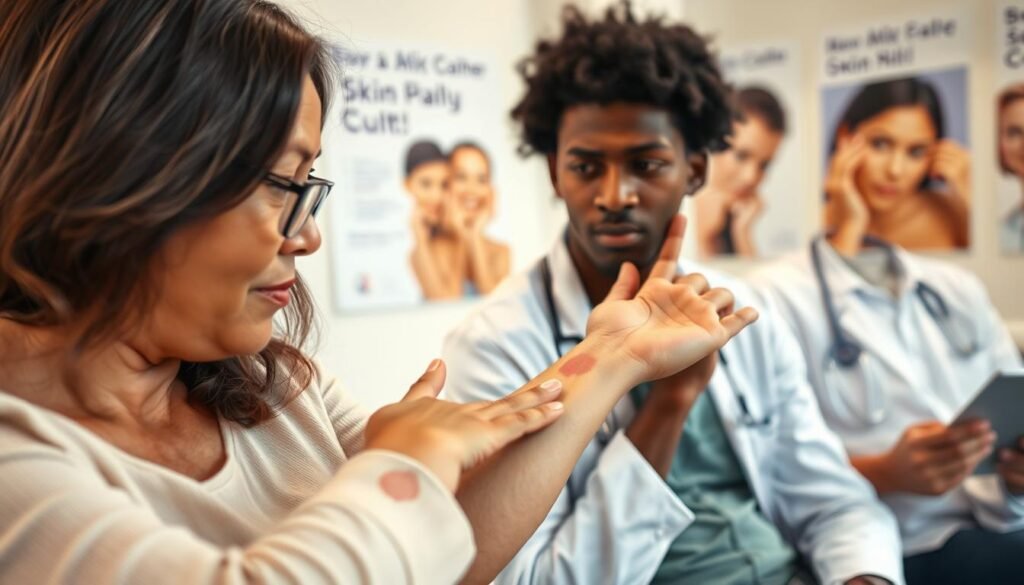
Unusual Color Changes
Look out for color changes from drugs that look dusky, gray-brown, or violaceous. In darker skin tones, redness may appear deep purple instead of bright red. You might see round areas that return to the same spot after each dose, sometimes with a central blister.
Sharp borders and strong contrast can help identify side effects of medications on skin color. After a flare fades, dark or light patches may stay for weeks.
Texture Alterations
Texture changes from medications can feel firm, puffy, or tight. Some reactions create small, non–hair-based pustules on thickened red skin. Others lead to flat-topped, firm bumps that are slow to resolve.
If the surface starts to blister, peel, or lift, stop cosmetic actives and note the timing. These clues help you recognize medication-induced skin discoloration alongside shifts in feel.
Sensitivity and Irritation
Drug-related skin changes symptoms often include itching, burning, or tenderness that worsens with heat or friction. Stinging after sunscreen or cleanser can signal a weakened barrier.
Painful areas, hives, or rapid peeling suggest a more intense response. Pair these sensations with any visible color changes from drugs to identify side effects of medications on skin color without delay.
| Visible Sign | Typical Feel | What to Note | Why It Matters |
|---|---|---|---|
| Dusky or violaceous patches | Tender or warm | Onset after dose; sharp borders | Helps recognize medication-induced skin discoloration |
| Recurrent round dark spots | May sting; occasional central blister | Same location each time | Links color changes from drugs to repeat exposure |
| Pustules on thickened red skin | Firm, tight, or puffy | Nonfollicular pattern | Signals texture changes from medications |
| Blistering or peeling | Painful, raw | Speed of spread; areas involved | Key drug-related skin changes symptoms that need prompt attention |
| Lingering dark or light marks | Smooth or slightly rough | Fade rate over weeks | Helps identify side effects of medications on skin color over time |
Role of Seasonal Changes on Skin Tone
Changes in temperature, light, and humidity can change how colors look on your skin. These changes can also affect how medications show up on your skin. By paying attention to these changes, you can better understand how seasons impact your skin’s color.
Seasonal Allergies
Spring and fall pollen can make your skin inflamed. If you’re also dealing with allergies and medication rashes, it might be harder to tell what’s causing the redness and hives. This can make it tricky to figure out if it’s an allergy or a medication reaction.
On darker skin, swelling can make contrast less noticeable. On lighter skin, red or pink colors might stand out more. Keeping track of itchiness, timing, and what triggers it can help you tell apart seasonal changes from medication effects.
UV Exposure
Sunlight gets stronger in spring and summer, changing how colors appear on your skin. The sun can make tans deeper or cause color to “print” around old inflammation. This can make drug spots more visible or hide them.
Photoaccentuation can make drug rashes look more defined in the sun. Note how shade lines change and if lesions get darker outside. This helps you understand if it’s the sun or medication causing the changes.
Hydration Variability
Winter air is drier, while summer air is more humid. Dry skin can look dull and ashy, while humid air can make rashes puffier. These changes affect how you see your skin’s tone and texture every day.
Using gentle moisturizers and drinking plenty of water can help you see clearer. This way, you can tell if changes are due to the weather or medication.
| Seasonal Factor | Visible Skin Effect | Medication Interaction | What to Track |
|---|---|---|---|
| High Pollen (Spring/Fall) | Redness, hives, itch | Allergy-related rashes and drugs may overlap with drug rashes | Onset timing, itch intensity, response to antihistamines |
| Strong UV (Late Spring–Summer) | Tan lines, darkening of spots | UV impact on skin color with medications may accentuate lesions | Sun exposure duration, sunscreen use, photodistributed patterns |
| Low Humidity (Winter) | Dryness, dull tone, flaking | Enhances contrast of medication-related skin discoloration issues | Moisturizer frequency, room humidity, scale severity |
| High Heat & Sweat (Summer) | Swelling, clogged pores, shine | May blur edges of lesions and affect how seasons affect drug-related pigmentation | Sweat triggers, cleansing routine, irritation after workouts |
Daily Habits Impacting Skin Appearance
Small choices shape how your skin looks day to day. Track new spots and tones during grooming to catch changes early. This helps map daily habits and drug-induced skin discoloration and guides medicines affecting skin color management with your clinician.
Skincare Routines
Use gentle, fragrance-free cleansers from brands like CeraVe or Vanicream, and apply a mineral sunscreen such as EltaMD daily. This is smart skincare while on prescriptions, when irritation can worsen pigment shifts.
Layer a ceramide moisturizer to support skin barrier with medications like retinoids or antibiotics. If itching or burning appears, reduce friction, avoid scrubs, and pause actives until calm to limit lifestyle and pigmentation changes.
Diet and Nutrition
Build plates with leafy greens, berries, and omega-3 sources like salmon or chia seeds. Hydration and antioxidants back the skin’s repair while you navigate medicines affecting skin color management.
Limit alcohol and excess sugar that may fuel inflammation. Discuss supplements such as vitamin C or niacinamide with your pharmacist to align skincare while on prescriptions and avoid unwanted interactions.
Sleep Patterns
Keep a steady sleep window of 7–9 hours, dim lights early, and reduce late caffeine. Consistent rest helps reduce stress-driven flares tied to daily habits and drug-induced skin discoloration.
Use clean pillowcases and gentle detergents to support skin barrier with medications. These small shifts curb friction and sweat build-up, easing lifestyle and pigmentation changes over time.
Environmental Factors and Skin Health
Changes in air quality, humidity, and UV can affect how skin reacts to medicines. Watch for new patches, tone shifts, or rashes when the weather changes. Environmental impacts on skin discoloration may show up quickly, then fade as conditions stabilize.
Pollution and Skin Damage
Smog and smoke increase oxidative stress on the skin’s barrier. This can make rashes worse in people taking antibiotics, NSAIDs, or chemotherapy. Fine particles stick to oil and sweat, making skin issues last longer.
These effects can make drug-related skin changes and climate responses worse. Gentle cleansing at night and a mineral sunscreen can help prevent buildup and darkening caused by UV rays.
Climate Effects on Skin Discoloration
Heat increases sweat and friction, making redness and itch worse. Cold, dry air dries out the skin, leaving it with scale and dull patches. High UV areas can make some eruptions worse and deepen marks.
United States climates vary a lot, from humid Gulf summers to dry Southwest winters. This means drug reactions can look different in different places. Watch for changes in skin after traveling or when the seasons change.
Skincare Adjustments for Your Environment
Adjust your skincare to fit your environment with small steps. Use a ceramide moisturizer in dry air, and add a humectant like glycerin when it’s dry. In hot or polluted areas, choose a light, noncomedogenic lotion and cleanse with a pH-balanced wash.
Apply broad-spectrum SPF 30 or higher every day, and reapply if you’re outside. Wear a hat and UPF clothing during peak UV hours. These choices can help protect your skin from environmental impacts without hiding medical clues.
| Environment | Likely Skin Stressor | Common Drug-Linked Change | Practical Adjustment |
|---|---|---|---|
| High pollution city | Oxidative particles | Worse pollution and rash severity; dull tone | Nightly cleanse; antioxidant serum; SPF mineral filter |
| Hot and humid | Sweat, friction | Prickling, erythema; darker postinflammatory spots | Light moisturizer; breathable fabrics; reapply sunscreen |
| Cold and dry | Barrier dehydration | Flaking that reveals contrast in discoloration | Ceramide cream; add glycerin; short lukewarm showers |
| High UV altitude/coast | Intense UV | Deeper marks after eruptions; stinging | Broad-spectrum SPF 30+; hat; seek shade midday |
| United States climates and skin diversity | Rapid shifts across regions | Variable timing of drug-related pigmentation alterations and climate effects | Log changes during travel; adapt skincare to environment promptly |
When to Consult a Healthcare Professional
New or changing spots, streaks, or patches can signal more than a cosmetic shift. If you’re unsure when to see a doctor for medication-induced skin discoloration, a quick check can prevent delays in care. Bring a current list of prescriptions and over-the-counter products so your clinician can spot medication-related skin discoloration issues early.
Signs You Should Seek Help
Act fast if you notice pain, sudden peeling, or blisters that spread. These signs help identify serious drug rashes that may worsen without treatment. Stop nonessential products and call your clinic or pharmacist for guidance on the next dose.
Watch for DRESS warning signs such as fever, facial swelling, tender lymph nodes, or a rash that lasts and expands. Dark or purple spots, open sores, or necrosis require same-day care. Seek urgent care for SJS/TEN if you develop a flu-like prodrome with mouth pain, eye irritation, target-like lesions, or skin detachment.
Any new mole-like mark, fast color change, or scars and light patches after a severe reaction deserve a dermatology review. A supervised plan can determine whether a drug needs to be paused or replaced to resolve medication-related skin discoloration issues.
Importance of Timely Consultation
Early evaluation helps your team identify serious drug rashes before complications set in. Clinicians can order labs, photograph lesions, and adjust your regimen safely, which is key when several medicines might be involved.
Rapid care also reduces risks linked to DRESS warning signs and supports urgent care for SJS/TEN, where prompt treatment can protect skin and mucous membranes. Many reactions improve once the trigger is stopped, but severe symptoms may need targeted therapies to stabilize your condition.
Timely follow-up ensures healing is tracked and long-term medication-related skin discoloration issues are managed with clear steps, including sun protection and scar care, to support your recovery.
Preventative Measures for Skin Discoloration
Small steps each day can prevent medication-induced skin discoloration and keep tone even. Watch for new color changes and note when they happen with your meds. Talk to your doctor early to minimize side effects of medications on skin color.
Lifestyle Changes to Consider
Start a gentle routine. Use cool showers, soft towels, and fragrance-free laundry. This can reduce irritation and flare-ups.
Drink plenty of water and eat foods full of antioxidants like blueberries and spinach. This helps keep your skin healthy.
Avoid scratching or picking to reduce postinflammatory hyperpigmentation risk. If a rash starts, ask about using low-potency steroid or calcineurin creams. They can calm inflammation and minimize side effects of medications on skin color.
The Role of Sunscreen
Wear sunscreen every day to control sunscreen and drug-induced pigmentation. Choose SPF 30 or higher with zinc oxide or titanium dioxide. Apply two fingers’ worth to your face and neck, and reapply every two hours outdoors.
Wear sunscreen with shade, a brimmed hat, and UV-blocking sunglasses. This helps prevent medication-induced skin discoloration and can reduce postinflammatory hyperpigmentation risk after minor irritation.
Choosing Non-Irritating Products
Read labels and choose gentle skincare without alcohol, strong fragrance, or harsh acids. Look for ceramides, niacinamide, and glycerin to support your skin barrier while you minimize side effects of medications on skin color.
Patch test on the inner arm for 48 hours. If you get stinging or redness, stop and change products. Keeping your skin calm helps prevent medication-induced skin discoloration.
| Goal | What to Use | How to Apply | Why It Helps |
|---|---|---|---|
| Daily UV Defense | Mineral SPF 30+ (zinc oxide, titanium dioxide) | AM, two-finger rule; reapply every 2 hours | Limits sunscreen and drug-induced pigmentation by blocking UVA/UVB |
| Calm Irritation | Niacinamide 2–5%, colloidal oatmeal | Apply to clean, dry skin before moisturizer | Soothes skin to reduce postinflammatory hyperpigmentation risk |
| Barrier Repair | Ceramide-rich moisturizer, petrolatum occlusive | PM layer; seal with a thin petrolatum film | Supports barrier to prevent medication-induced skin discoloration |
| Trigger Avoidance | Fragrance-free, alcohol-free, dye-free formulas | Patch test 48 hours before full use | Helps choose gentle skincare and minimize side effects of medications on skin color |
The Impact of Stress on Skin Appearance
Stress can change how our skin looks, making it darker or more uneven. This is true, even when we’re taking medicine. Our skin and mind are connected, affecting how we feel and look every day.
Spotting small changes early can help us feel calmer. It also guides us to take better care of our skin.

How Stress Affects Skin Health
Cortisol, a stress hormone, can harm our skin’s barrier. It slows down repair and increases inflammation. This can make spots darker or cause uneven skin tone.
When medicine causes a rash, stress makes it worse. This can make colors look darker or more spread out.
Inflammation makes skin cells divide faster. This can make spots and marks worse. But, with the right care, we can lessen these effects.
Stress Relief Techniques for Better Skin
Simple habits can help calm our skin. Use cool compresses and gentle moisturizers after washing. This soothes hot spots.
Choose fragrance-free sunscreens from Neutrogena or La Roche-Posay. They protect our skin and help with dark spots.
Try coping strategies for rashes like cool showers and soft clothes. Talk to a doctor about medicines that help with itching. Practices like deep breathing and regular sleep can also help.
Case Studies of Medication-Induced Discoloration
Clinical snapshots connect skin signs with possible causes and timelines. They show how skin discoloration from medicines can change from start to finish. This includes a clear treatment plan and follow-up.
Real-Life Examples
Fixed drug eruption (FDE) often shows up in the same spot after exposure. It can cause round, dark spots that may blister. These spots can stay brown for months.
Generalized FDE can look like severe reactions but usually spares mucosa. Stevens–Johnson syndrome/toxic epidermal necrolysis starts with dusky patches. It then forms blisters and affects mucosa.
Healing from SJS/TEN can leave scars, nail changes, and hair loss. DRESS is marked by indurated purpuric erythema and facial swelling. It resolves with scaling and a lichenoid repair pattern.
Lichenoid drug eruption can cause both light and dark spots after long exposure. It slowly repigments once the drug stops. Acute generalized exanthematous pustulosis has fever and leukocytosis. It resolves quickly after stopping the drug, leaving superficial peeling.
Symmetrical drug-related intertriginous and flexural exanthema shows bright plaques in flexures. It doesn’t have systemic signs after systemic exposure.
Managing Skin Changes
Managing skin color changes starts with stopping the drug causing it. In complex cases, reviewing the regimen is key. This may involve pausing more than one drug while monitoring the skin and body.
For severe reactions, emergency care may include epinephrine, diphenhydramine, and corticosteroids. Supportive care, wound care, and sun protection help during treatment and follow-up.
Shared decision-making tracks triggers and reexposure risks. It also monitors pigment repair. Documented cases guide counseling on expected timelines for fading, peeling, or repigmentation.
Conclusion: Navigating Skin Discoloration
New or changing marks on your skin need a clear plan. This summary helps you understand skin discoloration from medications. Changes can be affected by the season, daily habits, and local climate.
Summary of Key Points
Drug reactions can range from mild rashes to severe emergencies. They may cause redness, hives, blisters, peeling, pain, or itch. On darker skin, these changes might look different.
It’s important to stop a drug under medical supervision. Many rashes fade once the medication is stopped. Some pigment may return over time.
Final Thoughts and Recommendations
Use gentle skincare and broad-spectrum SPF 30 or higher. This helps reduce persistent pigment. Keep a list of your medications and note any rash timing.
Document photos in natural light to help identify pigmentation issues. Seek urgent care for severe symptoms. Schedule timely assessment for tailored testing and treatment.
This is general information and not medical advice. It’s not meant to diagnose, treat, cure, or prevent any disease. Always consult a licensed clinician before stopping a drug or starting therapy. With consistent photoprotection and careful follow-up, you can safely navigate skin discoloration from medications.