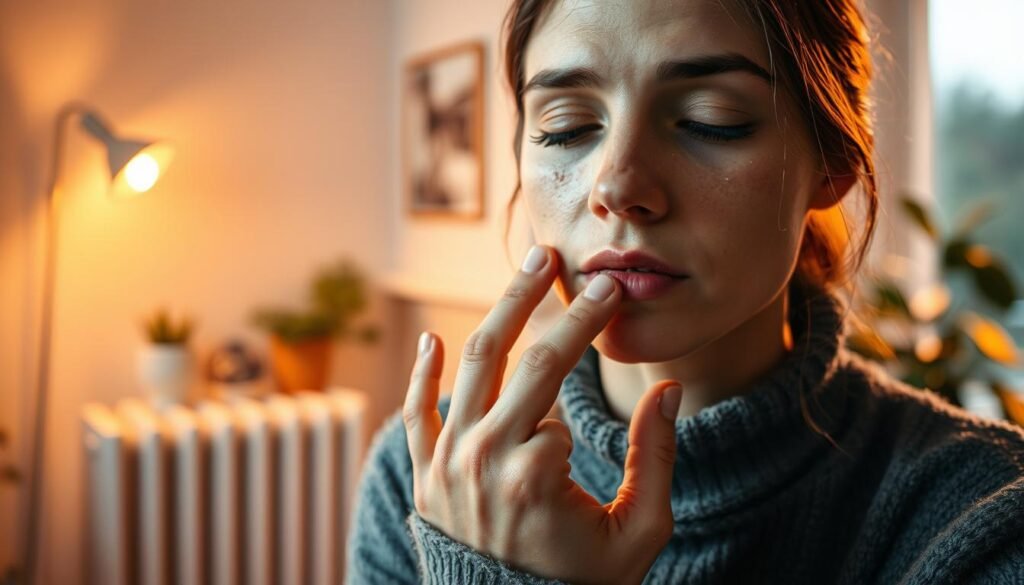
Did you know that temperatures as low as 109.4°F can permanently change your skin? Many people don’t know that home heating systems, space heaters, and even laptops can harm their skin. These can change how your skin looks and feels over time.
In winter, heated homes can dry out your skin. Central heating lowers humidity, causing dry winter skin. Direct heat can lead to more serious problems. Your skin changes due to weather, lifestyle, personal care, and aging.
Medical Disclaimer: This article is for educational purposes only. It’s not medical advice. It can’t diagnose, treat, or replace professional healthcare. Skin problems vary a lot between people. Always see a board-certified dermatologist or healthcare expert for skin issues.
This guide helps you spot signs of heat-related skin changes. You’ll learn to recognize symptoms and understand how indoor air quality plays a role. Knowing when to see a doctor is also important. Some problems might go away on their own, but others need medical help.
Key Takeaways
- Heat exposure between 109.4°F and 116.6°F can cause permanent changes to your skin’s elastic fibers and blood vessels
- Symptoms from heat-related conditions may take weeks or months to appear, making early detection challenging
- Multiple heat sources in your home—including central heating, space heaters, and electronic devices—can affect your skin simultaneously
- Professional consultation with a board-certified dermatologist is essential for accurate diagnosis and appropriate treatment
- This educational content cannot replace personalized medical advice, as skin conditions vary widely between individuals
- Recognizing early warning signs helps you take preventive action and seek timely professional care
Understanding Indoor Heating and Its Impact on Skin
Heating your home changes how your skin works. When you turn on the heat, your skin’s structure and function change. These changes happen slowly, so you might not notice them until it’s too late.
There are many factors at play when indoor heating affects your skin. Temperature goes up, humidity goes down, and air moves differently. Knowing these factors helps you protect your skin before damage happens.
The Science Behind Indoor Heating
Heat damages your skin’s elastic fibers and blood vessels. When your skin is exposed to heat, these fibers start to break down. This affects the collagen and elastin that keep your skin firm.
Heat also expands and inflames the blood vessels near your skin’s surface. This causes redness and can lead to long-term changes in your skin’s appearance.
Heat exposure leads to the buildup of certain chemicals in your skin. Hemosiderin, a brown molecule, and melanin, the pigment that gives your skin color, accumulate in heated areas. This turns your skin a reddish-brown color.
Heat-induced dermatitis is a condition that has been seen in people who work in hot environments. Bakers and metalworkers often got this condition from working near ovens and furnaces. Today, central heating skin problems are similar, caused by things like space heaters and heated car seats.
How Humidity Levels Affect Skin Health
Heating systems lower humidity levels in your home. When air is warmed, it loses moisture. This makes it harder for your skin to keep its moisture and protective barrier.
The low humidity effects on skin start with more water loss. Your skin always loses water, but in dry air, it loses more. This pulls moisture from deeper layers of your skin.
The outermost layer of your skin, the stratum corneum, is most affected. It needs moisture to work right. Without enough moisture, it dries out and cracks.
A damaged skin barrier makes your skin more open to irritants and allergens. It becomes dry and flaky, and feels tight. The protective layers that shield your skin from harm weaken.
Common Types of Indoor Heating
Different heating systems affect your skin in different ways. Forced-air systems, common in American homes, circulate dry air. This air moves quickly, taking moisture from your skin.
Radiators and baseboard heaters provide heat in specific spots. They don’t move air as much, but can cause hot spots. Sitting or sleeping near these can harm your skin.
Space heaters are the biggest risk for direct heat. People often put them close to their bodies for warmth. This increases the risk of central heating skin problems by focusing heat on certain areas.
Radiant floor heating warms surfaces, not air. It might not drop humidity as much, but it can affect your skin’s moisture balance. Knowing your heating system helps you understand the risks and take steps to protect your skin.
| Heating Type | Primary Skin Impact | Humidity Effect | Risk Level |
|---|---|---|---|
| Forced-Air Systems | Rapid moisture depletion | Severe humidity reduction | High |
| Radiators | Localized heat exposure | Moderate humidity reduction | Medium |
| Space Heaters | Direct thermal damage | Variable humidity impact | Very High |
| Radiant Floor | Gradual moisture loss | Mild humidity reduction | Low to Medium |
Identifying Symptoms of Skin Damage
Knowing the signs of skin damage from heat helps you act fast. Your skin shows changes when it’s exposed to indoor heat. These signs can appear right away or take weeks, depending on the heat.
Spotting these signs helps you keep an eye on your skin during the cold months. While you can watch for these signs yourself, seeing a doctor is important if you’re worried.
Dryness and Flakiness
One common sign of heat damage is dry skin that’s drier than usual seasonal skin dryness. Your skin might feel tight, more so after washing or waking up. This means your skin is losing moisture too fast.
- White or gray patches of dead skin cells on your skin’s surface
- A rough texture that feels like sandpaper when you touch it
- Skin cells shedding onto dark clothes, mainly on arms and legs
- Cracking or fissuring, which is more serious, on hands and feet
These signs often show up first on parts of your body with fewer oil glands. Your legs, arms, and hands usually get dry before your face does. The exact pattern depends on where you get the most heat.
Parts near heating vents or radiators tend to get drier. If you sit near a space heater or fireplace, those areas facing the heat will show symptoms first.
When humidity drops below 30 percent, your skin loses moisture more easily. This happens a lot in heated indoor spaces during winter.
Redness and Irritation
Heat can make your skin turn red, from a light pink to deep purple-brown. The pattern and intensity of redness can tell you a lot about the damage.
General redness means your skin is dry overall, not just from heat. But if red spots have clear edges, it’s from direct heat.
Keep getting heat from the same spot, and your skin might look mottled or like a fishnet. This is called toasted skin syndrome.
The “blanching test” helps check redness. Press hard on a red spot for a few seconds, then let go. If it turns white and then gets red again, it’s early irritation. If it doesn’t turn white anymore, it’s more serious.
Other signs with redness include:
- Itching that can be mild or strong, often worse at night
- Burning that feels like mild sunburn
- Discomfort or tenderness when touched
- Feeling warmer in the affected area than the rest of your skin
In some cases, your skin might get blisters or feel thinner in hot spots. Or, it might get thicker over time from constant heat.
Increased Sensitivity
When heat damages your skin, it becomes more sensitive. This means you might react to things you used to handle fine. Your skin’s barrier is weaker.
Products you’ve always used might now sting or burn. Your usual moisturizer or cleanser might feel harsh. This is because damaged skin lets things in deeper than healthy skin does.
Physical sensations get stronger as sensitivity grows. Clothes that didn’t bother you before might now feel scratchy. Temperature changes can also cause discomfort or visible flushing.
Many people feel like their skin is thinner or more vulnerable. This is true. With a weaker barrier, things that used to be okay now irritate more easily.
Signs of increased sensitivity include:
- Stinging when using water-based products
- Reactions to fragrances in personal care items that didn’t bother you before
- Discomfort from fabrics like wool or synthetic materials
- Quick redness in response to small triggers
- Longer time to recover from irritation
These signs mean your skin needs help to protect itself. While you can help it heal, if sensitivity doesn’t get better, see a doctor. They can check if there’s more going on and suggest treatments.
How your skin reacts to heat varies a lot. Skin type, age, health, and genetics all play a part. What seems mild dryness in one person might be severe irritation in another, even with the same heat.
Contribution of Lifestyle Factors
Our lifestyle choices can either help or harm our skin’s defense against winter’s heat. How we spend our day, what we eat, and how much we drink all play a role. Knowing how these choices affect our skin helps us make better decisions.
Modern life often goes against what’s good for our skin. Working from home, staring at screens, and sitting too much can harm us. Spotting which habits are bad helps us change before it’s too late.
Daily Routines That Exacerbate Skin Damage
Some daily habits put our skin in harm’s way. For example, using laptops on our laps can damage our skin. The heat from laptops can hurt the skin, mainly on the left thigh.
Using laptops on our laps for several hours daily can cause skin damage. This is true for kids, whose skin is more sensitive. It leads to a condition called toasted skin syndrome.
Long car rides with heated seats are also risky. People who sit in heated seats for 2-4 hours can damage their skin. The heat feels good but hurts our skin over time.
Other bad habits include:
- Taking hot showers or baths that strip our skin of natural oils
- Sitting near space heaters or radiators for warmth
- Using heating pads or hot water bottles for chronic pain
- Being close to fireplaces or baseboard heaters in the evenings
- Working near industrial heat without proper protection
Women and people assigned female at birth are at twice the risk of skin damage from heat. People with chronic pain who use heating devices often are also more vulnerable. Learning about your skin health helps spot these risks early.
How long and how often we’re exposed to heat matters a lot. Even moderate heat can be harmful if we’re in it for hours without breaks. Being aware of our position relative to heat sources is key to prevention.
The Role of Diet in Skin Health
What we eat affects how our skin handles winter’s heat. Our diet gives our skin the tools it needs to stay healthy. Poor nutrition weakens our skin and slows down healing.
Essential fatty acids are vital for our skin’s health. Omega-3 and omega-6 fatty acids keep our skin moist and reduce inflammation. Without enough, our skin dries out and gets irritated from heated air.
Key nutrients for skin health include:
| Nutrient | Function | Food Sources |
|---|---|---|
| Vitamin A | Supports cell regeneration and skin repair | Sweet potatoes, carrots, spinach, eggs |
| Vitamin C | Promotes collagen production and antioxidant protection | Citrus fruits, bell peppers, broccoli, strawberries |
| Vitamin E | Protects against oxidative stress from heat exposure | Almonds, sunflower seeds, avocado, olive oil |
| Zinc | Aids wound healing and inflammation control | Oysters, beef, pumpkin seeds, chickpeas |
| Selenium | Enhances antioxidant defenses | Brazil nuts, fish, turkey, brown rice |
Antioxidants are very important in winter when our skin faces many challenges. They fight off free radicals caused by heat and dry air. Eating colorful fruits and veggies helps protect our skin from the inside out.
But, foods high in sugar and unhealthy fats can harm our skin. These foods cause inflammation, which hurts our skin. Eating better can make our skin look and feel better.
Importance of Hydration
Drinking enough water is key to keeping our skin moist in heated spaces. When we don’t drink enough, our skin shows signs of dehydration first. This makes our skin dry out even more.
It’s harder to feel thirsty in cold weather, but we need to drink more water. Heated spaces make us lose water through breathing and sweating. Many people get dehydrated without realizing it.
Recommended daily fluid intake depends on several factors. A good rule of thumb is to drink eight 8-ounce glasses of water a day. But, we might need more in heated spaces. Checking our urine color is a simple way to see if we’re drinking enough water.
Some drinks, like coffee and tea, can actually make us lose more water. Drinking too much alcohol also dehydrates us and weakens our skin. Drinking water helps keep our skin healthy in winter.
Dehydration often shows up in our skin before other signs:
- Reduced skin elasticity and turgor
- Increased prominence of fine lines and wrinkles
- Dull or lackluster complexion
- Rough or flaky texture despite moisturizer use
- Slower healing of minor cuts or irritation
Drinking water regularly helps us stay hydrated all day. Keeping water nearby, setting reminders, and drinking before meals helps us drink enough. Combining water with moisturizers in our skincare routine protects our skin from heat damage.
Changing our lifestyle in many ways helps protect our skin in winter. Small changes in our daily habits, diet, and hydration can make a big difference over time.
Recognizing Skin Changes Over Time
Your skin’s changes tell a story over time. Indoor heating doesn’t cause sudden changes. Instead, the damage builds up slowly, showing itself over weeks, months, or years.
Knowing these changes helps you spot serious issues early. Skin lesions from heat may not show up right away. Catching these changes early can prevent lasting damage.
Watching your skin through different seasons and ages gives valuable insights. This long-term view shows how environment, habits, and skin health are connected.
Seasonal Variations in Skin Condition
Your skin changes with the seasons. Summer humidity and winter dryness make a big difference. During heating season, indoor air gets drier, making it hard to keep skin moist.
Normal dryness increases in cold months. But serious dryness that lasts is a sign of heating damage. Look out for flaky skin, red patches, or tightness in winter.
Some people see big changes, while others notice little. Where you live affects these changes. People in colder areas face bigger challenges than those in milder climates.
Tracking your symptoms each year helps you understand your pattern. Start with the hands, face, and legs. Note how fast symptoms spread and how long they last after heating stops. This info helps prevent future damage.
Dry skin that goes away quickly after heating stops is usually temporary. But symptoms lasting into spring or summer mean you need to see a doctor. Early signs are pink blotches, but they can turn red, purple, or brown with more heat.
Age-Related Skin Changes
As you age, your skin changes how it handles heat. Older skin makes less oil, losing moisture protection. The skin’s layers thin, with less collagen and elastin for support.
Older adults face more severe heat damage than younger people. This is because their skin biology changes over time. Moisture retention gets worse, and repair slows down.
It’s important to tell apart normal aging and heat damage. Aging causes skin to thin and dry. But heat damage shows up in specific patterns, often in exposed areas or where skin is already weak.
Combining aging skin with heat exposure makes things worse. A 30-year-old might quickly recover from dry skin. But a 65-year-old might take weeks or months, and some damage might be permanent.
Knowing your age-related risks helps set realistic goals. It also shows why preventing damage is key as skin ages and loses its natural defenses.
| Time Frame | Early Changes | Progressive Symptoms | Advanced Effects |
|---|---|---|---|
| Weeks 1-4 | Mild tightness after showering | Persistent dryness throughout day | Visible flaking and roughness |
| Months 2-3 | Occasional itching sensations | Blotchy pink patches appearing | Red or purple discoloration developing |
| Months 4-6 | Increased product absorption | Changes in skin texture | Hyperpigmentation forming |
| Beyond 6 Months | Seasonal pattern establishment | Symptoms persisting longer annually | Potential permanent changes |
Long-Term Effects of Stress on Skin
Stress weakens your skin’s defense against heat. Chronic stress makes it harder for your skin to keep moisture. This happens even if you don’t feel stressed.
Stress affects your skin through many ways. It slows down repair and triggers inflammation. This makes heat and dry air worse for your skin.
Winter stress comes from holidays, less daylight, money worries, and mood changes. This stress, heat, and dry air create a perfect storm for skin damage. Each factor makes the others worse, speeding up damage.
Stress damage builds up over time, like heat damage. Years of stress weaken your skin. This makes it harder to handle environmental challenges.
Seeing stress as a factor helps explain why heating affects you differently each year. A stressful winter can make your skin drier than usual, even with the same heating.
Healing takes longer with chronic stress. Damage that heals quickly without stress can take months with stress. Some changes last even after the heat is gone, if stress is not managed.
Stress-related skin issues last longer than immediate reactions. Long-term exposure to stress and heat can cause permanent changes. These changes usually go away in weeks or months, but severe cases can be permanent.
Understanding these patterns shows the need for full skin care. Fighting heat alone is not enough if stress is also a problem. A complete approach protects your skin better.
Skincare Habits to Mitigate Damage
Identifying heating-related skin damage is the first step. Next, you need to start a skincare routine that repairs and protects your skin. A good moisturizing routine and adjusting your environment can greatly help your skin in dry indoor air.
Some people find relief with over-the-counter products. But, others might need professional help for more serious issues.
Choosing the right moisturizer is key. Your skin needs different things during the heating season. You might need to change your products and how you use them.
Choosing the Right Moisturizer
Not all moisturizers are the same. Knowing the differences helps you pick the right one for dry skin from heating. Skincare products have three main types of moisturizers.
Occlusives create a seal on your skin to prevent water loss. Ingredients like petrolatum and dimethicone are great for dry indoor air. They work best on slightly damp skin.
Emollients smooth and soften your skin. Ceramides and fatty acids help repair damaged skin. They’re good when your skin’s barrier is compromised.
Humectants attract water to your skin’s surface. Hyaluronic acid and glycerin are common ones. But, in very dry air, they work best with occlusives.
The best products for heating season have all three types. Use thicker creams in cold weather. Apply moisturizer right after bathing while your skin is moist.
The right moisturizer doesn’t just sit on your skin’s surface—it actively supports your skin barrier’s ability to retain moisture and protect against environmental stressors.
Don’t make common mistakes like using light products in winter or applying moisturizer to dry skin. If your current product doesn’t work after two weeks, try a heavier one or layer products.
Benefits of Humidifiers
Humidifiers add moisture to your indoor air, fixing the root cause of dry skin. They also help with breathing and reduce static electricity. But, you need to know the right humidity levels and how to maintain your humidifier.
Keep humidity between 30-50% for healthy skin. Heating systems often make it too low. A hygrometer helps you check these levels and adjust your humidifier.
There are two main types of humidifiers:
- Cool mist humidifiers are safe for homes with kids and pets
- Warm mist humidifiers kill bacteria but can be dangerous if knocked over
- Whole-house systems work with your HVAC for consistent humidity
- Portable units target specific rooms and are more affordable
Where you place your humidifier is important. Put it on a flat, water-resistant surface at least three feet from walls and electronics. Avoid heating vents to ensure even moisture distribution.
Clean your humidifier regularly to prevent mold and bacteria. Change the water daily and deep clean weekly with vinegar or the manufacturer’s solution. Replace filters as instructed.
Signs you need to adjust your humidity include condensation on windows (too high) or static and dry skin (too low). You’ll see benefits in a few days, needing less moisturizer.
Recommended Ingredients for Repair
Certain skincare ingredients can repair heating-damaged skin. Knowing which ones to use helps you create a targeted skincare routine.
| Ingredient | Primary Function | Effective Concentration | Best For |
|---|---|---|---|
| Ceramides | Barrier repair and moisture retention | 2-5% | Compromised skin barriers and chronic dryness |
| Niacinamide | Reduces inflammation and supports barrier function | 2-10% | Irritated, sensitive skin with redness |
| Hyaluronic Acid | Attracts and holds moisture | 0.1-2% | Dehydrated skin needing hydration boost |
| Peptides | Stimulates collagen production | 3-5% | Aging skin with reduced elasticity |
Ceramides repair your skin’s barrier. When heating damage hits, ceramide products help fix it. Look for products with multiple ceramide types.
Niacinamide (vitamin B3) fights inflammation and strengthens your skin. It’s good for most skin types and rarely irritates. It also reduces redness from dry skin.
Antioxidants like vitamins C and E protect against aging. Indoor heating increases free radical damage. Apply them in the morning before sun exposure.
Colloidal oatmeal and allantoin soothe irritated skin. They calm inflammation without affecting other products. They’re great for tight, itchy skin from heating.
For serious damage, a dermatologist might suggest stronger treatments. Topical retinoids improve skin texture. But, start slowly to avoid irritation. Some cases need treatments like tretinoin for pigmentation or texture issues.
The main treatment involves removing the heat source that is causing irritation, as well as using medications on the skin to calm irritation. Mild cases usually resolve within a few months after avoiding heat exposure.
When using multiple ingredients, add them slowly. Start with one new product every two weeks. This lets your skin adjust before adding more. This way, you find the best ingredients for your skin.
Over-the-counter products often work well. But, if your symptoms don’t get better after four to six weeks, see a dermatologist. They can recommend stronger treatments for your specific needs.
Professional Treatments for Skin Damage
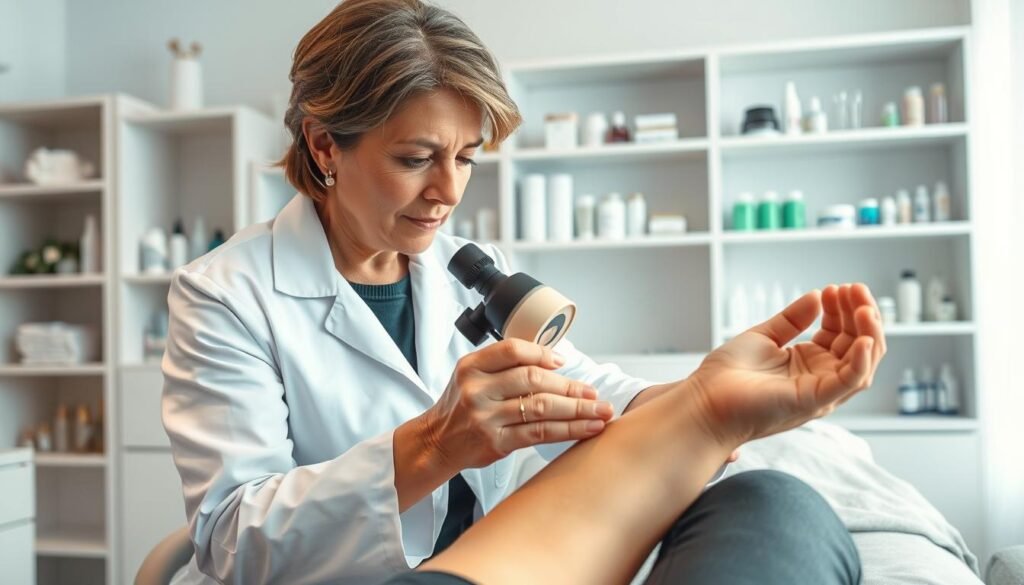
Knowing when to see a doctor for skin problems from central heating is key. Many issues can be fixed at home, but some need a dermatologist’s help. A professional can give the right diagnosis and treatment.
Dermatologists know how to tell if your skin is just dry or if it’s something more serious. They can spot signs of heat-induced dermatitis or other problems. Getting professional help early is important for your skin’s health.
Recognizing When Expert Evaluation Becomes Necessary
There are times when you should see a dermatologist. If your skin problem doesn’t get better after three weeks of home care, it’s time to get help. If it gets worse, you should see a doctor too.
Look out for these signs that mean you need to see a doctor:
- Unusual patterns: Reticulated or lace-like discoloration that doesn’t fade
- Significant discomfort: Pain or burning beyond mild irritation
- Texture changes: Skin thickening, blister formation, or unusual firmness
- Non-healing areas: Wounds or damaged spots that don’t improve
- Daily life disruption: Symptoms affecting sleep or regular activities
Dermatologists can do tests to find out what’s wrong. They might take a skin sample to check under a microscope. This helps figure out what’s going on and rule out other conditions.
If you have toasted skin syndrome and get skin ulcers, you need a skin biopsy to check for cancer. Heat can increase cancer risk, so doctors watch how the area heals. Seeing a doctor early can help you heal faster than trying to fix it yourself.
Doctors look at symptoms and heat exposure history to find the best treatment for heat-induced dermatitis.
Standard Professional Approaches to Heating-Related Damage
Dermatologists have strong treatments for skin damage from indoor heating. These treatments have more active ingredients than what you can buy over the counter. They work better for more serious cases.
Common treatments include:
- Prescription moisturizers: Barrier repair creams with enhanced formulations
- Topical medications: Anti-inflammatory compounds to reduce irritation
- Prescription retinoids: Products that improve skin texture and cell turnover
- Customized compounds: Treatments mixed for your specific needs
Your dermatologist will look at how bad your skin is and what you need. They consider your skin type, lifestyle, and what you want to achieve. This way, they can give you the best treatment for you.
Most people start to see improvements in four to six weeks. Regular check-ups let your doctor see how you’re doing and adjust your treatment if needed. Talking regularly with your doctor helps your treatment work better.
Specialized Interventions for Persistent Concerns
If standard treatments don’t work, dermatologists might suggest more advanced options. These treatments are for specific problems like lasting color changes or texture issues.
Advanced treatments include:
| Treatment Type | Primary Purpose | Best For |
|---|---|---|
| Laser Therapy | Address pigmentation changes and stimulate collagen | Permanent discoloration from heat exposure |
| Chemical Peels | Improve skin texture and tone | Surface irregularities and dullness |
| Phototherapy | Reduce inflammatory responses | Persistent redness and inflammation |
| Regenerative Procedures | Stimulate natural skin renewal | Chronic damage with texture changes |
Laser therapy is great for treating hyperpigmentation from heat. It targets specific pigment spots and helps your skin get healthier. You might need several sessions for the best results.
Chemical peels remove damaged skin layers to reveal new skin. Your dermatologist picks the right peel for you. This method is good for improving texture and tone.
Advanced treatments need careful evaluation and monitoring by experts. These options have more considerations than basic treatments. Your doctor will talk about the benefits, risks, and expected results before starting.
Always talk to a qualified healthcare provider about your treatment. Dermatologists examine your skin, look at your medical history, and create a plan just for you. This ensures you get safe and effective treatment that meets your needs.
Natural Remedies for Skin Recovery
Plant-based solutions and simple kitchen ingredients are great for soothing and restoring skin. They offer gentle support for healing when used with proper skincare. These home treatments work well for mild symptoms.
Removing the heat source is key to treating skin damage. This means stopping use of heating pads, laptops, or radiators. Most cases improve in a few months after removing the irritation source.
Natural remedies are helpful when indoor heating is harsh. They use ingredients many households already have. Knowing their benefits and limits helps use them safely and effectively.
DIY Masks and Treatments
Home-prepared masks are a cost-effective way to moisturize and nourish stressed skin. They use common ingredients that address dry winter skin without harsh chemicals.
Honey masks are great for their moisture-drawing properties. Raw honey also fights off infections in cracked areas. Apply a thin layer for 15-20 minutes before rinsing.
Oatmeal helps calm irritation and gently removes flakes. Grind oats into fine powder and mix with water. This is good for sensitive skin that reacts to commercial exfoliants.
Avocado and yogurt masks nourish the skin with healthy fats. Mash half an avocado with two tablespoons of yogurt for a treatment rich in vitamins A and E. The yogurt’s lactic acid gently exfoliates.
Aloe vera gel cools irritated areas. Use fresh gel or pure commercial preparations without fragrances. It absorbs quickly without leaving a greasy residue.
Cucumber or chamomile compresses reduce redness and inflammation. Soak chamomile tea bags in hot water, then cool them. Apply to affected areas for 10 minutes. The anti-inflammatory compounds soothe reactive skin.
Always perform a patch test before applying new ingredients to large areas. Apply a small amount to your inner forearm and wait 24 hours. Compromised skin may react unpredictably, even to gentle ingredients.
Essential Oils and Their Benefits
Essential oils are popular in skincare, but they need careful handling. Some offer real benefits, but others can cause problems if used wrong on damaged skin.
Lavender oil calms skin stress responses. It has anti-inflammatory compounds. But, it must be diluted properly in carrier oils before skin contact.
Chamomile essential oil soothes irritation like herbal tea. Its concentrated form is stronger but carries higher risk of sensitization. Start with minimal amounts mixed into carrier oils.
Rosehip seed oil is different from true essential oils as a carrier oil itself. It’s rich in essential fatty acids and vitamin A, supporting barrier repair without dilution. Many find it absorbs well without being too oily.
Jojoba oil mimics natural skin sebum. It’s an excellent carrier oil that rarely causes breakouts. It can be used alone or as a base for diluting essential oils.
Never apply undiluted essential oils directly to skin. A typical dilution ratio is 2-3 drops of essential oil per tablespoon of carrier oil. Some oils can cause photosensitivity or allergic reactions even when diluted.
Quality varies a lot among essential oil products. Look for pure oils without synthetic additives or extenders. Remember, “natural” doesn’t mean safe, when skin barriers are compromised.
Consult with aromatherapy experts or dermatologists before using essential oils on damaged skin. Some people should avoid them, like those with eczema or extreme sensitivity.
Herbal Solutions for Soothing Skin
Botanical ingredients offer more options for skin support. They come in various forms, from teas to extracts to commercial products.
Calendula has anti-inflammatory properties for calming reactive skin. It’s available as creams, ointments, or infused oils. This marigold flower extract has been used for centuries in wound healing.
Green tea extracts contain antioxidants called catechins. These protect skin cells from environmental stress and support healing. Cooled green tea bags make simple, affordable compresses for winter skin protection.
Licorice root extract reduces redness through anti-inflammatory compounds. Look for products with this ingredient instead of trying to make it at home. Proper extraction requires specific processes.
Colloidal oatmeal is recognized by the FDA as a skin protectant. It’s finely ground oat powder that disperses in water to coat skin. Dermatologists often recommend it for dryness and irritation from various causes, including heating damage.
| Natural Remedy | Primary Benefit | Application Method | Best Used For |
|---|---|---|---|
| Honey | Moisture retention and antimicrobial action | Direct mask application for 15-20 minutes | General dryness and minor cracks |
| Colloidal Oatmeal | Soothing irritation and gentle cleansing | Bath soak or paste application | Widespread dryness and itching |
| Aloe Vera | Cooling relief and hydration | Thin gel layer applied as needed | Acute irritation and redness |
| Calendula | Anti-inflammatory support | Cream or infused oil application | Sensitive reactive skin |
| Rosehip Seed Oil | Barrier repair and fatty acid delivery | Direct application or moisturizer additive | Compromised skin barriers |
Botanical approaches work best as part of a complete strategy. They complement, not replace, proper moisturizing, environmental adjustments, and professional care when needed.
Natural remedies appeal to those seeking gentler options. They may offer real benefits for mild symptoms. But, reactions vary widely based on skin type, damage severity, and sensitivities.
Quality and preparation methods greatly affect outcomes with natural treatments. A well-prepared chamomile compress is much different from random plant material. Knowing how to use them prevents disappointment and harm.
Discuss any natural remedies with healthcare providers, if using prescription treatments. Some botanical compounds interact with medications or may not mix well with clinical therapies. Ensuring they complement, not conflict, with treatments maximizes benefits while keeping safety in mind.
For significant skin damage or symptoms that last despite home treatment, professional evaluation is key. Natural remedies are best as gentle support for minor concerns and maintenance care, not substitutes for medical attention when needed.
The Importance of Regular Skin Checkups
Your skin tells a story through changes that deserve attention, specially when exposed to constant indoor heating. Most heating-related skin damage is harmless. But, watching for changes is key to avoid serious problems.
Knowing the risks is important. Toasted skin syndrome can lead to skin cancers like squamous cell carcinoma. Dermatologists watch for these because damage can turn into cancer years later.
Seeing a doctor is vital because some conditions look like heating damage. Livedo reticularis, skin cancers, and other issues can look similar. Only experts can tell them apart.
What to Look for During Self-Examination
Effective self-examination needs a systematic approach. Check all affected areas in well-lit spaces. Use mirrors to see hard-to-see spots, like those near heating sources.
Pay close attention to all areas. Document your findings to track changes over time. This helps spot gradual changes that might be missed.
Watch for these specific warning signs that warrant professional consultation:
- New or changing areas of discoloration with irregular borders or unusual patterns
- Persistent patches that don’t improve despite environmental modifications and proper skincare
- Areas developing unusual texture including thickening, thinning, or roughness
- Sores, ulcers, or wounds that fail to heal within expected timeframes
- Spots that bleed, itch, or become painful without clear cause
- Rapid changes in size, color, or sensation of any skin area
The ABCDE criteria helps identify concerning skin changes. It guides when to see a dermatologist:
- Asymmetry: One half of the spot doesn’t match the other half
- Border irregularity: Edges appear ragged, notched, or blurred
- Color variation: Multiple colors or uneven color distribution within one area
- Diameter: Size larger than a pencil eraser (6mm), though smaller spots can also be concerning
- Evolution: Changes in appearance, sensation, or behavior over time
Remember, most heating-related skin changes remain harmless. But, watching closely is key. If you notice anything unusual, don’t hesitate to seek help.
Anyone with skin ulcers or non-healing wounds should get a skin biopsy. This ensures serious conditions get treated quickly.
How Often Should You See a Dermatologist?
How often to see a dermatologist depends on your situation. Your unique circumstances guide how often you need checks.
If you have significant heating-related skin damage, see a dermatologist first. This sets a baseline and rules out serious conditions. Your dermatologist will tell you how often to come back.
For ongoing symptoms, annual checks are usually enough. This lets specialists track changes and catch problems early.
Consider more frequent professional monitoring if you have these additional risk factors:
- Fair skin that burns easily or tans minimally
- History of significant sun exposure or previous sunburns
- Family history of skin cancer or suspicious skin growths
- Compromised immune system due to medical conditions or medications
- Previous diagnosis of toasted skin syndrome or other heat-related conditions
Discussing frequency with a dermatologist is best. They assess your risk and suggest visits based on your needs. This ensures you get the right amount of monitoring.
Keeping a Skin Diary for Noticing Changes
Keeping a skin diary is very helpful. It helps you notice patterns and changes over time. This turns vague feelings into clear data for treatment.
Include these components in your skin diary for maximum benefit:
- Dated photographs: Take pictures of affected areas under consistent lighting conditions from the same angles
- Written descriptions: Note symptom location, appearance, and any associated sensations like itching or burning
- Heating exposures: Record types of heat sources, duration of exposure, and frequency of contact
- Skincare interventions: Document products and treatments tried with honest assessments of effectiveness
- Environmental factors: Track indoor humidity levels, temperatures, and seasonal variations
- Lifestyle correlations: Note stress levels, dietary changes, hydration habits, and sleep patterns
This diary helps spot subtle changes that might be missed. What seems small can show important patterns over time.
Your skin diary gives dermatologists valuable information. They can see trends that might be missed in consultations. This teamwork leads to better skin health.
By comparing entries, you can see patterns. You might find symptoms worsen in certain seasons or improve with specific treatments. This knowledge helps you make better choices for your skin.
Taking active responsibility for monitoring your skin health represents wisdom, not worry. Most skin issues from heating can be managed with awareness and action. Regular checks and a skin diary help keep your skin healthy despite indoor heating.
Seeking professional help is never wrong. If you’re worried about your skin, talk to a doctor or dermatologist. They can give you the right diagnosis and treatment.
Preventive Measures for Healthier Skin
Making small changes in your environment and daily habits can greatly reduce skin damage from heat. It’s better to take steps before problems start than to treat them after. This way, you save time and money and keep your skin healthy.
Protecting your skin in winter involves many steps. Changing your surroundings, daily habits, and what you wear are all important. These habits become easy to follow with practice, needing little effort over time.
“An ounce of prevention is worth a pound of cure.”
Creating a Skin-Friendly Indoor Climate
Your home and work environments play a big role in your skin health during winter. Stay away from direct heat sources like heaters and radiators. This helps prevent dryness and irritation.
Think carefully about your thermostat settings. Keeping the temperature between 68-72°F (20-22°C) is best. This balance keeps you warm without drying out your skin too much.
Using a humidifier can greatly improve your winter skincare routine. These devices add moisture to dry air, helping your skin stay hydrated. Place them in rooms where you spend most of your time.

Put humidifiers in your bedroom. This way, you get to enjoy better air quality while you sleep. Make sure to clean them regularly to avoid mold growth.
Improving indoor air quality is more than just about humidity. Change your HVAC filters often to reduce airborne particles. Clean filters also make your system work better, keeping the air comfortable.
Use a hygrometer to check the humidity levels in your home. Aim for 30-50% for the best skin health. Too low or too high can cause problems.
If you work from home, make your workspace safe. Don’t sit near vents or use laptops on your lap. This prevents heat damage.
If you work near heat sources, talk to your boss about safety. They might move your desk or give you protective gear. Staying away from heat is the best way to prevent damage.
Modifying Daily Skincare Practices
Start changing your skincare routine before winter to protect your skin better. Winter skincare is different from summer. Be ready for the season to avoid damage.
Switch to richer, more protective products in early fall. Look for ones with ceramides, niacinamide, and hyaluronic acid. These help your skin stay strong and moist.
Moisturize twice a day, in the morning and at night. Also, moisturize after washing your hands. This keeps your skin hydrated.
Use thick moisturizers at night for extra hydration. Your skin repairs itself while you sleep. These products won’t make your skin look greasy in the daytime.
Change how you clean your skin to avoid drying it out. Use gentle, non-foaming cleansers. Clean your skin only once or twice a day to keep it healthy.
Keep your bath water lukewarm. Hot water can dry out your skin fast. Try to keep your baths or showers short to avoid drying out.
Apply moisturizer right after bathing when your skin is damp. This helps it absorb better and stay hydrated longer.
Layering your moisturizers helps keep your skin protected all day. Start with thin, water-based products and add thicker ones on top. This way, each layer absorbs well, and the last one seals everything in.
| Prevention Strategy | Implementation Method | Expected Benefit | Difficulty Level |
|---|---|---|---|
| Humidity Control | Use bedroom humidifier nightly, maintain 30-50% humidity | Reduces transepidermal water loss by 25-40% | Easy |
| Temperature Management | Keep thermostat at 68-72°F, avoid overheating | Minimizes excessive drying, improves comfort | Easy |
| Enhanced Moisturizing | Apply rich formulations twice daily, after washing | Strengthens skin barrier, prevents moisture loss | Moderate |
| Heat Source Distance | Maintain 3+ feet from heaters, use barriers | Eliminates direct heat damage, reduces irritation | Easy |
| Modified Bathing | Lukewarm water, 5-10 minute duration, gentle cleansers | Preserves natural oils, maintains barrier integrity | Moderate |
If you use heating pads for pain, look for other treatments. Talk to your doctor about options like medicine or acupuncture. Using heating pads too much can harm your skin.
Strategic Clothing Selections
Wearing the right clothes can also protect your skin from heat. Choose fabrics and styles that work well together with your environment and habits.
Soft, natural fibers like cotton are good for your skin. They let your skin breathe and keep you warm without being too hot. These materials also don’t irritate your skin.
Stay away from rough fabrics that can make your skin worse. Wool might be too scratchy for some, but soft merino wool is okay. Choose synthetic fabrics wisely, as they vary in how breathable they are.
If you use a laptop a lot, use a barrier to protect your skin. Wear long pants or use a laptop pad to keep your legs safe. If your laptop is causing irritation, try working at a desk instead.
Layering your clothes helps you adjust to changing temperatures. Wear light layers that you can remove if it gets too warm. This keeps you comfortable and prevents overheating.
Be careful with heated car seats in winter. Use a towel or cover to protect your skin from the heat. Try not to sit in the seat for too long to avoid damage.
Don’t overheat, as it can make you sweat and irritate your skin. Wear breathable fabrics and use layers to stay comfortable in different temperatures.
These steps work together to protect your skin better than any one thing alone. Start these habits and they will become easy to follow over time.
Think about what risks you face and focus on the most important steps for you. If you work from home or near heat sources, you need different strategies. Adapting your approach to your situation is key to the best protection.
While these steps help a lot, they can’t completely prevent all skin problems. Keep watching your skin and act fast if you notice any issues. This is part of taking care of your skin during winter.
Conclusion: Understanding Your Skin’s Needs
Protecting your skin from indoor heating starts with knowing your own needs. Everyone reacts differently to environmental stressors. This depends on genetics, age, and lifestyle.
Emphasizing Individuality in Skin Care
Your skin type affects how you react to indoor heating. Some people notice changes fast, while others don’t. Listen to your body’s signs.
Creating a moisturizing skincare routine that fits you is key. Trying out different products and methods helps find what works best for you.
Seeking Professional Advice When Necessary
If you’re worried about your skin, see a dermatologist. They can figure out what’s causing the issues and how to fix them. If you have toasted skin syndrome, talking to a doctor is important.
Signs like persistent dryness or unusual rashes need a doctor’s check-up. In most cases, removing the heat source fixes the problem within months. But, severe cases can lead to permanent skin color changes.
Commitment to Ongoing Skin Health
Keeping your skin healthy in winter takes ongoing effort. It’s easier to prevent damage than to treat it. Watch your skin closely and change your routine as needed.
This article aims to help you make smart choices. But, it’s not a substitute for medical advice. Always talk to a board-certified dermatologist for the best care.