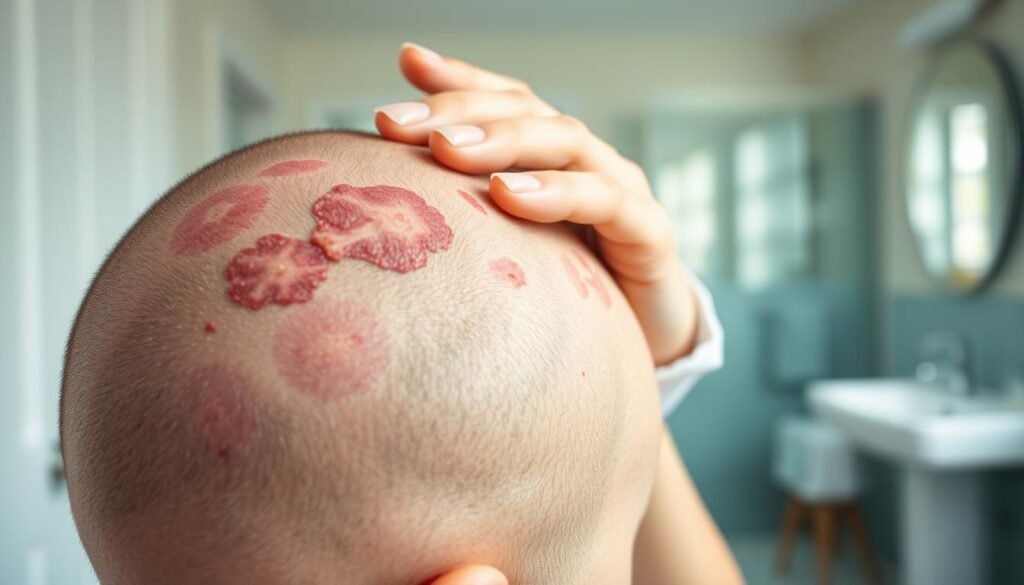
Nearly 7.5 million Americans live with a chronic skin condition. Many think it’s just dandruff when they see flaking or redness on their scalp. But it’s often more than that.
Distinguishing between common skin issues is hard. Dandruff, seborrheic dermatitis, and psoriasis look very similar. At first, changes in texture, color, or comfort might seem small. But over time, these signs become more obvious and worrying.
This guide will help you spot signs of this inflammatory condition. You’ll learn about common symptoms and when to see a doctor. We’ll also talk about how to tell similar conditions apart and treatment options.
Medical Disclaimer: This content is for information and education only. It’s not medical advice. Skin conditions are different for everyone. Always see a board-certified dermatologist or healthcare professional for a correct diagnosis and treatment. Getting a proper diagnosis is key to managing the condition well.
Key Takeaways
- Millions of Americans experience scalp conditions that share similar symptoms, making accurate identification challenging without professional evaluation
- Early signs may be subtle but typically become more noticeable over time, including changes in texture, color, and comfort levels
- Self-diagnosis can lead to inappropriate treatment, which is why consulting a board-certified dermatologist is essential for proper identification
- This guide provides educational information to help recognize potentially symptoms and understand when to seek medical advice
- Effective management begins with accurate diagnosis from a qualified healthcare professional who can assess individual variations
Understanding Scalp Psoriasis
Knowing about scalp psoriasis helps patients spot symptoms early and get the right treatment. This chronic skin issue affects many people but is not well-known. Understanding it well is key to early detection and action.
Exploring the medical definition and causes of scalp psoriasis is important. This knowledge is vital for those with unusual scalp symptoms or a family history of hair and scalp conditions.
What Is Scalp Psoriasis?
Scalp psoriasis is a chronic autoimmune condition that makes skin cells grow too fast on the scalp. This leads to thick, silvery scales and red patches. It happens when your immune system attacks healthy skin cells by mistake.
Normally, skin cells take three to four weeks to grow and shed. But with psoriasis, this process is much faster, just a few days. This fast growth causes skin cells to pile up, leading to scaling.
Scalp psoriasis can show up in different ways. Some people have small patches, while others have big areas affected. Psoriasis on scalp often spreads beyond the hairline, to the forehead, neck, or ears.
About 50% of people with psoriasis have it on their scalp. It’s one of the most common places for the condition.
This fact shows how common scalp psoriasis is in psoriasis patients. The scalp’s hair follicles and oil glands make treating it harder.
Common Causes of Scalp Psoriasis
The scalp psoriasis causes involve many factors. Knowing these helps you understand your risk and what might trigger it. No single reason explains why everyone gets it.
Genetics play a big role in getting scalp psoriasis. If your family has it, you’re more likely to get it too. Studies show that 40% of people with psoriasis have a family member with it.
Your immune system is also key. Psoriasis happens when your immune system goes wrong, attacking healthy skin cells. This leads to inflammation and fast cell growth.
Things in your environment can also make scalp psoriasis worse. These include:
- Stress: Stress can make symptoms worse
- Infections: Like strep throat, can start guttate psoriasis
- Skin injuries: Can trigger new patches, known as the Koebner phenomenon
- Weather conditions: Cold and dry weather can make symptoms worse
- Lifestyle factors: Drinking too much alcohol and smoking can increase risk
Some medicines can also make psoriasis worse. If you’re taking lithium, beta-blockers, or antimalarial drugs and notice scalp changes, talk to your doctor.
Medical science doesn’t fully understand what causes scalp psoriasis. But it’s known that genetics, immunity, and environment play a part.
Knowing scalp psoriasis causes helps you spot it early. Being aware of your risk factors means you can watch for symptoms sooner. This can lead to quicker diagnosis and better treatment.
Symptoms of Scalp Psoriasis
Scalp psoriasis shows clear signs that help identify it. These signs are important for early treatment. Scalp psoriasis symptoms start small but grow, affecting how you look and feel.
Most people see a mix of symptoms, not just one. How bad it is and how it looks can vary a lot. Symptoms can change over time, with ups and downs.
Flaking and Scaling
Scalp psoriasis is known for thick, silvery scales. These scales are different from dandruff. They are bigger, thicker, and stick to the skin more.
When you touch these scales, they look powdery. Removing them might show small bleeding spots. This is because the skin has more blood vessels underneath.
At first, you might just notice more hair loss. But it can get worse, with scales showing up in your hair and on clothes. Sometimes, the scales form thick, crusty patches on your scalp.
Redness and Inflammation
Under the scales, scalp psoriasis causes red or pink patches. These patches have clear edges, showing where the psoriasis starts. This is a key sign of the condition.
The redness comes from inflammation and more blood flow. The color can vary, from light pink to deep red. Some people say it looks raised and shiny.
The patches can be tender and feel warm. They can be small or cover a lot of the scalp. The warmth and tenderness are signs of inflammation.
Itching and Discomfort
Itching is a big problem for many with scalp psoriasis. It can be mild or very bad, making it hard to sleep and do daily things. This is often why people seek treatment.
Scratching might feel good for a moment but can make things worse. It can lead to bleeding, infections, and hair loss. The urge to scratch is strong, even when you know it’s bad.
People with scalp psoriasis symptoms often feel more than just itching. They might feel burning, soreness, or tightness. In severe cases, they might even feel pain.
The level of discomfort doesn’t always match how bad the condition looks. Some people with mild symptoms feel a lot of itching, while others with more visible symptoms might not feel as much. This is why finding the right treatment is so important.
Differentiating Scalp Psoriasis from Other Conditions
Scalp psoriasis can look like many other scalp problems. These issues share symptoms like flaking, itching, and redness. This makes it hard to know what you have without a doctor’s help.
Knowing the small differences between these conditions can help find the right treatment. But, getting a correct diagnosis often needs a doctor’s expertise. Let’s look at how scalp psoriasis compares to other common conditions.
Similarities with Dandruff
Dandruff and scalp psoriasis both cause flaking and itching. This is why people often get them mixed up. But, there are key differences that set them apart.
Dandruff makes small, oily flakes that are yellow-white. Psoriasis on the scalp, on the other hand, creates thicker, drier scales that look silvery-white.
Dandruff’s symptoms are milder, with less inflammation. The flakes fall off easily when you scratch or brush your hair. This usually doesn’t cause bleeding.
Dandruff spreads evenly over the scalp. Psoriasis on the scalp, though, shows up in clear patches with sharp edges that are easy to spot.
How well a treatment works can also tell you what you have. Dandruff often responds well to over-the-counter shampoos. Scalp psoriasis, though, needs stronger treatments from a dermatologist.
How it Differs from Eczema
Scalp eczema, or atopic dermatitis, looks similar to psoriasis. It causes redness, itching, and flaking. But, there are specific signs that help tell them apart.
Eczema flakes are finer and lighter than psoriasis scales. The itching from eczema can be very intense. This can keep you up at night and disrupt your day.
Eczema patches have fuzzy, less defined edges. Psoriasis patches have clearer, sharper edges.
Eczema patches can be weepy or crusty, with clear fluid and risk of infection. Psoriasis patches are dry with thick scales.
Who gets these conditions can also give clues. Eczema is more common in young children and those with family histories of asthma or allergies.
Identifying Fungal Infections
Fungal infections like tinea capitis can look like scalp psoriasis. They both cause scaling and inflammation. But, there are specific signs that help tell them apart.
Fungal infections create circular patches with clear centers, forming a “ring” pattern. These patches can cause hair loss. You might see pustules or small black dots, which are broken hair shafts.
Fungal infections are more common in children. They spread through contact with infected people, animals, or objects like combs and hats.
Treatment response is another clue. Fungal infections need antifungal medications, which don’t work on psoriasis. Psoriasis needs different treatments.
Getting a professional diagnosis is key. Dermatologists can do skin scrapings, fungal cultures, or biopsies to be sure. Trying to diagnose yourself is not reliable because symptoms can look the same. A doctor’s help ensures you get the right treatment.
Visual Changes and Their Significance
Noticing changes in your scalp can help manage scalp psoriasis better. These changes give clues about the condition’s presence and how severe it is. Knowing these signs lets you get treatment early, before symptoms get harder to handle.
Your scalp’s look gives important clues about your condition. Texture, color, and how it feels change in ways you might not notice at first. Paying attention to these changes helps you know when to see a doctor.
Subtle Initial Manifestations
Early Scalp Psoriasis Symptoms often start as small irritations. You might see small red spots that come and go without a clear reason. These spots are usually less than half an inch and might feel warm.
Minor scaling that looks like dandruff often shows up first. But unlike regular dandruff, these scales are silvery-white and stick more to the scalp. You might feel a bit of itchiness in certain spots, not all over your scalp.
Some people feel their scalp is more sensitive in certain areas before they see any changes. The hairline, behind the ears, and the back of the head are common spots. These areas can be hard to see without mirrors or help, making it tough to catch the problem early.
Small bumps on the scalp might show up before scaling becomes a big issue. These bumps feel different from the rest of your scalp when you touch them. The symptoms might come and go, making it hard to predict when they’ll return.
Evolution of the Condition
Psoriasis on Scalp can start small but grow if not treated. How fast it spreads varies from person to person. Some see slow changes over months, while others see big changes in weeks. Knowing this helps set realistic hopes for treatment.
As it gets worse, scales get thicker and stickier. What was once fine flaking turns into crusty plaques that need special care to remove. The redness gets deeper, and the itchiness can get so bad it disrupts sleep and daily life.
In severe cases, psoriasis can spread beyond the hairline to the face, neck, and ears. This can cause social and emotional problems. The emotional impact of visible symptoms can be as big as the physical discomfort.
Scratching or trying to remove scales too hard can cause problems. It might lead to bleeding or temporary hair loss in affected areas. But, once the inflammation is treated, hair usually grows back.
When the scalp barrier is broken, infections can happen. Bacteria can get in through scratched or broken skin, needing more medical help. Some people have mild symptoms for years, while others need intense treatment for fast-worsening symptoms.
Appearance Differences Across Individuals
The look of Psoriasis on Scalp changes a lot depending on skin tone, how severe it is, and other factors. On lighter skin, patches are often pink to red with silvery-white scales. These look like what you see in books and pictures.
On darker skin, patches can look purple, violet, or dark brown with gray scales. The difference between affected and unaffected areas can be subtle, making it harder to diagnose. Doctors need special training to spot these differences on different skin tones.
Texture can vary too. Some areas feel dry and rough, like sandpaper. Others have thick, crusted plaques or fine powdery scaling. Tight, stretched skin is a sign of more inflammation.
These differences don’t mean different types or severities of psoriasis. They show how psoriasis can look different on everyone. Some people get patches in one spot, while others get it all over.
It’s very important to recognize these differences for accurate diagnosis. Psoriasis can look very different from person to person. Understanding this helps you identify your condition, even if it doesn’t look like what you’ve seen online. This shows why getting a professional diagnosis is key.
When to Consult a Dermatologist
Knowing when to see a dermatologist is key to avoiding complications and getting the right treatment for scalp psoriasis. Mild irritation might clear up with over-the-counter products. But, some symptoms need a doctor’s check-up. Spotting these signs early helps protect your scalp health.
Getting a professional diagnosis can save you from years of trying treatments that don’t work. A dermatologist can tell if you have scalp psoriasis or something else. They create a treatment plan just for you.
Critical Warning Indicators
Some symptoms mean you should see a dermatologist right away. Paying attention to these signs helps avoid bigger problems and start treatment sooner.
Persistent scaling that doesn’t get better after two weeks of dandruff shampoos is a red flag. If your symptoms keep coming back, you need a doctor’s help.
Red, inflamed patches with silvery-white scales are a clear sign of scalp psoriasis. These patches are different from regular dandruff and need a doctor’s care.
Intense itching that keeps you awake or disrupts your day is not something to ignore. When itching gets bad enough to mess with your life, you need a doctor’s help.
The following signs need quick medical attention:
- Bleeding or cracking of scalp skin that causes pain or oozing
- Signs of infection including increased warmth, swelling, pain, or pus formation
- Noticeable hair loss or thinning in affected areas beyond normal shedding
- Joint pain or swelling accompanying scalp symptoms, which may indicate psoriatic arthritis
- Emotional distress or self-consciousness that affects your confidence and social interactions
- Symptoms spreading beyond your scalp to your face, ears, or neck
- Worsening condition despite consistent home care and over-the-counter treatments
Any of these symptoms means it’s time to see a dermatologist. Early treatment stops the condition from getting worse and helps manage it better over time.
| Symptom Severity | Timeframe for Action | Recommended Response |
|---|---|---|
| Mild flaking with minimal discomfort | Monitor for 2 weeks | Try over-the-counter medicated shampoos first |
| Persistent symptoms after home treatment | Schedule within 1-2 weeks | Book routine dermatology appointment |
| Severe itching, bleeding, or hair loss | Seek care within 3-5 days | Request priority appointment or urgent care |
| Signs of infection or spreading symptoms | Immediate attention needed | Contact dermatologist same day or visit urgent care |
The Value of Prompt Medical Evaluation
Early treatment of scalp psoriasis offers big benefits. Getting a professional check-up early can stop the condition from getting worse and becoming harder to treat.
Starting treatment early can prevent permanent hair loss or scarring. While you might lose some hair during flare-ups, early treatment helps keep your hair follicles healthy and your hair thick.
Early treatment also means less discomfort and disruption to your life. Instead of dealing with symptoms for months or years, professional help can bring relief and help you feel better about how you look.
Dermatologists can also find other conditions you might have with scalp psoriasis. About 30% of people with psoriasis also get psoriatic arthritis, and catching it early means you can treat it all at once.
Seeing a dermatologist improves your quality of life and how you feel about yourself. The emotional impact of visible symptoms shouldn’t be ignored, and effective treatment can help you feel normal again.
Early treatment usually means using milder treatments, which work better. Starting with gentle treatments when symptoms first appear often keeps them under control. Waiting too long might mean you need stronger treatments or more intense care.
Scalp psoriasis is a chronic condition without a cure. But, starting treatment early can help manage it better and reduce flare-ups over time.
Delaying diagnosis can lead to years of suffering and emotional impact. Many people try different products without knowing the real cause of their symptoms.
Your First Dermatology Visit
Understanding what happens at your dermatology appointment can make you feel less anxious. The visit follows a set process to get all the information needed about your condition.
Your dermatologist will start with a thorough medical history review. They’ll ask about your symptoms, if your family has psoriasis or autoimmune diseases, any triggers you’ve noticed, and what treatments you’ve tried before.
The physical exam goes beyond just looking at your scalp. Your dermatologist will check other parts of your body for psoriasis, as it often affects more than just the scalp.
They’ll closely examine the affected areas to assess the scale, inflammation, and severity. Some dermatologists use dermoscopy to get a closer look at your scalp and help diagnose it accurately.
Here’s how to prepare for your appointment:
- Document your symptom history including when they started and how they’ve changed
- List all medications, supplements, and topical products you currently use
- Note any triggers like stress, weather changes, or specific products
- Prepare questions about treatment options, expected outcomes, and lifestyle changes
- Bring photos showing symptoms at their worst if currently in remission
You might need skin scraping for fungal culture if infection is suspected. In some cases, a scalp biopsy might be done, but usually, diagnosis is based on how it looks.
Your dermatologist will explain the diagnosis, how severe it is, and the treatment options. You’ll work together to create a plan that fits your lifestyle and goals.
Dermatologists are experts in treating this condition, so you can trust you’re in good hands. Taking this step towards professional help is a positive move towards relief and better scalp health.
The appointment will end with clear next steps. This might include prescription medications, product recommendations, follow-up appointments, and guidance on monitoring your response to treatment. Most people leave their first appointment with a clear understanding of their condition and a plan to move forward.
Treatment Options Available
Treatment for scalp psoriasis depends on how severe it is. It can range from over-the-counter solutions to prescription medications. Your dermatologist will consider several factors when choosing scalp psoriasis treatment. These include how widespread your condition is and how you’ve responded to previous treatments.
Finding the right treatment often takes time and adjustments. There are many effective options available today. Working closely with your healthcare provider can help you find relief and keep your scalp healthy.
Topical Treatments
Topical therapies are often the first choice for scalp psoriasis. These treatments are applied directly to the affected areas. They work by reducing inflammation and slowing down skin cell growth.
Medicated shampoos are a common remedy. Coal tar shampoos slow skin cell growth and reduce inflammation. They may have a strong smell. Salicylic acid shampoos soften and remove scales, helping other treatments work better.
Selenium sulfide formulas can also help control scaling. When choosing the best shampoo for scalp psoriasis, remember that stronger formulas need a prescription. Milder versions are available over the counter.
Corticosteroid solutions, foams, and oils are powerful anti-inflammatory treatments. They reduce redness, swelling, and itching. Your doctor might use stronger corticosteroids during flares and switch to milder ones for maintenance.
Vitamin D analogs like calcipotriene work by normalizing skin cell growth. They’re effective when used with corticosteroids. Topical retinoids like tazarotene reduce inflammation and scaling by affecting skin cell development.
Calcineurin inhibitors, such as tacrolimus and pimecrolimus, are good for sensitive areas. They suppress specific immune responses without the long-term risks of corticosteroids. Combination products often work better than single-ingredient treatments.
Applying treatments to the scalp can be challenging. Hair coverage makes it hard to reach the affected skin. You’ll need to part your hair and apply products carefully.
Most treatments require staying on the scalp for specific durations. Following application instructions precisely improves your results. Finding the most effective regimen often involves trial and adjustment over several weeks or months.
Potential side effects include scalp irritation, dryness, and temporary stinging. Long-term use of corticosteroids may lead to skin thinning. Your dermatologist will monitor your treatment plan carefully.
Systemic Medications
Systemic medications work throughout your body, not just on your scalp. Doctors usually reserve these treatments for moderate to severe cases or when topicals haven’t worked. These powerful therapies require careful medical supervision.
Traditional systemic medications include methotrexate, which slows skin cell production and suppresses immune system activity. Cyclosporine provides rapid improvement by dampening immune responses, though it’s usually limited to short-term use due to kidney effects. Acitretin, a retinoid medication, normalizes skin cell growth but requires strict birth control measures for women of childbearing age.
Biologic drugs have revolutionized scalp psoriasis treatment. These medications target specific proteins and pathways in the immune system that drive psoriasis inflammation. Options include adalimumab, etanercept, ustekinumab, secukinumab, ixekizumab, and guselkumab, among others.
Each biologic works slightly differently by blocking particular immune system signals. Many patients experience significant improvement with manageable side effect profiles. These medications require ongoing injections or infusions, typically administered every few weeks or months.
Newer oral medications like apremilast modulate immune responses through different mechanisms. This option offers convenience compared to injectable biologics while providing meaningful symptom control for many people.
Systemic therapies require regular monitoring through blood tests to check for effects on your liver, kidneys, and blood cell counts. Your dermatologist will schedule routine follow-up appointments to assess both treatment effectiveness and safety.
The decision to start systemic medication involves weighing benefits against risks. Cost considerations matter too, as biologics can be expensive even with insurance coverage. Your healthcare team can help you navigate financial assistance programs if needed.
If you have psoriatic arthritis along with scalp involvement, systemic medications become even more important. Rheumatologists often work alongside dermatologists to manage both skin and joint symptoms comprehensively.
Light Therapy
Phototherapy exposes your scalp to controlled amounts of ultraviolet light. This treatment harnesses light’s ability to slow excessive skin cell production and reduce inflammation. Several types of light therapy exist for treating psoriasis.
Narrowband UVB therapy is the most common phototherapy approach. Specialized devices in dermatology offices deliver targeted ultraviolet B light to affected areas. The treatment typically takes just a few minutes per session, though you’ll need multiple visits each week.
Excimer lasers provide concentrated UVB light to specific patches of scalp psoriasis. This precision allows higher light doses to affected areas while sparing healthy skin. The targeted approach can be useful for stubborn patches that resist other treatments.
PUVA therapy combines psoralen medication with UVA light exposure. This powerful combination is less commonly used for scalp psoriasis today due to increased skin cancer risk with long-term use. When employed, it requires taking psoralen pills or applying psoralen solution before light exposure.
Light therapy for scalp psoriasis presents unique challenges. Hair coverage blocks ultraviolet light from reaching your skin effectively. The treatment works better if your hair is very thin or if affected areas have significant hair loss.
Some patients choose to cut their hair very short or shave their heads to improve light penetration. This personal decision depends on how severe your symptoms are and your comfort level with temporary appearance changes.
Treatment courses typically require two to three sessions weekly over several weeks or months. This schedule demands significant time commitment, as you may need to travel to a dermatology office for each appointment. Many patients combine phototherapy with topical scalp psoriasis remedies for enhanced results.
Potential side effects resemble sunburn reactions, including redness, tenderness, and occasionally blistering if exposure is too intense. Long-term phototherapy carries increased skin cancer risk, though dermatologists carefully manage cumulative exposure to minimize this concern. Premature skin aging and pigmentation changes can also occur.
Your dermatologist will start with conservative light doses and gradually increase intensity as your skin adapts. They’ll track your cumulative exposure over time and may recommend treatment breaks or switches to other therapies to limit long-term risks.
| Treatment Category | Administration Method | Typical Use Cases | Key Considerations |
|---|---|---|---|
| Topical Treatments | Applied directly to scalp | Mild to moderate scalp psoriasis, first-line therapy | Requires consistent application, may be challenging with thick hair |
| Systemic Medications | Oral pills or injections | Moderate to severe cases, inadequate response to topicals | Needs regular monitoring, higher cost, potentially side effects |
| Light Therapy | UV exposure in medical office | Moderate cases, can combine with topicals | Multiple weekly sessions required, less effective with thick hair |
| Combination Approaches | Multiple methods together | Persistent or widespread scalp involvement | Often provides better control than single treatments alone |
Choosing the right scalp psoriasis treatment depends on many factors. Your lifestyle, other health conditions, pregnancy status, medication costs, and personal preferences all matter. Some treatments require more time commitment than others.
Your response to previous therapies provides valuable information. If you’ve tried certain medications before without success, your dermatologist will consider alternative approaches. They’ll also evaluate whether you have psoriasis on other body areas that might benefit from systemic therapy.
Working with your dermatologist to develop a personalized treatment plan offers the best chance for effective symptom control. Treatment plans evolve over time as your condition changes and new therapies become available. Regular follow-up appointments allow your healthcare team to assess what’s working and make necessary adjustments.
Don’t hesitate to communicate openly about treatment burdens, side effects, or concerns. Your active participation in treatment decisions leads to better adherence and improved outcomes. Remember that managing scalp psoriasis is often a long-term journey requiring patience and persistence.
Lifestyle Adjustments to Consider
Changing your daily habits can help control scalp psoriasis symptoms. These changes can enhance treatment effectiveness and offer relief. Adjusting your diet, managing stress, and improving scalp care routines are key.
Combining your doctor’s advice with lifestyle changes is best. These approaches work together to reduce inflammation and improve your life.
Nutritional Approaches That Support Skin Health
Your diet affects how your body handles scalp psoriasis. An anti-inflammatory diet can help. It focuses on whole, unprocessed foods.
Eat lots of colorful fruits and vegetables for antioxidants. Include whole grains, lean proteins, and healthy fats in your meals.
Omega-3 fatty acids are great for reducing inflammation. Find them in fatty fish, flaxseeds, chia seeds, and walnuts.
Try to avoid foods that cause inflammation. Processed foods, refined sugars, and red meat can worsen symptoms. Some people see improvements by cutting dairy.
Be careful with alcohol as it can trigger flares. Limiting or avoiding alcohol may help your symptoms.
Keeping a healthy weight is important. Obesity can make psoriasis worse. Even a little weight loss can help.
- Eat a Mediterranean-style diet with lots of vegetables, fish, and olive oil
- Drink plenty of water
- Get personalized nutrition advice from a registered dietitian
- Keep track of your food and symptoms to find triggers
- Talk to your doctor before making big diet changes
Some people try elimination diets to find food triggers. But remember, these home remedies work best with professional treatment.
Managing Stress for Better Symptom Control
Stress can make psoriasis worse. Reducing stress is key to managing symptoms. High stress can trigger or worsen symptoms.
Mindfulness meditation and guided relaxation can help. Even 10-15 minutes a day can reduce stress and inflammation.
Yoga is great for stress and psoriasis. It combines physical activity with stress reduction. Many classes are designed for people with chronic conditions.
Deep breathing exercises can help during stressful moments. Try breathing in for four counts, holding for four, then exhaling for four.
Regular exercise is important. It reduces stress, supports your immune system, and helps with weight. Aim for 30 minutes of moderate activity daily.
Good sleep is essential for managing symptoms. Poor sleep can make inflammation worse. Aim for 7-9 hours of sleep each night.
Consider therapy or counseling for emotional support. These can help you cope with psoriasis-related stress. Many people find their physical symptoms improve too.
Support groups offer emotional support and practical tips. They help you feel less alone and provide new ideas for managing symptoms.
Daily Scalp Care That Makes a Difference
Your daily scalp care routine is important. Gentle, consistent practices can help your symptoms. Small changes can make a big difference over time.
Wash your hair with lukewarm water to avoid irritating your scalp. Hot water can make redness and itching worse.
Use fragrance-free, gentle shampoos between treatments. These reduce irritation and help your scalp heal. Look for products made for sensitive skin or scalp conditions.
Apply moisturizing oils before shampooing to soften scales. Coconut oil, jojoba oil, or mineral oil work well. Let the oil sit for 15-30 minutes before washing.
Resist the urge to scratch or pick at scales. Use gentle pressure or a cold compress for itch relief. Scratching can make inflammation worse and cause bleeding.
| Scalp Care Practice | Benefit | Frequency |
|---|---|---|
| Lukewarm water washing | Reduces irritation and inflammation | Every wash |
| Pre-shampoo oil treatment | Softens scales for gentle removal | 2-3 times weekly |
| Soft-bristled brushing | Minimizes scalp trauma | Daily, as needed |
| Sun protection | Prevents flare-triggering sunburn | During outdoor exposure |
Avoid harsh hair treatments that stress your scalp. Chemical relaxers, perms, tight hairstyles, and excessive heat styling can trigger or worsen symptoms. Opt for loose, natural hairstyles that allow air circulation and easy application of treatments.
When removing scales during washing, be patient and gentle. Never forcefully scrape or pick at scales, as this causes bleeding and further inflammation. Let your fingers work gently through your hair, allowing loosened scales to wash away naturally.
Some people try apple cider vinegar rinses, aloe vera gel, or tea tree oil products. While these natural approaches appeal to many, scientific evidence for their effectiveness remains limited. Use them cautiously and discontinue immediately if you notice increased irritation.
Protect your scalp from sunburn by wearing a hat during extended outdoor activities. While some sun exposure may help your symptoms, excessive sun can trigger flares and damage already sensitive skin. Balance is key when it comes to sun exposure.
Choose soft-bristled brushes and wide-toothed combs that glide through your hair without pulling or scraping your scalp. This simple tool change reduces daily trauma to affected areas and makes grooming more comfortable.
Remember that improvements typically develop gradually over weeks or months. Consistency with your scalp care routine matters more than perfection. Keep following these practices even when you start feeling better to maintain your progress.
Always discuss new products or practices with your dermatologist before adding them to your routine. This ensures they won’t interfere with your prescribed treatments or cause unexpected reactions. Your healthcare provider can help you integrate these lifestyle adjustments effectively with your medical treatment plan.
Frequently Asked Questions
When you find out you have scalp psoriasis, you might wonder about its impact on your daily life and health. It’s natural to have questions. Here, we aim to provide clear answers to help you understand your condition better.
Prevalence and Risk Factors
Scalp psoriasis affects millions in the U.S. and worldwide. About 2-3% of the global population has psoriasis, which is around 7.5 million Americans. Scalp psoriasis is very common among those with psoriasis.
45-56% of people with psoriasis have it on their scalp at some point. For 50-80%, the scalp is where symptoms first appear. This makes early treatment key.
Psoriasis can start at any age, but it often begins in adults between 15 and 35. It can also start in childhood or later in life. Men and women get it equally.
Family history plays a big role. If one parent has psoriasis, a child’s risk is about 10%. If both parents have it, the risk is around 50%. This shows the genetic link to psoriasis.
Knowing these numbers can help you feel less alone. Millions manage scalp psoriasis well with the right care and professional treatment.
Treatment Realities and Long-Term Management
Many wonder if scalp psoriasis can be cured. Sadly, there is no cure for this chronic condition. It usually lasts a lifetime, with periods of flare-ups and remission.
But, this doesn’t mean you have to suffer. Modern treatments work well in managing symptoms. With the right care, most people can feel much better and live well.
Treatment aims for several goals:
- Controlling symptoms and reducing discomfort
- Reducing or eliminating visible signs like scaling and redness
- Preventing new flare-ups or extending remission periods
- Maintaining scalp health and normal appearance
- Allowing full participation in daily activities without limitation
Many people have long remission periods with little to no symptoms. Others manage persistent symptoms with ongoing treatment. What works for one person might not work for another.
This means treatment plans need to be tailored to each person. Working closely with a dermatologist is key. They can help find the best treatment for you. Treatment plans may change as your condition evolves or as your body responds differently to treatments.
Research is ongoing to find new treatments and understand psoriasis better. This could lead to cures in the future. While living with a chronic condition is challenging, controlling symptoms is achievable with the right medical care.
Addressing Contagion Concerns
One big misconception is that scalp psoriasis is contagious. But the truth is, scalp psoriasis is not contagious. You can’t spread it to others through touching, sharing items, or being close.
This is important to remember because many people believe it. Scalp psoriasis is not spread through touching, sharing items, or being close. No precautions are needed to protect others.
Scalp psoriasis is caused by your immune system attacking healthy skin cells. It’s an autoimmune disorder, not caused by germs or viruses. The immune response happens inside your body and can’t be passed to others.
While infections like strep throat can trigger or worsen psoriasis, the psoriasis itself is not contagious. The trigger affects those already at risk, but it doesn’t spread to others.
Knowing this can help reduce stigma and misunderstanding. Fear of contagion can lead to isolation and emotional distress. Educating others about the non-contagious nature of scalp psoriasis can help.
Some people delay seeking treatment due to fear or shame. But, talking openly with healthcare providers is key for proper care. Scalp psoriasis is a medical condition that requires treatment, just like diabetes or high blood pressure. It doesn’t mean you have to isolate yourself from others.
Conclusion: Taking Action on Scalp Health
Learning how to spot scalp psoriasis is key to keeping your health safe. You now know how to recognize unusual signs and act fast.
Spotting the Signs
Spotting it early is very important. Look for thick, silvery-white scales and well-defined red patches. Also, watch for itching that doesn’t go away with regular hair care.
These signs are different from regular dandruff. If scalp changes last more than a few weeks, trust your instincts.
Getting Expert Guidance
Seeing a dermatologist is a must for a correct diagnosis. They can tell if it’s scalp psoriasis or something else. They’ll make a treatment plan just for you.
They can prescribe medicines, check on your progress, and change the plan if needed. Now, you can even get help from specialists online in the United States.
Building Long-Term Wellness
Getting better from scalp psoriasis takes time and effort. Stick to your treatment plan, even if you see small changes. Keeping a diary of your symptoms can help you find what triggers them.
Use gentle scalp care, manage stress, and make healthy lifestyle choices. Millions of people live well with this condition. With the right steps, you can too.
This info is for learning only. Always talk to a doctor for a proper diagnosis and treatment plan that fits you.