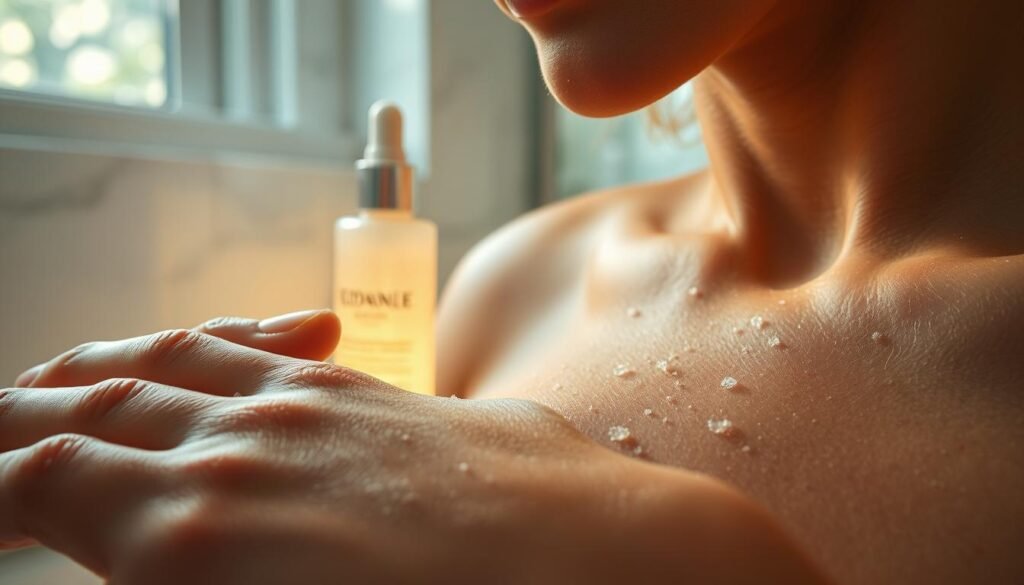
Nearly 30% of first-time retinol users see flaking in the first two weeks. This reaction surprises many when they start new skincare.
Introducing strong active ingredients can make your skin shed. This is because retinol and AHAs speed up cell turnover. They bring new skin to the surface quicker than usual.
It’s important to know the difference between normal exfoliation and bad reactions. Some flaking is okay when starting new products. But knowing when it’s too much is key to keeping your skin healthy.
This article will help you understand common signs of skin peeling. It will show you what to expect and what might cause it. The goal is to help you understand your skin better, not to replace doctor’s advice.
Medical Disclaimer: This content is for information and education only. It’s not medical advice. Skin conditions can be very different for everyone. Always talk to a board-certified dermatologist or healthcare professional for the right diagnosis and treatment.
Key Takeaways
- Active ingredients like retinol and AHAs can trigger visible flaking as they speed up cell renewal
- Temporary shedding during the adjustment period is often a normal response to certain products
- Understanding the difference between expected exfoliation and barrier damage protects your complexion
- Don’t confuse product pilling with actual flaking—they are two distinct reactions
- Professional guidance from a dermatologist is essential for addressing persistent or concerning reactions
- Individual responses vary significantly, making personalized assessment important
Understanding Skin Peeling: An Overview
Your skin renews itself every day, sometimes more noticeably. This can be due to weather, lifestyle, skincare, or aging. Some peeling is temporary, but other signs might mean a skin issue.
Knowing why your skin peels helps you act right. It’s about knowing when it’s normal and when it’s not.
The Natural Shedding Process
Peeling is when your skin’s outer layer, the stratum corneum, sheds. This layer is made of dead skin cells that your body replaces as it renews itself.
Healthy skin sheds these cells all the time, but you usually don’t notice. Each cell takes about 28 days to move from deep layers to the surface. If this process speeds up or gets disrupted, you’ll see more peeling.
Some things can make skin cells turn over faster. Active ingredients in skincare products do this. They make the surface layer shed faster, helping your skin recover faster.
Multiple Factors Behind Skin Changes
Knowing what makes skin peel helps you understand it better. Many things can cause visible shedding:
- Weather changes: Cold air, low humidity, and harsh winds dry out your skin
- Sun exposure: UV rays damage skin, causing it to peel as it heals
- Skincare habits: Products with retinoids, alpha hydroxy acids, or beta hydroxy acids speed up cell turnover
- Lifestyle factors: Not drinking enough water, eating poorly, and stress harm your skin
- Natural aging: As you get older, your skin renews itself slower and produces less oil, making peeling more obvious
- Underlying conditions: Eczema, psoriasis, and fungal infections cause too much shedding
When you start using products that exfoliate or renew your skin, peeling can happen. Skin purging is when your skin reacts to these products by peeling more. This is different from irritation or an allergic reaction.
Knowing the difference is important. It tells you if you should keep using a product or stop. Purging usually gets better in four to six weeks as your skin adjusts.
Recognizing Warning Signs
Not all peeling is normal. Some signs mean your skin barrier is broken or you have a condition that needs a doctor’s help.
Expected peeling happens when you start new products. It should be mild and get better as your skin gets used to it. This shouldn’t hurt much.
But, some peeling is a problem:
- Excessive redness: Skin looks too red and inflamed
- Pain or burning: You feel pain or burning even after stopping the product
- Bleeding or cracking: Skin breaks open or has deep cracks
- Signs of infection: Skin feels warm, swells, has pus, or gets red and spreads
- Persistent peeling: Peeling goes on for too long without getting better
- Unusual patterns: Peeling looks strange, like shapes or patches
These signs mean you might need to change your routine or see a dermatologist. Listening to your skin means knowing when it’s just adapting and when it’s a problem.
Pay attention to how your skin feels after using products. If it feels tight, uncomfortable, or gets more sensitive, your skin barrier might be broken. This is different from the quick tightness that goes away with moisturizer.
Recognizing the Signs of Skin Peeling
Skin peeling shows up in different ways, making it easier to spot once you know what to look for. Your skin gives clear signs when it reacts to active ingredients. These signs can range from small flakes to big sheets of dry skin. Knowing these signs helps you act fast and change your skincare routine.
Being able to recognize skin peeling early can help prevent damage to your skin. Some people have mild reactions, while others have stronger ones. This depends on their skin type and the products they use.
Visual Characteristics of Peeling Skin
The look of peeling skin varies a lot from person to person. Spotting skin peeling early means noticing certain signs that are different from normal skin.
Common signs include thin, translucent flakes that look white or match your skin tone. These flakes often show up where you used products like retinoids or chemical exfoliants.
During skin purging, you might see many different blemishes at once. This includes whiteheads, blackheads, papules, pustules, and cysts in severe cases. These blemishes come up fast because active ingredients speed up cell turnover.
Other signs to watch for:
- Larger sheets of skin lifting away from the surface in more severe reactions
- Visible dry patches that appear lighter or more textured than surrounding skin
- Redness or inflammation accompanying the flaking areas
- Clear bumps and microcomedones that signal accelerated skin renewal
- Uneven skin tone where peeling occurs in concentrated zones
The severity of visible peeling can vary a lot. Some people just have a few small flakes, while others see big areas of skin lifting away.
Texture Changes to Look Out For
Besides what you see, how your skin feels is very important. Changes in texture often show up before you see flaking, making it key to feel your skin to spot peeling early.
When you touch affected areas, you’ll notice they feel rough or uneven instead of smooth. Your fingers might catch on raised edges where flakes start to lift.
Key texture changes include:
- Tight or uncomfortable sensation that persists even after applying moisturizer
- Dry patches that feel rough despite regular hydration
- Raised edges along flaking areas that snag on fabric or fingers
- Bumpy texture from accumulated dead skin cells
- Areas that catch on clothing when you dress or touch your face
Peeling skin feels very different from normal skin. The affected areas might feel papery or fragile. This signals that your skin barrier needs care and maybe a gentler approach to active ingredients.
Moisturizers might not work the same in peeling areas. They might sit on top of flaky skin or not absorb well. This is because the damaged barrier can’t soak up skincare products properly.
Seeing and feeling these signs together gives a full picture. Recognizing skin peeling through both visual and tactile changes lets you take quick action to help your skin recover and adjust your product use.
Factors Contributing to Skin Peeling
Many things can cause your skin to peel, from the weather to your daily habits. Skin changes can happen for many reasons, including weather, lifestyle, skincare habits, and natural aging. Knowing what causes peeling helps you fix it.
A proper dry skin diagnosis looks at your environment and daily routine. Peeling is rarely just one thing. Instead, many factors can make your skin lose its barrier and flake.
Environmental and Climate Influences
The weather greatly affects your skin’s health and moisture. Your environment directly impacts how well your skin keeps its protective barrier. Different seasons bring unique challenges that can lead to peeling.
Cold winter air is a big threat to your skin. Low temperatures and less humidity take moisture from your skin’s surface. Your skin loses water faster than it can be replaced, leading to dryness and peeling.
Hot summer weather also causes problems. Sun exposure damages the skin barrier and speeds up moisture loss. UV rays penetrate deep into skin layers, causing cellular damage that manifests as peeling days after exposure.
Wind exposure also increases moisture loss, regardless of the season. Strong winds remove the thin layer of oils that protect your skin. This leaves your skin vulnerable to dehydration and environmental irritants.
Indoor climate control systems contribute to skin peeling year-round. Heating systems in winter and air conditioning in summer both create extremely dry environments. These artificial climate conditions constantly pull moisture from your skin, often without you realizing it.
Key environmental factors include:
- Low humidity levels below 30% that accelerate water evaporation from skin
- Extreme temperature fluctuations that stress skin cells
- Direct sun exposure without adequate protection
- Prolonged time in artificially heated or cooled spaces
- High altitude environments with thinner atmosphere and increased UV exposure
Daily Habits and Personal Choices
Your lifestyle choices greatly impact your skin’s ability to stay moist and resist peeling. Many habits affect skin health in ways you might not recognize. These habits either support or undermine your skin barrier function.
Not drinking enough water is a common lifestyle factor that contributes to skin peeling. Dehydration affects your entire body, including your skin. When you don’t drink enough water, your skin cells cannot maintain proper hydration levels.
Poor nutrition lacking essential fatty acids and vitamins weakens skin structure. Your skin needs specific nutrients to build and maintain its protective barrier. Without adequate omega-3 fatty acids, vitamins A, C, and E, your skin becomes more susceptible to damage and peeling.
Excessive alcohol consumption directly impairs skin health. Alcohol acts as a diuretic, increasing water loss throughout your body. It also dilates blood vessels and triggers inflammation, both of which can compromise skin integrity.
Smoking severely damages skin from the inside out. Tobacco smoke restricts blood flow to skin cells and depletes oxygen levels. This impairs your skin’s natural repair processes and accelerates aging, making peeling more likely.
Stress affects skin barrier function through hormonal changes. Cortisol and other stress hormones disrupt normal skin processes. Chronic stress can trigger inflammatory responses that manifest as various skin problems, including peeling.
Insufficient sleep disrupts your skin’s repair cycle. Your body performs most cellular repair during deep sleep. When you consistently sleep fewer than seven hours, your skin cannot adequately regenerate and maintain its protective functions.
The skin is a reflection of overall health—lifestyle choices that harm your body will inevitably show up on your skin’s surface.
Skincare Product Components
Certain skincare ingredients intentionally cause controlled peeling as part of their beneficial effects. Understanding this distinction helps you differentiate between therapeutic peeling and problematic skin damage. Not all peeling from skincare products indicates a problem.
Some active ingredients accelerate cell turnover, which naturally involves shedding dead skin cells. This process reveals fresher, healthier skin underneath. When used correctly, this type of peeling represents the desired outcome of effective skincare.
But, using these ingredients too much or in the wrong way can damage your skin barrier. Using products too frequently or combining incompatible ingredients overwhelms your skin’s ability to repair itself. This leads to problematic peeling accompanied by irritation, redness, and sensitivity.
The concentration of active ingredients matters significantly. Professional-strength formulations require different usage protocols than over-the-counter products. Applying high-concentration products without proper preparation can trigger severe peeling and barrier damage.
Product formulation quality also influences how your skin responds. Well-formulated products include supporting ingredients that buffer possible irritation. Poorly formulated products may contain high levels of actives without adequate soothing or hydrating components.
Important considerations for skincare ingredients include:
- Starting with lower concentrations and gradually increasing strength
- Understanding the intended effects versus adverse reactions
- Recognizing that some initial peeling may be therapeutic
- Monitoring your skin’s response and adjusting usage according to it
- Distinguishing between beneficial exfoliation and barrier damage
Environmental conditions, lifestyle factors, and skincare ingredients often work together to cause skin peeling. Addressing peeling effectively requires examining all these contributing elements. A complete approach to dry skin diagnosis considers how these factors interact in your specific situation.
Skincare Habits That Can Cause Peeling
Many things can change your skin, including your skincare habits. The products and methods you use daily can either help or harm your skin. Knowing which habits cause peeling helps you make better choices for your skin.
Common skincare mistakes can make your skin dry and flaky. These mistakes often come from trying to improve your skin’s look. But, using too many active ingredients or applying them wrong can lead to peeling.
Spotting bad habits early lets you change them. Your skin needs time to heal and care for itself. Let’s look at the habits that often cause peeling.
Over-Exfoliation
Exfoliation removes dead skin cells and reveals new skin. But, doing it too much damages your skin barrier and causes peeling. This is a common problem from skincare treatments.
Skin exfoliation signs show when you’re doing too much. Your skin might feel tight, sensitive, or burn even with gentle products. If redness doesn’t go away, your skin barrier is damaged.
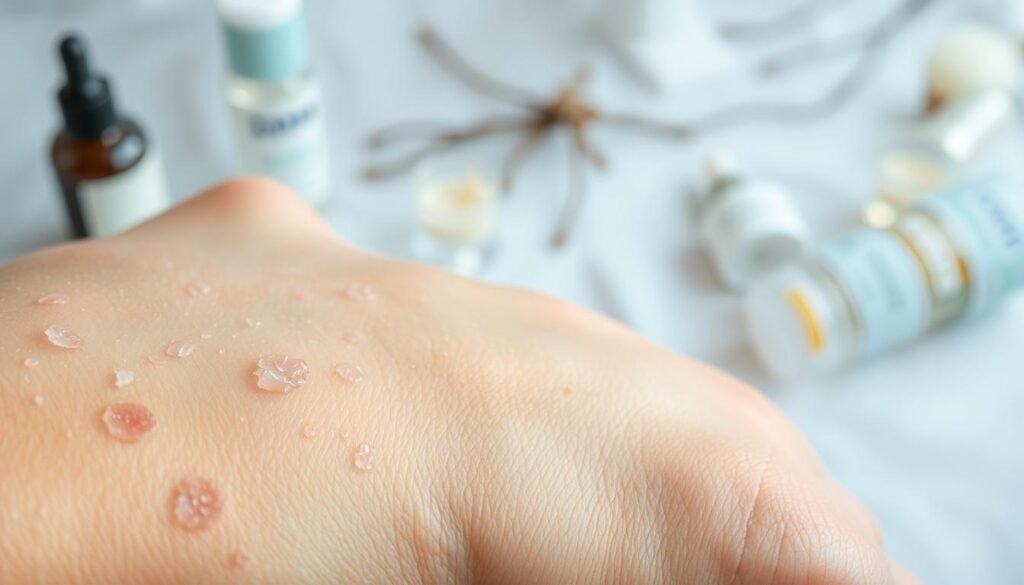
Too much exfoliation can cause skin purging and peeling for weeks. This happens when you exfoliate too often or mix different exfoliants. Using both physical and chemical exfoliants can be too harsh on your skin.
Several things lead to over-exfoliation problems:
- Using exfoliating products daily when your skin only tolerates them 2-3 times weekly
- Combining AHAs, BHAs, and retinoids in the same routine without proper spacing
- Applying exfoliants at concentrations too strong for your individual skin tolerance
- Not allowing adequate recovery time between exfoliation sessions
Your skin needs time to heal between treatments. The natural cell turnover cycle is about 28 days. Excessive exfoliation disrupts this process and prevents healthy new skin cells from forming.
Using Harsh Products
Some skincare products remove natural oils too fast. These products take away not just dirt and excess oil but also essential lipids. This leads to dehydration, irritation, and visible peeling.
Sulfate-heavy cleansers are common culprits. They create a lot of lather but can be too harsh. They leave your skin feeling dry because they remove too much moisture.
Many spot treatments are actually exfoliating agents like salicylic acid and benzoyl peroxide. These should be used carefully, avoiding sensitive or purging skin. Using them on already compromised skin can make peeling worse.
Additional harsh products that commonly cause problems include:
- High-concentration acids used too frequently without proper introduction periods
- Astringent toners containing high alcohol content that evaporates moisture
- Overly aggressive physical exfoliants with sharp, irregular particles
- Clay masks used daily instead of weekly, which over-dry the skin
The main issue with these products is disruption of the skin’s natural pH balance. When natural oils are stripped away too often, the barrier can’t protect the skin. This makes the skin vulnerable to damage and moisture loss.
Improper Product Layering
The order and timing of applying products affect how your skin reacts. Applying active ingredients without enough time for absorption can prevent them from working. This can make side effects like peeling and irritation worse.
Not waiting long enough between skincare steps causes problems. Active ingredients can interact in ways you don’t want when layered too soon. Some products need time to penetrate and adjust the skin’s pH before the next layer.
Layering multiple actives in one routine stresses your skin too much. Using vitamin C, retinoid, and an exfoliating acid together creates too much stress. Each active ingredient starts cellular changes that need energy and resources.
Not using moisturizer with strong actives increases bad reactions. Applying retinoids or high-percentage acids directly to bare skin maximizes their effect. But, this often leads to dryness and peeling that outweighs any benefits.
| Skincare Habit | Common Mistake | Result on Skin | Correction Strategy |
|---|---|---|---|
| Daily Exfoliation | Using chemical or physical exfoliants every day | Persistent redness, sensitivity, continuous peeling | Reduce to 2-3 times weekly, allow 48-hour recovery between sessions |
| Harsh Cleansing | Using sulfate-rich foaming cleansers twice daily | Tight, dry feeling, barrier damage, increased flaking | Switch to gentle, pH-balanced cleansers without harsh surfactants |
| Spot Treatment Overuse | Applying salicylic acid or benzoyl peroxide to entire face | Widespread dryness, peeling beyond problem areas | Apply spot treatments only to affected areas, avoid already peeling skin |
| Rushing Product Application | Layering actives immediately without wait time | Increased irritation, compromised product effectiveness | Wait 2-5 minutes between active ingredient applications |
Proper product layering needs patience and planning. Start with thin products and move to thicker ones. Let each layer absorb before adding the next, which is important for active ingredients that change skin pH.
Knowing these bad habits helps you change your routine. Small changes in frequency, product choice, and timing can greatly reduce peeling. Your skin does better when you respect its natural healing and barrier needs.
Skin Conditions Associated with Peeling
Some skin peeling needs more than just skincare. Certain health issues show up as peeling patterns. Knowing these can help you know when to see a doctor.
Temporary peeling is different from medical peeling. Medical peeling often has a specific pattern and lasts longer. This is because it’s caused by deeper health problems.
Inflammatory Skin Disorders
Eczema and dermatitis are common inflammatory conditions. They make your skin lose moisture and get irritated. Atopic dermatitis, a type of eczema, causes dry, itchy patches.
Dermatitis symptoms include intense itching, worse at night. The skin may weep or crust over. As it heals, it becomes thick and peels.
Contact dermatitis happens where you touch an allergen. It peels but stays in one area. Common allergens include metals and fragrances.
Watch for these dermatitis signs:
- Persistent itching that interferes with daily activities
- Red or brownish-gray patches, often on hands and feet
- Thickened, cracked, or scaly skin that peels continuously
- Small raised bumps that leak fluid when scratched
- Raw, sensitive skin from repeated scratching
Autoimmune Scaling Conditions
Psoriasis is an autoimmune condition where your immune system attacks healthy skin. This leads to thick, silvery scales on raised, red patches.
Psoriasis creates well-defined plaques with clear borders. These patches often appear on elbows, knees, and scalp. The scales are thick and hard to remove.
Removing psoriasis scales may cause bleeding. This is called the Auspitz sign. The affected areas may feel tender and crack, making joints painful.
Psoriasis has a cyclical pattern with flare-ups and remission. Stress and certain medications can trigger new outbreaks.
Fungal Skin Infections
Fungal infections like tinea cause circular patches of scaling skin. These patches spread outward, forming ring-shaped lesions. The center is often clearer than the edges.
Fungal infections have defined boundaries where healthy skin meets infected areas. The patches may itch and have fine scales that flake away easily.
These infections often occur in warm, moist areas like the feet and groin. They thrive in moist environments, making them more common in warmer months.
| Condition | Appearance Pattern | Primary Symptoms | Distinctive Features |
|---|---|---|---|
| Eczema/Dermatitis | Red, inflamed patches in skin creases | Intense itching, weeping, rough texture | Fluid-filled bumps, thickened skin from scratching |
| Psoriasis | Thick silvery scales on raised red plaques | Dry cracked skin, mild itching, tenderness | Well-defined borders, pinpoint bleeding when scales removed |
| Fungal Infections | Circular expanding patches with clear centers | Itching, scaling edges, gradual spreading | Ring-shaped lesions, defined boundaries, responds to antifungals |
Each condition needs professional diagnosis and treatment. While they share peeling, their causes and treatments are different. A dermatologist can identify the condition and suggest the right treatment.
If you have persistent peeling, itching, or spreading lesions, see a skin specialist. Early treatment can prevent complications and relieve symptoms faster.
The Importance of an Appropriate Skincare Routine
When your skin starts peeling, the right products and how you use them are key. A good skincare routine is the first step in treating skin flaking and preventing more damage. It’s about keeping things simple and using gentle products that help your skin heal.
Stick to a gentle skincare routine to avoid making things worse. Use a sulfate-free cleanser, a soothing moisturizer, and sunscreen during the day. Too many steps can overwhelm your skin and slow down healing.
Don’t use products that dry out your skin too much. Keep it hydrated and protected from the sun with sunscreen, UV-protective clothes, and wide-brimmed hats. These steps help your skin repair itself.
Choosing the Right Moisturizer
Finding the right moisturizer is key when your skin is flaking. Your moisturizer should help restore the skin barrier and keep it hydrated. Look for products with ingredients that work together well.
Ceramides help fix the skin barrier by filling gaps between cells. They keep moisture in and protect against irritants. Ceramide-rich products are great for skin that peels a lot.
Hyaluronic acid pulls in moisture, holding up to 1,000 times its weight in water. Glycerin does the same thing, pulling water into your skin. These ingredients are essential for keeping your skin moist.
Occlusive ingredients like squalane or shea butter lock in moisture. They prevent water loss, which is important when your skin is damaged. When your skin is peeling, use thicker creams instead of light lotions.
Avoid moisturizers with fragrances, essential oils, or too many active ingredients when your skin is peeling. These can irritate your skin and slow healing.
Incorporating Soothing Ingredients
Calming ingredients help your skin heal and reduce inflammation. Niacinamide reduces inflammation and strengthens the skin barrier. It’s safe for most skin types and rarely causes irritation.
Centella asiatica, or cica, helps repair the barrier and heal wounds. It’s been used for centuries in traditional medicine. Colloidal oatmeal soothes irritation by creating a protective film on your skin.
Allantoin calms and protects damaged skin while promoting new cell growth. Panthenol, or vitamin B5, helps keep moisture in and supports healing. These ingredients work together to calm inflammation and speed up recovery.
When treating skin flaking, look for products with multiple soothing ingredients. This approach helps with different aspects of healing at the same time.
Avoiding Irritating Products
Knowing what not to use is just as important as knowing what to use. Avoid sulfate-based cleansers that strip your skin of natural oils. Choose sulfate-free cleansers that clean without drying out your skin.
Products with denatured alcohol can sting and dry out your skin. Always check the ingredient list for alcohol, as it can be listed under different names. Synthetic fragrances are also common irritants and don’t offer any benefits.
Don’t add more exfoliating acids to your routine when your skin is peeling. Your skin is already shedding cells quickly. Adding more exfoliation can make things worse.
| Product Category | Ingredients to Seek | Ingredients to Avoid | Key Benefit |
|---|---|---|---|
| Cleansers | Sulfate-free surfactants, glycerin | Sodium lauryl sulfate, harsh detergents | Gentle cleansing without stripping |
| Moisturizers | Ceramides, hyaluronic acid, squalane | Fragrance, essential oils, high-percentage actives | Barrier repair and hydration |
| Treatment Products | Niacinamide, centella asiatica, panthenol | Additional acids, retinoids, vitamin C | Calming inflammation and supporting healing |
| Sun Protection | Mineral filters (zinc oxide), moisturizing base | Alcohol-based formulas, strong fragrances | UV protection without irritation |
Building a supportive skincare routine takes patience and careful product selection. Focus on treating skin flaking with hydration, protection, and gentle care. Your skin will heal better with a simple, thoughtful approach that respects its natural healing timeline.
Identifying Active Ingredients That Cause Peeling
Some active ingredients cause skin peeling to reveal fresher cells. Knowing what causes peeling in your routine lets you adjust your products. Many people flake without knowing their products have strong compounds.
Anti-aging and complexion-refining ingredients often cause peeling. This is a sign that old cells are being replaced. Knowing which ingredients cause this helps you know if it’s good or bad.
Alpha and Beta Hydroxy Acids
Alpha hydroxy acids (AHAs) are common exfoliants. They dissolve dead skin cells. Glycolic acid, lactic acid, and mandelic acid are often used.
Glycolic acid is very effective but can cause peeling. Lactic acid is gentler and hydrates. Mandelic acid works slowly.
Beta hydroxy acids (BHAs) like salicylic acid work differently. They are oil-soluble and clean pores. Acne-prone skin benefits a lot, but it may peel at first.
The strength and pH of these ingredients matter. Higher concentrations and lower pH values mean stronger results but more peeling. Chemical peels can use even higher concentrations for quick results.
- Glycolic Acid: Most potent AHA, causes noticeable peeling at 8-10% concentrations
- Lactic Acid: Gentler exfoliation with moisturizing benefits, visible peeling at 10-15%
- Mandelic Acid: Slowest-acting AHA, suitable for sensitive skin, minimal peeling
- Salicylic Acid: Oil-soluble BHA, penetrates pores, may cause initial purging and peeling
Retinoid Family Compounds
Retinoids, like retinol and tretinoin, are common causes of peeling. They speed up cell turnover. Retinoids push newer cells to the surface faster than usual.
Retinoids vary in strength. Tretinoin works right away. Adapalene and tazarotene target acne. Over-the-counter retinol is gentler but effective.
Adapting to retinoids takes 4-12 weeks. Peeling and sensitivity are normal. These signs mean the product is working and not a problem.
Start with low concentrations and gradually increase. Apply 2-3 times a week and then nightly. Using moisturizer before and after can help.
| Retinoid Type | Strength Level | Conversion Required | Typical Peeling Duration |
|---|---|---|---|
| Retinol | Moderate | Yes (2 steps) | 2-4 weeks |
| Retinaldehyde | Moderate-Strong | Yes (1 step) | 2-6 weeks |
| Tretinoin | Strong | No | 4-8 weeks |
| Adapalene | Strong | No | 4-12 weeks |
Ascorbic Acid Formulations
Vitamin C, or L-ascorbic acid, can cause mild peeling. It’s generally safe but high concentrations can exfoliate. This brightens skin but may flake.
Combining vitamin C with other ingredients can increase peeling. This mix speeds up results but raises peeling risk. Be careful and adjust as needed.
Vitamin C derivatives are gentler. They rarely cause peeling but offer antioxidant benefits. They’re better for sensitive skin or those new to actives.
To know if vitamin C is causing peeling, check the product’s concentration and pH. Below pH 3.5 and above 15% can exfoliate. If peeling happens, try using it alone or switch to a derivative.
Seasonal Changes and Skin Health
The seasons change, bringing more than just temperature shifts. They greatly affect your skin’s health and look. Skin changes can happen for many reasons, like weather patterns that change throughout the year. Knowing these seasonal effects helps you adjust your skincare routine to protect against peeling and keep your skin healthy.
Different times of the year bring unique environmental stresses that challenge your skin’s natural defenses. Both extreme cold and intense heat can disrupt moisture balance and cause peeling. Recognizing these patterns lets you take steps before damage happens.
Winter’s Harsh Effects on Your Skin
Cold weather poses many challenges for your skin’s integrity and moisture retention. Low temperatures and reduced humidity greatly decrease your skin’s natural moisture. This makes your skin more prone to dryness, flaking, and uncomfortable peeling.
The body’s response to cold air involves blood vessels near the skin’s surface constricting. This reduces nutrient and oxygen delivery to skin cells. When cells don’t get enough nourishment, your skin barrier function becomes impaired and vulnerable to damage.
Indoor heating systems make the problem worse by creating dry environments. Furnaces and space heaters strip moisture from the air, pulling water from your skin. This increased water loss accelerates drying and contributes to visible peeling.

Cold wind adds another stress by physically damaging the protective skin barrier. Harsh winter winds create microabrasions on the skin’s surface. These tiny injuries compromise barrier function and allow more moisture to escape, creating a cycle of dryness and peeling.
Winter air can hold much less moisture than warm air, dropping humidity levels to as low as 10-20% outdoors and even lower indoors with heating systems running constantly.
To protect your skin in winter, make strategic changes to your skincare routine. Switch to richer, more emollient moisturizers that create an occlusive barrier on the skin’s surface. Look for products containing ceramides, hyaluronic acid, and natural oils that reinforce the skin barrier.
Consider these essential winter protection strategies:
- Use a humidifier in your bedroom and main living spaces to restore moisture to indoor air
- Layer protective clothing including scarves and face coverings when going outdoors in harsh weather
- Apply moisturizer immediately after washing when skin is slightly damp to lock in hydration
- Avoid hot showers which strip natural oils; use lukewarm water instead
- Reduce exfoliation frequency during winter months when skin is already compromised
Summer Heat and UV Damage
Summer sun exposure presents different but significant threats to skin health. Ultraviolet radiation causes direct DNA damage to skin cells at the molecular level. This cellular injury triggers an inflammatory response throughout affected tissue, leading to the redness and discomfort associated with sunburn.
The body’s response to UV damage involves shedding damaged cells through accelerated exfoliation. This process creates the classic sunburn peel that appears several days after intense sun exposure. Understanding proper sunburn peeling treatment becomes essential for anyone who experiences this condition.
When sunburn peeling occurs, resist the urge to pull or pick at flaking skin. Instead, focus on gentle hydration and allowing the natural shedding process to complete. Apply aloe vera gel or fragrance-free moisturizers to soothe affected areas and support healing.
Beyond immediate sunburn effects, prolonged sun exposure accelerates photoaging processes in the skin. UV radiation breaks down collagen and elastin fibers that maintain skin structure and elasticity. This damage disrupts normal skin renewal patterns and can contribute to irregular peeling and texture changes over time.
The cumulative nature of sun damage makes consistent protection absolutely critical. Keep skin protected from UV light with sunscreen, UV-protective clothing, and wide-brimmed hats. These preventive measures protect against both immediate concerns like sunburn and long-term barrier damage.
Effective sun protection requires a complete approach:
- Apply broad-spectrum SPF 30 or higher sunscreen every morning, regardless of weather conditions or season
- Reapply sunscreen every two hours when outdoors, or immediately after swimming or sweating
- Seek shade during peak sun hours between 10 AM and 4 PM when UV rays are strongest
- Wear protective clothing including long sleeves, pants, and wide-brimmed hats when spending extended time outdoors
- Use UV-blocking sunglasses to protect the delicate skin around your eyes
Proper sunburn peeling treatment focuses on supporting the skin’s natural healing process. Keep affected areas moisturized with gentle, fragrance-free products. Stay well-hydrated by drinking plenty of water to support skin recovery from within.
| Season | Primary Skin Challenge | Key Protective Strategy | Common Peeling Trigger |
|---|---|---|---|
| Winter | Low humidity and moisture loss | Rich moisturizers and humidifiers | Dry air and cold wind damage |
| Summer | UV radiation and heat exposure | Broad-spectrum SPF 30+ sunscreen | Sunburn and photoaging effects |
| Spring/Fall | Temperature fluctuations | Flexible routine adjustments | Transitional weather stress |
| Year-Round | Environmental stressors | Consistent barrier protection | Inadequate moisture retention |
Remember that sun damage accumulates over your lifetime, making daily protection essential regardless of your immediate plans. Even incidental exposure during your commute or while running errands contributes to long-term skin damage. Making sunscreen application a non-negotiable part of your morning routine provides the best defense against UV-related peeling and premature aging.
Seasonal awareness empowers you to anticipate skin challenges before they develop into problematic peeling. By adjusting your skincare approach to match environmental conditions, you maintain healthier, more resilient skin throughout the entire year.
When to Seek Professional Help
Knowing when to get help is key to taking care of your skin. Some peeling is normal, but other signs mean you need a doctor. This info is to help you understand your skin, not to replace a doctor’s care. Always see a board-certified dermatologist or healthcare expert for the right diagnosis and treatment.
It’s important to know the difference between normal and serious symptoms. Most skin reactions get better in a few weeks. But, if problems last longer, you should see a doctor.
Warning Signs Requiring Dermatological Evaluation
Some symptoms mean your peeling is more than just a normal reaction. If purging lasts longer than six weeks, see your dermatologist. You might need to change how often or how much you use a product.
Here are signs you should see a doctor right away:
- Persistent peeling beyond six weeks when using active ingredients, indicating abnormal reactions
- Severe pain, burning, or bleeding with peeling
- Signs of infection like oozing, crusting, fever, or increasing redness and warmth
- Peeling that spreads or worsens despite stopping products
- Unusual patterns or locations that don’t match where you applied products
- Systemic symptoms like fatigue, joint pain, or general malaise with skin changes
- Sudden onset in adults or any peeling in children without clear cause
Dermatologists can tell the difference between normal and serious reactions. They adjust treatments and find problems that home care can’t solve.
The table below helps you tell normal reactions from signs that need a doctor:
| Symptom Category | Normal Adjustment | Requires Medical Evaluation | Timeline |
|---|---|---|---|
| Duration | Resolves within 4-6 weeks | Persists beyond 6 weeks | Track for 6+ weeks |
| Pain Level | Mild tightness or sensitivity | Severe burning, stinging, or sharp pain | Immediate if severe |
| Appearance | Light flaking in treated areas | Oozing, crusting, bleeding, or spreading rash | Within 48-72 hours |
| Response to Care | Improves with moisturizer and reduced frequency | Worsens despite stopping products | 1-2 weeks observation |
| Associated Symptoms | Limited to application area | Fever, fatigue, joint pain, systemic issues | Same day if systemic |
Talk to your dermatologist or doctor before starting a peel regimen if you’re worried about how your skin will react.
Making the Most of Your Appointment
Getting ready for your dermatologist visit is important. Good preparation helps doctors understand your skin better and plan the best treatment.
Follow these steps before your visit:
- Document with photographs showing symptom progression over time, capturing different angles and lighting conditions
- Create a detailed timeline noting when peeling started and any potentially related events or product changes
- Compile a complete product list including all skincare items, medications, and supplements currently used
- Note additional symptoms even if they seem unrelated to your skin concerns
- Prepare specific questions about diagnosis, treatment options, expected outcomes, and timeline for improvement
- Bring suspect products or detailed ingredient lists for review during your appointment
This way, your dermatologist can understand your situation fully. Professional evaluation provides clarity that self-assessment cannot offer.
Your dermatologist may do a physical exam, look at your medical history, and possibly order tests for a full dry skin diagnosis. They can figure out if peeling is from products, skin conditions, or health issues.
Seeing a professional means you get the right treatment instead of trying home remedies that don’t work. Dermatologists have treatments that you can’t buy over the counter.
Getting help early is a sign of good self-care, not failure. Early intervention often prevents complications and speeds up healing. Your skin’s health is worth expert attention when you see warning signs.
Tips for Soothing Peeling Skin
When your skin starts flaking, it’s important to be gentle and protective. Your skin needs care, not harsh treatments. The right steps can help it heal faster and avoid scars or infections.
Knowing how to care for your skin when it’s peeling is key. Your skin’s barrier is weak, so it needs extra care and patience.
Home Remedies to Consider
The most important thing is to never pick or pull at peeling skin. This can hurt healthy skin and increase the risk of infection. It also makes healing take longer and can cause scars or dark spots.
Instead, use gentle methods that help your skin heal naturally. These methods work with your skin, not against it.
Start with lukewarm compresses to help loosen flakes. Use a clean, damp cloth on the affected areas for a few minutes. The warmth helps without forcing off dead skin cells too soon.
Use a gentle, fragrance-free cleanser and lukewarm water. Hot water takes away the natural oils your skin needs. Pat your face dry instead of rubbing to keep it slightly damp.
Apply a rich moisturizer right after cleansing while your skin is damp. This locks in moisture better than applying to dry skin. Look for ingredients like ceramides, hyaluronic acid, and glycerin to strengthen your skin.
Consider these additional soothing strategies:
- Apply occlusive treatments like petroleum jelly or healing ointments on dry patches at night
- Drink enough water throughout the day to keep your skin hydrated
- Use a humidifier to add moisture to indoor air, which is dry
- Keep your hands away from your face to prevent bacteria
These remedies help your skin heal naturally. Letting your skin heal at its own pace is best. Rushing it can cause more problems.
Protective Measures to Use
Sun protection is critical when your skin is peeling. Your skin is more vulnerable to UV damage. This can lead to burns, dark spots, and longer healing times.
Choose mineral sunscreens with zinc oxide or titanium dioxide. These sit on top of your skin and are less likely to irritate it. Apply often and reapply every two hours when outside.
Stop using products with active ingredients until the peeling stops. This means no retinoids, AHAs, BHAs, or vitamin C products. Your skin is already shedding, so it doesn’t need more exfoliation.
Don’t use spot treatments for peeling skin. Many contain ingredients that can make things worse. Avoid using extra products to speed up healing.
Avoid hot showers or baths that dry out your skin. Use lukewarm water for all cleansing. The comfort of hot water isn’t worth losing more moisture.
Protect your skin from environmental stressors that can slow healing:
- Cover your face with a soft scarf in windy or cold weather
- Avoid swimming in chlorinated pools or salt water that irritates your skin
- Stay out of saunas and steam rooms that can increase inflammation
- Wash your hands well before touching your face to prevent bacteria
These protective measures help your skin recover. They create a safe space for your skin to heal without extra challenges.
Remember, patience is key when treating skin flaking. Peeling skin usually lasts one to two weeks, but full recovery may take longer. Gentle care during this time helps your skin become healthier and more resilient once it’s healed.
Prevention Strategies for Healthy Skin
Healthy skin starts with smart choices and good habits. The key is proactive prevention to avoid peeling. Good skin shedding solutions help your skin get better without hurting it.
Start slow with new products. Your skin needs time to get used to them. Rushing can cause irritation and flaking.
Building Daily Protective Habits
The best way to prevent peeling is the “ease in” method. This lets your skin get used to new ingredients without problems.
For retinoids, start with two times a week. Then, increase to three times a week. Keep going until you use it every day if you want. This lets your skin adjust slowly.
With exfoliating acids, start with once a week. Most people shouldn’t use them more than two to three times a week. This keeps your skin’s renewal process in check.
How you apply products matters. Using the right amount is better than too much. This way, you get better results without harming your skin.
Here are some daily habits to keep your skin healthy:
- Use water-based serums before oil-based moisturizers for better absorption
- Wait 3-5 minutes between product layers, like before sunscreen
- Avoid mixing strong actives together, like retinoids and acids
- Use daily broad-spectrum SPF 30 or higher to prevent sun damage
- Apply moisturizer twice a day to keep your skin barrier strong
The buffering technique is also helpful. Apply moisturizer first, then the active ingredient. This reduces irritation while keeping your skin healthy. Or, mix the active serum into your moisturizer for a gentler touch.
Layering products right helps protect your skin. This way, your skin can enjoy the benefits of active ingredients without losing its natural defense.
Making Lifestyle Changes That Support Skin Health
Your lifestyle affects how your skin reacts to products. Good skin shedding solutions look at both what you put on your skin and what you eat.
Drinking enough water is key for healthy skin. Aim for eight glasses a day. More if you’re active, in hot weather, or live in a dry place. Water helps your skin cells work right and keeps moisture in.
What you eat also matters. Focus on these nutrients for your skin:
| Nutrient Category | Primary Benefits | Food Sources | Daily Target |
|---|---|---|---|
| Omega-3 Fatty Acids | Reduces inflammation and strengthens barrier | Salmon, walnuts, flaxseeds, chia seeds | 2-3 servings weekly |
| Antioxidants | Protects against free radical damage | Berries, leafy greens, dark chocolate | 5-7 servings daily |
| Vitamin A | Supports cell turnover and repair | Sweet potatoes, carrots, spinach | 700-900 mcg daily |
| Vitamin C | Boosts collagen production | Citrus fruits, bell peppers, broccoli | 75-90 mg daily |
| Vitamin E | Enhances moisture retention | Almonds, sunflower seeds, avocado | 15 mg daily |
Sleep is very important for your skin. It does most of its repair work when you’re sleeping. Not enough sleep can weaken your skin and slow down healing.
Managing stress is also key. Stress can weaken your skin and make it more sensitive. Exercise helps by improving blood flow and reducing stress.
Here are some ways to manage stress:
- Try meditation or deep breathing for 10-15 minutes a day
- Exercise 3-5 times a week to improve blood flow and reduce stress
- Go to bed and wake up at the same time every day, even on weekends
- Do yoga or stretching to help with physical tension
Bad habits can hurt your skin more than good products. Smoking and drinking too much alcohol can damage your skin. Try to avoid these to keep your skin healthy.
By choosing the right products and living a healthy lifestyle, your skin can thrive. These strategies help you enjoy the benefits of skincare without the problems of peeling and damage.
Conclusion: Listening to Your Skin’s Needs
Your skin is as unique as your fingerprint. What works for your friend might not work for you. Understanding this helps you create a skincare routine that meets your needs.
Creating Your Personal Approach
Skincare takes patience and observation. When you try new products, your skin may take four to six weeks to adjust. You might see skin peeling as your skin gets used to the new ingredients.
Some products just don’t work for everyone. By trying different things, you can find out what works for you. This way, you can avoid products that cause problems.
Sticking to a routine helps your skin more than changing products all the time. Watch how your skin reacts to different things. This helps you know what’s normal and what’s not.
Moving Forward with Confidence
Learning about skin peeling helps you make better choices. You can use active ingredients safely and know when to make changes. This knowledge helps you make smart decisions for your skin.
If you’re worried about peeling or have other skin concerns, see a dermatologist. Their advice, combined with your knowledge, will help you achieve healthy, glowing skin.