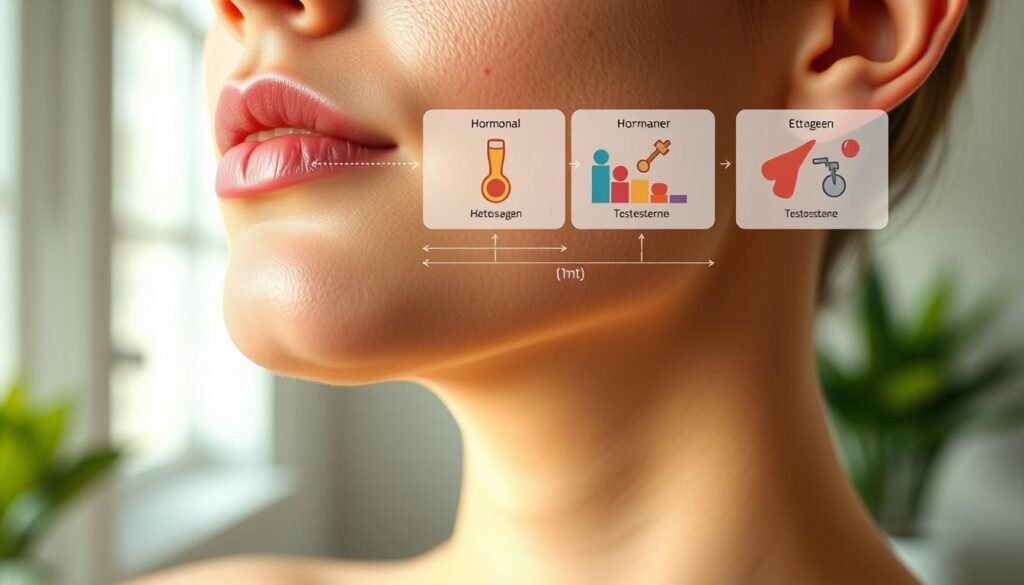
Nearly 85% of adults between 20 and 40 have acne on their jawline. Yet, most don’t know these breakouts show deeper hormonal issues. This type of acne affects millions of Americans, making them think it’s just like teenage acne.
When you see breakouts on your chin and jaw, it might mean your body’s balance is off. These spots can be small blackheads or big, painful cysts. Knowing about hormonal acne helps you find the right treatment for clear skin.
Your sebaceous glands make more oil when hormone levels change. This oil mixes with dead skin and bacteria, causing acne. Women often see these breakouts get worse during their period, pregnancy, or when starting birth control. Men might notice changes when their testosterone levels shift.
Figuring out what causes your acne is key to treating it. The place where your acne shows up is very telling. Adult acne usually appears on the lower face, unlike teenage acne on the forehead and nose. This helps doctors figure out if hormones are the main issue.
Key Takeaways
- Jawline acne affects 85% of adults and differs from regular teenage breakouts
- Hormonal fluctuations cause sebaceous glands to overproduce oil, leading to clogged pores
- Breakouts along the chin, jaw, and lower cheeks often indicate hormonal imbalances
- Women may notice patterns linked to menstrual cycles, pregnancy, or birth control changes
- Location of acne helps determine if hormones are the primary trigger
- Adult hormonal acne requires different treatment approaches than typical acne
What is Jawline Acne?
Jawline pimples show up on your lower face in a special way. They appear around your chin, jaw, and lower cheeks. This makes it hard for many to get clear skin. Knowing why these pimples come back in the same spots is key.
Defining Jawline Acne
Jawline acne happens when your sebaceous glands make too much oil. This oil clogs your pores. Unlike teen acne, jawline pimples form deep in the skin. They feel firm and take a long time to heal.
Common Symptoms to Look For
To spot jawline pimples, you need to know what to look for. They are different from regular acne in several ways:
| Symptom Type | Description | Duration |
|---|---|---|
| Deep Cysts | Painful bumps under skin | 2-4 weeks |
| Blackheads | Dark spots at pore openings | 1-2 weeks |
| Whiteheads | Small white bumps | 3-7 days |
| Redness | Inflamed, swollen areas | 5-10 days |
The pain level is a big difference. Treating chin breakouts takes time because these spots are hard to get rid of. They often get worse during certain times of the month, like for women with hormonal changes.
Causes of Jawline Acne
Jawline acne doesn’t just happen out of nowhere. Many things come together to cause those tough breakouts on your chin and jaw. Knowing what causes adult acne helps you find your personal triggers and the best treatments.
Hormonal Changes and Imbalances
Your hormones are key in causing jawline breakouts. When hormone levels change, your oil glands make more sebum. This excess oil clogs pores and leads to acne. Women often see more breakouts before their periods or during early pregnancy when hormone levels change a lot.
PCOS acne is a big challenge due to hormonal imbalances. This condition messes with reproductive hormones, causing constant breakouts on the face, chest, and upper back. Women with PCOS often deal with deep, painful cysts along the jawline that are hard to treat.
Lifestyle Factors Contributing to Acne
Your daily habits and choices really affect your skin’s health. Comedogenic ingredients in makeup and skincare products can clog pores, which is worse along the jawline where products tend to pile up. Physical irritation from chin straps, musical instruments like violins, or touching your face a lot can also cause inflammation and breakouts.
| Contributing Factor | Impact on Skin |
|---|---|
| Harsh cleansers | Strip natural oils, increase oil production |
| Sun exposure | Thickens skin, traps oil in pores |
| Certain medications | Lithium, steroids trigger breakouts |
| Insulin resistance | Increases inflammation and oil production |
Genetics play a big role in your pore size and how much oil you naturally produce. This means some people are more likely to get adult acne. Even though you can’t change your genetics, knowing your risk helps you make a better skincare plan.
Differentiating Jawline Acne from Other Skin Issues
Getting the right diagnosis is key to finding effective treatments. Many skin problems look similar, like around the jaw. Knowing the differences helps you pick the best way to get clear skin.
Acne vs. Rosacea
Both conditions cause facial redness, but they’re different. Jawline acne shows up as blackheads, whiteheads, and inflamed bumps. Rosacea, on the other hand, is persistent redness with visible blood vessels and rarely has blackheads.
People with rosacea often feel burning or stinging, unlike those with acne.
Acne vs. Folliculitis
Folliculitis creates small red bumps around hair follicles, looking like acne. But, it’s caused by bacteria or fungi, not clogged pores. Folliculitis bumps often itch a lot, unlike typical acne.
Acne vs. Hormonal Cysts
Deep, painful lumps along your jawline are usually hormonal cysts, not regular acne. These cysts are deeper in the skin and take longer to heal. Surface-level acne responds to topical treatments, but hormonal cysts need prescription meds or a dermatologist’s help.
Accurate diagnosis requires careful observation of symptoms, timing, and treatment response. If unsure, seeing a dermatologist is best to treat the right condition properly.
Recognizing the Patterns of Jawline Acne
Knowing when and why jawline acne shows up is key to treating it. Most people find their breakouts follow their body’s natural rhythms. This helps spot the link between hormones and skin issues.
Timing of Breakouts
Jawline acne often shows up during hormonal changes. Women often see breakouts 7-10 days before their period. This is because progesterone goes up and estrogen goes down, making oil glands work overtime.
Pregnancy and menopause also lead to acne. In the first trimester of pregnancy, and during menopause, hormone changes cause breakouts.
Stress is another big factor. High cortisol levels from work or lack of sleep can lead to jawline breakouts. Changes in birth control, starting testosterone therapy, or taking certain meds can also cause acne.
Frequency and Severity
The severity of hormonal acne varies. Some get mild breakouts monthly, while others face severe acne needs. Keeping a journal of your breakouts can help you spot your pattern.
| Life Stage | Typical Frequency | Common Severity |
|---|---|---|
| Puberty (12-18 years) | Weekly to monthly | Moderate to severe |
| Menstrual years (18-45) | Monthly cycles | Mild to moderate |
| Perimenopause (40-50) | Irregular patterns | Moderate to severe |
| Post-menopause (50+) | Occasional flares | Mild to moderate |
Menstrual cycle breakouts are usually worse in teens and early twenties. Adult acne is deeper and more painful, forming cysts that take longer to heal.
Skincare Routine for Jawline Acne
Creating an effective skincare routine is key for managing jawline breakouts. It should include gentle cleansing and targeted treatments. Understanding Facial Mapping Acne helps pick the right products for your skin.
Cleansing Properly
Begin by washing your face twice a day with a gentle cleanser. Use lukewarm water to rinse, as hot water can irritate your skin. Medical-grade skincare cleansers have active ingredients that go deeper than regular products.
Look for cleansers with salicylic acid. It helps remove dead skin cells and excess oil without drying out your skin.
Recommended Products
Several ZO Skin Health products are great for jawline acne:
- The Exfoliating Cleanser uses salicylic acid to unclog pores and reduce inflammation
- Dual Action Scrub combines chemical exfoliation (salicylic and lactic acids) with gentle physical exfoliation
- Oil Control Pads remove pore-blocking dead skin throughout the day
- Complexion Clarifying Serum features niacinamide and glycolic acid to calm inflammation
- Daily Power Defense strengthens your skin barrier function
- Smart Tone Broad-Spectrum SPF 50 provides essential UV protection
These medical-grade skincare options form a complete treatment plan. Regular use prevents new breakouts and heals existing ones.
When to See a Dermatologist
Many people try to fight jawline acne on their own. But, some cases need a dermatologist consultation. Knowing when to get expert help can lead to lasting clear skin. Breakouts that don’t get better with home remedies often mean deeper issues.
Signs That Require Professional Attention
Some signs mean it’s time for professional acne treatment. If OTC products don’t work after 6-8 weeks, a dermatologist can help. Painful, deep cysts that leave scars need quick attention. Unusual skin changes require expert evaluation to check for other conditions.

- Irregular menstrual cycles paired with chin acne
- New facial hair growth on chin or upper lip
- Unexplained weight gain with persistent breakouts
- Dark patches in skin folds (neck, underarms, groin)
- Thinning scalp hair while jawline acne worsens
Importance of a Correct Diagnosis
Getting the right diagnosis is key for effective treatment. Conditions like PCOS can look like simple acne but need special care. A dermatologist combines medical and cosmetic knowledge for personalized plans.
They can figure out if your breakouts come from hormones, bacteria, or lifestyle. This targeted approach saves time, money, and prevents skin damage from wrong treatments.
Lifestyle Adjustments for Prevention
Making small changes in your daily routine can greatly improve your skin. These tips help you achieve a clear jawline naturally. They focus on easy adjustments to support your skin health.
Diet and Nutrition Changes
Your diet is key to healthy skin. Avoid foods high in sugar and dairy, as they can cause inflammation. Instead, eat fresh fruits, veggies, and foods rich in omega-3s like salmon and walnuts.
Drinking eight glasses of water a day helps remove toxins. This keeps your skin clear and healthy.
Stress Management Techniques
Stress can lead to acne by increasing cortisol levels. Regular exercise helps reduce stress and improves blood flow to your skin. Try yoga, meditation, or simple breathing exercises for 10-15 minutes each day.
Getting enough sleep, seven to nine hours a night, helps your skin repair itself. This is essential for maintaining a clear jawline.
| Daily Habit | Benefit for Skin | Time Required |
|---|---|---|
| Face cleansing after exercise | Removes sweat and bacteria | 2-3 minutes |
| Clean razor replacement | Prevents bacterial spread | Weekly task |
| Makeup brush cleaning | Eliminates bacteria buildup | 5 minutes weekly |
| Oil-free moisturizer use | Prevents pore clogging | 30 seconds daily |
Try to avoid touching your face throughout the day. This simple habit stops bacteria from spreading and causing more breakouts. Use noncomedogenic skincare and avoid harsh astringents to keep your jawline skin healthy.
Natural Remedies for Jawline Acne
Looking for home remedies can really help with jawline acne. The right mix of gentle ingredients and lifestyle changes can lead to clearer skin. These methods aim at reducing inflammation, bacteria, and oil without using harsh chemicals.
Safe Ingredients to Try
Some gentle ingredients are great for acne. Vitamin C helps brighten dark spots and repair the skin. Niacinamide fights inflammation and controls oil, which is good for hormonal acne. Azelaic acid kills bacteria and clears pores without drying out the skin.
Retinol is a top choice for natural acne treatments. Start with a low dose to avoid irritation. Use these treatments after washing with mild, fragrance-free cleansers. Pat your face dry, not rub, to avoid spreading bacteria.
Lifestyle Modifications That Help
Simple daily habits can boost your home remedies. Getting enough sleep is key for hormone balance and skin health. Try to sleep seven to nine hours a night for repair and balance.
- Remove all makeup and sunscreen before bed using gentle ingredients like micellar water
- Try LED light therapy—blue light kills acne bacteria while red light reduces inflammation
- Keep hands away from your face to prevent spreading oils and bacteria
- Change pillowcases twice weekly to reduce bacterial buildup
These natural treatments take time but offer lasting benefits without harsh side effects.
Importance of Hormonal Balance
Your hormones are key to clear, healthy skin. When they’re out of balance, your skin may show signs like acne on your jawline and chin. Knowing this helps you work towards better skin.
The Role of Hormones in Skin Health
Androgens, like testosterone, affect your skin’s oil production. When androgen levels go up, your skin makes more oil. This oil clogs pores and lets acne bacteria grow. The jawline, chin, and lower cheeks are more likely to get breakouts because they have more androgen receptors.
Testing and Treatment Options
Getting hormonal testing through blood work can show imbalances that cause acne. Your doctor might check testosterone and other hormones to find the cause of your breakouts.
There are many hormone regulation treatments to help balance hormones:
- Combined birth control pills reduce androgen production and help manage PCOS symptoms
- Spironolactone blocks androgen receptors, making it effective for stubborn hormonal acne
- Isotretinoin (Accutane) treats severe nodular acne by shrinking oil glands
- Progesterone-only pills offer an alternative for those who cannot take estrogen
Each treatment works in its own way. Your dermatologist will suggest the best one for you based on your hormone levels and health history.
Common Myths About Jawline Acne
Many people believe false information about jawline breakouts. This can stop them from finding effective treatment. Let’s look at the real factual information behind this common skin condition. It affects millions of adults in America.
Debunking Misconceptions
One big acne myth is that breakouts only happen in teenagers. This is not true. Adult acne hits about 15% of women and 3% of men over 25, says the American Academy of Dermatology.
Many adults get jawline breakouts well into their 30s, 40s, and beyond.
Another myth is that acne can’t be treated. While there’s no permanent cure, dermatologists have many safe treatments. Options range from over-the-counter benzoyl peroxide gels to prescription retinoids like tretinoin.
Understanding the Truth
The most damaging misconceptions about hormonal acne involve shame and self-blame. People often think poor hygiene causes breakouts. But overwashing can make inflammation worse. Jawline acne usually comes from hormonal changes, not dirty skin.
Professional treatments have improved a lot. Today, you can try:
- Chemical peels using salicylic acid
- HydraFacial treatments for deep cleansing
- Blue LED light therapy targeting bacteria
- Cortisone injections for painful cysts
Knowing these acne myths helps you make better choices for your skin. This knowledge turns frustration into empowerment on your path to clearer skin.
Conclusion: Taking Control of Your Skin Health
Understanding jawline acne means it’s not just about the surface. Breakouts along your jaw often show deeper hormonal issues. To fix this, you need a full approach to skin health.
When you find the root cause of your acne, you can move past quick fixes. This leads to lasting results.
Empowering Yourself with Knowledge
Knowledge is power when it comes to your skin. Treating jawline acne early prevents scarring and damage. Getting advice from professionals helps you find the right treatments for your skin.
Everyone’s skin is different. What works for one person might not work for another. So, it’s important to find what works best for you.
Finding Effective Treatments and Solutions
The best acne solutions use a mix of treatments. Brands like ZO Skin Health offer medical-grade skincare. This works well with professional treatments at clinics.
Health & Aesthetics offers many options. These include prescription meds, chemical peels, Hydrafacial treatments, laser therapy, and LED light therapy. These treatments help with active breakouts and prevent new ones.
Success in treating acne long-term comes from using the right products, treatments, and lifestyle changes. Your diet, stress, and sleep affect your skin. By addressing these, you build a strong foundation for lasting, healthy skin.