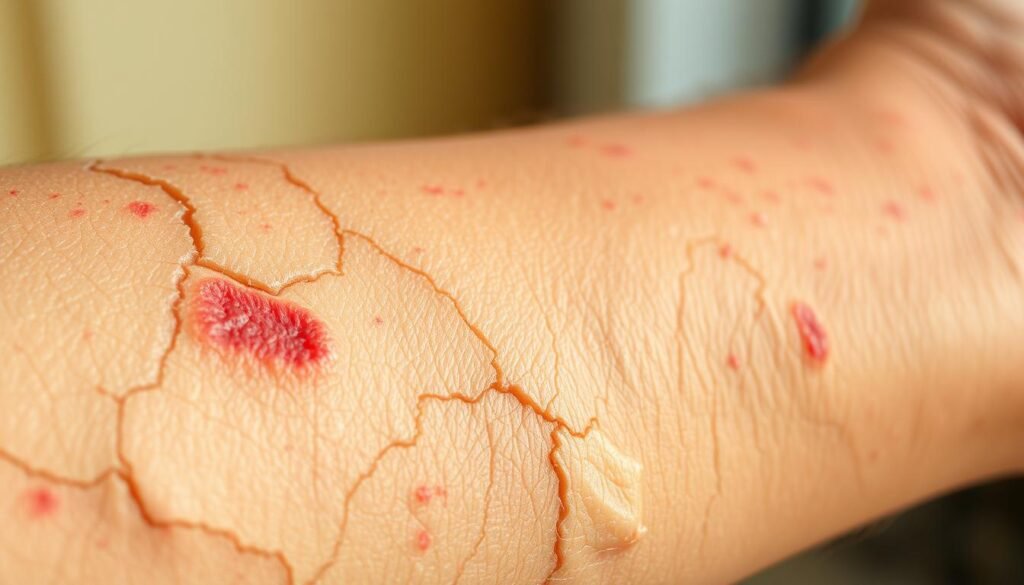
Studies show that nearly 30% of people misidentify their skin condition in the first year of symptoms. They often confuse general dryness with eczema-related inflammation. This is because many skin issues look similar at first.
Small changes in texture, appearance, and comfort can start early. Over time, these changes become more obvious and may need attention. Understanding the specific signs helps you make better choices for your skincare.
This guide helps you spot signs of eczema. You’ll learn about common symptoms and when to see a doctor. We’ll explain the difference between everyday dryness and signs of something more serious.
Medical Disclaimer: This content is for educational purposes only. It does not replace medical advice. Conditions vary greatly among individuals. Always see a board-certified dermatologist or healthcare professional for a correct diagnosis and treatment plan.
Key Takeaways
- About 30% of people initially misidentify their condition, confusing general dryness with inflammation-related issues
- Texture and appearance changes often begin subtly before becoming more pronounced over time
- Professional dermatological evaluation is essential for accurate diagnosis and personalized treatment
- Multiple conditions share overlapping characteristics, making self-assessment challenging without proper knowledge
- This guide provides educational information to help you identify when to seek expert medical consultation
Understanding Dry, Cracked Skin
When your skin loses its natural moisture, big changes happen. The outer layer gets weaker, letting water escape and making it hard to stay hydrated. This can lead to flakiness or painful cracks that affect your daily life and skin health.
It’s important to know how skin gets dry before linking it to eczema. Understanding moisture loss helps you spot when normal dryness turns into a serious issue.
The Science Behind Moisture Loss
Dry skin, or xerosis, happens when the outer layer loses moisture and oils. Your skin has a barrier made of cells, lipids, and proteins that keep moisture in. When this barrier breaks down, water escapes faster than your body can replace it.
Many confuse dry skin with dehydrated skin. Dry skin lacks oil, while dehydrated skin lacks water. But, these conditions often happen together, making treatment harder.
Your skin’s barrier has three main parts. Natural moisturizers draw water into cells. Lipids seal in moisture. Skin cells block irritants.
If any part of this barrier fails, your skin can’t hold moisture well. The barrier weakens, moisture escapes, and irritants can get in. This makes your skin more prone to damage.
Factors That Strip Your Skin’s Natural Protection
Many things can make your skin dry and cracked. Knowing what causes it helps you find ways to protect your skin.
Environmental conditions play a big role in skin dryness. Cold weather, low humidity, and wind take moisture from your skin. Indoor heating in winter makes air dry, speeding up water loss.
Your daily habits also affect your skin’s moisture. Washing with harsh soaps removes natural oils. Hot showers and baths dissolve the lipid barrier faster than warm water.
As you age, your skin makes fewer oils and loses moisture. Your skin gets thinner and makes less moisturizing compounds. Genetics also play a part in how well your skin keeps its barrier.
| Cause Category | Specific Factors | Impact Level | Prevention Strategy |
|---|---|---|---|
| Environmental | Cold weather, low humidity, wind exposure | High | Use humidifiers, wear protective clothing |
| Daily Habits | Hot water, harsh soaps, frequent washing | Moderate to High | Switch to lukewarm water, gentle cleansers |
| Biological | Aging, genetic predisposition, hormonal changes | Moderate | Consistent moisturizing, protective skincare |
| Medical | Thyroid conditions, diabetes, kidney disease | Variable | Medical treatment, specialized care |
Health conditions can show up through skin changes. Thyroid disorders, diabetes, and kidney disease affect hydration. These need professional treatment.
Dryness can get worse, leading to severe skin issues. Early signs include rough texture and flaking. As it gets worse, you might feel itching, tightness, and see scaling.
Severe skin dryness can cause cracks and open wounds. These are entry points for bacteria and allergens. Without treatment, damage and moisture loss continue, making recovery harder.
Anyone can get dry skin sometimes. But, certain signs can mean you have a more serious condition like eczema. Normal dry skin usually gets better with moisturizing and changing your environment. If dryness persists or symptoms worsen, you might need special care.
The Connection Between Eczema and Dry Skin
Eczema and dry skin are more than just skin issues. They create a cycle of inflammation and moisture loss. This cycle needs special care to break it.
Dry skin can happen from time to time. But eczema is different. It involves deeper changes in the body. Knowing this helps you treat it right.
Understanding the Inflammatory Skin Condition
Eczema, also called atopic dermatitis, is a chronic condition. It disrupts your skin’s protective barrier. Unlike temporary dryness, it involves immune system problems.
People with eczema lack a protein called filaggrin. This protein helps keep the skin moist. Without it, the skin can’t hold onto moisture well.
When the skin barrier breaks down, moisture escapes. Irritants and bacteria can get in deeper. This leads to symptoms like intense itching, redness, and inflammation.
Not all dry skin indicates eczema. But all eczema involves a broken skin barrier. Simple dry skin can get better with moisturizers and changes in the environment. Eczema needs more than that.
Genetics play a big role in eczema. If your family has eczema, asthma, or hay fever, you’re at higher risk. The immune system overreacts to substances, causing inflammation and damage.
Different Forms and Their Characteristics
Eczema comes in different forms, each with its own signs and triggers. Knowing these helps in treating it better. The most common types affect different areas and ages.
Atopic dermatitis is the most common type. It starts in childhood and can last into adulthood. It causes itchy, red patches on the face, hands, and other areas.
Contact dermatitis happens when skin touches irritants or allergens. It causes redness, burning, and sometimes blisters. Harsh soaps, metals, fragrances, and plants are common triggers.
Dyshidrotic eczema affects hands and feet. It causes small, itchy blisters. Stress and allergies can trigger it.
Nummular eczema looks like coin-shaped patches. They are itchy and well-defined. These patches can ooze fluid before drying out.
Seborrheic dermatitis affects oily areas like the scalp and face. It causes scaly patches and stubborn dandruff. It needs different treatment than other eczema types.
Stasis dermatitis happens in the lower legs due to poor circulation. The skin becomes swollen and discolored. It needs treatment for circulation issues and skin care.
Each type of eczema needs its own treatment plan. Some people have more than one type. Knowing the differences helps in finding the right treatment.
Eczema symptoms change over time. Knowing your type and triggers helps control flare-ups. If over-the-counter treatments don’t work, see a doctor.
Identifying Symptoms of Dry, Cracked Skin
Spotting early signs of dry, cracked skin is key to acting fast. At first, changes might be small but grow over time. Knowing these signs helps you tell simple dryness from serious issues like eczema.
Your skin sends signals through its look and feel. Paying attention to these clues is important for your skin’s health.
Texture Changes
When your skin gets dry, it changes. You might feel it’s a bit rough or tight, mainly after washing or in cold air. This often starts on hands, elbows, or lower legs.
As dryness gets worse, your skin gets even rougher. You might see flakes or scales that look like small white or gray patches. Touching these areas shows an uneven feel compared to healthy skin.
Later, your skin might crack into deep splits called fissures. These can be shallow or deep enough to bleed. Fissures often show up where skin bends a lot, like knuckles or heels.
Eczema makes skin feel thick and leathery from constant scratching and swelling. This is called lichenification. The skin might get raised lines or plaques that feel harder than usual.
Color Variations
Changes in color and texture are signs of dry, cracked skin, often linked to eczema. Normal dry skin might look a bit dull or ashy. But eczema-related dryness shows more color changes that are important to notice.
Redness, or erythema, often shows up around dry areas. This pink to bright red color means there’s inflammation under the skin. How red it is can show how bad the condition is.
For darker skin tones, hyperpigmentation is common. These dark patches can be brown, purple, or gray. They happen because of inflammation and stick around even after symptoms get better.
On the other hand, some people see lighter patches after the inflammation goes away. These lighter spots contrast with the rest of the skin and might take months to fade. Knowing these changes helps you spot dry, cracked skin in different skin types.
The table below shows how symptoms get worse from mild to severe:
| Symptom Category | Mild Stage | Moderate Stage | Severe Stage |
|---|---|---|---|
| Texture | Slight roughness and tightness after washing | Visible flaking, scaling, and uneven surface texture | Deep cracks (fissures), bleeding, and leathery thickening |
| Color | Dull or ashy appearance with minimal redness | Pink to red patches with early pigmentation changes | Intense redness, significant hyper or hypopigmentation |
| Sensation | Minor tightness and occasional mild itching | Persistent itching, burning sensations, sleep disruption | Severe pain, constant itching, major impact on daily activities |
Sensations and Comfort Level
How your skin feels is very telling. Your comfort level shows how serious your condition is and if you need to see a doctor.
Tightness is one of the first things people notice. The skin feels stretched and uncomfortable, more so after washing or in dry air. This feeling gets worse when you make facial expressions or move your joints.
Itching, or pruritus, can range from mild to severe. Simple dryness might itch a bit, but eczema makes it much worse. This itching often gets worse at night, making it hard to sleep.
Burning or stinging sensations mean your dryness is getting worse. These feelings get worse when you put water, lotions, or other products on affected areas. This discomfort means your skin’s barrier is badly damaged.
Deep cracks cause sharp pain. Moving or putting pressure on these cracks hurts a lot. This pain is different from the dull ache of simple dryness and means you need to see a doctor right away.
Mild dryness might cause a bit of discomfort but doesn’t usually affect your daily life. But eczema can really impact your life. People with severe dry, cracked skin might avoid certain activities, clothes, or social events because of discomfort or how they look.
Sleep problems are a big sign of how bad your symptoms are. If itching or pain keeps you awake or wakes you up a lot, your symptoms are getting worse. This level of discomfort means you should pay closer attention and might need to see a doctor.
Knowing these changes helps you understand when you need to take action. The mix of texture changes, color changes, and growing discomfort gives a full picture of your skin’s health.
Common Signs of Eczema-Related Dry Skin
When dry skin is linked to eczema, certain symptoms appear. These signs are more than just dryness. They show when you need to see a doctor.
Eczema symptoms are different from simple dryness. While regular dryness might be a bit uncomfortable, eczema causes more severe reactions. These reactions can be both physical and visible, and they get worse if not treated.
Persistent Itching and Inflammatory Response
Intense itching is the worst part of eczema-related dry skin. This feeling, called pruritus, is much worse than regular dryness. Many find it unbearable, often at night.
The itching comes from inflammation in the skin. Your body’s immune system releases chemicals that make you itch. These chemicals wake up nerve endings, making you want to scratch.
Scratching might feel good for a moment but starts a bad cycle. This itch-scratch cycle is key to eczema symptoms. Each scratch damages the skin more, letting more irritants in.
The inflammation keeps this cycle going. Scratching breaks the skin, making inflammation worse. This makes you itch even more, starting the cycle again.
This cycle is what makes eczema different from simple dryness. Simple dryness might itch sometimes, but eczema’s itching never stops. It also raises the risk of infections because broken skin lets bacteria in.
Visible Redness and Tissue Swelling
Inflammation shows up in different ways on the skin. It looks different on different skin tones. Knowing how it looks on your skin is important.
In lighter skin, affected areas turn pink or red. This gets worse during flare-ups. In darker skin, it shows as darker brown, purple, or gray patches.
During acute eczema episodes, swelling is common. This swelling is more noticeable in thin skin areas. The eyelids, areas around joints, and hands often swell up.
Chronic eczema looks different than acute episodes. It may not show as much redness. Instead, it gets thick and changes color from scratching.
Significant itching, redness, and swelling mean you likely have eczema. These signs are not seen in simple dry skin. They show that your skin is reacting strongly.
Seeing these signs early is key. It helps stop the condition from getting worse. Early treatment can break the itch-scratch cycle and fix the skin barrier.
Environmental Factors Contributing to Dry Skin
Things around you can really affect how hydrated your skin is and make eczema worse. Where you are, whether outside or inside, can either help or hurt your skin. Knowing what affects your skin helps you take better care of it all year.
Changes in temperature, humidity, and air quality all play a big role. For people with eczema, their skin is already in trouble. Knowing what environmental challenges you face helps you get ready and take better care of your skin.
Seasonal Changes
Every season brings its own skin challenges. Winter skin problems are a big issue for people with dry, cracked skin and eczema. The cold air and low humidity make it hard for your skin to hold onto moisture.
In winter, your skin loses more natural oils that protect it. This makes your skin lose moisture faster. When your skin’s barrier is weak, it’s easier for irritants to get in and cause inflammation and eczema flares.
Going from cold outside air to warm indoor air stresses your skin. Your skin has to work hard to adjust, which wears it out. In cold weather, your blood vessels get smaller to keep you warm, which means less blood flow to your skin.
Summer has its own challenges. The heat and humidity can make you sweat a lot, which can irritate your skin. But winter skin problems are usually the biggest issue for people with dry, cracked skin and eczema.
Knowing what to expect with the seasons helps you prepare your skin. You can start using more moisturizer before your skin gets worse.
Indoor Climate Conditions
The air inside your home or office can really affect your skin’s moisture. Central heating in winter and air conditioning in summer both make the air very dry. This dry air pulls moisture from your skin, even if you’re comfortable with the temperature.
Heating systems dry out the air because they blow low-humidity air everywhere. Many places keep the humidity too low, which is bad for your skin. The ideal humidity for skin health is between 30-50%.
Workplaces can be tough on your skin too. Offices, hospitals, and other places with climate control focus on keeping you comfortable but forget about humidity. Spending long hours in these places can dry out your skin.
Things like dust, pet dander, mold spores, and chemicals from cleaning products can also harm your skin. These irritants can make your eczema worse, even if the air is dry.
Changing your environment can help manage your eczema. Simple steps like using humidifiers, improving air flow, and avoiding airborne irritants can make a big difference.
| Environmental Factor | Impact on Skin | High-Risk Seasons | Management Strategy |
|---|---|---|---|
| Cold outdoor temperatures | Strips natural oils and accelerates moisture loss | Winter and early spring | Apply thicker moisturizers before going outside |
| Indoor heating systems | Reduces humidity below optimal levels | Fall through early spring | Use humidifiers to maintain 30-50% humidity |
| Air conditioning | Decreases indoor moisture and dries skin surface | Summer months | Increase moisturizing frequency and hydration |
| Indoor irritants | Triggers inflammation and compromises skin barrier | Year-round exposure | Improve ventilation and reduce chemical cleaners |
Being aware of your environment gives you tools to protect your skin. By knowing what makes your symptoms worse, you can find ways to keep your skin healthy all year.
Lifestyle Factors Impacting Skin Health
Personal habits, like what you eat and how you care for your skin, affect your skin’s health. The choices you make every day impact your skin’s moisture and ability to fight inflammation. By understanding these lifestyle connections, you can improve your skin health with simple changes.
While the weather and humidity are important, your daily habits play a bigger role. Pay attention to what you eat and how you take care of your skin.
Nourishment and Fluid Intake
Your skin needs enough water to stay healthy. It has about 30% water, which keeps it plump and elastic. If you don’t drink enough water, your skin gets dry.
Drinking water helps treat dry skin. While it can’t cure eczema, not drinking enough makes it worse. Try to drink eight glasses of water daily, more when it’s hot or you’re active.
What you eat also matters for your skin. Some foods help keep your skin healthy and manage eczema.
Omega-3 fatty acids are good for your skin. They help keep moisture in and fight inflammation. You can find them in fish, flaxseeds, chia seeds, and walnuts.
Vitamins A, C, and E protect your skin from damage. Vitamin A helps your skin repair itself, while vitamin C is important for collagen. Vitamin E keeps your skin cells safe. You can get these vitamins from fruits, vegetables, nuts, and whole grains.
Zinc helps your skin heal and repair. It’s great for people with dry skin. You can find zinc in lean meats, legumes, seeds, and fortified cereals.
Some people with eczema might react to certain foods. Common culprits include dairy, eggs, nuts, soy, and wheat. But, don’t cut out all these foods without a reason.
Work with your doctor to find out what foods might make your eczema worse. Removing foods without a good reason can lead to nutritional problems that harm your skin.
Daily Skin Care Practices
Your skincare routine can either help or hurt your skin. Using harsh products can strip away the natural oils that keep your skin moist.
Practices like washing too much, using hot water, and scrubbing hard can dry out your skin. These actions remove the oils that protect your skin.
For eczema-friendly skin, start with a mild, fragrance-free cleanser. These products clean well without harming your skin’s natural balance.
Water temperature is key. Hot water might feel good but it dries out your skin. Use lukewarm water and keep your showers or baths short, around 5-10 minutes.
Moisturizing right after bathing is important. Apply your moisturizer within three minutes to keep moisture in your skin.
Choose products carefully. Avoid those with fragrances, dyes, or alcohols. These can make eczema worse. Look for “fragrance-free” products instead.
Being consistent is more important than using strong products. Use your products every day, focusing on gentle cleansing and moisturizing.
Here are key parts of a good skincare routine:
- Morning: Rinse with lukewarm water, apply moisturizer to damp skin
- Evening: Gentle cleansing, immediate moisturizer application
- After hand washing: Reapply hand cream to prevent dryness from frequent washing
- Post-exercise: Quick rinse to remove sweat, followed by moisturizer
The table below shows good and bad skincare practices. It helps you see what you can change in your routine.
| Skin-Supporting Practices | Skin-Damaging Practices | Impact on Barrier Function |
|---|---|---|
| Lukewarm water for bathing | Hot showers or baths | Hot water strips natural oils and increases transepidermal water loss |
| Fragrance-free gentle cleansers | Harsh soaps with fragrances | Harsh products disrupt pH balance and trigger inflammatory responses |
| 5-10 minute bathing duration | Extended water exposure (20+ minutes) | Prolonged exposure over-hydrates then rapidly dehydrates the outer skin layer |
| Pat dry, then moisturize immediately | Air drying or rubbing vigorously | Failure to seal in moisture leads to increased dryness and irritation |
| Consistent daily routine | Sporadic or inconsistent care | Irregular moisturizing prevents barrier repair and maintenance |
Changing your lifestyle helps with eczema treatment. What you eat and your skincare routine work together. They help your skin stay moist and fight eczema.
Start with small changes for better results. Focus on one or two areas first. Then, add more changes as they become part of your routine.
The Role of Allergens in Dry Skin
Allergens in everyday products and surroundings can harm your skin. They make eczema symptoms worse. Knowing which allergens affect you and how to avoid them is key.
When your skin’s barrier weakens, allergens can get in and cause problems. This leads to more inflammation and dryness. It’s important to find and avoid your specific triggers.
Environmental and Contact Triggers
There are many types of allergens that can cause dry skin. Environmental allergens are found in your surroundings. Contact allergens cause reactions when they touch your skin.
Dust mites are a big problem because they live in places like bedding and carpets. Their waste can get into your skin and cause inflammation.
Pet dander, pollen, and mold spores are also environmental allergens. They settle on surfaces and can get on your skin. For people with damaged skin, even a little bit can cause big problems.
Contact allergens can cause contact dermatitis. This is when your skin gets inflamed where the allergen touched. It’s easier to find out what’s causing the problem.
Common contact allergens include:
- Nickel found in jewelry, belt buckles, and metal fasteners
- Fragrances in cosmetics, soaps, lotions, and laundry products
- Preservatives like formaldehyde in personal care items
- Latex in gloves, elastic bands, and certain clothing
- Synthetic fabrics that trap moisture and irritate sensitive skin
Fragrances are everywhere and can be very harmful. They’re in things like laundry detergent and hand sanitizer. Many people don’t know that their favorite scented products can hurt their skin.
Allergens and damaged skin barriers create a big problem. When your skin’s protective layer breaks down, allergens can get in and cause inflammation. This makes your skin even drier and more inflamed.
Reducing Exposure Through Strategic Action
Reducing allergen contact helps your skin heal. It’s best to do this in a few ways at once. This way, you can avoid flares caused by too much exposure.
Changing your bedroom can really help. Use allergen-proof covers for your mattress and pillows. Wash your bedding in hot water every week to kill dust mites.
Keeping your home’s humidity between 30-50% helps too. Dust mites and mold don’t like it when it’s not too humid. But, don’t let it get too dry, as that can also dry out your skin.
Here are some more ways to protect your skin:
- Install HEPA filters in vacuum cleaners and air purifiers to capture airborne allergens
- Choose fragrance-free and dye-free personal care products consistently
- Switch to hypoallergenic laundry detergents without added scents
- Wear hypoallergenic jewelry and avoid nickel-containing accessories
- Select natural, breathable fabrics like cotton over synthetic materials
- Remove carpeting in bedrooms if possible, replacing it with hardwood or tile flooring
When picking products, be careful. Look for “fragrance-free” labels. “Unscented” products might have fragrances that can harm your skin.
For nickel sensitivity, apply clear nail polish to metal buttons and fasteners. This creates a barrier that prevents skin contact. It’s not perfect, but it helps when avoiding nickel is hard.
Reducing allergen exposure lets your skin heal. When you reduce inflammation, your skin can focus on repairing itself. This helps break the cycle of inflammation and dryness that comes with eczema.
Figuring out what allergens affect you might need professional help. What bothers one person’s skin might not bother another. So, finding what works for you is key to managing eczema.
When to Seek Professional Help
Many people treat mild skin dryness at home successfully. But, some symptoms mean you need a doctor’s help. Severe skin dryness that doesn’t get better with moisturizer needs a doctor.
It’s not always easy to know when to see a doctor. But, some signs are clear that you need a dermatologist’s help.
Critical Warning Signs Requiring Medical Attention
Some symptoms mean your skin needs a doctor’s check-up. If you see these signs, see a dermatologist right away.
Persistent severe skin dryness that doesn’t get better after a week needs a doctor. This means your skin needs stronger treatment.
Intense itching that keeps you awake or stops you from doing things is a big problem. When you can’t stop scratching, a doctor can help.
- Signs of infection like more redness, warmth, swelling, oozing, crusting, or pustules
- Skin cracks that bleed or hurt a lot
- A rash that covers a lot of your body or shows up in many places
- Changes in skin on sensitive areas like your face or genitals
- Eczema symptoms that suddenly get worse or change
- Symptoms that really affect your life or mental health
These signs might mean you need stronger treatments. They could also mean you have a secondary infection, which is common in eczema.
Sometimes, what looks like eczema is actually something else. Psoriasis, fungal infections, and other skin problems can look like eczema. A dermatologist can tell you what’s really going on.
Benefits of Timely Professional Diagnosis
Seeing a doctor early is very important for dry, cracked skin. Early diagnosis stops small problems from getting bigger and harder to treat.
A dermatologist can figure out what’s wrong with your skin. This means you won’t get the wrong treatment, which could make things worse.
Getting help early means you might not need as strong treatments. You can get better faster.
Doctors can give you stronger treatments than you can buy over the counter. They can prescribe special creams, pills, or other treatments that are just right for you.
They can also do tests to find out what’s causing your problems. Patch tests can show what allergens you’re reacting to, so you can avoid them.
Preventing complications is another big plus. Doctors can stop infections and scarring that can happen if eczema isn’t treated.
Today, there are many good treatments for eczema-related dryness. If you’re not sure if you should see a doctor, think again. Dermatologists can make a plan just for you.
Getting better can really improve your life. If dry, cracked skin is making you uncomfortable or affecting your work or relationships, a doctor can help you feel better.
Home Remedies for Managing Dry, Cracked Skin
You can manage dry, cracked skin with simple home remedies. These methods support your skin’s natural healing. They combine proven moisturizing techniques with natural treatments.
Home care strategies offer immediate relief and strengthen your skin’s barrier. The key is to find the right methods for your needs and use them correctly.
Effective Moisturizing Methods
The soak and seal method is the best way to manage dry, cracked skin. It involves three steps. First, soak in lukewarm water for 5-10 minutes to hydrate your skin.
Second, gently pat your skin with a soft towel until it’s slightly damp. Avoid rubbing to prevent irritation. Third, apply moisturizer within three minutes to keep water in your skin.
Choosing the right moisturizer is important. The table below compares three types and their effectiveness:
| Moisturizer Type | Characteristics | Best For | Effectiveness Level |
|---|---|---|---|
| Ointments | Most occlusive, greasy texture, petroleum-based | Severe dryness, cracked skin, nighttime use | Highest water retention |
| Creams | Balance of oil and water, semi-solid consistency | Moderate to severe dryness, daily use | Good efficacy and acceptance |
| Lotions | High water content, lightweight, spreads easily | Mild dryness, hairy areas, summer months | Lowest occlusion |
Proper application techniques enhance the benefits of any moisturizer. Apply generous amounts using downward strokes that follow your hair growth patterns. This method prevents follicular irritation that can trigger additional discomfort.
Reapply moisturizer at least twice daily and whenever your skin feels dry or tight. Severely dry or cracked areas need more frequent attention and thicker formulations. Consistency matters more than the specific product you select.
Regular moisturizing even when skin appears normal helps maintain barrier function and prevent flares.
Adapt your moisturizing techniques to match seasonal changes and your daily activities. Winter months typically require richer ointments, while summer allows lighter creams. Activities like swimming or frequent handwashing demand immediate reapplication.
Natural Treatment Options
Natural remedies offer complementary benefits for managing dry, cracked skin. They cannot replace medical treatment for moderate to severe eczema. Several evidence-supported options provide symptom relief when used appropriately.
Colloidal oatmeal baths soothe itching and reduce inflammation through compounds called avenanthramides. Add finely ground oatmeal to lukewarm bathwater and soak for 10-15 minutes. This treatment works well before applying moisturizer.
Coconut oil serves as a natural moisturizer with antimicrobial properties that may help protect compromised skin. Apply virgin coconut oil to damp skin after bathing. Keep in mind that some individuals experience sensitivity to coconut oil, so patch testing remains important.
Sunflower seed oil contains linoleic acid that may improve barrier function and reduce inflammation. Research suggests it helps maintain skin hydration when applied topically. Use cold-pressed, organic sunflower seed oil for best results.
Medical-grade honey provides antimicrobial and wound-healing properties for open or cracked skin areas. Apply a thin layer to affected spots and cover with a bandage. Regular honey from your kitchen lacks the purity needed for topical treatment.
Aloe vera gel offers soothing and anti-inflammatory effects for mild symptoms of dry skin. Choose pure aloe vera gel without added fragrances or dyes. Apply directly to irritated areas up to three times daily.
Set realistic expectations when trying natural treatments. These remedies may provide symptomatic relief and complement conventional care, but they work best alongside proper moisturizing techniques. Results vary between individuals, and what helps one person may not benefit another.
Always patch-test any new product on a small area first, even natural substances. Apply a small amount to your inner forearm and wait 24 hours to check for reactions. Sensitive skin can respond to natural ingredients with irritation or allergic responses.
Combine natural treatments with evidence-based moisturizing methods for optimal results. Track which approaches provide the most relief so you can build a personalized care routine. Consistency with home remedies produces better outcomes than sporadic application.
Recommended Over-the-Counter Products
Choosing the right over-the-counter products for eczema is more than just picking a moisturizer. The right products can help with dryness and cracking without a prescription. Knowing which ingredients work and how to pick the right products for different areas is key.
Choosing the Right Moisturizers
Good moisturizers for eczema have special ingredients. Look for ceramides, which help fix the skin’s barrier. This barrier stops moisture from leaving the skin.
Hyaluronic acid pulls water into the skin. Petrolatum locks in moisture. Glycerin and dimethicone also help keep moisture in.
Colloidal oatmeal is great for soothing and moisturizing. Many doctors suggest it for sensitive skin.
When picking moisturizers, look for:
- Fragrance-free to avoid irritants
- Dye-free to avoid sensitizers
- Hypoallergenic options
- Rich textures like creams and ointments
- Products with the National Eczema Association Seal of Acceptance
The right texture and formula depend on the area. Thicker ointments are best for hands and feet. Regular creams work well for most areas. Lighter lotions are better for the face.
Moisturizing right away after bathing helps a lot. Use a lot and reapply as needed.
Hands chapping needs extra care. Use products with lots of occlusives. Apply after washing hands, keeping a tube near every sink.
For hands, try this: Apply a thick ointment layer before bed and wear gloves. This helps repair cracked skin.
Medicated Topical Treatments
Some over-the-counter products help with inflammation and symptoms. They have ingredients that target eczema symptoms, not just moisturize.
Hydrocortisone cream is a common OTC steroid. It reduces redness and itching. But use it carefully and for no more than two weeks.
Apply hydrocortisone as directed. Avoid the face, groin, and underarms without a doctor’s advice.
Anti-itch products with pramoxine or menthol help with itching. They don’t fight inflammation but can stop the itch-scratch cycle. Use them as needed.
Colloidal oatmeal is also in other forms:
- Medicated creams
- Bath treatments
- Spray formulations
Know when to stop using OTC products. If symptoms don’t get better or get worse, you might need stronger treatments.
Use the least amount of medicated products needed. More isn’t always better, as it can harm the skin. Follow instructions and watch how your skin reacts.
Using moisturizers with medicated treatments works best. Apply the medicated product first, then moisturizer over it. This tackles inflammation and repairs the skin barrier.
Understanding Treatment Options
Knowing all the treatment options helps people work better with their doctors. When over-the-counter products don’t work, prescription drugs and lifestyle changes are key. A good plan mixes medical treatments and daily habits for lasting relief.
Dermatologists look at many things before choosing treatments. They consider how bad the symptoms are, where on the body they are, the patient’s age, and how well past treatments worked. They aim to reduce inflammation and help the skin heal naturally.
Medical Treatments for Moderate to Severe Cases
Prescription drugs can control inflammation better than moisturizers. Topical corticosteroids are the main treatment for eczema. They come in different strengths for different needs.
The strength of the corticosteroid depends on where on the body it’s used. Sensitive areas like the face need gentler options to avoid thinning. Thicker skin on hands and feet can handle stronger drugs.
Non-steroidal drugs offer long-term management options. Topical calcineurin inhibitors, like tacrolimus and pimecrolimus, fight inflammation without steroids’ side effects. They’re great for facial eczema and long-term use.
New drugs target specific immune pathways in eczema. Topical PDE4 inhibitors, like crisaborole, control inflammation. Topical JAK inhibitors, such as ruxolitinib, are recent advances that block proteins causing eczema symptoms.
For severe or widespread eczema, systemic treatments are needed. Oral corticosteroids provide quick relief but are only for short-term use. Immunosuppressants like cyclosporine, methotrexate, and azathioprine reduce immune activity for long-term cases.
Biologic medications have changed treatment for severe atopic dermatitis. Dupilumab targets specific immune pathways, helping when other treatments fail. Phototherapy uses ultraviolet light to treat widespread eczema.
Dermatologists use a step-up treatment approach. They start with mild treatments and move to stronger ones as needed. Consistent moisturizing and avoiding triggers are key for skin repair.
Daily Habits That Support Treatment Success
Lifestyle changes help medical treatments work better. A good plan combines prescribed drugs with daily habits. These changes can reduce medication needs over time.
Bathing habits affect skin moisture. Taking baths or showers once a day helps keep natural oils. Lukewarm water is better than hot water for the skin barrier.
Use gentle, fragrance-free cleansers to avoid irritation. Pat dry with a soft towel instead of rubbing. Apply moisturizer right after bathing, within three minutes, to keep moisture in.
- Choose soft, breathable fabrics like cotton for clothing and bedding
- Avoid wool and synthetic materials that may trigger itching
- Wear loose-fitting garments that don’t constrict or rub the skin
- Wash new clothes before wearing to remove formaldehyde and chemical residues
Managing stress is key to controlling eczema flares. Stress can trigger immune responses that make symptoms worse. Relaxation techniques, regular exercise, and enough sleep help keep the skin stable.
What household products you use affects your skin. Switch to fragrance-free laundry detergents and avoid fabric softeners. Wear gloves when cleaning with harsh chemicals or washing dishes often.
Keeping the indoor climate comfortable helps the skin. Maintain moderate temperatures and humidity levels to prevent dryness. Use a humidifier in winter when heating systems dry out the air.
Workplace considerations are important for those exposed to skin irritants. Talk to employers about protective measures if your job involves chemicals or frequent handwashing. Workplace accommodations can prevent eczema from getting worse and help treatment succeed.
Finding personal triggers takes time and observation. Common triggers include environmental allergens, certain fabrics, temperature extremes, and stress. Avoiding these triggers is as important as taking medication for long-term control.
Investing in lifestyle changes improves skin health. These changes require dedication and consistency but work well with medical treatments. Patients who actively participate in their care through both medication and lifestyle changes usually see better results than those relying only on medication.
Long-term Care for Skin Health
Managing eczema is a long-term commitment, not just a quick fix. A daily skincare routine is key to preventing flares and keeping your skin comfortable. Many people stop their care when symptoms go away, leading to more problems later.
Building Sustainable Habits
Being consistent is the most important thing for long-term control. Use moisturizer every day, even if your skin looks fine. This helps build a strong skin barrier before problems arise.
Use reminders on your phone to stay on track. Keep moisturizers in places like your bathroom, bedroom, and office. Also, remember to pack your skincare when you travel.
Monitoring Your Progress
Check your skin weekly for signs of dryness or cracks. Look for any new rough spots, scaling, or texture changes. Keep a journal to track when flares happen and what might cause them.
See your dermatologist every three to six months. They can spot changes you might miss. These visits help adjust treatments before small issues become big problems.
Learning to spot dry, cracked skin early is key. Quick action prevents small issues from getting worse. With consistent care, most people can manage their symptoms well and enjoy a better quality of life.