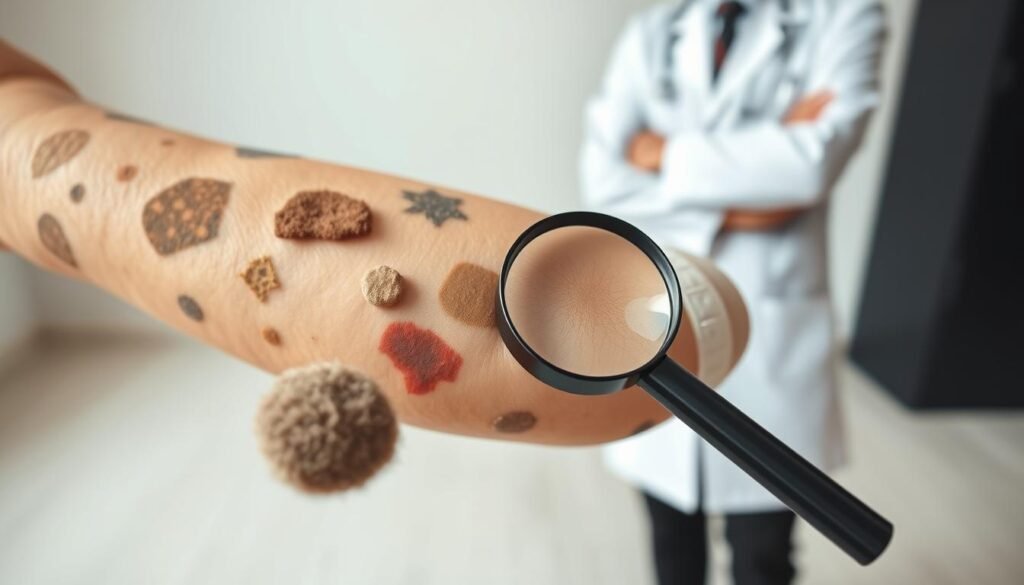
One in five Americans will get skin cancer by age 70, says the Skin Cancer Foundation. This is a clear sign that some color changes need quick attention. This guide will show you how to spot skin changes that might need a doctor’s visit, based on US dermatology advice.
New or changing spots are common, but not all are safe. A detailed look at growth, itching, bleeding, and color or shape changes is key. If a spot grows fast or looks unlike your other spots, seeing a doctor can help rule out serious conditions.
Changes can come from UV rays, hormones, injuries, infections, meds, or diseases like vitiligo and Addison’s. Knowing these causes helps you know when to see a doctor. This way, you can catch skin issues early.
Dermatologists might use a Wood’s lamp or biopsy to diagnose. To prevent and catch problems early, follow US dermatology advice on sun protection and wear protective clothes. Also, get an annual total-body skin cancer exam if you notice new or changing marks.
This article is for information only and not a substitute for medical advice. If a mole or patch grows, itches, bleeds, or changes, see a board-certified dermatologist for a check-up.
Key Takeaways
- Rapidly changing or unusual spots may indicate Pigmentation That Needs Medical Evaluation.
- A structured Skin discoloration assessment focuses on growth, color shifts, borders, and symptoms like itch or bleed.
- Common causes include sun exposure, hormones, injuries, medications, and medical conditions.
- United States dermatology guidance supports annual full-skin checks and timely biopsies when needed.
- Use SPF 30+ sunscreen, seek shade, and wear protective clothing to reduce risky changes.
- Know How to recognize skin changes so you can act early and book a Skin condition medical assessment.
Understanding Skin Pigmentation
Skin color comes from melanin, made by melanocytes. More pigment means darker areas, less means paler spots. Knowing this helps in evaluating skin pigmentation and understanding Fitzpatrick skin types.
What Is Skin Pigmentation?
Melanin gives skin, hair, and eyes their color. It absorbs UV light, causing tanning. Understanding how melanin is made and stored is key for diagnosing.
The Fitzpatrick skin types scale (I–VI) helps doctors talk about risks. Type I burns easily, while type VI tans well. This helps in evaluating Melasma and other skin conditions.
Common Types of Pigmentation
Hyperpigmentation includes freckles, age spots, and more. It’s caused by too much melanin. Doctors look at when it started and how it’s triggered.
Hypopigmentation shows as lighter patches. It can follow inflammation or be part of conditions like vitiligo. A detailed look at its appearance is important.
Solar lentigines and ephelides are more common in lighter skin. Melasma is often seen in darker skin. This helps in evaluating skin pigmentation.
The Importance of Pigment in Skin Health
Melanin protects skin from UV damage. Using sunscreen daily is essential for all skin types. It helps prevent melasma and age spots.
Knowing what’s normal helps in accurate skin pigmentation evaluation. This way, Melasma and Hypopigmentation can be properly assessed over time.
Seasonal Changes Affecting Skin Appearance
Seasonal skin changes show how daylight, humidity, and temperature change through the year. As UV levels go up and down, our skin’s color adjusts. Checking our skin each season helps us understand and care for it better.
How Seasons Impact Skin Color
In spring and summer, we get more sun exposure and pigmentation changes. The sun makes our skin tan and can darken freckles and spots. When fall and winter come, some spots might fade, but indoor UV is also a concern.
Freckles get lighter with sun and fade later. Solar lentigines show how much sun we’ve had, appearing on our face, hands, and more. Regular skin discoloration assessment helps prevent hyperpigmentation.
Common Seasonal Skin Conditions
Tinea versicolor grows in warm, humid weather, causing light, pink, or darker patches. Pityriasis alba might look lighter after sun exposure.
Heat, sweat, and friction can make dark marks worse. Cold, dry air can cause irritation that leads to color changes. These seasonal skin changes affect our skin’s tone and texture.
Strategies for Seasonal Skin Care
Use daily seasonal skin care strategies with SPF 30+ sunscreen. Tinted sunscreens with iron-oxide can block visible light that worsens melasma. Wear UPF clothing and avoid tanning beds for hyperpigmentation prevention.
In summer, reapply sunscreen often and stay out of the sun during peak hours. In winter, keep using SPF and stay hydrated to protect your skin. Regular skin discoloration assessment helps adjust your care as sun exposure and pigmentation change.
Daily Habits and Their Impact on Pigmentation
Every morning, we make choices that affect our skin years later. Habits like spending time outside or using skincare products play a big role. By choosing wisely, we can prevent age spots and keep our skin tone even.
Consistency beats intensity. A gentle, steady routine helps avoid irritation that can lead to dark marks. If you notice changes, getting a skin check ensures your routine stays safe and effective.

The Role of Sunscreen in Skin Health
Sunscreen is key for keeping your skin healthy. Use a broad-spectrum SPF 30 or higher on all exposed skin every day. Reapply every two hours when you’re outside. Look for tinted formulas with iron oxides to block visible light that can worsen melasma.
Wear a wide-brim hat, UV-protective sunglasses, and long sleeves when you can. Avoid sunbeds. Regular use helps prevent age spots and reduces seasonal flare-ups. If irritation happens, stop and get a skin check for advice.
Effects of Diet on Skin Coloration
Food doesn’t change skin color overnight, but it can affect inflammation. Eating a balanced diet with fruits, vegetables, lean proteins, and omega‑3s may reduce breakouts. This lowers the risk of dark marks after inflammation.
Support your skin barrier with nutrients like vitamin C and niacinamide in skincare. Keep exfoliation gentle. If you have established discoloration, talk to a clinician about options like hydroquinone or retinoids.
Importance of Hydration for Skin
Keeping your skin hydrated makes it calm and strong. Well-hydrated skin handles brighteners and exfoliants better, which may lower irritation-related pigment shifts. Drink water all day and moisturize with a fragrance-free product containing ceramides or glycerin.
If you notice dryness, stinging, or new patches, pause your skincare routine. A short break can prevent setbacks and support your long-term goals.
| Habit | Action Steps | Pigmentation Benefit | Pro Tip |
|---|---|---|---|
| Sun Protection | Apply broad-spectrum SPF 30+ daily; reapply every 2 hours; wear hats and sleeves | Helps in preventing age spots and melasma flares | Use tinted sunscreen with iron oxides for visible light; follow Broad-spectrum SPF guidance |
| Gentle Skincare | Use mild cleanser; moisturize; exfoliate sparingly with AHAs | Reduces irritation that can trigger dark marks | Add vitamin C or niacinamide for tone support |
| Diet Support | Favor whole foods; manage sugar spikes; include omega‑3s | Less inflammation means fewer post-acne spots | Keep a food and flare journal for patterns |
| Hydration | Drink water regularly; use ceramide-rich moisturizer | Stronger barrier lowers sensitivity to actives | Humidifier use at night can improve moisture balance |
| Clinical Guidance | Consult for topicals like hydroquinone, retinoids, azelaic acid | Targeted care with lower risk of rebound darkening | Schedule a skin condition medical assessment before combining actives |
Environmental Factors Influencing Skin Tone
Sun, air, and irritants change skin color over time. In the United States, climate and skin issues vary by area. A quick look at local UV levels, humidity, and pollution is key.
UV radiation leads the list. It darkens freckles and melasma and causes solar lentigines. Daily SPF, shade, and UPF clothes help prevent Postinflammatory hyperpigmentation risks. Regular habits help keep skin tone stable.
Pollution and Its Effects on Skin
Smog and particles stress the skin’s barrier. This can cause redness or itching, leading to dark or light marks. Gentle cleansing, antioxidants, and moisturizers help fight Environmental pigmentation factors from urban air.
How Weather Changes Affect Skin
Heat and humidity cause yeast overgrowth in tinea versicolor. This leads to scaly patches on the trunk and upper arms. Cold, dry weather can make eczema worse and cause pale patches.
Sun-smart behavior is important, even on cloudy days. UVA rays pass through glass and haze. Wide-brim hats and broad-spectrum SPF 30+ help prevent Postinflammatory hyperpigmentation risks. If spots spread quickly or itch, see a dermatologist.
The Impact of Allergens on Skin Health
Fragrances, nickel, and plant resins can cause dermatitis. After the rash heals, pigment may stay or fade unevenly. Patch testing can find allergens and reduce Environmental pigmentation factors.
Use fragrance-free cleansers and wash after being outside to pollen. Treating the rash early with a doctor’s help reduces Postinflammatory hyperpigmentation risks. This supports clearer results on future Skin discoloration assessments.
- Shield: broad-spectrum SPF, UPF clothing, and midday shade
- Protect barrier: gentle cleansers, ceramide-rich moisturizers, antioxidants
- Track triggers: note Weather and skin tone shifts across travel and seasons in the United States climate and skin patterns
Recognizing Symptoms of Concern
Small changes in skin color might be nothing to worry about. But, if they happen suddenly or look off, it’s time to check. Getting a Skin discoloration assessment can tell if it’s just a sun spot or something serious. If you’re unsure, seeing a doctor for pigmentation issues is a good idea.
Signs of Unusual Pigmentation
Look out for new or growing marks, itching, bleeding, pain, or slow healing. If a spot has different colors like tan, brown, black, blue, red, or white, it’s a sign to see a doctor. Also, if a mark is not even or has jagged edges, it’s a warning sign.
Solar lentigines that change fast or show symptoms need a closer look. More than six café-au-lait macules, big or small, should be checked by a dermatologist.
When to Worry About Skin Changes
If a mark changes size, shape, or feel in weeks, not years, see a doctor right away. Knowing the difference between melanoma and benign spots is important. But, don’t rely on self-checks alone.
If you’re unsure after checking yourself, use a Wood’s lamp or dermoscopy. If it’s not clear, a doctor might need to take a biopsy.
Common Skin Conditions Requiring Evaluation
Melasma that doesn’t respond to treatment or looks deep in the skin needs a dermatologist. Vitiligo should be checked because of its impact on mental health and possible autoimmune links.
Other common issues include tinea versicolor, pityriasis alba in kids and teens, and postinflammatory dyspigmentation. Each has its own path, so a careful assessment is key.
| Condition | Key Clues | Why It Needs Evaluation | Typical Next Step |
|---|---|---|---|
| Melasma | Symmetric brown patches on cheeks, forehead, or upper lip | Dermal depth or stubborn cases require Pigmentation medical diagnosis | Sun protection, topical agents; consider chemical peels or lasers under specialist care |
| Vitiligo | Well-defined depigmented patches, often around eyes, mouth, hands | Potential autoimmune associations; psychosocial impact | Medical consultation for pigmentation; phototherapy or topical immunomodulators |
| Tinea versicolor | Fine scale with lighter or darker macules on trunk or shoulders | May mimic other disorders | Antifungal therapy after confirmation by KOH or clinical exam |
| Pityriasis alba | Pale, slightly scaly patches, common in children and teens | Distress due to appearance; needs differentiation from vitiligo | Moisturizers, mild steroids; sunscreen to reduce contrast |
| Postinflammatory dyspigmentation | Dark or light marks after acne, eczema, or injury | Can mimic early melanoma changes | Skin discoloration assessment; targeted topicals, sun protection |
| Suspicious nevus | Asymmetry, irregular border, multiple colors, rapid change | Signs of melanoma vs benign must be clarified promptly | Dermatologist for pigmentation to perform dermoscopy and possible biopsy |
Triggers That May Exacerbate Pigmentation Issues
Hormones, genes, and medicines can change your skin tone quickly. A Pigmentation evaluation specialist looks for patterns and sun exposure to diagnose Hyperpigmentation. Daily sun protection and smart skincare choices help avoid flare-ups. For more on broad-spectrum sun safety, check this brief.
Hormonal Changes and Skin Discoloration
Pregnancy, birth control, and certain drugs like phenytoin can cause melasma. A Melasma evaluation looks at facial patterns and skin type. Using SPF 30+ and staying in the shade helps, along with medical care.
Genetic Factors Influencing Pigmentation
Genetics affect melanin levels and skin reactions to sun and inflammation. Family history can increase the risk of skin issues. A detailed diagnosis considers genetics, lifestyle, and sun habits.
Medication Effects on Skin Appearance
Some drugs, like chemotherapy and antibiotics, can cause skin color changes. Bleaching creams can darken skin if used wrong. A doctor may adjust treatment and stress UV protection.
- Action steps: track new or spreading patches after starting a drug, photograph changes monthly, and log sun exposure windows.
- Discuss alternatives with a Pigmentation evaluation specialist if discoloration persists or worsens.
| Trigger | Typical Pattern | Who Is Most Affected | Supportive Measures |
|---|---|---|---|
| Pregnancy or oral contraceptives | Symmetric facial macules (centrofacial, malar, mandibular) | Women; skin types IV–VI | Daily SPF 30+, hats, Melasma evaluation |
| Phenytoin and select drugs | Diffuse or patchy darkening on sun-exposed sites | All skin types; higher visibility in darker tones | Medication review, shade, Hyperpigmentation diagnosis |
| Genetic predisposition | Freckles, uneven tone, or pigment loss patterns | Those with family history | Sun control, targeted skincare, Genetic pigmentation factors assessment |
| Postinflammatory changes | Marks after acne, eczema, burns, or infections | Skin types III–VI | Manage the cause, SPF, gentle actives as advised |
Situations Where Pigmentation Becomes More Noticeable
Changes in routine, weather, and stress can affect how spots and patches look. A timely Skin pigmentation evaluation helps map patterns and guide care. This is important when tone seems uneven or new marks appear.
Events and Stress Impacting Skin
High-pressure periods, illness, or a major life event can change cortisol and immune activity. This link between Lifestyle and pigmentation can make melasma deepen or trigger new contrast after a sunburn.
Vitiligo affects an estimated 0.5–2% of people and may flare after stress, injury, or infection. Lesions on the head and neck often respond better to care than those on the hands, feet, or groin. This shapes Skin condition medical assessment and expectations.
Camouflage makeup from brands like Dermablend and Covermark can soften the look of dyspigmentation during recovery. If a spot changes fast, stings, or bleeds amid routine shifts, seek a prompt Skin pigmentation evaluation.
Seasonal Changes in Outdoor Activities
Longer days mean more UV during Seasonal outdoor activities and sun. Freckles, solar lentigines, and melasma can seem darker after hikes, beach trips, or sports.
Use SPF 30+ broad-spectrum sunscreen, UPF clothing from Columbia or Coolibar, and shade to reduce risk. Brief, repeated cryotherapy or topical plans may help lentigines. Lasers or light devices require referral due to postinflammatory hyperpigmentation risk and a careful Skin condition medical assessment.
Track how often you reapply sunscreen and where you burn. That log improves Lifestyle and pigmentation insights and makes a later Skin pigmentation evaluation more precise.
The Role of Skin Care Routines in Changes
Harsh scrubs or frequent strong acids can inflame skin, leading to dark marks after acne or dermatitis. A gentle cleanser, daily moisturizer, and measured actives show the Skincare routine impact on pigmentation without tipping into irritation.
Consider vitamin C, niacinamide, or dermatologist-directed hydroquinone, retinoids, azelaic acid, or glycolic acid. Introduce one change at a time and watch for sting, peel, or redness that may worsen contrast.
Sunless tanners can blur edges on some tones while treatment works. Keep notes on products, frequency, and effects to support Lifestyle and pigmentation planning and a thorough Skin condition medical assessment when needed.
The Importance of Seeking Professional Evaluation
Changes in skin tone can be small or big. A quick Skin discoloration assessment can tell if it’s normal or not. A Dermatologist for pigmentation helps when home care doesn’t work and patterns look odd.
See a doctor for any new or changing moles or marks, rapid spread of dark or light patches, itching, bleeding, pain, or poor healing. A primary care visit can start a Skin condition medical assessment, and a referral supports advanced testing or procedures when the cause is unclear.
When to Consult a Dermatologist
- New or evolving spots, streaks, or borders that look irregular.
- Lesions that itch, bleed, crust, or hurt, or that do not heal as expected.
- Rapidly enlarging pigmentation or color that spreads beyond the original area.
- Patches that recur after treatment or show atypical colors like blue-black or gray.
- Uncertain findings after a Medical consultation for pigmentation with your primary care doctor.
Urgent review is wise when melanoma is a concern or when specialized therapies are being considered. A focused Pigmentation medical diagnosis aims to identify the exact disorder before treatment starts.
What to Expect During a Skin Evaluation
The visit starts with history, photos, and a close visual check under bright light. Dermoscopy may reveal patterns not seen by the eye, improving Pigmentation medical diagnosis and triage.
- Wood’s lamp to gauge epidermal versus dermal pigment; epidermal melasma often appears more marked.
- KOH microscopy for suspected tinea versicolor to confirm fungus quickly.
- Biopsy when cancer must be ruled out or the presentation is atypical.
Management depends on cause and skin type. A Skin discoloration assessment guides safe choices and timelines, reducing risk of scarring or rebound.
| Condition | First-Line Approaches | Notes on Maintenance | Common Pitfalls |
|---|---|---|---|
| Melasma | Triple combination cream (fluocinolone 0.01%, hydroquinone 4%, tretinoin 0.05%) plus daily SPF 30–50+ | Long-term sunscreen and gentle care reduce relapse | Irritation and rebound if overused or peels/lasers done too early |
| Vitiligo | Topical corticosteroids (class II–III), tacrolimus or pimecrolimus; narrowband UVB for widespread areas | Slow, steady courses with follow-up for safety | Photosensitivity without sun protection; uneven expectations on repigmentation |
| Pityriasis alba | Moisturizer, sunscreen, low-potency steroids or tacrolimus for flares | Gentle skincare; fade occurs gradually | Over-treating with strong steroids |
| Tinea versicolor | Topical antifungals, selenium sulfide, zinc pyrithione; adapalene for scale control | Prophylactic washes during warm months | Expect slow repigmentation after clearing fungus |
| Postinflammatory change | Treat the trigger; sunscreen; targeted topicals as needed | Patience; color evens out over weeks to months | Harsh scrubs and heat exposures that darken spots |
Questions to Ask Your Healthcare Provider
- What is the working diagnosis and differential after the Skin condition medical assessment?
- Do I need a biopsy, and how will results guide care?
- Which sun protection steps fit my routine and budget?
- Should I start topical therapy, or consider peels, cryotherapy, IPL, or laser?
- What is my risk of postinflammatory darkening, and how do we reduce it?
- What results should I expect at two, six, and twelve weeks?
- How does my Fitzpatrick skin type affect treatment choices and safety?
A thorough Medical consultation for pigmentation builds a clear plan you can follow. Document changes with photos, keep a simple routine, and attend follow-ups so adjustments can be made without delay.
This content does not diagnose or treat conditions. Seek personalized medical advice before changing skincare or health routines.
Conclusion: Taking Control of Your Skin Health
Healthy skin comes from simple steps you can follow. Create a plan that includes prevention and gentle repair. Use daily broad-spectrum SPF 30+ to block harmful light, which helps with melasma.
Wear protective clothing and avoid tanning beds. Keep your cleansing gentle, moisturize twice a day, and use vitamin C and niacinamide. For specific issues, a doctor might suggest treatments like hydroquinone or retinoids.
Developing a Personalized Skin Care Routine
Adjust your routine with the seasons. In summer, use more shade and reapply SPF often. Wear a wide-brimmed hat too. In winter, focus on repairing your skin’s barrier.
Watch for triggers like hormones or new medications. If you need a Skin pigmentation evaluation, see a board-certified dermatologist. They can help adjust your plan as your skin changes.
Importance of Regular Skin Checks
Make it a habit to check your skin monthly. Look for new moles, spots that grow fast, bleeding, itching, or color changes. If you notice anything unusual, get it checked right away.
A biopsy might be needed to check for melanoma. Regular visits to a dermatologist and quick follow-ups are key. This way, you can catch any issues early.
Staying Informed About Skin Changes
Keep up with the latest in skin care. Melasma often needs ongoing protection from the sun. Solar lentigines can be treated with sunscreen and certain procedures.
Vitiligo might be managed with strong creams or UVB light. Tinea versicolor can come back, so keep using treatments. Pityriasis alba usually gets better with sunscreen and mild creams. Use resources from the United States dermatology community for advice and to schedule evaluations.