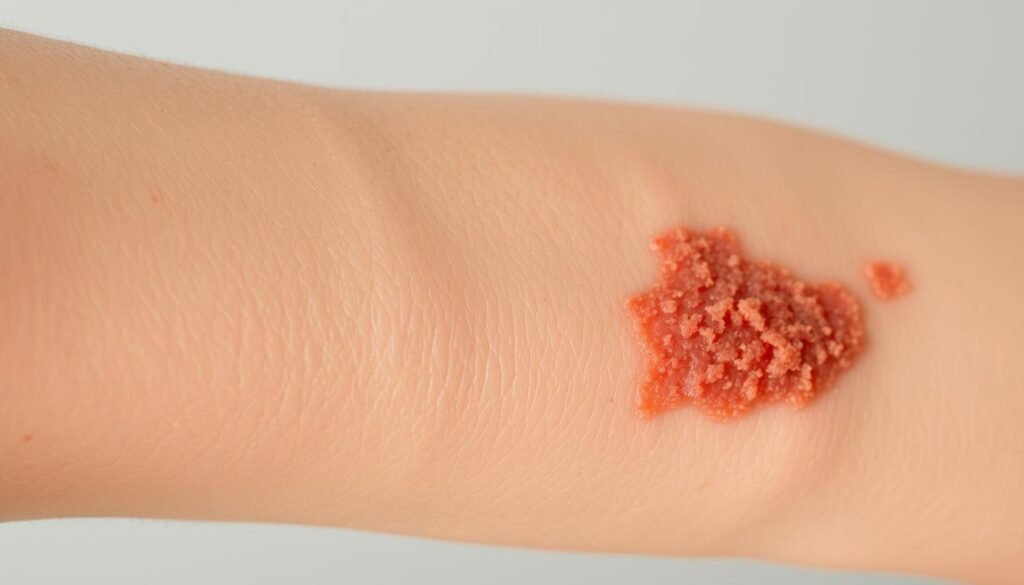
Nearly 50 million Americans deal with dry skin every year. This is a big problem across all ages. Dry patches can make you feel uncomfortable and affect your confidence.
Xerosis or xeroderma is what doctors call dry skin. It happens when your skin doesn’t have enough moisture. This makes your skin feel rough and tight.
Your skin changes a lot. Weather, indoor heat, how you bathe, and aging all affect it. Sometimes, flaky skin is just a temporary issue. But other times, it means you need to see a doctor.
Knowing what causes dry skin patches helps you take better care of your skin. But, everyone’s skin is different. What works for one person might not work for another.
Medical Disclaimer: This info is for learning and education only. It’s not medical advice. Always talk to a dermatologist or healthcare expert for real help and treatment.
Key Takeaways
- Xerosis affects about 50 million Americans every year, making it a big skin issue
- Dry patches can show up anywhere on your body and look different based on your skin, age, and health
- Many things can cause dry skin, like weather, skincare, bathing, and aging
- Terms like xerosis and xeroderma help you understand what doctors mean when talking about dry skin
- Even though this guide has good info, only a dermatologist can give you the right diagnosis and treatment
- Knowing the signs of dry skin helps you talk better with doctors about your skin
Understanding Dry Patches: An Overview
Dry patches on your skin come from many factors. These can be inside your body or from the outside world. When your skin loses moisture, you see and feel changes. Knowing what causes these patches helps you fix your skin’s health.
Learning about skin moisture loss helps you choose the right treatments. Causes range from simple things like weather to serious health issues. Everyone’s experience with dry skin is different, based on their own risk factors.
What Are Dry Patches?
Dry patches are areas where your skin’s outer layer loses too much moisture. This makes your skin feel rough, flaky, or scaly. These spots feel different from the rest of your skin.
Doctors call this condition xerosis or xeroderma. It’s the same as what you feel as dry, uncomfortable skin. Knowing this term helps when talking to doctors about your skin.
Healthy skin keeps moisture with a system involving natural oils called sebum. Your sebaceous glands make these oils all the time. They work with your skin’s lipid barrier to keep moisture in and protect against damage.
When this system fails, your skin loses moisture fast. The outer layer of your skin, the stratum corneum, needs water to stay flexible and whole. Without enough moisture, it cracks and peels, showing as dry patches.
Your skin’s barrier does more than keep moisture in. It also protects against bacteria, allergens, and irritants. When dry patches appear, this shield weakens, leaving your skin open to more harm.
Common Causes of Dry Skin
Many things can cause dry skin, and most people face a mix of these. Things around you and your daily habits and health can affect your skin’s moisture.
Environmental factors are big causes of dry skin. Central heating lowers indoor humidity in winter. Wood-burning stoves, space heaters, and fireplaces also dry out your space.
The weather also affects your skin’s moisture. Cold, windy places make it hard for your skin to keep moisture. Low-humidity climates, whether hot or cold, pull water out of your skin.
| Environmental Factor | Impact on Skin | Severity Level |
|---|---|---|
| Central heating systems | Reduces indoor humidity by 10-20% | High |
| Cold, windy weather | Increases moisture evaporation rate | High |
| Low-humidity climates | Accelerates transepidermal water loss | Moderate to High |
| Air conditioning | Decreases moisture in summer months | Moderate |
How you bathe affects your skin’s moisture. Long, hot showers or baths take away your skin’s natural oils. Aggressive scrubbing also removes the lipid barrier that keeps moisture in.
Bathing too often makes things worse. Each time you wash, you lose more of the good oils your skin makes. This is why people who bathe a lot often have dry skin.
Product-related causes of flaky skin include soaps, detergents, and shampoos that remove oil well. Many popular brands use harsh surfactants that clean too well. These products take away both dirt and the natural oils that keep your skin soft and moist.
Some skin conditions make you more prone to dryness. People with atopic dermatitis, or eczema, have a weak skin barrier from birth. Psoriasis causes your skin cells to grow too fast, leading to thick, dry patches.
Medical treatments can also cause dry skin as a side effect. Cancer treatments, like chemotherapy and radiation, often make your skin very dry. Dialysis patients may also develop dry skin due to fluid balance changes.
Some medicines can dry out your skin. Diuretics, retinoids, and some blood pressure medicines reduce your skin’s moisture. If you start new medicines and your skin gets dry, talk to your doctor.
As you get older, your skin gets thinner and makes less natural oil. Older adults often find their skin drier than it used to be, even without changing their skincare routines.
Sebaceous gland activity goes down with age, reducing sebum. This means older people need to moisturize more to replace lost natural oils.
Knowing what causes dry skin helps you find the right solutions. Most cases come from a mix of factors. Treating several causes at once usually works best for improving your skin’s moisture and comfort.
Recognizing the Signs of Dry Skin
Dry patches show up in different ways. Knowing what to look for helps you spot them early. This lets you act fast to prevent bigger problems.
Dry skin looks and feels different for everyone. Your age, health, skin color, and where you live all play a part. Knowing these differences helps you spot dry patches on your face and body, no matter who you are.
What Dry Skin Looks Like
Dry skin looks different based on your skin tone. On lighter skin, it looks reddish or pink. On darker skin, it might look grayish or ashy.
The texture of dry skin is also a giveaway. It feels rough, not smooth. On darker skin, you might see flaking that looks dusty.
As dryness gets worse, scaling or peeling gets more obvious. You might see fine lines that weren’t there before. On your legs, you might see a “dry riverbed” look with cracks.
Deep cracks or fissures are the worst sign. These can go deep into your skin and might bleed. This is a sign you need to get help right away.
How Dry Skin Feels
Before you see it, dry skin might feel tight. This feeling gets worse after you wash or swim.
Itching, or pruritus, is a common sign of dry skin. It can be mild or very uncomfortable. Some people can’t sleep because of it.
Touching dry skin feels rough. Healthy skin feels smooth and soft. Dry skin might catch on your fingers.
How long your symptoms last is important. Some dry skin is just for a while, like in winter. But some people have it all the time.
Knowing if your dry skin is temporary or long-term helps you choose the right treatment. This makes a big difference in how you take care of your skin.
| Severity Level | Visual Indicators | Physical Sensations | Common Locations |
|---|---|---|---|
| Mild | Slight flaking, ashy appearance, minimal roughness | Light tightness after washing, occasional mild itching | Hands, lower legs, cheeks |
| Moderate | Visible scaling, pronounced rough texture, fine lines | Persistent tightness, regular itching, noticeable roughness | Elbows, knees, face, entire legs |
| Severe | Deep cracks, “riverbed” patterns, possible redness or gray tone | Intense itching, painful tightness, bleeding from cracks | Hands, feet, legs, any chronically dry area |
Where you live and how much sun you get affects your skin. Dry places and too much sun can dry out your skin.
Your health also plays a part. Some health issues make it hard to keep your skin moist. Older people often have drier skin because their bodies make less oil.
Watching for both what you see and feel helps you understand your skin better. This awareness is key to catching problems early. Whether it’s dry skin from winter or a long-term issue, knowing the signs is the first step to better skin.
Possible Skin Conditions Related to Dryness
Dry patches on your skin might mean more than just irritation. They could signal an underlying skin condition. Many cases of dry skin get better with moisturizing. But, if the dryness doesn’t go away, it might be a sign of a deeper issue.
Chronic inflammatory conditions like eczema and psoriasis cause dry skin that’s hard to treat. This dryness is intense and doesn’t respond well to regular moisturizers. Knowing the signs of these conditions helps you get the right care and avoid complications.
Chronic Inflammatory Skin Disorder: Symptoms and Identification
Atopic dermatitis, or eczema, is a widespread condition that affects millions. It’s more than just dry skin; it causes itchy, inflamed patches. The itching is a key difference from regular dry skin.
Spotting eczema symptoms starts with knowing where they show up. The condition often targets specific areas:
- Inner elbows and behind the knees
- Hands, wrists, and ankles
- Face, neck, and chest
- Eyelids and around the eyes
The affected areas look red and inflamed on lighter skin. On darker skin, they may appear brown, purple, or gray. These patches feel rough and thick, getting worse with scratching.

People with allergies or asthma are more likely to get eczema. It often starts in childhood but can also appear in adults. Dry skin can make eczema worse, creating a cycle of inflammation and dryness.
This cycle can lead to serious problems. When skin cracks, bacteria can get in, causing infections. Catching eczema early is key to avoiding these complications.
Autoimmune Condition: Key Indicators
Psoriasis is different from eczema because it’s caused by an autoimmune response. This makes skin cells grow too fast, leading to thick, scaly patches. Knowing the psoriasis signs helps you tell it apart from other dry skin issues.
Psoriasis patches are raised and have silvery-white scales on lighter skin. On darker skin, they look darker with gray scales. These patches are thicker and have clear boundaries, unlike eczema.
Psoriasis often shows up in areas that stretch, like elbows and knees. It may itch, but not as much as eczema. Nail changes, like pitting or thickening, can also occur.
Psoriasis has flare-ups and remissions. Triggers like stress or infections can set off episodes. It needs specific treatments that address the immune response, not just the surface dryness.
Additional Dermatological Concerns
Other conditions, like contact dermatitis, can also cause dry, flaky skin. This condition is caused by skin reacting to irritants or allergens. It affects only the areas that touched the trigger.
Finding out what causes contact dermatitis often needs patch testing. This helps avoid future problems and manage symptoms better.
Seborrheic dermatitis affects oily areas like the scalp and face. It has flaky scales despite the oiliness. Treating it is different from treating dry skin because it involves yeast overgrowth.
Ichthyosis is a group of genetic conditions that cause widespread dry, scaly skin. It looks like fish scales. These rare conditions need special care and long-term management.
Some health issues, like thyroid problems or diabetes, can cause dry skin. Nutritional deficiencies, like not enough essential fatty acids or vitamins, can also harm the skin.
While knowing about these conditions helps, seeing a dermatologist is key. They can diagnose and treat the underlying causes of dry skin. Trying to diagnose yourself can lead to ineffective treatments or worsening symptoms. If dry patches don’t get better with moisturizing, see a dermatologist for proper care.
Weather and Lifestyle Factors
The weather and your daily choices can either help or harm your skin. Things like the air you breathe and your habits affect how well your skin holds moisture. Knowing these factors helps you keep your skin healthy all year.
What you do every day affects your skin more than you think. The foods you eat, drinks you drink, and places you go all impact your skin’s moisture. By understanding these links, you can make choices that help your skin stay healthy and comfortable.
Seasonal Weather Patterns and Their Effects
Winter is the toughest time for keeping your skin moist. Cold air has less moisture than warm air, making it hard for your skin to stay hydrated. When you go outside in winter, the cold air takes moisture from your skin.
Heating systems inside also make the air very dry. Things like central heating, wood-burning stoves, and fireplaces dry out the air. This is bad for your skin, which likes air with 40-60% humidity.
Winter dry skin happens because of the cold outside and dry air inside. The cold air damages your skin’s barrier, and the dry air takes moisture from your skin. This is why many people get very dry skin in the winter.
But seasonal skin dryness isn’t just a winter problem. Hot weather and air conditioning in summer also dry out the air. Places like deserts and high-altitude areas make it hard to keep your skin moist all year.
The following table shows how different seasons affect your skin’s moisture:
| Season | Primary Challenge | Humidity Impact | Skin Response |
|---|---|---|---|
| Winter | Cold air and indoor heating | Drops below 30% | Severe moisture loss and flaking |
| Spring | Fluctuating temperatures | Variable 35-55% | Adjustment period with mild dryness |
| Summer | Air conditioning and sun exposure | Indoor: 30-40% | Surface dehydration and tightness |
| Fall | Decreasing humidity and wind | Declining to 35% | Increasing dryness and sensitivity |
Changing your skincare routine with the seasons is key to keeping your skin healthy. You might need to use more moisturizer when the weather is harsh. Knowing these patterns helps you prevent problems before they start.
The Connection Between Water Intake and Skin
Your skin needs water to work right. Hydration and skin health are closely linked, but drinking water alone won’t fix dry skin. The main reason for dry skin is losing water through your skin, not drinking enough.
But drinking enough water helps your skin stay strong. Drinking noncaffeinated drinks all day keeps your skin and other body tissues hydrated. Water, herbal teas, and other caffeine-free drinks are best for keeping your skin moist.
Caffeinated drinks don’t dehydrate you too much, but they’re not as good for keeping you hydrated as water. Drinking mostly noncaffeinated drinks helps your skin stay healthy and moist.
People over 40 face extra challenges because their skin loses moisture faster. This makes drinking enough water even more important for older skin. Drinking water and using the right creams together is the best way to fight dryness as you age.
Nutritional Building Blocks for Healthy Skin
Your diet affects your skin’s ability to keep its barrier and make natural oils. Your skin needs certain nutrients to work well, and not getting them can make your skin dry. Essential fatty acids are key for keeping your skin moist.
Foods like fish, nuts, seeds, and avocados are full of omega-3 and omega-6 fatty acids. Vitamins A, C, D, and E, along with minerals like zinc and selenium, also help keep your skin healthy.
The following nutrients are very important for preventing dry skin:
- Essential fatty acids: Found in salmon, walnuts, flaxseeds, and chia seeds
- Vitamin A: Supports skin cell production and repair
- Vitamin C: Aids collagen formation and barrier function
- Vitamin E: Protects against oxidative damage
- Zinc and selenium: Support healing and moisture retention
Not eating enough or having certain health problems can make your skin very dry. Conditions like hypothyroidism, diabetes, and malabsorption disorders often cause dry skin. These problems make it hard for your body to use the nutrients your skin needs.
If you have dry skin that doesn’t get better with good skincare, there might be a health issue. Finding and treating the cause is often better than just treating the symptoms.
Keeping your skin healthy needs both what you put on your skin and what you eat. While creams are important for dry patches, eating right and drinking enough water are the foundation. This approach tackles dryness from all sides for better results over time.
Skincare Habits That Contribute to Dryness
Many things can make your skin dry, but your daily skincare habits might be the biggest reason. What you do every day can either help or hurt your skin. Knowing which habits cause dryness helps you make better choices.
Some products and methods might seem good but actually take away the oils your skin needs. The choices you make about cleansers, moisturizers, and how you exfoliate affect your skin’s moisture. Understanding these connections helps you create a routine that supports your skin.
Why Proper Hydration Matters for Your Skin
Moisturizers create a protective layer on your skin that keeps it from losing water. This helps prevent moisture loss from deeper skin layers. Without this layer, your skin gets dry and can easily get irritated.
Timing is key when applying moisturizer. The best time is right after bathing, when your skin is slightly damp. This helps keep water in your skin better than waiting until it’s dry.
For dry areas, moisturizing all day is important, not just after bathing. Hands need extra care because washing them often removes oils. Keeping moisturizer near your sink helps you remember to apply it after washing your hands.
The ingredients in your moisturizer are very important. Petrolatum, also known as petroleum jelly, is very effective. It can reduce moisture loss by over 98 percent, making it great for very dry skin.
Other good ingredients include:
- Ceramides: help repair and strengthen the skin barrier
- Hyaluronic acid: keeps skin hydrated by attracting and binding water
- Glycerin: draws moisture from the air into your skin
- Shea butter: hydrates and has anti-inflammatory properties
When choosing products, pay attention to fragrances. Fragrance-free products have no added fragrances, while unscented products might have fragrances to mask other smells. For dry or sensitive skin, fragrance-free options are safer.
How Cleansers Strip Natural Oils
Many soaps and body washes remove oil and dirt well but also take away the oils your skin needs. This is a big problem for people with dry skin.
These harsh cleansers can also upset your skin’s pH balance and damage its lipid barrier. When this barrier is damaged, moisture escapes more easily and irritants can get in. This creates a cycle where dry skin gets even drier and more sensitive.
| Cleanser Type | Key Characteristics | Best For | Ingredients to Seek |
|---|---|---|---|
| Traditional Bar Soap | High pH (9-10), strips oils effectively | Oily skin without sensitivity | Avoid for dry skin |
| Moisturizing Body Wash | Contains added emollients, gentler surfactants | Normal to dry skin | Glycerin, ceramides, no sulfates |
| Nonsoap Cleanser | Synthetic detergents, pH-balanced (5.5-7) | Sensitive or very dry skin | Hypoallergenic, fragrance-free formulas |
| Cleansing Cream | Oil-based, minimal foaming | Extremely dry or mature skin | Petrolatum, natural oils, no harsh detergents |
For dry skin, gentler alternatives are better. Look for nonsoap cleansing creams, shower gels for sensitive skin, or hypoallergenic moisturizing soaps. These clean well without stripping your skin of its natural oils.
How you bathe affects your skin. Long, hot showers or baths dry out your skin more than warm water. The heat opens pores and breaks down the lipid barrier faster than cooler temperatures.
Try to keep baths and showers short, under 10 minutes. Use warm water instead of hot, and bathe only once a day unless you need to wash more often. Washing too much removes oils faster than your skin can replace them.
Balancing Exfoliation and Moisture Retention
Exfoliation can be good for dry skin if done right. It removes dead skin cells that make your skin feel rough. This lets moisturizers work better.
But too much or too harsh exfoliation can damage your skin’s barrier and make dryness worse. Scrubbing too hard with washcloths, loofahs, or abrasive scrubs removes the protective outer layer. This leads to more water loss and sensitivity to irritants.
Physical exfoliation methods can cause tiny tears in the skin when used too much or too hard. These tears make it harder for your skin to keep moisture in. For people with dry skin, this often makes things worse instead of better.
Chemical exfoliants are a gentler choice for preventing skin flaking without scrubbing. Products with lactic acid help dead skin cells shed naturally. This way, you remove buildup without the damage of scrubbing.
Here are some tips for exfoliating with dry skin:
- Limit physical exfoliation to once weekly at most, using very gentle pressure
- Choose chemical exfoliants with alpha-hydroxy acids for less irritation
- Skip exfoliation entirely during periods of severe dryness or active irritation
- Always apply moisturizer immediately after any exfoliation treatment
- Watch for signs of over-exfoliation like redness, stinging, or increased flaking
Prevention is better than treatment for skin flaking. Keeping your skin moisturized and gently cleansing prevents flakes from forming. This is better than trying to remove them with harsh exfoliation.
Your skincare habits have a big impact on your skin’s moisture. Making small changes in many areas works better than big changes in just one. Focus on building a routine that protects your skin’s moisture barrier through gentle cleansing, strategic exfoliation, and consistent moisturizing.
Managing dryness means knowing which habits cause moisture loss and changing them. Most people see big improvements in one to two weeks by reducing shower temperature, using gentler cleansers, and moisturizing more often. These changes help your skin stay hydrated and repair its protective barrier.
Identifying Dry Skin on Different Areas
Dry patches can show up in different places on your body. It’s important to know where they appear on your face and body. This helps you focus on the areas that need the most care.
Each part of your body has its own way of handling moisture. Some areas are more prone to dryness because of how they’re exposed to the environment.
Knowing where dry patches appear is key. Some areas naturally have less oil, while others face harsh conditions. Your job, daily habits, and where you live all play a part in where dry patches show up.
Recognizing Facial Dryness
Facial dry patches are a big concern because they’re visible and your face is delicate. The face faces more stress than other areas, like sun, wind, and pollution. This makes it lose moisture quickly.
Some areas of your face are more likely to get dry. The cheeks, nose, mouth, forehead, and around your eyes are at risk. Each area has its own challenges that affect how dry patches look and feel.
The skin around your eyes is very sensitive and often gets dry. It lacks oil glands and can get flaky. This can make your eyes look tight and flaky, even when you wear makeup.
Dry patches on your face can make it hard to apply makeup evenly. They might feel tight and uncomfortable, getting worse when you smile or talk. This can be a sign that your face is losing too much moisture.
Some facial products can dry out your skin without you realizing it. Products with alcohol or astringents can strip away your natural oils. These products might feel refreshing at first but can make your skin drier over time.
Dry patches on your face can be mistaken for other skin problems. Conditions like seborrheic dermatitis and rosacea can look similar. Knowing the difference is important to treat it right.
Common Body Areas Affected by Dryness
Knowing where dry patches appear on your body helps you target your skincare efforts. Different areas of your body are more prone to dryness due to their characteristics and how they’re exposed to the environment.
The legs, shins, and lower legs are very prone to dryness. They can get a “dry riverbed” look with visible cracks. This is because they have fewer oil glands than other areas.
Arms, and the upper and outer parts, often get dry and rough. Sometimes, tiny bumps called keratosis pilaris appear. These patches can feel like sandpaper.
Hands are another area that needs extra care. They’re washed a lot and exposed to harsh conditions. People who work with water or dry substances are at higher risk.
The back, and the lower back in particular, can get dry patches that are hard to moisturize. This area often gets neglected because it’s hard to reach. Neglecting it can lead to severe dryness.
Feet, and the heels and soles in particular, can get very dry. This is due to constant pressure and friction from shoes. Untreated cracked heels can be painful and bleed.
Elbows and knees often get dry patches that are rough and dark. These areas have thicker skin that bends and stretches a lot. This makes it hard to keep them moisturized.
Swimmers in chlorinated pools often get dry all over their body. Chlorine removes natural oils from the skin. Swimmers notice dryness patterns that others don’t.
The table below shows common body dryness locations and their characteristics:
| Body Area | Common Appearance | Contributing Factors | Risk Groups |
|---|---|---|---|
| Legs and Shins | Cracked “dry riverbed” pattern, severe flaking | Fewer oil glands, environmental exposure | People in dry climates, older adults |
| Hands | Rough texture, cracking around knuckles, redness | Frequent washing, occupational exposure, weather | Healthcare workers, hairstylists, food handlers, construction workers |
| Feet and Heels | Thick, cracked skin, calluses, painful fissures | Pressure, friction, thick skin layer, inadequate care | Athletes, people who walk barefoot, those wearing open-back shoes |
| Elbows and Knees | Rough, darkened patches, thickened skin | Joint movement, friction, thicker skin | People who lean on elbows, those who kneel frequently |
While these patterns are common, everyone is different. The places where dry patches appear vary based on genetics, lifestyle, job, skincare habits, and environment. Understanding your own pattern helps you focus on the right areas.
Knowing how to identify dry patches on face and body lets you tackle dryness early. Pay attention to areas specific to your daily life and environment. Your unique dryness pattern tells a story about your lifestyle and what your skin needs.
When to Seek Professional Help
Knowing when to seek help for dry skin is key. Most dry skin can be managed with lifestyle changes and moisturizing. But, some cases need a doctor’s help. Knowing the signs can protect your skin and prevent serious problems.
This guide is to help you understand your skin better. It’s not meant to diagnose or replace doctor visits. Always see a board-certified dermatologist for accurate diagnosis and treatment.
Recognizing Warning Signs
Some signs mean you need more than home remedies. Knowing when to see a dermatologist is important when self-care doesn’t work.
Persistent symptoms despite consistent care are a big warning sign. If you’ve tried everything for weeks without improvement, see a doctor. They can find causes that home treatments can’t.
Inflammation and pain mean something more than dry skin is happening. If your dry patches get red, swollen, or warm, it could be an infection or skin condition needing medical help.
Open sores, weeping areas, or signs of infection need quick medical attention. When skin cracks and bleeds, or oozes, it’s open to bacteria. This can lead to serious infections.
You might need to see a dermatologist if you experience:
- Severely cracked skin that bleeds or forms deep fissures
- Pus, increased warmth, spreading redness, or fever accompanying dry patches
- Intense itching that disrupts sleep or daily activities
- Large areas of scaly or peeling skin developing rapidly
- Dry, thick skin appearing as a side effect of cancer treatment
Quality of life impacts are important. If dryness keeps you awake, makes you feel embarrassed, or distracts you from work, see a doctor. They can offer better relief than over-the-counter products.
People getting cancer treatment face special challenges. If you get dry, thick skin, talk to your oncologist or dermatologist. They can manage it with your cancer treatment.
Sudden severe dryness needs attention. Also, if dry skin comes with other symptoms like fatigue, weight changes, or hair loss, it could be a sign of something serious like thyroid disorders or diabetes.
Value of Expert Evaluation
Seeing a dermatologist offers benefits you can’t get from self-assessment. They’re trained to tell the difference between simple dryness and other skin conditions.
Getting the right diagnosis is key. Different conditions need different treatments. What works for dry skin might not work for eczema, psoriasis, or contact dermatitis. Without the right diagnosis, you might waste time and money on the wrong treatments.
At a dermatology visit, you’ll get a thorough check-up. The doctor will look at your skin, ask questions, and review your health history. They’ll talk about your lifestyle, what you’re exposed to, and your skincare routine.
Diagnostic procedures might include patch testing or skin biopsies. These help find the cause when just looking isn’t enough.
Professional diagnosis lets you get targeted treatments you can’t get on your own. These might include:
- Topical corticosteroids for inflammatory conditions
- Prescription-strength moisturizers with special ingredients
- Immunomodulators for certain chronic skin conditions
- Oral medications when topical treatments aren’t enough
These treatments address the cause, not just the symptoms. Your dermatologist can also find out if your dryness is from a skin condition or something more serious.
Your healthcare provider becomes a partner in skin health when you talk openly about your concerns. Share what makes your symptoms better or worse. This helps them find the best treatment for you. Don’t be afraid to ask questions about treatments, how long they’ll take, or any side effects.
Remember, this content is for education only and not medical advice. Skin conditions are different for everyone. Only a qualified healthcare professional can give you the right diagnosis and treatment. If you’re unsure, seeing a dermatologist can give you peace of mind and the right care for your needs.
Treatment and Management Options
When dry patches appear, you have many treatment options. These range from simple drugstore solutions to specialized medical interventions. Most cases improve with consistent care and lifestyle changes. Knowing your options helps you choose the best approach for your situation.
Some dry skin issues are temporary and seasonal. Others may need ongoing treatment and management. The right strategy depends on the severity of your symptoms and any underlying conditions. You can often improve dry skin significantly through self-care before needing professional help.
Effective Over-the-Counter Products
The foundation of treating dry skin patches involves regular use of effective moisturizers. These products create a protective barrier on your skin’s surface, preventing water loss and supporting natural repair. OTC moisturizers come in various formulations to match different severity levels.
For mild to moderate dryness, lotions with higher water content may provide sufficient relief. The best lotions for dry patches often depend on severity. Creams contain less water and more oil, making them more effective for moderate dryness. Ointments have the highest oil content and provide the most intensive moisture retention for severe cases.
Look for products containing proven moisturizing ingredients. Research shows these components deliver the best results:
- Petrolatum (petroleum jelly) – one of the most effective ingredients for preventing water loss and considered highly hypoallergenic
- Dimethicone – creates a breathable protective barrier on the skin
- Ceramides – help restore your skin’s natural lipid barrier
- Hyaluronic acid – attracts and holds water in the skin layers
- Glycerin – a humectant that draws moisture to the skin
- Shea butter – moisturizes while soothing irritated skin
- Colloidal oatmeal – reduces inflammation and locks in moisture
Choose fragrance-free, hypoallergenic products to minimize irritation risk. This becomes important for sensitive or already-compromised skin. Allergen-free formulations reduce the chance of adverse reactions that could worsen your condition.
Application timing and technique significantly impact effectiveness. Apply moisturizer immediately after bathing while your skin remains slightly damp to trap water. Reapply throughout the day, specially to frequently washed areas like hands. Use more intensive products like petroleum jelly on extremely dry areas or at night when the product can work undisturbed.
Over-the-counter hydrocortisone cream in 0.5% or 1% strength can help reduce inflammation and itching. Use these products only for short periods and avoid applying to large areas without medical guidance. They work best as temporary relief while you address the underlying dryness.
Some OTC moisturizers contain alpha-hydroxy acids like lactic acid that gently exfoliate dead skin cells while moisturizing. These may initially cause slight stinging on very dry or cracked skin. Start with lower concentrations if your skin is sensitive.
Sun protection remains essential for skin health year-round. Use a moisturizer containing broad-spectrum SPF 30 or higher sunscreen before going outdoors, even on cloudy days. Apply sunscreen generously and reapply every two hours, or more frequently if swimming or sweating. Sun exposure damages skin and accelerates moisture loss.
| Product Type | Water Content | Best For | Application Frequency |
|---|---|---|---|
| Lotions | High | Mild dryness, daytime use | 2-3 times daily |
| Creams | Medium | Moderate dryness, daily maintenance | 2 times daily |
| Ointments | Low | Severe dryness, nighttime treatment | 1-2 times daily |
| Petroleum Jelly | None | Extremely dry patches, targeted treatment | As needed, specially at night |
When Prescription Strength Is Needed
Most dry skin cases respond to over-the-counter approaches and lifestyle modifications. But, persistent or severe cases may need prescription dry skin treatments. Conditions caused by underlying skin disorders often need medical-grade interventions.
Dermatologists may recommend high-potency topical corticosteroids for severe inflammation and itching. These prescription-strength formulations are significantly more powerful than OTC versions. They require medical supervision due to possible side effects with prolonged use, including skin thinning.
Topical calcineurin inhibitors such as tacrolimus or pimecrolimus offer non-steroidal alternatives. These prescription medications reduce inflammation without the risks associated with long-term corticosteroid use. They work well for sensitive areas like the face and eyelids.
Prescription-strength moisturizers and barrier repair creams contain higher concentrations of active ingredients. These formulations penetrate deeper and provide more intensive hydration than standard products. Your dermatologist can determine if these specialized treatments would benefit your situation.
For severe cases of conditions like psoriasis, doctors might prescribe vitamin D analogs or retinoids. Some situations require systemic medications—oral or injectable drugs that work throughout your entire body. These become necessary when topical treatments don’t provide adequate relief.
When dry skin relates to underlying medical conditions like thyroid disease or diabetes, treating the root cause becomes essential. Addressing the systemic issue often resolves the skin symptoms. Your healthcare provider can coordinate treatment across different health concerns.
Always use prescription dry skin treatments exactly as directed by your healthcare provider. Communicate openly about effectiveness and any side effects you experience. This feedback allows your dermatologist to adjust your treatment plan for optimal results.
Remember that treatment decisions should be made in consultation with qualified healthcare professionals. They can evaluate your individual circumstances, monitor your progress, and modify approaches as needed. This information serves educational purposes and doesn’t replace personalized medical advice.
Natural Remedies for Dry Skin
Many people turn to natural treatments for dry skin instead of commercial products. These natural options are often gentler and fit better with a person’s lifestyle. Home remedies can help with mild to moderate dry patches, but it’s key to have realistic expectations.
Simple home care can make a big difference in how your skin feels and looks. The trick is to find what works best for your skin type and concerns.

Plant-Based Oils and Natural Moisturizing Ingredients
Natural oils and plant-based ingredients can help with dryness. But, it’s important to remember that “natural” doesn’t mean safe for everyone. Always test a small area first to make sure your skin can handle it.
Carrier oils are great natural moisturizers. Coconut oil moisturizes and has antimicrobial effects, but it can clog pores. Jojoba oil is similar to skin’s natural oils and absorbs well without feeling heavy.
Other good carrier oils include almond, sunflower, and argan oil. They have fatty acids that help keep the skin barrier strong and moist. For very dry areas like elbows and knees, shea and cocoa butter are very moisturizing.
Essential oils need careful use as dry patch remedies. Some oils, like lavender and tea tree, can be beneficial, but they must be diluted in a carrier oil. Undiluted essential oils can irritate the skin.
Even though essential oils are natural, their fragrance can irritate sensitive skin. If you have active dry patches, essential oils might not be the best choice. Always listen to your skin and stop using if irritation happens.
Aloe vera gel is soothing and moisturizing for mildly dry skin. But, it’s not as effective as oils or petroleum jelly for very dry skin because it’s mostly water. Honey attracts moisture and has antimicrobial effects, making it good in face masks or mixed with other moisturizers.
Despite the appeal of natural ingredients, petroleum jelly is one of the most effective moisturizers—natural or synthetic. Apply a thin layer when skin is damp for the best results. You shouldn’t feel bad about using petroleum-based products if they work for you.
Homemade Treatment Solutions
Making your own skincare at home can be cost-effective and rewarding. These DIY solutions use simple ingredients to tackle common dry skin issues. But, homemade products may not work as well as commercial ones because they haven’t been tested as much.
An oatmeal bath can soothe dry, itchy skin. Mix ground oatmeal into warm bathwater. Soak for 15-20 minutes to get the most benefits.
For dry facial skin, try a honey and oil face mask. Mix equal parts honey and a light carrier oil like jojoba or almond oil. Apply to clean skin and rinse after 10-15 minutes. This mix provides moisture and softens the skin.
A basic body scrub can gently remove dead skin cells. Mix sugar or salt with coconut or olive oil. Only use this on areas that aren’t severely dry or cracked, as it can make very dry skin worse.
Make whipped body butter for deep moisturizing by mixing:
- 1/2 cup shea butter
- 1/4 cup coconut oil
- 1 tablespoon vitamin E oil
- Optional: a few drops of essential oil for fragrance
Whip the ingredients until fluffy and store in a clean container. This homemade moisturizer is great when applied before bed, letting it work all night.
Adding olive oil or milk to bathwater can boost moisture. Keep the water lukewarm to prevent drying.
For babies with dry skin, keep things simple. Bathe them in plain water most of the time, using gentle cleanser only every 1-2 weeks. Clean the diaper area with each change, and apply a thin layer of petroleum jelly to damp skin after bathing.
Important precautions for DIY skincare include:
- Always use clean utensils and containers to prevent contamination
- Store homemade products properly in cool, dark places
- Recognize that many homemade products have short shelf lives without preservatives
- Discontinue use immediately if irritation develops
- Avoid using DIY treatments on broken or infected skin
- Keep products away from eyes and mucous membranes
Natural and DIY skincare can help with mild to moderate dryness. They appeal to those who prefer simpler, more affordable, or eco-friendly options. But, they might not be enough for severe dryness or underlying skin conditions that need medical treatment.
If your dry patches don’t get better with home remedies, get worse, or come with other symptoms, see a healthcare provider. A professional can help find the right treatment for any underlying conditions.
Prevention Strategies for Healthy Skin
The best way to fight dryness is to stop it before it happens. By making protective habits a part of your daily life, you can keep your skin healthy all year. This approach ensures your skin stays comfortable and moisturized.
Daily Skincare Routines
Begin each day by moisturizing your skin after washing it with a gentle cleanser. This helps your skin hold onto moisture better than applying to dry skin. Always use a broad-spectrum sunscreen with SPF 30 or higher, even on cloudy days. UV rays can harm your skin’s moisture barrier and cause dryness.
Moisturizing dry areas needs extra care. Keep lotion by every sink to moisturize after washing your hands. Pay special attention to dry spots like elbows, knees, and feet. Shorten your showers to 10 minutes or less, using warm water instead of hot. Gently pat your skin dry with a towel instead of rubbing it vigorously.
Long-Term Lifestyle Adjustments
Preventing dry skin goes beyond daily routines. Use a humidifier in winter to keep the air moist, aiming for 40-60% humidity. Wear protective clothing like gloves, scarves, and hats when it’s cold or windy.
People over 40 are more likely to have dry skin because their bodies make less oil. Those who often get their hands wet, work with cement or soil, or swim in chlorinated pools need to be extra careful. Wearing the right gloves can help protect your skin from irritation and dryness.