
Up to 40% of adults face facial pigmentation issues at some point. This number increases in summer with higher UV indexes. It’s important to catch Hyperpigmentation early to avoid dark spots and uneven skin tone.
Hyperpigmentation is a common skin issue caused by too much melanin. It shows up as brown, black, gray, red, or pink patches. These spots are usually not painful or itchy but can be noticeable under bright light or after skin changes.
Look for patches with clear edges or freckle-like clusters that darken after sun exposure or breakouts. Daily habits like skipping SPF, using harsh scrubs, or squeezing pimples can worsen discoloration. Environmental factors like heat, pollution, and blue light can also make uneven tones worse, affecting the forehead, cheeks, and upper lip.
Protecting your skin from the sun and following a consistent skincare routine is essential. Use broad-spectrum SPF 30 or higher, gentle cleansers, and targeted serums as recommended by a professional. This guide helps you spot changes without diagnosing. If you notice new, fast-growing, or irregular patches, see a board-certified dermatologist.
Key Takeaways
- Hyperpigmentation appears as skin discoloration and dark spots that create an uneven skin tone.
- Seasonal skin changes and environmental factors like UV, heat, and pollution can worsen facial pigmentation.
- Daily habits—sun exposure, picking blemishes, and harsh products—often trigger or deepen discoloration.
- Patches can look brown, black, gray, red, or pink and are typically not painful or itchy.
- Consistent sun protection and gentle skincare help manage appearance and prevent worsening.
- See a dermatologist if you notice rapid changes, irregular borders, or new patches.
What is Hyperpigmentation?
Dark patches on the face often come from changes in skin pigmentation. These marks can be brown, black, gray, red, or pink. They usually appear in clusters or patches. While they’re often painless, they can make your skin look uneven.
Definition and Overview
Hyperpigmentation happens when melanocytes make too much melanin in certain spots. This creates visible marks against the rest of your skin. These spots can be small or big and get darker with sun exposure. Knowing what hyperpigmentation is helps you start treating it.
Common Causes
Sunlight is a big cause because UV rays tell the skin to make more melanin. Inflammation from acne, ingrown hairs, or cosmetic treatments can also cause dark spots. Hormonal changes, like during pregnancy, can lead to melasma. Using sunscreen daily and gentle skincare routines can help manage these issues.
Types of Hyperpigmentation
Sun-induced spots, known as age spots or solar lentigines, often show up on the cheeks, forehead, and temples. Post-inflammatory patches come after breakouts or irritation and can stay long after the skin heals. Hormonal melasma looks like map-like patches and needs strict sun protection and consistent care for skin pigmentation balance.
How to Identify Hyperpigmentation
Start by looking closely in natural light to spot facial hyperpigmentation signs. Look for any uneven skin tone that’s different from your usual skin color. Use a mirror near a window to get a clear view without shadows.
Visual Cues and Symptoms
Look for spots or patches that are darker than the skin around them. These dark spots on face can be tan, brown, deep brown, or gray. Some might start off pink or red and get darker over time.
Most of the time, these spots don’t hurt or itch. When checking for skin discoloration identification, focus on color, shape, and pattern. Soft, blurry edges often mean it’s a pigment issue, not a rash.
Common Locations on the Face
Hyperpigmented patches often show up where light hits first. The forehead, cheekbones, nose bridge, and upper lip are common spots. The jawline and temples can also have bands that make the skin tone look uneven.
Areas under sunglasses or hats might look clearer, helping confirm facial hyperpigmentation signs linked to sun exposure. Compare these areas with the ones in the open to better understand skin discoloration identification.
Duration and Changes Over Time
Dark spots on face can last for months. Many treatments need regular use for months to see results. Take a photo every four weeks to track changes in skin tone.
More sunlight in late spring and summer can make spots darker. Using sunscreen and staying in the shade can help even out your skin tone and improve skin discoloration identification over time.
| Indicator | What You’ll See | Why It Matters | Practical Tip |
|---|---|---|---|
| Color Range | Tan, brown, deep brown, gray, or pink-red shifting to brown | Supports skin discoloration identification over rashes or bruises | Check in daylight and compare to baseline photos |
| Borders | Soft, smudged edges; patchy shapes | Aligns with common facial hyperpigmentation signs | Trace edges with a fingertip to feel consistent skin texture |
| Locations | Forehead, cheeks, nose bridge, upper lip, temples | Sun-exposed zones often reveal dark spots on face | Compare exposed areas with shaded regions under hats |
| Sensation | No pain or itch in most cases | Distinguishes pigment change from irritation | If tender or scaly, reassess and consider a dermatology check |
| Time Course | Months-long persistence; slow lightening | Explains ongoing uneven skin tone despite daily care | Review progress every four weeks with consistent lighting |
Risk Factors for Hyperpigmentation
Many things can cause hyperpigmentation. Genes, hormones, and the environment play a big role. Seasonal changes can make dark spots look worse.
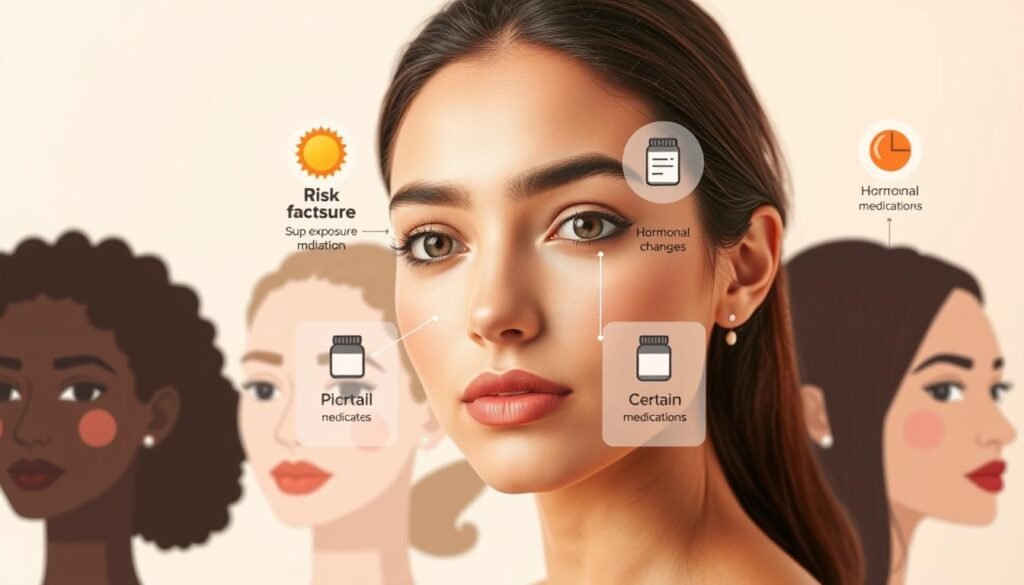
Skin Types and Ethnicity
Everyone can get spots because of too much melanin. Darker skin may have marks for longer after skin issues. Lighter skin can freckle quickly in the sun, but both are at risk for melasma.
How your skin feels and how oily it is also matters. Harsh treatments can lead to more spots. Gentle care helps keep your skin tone even, no matter your skin type.
Environmental Influences
Sunlight is the biggest environmental trigger. Use SPF 30–50 daily and reapply every two hours outside. Wearing UPF clothing, hats, and sunglasses helps too.
Seasonal changes mean more UV and visible light, making spots darker. Heat, glare, and long walks add to the problem. Staying in the shade and avoiding midday sun helps.
Hormonal Changes
Pregnancy, birth control, or thyroid issues can increase melasma risk. Hormonal shifts make skin react more to light. Mineral sunscreens block visible light that can make spots worse.
Stay safe in the sun and keep a regular routine. Use fragrance-free cleansers, niacinamide, and retinoids carefully. They help your skin stay strong and prevent new spots.
Causes of Hyperpigmentation
Understanding why some marks fade and others stay can be tricky. It’s all about light, past skin issues, and hormones. These factors can make melanocytes produce more pigment.
Sun Exposure
Ultraviolet and visible light can cause more melanin. This leads to dark spots that get worse with more sun. Even a little time outside can make spots darker.
Wearing sunscreen with SPF 30–50 daily is key. Reapply every two hours to keep your skin safe. Wide-brim hats and UPF clothes also block harmful rays.
Post-Inflammatory Hyperpigmentation
After skin issues like acne or cuts, it might leave brown marks. These marks can last longer than the original problem.
These marks aren’t painful or itchy. But they can be annoying. Taking care of your skin and avoiding the sun can help prevent more marks.
Hormonal Factors and Melasma
Changes in estrogen and progesterone can cause melasma. This leads to patches on the face. Heat and light can make these patches darker.
Using mineral sunscreen with iron oxide can help. It blocks some light that causes melasma. Wearing sunscreen and protective clothes also helps control these marks.
Diagnosing Hyperpigmentation
Getting a correct diagnosis for hyperpigmentation starts with a detailed history and a skin check. A thorough facial pigmentation assessment helps tell sun spots from melasma or marks left by inflammation. Getting a dermatologist’s opinion early on helps avoid wrong treatments and ensures safe care.
Dermatological Examination
At a clinic visit, the specialist looks at when the spots started, what might have caused them, and any treatments tried before. They check the spots’ edges, color, and shape. They compare these to common patterns on the cheeks, temples, or upper lip.
This detailed facial pigmentation assessment leads to a treatment plan made just for you. With a focused dermatologist evaluation, patients avoid harmful bleaching and learn about sunscreens, creams, or treatments when needed.
Use of Wood’s Lamp
A Wood’s lamp shines light on the skin to see how deep the pigmentation is. This helps in diagnosing hyperpigmentation more accurately. It can decide if creams, peels, or lasers are the best choice.
The results are looked at with the whole picture in mind. The device adds more detail to a dermatologist’s evaluation but doesn’t replace a full check-up or advice on sun protection.
Invasive Testing Procedures
If a spot looks unusual, doctors might do a dermoscopy or a small biopsy to check for other conditions. They watch how the skin responds over time. They adjust the treatment to avoid irritation and dark spots coming back.
Using these methods wisely makes a facial pigmentation assessment stronger. It leads to a precise diagnosis of hyperpigmentation, with safety checks in follow-ups.
Treatment Options for Hyperpigmentation
Hyperpigmented patches can fade with a precise plan. This plan includes daily care and targeted procedures. It’s best when paired with strict sun habits and gentle skin support.
Always discuss options with a board-certified dermatologist. They can match therapy to your skin tone and the cause of discoloration.

Topical Treatments
Dermatologists often start with topical treatments for dark spots. Short courses of hydroquinone, adapalene or tretinoin, azelaic acid, and niacinamide can lighten patches over several months. These formulas may sting at first, so introduce them slowly.
Do not self-medicate with strong bleaching creams. Overuse can irritate skin or even darken it. Pair every routine with daily sunscreen for melasma to guard gains and prevent rebound color.
Professional Procedures
When cream-based care is not enough, in-office options add precision. Chemical peels using glycolic or salicylic acid, microneedling with tranexamic acid, and laser treatment can target persistent pigment. Device choice and settings vary by skin tone and type of hyperpigmentation.
A dermatologist evaluates post-inflammatory marks versus melasma before choosing therapy. Pre- and post-care include sunscreen for melasma and barrier repair to lower the risk of irritation or new spots.
Natural Remedies
Some people try licorice root, vitamin C serums, or gentle exfoliation. These can support a broader pigmentation treatment plan but should not replace evidence-based care. Patch-test first and avoid harsh scrubs that inflame skin.
Consistent sun protection remains central. Broad-spectrum SPF 30–50, hats, and shade back up topical treatments for dark spots and any laser treatment. They help maintain clearer, even-toned skin.
| Approach | Best For | Typical Timeline | Key Pros | Potential Risks | Essential Support |
|---|---|---|---|---|---|
| Prescription Topicals (hydroquinone, tretinoin, azelaic acid) | Diffuse dark spots, melasma maintenance | 8–16 weeks for visible change | Targeted action, at-home use | Irritation, paradoxical darkening with misuse | Daily sunscreen for melasma; dermatologist oversight |
| Office Peels (glycolic, salicylic), Microneedling | Post-inflammatory marks, uneven tone | 3–6 sessions spaced weeks apart | Faster turnover, controlled intensity | Redness, downtime, sensitivity | Barrier repair, sun avoidance, follow-up |
| Laser Treatment (e.g., picosecond, Q-switched) | Stubborn spots, discrete lesions | 1–4+ sessions depending on device | Precision targeting, rapid results | Post-inflammatory hyperpigmentation risk in darker tones | Expert operator selection; strict sunscreen for melasma |
| Supportive “Natural” Add‑ons (vitamin C, licorice) | Mild discoloration, maintenance | Ongoing, gradual improvement | Gentle, easy to layer | Irritation if overused; variable potency | Patch-testing; integrate with pigmentation treatment plan |
Preventive Measures Against Hyperpigmentation
Hyperpigmented patches don’t usually itch or sting. So, the key is to control light and stick to a routine. A good skin care plan and sun protection help prevent dark spots all year.
Importance of Sun Protection
Use broad-spectrum daily SPF 30–50. Apply a nickel-sized amount to your face every morning. Reapply every two hours outside, or after sweating or swimming.
For melasma, use mineral formulas with iron oxide. They block certain visible light. Wear a brimmed hat, UV-blocking sunglasses, and UPF clothing for extra protection. Stay in the shade from 10 a.m. to 4 p.m. This keeps your skin safe without making your day complicated.
Skin Care Routine Tips
Stick to a simple skin care routine. Use a gentle cleanser, antioxidant serum, and daily SPF. At night, apply a gradual retinoid if your skin can handle it.
Always patch test new products and space out exfoliation. This prevents irritation that can lead to spots. Regular care helps protect your skin from dark spots and uneven tones.
Lifestyle Changes
Seek shade and work out early or late. As UV and visible light increase in spring and summer, reapply sunscreen more often. Use hats and UPF shirts for extra protection.
Avoid heat from saunas or hot yoga if spots flare up. Carry a travel sunscreen stick for quick touch-ups. These small steps keep your skin care simple and effective.
Myths and Misconceptions
Getting clear skin advice can be overwhelming. Hyperpigmentation myths make it tough to know what’s true. Before you start any new routine, make sure you know the facts.
Common Misunderstandings
Dark spots don’t mean your skin is hurt. Most spots are not painful or itchy, even if they look dark. They’re caused by too much melanin, not by a rash or infection.
Another myth is that spots will go away fast. They usually take weeks to months to fade. This happens with daily care and protecting your skin from the sun.
Debunking Treatment Myths
Quick fixes often don’t work. Using strong treatments like hydroquinone or high-strength retinoids for too long can make spots darker. Always talk to a dermatologist and watch how your skin changes over time.
Sunscreen is a must. Use broad-spectrum SPF every day and reapply often. For more on safe treatments and realistic timelines, check out this guide on dark spots and hyperpigmentation.
The Role of Genetics
Genetics and skin color often mix with sun, heat, and hormones. If your family has a history of dark spots, you might be more likely to get them. But, sun exposure is a big trigger, including for melasma.
If you notice a family pattern, try mineral formulas with iron oxides and UPF clothing. This helps with genetics and skin color while clearing up myths and misconceptions about treating dark spots.
When to Seek Professional Help
Knowing when to see a dermatologist for hyperpigmentation can save time and protect your skin. If patches change quickly, grow, or change color, get a consultation right away. This visit helps you understand what to expect and makes sure you’re choosing safe treatments.
Signs You Need a Dermatologist
Book an appointment if dark spots spread fast or look uneven. Also, seek help if spots turn gray, blue, or very dark, or if new spots appear without a clear reason.
See a dermatologist before starting treatments like hydroquinone, topical retinoids, chemical peels, or laser therapy. They can guide you to avoid risks and create a treatment plan that works.
Consultation Process
A dermatologist will review your history and examine your skin. They might use a Wood’s lamp to check the pigment depth. You’ll talk about using sunscreen with SPF 30–50, reapplying every two hours, and wearing hats and UPF clothing.
The consultation will outline a treatment plan with timelines and safety checks. You’ll get clear advice on the strength of ingredients, how often to use them, and how to mix them for the best results.
Expected Outcomes
Most topical treatments take weeks to months to show results. Consistent sunscreen use and avoiding triggers help. Some cases might need lasers or peels, chosen by the dermatologist, along with strict sun protection.
Following the treatment plan is key for good results. This includes using sunscreen, gentle skin care, and regular check-ups. Ongoing care is important, even more so during high UV seasons.
| Visit Goal | What to Expect | Why It Matters |
|---|---|---|
| Accurate Diagnosis | Visual exam plus possible Wood’s lamp to assess depth | Confirms cause and guides safe therapy choices |
| Personalized Treatment Plan | Stepwise topicals, possible procedures, and timing | Targets your skin needs while limiting irritation |
| Sun Strategy | SPF 30–50, two-hour reapplication, hats, UPF clothing | Prevents rebound darkening and supports fading |
| Safety and Monitoring | Dose guidance for hydroquinone, retinoids, and acids | Reduces side effects and improves adherence |
| Realistic Results | Timeframe of months, progress checks, maintenance | Aligns expectations and sustains improvements |
Living with Hyperpigmentation
Many people deal with hyperpigmentation every day. Dark spots may not hurt, but they can make you feel bad about your skin. Knowing it’s common and treatable is the first step to feeling better.
Emotional Impact
Changes in skin tone can make you feel self-conscious. You might feel bad in bright light or in photos. Celebrate small victories, like sticking to a skincare routine or seeing spots fade.
Coping Strategies
Follow a consistent skincare routine with your dermatologist’s help. Use sunscreen with SPF 30–50 and reapply every two hours. For melasma, try mineral sunscreens and wear protective clothing.
Topicals like retinoids or hydroquinone may take months to work. Start slow to avoid irritation. Keep track of your progress and avoid changing products too often. This helps you stay positive and manage dark spots effectively.
Community and Support Resources
Find support through trusted dermatology sites like the American Academy of Dermatology. These sites offer guidance and education. Always talk to a board-certified dermatologist before changing your skincare routine.
This info is for education only. It’s not meant to diagnose or treat any disease.