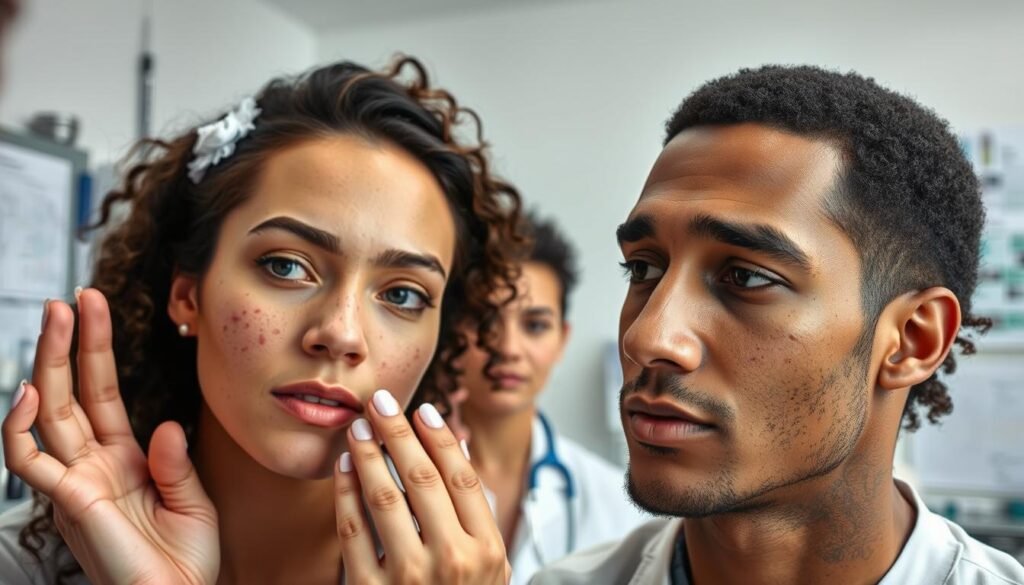
Nearly 85% of people between ages 12 and 24 get at least minor acne. But, many adults keep fighting breakouts into their 30s and 40s because of hormonal imbalance. Knowing if your skin problems are from hormonal acne or regular bacterial breakouts can change how you treat them and how well you do.
Your skin tells a story through its breakouts. Deep, painful cysts along your jawline mean something different than small whiteheads on your forehead. Hormonal acne shows up as tender, inflamed bumps on your chin, jawline, and lower cheeks. These stubborn breakouts are different from regular acne, which looks like surface-level pimples in the T-zone.
The location and type of your breakouts give you important clues. Bacterial acne comes from clogged pores and too much oil in areas like your nose and forehead. Hormonal imbalance, on the other hand, causes deeper inflammation. Women often see these hormonal acne patterns change with their monthly cycles, pregnancy, or during big stress times.
Knowing these differences helps you pick the right skincare products and treatments. Regular breakouts might do well with over-the-counter salicylic acid or benzoyl peroxide. But, hormonal acne often needs a different plan, like changing your diet, managing stress, or getting medical help to fix the hormonal imbalance causing your skin worries.
Key Takeaways
- Hormonal acne appears as deep, painful cysts mainly on the jawline, chin, and lower face
- Regular bacterial breakouts show up as surface-level pimples in the T-zone area
- Location of breakouts provides important clues about their underlying cause
- Hormonal imbalance often triggers acne that coincides with menstrual cycles or stress
- Treatment approaches differ significantly between hormonal and regular acne
- Understanding your acne type leads to more effective skincare solutions
Understanding Hormonal Acne: A Brief Overview
Dealing with persistent breakouts can feel frustrating. It’s hard when your regular skincare routine doesn’t work. The first step is to understand that not all acne is the same. Hormonal imbalances cause specific types of breakouts that need special treatments.
What Causes Hormonal Acne?
Hormonal acne is mainly caused by your skin’s sensitivity to androgens, like testosterone. These hormones make oil glands produce too much sebum. This creates a perfect spot for acne-causing bacteria to grow.
Women with polycystic ovary syndrome (PCOS) often have constant breakouts because of high androgen levels. Your skin becomes a battlefield where hormones dictate oil production. This leads to deep, painful cysts that are hard to treat.
Common Age Groups Affected
Teenage acne is common, but hormonal breakouts affect adults too. Women between 20 and 40 often get these breakouts, during pregnancy, perimenopause, and menopause. Men can get hormonal acne, but it’s less common after they’re teenagers.
Hormones at Play
Many hormones affect your skin. Testosterone and other androgens make your skin produce more oil. Fluctuating estrogen and progesterone levels during your menstrual cycle can cause monthly breakouts. Cortisol, your stress hormone, makes inflammation worse and can mess up your skincare routine.
Knowing these hormonal patterns helps you predict breakouts. It also helps you adjust your acne treatment plan.
Identifying Regular Breakouts: Key Characteristics
Regular acne breakouts are different from hormonal acne. They happen when bacteria, oil, and dead skin cells build up. Knowing these differences helps you pick the right skincare.
Typical Causes of Regular Breakouts
Bacterial acne occurs when pores get blocked. Your genes and diet affect how much oil you produce. Foods with sugar and dairy can make oil levels higher.
Unlike hormonal acne, regular acne is treated with creams that fight bacteria like Cutibacterium acnes.
Frequency and Timing of Breakouts
Regular acne breakouts happen randomly and stay the same each week. Hormonal acne, on the other hand, gets worse before your period and better after. This makes regular acne easier to spot.
Common Locations for Regular Acne
Bacterial acne often shows up in the T-zone. This is where oil glands are most active:
| Face Area | Oil Gland Density | Breakout Frequency |
|---|---|---|
| Forehead | High | Very Common |
| Nose | Highest | Most Common |
| Cheeks | Moderate | Common |
| Chin | Low | Less Common |
Regular acne breakouts do well with skincare that fights bacteria and controls oil.
Recognizing the Symptoms of Hormonal Acne
Spotting hormonal acne means looking for specific signs. These signs show up when your body’s hormones are out of balance. Knowing these symptoms helps you pick the right products and treatments for clearer skin.
Types of Hormonal Breakouts
Hormonal acne appears as deep, painful cysts under your skin. These cysts are different from regular pimples. They feel tender, look red and inflamed, and often show up on your jawline, chin, and lower cheeks.
Unlike surface pimples, these cysts are hard to treat. They sit deep under the skin and don’t respond well to spot treatments.
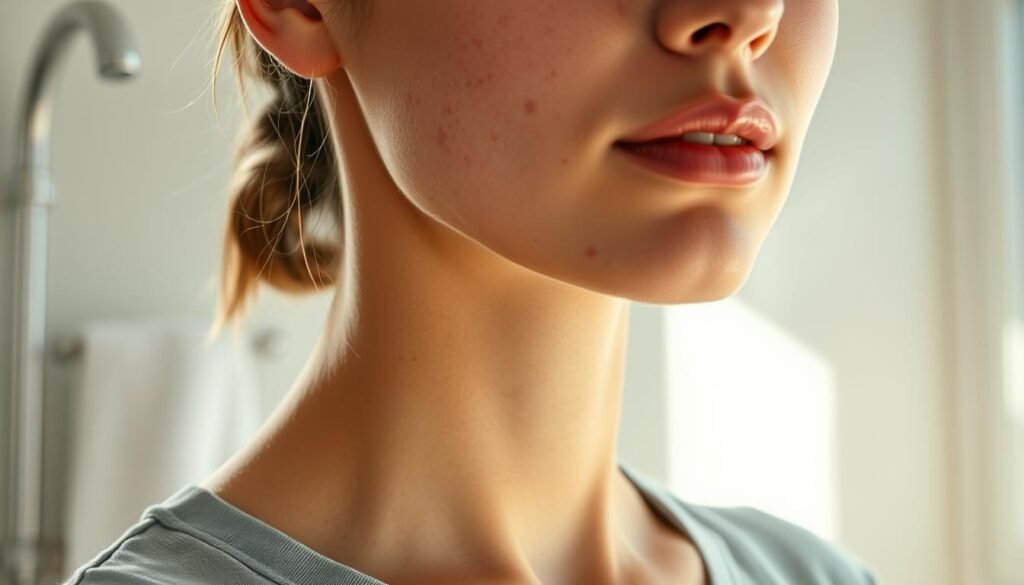
Breakouts follow your body’s hormone changes. Women often see them before their period. These cysts take longer to heal and can leave scars or dark marks if not treated right.
Accompanying Symptoms to Watch For
Hormonal imbalance does more than just affect your skin. People with hormonal acne might also experience:
- Irregular or painful periods
- Unwanted facial hair growth
- Thinning hair on the scalp
- Mood swings or irritability
- Fatigue during certain times of the month
Women with PCOS often face hormonal acne, missed periods, and weight gain. Spotting these symptoms helps figure out if hormones are causing your breakouts.
Differentiating Hormonal Acne from Other Skin Issues
It can be hard to tell hormonal acne from other skin problems. Many look similar, but knowing the signs of hormonal acne helps find the right treatment. It’s key to know the differences for good acne management.
The Role of Menstrual Cycles
Menstrual cycles make hormonal breakouts follow a pattern. One to two weeks before menstruation, progesterone goes up and estrogen goes down. This change makes skin oilier and more inflamed.
Women often see bigger, painful cysts on their jawline and chin during this time.
Fungal acne looks different, with small, itchy red bumps on the forehead and temples. But hormonal acne is bigger and more inflamed. Fungal acne doesn’t follow menstrual cycles.
Pregnancy also changes hormones, which can make acne better or worse, depending on the person.
How Stress Impacts Hormonal Changes
Stress makes cortisol levels go up, upsetting hormone balance. This affects acne by making skin more oily and inflamed. When stressed, the body makes more androgens, making acne worse.
Doctors say to track stress and acne patterns together. Dr. Diane Madfes from Mount Sinai School of Medicine suggests blood tests for hormone levels if stress acne doesn’t go away. Dr. Azadeh Shirazi from La Jolla Laser Dermatology says to check pore bacteria for the right treatment.
The Impact of Skincare Products on Acne
Your skincare routine is key in fighting breakouts, like hormonal acne. The right products can clear your skin, while the wrong ones can make it worse. Knowing which ingredients to use and which to avoid is vital for clear skin.
Non-Comedogenic vs. Comedogenic Products
Non-comedogenic products don’t clog pores, which is great for acne-prone skin. They let your skin breathe while keeping it moist and treated. On the other hand, comedogenic products block pores, causing more blackheads and breakouts.
When picking products for hormonal acne, look for “non-comedogenic” or “won’t clog pores.” Brands like CeraVe, La Roche-Posay, and Neutrogena have good options for any skincare routine.
Ingredients to Avoid for Hormonal Acne
Some ingredients can make hormonal breakouts worse. The best skincare for hormonal acne steers clear of these common offenders:
- Coconut oil and other heavy oils
- Sodium lauryl sulfate
- Isopropyl myristate
- Artificial fragrances and dyes
- Alcohol-based toners
Instead, choose ingredients like salicylic acid, benzoyl peroxide, and retinoids. Salicylic acid clears pores, benzoyl peroxide kills bacteria, and retinoids cut oil. Differin Gel has adapalene, a retinoid good for hormonal acne. Use only a pea-sized amount to avoid irritation.
Lifestyle Factors Influencing Hormonal Acne
Your daily habits have a big impact on hormonal acne. What you eat, how much you sleep, and how you handle stress all affect your hormones. Making small changes can help manage breakouts and improve your skin.
Diet and Hormonal Balance
What you eat affects your skin and hormones. Research shows dairy products, like skim milk, can cause hormonal acne. When fat is removed from milk, proteins and sugars get absorbed quickly into your blood.
- Drink at least eight glasses of water daily
- Limit dairy intake, specially skim milk
- Reduce sugar consumption
- Add omega-3 rich foods like salmon and walnuts
- Include zinc-rich foods such as pumpkin seeds
Importance of Sleep and Stress Management
Getting enough sleep, seven to nine hours, helps control hormones. Poor sleep can disrupt this balance and make acne worse. Sleep is key for skin repair.
Stress raises cortisol levels, leading to more oil and inflammation. Exercise, meditation, or yoga can lower stress. Dr. Azadeh Shirazi says managing stress helps keep your skin’s microbiome balanced. Good bacteria fights acne when hormones are balanced.
When to Seek Professional Help
Dealing with persistent breakouts can be tough, and over-the-counter acne treatment might not work. Knowing when to see a dermatologist is key to fixing your skin. If breakouts mess up your daily life or if treatments don’t improve after weeks, it’s time to get help.
Signs That Require Dermatologist Consultation
Some signs mean you need a dermatologist’s help. Deep, painful cysts that last for weeks need medical care. Scarring or dark spots from breakouts also mean you need stronger treatments.
If breakouts keep showing up on your jawline and chin every month, a dermatologist can help. Feeling down because of acne affects your confidence and needs expert care.
Treatment Options for Hormonal Acne
Dermatologists have strong acne treatment options for hormonal imbalances. Birth control pills help by balancing hormone levels in women. They reduce testosterone production.
Spironolactone blocks testosterone, stopping it from causing too much oil in your skin. This helps with hormonal acne.
| Treatment Type | How It Works | Best For |
|---|---|---|
| Birth Control Pills | Regulates hormone levels | Women with monthly flare-ups |
| Spironolactone | Blocks androgen receptors | Adult women with jaw acne |
| Doxycycline | Reduces inflammation | Severe inflammatory acne |
| Topical Retinoids | Unclogs pores | All hormonal acne types |
Board-certified dermatologists now offer teledermatology services across all 50 states. This makes getting help for hormonal acne easier, even in rural areas. Virtual consultations give you a treatment plan that fits your skin needs.
Home Remedies vs. Medical Treatments
When you have stubborn breakouts, you must choose between natural remedies and prescription drugs. Both have their own benefits for your skin. Your choice depends on how bad your acne is, your skin type, and what you prefer. Knowing about each option helps you pick the right acne treatment for you.
Popular Home Remedies to Try
Natural ingredients are gentle yet effective for hormonal acne. Tea tree oil kills bacteria and reduces swelling. Green tea extract calms red skin and controls oil.
- Apple cider vinegar toner diluted with water balances skin pH
- Honey masks provide antibacterial benefits and moisture
- Aloe vera gel soothes inflammation and promotes healing
- Zinc supplements support immune function and reduce oil production
The Effectiveness of Medication
Prescription treatments target hormonal imbalances. Retinoids like tretinoin help skin cells renew and prevent clogs. Benzoyl peroxide kills bacteria, and salicylic acid removes dead skin.
Birth control pills help control hormones and lower testosterone. Spironolactone blocks androgens, which helps adult women. Oral antibiotics like doxycycline fight infections and reduce swelling. Your doctor might mix these with creams for the best results.
Maintaining Healthy Skin: Best Practices
Creating a consistent skincare routine is key to managing hormonal acne. Your skin needs regular care to handle hormonal changes well. Dr. Anna Chacon says simple habits lead to clear, healthy skin.
Daily Skincare Routine Tips
Begin your day with a gentle cleanser for acne-prone skin. It cleanses overnight oils and gets your skin ready for the day. Evening cleansing is vital to remove daily dirt, makeup, and pollutants that clog pores.
Keep your routine simple to avoid stressing your skin. The best skincare for hormonal acne includes:
- A pH-balanced cleanser used twice daily
- Lightweight, oil-free moisturizer to maintain your skin barrier
- Topical treatments applied consistently at the same time each day
- Non-comedogenic products that won’t block pores
Regular cleansing removes excess oil and dead skin cells that cause acne. Consistency matters more than complexity in your skincare routine.
Importance of Sun Protection
Daily sunscreen protects your skin from UV damage that can worsen acne scars and cause inflammation. Choose broad-spectrum SPF 30 or higher for acne-prone skin. Mineral sunscreens with zinc oxide or titanium dioxide are gentle and won’t irritate sensitive skin.
“Your skin is unique, and what works for others might not work for you. Pay attention to how your skin responds and adjust according.”
Keeping a Journal for Better Understanding
Starting a skin diary can turn the mystery of acne into clear patterns. By writing down when pimples appear, what you ate, and how you felt, you create a roadmap to clearer skin. This simple act helps you understand if your breakouts are due to hormonal changes or other triggers.
Tracking Breakouts and Symptoms
Your journal is like a detective tool for finding patterns in hormonal acne. Record these important details every day:
- Location of new breakouts (chin, jawline, forehead, cheeks)
- Type of acne (cystic, whiteheads, blackheads)
- Menstrual cycle day and any period irregularities
- Mood changes or stress levels
- Sleep quality and hours
- Foods consumed, focusing on dairy and sugar
Also, note any symptoms like bloating, fatigue, or mood swings. These signs often point to hormonal changes that cause acne, mainly on your jawline and chin.
Analyzing Patterns Over Time
After tracking for two to three months, patterns start to show. You might find breakouts happen 7-10 days before your period, indicating hormonal acne. Maybe stress from work deadlines is linked to chin breakouts. Some people see cystic acne within 48 hours after eating dairy.
Check your journal weekly to find links between your lifestyle and skin changes. This knowledge lets you make better choices about treatments, diet, and when to see a professional for persistent hormonal acne.
Conclusion: Empowering Your Skincare Journey
Understanding the difference between hormonal and regular acne is key to effective treatment. Your skin has its own story to tell. By recognizing these signs, you can pick the right products for clear skin.
Everyone’s skin reacts differently to treatments. What works for one might not work for another. So, it’s important to find what works best for you.
Embracing Individuality in Skin Care
Your skin is as unique as your fingerprint. Some people do well with simple cleansers and moisturizers. Others need special treatments for hormonal acne.
Pay attention to how your skin reacts to different products. Keep a record of what helps or hurts your skin. This knowledge is your strongest ally in getting clearer skin.
Staying Informed and Proactive
The skincare world is always changing with new research and treatments. Stay up-to-date by following trusted sources like the American Academy of Dermatology. Regular visits to experts at places like Sasha Luxe Dermatology can offer tailored advice.
Remember, managing acne is a journey, not a quick fix. With patience, the right products, and expert help, you can achieve clearer skin.