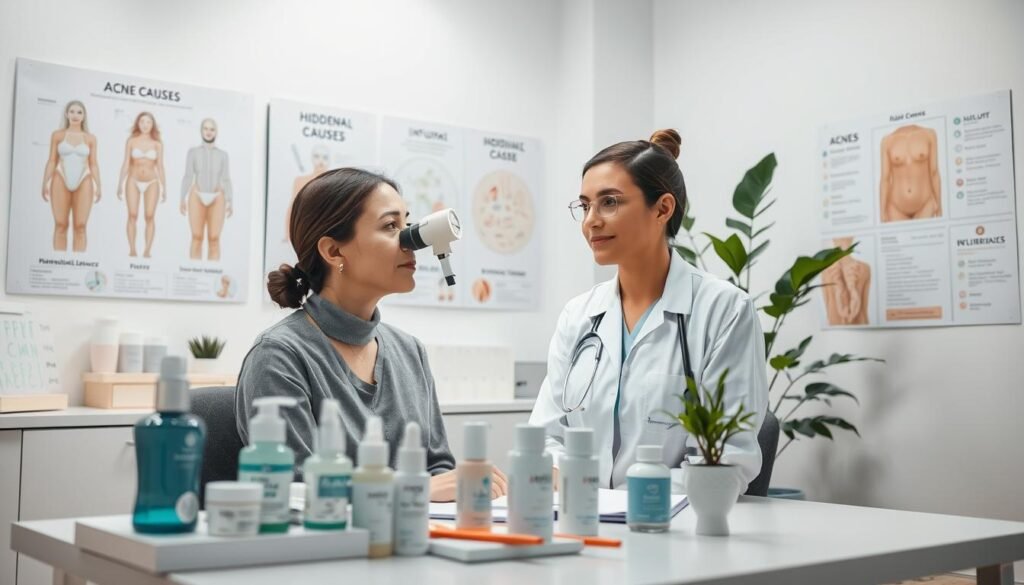
Nearly 85% of adults between ages 25 and 40 face acne breakouts. Women are five times more likely to deal with this issue than men. This condition is not just for teenagers but affects millions of adults too.
Adult acne shows up differently than teenage acne. It often appears on the jawline, chin, and lower face. These deep cysts can leave lasting marks and need special treatments.
What causes adult acne? It’s not just hormones. Environmental factors also play a big role. Knowing these causes helps you tackle your acne better.
Key Takeaways
- Adult acne affects 85% of people aged 25-40, appearing mainly on the jawline and lower face
- Four main factors create acne: excess oil production, clogged hair follicles, bacteria, and inflammation
- Women experience adult acne five times more frequently than men due to hormonal fluctuations
- Adult breakouts tend to be more inflammatory and leave deeper scars than teenage acne
- Early treatment prevents emotional distress and reduces the risk of permanent scarring
- Environmental factors and lifestyle choices play bigger roles in adult acne than previously thought
Understanding Adult Acne and Its Hidden Causes
Adult acne is common in the U.S., but many don’t know why it lasts into adulthood. Adult acne has its own causes and patterns, unlike teen acne. Knowing these differences is key to better skincare.
What Distinguishes Adult Acne from Other Skin Issues
Adult acne is different from teen acne and other skin problems. Adults often get breakouts on the jawline and chin, not all over their face. These can be whiteheads, blackheads, or painful nodules under the skin.
Adult breakouts happen at specific times, often when hormones are out of balance. Women might notice patterns tied to their menstrual cycle. Both men and women can get stress-related breakouts that take time to heal.
Common Misconceptions About Acne in Adults
Many myths stop people from finding good treatments for adult acne. Some think chocolate and greasy foods cause breakouts, but research shows they don’t for most. Another myth is that dirty skin causes acne, leading to harsh scrubbing that makes it worse.
It’s also a myth that all makeup clogs pores. Oil-free, noncomedogenic makeup lets skin breathe while covering. Knowing the truth about hormones and skin health helps adults choose better skincare.
Hormonal Influences on Adult Acne
Your hormones play a big role in your skin’s health. When hormone levels change, your skin often shows it first. These changes can lead to breakouts that are different from teenage acne. Knowing how hormones affect your skin helps you find the right hormonal acne treatment for you.
The Role of Hormones in Skin Health
Hormones are like chemical messengers that control oil in your skin. Androgens, like testosterone, tell your oil glands to make more sebum. When androgen levels go up, your glands make extra oil. This extra oil can clog pores and let acne bacteria grow.
During pregnancy, menopause, or when starting or stopping birth control pills, hormone levels change a lot. These changes often show up as breakouts on your jawline and chin. Unlike stress-related acne, which can pop up anywhere, hormonal breakouts follow a pattern.
Menstrual Cycle and Acne Flare-Ups
Many women get menstrual breakouts that happen every month. About a week before your period, progesterone goes up while estrogen goes down. This makes your skin produce more oil, leading to pre-period pimples.
| Cycle Phase | Hormone Changes | Skin Effects |
|---|---|---|
| Follicular (Days 1-14) | Estrogen rises | Clearer, brighter skin |
| Ovulation (Day 14) | Estrogen peaks | Skin glows, minimal breakouts |
| Luteal (Days 15-28) | Progesterone increases | Oilier skin, possible breakouts |
Birth control pills can help control these monthly changes. Women on hormonal contraceptives often see their monthly breakouts decrease or go away within three to four months of starting treatment.
Stress: A Common Trigger for Adult Acne
Your skin shows what’s happening inside your body, and stress is a big factor. When life gets tough, your skin can suffer. Understanding acne triggers like stress helps you prevent acne better.
How Stress Affects Your Skin
Stress makes your body go into survival mode, releasing hormones that increase oil. This extra oil clogs pores and leads to breakouts. Stress also makes pimples look redder and bigger.

Stress often disrupts sleep, which is bad for your skin’s repair. Poor sleep and stress make acne harder to prevent. Remember, managing stress is as important as your diet for clear skin.
Coping Mechanisms to Manage Stress
Simple daily habits can help manage stress and acne:
- Practice deep breathing exercises for 5-10 minutes each morning
- Take regular breaks from screens throughout your workday
- Exercise regularly to release tension and boost endorphins
- Maintain consistent sleep schedules, aiming for 7-9 hours nightly
- Try meditation apps or yoga videos before bedtime
Setting boundaries between work and personal life reduces stress. Small changes in your routine can lead to clearer skin with good skincare habits.
Dietary Factors Contributing to Acne
What you eat can affect your skin’s health and look. Recent studies show that some foods can lead to adult acne. Knowing which foods cause breakouts helps you choose better for clearer skin.
Foods That Might Trigger Breakouts
Carbs are a big problem for skin issues. Foods like white bread, bagels, chips, and sweets raise blood sugar fast. This makes your body produce more insulin, which can lead to more oil and inflammation.
- Processed snacks and fast food
- White rice and pasta
- Sweetened beverages and sodas
- Baked goods and pastries
The Impact of Sugar and Dairy on Skin
Sugar and dairy can be bad for acne-prone skin. High-glycemic foods trigger insulin production, causing more sebum and clogged pores. Milk products have hormones and molecules that can upset your skin’s balance.
“The skin is a reflection of overall health, and diet plays a critical role in keeping it clear and vibrant.”
Making simple diet changes can help your skincare routine for acne. Try whole grains instead of refined sugars, and choose almond or oat milk over dairy. Eating more omega-3 foods can also help. These steps, with expert advice, can lessen the link between food and breakouts.
Product Misuse and Skin Reactions
The products you use on your skin are key to fighting breakouts. But, using the wrong ones can make things worse. Many people unknowingly harm their skin by using products that clog pores or cause irritation. Knowing which skincare ingredients are right for your skin type can make a big difference.
Popular Ingredients That Can Worsen Acne
Some common ingredients in skincare and makeup can be bad for acne-prone skin. Heavy oils like coconut oil and cocoa butter can clog pores, even though they’re popular. Silicones trap bacteria under the skin. Artificial fragrances and dyes often cause product reactions that lead to inflammation and new breakouts.
- Isopropyl myristate and isopropyl palmitate
- Sodium lauryl sulfate in cleansers
- Lanolin and mineral oil
- D&C red dyes
The Importance of Patch Testing New Products
Before adding new products to your routine, patch testing is key to avoiding. Apply a small amount behind your ear or on your inner wrist. Wait 48 hours to see if there’s redness, itching, or bumps. This simple step can prevent breakouts from new products.
Different acne treatment methods need patience and careful watching. Start with one new product at a time. If your skin reacts, you’ll know what caused it. Keep a skincare journal to track which products work and which ones cause breakouts.
Environmental Contributors to Acne
The world around us affects our skin more than we think. Environmental factors can cause unexpected breakouts, even with a good skincare routine. From city smog to changing seasons, our skin faces daily challenges. Protecting our skin is key to preventing acne.
Pollution: Its Impact on Skin Health
Living in the city means our skin is exposed to many pollutants every day. Tiny particles from car exhaust, industrial emissions, and dust settle on your face, mixing with natural oils to clog pores. This creates a film on your skin that traps bacteria and dead cells underneath.
Studies show that people in polluted areas get more blackheads and inflammatory acne. When pores get clogged with bacteria and oil, they turn brown, showing as blackheads. Simple steps can help:
- Cleanse your face twice daily to remove pollutant buildup
- Apply antioxidant serums to neutralize free radicals
- Use non-comedogenic moisturizers as a protective barrier
- Avoid touching your face throughout the day
Seasonal Changes and Acne Patterns
Weather changes affect oil production and skin sensitivity in different ways. Summer humidity increases sweat and oil, while winter dryness can cause overcompensation in sebum production. Both extremes make it hard to prevent acne.
Spring allergies add to the environmental factors that irritate the skin. Fall temperature drops require adjusting your skincare routine. Dermatologists suggest changing your routine seasonally. Use lighter products in summer and richer ones in winter to keep your skin protected all year.
Skincare Habits: Good vs. Bad
Creating a good daily skincare routine is key. It’s about knowing what’s good for your skin and what’s not. Making small changes can greatly help in preventing breakouts and keeping your skin clear.
Daily Routines That Promote Healthy Skin
A consistent skincare routine is essential for clear skin. Begin your day with gentle cleansing to remove overnight oils without drying out your skin. Use lukewarm water and gently pat your face dry with a clean towel.
Choose non-comedogenic products for acne prone skin. These won’t clog your pores.
Your evening routine is just as important. Remove makeup with oil-free removers before cleansing. This keeps your pores open. Then, apply treatments like retinoids or benzoyl peroxide if your dermatologist suggests it.
Common Mistakes in Skincare Regimens
Many think acne comes from dirty skin, leading to over-cleansing. But scrubbing hard or using harsh soaps can irritate your skin and make it produce more oil. Cleanse gently twice a day.
Don’t skip moisturizer, even if you have oily skin. Use lightweight, non-comedogenic products that moisturize without clogging pores. Also, avoid missing doses of prescribed treatments or changing products too often. This can upset your skin’s balance.
Consistency is more important than intensity. A simple, daily skincare routine is more effective than a complex one you can’t stick to.
Understanding Acne Scars and Hyperpigmentation
Even after acne goes away, scars and dark spots can linger. These marks can hurt your self-confidence as much as active acne. Luckily, there are treatments for both scarring and dark spots.
Differentiating Between Acne and Other Skin Marks
Not all acne marks are the same. Pitted scars make the skin sink in, while keloid scars bulge out. Hyperpigmentation shows up as flat, dark spots where acne was.
People with darker skin often see more noticeable dark spots after acne heals. Post-inflammatory hyperpigmentation is different from true scarring. It only changes skin color, not texture. Dark spots can be brown, red, or purple, depending on your skin tone. Light patches, or hypopigmentation, are less common.
Treatment Options for Post-Acne Scarring
Today’s dermatology offers many ways to treat acne scars. Chemical peels and laser therapy can improve skin texture and tone. Microneedling boosts collagen to fill in pitted areas.
For dark spots, vitamin C serums and retinoids can help fade them over time. Starting treatment early is key to success. A dermatologist can create a plan tailored to your skin. Some people see results with topical treatments, while others need professional procedures. The important thing is to start treatment before scarring gets worse.
When to Consult a Dermatologist
Self-care can handle mild breakouts, but some acne needs a pro’s touch. Knowing when to see a dermatologist is key to avoiding scars. Your skin needs the best care at the right time.
Signs That Indicate a Need for Professional Help
Some signs mean it’s time for a dermatologist. Look out for these:
- Acne lasts more than 6-8 weeks with OTC treatments
- Deep, painful cysts form under the skin
- Breakouts leave dark spots or pitted scars
- Acne spreads to chest, back, or shoulders
- Emotional distress affects daily activities
When breakouts mess with your life, it’s time for a pro. Severe acne can damage skin permanently within months. Getting help early is vital.
What to Expect During Your Dermatology Visit
Your first visit is a detailed skin check. The dermatologist will look at your acne, its severity, and scars. They’ll also ask about your skincare, meds, and family history.
| Visit Component | Duration | Purpose |
|---|---|---|
| Skin Analysis | 10-15 minutes | Identify acne type and triggers |
| Medical History | 5-10 minutes | Review health factors affecting skin |
| Treatment Planning | 10-15 minutes | Create personalized care approach |
| Follow-up Schedule | 5 minutes | Set monitoring appointments |
Treatment plans can include retinoids or chemical peels. Your doctor will choose based on your needs. Regular check-ups help track progress and adjust treatments for the best results.
Personalizing Your Acne Treatment Plan
Starting a customized acne treatment means knowing your skin type and what triggers it. Everyone’s skin reacts differently to treatments. Your age, family history, and acne type all affect what works best for you.
Some people face painful red bumps, while others deal with deep cystic nodules. Blackheads and whiteheads need special care. Hormonal breakouts on the chin are different too.
Factors to Consider for Effective Treatment
Your skin care plan should fit your acne type and lifestyle. New tech like Accure laser uses AI to target oil glands. Dr. Tanghetti says this can stop acne before it starts, even with hormones.
Some people need oral antibiotics or hormonal treatments to fight inflammation. Your doctor will look at your health history before suggesting meds. Regular check-ups help adjust treatments as needed.
The Role of Lifestyle Changes in Managing Acne
Simple lifestyle changes can greatly improve your skin. Getting enough sleep, drinking water, and managing stress are key. Exercise boosts blood flow and lowers stress hormones that cause breakouts.
Avoiding greasy products and cleaning your phone screen stops bacteria buildup. These habits, along with your treatment, lead to better skin. Small changes can make a big difference in your skin’s health and look.