Did you know that up to 80% of people with oily skin also experience hidden moisture loss? This surprising reality challenges everything most people believe about their complexion.
Many assume that shiny, oil-prone skin means proper hydration. But, oily but dehydrated skin is surprisingly common. Your sebaceous glands produce oil to protect your skin, but this doesn’t affect your skin’s water content.
Sebum production is influenced by genetics, hormones, and stress. Water content, on the other hand, depends on different factors. This can lead to confusion for those seeking clearer skin.
Your skin changes due to weather, lifestyle, product use, and aging. Some issues are temporary, while others may signal deeper problems that need attention.
Medical Disclaimer: This article is for educational purposes only and does not offer medical advice. Skin conditions vary greatly among individuals. Always see a board-certified dermatologist or healthcare professional for accurate diagnosis and treatment plans.
Understanding your skin helps you talk better with skincare experts. This guide helps you spot signs to discuss at your next dermatology visit.
Key Takeaways
- Oily skin and dehydrated skin are two separate conditions that frequently occur together
- Sebum production doesn’t indicate hydration levels in your skin cells
- Environmental factors, lifestyle habits, and skincare routines all affect moisture balance
- Surface shine can mask underlying water deficiency that requires different treatment approaches
- Professional evaluation by a dermatologist is essential for accurate diagnosis
- This educational content supplements but never replaces qualified medical advice
Understanding Oily Skin: Common Characteristics
Oily skin has its own set of traits that affect how it looks and feels. Knowing these traits helps you choose the right skincare. It’s not just about the shine—it’s about the biology behind it.
As the day goes on, oily skin becomes more noticeable. You might see more shine or need to blot your face often. These signs show what’s happening with your glands and moisture levels.
What Makes Skin Oily
Oily skin happens when your sebaceous glands make too much sebum. This sebum overproduction makes your skin look shiny, mainly on your forehead, nose, and chin.
Oily skin feels slick when you touch it, more so in oily areas. This greasiness gets worse in warm weather or after you’ve been active.
Oily skin also has enlarged and visible pores. These pores can get clogged with oil, dead skin, and other stuff. This makes oily skin prone to blemishes and acne.
After breakouts, oily skin can leave dark spots. This happens because oily skin produces more melanin when it’s inflamed.
What Causes Excess Oil Production
Many things can make your skin produce more oil. Genetics are a big factor. If your parents had oily skin, you might too.
Hormones also play a big role. Changes in hormones, like during puberty or pregnancy, can make your glands work harder. This can make your skin oilier.
Stress is another big factor. Stress makes your glands produce more sebum. This can make your skin lose moisture and produce more oil.
This creates a cycle where dehydration makes your skin produce more oil. Your skin tries to replace lost moisture with more sebum. This can damage your oily skin moisture barrier and lead to more breakouts.
Things like sun, heat, and humidity can also make your skin produce more oil. Even air conditioning can do this by drying out your skin and signaling your glands to produce more oil.
Some medications, what you eat, and certain skincare products can also affect how oily your skin is. Using harsh cleansers can make your skin produce even more oil as a defense.
Short-Term Versus Long-Term Oiliness
Not all oily skin is the same. Some people have temporary oiliness due to certain situations. Others have oily skin all the time.
Temporary oiliness often happens in the summer or after exercise. It can also be caused by certain products or hormonal changes. This usually goes away when the cause is gone.
Chronic oily skin is always there, no matter the season. If your skin always produces too much oil, it’s likely your natural skin type. Your glands are always working hard.
Knowing if your oiliness is temporary or chronic helps you choose the right skincare. Temporary oiliness might need just a few seasonal changes. Chronic oily skin needs consistent, targeted care.
If your skin problems don’t get better with regular skincare, it might be time to see a dermatologist. They can tell if your oiliness is something you can control or if you need special treatment.
What is Skin Dehydration?
Water-oil balance skincare starts with a key truth: your skin can have too much oil but not enough water. This mix-up leads to shiny faces and tight, flaky skin. The real issue is that dehydration is a skin condition, not a skin type.
Dry skin is a permanent trait, shaped by your genes. But dehydrated skin is temporary and can happen to anyone. Your skin type stays the same, but hydration levels change due to many factors.
The Critical Distinction Between Two Common Problems
Many confuse “dehydrated” with “dry,” but they’re not the same. Dry skin lacks oil, while dehydrated skin lacks water. Think of it like a car needing oil versus a person needing water.
Dry skin is a lifelong condition due to low oil production. It means your skin can’t keep moisture in. People with dry skin often face this issue their whole lives.
Dehydrated skin, on the other hand, is about water loss. It can happen to anyone, oiliness aside. It’s about the outer skin layer lacking enough water.
“Oily skin lacking water creates a vicious cycle where the skin tries to compensate for dehydration by producing even more sebum, which only makes the surface shinier without addressing the underlying moisture deficit.”
Some oily skin people feel tight, flaky, and see fine lines. Oil cannot hydrate skin; only water can. Sebum protects, but it can’t replace the water skin cells need.
What Depletes Your Skin’s Water Content
Many things can make your skin dehydrated. Knowing what they are helps you spot problems in your daily life. Environmental factors are big culprits for Americans.
Sunlight, air conditioning, and heating systems dry out your skin. They cause water loss through a process called transepidermal water loss. Weather changes also harm your skin, making it dry and tight.
Your skincare routine might also be dehydrating. Harsh ingredients in products, like alcohol and strong acids, can hurt your skin. Over-exfoliating removes skin layers too fast.
Lifestyle choices affect your skin’s hydration more than you think:
- Insufficient water intake: Not drinking enough water affects your skin
- Excessive alcohol consumption: Alcohol depletes water from your system
- Smoking: Tobacco reduces blood flow to skin cells
- Poor diet: Lack of essential nutrients harms your skin
Some medications and health issues can also cause dehydration. It’s important to address these problems.
Climate and environment add to the challenge. People in dry areas face more dehydration risks. Travelers also struggle with adapting to different humidity levels.
These factors explain why oily skin lacking water is a big issue. Our lifestyles expose us to many dehydrating factors. It’s key to understand and tackle this problem early on.
Signs You Might Have Dehydrated Oily Skin
When your skin produces too much oil but feels dry, you might have dehydrated oily skin. This condition can be confusing, even for those who pay close attention to their skin. Knowing the signs helps you figure out if your skin is lacking water, even though it’s oily.
Finding out if you have dehydrated oily skin is tricky because it looks normal at first. But, if you look closely, you’ll see signs that show your skin is dehydrated. While you can try to figure it out yourself, getting a professional opinion is usually the best way to know for sure.
Visual Symptoms to Look Out For
The first sign of dehydrated oily skin is a dull look, even with oil on the surface. Your face might look shiny but also flat, lacking the glow of healthy skin.
Dark circles under your eyes get more noticeable when you’re dehydrated. This is because the skin in this area loses water first, making shadows that makeup can’t hide. These circles look worse than usual, even after you’ve slept well.
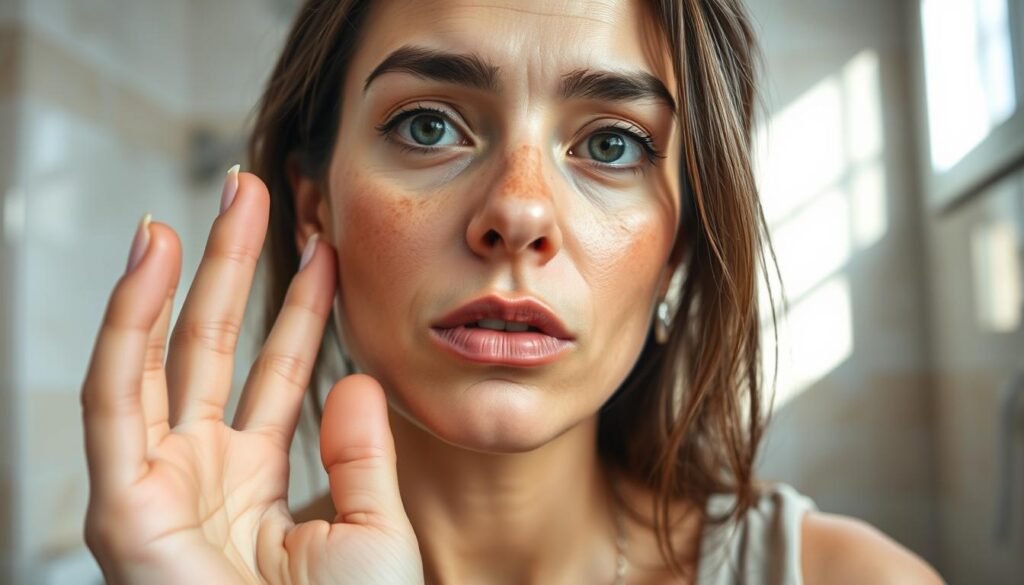
Fine lines are another sign of dehydration. These lines are different from wrinkles caused by aging. They look like a crisscross pattern, mainly around your eyes and mouth, and get better when you hydrate properly.
You might see flaky or rough patches, even with oily areas. These patches often appear around your eyebrows, nose sides, and cheeks. The mix of oil and dryness makes your skin feel uneven.
Dehydration also makes pores look bigger. Without enough water, skin cells lose plumpness, stretching pores. This is more noticeable in the T-zone, where oil is most.
Common visual signs include:
- Dull complexion despite surface oil and shine
- Increased breakouts with blackheads and pustules
- Redness or inflammation appearing in patches
- Uneven texture combining smooth and rough areas
- Visible capillaries showing through thinned skin
Sensations and Feelings
Dehydrated oily skin often feels tight, even after you’ve cleaned your face. This tightness comes back, even when oil resurfaces quickly.
Itchiness is another sign of dehydration. Your skin might feel uncomfortable and irritated, making you want to scratch. This itchiness doesn’t go away, even with moisturizer or more oil.
Your skin might feel rough, even if it looks oily. When you touch your cheeks, you’ll feel bumps instead of smoothness. This roughness, combined with too much oil, is confusing.
The pinch test can show how dehydrated your skin is. If your cheek wrinkles or takes time to bounce back, it’s dehydrated. Healthy skin bounces back right away.
You might feel uncomfortable all day, even with moisturizer. This feeling is different from oily skin and suggests a hydration problem.
Physical sensations include:
- Tightness that persists despite oil production
- Sensitivity to products that previously caused no reaction
- Discomfort that moisturizers don’t fully resolve
- Delayed skin response in the pinch test
Effects on Makeup Application
Makeup application can reveal dehydration. Foundation might slide off oily areas but cling to dry ones. This uneven application makes your makeup look patchy.
Makeup can also highlight texture problems and fine lines. It settles into dehydration lines quickly, making you look older. Makeup doesn’t cover these problems well.
Products can separate or become cakey as the day goes on. Foundation might break apart in some areas but stay put in others. This happens faster on dehydrated skin, often within hours.
Mattifying products often fail to control shine. Your skin produces more oil, overwhelming any primer or setting powder. This is because dehydrated skin tries to compensate by making more sebum.
Makeup challenges with dehydrated oily skin:
- Uneven foundation coverage across different facial zones
- Product pilling when layering skincare and cosmetics
- Shortened wear time requiring frequent touch-ups
- Increased creasing around eyes and smile lines
- Difficulty achieving a natural, radiant finish
These signs can help you understand your skin better. But, many conditions can have similar symptoms. Getting a professional opinion is usually the best way to know for sure.
Why Oily Skin Can Be Dehydrated
Oily skin can lack hydration because of a misunderstanding about oil and water in skin health. Oil, or sebum, protects the skin’s surface. Water hydrates cells from the inside.
Many people think greasy skin means it’s moist enough. This leads to treatments that make things worse, not better.
Common Misunderstandings
One big myth is that oily but dehydrated skin doesn’t exist because oil is moisture. This myth makes people skip moisturizers and hydrating products. They think adding more “wetness” to shiny skin is bad, not realizing it needs water, not less oil.
People with oily skin often use harsh, drying products to control shine. Alcohol-based toners, aggressive cleansers, and astringent treatments seem like good solutions. But these products strip away natural barriers and make more oil as a defense.
Shine is often seen as a sign of healthy skin. But it really means there’s too much sebum on the surface, not enough moisture inside. Your skin cells can be dry, even if your face looks oily.
Some think oily skin doesn’t need extra moisture because it makes its own. But this ignores the difference between lipid-based sebum and water-based hydration. Your skin needs both to stay healthy and protect itself.
How Sebum Functions in Your Skin
Sebaceous glands make sebum to protect your skin’s surface. This oily substance prevents damage, keeps water in, and makes skin soft. Sebum is good for all skin types, including oily ones.
But when skin gets dehydrated, things go wrong. Your skin sees water loss as a threat. It makes more sebum to protect what moisture it has left.
This creates a cycle of problems. More oil doesn’t fix the water shortage. Only water can do that. So, your skin feels greasy and tight at the same time.
Stress and cortisol play a big role in this. Stress makes your body produce cortisol. Cortisol lowers hyaluronic acid, which your skin needs to stay moist. At the same time, cortisol makes more sebum, leading to more oiliness and dehydration.
This hormonal effect explains why skin gets oilier and drier when stressed. Dehydration makes your skin produce more sebum as a defense. Unfortunately, this can clog pores and cause breakouts, making things worse.
External Conditions That Worsen Dehydration
Environmental factors greatly affect oily skin’s hydration and oil balance. Knowing these factors helps you understand why your skin behaves differently in different places.
Climate conditions greatly impact your skin’s moisture. Dry air pulls moisture from your skin. Cold weather and indoor heating systems also dry out your skin, making your sebaceous glands work harder.
Long sun exposure is another big dehydrator. UV rays take water from your skin cells. Your skin tries to protect itself by making more oil, leading to more oiliness and dehydration.
Indoor air controls, like air conditioning, also dry out your skin. They remove humidity, leaving your skin dry and oily.
Other environmental and lifestyle factors include:
- Pollution and environmental aggressors that damage the moisture barrier and trigger oily production
- Frequent travel exposing skin to different climates, airplane cabins, and water qualities
- Inadequate sleep disrupting skin repair and hormone balance
- Poor dietary habits lacking essential fatty acids and nutrients for barrier function
- Insufficient water intake directly causing cellular dehydration
Using too-drying products creates a vicious cycle. Harsh cleansers damage the skin’s acid mantle. This irritates your skin and makes it produce more oil. The more you try to control oil, the worse it gets.
| Characteristic | Sebum (Oil) | Hydration (Water) | Impact When Imbalanced |
|---|---|---|---|
| Primary Function | Creates protective lipid barrier on skin surface | Provides cellular moisture and plumpness from within | Barrier breakdown and moisture loss occur simultaneously |
| Production Source | Sebaceous glands in dermis layer | Water consumed and absorbed by skin cells | One system cannot compensate for the other’s deficiency |
| Visible Signs | Surface shine, enlarged pores, greasy texture | Plump appearance, smooth texture, healthy glow | Skin appears oily but feels tight and shows fine lines |
| Response to Dehydration | Increases production attempting to seal in moisture | Decreases due to environmental loss and insufficient intake | Creates feedback loop of excess oil with persistent dryness |
Understanding these factors shows why oily but dehydrated skin is complex. Your skin reacts to hormones, environment, and skincare products. Knowing this helps you treat your skin better by focusing on hydration and managing oil.
Common Triggers of Dehydration in Oily Skin
Many things in your daily life can harm your oily skin’s moisture barrier. Knowing what these are is the first step to fixing the problem. Most of these issues can be changed, giving you control over your skin’s health.
Weather, what’s in your products, and your habits all play a part in keeping your skin hydrated. Figuring out which ones affect you the most helps you tackle dehydrated oily skin more effectively.
Seasonal Changes
Seasons change, and so do the challenges for keeping your skin hydrated. Winter is often the toughest time for moisture.
Cold air outside holds less moisture than warm air. When you go inside, the heat strips more moisture from your skin. This makes your skin lose water fast.
Harsh winds in winter take away moisture from your skin. Low humidity indoors and outdoors means water evaporates quickly from your skin.
Summer brings its own set of challenges. Too much sun damage your skin’s protective layer over time. Air conditioning makes the air dry, like in winter.
Swimming in chlorinated pools or saltwater disrupts your skin’s natural balance. It can make your skin feel tight and dry, even though you’re in water.
Spring and fall are unpredictable. Your skin may struggle to adapt to changing temperatures and humidity. What worked last week might not work this week.
Key seasonal factors include:
- Indoor heating during winter months
- Cold, dry outdoor air with low humidity
- Extended sun exposure in summer
- Constant air conditioning use
- Unpredictable weather during seasonal transitions
Skincare Ingredients
Some ingredients in oily skin products can dry out your skin. They’re not bad, but you need to balance them with hydrating products.
Drying alcohols, like denatured alcohol and isopropyl alcohol, are common in oily skin products. They evaporate fast, taking moisture with them. They give you a matte look but can harm your skin barrier if used too much.
Exfoliating acids, like salicylic acid and glycolic acid, are great for oily, acne-prone skin. They clear pores and smooth out your skin. But using them too often or in high amounts can make it hard for your skin to hold onto water.
Benzoyl peroxide helps with acne by slowing down oil production and exfoliating. But it can also dry out your skin. Many acne treatments have benzoyl peroxide.
Topical retinoids speed up cell turnover, revealing new skin. But they can dry out and flake your skin as a side effect. The benefits are worth it, but you need to manage the dryness.
Harsh sulfate cleansers, like sodium lauryl sulfate, remove oil and natural protective elements. They leave your skin feeling clean but vulnerable to dryness.
Fragrances and essential oils can irritate sensitive skin and weaken your skin’s barrier. Even if you don’t see immediate effects, they can harm your skin over time.
Potentially drying ingredients to monitor:
- Denatured alcohol and isopropyl alcohol
- High concentrations of exfoliating acids
- Benzoyl peroxide in acne treatments
- Prescription and over-the-counter retinoids
- Sulfate-based cleansers
- Added fragrances and essential oils
Lifestyle Choices
Your daily habits affect your skin’s hydration from the inside out. While skincare is important, what you do inside your body is the foundation for healthy skin.
Drinking enough water is key for your skin. Without enough, your skin cells can’t function well. This is essential for treating dehydrated oily skin.
Caffeine and alcohol can act as diuretics, making you lose more water. This shows in your skin, making it look dehydrated.
Smoking hurts your blood flow, which means less nutrients and oxygen for your skin. This damage adds up, making it hard for your skin to stay hydrated.
Poor sleep disrupts your skin’s repair and regeneration at night. Your skin needs this time to stay healthy and balanced.
High stress levels can affect your skin’s hydration and barrier. Chronic stress can change how your skin looks and feels.
Not getting enough nutrients is a big problem. Essential fatty acids, vitamins, and minerals are important for your skin. Without them, your skin can’t stay hydrated.
Not sticking to a consistent skincare routine confuses your skin. Skipping moisturizer or over-cleansing can mess up your skin’s balance.
Lifestyle factors affecting skin hydration:
- Drinking insufficient water throughout the day
- High consumption of caffeine or alcohol
- Smoking tobacco products
- Getting less than seven hours of sleep
- Experiencing chronic stress without management
- Eating diets lacking essential fatty acids and nutrients
- Following irregular skincare routines
Extended sun exposure is another environmental factor. UV radiation damages your skin’s barrier over time. This makes it harder for your skin to keep moisture.
By knowing which factors apply to you, you can focus on making the biggest impact. Small, consistent changes often work better than big changes all at once when treating dehydrated oily skin.
How to Test for Dehydration
There are several ways to check if you have dehydration in oily skin. But, getting a professional check-up is the best way to know for sure. Dehydrated oily skin looks normal at first glance, making it hard to tell without the right tests.
Knowing the difference between checking yourself and getting a professional check-up is key. Home tests can give you a hint, but they can’t replace a doctor’s opinion. Experts can see things that you can’t, helping you get the right treatment.
At-Home Assessment Techniques
You can do some simple tests at home to see if you have dehydration in oily skin. These tests can give you a hint, but they’re not always right. Each test looks at different things about your skin.
The pinch test is easy to do. Just pinch your skin gently and see how fast it goes back to normal.
If your skin wrinkles or takes a long time to go back, it might be dehydrated. Healthy skin snaps back right away. This shows how elastic and moist your skin is.
Looking at your skin in natural light is another good way to check. Look for dullness, fine lines, or uneven texture even if your skin is oily. Dehydrated oily skin often looks dull, even with lots of oil.
Feeling your skin all day can also help. If it feels rough, tight, or uncomfortable, it might be dehydrated. These feelings can happen even if your skin looks oily.

The absorption test checks how well your skin takes in hydrating products. Put a light, water-based serum or toner on clean skin. If it absorbs fast but your skin feels dry, you might be dehydrated.
Keeping a journal of your skin’s feelings and looks can help a lot. Write down how your skin feels and looks at different times. Note any changes after certain activities or in different places.
This can help you find patterns and confirm if you’re dehydrated. But remember, home tests are just hints. You really need a professional to be sure.
Expert Diagnostic Methods
Getting a professional to check your skin is much more accurate than doing it yourself. Doctors and skincare experts use special tools that can see things you can’t. These tools can find dehydration early on.
Skin analysis devices measure how much water is in your skin layers. They give exact numbers about moisture in your skin. This helps figure out if your oil production is hiding dehydration.
Moisture meters give exact numbers of how much water is in your skin. They help track changes over time. Doctors use this info to see if treatments are working and make changes if needed.
Looking at your skin under special lights or with magnification shows things you can’t see normally. Face mapping appointments at skincare stores or with dermatologists can tell if oily skin is really dehydrated. They look at texture, pore size, and other small details.
Getting a full skin check includes your health history, lifestyle, and overall health. Doctors consider your medications, diet, environment, and stress. This way, they can give you a treatment plan that’s just right for you.
Advanced aestheticians and dermatologists often give free skin analysis services. These include questionnaires, looking at your skin, using devices, and explaining what they find. This gives a complete picture of your skin’s health.
Professional methods are great at finding dehydration early. Catching it early means you can prevent problems instead of just treating them. Experts can also tell if you have dehydration or something else that looks similar.
If you think you might have dehydration, get a professional check-up. If your skin doesn’t get better with over-the-counter products in a few weeks, see a doctor. Getting expert advice is very important for a skincare plan that really works for you.
| Assessment Method | What It Measures | Accuracy Level | Best Used For |
|---|---|---|---|
| Pinch Test | Skin elasticity and bounce-back speed | General indication only | Quick preliminary screening at home |
| Visual Examination | Surface texture, dullness, fine lines | Subjective observation | Identifying visible symptoms and changes |
| Moisture Meters | Precise water content in skin layers | Highly accurate quantitative data | Professional diagnosis and treatment tracking |
| Skin Analysis Devices | Multi-layer hydration levels and characteristics | Objective scientific measurement | Comprehensive professional assessment |
| Face Mapping | Regional hydration patterns and skin behavior | Expert interpretation with technology | Personalized treatment plan development |
Getting a professional to check your skin is much better than trying to do it yourself. While home tests can give you a hint, only a doctor can give you a clear diagnosis. Getting a professional check-up saves time, money, and stress by making sure you treat the right problem.
Effective Skincare Practices for Dehydrated Oily Skin
Good skincare can change dehydrated oily skin for the better. It tackles both water loss and too much oil. Knowing the right ingredients and methods is key to a balanced routine.
Many oily skin folks avoid hydrating products, fearing they’ll get greasier. But skipping hydration makes skin dry and oilier. Learning to hydrate properly improves skin texture and comfort.
Key Components That Provide Hydration
Hyaluronic acid is great for hydrating oily skin. It holds up to 1,000 times its weight in water. This keeps skin hydrated without feeling heavy.
It draws water to the skin’s surface, making it look smoother. This reduces the tight, dry feeling of dehydrated skin.
Niacinamide, or vitamin B3, is also beneficial. It strengthens the moisture barrier and controls oil. It also reduces inflammation and helps skin heal faster.
Studies show niacinamide helps keep moisture in the skin. It’s perfect for oily skin that’s also dehydrated.
Ceramides and fatty acids fix the lipid barrier. This barrier keeps water in. They’re essential for healthy skin.
Squalane hydrates like skin does, without feeling heavy. It’s good for acne-prone skin and protects against damage.
Other good ingredients include glycerin, aloe vera, and gentle alpha hydroxy acids. These help clear pores and improve texture.
“The key to moisturizing without clogging pores lies in selecting ingredients that hydrate the skin’s water content without adding heavy oils that sit on the surface.”
| Ingredient | Primary Function | Benefit for Dehydrated Oily Skin | How It Works |
|---|---|---|---|
| Hyaluronic Acid | Humectant | Provides deep hydration without oiliness | Binds water molecules to skin at multiple depths |
| Niacinamide | Barrier Support | Reduces oil while preventing moisture loss | Strengthens lipid barrier and regulates sebum |
| Ceramides | Barrier Repair | Increases water retention capacity | Reinforces protective outer layer structure |
| Squalane | Emollient | Lightweight moisture with antioxidants | Mimics skin’s natural oils without heaviness |
Choose non-comedogenic products to avoid clogged pores. Some oils, like jojoba, can help regulate oil and hydrate.
Building Your Daily Routine
Start with gentle, soap-free cleansers. They remove makeup and oil without drying out your skin. Clean twice a day, but don’t overdo it.
For makeup or sunscreen, use a double-cleanse method. An oil-based cleanser first, then a water-based one. This keeps your skin clean without harsh scrubbing.
Regular exfoliation helps control oil and improve texture. Use gentle acids 2-3 times a week. This clears pores without damaging your skin.
After cleansing, apply products in order:
- Start with a hydrating toner or essence
- Use water-based serums for extra nourishment
- Apply a lightweight moisturizer
- Finish with sunscreen in the morning
Use hydrating mists or toners throughout the day. They refresh your skin without disturbing makeup or adding too much product.
Add targeted treatments for specific issues, like vitamin C serums. These address your skin’s needs while keeping hydration and balance in mind.
Why Your Skin Needs Moisture
Oily skin needs moisturizer, not just because it’s oily. Skipping it makes skin drier and oilier. Moisturizing helps your skin keep water in and reduce oiliness.
Choose the right moisturizers for oily skin. Gel-based moisturizers or lightweight lotions are better than thick creams. They hydrate without feeling heavy.
Moisturizers give your skin vitamins and antioxidants. They help protect against damage and keep your skin healthy.
Lightweight occlusives are good for oily skin. They seal in moisture without feeling heavy. Look for them in gel or lotion forms.
Adjust your moisturizer based on climate and how your skin feels. Use richer formulas in dry weather and lighter ones in humid conditions. Your skin should feel comfortable, not too shiny.
Consistent moisturizing trains your skin to hold water better. This reduces oiliness over time.
Everyone’s skin is different. While these tips are helpful, getting personalized advice can make a big difference. The goal is to find a routine that works for you, addressing both hydration and oil concerns.
Lifestyle Adjustments to Manage Skin Hydration
While using the right products is important, your daily choices also affect your skin’s hydration. Your skin is connected to your body’s health. What you eat, drink, and how you handle stress all matter for your skin.
Dehydration isn’t permanent. With the right lifestyle changes and skincare, you can fix it. Making these changes helps your skin keep moisture and control oil.
Nourishing Your Skin from Within
The foods you eat are key for your skin’s health. They help keep your skin’s barrier strong and moist. Knowing which foods are good for your skin can help your diet.
Essential fatty acids are very important. They help keep your skin’s barrier strong. You can find them in:
- Fatty fish like salmon, mackerel, and sardines
- Plant-based options including flaxseeds and chia seeds
- Walnuts and other tree nuts
- Avocados and olive oil
Antioxidant-rich foods protect your skin from damage. Fruits and veggies with lots of vitamins help your skin. Berries, leafy greens, bell peppers, and citrus fruits are great choices.
Water-rich foods help with hydration. Cucumbers, watermelon, celery, oranges, and tomatoes are full of water. They also give you vitamins and minerals.
Some vitamins and minerals are very important for your skin:
- Vitamin C helps with collagen and barrier strength
- Vitamin E protects cell membranes and strengthens the moisture barrier
- Zinc helps regulate oil and supports healing
- B-vitamins give energy for skin cells
Some foods might need to be eaten in moderation. Too much sugar and processed carbs can cause inflammation. Processed foods often lack nutrients your skin needs. Dairy can affect some people’s skin, but it varies.
For detailed advice on how diet affects skin, hair, and scalp health, talking to a dermatologist is a good idea. They can give you personalized advice based on your needs.
The Foundation of Internal Hydration
Drinking enough water is essential for your skin. It helps remove toxins, keeps blood flowing, and gives your skin moisture. Without enough water, your skin can’t work well.
The common rule is to drink eight 8-ounce glasses of water a day. But, how much you need can vary. Your body size, activity level, climate, and health all play a part.
Here are some ways to drink more water:
- Carry a reusable water bottle everywhere
- Set reminders on your phone to drink water
- Drink a glass of water with each meal and snack
- Try herbal teas for a tasty way to stay hydrated
- Eat foods with high water content
Signs you might not be drinking enough water include dark yellow urine, dry mouth, and feeling tired. Dehydration can also make your skin dry.
Understanding how internal and external hydration work together is key. Both are important. Drinking water alone won’t help if your skin barrier is damaged. Topical products can’t fix dehydration alone.
Managing Stress for Better Skin Balance
Stress affects your skin more than you might think. It changes your hormones, which can make your skin dry and oily. Knowing this can help you take steps to manage stress.
Stress makes your body produce more cortisol. This hormone hurts your skin’s ability to hold moisture. It also makes your skin produce more oil, leading to oiliness.
Stress also weakens your skin’s barrier. A weak barrier lets moisture escape, causing dehydration. It also slows down skin repair and growth.
This creates a cycle: stress makes your skin dry and oily, leading to breakouts. The skin problems then cause more stress, making it harder to break the cycle.
But, there are ways to manage stress:
- Regular physical activity improves circulation, reduces cortisol, and supports overall health
- Adequate sleep allows skin repair to occur (aim for 7-9 hours nightly)
- Mindfulness practices like meditation, deep breathing, or yoga calm your nervous system
- Social connections provide emotional support and stress relief
- Enjoyable activities offer mental breaks and positive experiences
- Professional support when stress becomes overwhelming
Stress is a part of life. You can’t get rid of it completely. But, how you handle stress and which strategies you use can greatly reduce its impact on your skin and overall health.
These lifestyle changes work with the right skincare to help your skin stay hydrated and manage oil. Making small, consistent changes can lead to big improvements over time.
When to Seek Professional Help
Many dehydration issues in oily skin can be fixed with the right skincare. But, some problems need a dermatologist’s help. Knowing when to ask for help is key to keeping your skin healthy.
Going to a dermatologist doesn’t mean you’ve failed with your skin care. It’s actually a smart move to tackle tough skin issues. Many people find that getting professional advice helps a lot.
Signs That Require Dermatological Attention
Some dehydration signs in oily skin need a doctor’s check-up, not just home care. These signs help you know when to seek expert help. Catching these early can prevent bigger problems.
Persistent symptoms that don’t get better after a few weeks need a doctor. If your skin doesn’t respond to hydrating products, there might be an underlying issue. A dermatologist can find what you might have missed.
- Worsening symptoms despite trying treatments for 4-6 weeks
- Severe or sudden changes in your skin’s look, feel, or texture
- Painful conditions like cystic acne that could scar
- Signs of infection like more redness, warmth, swelling, pus, or fever
- Skin changes with systemic symptoms like tiredness, joint pain, or digestive problems
- Suspected allergic reactions or contact dermatitis from skincare products
- Unusual spots or growths that change, bleed, or look uneven
- Significant impact on your quality of life or emotional wellbeing
Dehydration signs in oily skin can also mean other health issues. What looks like simple dehydration might be a sign of hormonal problems, allergies, or other health concerns. A doctor can figure out what’s really going on.
Early intervention can stop small problems from getting bigger. Dermatologists can spot signs that you might not see. Their help saves time, money, and stress compared to trying things on your own.
Understanding Skin Conditions
Skin health is complex, involving genetics, environment, and overall health. While dehydration is common, it can sometimes mean there’s a bigger health issue. Knowing this helps you know when to see a doctor.
Many health problems show up in the skin, looking like dehydration. Thyroid disorders can affect oil and moisture levels. Hormonal imbalances also play a role. Autoimmune conditions can show up in the skin first.
Nutritional deficiencies often show in the skin before affecting other parts of the body. Medications can also change how your skin looks and feels. These situations need medical help, not just cosmetic fixes.
A dermatologist’s visit includes a detailed skin check with special tools. They use things like microscopy, face mapping, and moisture meters. These tools find dehydration that you can’t see.
Your dermatologist will talk about your health history and lifestyle. They might do tests if they think there’s an underlying issue. This detailed approach leads to treatments that fit your specific needs.
Seeing a dermatologist with advanced tools gives you accurate results. Dehydrated oily skin is often missed because it’s hard to spot. Dermatologists know how to find these signs, even if you don’t.
Having a regular check-up with a dermatologist is very beneficial. They can watch your skin over time and adjust treatments as needed. This ongoing care helps keep your skin healthy for the long term.
When over-the-counter products don’t work, dermatologists can prescribe stronger treatments. These medical-grade options have higher concentrations and specific actions that you can’t find in stores. Professional treatment plans use a mix of methods for the best results.
Remember, while learning about your skin is helpful, it can’t replace a doctor’s evaluation. Doctors consider your unique situation, health history, and symptoms. Their advice is tailored to your needs, not just general tips.
Seeing a dermatologist is wise and caring, not weak. Everyone deserves expert advice when they’re worried about their health. Your skin is your biggest organ, and it’s worth taking care of with professional help.
Conclusions and Key Takeaways
Knowing your skin’s true state is key to choosing the right skincare. You now understand how to spot dehydration in oily skin. This knowledge helps you make better choices for your skincare routine.
Recognizing Your Skin’s True Condition
Your skin might be oily but also dry. It needs attention to both oil and moisture levels. Skin changes with seasons, stress, and environment. Watching these changes helps you adjust your skincare as needed.
Dehydration signs can hide under oily skin. Look for tightness, dullness, and fine lines. Knowing these signs helps you tackle them properly.
Managing Water and Oil Balance
Dealing with oily skin that’s also dry needs a balanced approach. Use hydrating ingredients that don’t make your skin greasy. Drinking water and managing stress also help your skin. It takes time, usually weeks, to see results.
Finding the right products might take some trial and error. What works for one person might not work for another. Being patient and making adjustments is better than quick fixes.
Professional Guidance Matters
Dermatologists can provide detailed diagnoses and treatment plans. Getting professional help is an investment in your skin’s health. If you’re worried or uncomfortable, see a dermatologist.
You now have the basics to understand and meet your skin’s needs. Use this knowledge wisely. Remember, both self-care and professional advice are important for healthy, balanced skin.