Nearly 40% of Americans struggle with their skin but don’t know why. They might think it’s a lack of water or oils. But using the wrong products can make things worse.
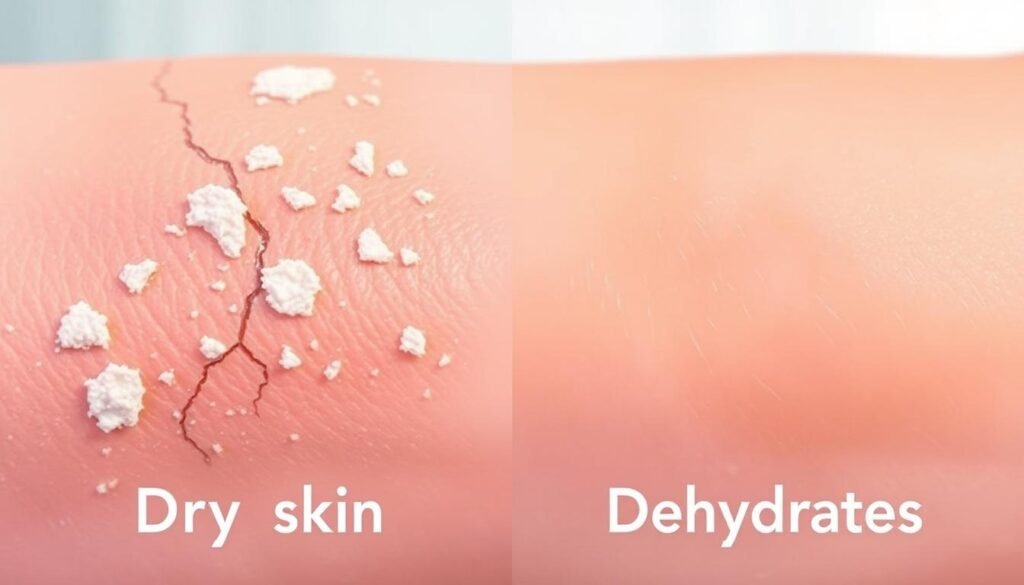
Knowing the difference between dry skin and dehydrated skin is key. One is a temporary state that can happen to anyone. The other is a condition you’re born with. Each needs a different treatment approach.
Many things can change your skin. Weather, lifestyle, products, and aging all play a part. Some problems fix quickly with the right care. Others might need a doctor’s help to figure out what’s going on.
This article aims to help you understand your skin better. But remember, it’s not a substitute for expert advice. Medical Disclaimer: This is for information and education only. It’s not medical advice. Skin conditions vary a lot from person to person. Always see a board-certified dermatologist or healthcare professional for a proper diagnosis and treatment.
Key Takeaways
- Lack of oils defines one condition, while lack of water defines the other—understanding this distinction is essential for effective treatment
- One is an inherited type you’re born with, while the other is a temporary state that can happen to anyone regardless of natural type
- Both conditions can show similar symptoms like tightness and flakiness, making identification challenging without proper knowledge
- Environmental factors, weather patterns, lifestyle habits, and product choices all influence your complexion’s current state
- Oil-based moisturization treats one condition, while water-based hydration addresses the other—using the wrong approach can worsen symptoms
- Professional consultation with a board-certified dermatologist is recommended for accurate diagnosis and personalized treatment plans
Understanding the Basics of Skin Type
Knowing your skin type is key to good skincare. It’s about whether your skin makes less oil or lacks water. Dry skin and dehydrated skin are different, needing different treatments.
There are five main skin types: normal, oily, combination, sensitive, and dry. Dehydration is a temporary issue that can hit anyone, no matter their skin type. Knowing what you’re dealing with can change your skincare game.
The Nature of Dry Skin Type
Dry skin is a permanent skin type determined by your genetics at birth. It’s not something that comes and goes. Your skin makes less sebum, leading to a natural oil shortage.
This shortage weakens your skin’s lipid barrier. This barrier is like a shield that keeps moisture in. Without enough oils, it can’t do its job well.
People with dry skin often have dry skin all over, not just their face. Your hands, scalp, legs, and more show signs of oil deficiency. This widespread dryness is a sign of a genetic skin type.
The Reality of Dehydrated Skin
Dehydrated skin is a temporary skin condition, not a permanent type. This is a big difference from dry skin. Dehydration happens when your skin loses more water than it takes in, leading to a moisture deficit.
Healthy skin has about 30% water content. This water is vital for skin elasticity, firmness, and that youthful look. If water levels drop, your skin becomes dehydrated.
Surprisingly, dehydrated skin can affect anyone, no matter their natural skin type. Even oily or combination skin can get dehydrated. It’s not about oil levels, but water content.
Things like environment, lifestyle, and diet can cause dehydration. The good news is it’s reversible. By identifying causes and adjusting your skincare, you can restore your skin’s water balance.
Core Distinctions That Matter
Knowing the difference between dry and dehydrated skin helps you choose the right products. Dry skin needs oils and lipids, while dehydrated skin needs water.
Dry skin is due to genetics, affecting sebum production. It stays the same throughout your life. Dehydrated skin, on the other hand, comes from external factors like climate, air conditioning, harsh cleansers, or not drinking enough water.
| Characteristic | Dry Skin | Dehydrated Skin |
|---|---|---|
| Primary Deficiency | Lacks oils and lipids | Lacks water content |
| Classification | Permanent skin type | Temporary skin condition |
| Cause | Genetic factors | Environmental and lifestyle factors |
| Who It Affects | Those born with low sebum production | Anyone, regardless of skin type |
| Treatment Duration | Requires ongoing management | Can be reversed with proper care |
It’s also possible to have both dry and dehydrated skin at once. This requires a treatment that addresses both oil and water needs. You’ll need products that fix your lipid barrier and boost water content.
The location of symptoms can give clues. Dry skin shows up all over, from scalp to feet. Dehydrated skin often hits your face, where environmental stressors are higher.
Oil production is another clue. Dehydrated skin might be oily in the T-zone or produce excess sebum. Dry skin type rarely gets oily anywhere.
Understanding these differences lets you make better skincare choices. You can target your skin’s specific needs with precision. This knowledge is the first step to managing your skin’s health effectively.
Common Symptoms of Dry Skin
When your skin lacks natural oils, it sends clear signals. These signals help you know if you have dry skin, not just temporary dehydration. Dry skin is about oil production, not just water, and its symptoms last all year.
People with dry skin show signs all over their body. These signs come from less sebum, which weakens the skin’s barrier. Knowing these signs helps you pick the right skincare products for your needs.
Flakiness and Scaling
Flakes on your skin are a clear sign of dry skin. Without enough oils, skin cells don’t shed right. This leads to flaky, scaly skin that’s both visible and uncomfortable.
Flaking can vary from person to person. Some see fine flakes, while others have bigger patches. This flaking is usually constant, affecting many parts of the body at once.
Certain areas tend to flake more. These include:
- Hands and fingers – between the knuckles and on the back of hands
- Lower legs and shins – where there are fewer oil glands
- Elbows and knees – due to frequent bending and friction
- Feet and heels – prone to thick, scaly buildup
Flakes get more noticeable when you scratch or remove clothes. Scaling doesn’t get better with just moisturizing. It’s about oil production, not just water.
Tightness and Roughness
Dry skin also feels tight and rough. Many people feel a constant tightness after washing their face or showering. This is because the skin lacks the lipid barrier that keeps it soft and flexible.
This tightness feels like your skin is stretched. It’s not just from swimming in chlorinated water. It’s constant and can get worse during the day.
Along with tightness, dry skin feels rough. Running your hand over it feels like sandpaper. This roughness is clear on:
- The backs of hands
- Elbows and surrounding areas
- Knees and lower legs
- Heels and soles of feet
These feelings of tightness and roughness don’t change with the seasons. They stay the same, year-round. This shows dry skin is different from temporary dehydration, which changes with the weather.
Redness and Irritation
Without enough oil, skin can’t protect itself. This makes it more sensitive to irritants. As a result, it becomes red, sensitive, and irritated.
People with dry skin often see their skin turn red. This redness can be all over or in specific areas. The skin may itch and feel uncomfortable, leading to more irritation.
In severe cases, dry skin can get worse:
- Small cracks or fissures that can be painful and may bleed
- Increased susceptibility to conditions like eczema, psoriasis, and dermatitis
- Heightened sensitivity to skincare products, fragrances, and environmental factors
- Persistent itching that worsens at night or after bathing
These symptoms mean your skin needs special care. Without it, irritation can get worse and lead to chronic conditions. But, knowing these symptoms early helps you start the right skincare routine to protect your skin.
Understanding the cause of these symptoms is key. They come from a lack of oil, not just water. This knowledge helps you find the right treatments to fix your skin’s barrier.
Common Symptoms of Dehydrated Skin
Dehydrated skin can be tricky to spot because it often looks oily and changes daily. Unlike permanent skin types, dehydration is a temporary issue. It shows signs that change based on your lifestyle and the environment you’re in. Knowing these signs helps you figure out if your skin is dehydrated and what to do about it.
Dehydrated skin can look different every day or even within a single day. It might get worse after drinking caffeine, flying, or being in air-conditioned spaces. It’s key to know the signs that point to dehydration, not just oiliness.
Dullness and Lack of Radiance
One clear sign of dehydrated skin is a lackluster, flat look. It doesn’t have the glow of well-hydrated skin. This makes it look tired and older than it is.
This dullness is different from the constant dullness of dry skin. It changes with your hydration levels. You might notice it more after flying, drinking alcohol, or being in extreme temperatures.
Dehydrated skin cells lack the plumpness to reflect light well. This makes your skin look shadowed and tired, even if you’ve slept well.
Increased Sensitivity
Dehydrated skin is more sensitive to products and the environment. It needs enough water to keep its protective barrier function. Without it, your skin is more open to irritants.
You might suddenly react to skincare products that used to be fine. Your skin could feel itchy, tight, or uncomfortable. This sensitivity usually goes away once you drink enough water, unlike chronic sensitivity from other issues.
Dehydrated skin can feel both oily and dry at the same time. It overproduces oil because it lacks water. Knowing dehydrated skin causes helps you choose water-based solutions over oil-control products.
Fine Lines and Wrinkles
Dehydration makes fine lines and wrinkles appear, even if you’re not aging. Water keeps your skin plump and elastic. Without enough, your skin looks creased with fine lines.
These lines show up most around the eyes, mouth, and forehead. Unlike true aging wrinkles, these are temporary and improve with better hydration. They’re called “surface wrinkles” because they affect only the outer skin layers.
A simple way to check if you’re dehydrated is the pinch test. Pinch a small skin area and hold for a few seconds. If it snaps back right away, you’re likely hydrated. If it takes time, you’re dehydrated.
Other signs of dehydrated skin include darker under-eye circles and bags. Your skin might look tired even after enough sleep. These signs can change with the seasons, your activities, or your skincare routine. They’re temporary, unlike permanent skin types.
| Symptom | How It Appears | Key Characteristics | Pinch Test Result |
|---|---|---|---|
| Dullness | Flat, lifeless complexion lacking glow | Fluctuates based on hydration levels and environment | Skin may show reduced elasticity |
| Increased Sensitivity | Itchiness, tightness, reactivity to products | Can feel oily and dry at the same time | May show delayed skin rebound |
| Fine Lines | Surface wrinkles around eyes, mouth, forehead | Temporary, responsive to hydration improvements | Skin takes several moments to return to normal |
| Dark Circles | Shadows and bags under eyes | Appear despite adequate sleep, worsen with dehydration | Under-eye area shows reduced firmness |
Factors Contributing to Dry Skin
Dry skin is not just a random issue. It’s often caused by many factors in our environment and lifestyle. While your genes can make you more prone to dry skin, external factors can make it worse. Knowing what affects your skin helps you take steps to improve it.
Environmental Influences
Your surroundings greatly affect your dry skin. Cold, dry air pulls moisture from your skin. This is called transepidermal water loss.
Cold weather also lowers your skin’s oil production. This makes your skin more vulnerable in winter. Indoor heaters make it even drier by reducing humidity.
Summer air conditioning can also dry out your skin. These systems remove moisture from the air, drying your skin further.
Wind can damage your skin’s protective layer, making dryness worse. Places at high altitudes are even drier, losing more moisture.
Pollution and environmental irritants also harm your skin. They weaken your skin’s defense, making it harder to hold onto moisture.
Seasonal Changes
Dry skin often gets worse in the fall and winter. Cold air and indoor heat create a perfect storm for dryness.
Summer can offer relief, but it’s short-lived. Higher humidity helps your skin hold onto moisture, but it’s temporary.
Seasonal changes can be tough on your skin. It takes time to adjust to new humidity and temperatures. You might see more flaking, tightness, or irritation during these times.
Skin dryness is common and affects most people at some point. It can get worse with age, as your skin produces less oil, starting around 40.
Seasons affect how bad your dry skin symptoms are, but they don’t cause it. Your genetic tendency to have dry skin remains the same. The seasons just make it more noticeable.
Skin Care Products
Some cleaning products can make dry skin worse. Harsh soaps and cleansers remove the little oil your skin makes. This makes dryness worse.
Some ingredients are bad for dry skin. Avoid or use with caution:
- Sulfate-based cleansers that strip away too much oil
- Alcohol-containing products that quickly evaporate and take moisture with them
- Heavily fragranced items that can irritate and damage the skin barrier
- Over-exfoliation that damages the outer layer
Hot showers or baths can also dry out your skin. They remove your skin’s natural oils. This leaves your skin tighter and drier.
Some treatments and medications can dry out your skin as a side effect. If you start a new treatment and notice dryness, talk to your doctor.
Getting older also means your skin will naturally produce less oil. This decline usually starts after 40. So, dry skin often gets worse with age, even if you manage it well earlier.
Understanding what causes dry skin is the first step to managing it. While you can’t change your genetic skin type, you can control many environmental and lifestyle factors.
Factors Contributing to Dehydrated Skin
When your skin loses water faster than it can keep, many factors are at play. Unlike dry skin, which is a permanent condition, dehydrated skin is temporary. You can change it by understanding what causes it.
Daily Habits That Affect Your Skin
Your daily choices affect your skin’s hydration. Many common causes of dehydrated skin come from habits you might not think about.
Caffeine and alcohol are big factors. They make you urinate more, taking water away from your skin. That morning coffee or evening wine takes moisture from your skin cells.
Climate-control systems also affect your skin. Air conditioning and heating dry out the air, taking moisture from your skin. Working in an air-conditioned office or sleeping with the heat on dries out your skin.
Air travel is even worse. Airplane cabins are very dry, with humidity levels as low as 10-20%. Even a few hours of flying can dry out your skin.
Getting enough sleep is key. Poor sleep disrupts your skin’s repair and regeneration. Your skin restores moisture and strengthens its barrier during sleep.
Other lifestyle factors include:
- Chronic stress affects your skin’s hydration
- Smoking damages your skin’s moisture-retention ability
- Hot showers and baths strip away natural oils
- Over-washing your face removes essential lipids
What You Eat Matters
Your diet affects your skin’s hydration more than just drinking water. What you eat throughout the day is important for your skin’s moisture.
Diets high in sodium are a problem. Too much salt can make your body retain water, but it doesn’t help your skin. Your body holds onto water internally, but your skin’s outer layers may stay dehydrated.
Processed foods are also bad. They have high sodium and lack nutrients your skin needs. Eating too many packaged snacks and fast food means your skin misses out on vitamins and minerals.
Healthy fats are important for your skin’s hydration. Your skin needs omega-3 and omega-6 fatty acids. Eating foods like fish, nuts, seeds, and avocados helps your skin hold onto water.
Remember, your diet is just one part of the puzzle. You can’t just eat your way to hydrated skin if you’re drinking too much coffee or living in a dry climate. Nutrition is important, but it’s not the only factor.
The Truth About Drinking Water
Not drinking enough water is a big cause of dehydrated skin. But, drinking water is more complex than most people think. Your body gives water to vital organs first, leaving your skin last.
Here’s a surprising fact: only a small percentage of the water you drink actually reaches your skin. Drinking eight glasses of water a day doesn’t always mean your skin is hydrated. You need both internal and external hydration.
Topical skincare is key. Water-based products applied to your skin provide hydration that drinking water alone can’t. You need both internal and external hydration to keep your skin healthy.
Environmental conditions also play a big role. Low humidity, wind, and extreme temperatures all increase water loss from your skin. This process is called transepidermal water loss (TEWL).
Weather conditions have a big effect:
- Cold, dry winters increase TEWL as indoor heating reduces humidity
- Arid climates naturally have low moisture, pulling water from your skin
- Windy conditions accelerate evaporation from your skin’s surface
- High altitudes combine lower humidity with increased UV exposure
Fixing dehydrated skin requires a multi-faceted approach. Drink enough water, use the right topical products, and protect your skin from environmental factors. Because skin dehydration is temporary and controllable, you can restore your skin’s hydration by addressing the causes.
How to Diagnose Your Skin Type
Finding out what your skin needs is easier than you think. Knowing your skin type helps you pick the right products and treatments. You can use at-home tests or get help from a professional to figure out if you have dry skin, dehydrated skin, or both.
It’s important to know the difference between dry skin and dehydrated skin. Your skin tells you a lot through how it feels and looks. By paying attention to these signs, you can make better choices for your skin.
Simple Ways to Test Your Skin at Home
The pinch test is a simple way to check if your skin is hydrated. Pinch a small area of skin, like your cheek or hand, and hold it for a few seconds. Then, let it go and see how fast it goes back to normal.
If your skin snaps back right away, you’re likely hydrated. But if it takes a while or stays tented, you might be dehydrated. This means your skin needs more water.

There are other ways to figure out your skin type too. Look at where you get dry. If your hands, scalp, and legs are all dry, you might have dry skin.
See how fast your skin absorbs moisturizers. Dry skin soaks them up quickly because it’s thirsty for oils. Dehydrated skin might feel tight even after using oil-based products because it needs water.
Try the bare-faced test for more insight. Clean your skin and leave it bare for thirty minutes. Then, see how it feels and looks without any products.
Dry skin feels tight right after cleansing. Dehydrated skin might look oily but feel tight underneath. This mix of oily and tight skin usually means you’re dehydrated.
Watch how your skin reacts to different things. Dehydration can change with activities, seasons, or products. But dry skin usually stays the same no matter what.
Getting Expert Assessment
Getting a professional opinion can give you insights you can’t get on your own. Dermatologists and estheticians use special tools to really understand your skin. They can measure how hydrated your skin is and find out if there are any underlying problems.
Experts can see what’s going on under the surface. They can find things like hypothyroidism or eczema that might be causing your skin problems. This way, you can treat the real issue, not just the symptoms.
If you’re not sure about your skin, see a dermatologist. They can help if you’re not getting results from home treatments. They can also give you prescription treatments and advice that’s just for you.
Why Knowing Your Skin Matters
Knowing your skin type is key to getting the right treatment. Using the wrong products can make things worse. For example, using heavy oils on dehydrated skin can clog pores and cause breakouts.
On the other hand, using only water-based products on dry skin won’t fix the oil problem. Your skin will keep struggling because it needs lipids to stay healthy. This can waste a lot of time and money.
Many people have both dry skin and dehydration at the same time. You need to address both oil and water needs. Knowing this lets you use products in a way that really helps your skin.
Your skin changes over time because of aging, hormones, and the environment. What worked before might not work now. It’s important to check your skin regularly and adjust your routine as needed.
By paying attention to your skin, you can make better choices. You’ll notice patterns and be ready for changes. This way, skincare becomes a targeted and effective practice.
Remember, knowing your skin and getting professional help are both important. Start with at-home tests and then see a dermatologist if you need more help. This balanced approach will help you achieve healthy, comfortable skin.
Recommended Skincare Routines for Dry Skin
When you have dry skin, your daily routine should focus on restoring your skin’s barrier. This skin type lacks the natural oils needed for hydration. The best skincare for dry skin provides these missing lipids through selected products and habits.
Creating a routine that addresses dryness requires knowing which ingredients work best. Your skin needs hydration and the ability to keep that moisture. The right products can turn flaky, uncomfortable skin into a healthier, more comfortable look.
Essential Moisturizing Ingredients
The base of any dry skin remedies is products with ingredients that replace missing oils and seal in moisture. These ingredients strengthen your skin’s barrier function. Knowing what to look for helps you make better choices at the skincare counter.
Ceramides are key because they make up about 50% of your skin’s lipid barrier. They are vital for keeping your skin’s protective function. Ceramide products help rebuild the barrier that dry skin lacks, making them great for long-term care.
Plant-based oils are great because they mimic your skin’s natural sebum. The best ones include:
- Jojoba oil – closely resembles skin’s natural oils and absorbs easily
- Rosehip oil – rich in fatty acids and vitamins that nourish skin
- Argan oil – provides antioxidants along with moisture
- Squalane – lightweight yet deeply hydrating plant oil
Nut and seed oils add nourishing fatty acids that soften and protect your skin. Coconut oil, almond oil, and hemp oil are great choices. Each offers a unique fatty acid profile that helps restore suppleness to dry, rough skin.
Shea butter is known for its rich vitamin and fatty acid content. This thick emollient creates a protective layer that locks in moisture while delivering nutrients. It works well in nighttime treatments when your skin repairs itself.
Occlusive ingredients create a physical barrier that prevents water loss. Mineral oil and lanolin are highly effective occlusives that seal in hydration. They may feel heavy at first, but they provide the protective seal dry skin needs.
Additional beneficial ingredients include urea, which moisturizes and gently exfoliates dead skin cells. Colloidal oatmeal soothes irritation while forming a protective film. These ingredients address multiple concerns that come with dryness.
One important note about hyaluronic acid: while it can benefit dry skin, it must be sealed in with an oil or cream-based moisturizer. Without this final step, it can actually draw moisture from your skin into the air, worsening dehydration.
Products and Ingredients to Avoid
Knowing what to avoid is just as important as knowing what to use. Dry skin is more vulnerable to irritation because of its compromised barrier function. Certain ingredients can strip away the limited oils your skin produces or cause unnecessary reactions.
Fragrance and perfume serve no beneficial purpose and frequently irritate sensitive dry skin. Dyes add nothing positive to skincare products. Both ingredients increase the likelihood of adverse reactions without providing any therapeutic value.
Alcohol and denatured alcohol are extremely drying ingredients that you should avoid completely. These substances strip away the protective oils your skin needs to maintain its barrier function. Check ingredient lists carefully, as alcohol appears in many toners and lightweight moisturizers.
Harsh sulfates in cleansers remove too much of your skin’s natural protective oils. Sodium lauryl sulfate and sodium laureth sulfate create abundant foam but leave dry skin feeling tight and uncomfortable. Choose gentle, creamy cleansers instead.
Physical exfoliants like scrubs containing sugar, salt, or coffee grounds can cause micro-tears in dry, fragile skin. These abrasive particles damage the already compromised surface. If you must exfoliate, chemical exfoliants used sparingly and infrequently are safer options.
Undiluted essential oils can irritate even though they’re natural. Their concentrated nature often overwhelms sensitive dry skin. Products marketed as “natural” or “organic” aren’t automatically safe—ingredient selection matters more than marketing claims.
Daily Care Practices That Work
Effective dry skin remedies extend beyond product selection to include daily habits that support your skin’s health. Consistency is more important than occasional intensive treatments. Building these practices into your routine creates lasting improvements.
Start with cleansing using gentle, creamy, fragrance-free products that don’t foam excessively. Foaming typically indicates harsh surfactants that strip natural oils. Apply cleanser with light pressure and rinse with warm—never hot—water.
Limit showers to 10 minutes or less and avoid bathing more than once daily. Hot water strips skin of its natural oils rapidly. Keep the water temperature warm and comfortable.
After bathing, pat your skin dry gently instead of rubbing vigorously. Immediately apply moisturizer to damp skin within three minutes. This technique seals in the water your skin absorbed during bathing, maximizing hydration.
Apply moisturizer as often as needed throughout the day. Pay particular attention to your hands, face, and any other affected areas. Dry skin requires consistent moisture replenishment, not just morning and evening application.
Use rich moisturizers or facial oils at night when your skin repairs itself. Your skin’s natural regeneration processes work most actively during sleep. Supporting these processes with intensive moisturization yields better results.
Environmental modifications can significantly impact your comfort level. Consider using a humidifier during winter months to add moisture to heated indoor air. Dry air pulls moisture from your skin continuously, making external hydration more challenging.
Wear protective clothing in cold, windy weather to shield your skin from harsh elements. Wind and cold accelerate moisture loss dramatically. Scarves, gloves, and appropriate coverage make a noticeable difference.
For intensive overnight treatment, try this effective approach: slather thick moisturizer on your hands or feet and wear cotton gloves or socks to bed. This creates an occlusive environment that allows deep moisture penetration. You’ll notice softer, more supple skin by morning.
Remember that consistency is key with skincare for dry skin. This is a permanent skin type requiring ongoing management. The moisturizing process isn’t just about adding moisture—it’s about providing the oils your skin doesn’t naturally produce and creating a barrier to prevent water loss.
Recommended Skincare Routines for Dehydrated Skin
Creating a skincare routine for dehydrated skin means focusing on hydration. It’s different from dry skin, which needs oils and emollients. Dehydrated skin needs water-based formulas. It’s a temporary condition that responds well to the right products and lifestyle changes.
Learning how to treat dehydrated skin involves understanding that your skin needs water, not more oil. This shapes every product choice you make. If your skin is oily but dehydrated, you might skip heavy moisturizers for lightweight hydrating layers.
Hydration-Boosting Ingredients
The foundation of any effective routine for dehydrated skin starts with the right ingredients. Humectants are your best allies because they attract and bind water molecules to your skin. These ingredients work differently than the emollients and occlusives needed for dry skin.
Hyaluronic acid is the gold standard for skin hydration. It can hold up to 1,000 times its weight in water, making it incredibly effective at plumping and hydrating the skin. But, you must seal it in with a moisturizer or oil.
Without that protective layer, hyaluronic acid can actually draw moisture from deeper skin layers and allow it to evaporate into the air. This could worsen your dehydration.
Hydration is the foundation of healthy skin. Without adequate water, even the richest moisturizers cannot perform their job effectively.
Glycerin offers another powerful option for pulling water into the skin and maintaining hydration levels throughout the day. It works like hyaluronic acid but with a slightly different molecular structure. Many hydrating toners and essences feature glycerin as a primary ingredient.
Other beneficial ingredients for dehydrated skin include:
- Aloe vera: Naturally water-rich with soothing properties that calm irritation while providing hydration
- Honey: A natural humectant with antimicrobial benefits that attracts moisture to the skin
- Snail mucin: Contains hyaluronic acid, glycoproteins, and other hydrating components that support skin moisture
- Lactic acid and citric acid: Gentle alpha-hydroxy acids that improve the skin’s ability to retain moisture
- Ceramides: Strengthen the moisture barrier to prevent water loss from the skin
Ceramides deserve special mention because they benefit both dehydrated and dry skin. They work by reinforcing the skin’s protective barrier, which prevents moisture from escaping. This makes them valuable when your barrier has been compromised by dehydration.
For dehydrated skin, water-rich serums, essences, and lightweight gels typically work better than heavy creams. If your skin is oily but dehydrated, you might find that hydrating serums sealed with a light moisturizer provide all the hydration you need without causing breakouts.
| Ingredient | Primary Function | Best For | Application Tips |
|---|---|---|---|
| Hyaluronic Acid | Holds 1000x its weight in water | All dehydrated skin types | Must seal with moisturizer or oil |
| Glycerin | Draws water into skin layers | Sensitive dehydrated skin | Apply to damp skin for best results |
| Ceramides | Strengthens moisture barrier | Compromised skin barriers | Use morning and evening consistently |
| Aloe Vera | Provides water-rich hydration | Irritated dehydrated skin | Can be used generously throughout day |
Importance of Layering Products
Strategic layering makes a big difference in hydration. Apply products from thinnest to thickest to ensure each layer penetrates effectively. This maximizes the benefits of each product in your routine.
Follow this layering sequence for optimal results:
- Start with a hydrating toner or essence on freshly cleansed skin to deliver the first layer of water-based hydration
- Apply a water-based serum containing hyaluronic acid or other humectants for concentrated hydration
- Add any treatment products if needed for specific concerns
- Seal everything with an appropriate moisturizer to prevent water from evaporating
The final moisturizer layer is critical. Without it, humectants like hyaluronic acid can pull moisture from deeper skin layers and let it evaporate into the air. This is why the layering sequence matters so much for dehydrated skin.
Your skin type determines the weight of that final moisturizer. If you have oily-dehydrated skin, a lightweight, oil-free moisturizer or even a few drops of facial oil may suffice. For dry-dehydrated skin, you’ll need a richer cream that provides both hydration and occlusion.
This layering approach allows for customization based on your needs. Those experiencing severe dehydration can add more hydrating layers, while mild dehydration may require fewer products. The beauty of this method lies in its flexibility.
Daily Skin Care Tips
Practical daily habits make a big difference for dehydrated skin. Consistency is more important than expensive products. Small changes to your routine can produce noticeable improvements within days.
Start with a gentle, hydrating cleanser that doesn’t strip your skin. Harsh cleansers remove the natural moisture barrier, making dehydration worse. Look for cream or gel cleansers labeled as hydrating or moisturizing.
Avoid hot water during cleansing and showering. Hot water increases transepidermal water loss, which directly contributes to dehydration. Use lukewarm water instead, and keep cleansing time under two minutes.
Keep a facial mist or hydrating toner accessible throughout the day. This allows you to refresh your skin in air-conditioned offices or heated environments. Rose water makes an excellent portable option that provides instant hydration and a pleasant sensory experience.
Apply a hydrating mask once or twice weekly for an intensive boost. Sheet masks soaked in hydrating essences work well for dehydrated skin. Leave them on for 15-20 minutes, then pat in any remaining essence.
Understanding how to treat dehydrated skin requires identifying and addressing the root causes. Common culprits include:
- Excessive caffeine or alcohol consumption that depletes internal hydration
- Inadequate daily water intake (aim for 8 glasses minimum)
- Dry environmental conditions from heating or air conditioning
- Harsh skincare products that damage the moisture barrier
- Lifestyle factors like stress or insufficient sleep
Treatment demands a two-pronged approach: topical hydration through appropriate skincare and internal hydration through adequate water consumption. While drinking water is essential, only a small percentage reaches the skin. This is why topical hydration cannot be skipped in favor of just drinking more water.
Carry a water bottle to encourage consistent hydration throughout the day. Set reminders on your phone if you tend to forget. Incorporate water-rich foods like cucumbers, watermelon, and oranges into your diet.
Consider using a humidifier in dry environments, like during winter. This adds moisture to the air, reducing the amount your skin loses throughout the day and night. Place one in your bedroom for overnight benefits.
Remember, dehydrated skin is temporary, unlike dry skin which is permanent. By identifying what’s causing your water loss and consistently providing adequate hydration both internally and topically, you can restore your skin’s moisture balance. Most people see improvement within one to two weeks of following a proper hydration routine.
The Impact of Diet on Skin Hydration
Your diet is key to healthy skin, more than any cream or lotion. What you eat affects how well your skin holds moisture and makes natural oils. Knowing how food impacts your skin helps you choose better for your skin health.
While creams are important, food also plays a big role. Certain foods help your skin stay healthy. Your diet can either help or hurt your skincare efforts.

Nourishing Your Skin’s Natural Oil Production
Some foods help your skin make its own oils. Omega-3 fatty acids are very good for your skin. They help keep your skin’s barrier strong and make more natural oils.
Fatty fish like salmon, mackerel, and sardines are full of omega-3s. These fats are important for cell health all over your body. Your skin uses them to stay healthy and strong.
For those who don’t eat fish, walnuts, flaxseeds, and chia seeds are good alternatives. Adding these to your diet gives your skin the omega-3s it needs.
Avocados are also great for your skin. They have healthy fats and vitamin E. The fats help your cells, and vitamin E protects your skin cells from damage.
Try adding these foods to your meals:
- Nuts and seeds for healthy oils, vitamin E, and minerals
- Olive oil and quality plant oils for internal and topical benefits
- Sweet potatoes, carrots, and leafy greens for vitamin A
- Enough protein for skin structure
These foods are good for dry skin from the inside. But, they can’t change your skin type. If you naturally have dry skin, you’ll always need to use oil-based moisturizers.
A diet rich in nutrients helps your skin stay healthy and may make it less dry. Using both good food and skincare products works best. Neither one alone is enough for dry skin.
Hydrating Your Body Through Food Choices
Drinking water is not the only way to keep your skin hydrated. Foods with a lot of water also help. These foods add hydration and vitamins that are good for your skin.
Watermelon is very hydrating, with about 92% water. It also has vitamins and antioxidants that are good for your skin. It’s a great choice for staying hydrated from the inside.
Cucumbers are even more hydrating, with about 96% water. You can eat them or add them to water for flavor. They’re easy to add to many meals and snacks.
Make sure to eat these water-rich foods:
- Strawberries and berries for water and antioxidants
- Celery for water and minerals
- Lettuce and leafy greens for hydration
- Citrus fruits for water and vitamin C
- Tomatoes for water and lycopene
Foods with a lot of water help you stay hydrated more than you might think. They work with your water intake to keep you hydrated. This is a key way to treat dehydrated skin from the inside.
Some things can make you lose water faster. Caffeine and alcohol are diuretics that make you lose more water. They can make dehydrated skin worse.
Experts say to limit or avoid these drinks when you’re trying to keep your skin hydrated. If you do drink them, drink more water. It’s important to be careful when you’re trying to improve your skin’s hydration.
Foods high in sodium can also affect your hydration in unexpected ways. They might make your body hold onto water, but your skin can be dehydrated. Eating less sodium can help your health and your skin look better.
Considering Nutritional Supplements
Supplements can help your skin, but they work differently for everyone. Knowing which ones are backed by research helps you make smart choices. Always have realistic expectations about what supplements can do.
Omega-3 fatty acid supplements are an option for those who don’t eat fish. They may help your skin’s barrier and overall health. The research shows they could be beneficial, but results vary.
Vitamin E supplements have antioxidant properties that might help your skin. But, the evidence is mixed on how well they work for dry or dehydrated skin. Some studies show promise, while others find little effect.
| Supplement Type | Primary Benefits | Evidence Level | Considerations |
|---|---|---|---|
| Omega-3 Fatty Acids | Supports lipid barrier function | Moderate research support | Best for those avoiding fish |
| Collagen | May improve hydration and elasticity | Limited but growing evidence | Results vary by individual |
| Vitamin C | Supports collagen production | Strong research support | Beneficial for deficient individuals |
| Vitamin D | Overall skin health support | Complex relationship | Deficiency linked to skin issues |
Collagen supplements have become popular for skin health. Some studies suggest they can help with hydration and elasticity. But, more research is needed, and results vary a lot.
Vitamin C is important for collagen and skin health. For those who don’t get enough from food, supplements might help. This vitamin is key for keeping your skin’s structure and function.
Vitamin D is also important for skin health, but its role is complex. Research shows it can help with skin problems, but its exact effect on dry or dehydrated skin is not fully understood.
Some people find benefits from supplements like ceramides, hyaluronic acid, or other skin-supporting compounds. But, the evidence for their effectiveness is not the same for everyone. People respond differently to these supplements.
Supplements should never replace a balanced diet. They work best when added to a healthy diet. The evidence for their effectiveness in treating dry or dehydrated skin is often limited or mixed.
Always talk to a healthcare professional before starting any supplement regimen. Supplements can interact with medications or affect other health conditions. Getting professional advice helps avoid problems and choose the right supplements.
Remember, using the right skincare products is also key, even with good food and supplements. No diet change or supplement can replace the need for moisturizers for dry skin. Topical hydration products are also necessary for dehydrated skin.
Good nutrition is just one part of taking care of your skin. Combining it with the right skincare products is the best approach. This balanced approach helps you have realistic expectations and improve your skin health.
When to Consult a Dermatologist
Knowing when to seek medical help for your skin is key. Many skin issues can be handled at home. But, some problems need a doctor’s help. It’s important to know when to ask for professional advice.
Dermatologists offer more than what you can find in stores. They can diagnose and treat skin problems that need special care. This section will help you know when to see a skin specialist.
Recognizing Persistent Issues
Most dry skin can be managed with home care in a few weeks. But, some signs mean you need a doctor. If your skin doesn’t get better after trying different treatments, see a dermatologist.
Watch for skin problems that get worse, even with good care. Severe dryness or widespread issues might be more than just dry skin. A doctor can tell you what’s really going on.
Some symptoms need immediate attention. Severe cracks or bleeding skin is a sign of a big problem. Also, intense itching that keeps you awake or disrupts your day is a warning sign.
The table below shows when to see a doctor for your skin:
| Symptom Type | Manageable at Home | Requires Professional Care | Urgency Level |
|---|---|---|---|
| Dryness Duration | Improves within 2-3 weeks | Persists beyond 4-6 weeks | Schedule routine appointment |
| Skin Cracking | Minor surface dryness | Deep cracks with bleeding | Seek prompt evaluation |
| Itching Severity | Occasional mild discomfort | Intense, sleep-disrupting itching | Consult within one week |
| Area Affected | Small, localized patches | Widespread across body | Schedule a thorough exam |
Trust your gut about your skin. If you’re worried or uncomfortable, it’s time to see a dermatologist. Getting a professional opinion can prevent bigger problems.
Understanding Possible Underlying Conditions
What looks like simple dry skin might be a sign of something more serious. Dermatologists can tell the difference. They have the skills to diagnose and treat various conditions.
Eczema, or atopic dermatitis, is often mistaken for dry skin. It’s a chronic condition that causes itchy, inflamed patches. People with eczema need special treatments that go beyond moisturizers.
Psoriasis is another condition that looks like extreme dryness but needs different treatment. It’s an autoimmune disease that causes thick, scaly patches. Without the right treatment, it can affect your quality of life.
Ignoring dry skin can lead to conditions like eczema and psoriasis. Always see a board-certified dermatologist for a proper diagnosis and treatment.
Some health issues can cause persistent dry skin. Hypothyroidism, diabetes, and kidney disease can all affect your skin’s moisture. Certain medications can also cause dryness as a side effect.
Some medications can make your skin drier. This includes retinoids, diuretics, and cholesterol medications. A dermatologist can help you understand how your medications affect your skin and find solutions.
Contact dermatitis can also cause symptoms similar to dehydrated skin. It’s a reaction to substances that causes inflammation and dryness. Identifying the cause often requires professional evaluation and patch testing.
Importance of Professional Care
Dermatologists have the knowledge and tools you don’t. They can spot differences in skin conditions that look the same to you. This ensures you get the right treatment.
They can offer treatments beyond what you can buy in stores. Dermatologists can prescribe stronger moisturizers and medications for specific conditions. These treatments work better and faster than over-the-counter products.
Getting personalized advice is another benefit of seeing a dermatologist. They consider your skin type, medical history, and lifestyle. This approach helps create a treatment plan that fits you.
Dermatologists recommend products based on scientific evidence. They stay updated with the latest research. This helps you avoid wasting money on ineffective products.
For ongoing conditions, dermatologists provide ongoing care. They adjust your treatment plan as needed. This ensures your skin care strategy keeps up with your changing needs.
Seeing a dermatologist shows you care about your health. It’s like getting advice from other specialists. Professional guidance helps you manage your skin better.
This article is for educational purposes only. It’s not medical advice. Skin conditions vary, and what works for one person might not work for another. Always see a dermatologist for a proper diagnosis and treatment plan.
Always consult a board-certified dermatologist or qualified healthcare professional for accurate diagnosis and appropriate treatment recommendations. These specialists can address your specific concerns, answer your questions, and create a treatment plan tailored to your individual needs. Professional medical care ensures you receive safe, effective treatment based on proper diagnosis.
Conclusion: Taking Care of Your Skin
Understanding your skin is key to better comfort and look. Knowing if you have dry or dehydrated skin is vital. It affects how well treatments work.
Key Distinctions to Remember
Dry skin is a permanent type due to low oil production. Dehydrated skin is a temporary issue from not enough water. You need different treatments for each.
Identifying your skin type means watching for symptoms and how products affect you. The pinch test and careful watching can help figure out your skin’s condition.
Taking Action for Better Skin
Check your skincare routine and ingredient lists. For dehydration, look for humectants like hyaluronic acid. For dryness, use emollients like shea butter.
Changes take time. Wait a few weeks before seeing results. Healthy skin starts with proper care of both facial and scalp areas.
Seeking Professional Guidance
This info is for education, not a substitute for medical advice. If home treatments don’t work or symptoms get worse, see a dermatologist.
Skin health is linked to overall wellness. A complete approach, including products, diet, hydration, and environment, often leads to the best results. Don’t be afraid to get professional help when needed.