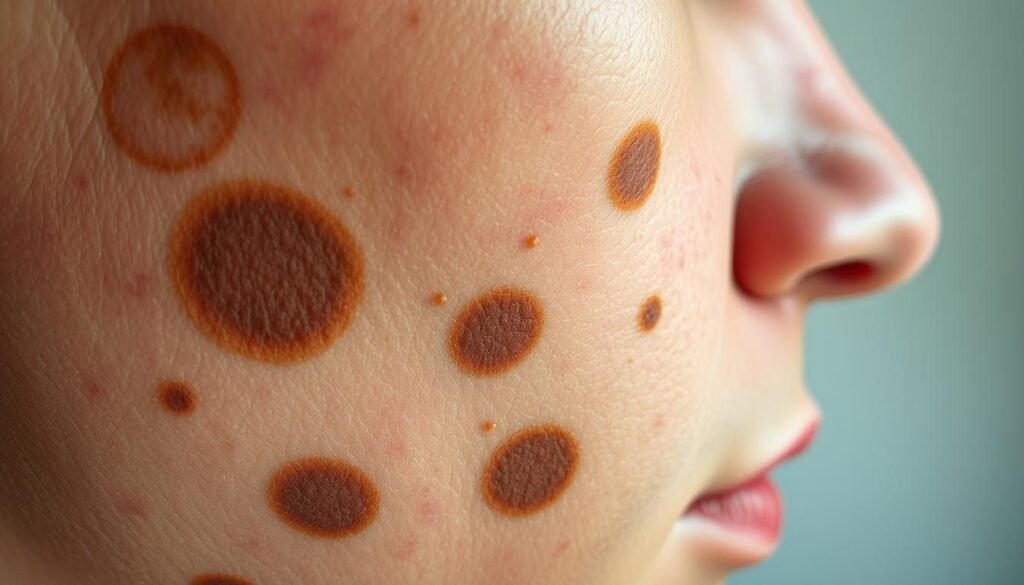
Up to 65% of people with acne get post-inflammatory hyperpigmentation. These marks can last months or years without treatment. This guide helps you understand and tackle Dark Spots Caused by Acne.
Dark Spots form when a pimple’s inflammation causes extra melanin in healing skin. These flat patches are not scars but can be just as hard to get rid of. With the right skincare and habits, fading is possible.
Sunlight makes Dark Spots worse. UV and visible light can darken skin, even on cloudy or snowy days. Always use sunscreen, wear hats, and seek shade to reduce dark spots from acne. People with darker skin tones may notice more pigment changes, and spots might appear blue-gray if melanin settles deeper.
This article will teach you how to spot, prevent, and treat Dark Spots Caused by Acne. You’ll learn how to create a skincare routine, choose effective ingredients, and know when to see a dermatologist. The information is educational and not a substitute for medical advice.
Key Takeaways
- Post-inflammatory hyperpigmentation is common after acne and can fade with consistent care.
- Daily sun protection is essential for reducing dark spots from acne in every season.
- Dark Spots Caused by Acne are flat pigment changes, distinct from raised or indented scars.
- A targeted skincare routine for acne marks can speed results with ingredients like sunscreen, retinoids, and azelaic acid.
- People with darker skin tones experience PIH more often and may need longer treatment timelines.
- Environmental triggers—UV, heat, and pollution—can intensify pigment and delay fading.
- Consult a dermatologist if spots persist, worsen, or show mixed patterns of scar and pigment.
What Are Dark Spots Caused by Acne?
After breakouts fade, many people notice flat marks that linger. These are Dark Spots Caused by Acne, often called post-inflammatory hyperpigmentation. They can range from light tan to deep brown, and some deeper spots may appear blue-gray.
These marks are not raised like scars. They sit on the surface or within the dermis and reflect excess melanin made during healing. With consistent care and smart choices, including hyperpigmentation remedies and the best products for post-acne marks, their look can soften over time.
Definition and Characteristics
Dark Spots Caused by Acne are flat patches of color where a blemish once was. Most are brown, but deeper lesions can look gray or slate blue. They do not change the skin’s texture, which separates them from true scars.
These marks may fade in months, though stubborn areas can take longer. Gentle routines and targeted hyperpigmentation remedies help keep skin calm while tone evens out.
Causes of Dark Spots
The main driver is extra melanin. Inflammation from a pimple signals melanocytes to produce more pigment as new skin forms. Picking or squeezing increases this signal and raises the risk of Dark Spots Caused by Acne.
Sunlight can darken existing marks. Daily sunscreen works alongside the best products for post-acne marks to reduce contrast and help prevent new discoloration.
The Role of Inflammation in Acne
Acne begins when pores clog with oil and dead skin. Bacteria thrive, and the body mounts an inflammatory response. This response releases mediators that can stimulate pigment production and lead to Dark Spots Caused by Acne.
Keeping inflammation in check is essential. Avoid trauma to blemishes, follow steady care, and use hyperpigmentation remedies designed to calm the skin while supporting repair with the best products for post-acne marks.
How Do Dark Spots Form After Acne?
When acne heals, the skin starts to repair itself. This can lead to an increase in melanin, causing lasting marks. People looking to fade these scars naturally are tackling Dark Spots Caused by Acne. These can be addressed with time, proper sun care, and the right skincare routine, including serums for brightening.
The Process of Hyperpigmentation
Inflamed pimples send signals to melanocytes, leading to excess pigment. This pigment can appear tan to brown on the surface or deeper in the dermis. Surface marks may fade in months, but deeper ones can last longer.
Without treatment, marks can take 6–12 months to fade. Using sunscreen and gentle skincare helps. Brightening serums can slow new pigment as the skin renews itself.
Factors Influencing Dark Spot Formation
Several factors can make Dark Spots Caused by Acne worse. Picking or squeezing can cause more damage. Deep pimples and cysts lead to stronger inflammation. UV and visible light can also darken existing spots, more so in summer.
People with darker skin tones are more likely to have lasting marks due to higher melanin levels. Wind, dry air, and pollution can irritate the skin. Harsh or comedogenic products can also prolong discoloration.
- Use daily SPF to protect gains from brightening serums for acne scars.
- Treat breakouts early to limit the cascade that drives pigment.
- Keep a steady routine if you want how to fade acne scars naturally to work.
Small steps add up: consistent sun protection, gentle cleansing, and targeted care can reduce triggers. This helps achieve clearer skin without worsening Dark Spots Caused by Acne.
Types of Dark Spots from Acne
Not all marks left after breakouts look or behave the same. Knowing the difference between Dark Spots Caused by Acne and true scars helps you pick the right care. This includes gentle routines and targeted treatments for acne scarring.
Post-inflammatory Hyperpigmentation
Post-inflammatory hyperpigmentation (PIH) is a flat patch of color that follows an inflamed pimple. It can appear tan to deep brown when pigment sits in the upper skin, and blue-gray when pigment drops deeper, which often lingers longer.
PIH can affect every skin tone, though it is more common in skin of color. Using sunscreen and dark spot correctors for acne scars helps fade them. It also reduces new discoloration.
Acne Scars vs. Dark Spots
Scars reshape the skin’s surface after injury and collagen shifts. Atrophic scars look like ice pick, rolling, or boxcar dents. Hypertrophic and keloid scars rise above the skin and can be firm.
Dark spots stay flat and do not change texture. They usually soften over time, thanks to ingredients in acne scarring treatment and dark spot correctors for acne scars.
Differences Between Dark Spots and Other Skin Imperfections
Comedones—whiteheads and blackheads—are clogged pores that feel raised but often heal without lingering color. Active inflamed pimples are red, tender, or pus-filled and may lead to PIH once they calm down.
Hyperpigmentation is not the same as lingering redness or melasma. PIH stems from melanin made after inflammation. So, targeted care for Dark Spots Caused by Acne differs from treatments used for other color changes.
Who Is Most Affected by Dark Spots?
Dark Spots Caused by Acne can affect anyone, but some groups are more at risk. The amount of melanin, how deep the lesion is, and how long a pimple lasts all play a role. Early treatment and advice from a dermatologist can make a big difference.
Skin Types Prone to Dark Spots
Those with darker skin tones produce more melanin. When acne strikes, this extra pigment can leave lasting marks. It’s important to take care of your skin early on.
Nodules and cysts cause more inflammation. Picking or squeezing can damage the skin and lead to lasting color changes. Using gentle skincare and following a dermatologist’s advice can help prevent this.
Demographic Variations
Dark Spots Caused by Acne are common among African Americans, Hispanics, Asians, Native Americans, Pacific Islanders, and people of Middle Eastern descent. But anyone can get them, regardless of skin color.
Teens and adults can get acne. Many people between 11 and 30 experience breakouts. Hormonal changes, stress, climate, and certain products can affect how the skin responds. Getting advice from a dermatologist can help you manage acne marks safely and effectively.
| Group | Key Risk Factors | Typical Presentation | Helpful Approaches |
|---|---|---|---|
| Higher Fitzpatrick Types (IV–VI) | Elevated melanin response, inflammatory lesions | Brown to deep brown macules after breakouts | Daily SPF 30+, azelaic acid, adapalene, patience with Dark Spots Caused by Acne |
| Teens and Young Adults | Hormonal shifts, sports sweat, occlusive gear | Clusters on forehead, jawline, back | Non-comedogenic products, benzoyl peroxide, dermatologist recommended treatments for acne pigmentation |
| Adults 25+ | Stress, hormonal cycles, cosmetic irritation | Chin and jaw lesions with slow fade marks | Niacinamide, retinoids, gentle chemical exfoliants |
| Picker/Squeezer Profiles | Mechanical trauma, prolonged healing | Darker, longer-lasting spots | Hands-off habits, hydrocolloid patches, guided care for Dark Spots Caused by Acne |
Common Myths About Dark Spots Caused by Acne
When skin issues come up, myths spread quickly. Knowing the truth helps you pick the right treatments. This way, you avoid irritation and get results faster.
Debunking Misconceptions
Myth: Dark spots are scars. Reality: They are color changes, not scars. Scars change skin texture, but dark spots don’t. This fact helps in choosing the right treatment.
Myth: Only skin-lightening gels work. Reality: First, calm breakouts and avoid picking. Then, use daily SPF. Add niacinamide, azelaic acid, and gentle retinoids for better results. Brands like La Roche-Posay, CeraVe, and The Ordinary offer great options.
Myth: Home bleaching agents are safe. Reality: Liquid bleach can burn and stain skin. It’s not safe for treating dark spots. Always choose regulated formulas with clear instructions.
The Truth About Sun Exposure and Acne Treatment
UV and visible light can make spots darker. Always use broad-spectrum SPF 30+ daily. Reapply when outside, and wear a hat or UPF clothing for extra protection.
Many treatments, like retinoids and peels, make skin more sensitive to the sun. Use sunscreen to help fade spots and prevent new ones. Combine sun protection with the right treatments for better skin tone and clarity.
Prevention Strategies for Dark Spots
Small, steady habits can help prevent Dark Spots Caused by Acne. It’s important to calm breakouts quickly and block light that causes pigment. Protecting healing skin from trauma is also key. A focused skincare routine for acne marks can help achieve a clear tone over time.

Effective Acne Treatment Approaches
Treat pimples early to reduce inflammation and shorten flare-ups. Inflammatory lesions like papules, pustules, nodules, and cysts can lead to post-inflammatory pigment. Reducing dark spots from acne starts with controlling these triggers.
Dermatologists often recommend adapalene or tretinoin with benzoyl peroxide, azelaic acid, or salicylic acid. Choose non-comedogenic products from trusted brands like La Roche-Posay, CeraVe, or Neutrogena. A consistent skincare routine for acne marks includes gentle cleansing at night, actives as directed, and light moisturizers that support the barrier.
Importance of Sun Protection
UV and visible light can deepen pigment even on cloudy days. Apply a broad-spectrum SPF 30 or higher every morning and reapply every two hours outdoors. Mineral or tinted sunscreens with iron oxides help shield visible light, aiding in reducing dark spots from acne.
Use hats, UPF clothing, and shade when the sun is high. Adjust for seasons and environment: higher UV in summer, wind and dryness in winter, and pollution in cities. These steps defend skin while a skincare routine for acne marks does the repair work.
Avoiding Picking and Squeezing
Hands-off care prevents extra injury that can lead to Dark Spots Caused by Acne. Picking stretches inflammation and raises the chance of scars. Hydrocolloid patches from brands like COSRX or Hero Cosmetics shield spots and remind you not to touch.
Keep nails short, cleanse after workouts, and book extractions only with a licensed professional. Pair these habits with gentle spot care to keep healing steady, supporting reducing dark spots from acne.
| Goal | Daily Actions | Recommended Options | Why It Helps |
|---|---|---|---|
| Calm Inflammation | Nightly retinoid; targeted benzoyl peroxide; azelaic acid | Adapalene gel; La Roche-Posay Effaclar Duo; The Ordinary Azelaic Acid | Shortens lesion life and lowers pigment signals that cause Dark Spots Caused by Acne |
| Block Light | AM broad-spectrum SPF 30+; reapply outdoors | EltaMD UV Clear; CeraVe Hydrating Mineral Sunscreen; tinted iron-oxide formulas | Limits UV and visible light that darken healing marks, reducing dark spots from acne |
| Prevent Picking | Use hydrocolloid patches; hands-off habits | COSRX Pimple Patches; Hero Cosmetics Mighty Patch | Reduces trauma and spread of inflammation for a smoother skincare routine for acne marks |
| Protect Barrier | Gentle cleanse; non-comedogenic moisturizer | CeraVe Hydrating Cleanser; Neutrogena Hydro Boost Gel-Cream | Maintains moisture and supports repair, helping fade discoloration steadily |
Treatment Options for Existing Dark Spots
Targeted care can fade Dark Spots Caused by Acne with steady use and sun protection. Look for formulas that even tone while being gentle enough for daily use. Pair at-home steps with in-office care when spots are stubborn.
Over-the-Counter Products
The best products for post-acne marks often combine exfoliation and pigment control. Dermatologists frequently point to 2% hydroquinone (where sold OTC), azelaic acid, glycolic acid, mandelic acid, kojic acid, vitamin C, retinoids like retinol or adapalene gel, and vitamin E.
These actives support cell turnover and can inhibit tyrosinase, helping dark spot correctors for acne scars work faster. Introduce one product at a time, start slow, and use SPF daily to prevent rebound discoloration.
Professional Treatments and Procedures
When at-home care stalls, in-office options can speed results. Supervised chemical peels use concentrated acids to lift uneven pigment. Microdermabrasion offers controlled exfoliation for a smoother look and can prime skin for brightening serums for acne scars.
Laser resurfacing targets excess pigment and encourages renewal. Pricing varies: peels may start near $600 per session, microdermabrasion around $150, and many lasers range from $1,000–$2,000. Cosmetic care for PIH is usually not covered by insurance.
Natural Remedies and Their Effectiveness
Some prefer gentler paths alongside medical care. Vitamin C-rich options inspired by fruit-derived ascorbic acid can help reduce melanin formation, while aloe vera is used by many for soothing support. Evidence is mixed, so treat these as extras, not stand-alone cures.
Stay clear of unregulated creams or imports that may hide harmful agents. Consistent sunscreen, proven brightening serums for acne scars, and clinician guidance remain the safest way to fade Dark Spots Caused by Acne.
| Option | How It Works | Typical Cost (USD) | Best For | Notes |
|---|---|---|---|---|
| OTC Actives (hydroquinone 2%, azelaic acid, AHAs, kojic acid, vitamin C, retinol/adapalene) | Inhibit melanin and boost turnover to fade marks | $10–$60 per product | Mild to moderate spots | Patch test; combine with SPF; watch for irritation |
| Chemical Peels (clinic) | Controlled exfoliation removes pigmented layers | ~$600+ per session | Diffuse discoloration | Series often needed; downtime varies |
| Microdermabrasion | Mechanical exfoliation smooths texture | ~$150 per session | Texture and dullness | Works well with brightening regimens |
| Laser Resurfacing | Breaks up pigment, stimulates renewal | $1,000–$2,000 per treatment | Stubborn patches | Skin tone and device choice affect outcomes |
| Natural Adjuncts (vitamin C, aloe vera) | Antioxidant support and soothing care | $8–$40 per item | Maintenance and mild spots | Use with sunscreen and proven dark spot correctors for acne scars |
When to Consult a Dermatologist
Not every dark mark needs a clinic visit, but some do. If Dark Spots Caused by Acne keep spreading, look darker, or fail to fade after steady care, it is time to call a specialist. This is also true if you feel overwhelmed or unsure which brightening ingredients are safe for your skin.
Seeing a board-certified expert can prevent delays and tailor care to your tone, lifestyle, and goals. It also ensures access to dermatologist recommended treatments for acne pigmentation that match the depth of the spots.
Signs You Should Seek Professional Help
- Dark Spots Caused by Acne are frequent, worsening, or turning blue-gray, which can suggest deeper dermal pigment.
- Over-the-counter routines with vitamin C, niacinamide, or gentle acids have not helped after several months.
- You have nodulocystic breakouts, pitted scarring, or mixed concerns that make home care complex.
- There is significant stress, social withdrawal, or work impact tied to the discoloration.
- You are unsure about safe use of hydroquinone, retinoids, or exfoliants with your skin type.
What to Expect During a Consultation
The dermatologist will review your history, skin type, and triggers like sun, fragrance, or harsh scrubs. They will check the depth and intensity of pigment and note any active acne. Expect a simple, staged plan with clear goals and timelines.
Many patients do well with dermatologist recommended treatments for acne pigmentation using a mix of topicals such as hydroquinone 2%, azelaic acid, kojic acid, glycolic acid, retinoids, and vitamin C. When needed, office procedures like chemical peels, microdermabrasion, or laser therapy can target persistent Dark Spots Caused by Acne.
You will also get guidance on daily SPF, product layering, and how seasons or travel may change your routine. Realistic timing is part of the visit, as pigment can take months to fade and often needs combination care with close follow-up.
Skin Care Routine to Address Dark Spots
Having a steady skincare plan can help reduce Dark Spots Caused by Acne. It keeps your skin calm and even-toned. To fade acne scars naturally, start with gentle steps and add active care.
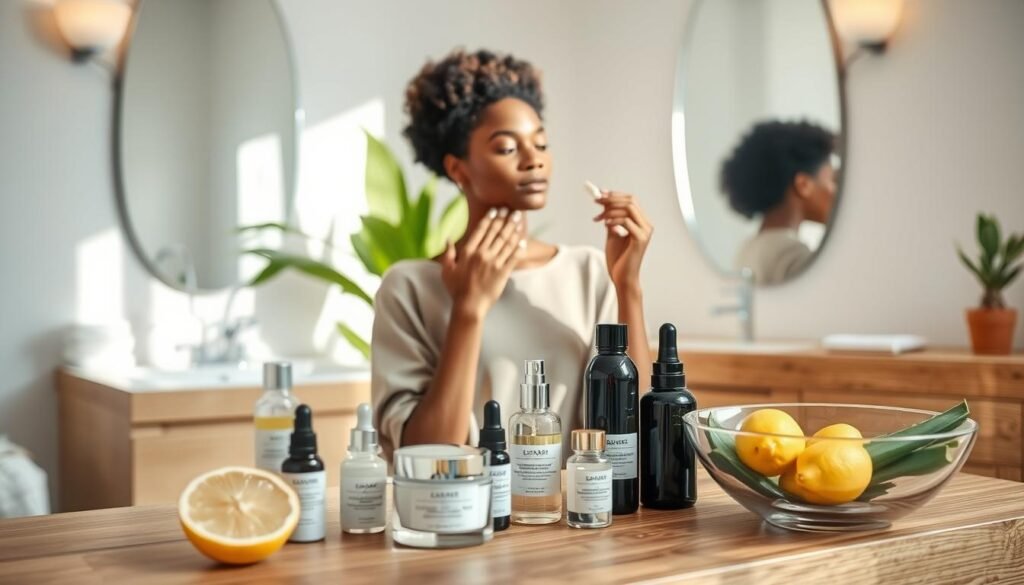
Cleansing and Exfoliating Strategies
Use a gentle, noncomedogenic cleanser morning and night. It clears oil, sweat, and pollution. Keep water lukewarm to protect your barrier. Pat dry—do not rub.
Rotate chemical exfoliation with alpha hydroxy acids like glycolic or mandelic acid. This smooths tone and fades surface marks. Start once weekly, then increase as tolerated. In cold, dry months or after procedures, scale back to limit irritation.
Moisturization and Hydration Tips
Choose a lightweight, non-greasy moisturizer to lock in water. This supports the barrier and reduces redness. Look for ceramides, glycerin, and hyaluronic acid.
Match texture to season: richer creams in winter dryness, gel formulas in summer humidity. Consistent hydration makes it easier to see how to fade acne scars naturally over time.
Incorporating Active Ingredients
In the morning, apply vitamin C serum under broad-spectrum SPF 30+ for brightening. Sunscreen prevents spots from deepening and protects progress on Dark Spots Caused by Acne.
At night, use a retinoid such as retinol or adapalene to boost turnover. Add azelaic acid, kojic acid, or glycolic acid on alternating nights as tolerated. Avoid stacking many strong actives at once to keep skin calm.
| Step | AM Focus | PM Focus | Seasonal Adjustments | Notes for Dark Spots |
|---|---|---|---|---|
| Cleanse | Gentle gel or milk cleanser | Gentle cleanser to remove buildup | Use lukewarm water in winter | Minimize friction to avoid new pigment |
| Exfoliate | Skip or use mild AHA if tolerated | AHA (glycolic or mandelic) 1–3x/week | Reduce frequency in dry, cold months | Targets epidermal PIH without scrubbing |
| Treat | Vitamin C serum | Retinol or adapalene | Lower strength during sensitivity | Brightens and boosts turnover |
| Spot-Brighten | Azelaic or kojic acid as needed | Azelaic or glycolic on alternate nights | Pause if irritation occurs | Helps fade Dark Spots Caused by Acne |
| Moisturize | Light lotion with ceramides | Cream or gel-cream | Richer textures in winter; lighter in summer | Barrier support reduces post-acne pigment |
| Protect | Broad-spectrum SPF 30+ | N/A | Reapply every two hours outdoors | Essential for a skincare routine for acne marks |
The Psychological Impact of Dark Spots
Dark Spots Caused by Acne can affect how we feel in school, work, and social settings. Spots that last for months can draw unwanted attention and lower our confidence. The slow healing process can test our patience, even when progress is real but hard to see every day.
Effects on Self-Esteem and Confidence
When our skin tone looks uneven, many of us avoid photos, meetings, or bright lights. The contrast is often stronger on deeper skin tones, making marks appear sharper. This can lead to doubting ourselves, canceling plans, and pulling back from activities that once felt easy.
Seeing new spots while others fade can feel like a never-ending cycle. This cycle can cause stress, which can also lead to more breakouts. It becomes hard to trust any routine, even those aimed at reducing dark spots from acne.
Coping Strategies and Support Options
Visiting a board-certified dermatologist early helps set clear goals and track progress. Combining medical care with daily SPF and no picking builds momentum for reducing dark spots from acne. Small changes add up and make goals feel achievable.
Cosmetic camouflage can offer quick relief. Long-wear, noncomedogenic concealers from brands like NARS, Fenty Beauty, and Dermablend hide edges without clogging pores. This is helpful when Dark Spots Caused by Acne stand out against a rich skin tone.
Support is key. Short-term counseling, patient groups, or regular check-ins with clinicians can ease emotional burdens while treatments work. Taking photos weekly, not daily, can make progress visible and keep confidence steady.
Conclusion: Regaining Smooth Skin After Acne
Getting an even skin tone takes time, not a quick fix. Dark spots from acne are caused by hyperpigmentation, not texture changes like scars. These spots can be tan to dark brown and may look blue-gray. They fade slowly, sometimes over months or years.
Recap of Key Points
Start by controlling acne early and letting your skin heal on its own. Use daily broad-spectrum SPF 30+ to protect your skin. To treat dark spots, try hydroquinone 2%, azelaic acid, and other treatments.
Chemical peels, microdermabrasion, and lasers can also help. But, consider the costs and how they might make your skin more sensitive to the sun. Be careful with dark spot correctors and avoid harmful bleaching agents. For more details, check out this guide on how to fade hyperpigmentation.
Encouragement for Ongoing Skin Care
Stick to a gentle skincare routine and adjust it with the seasons. Always protect your skin from the sun to keep your progress. Using dark spot correctors consistently can help reduce new spots.
If dark spots don’t go away or bother you, see a dermatologist. They can create a plan that fits your skin and goals. Remember, this advice is not a substitute for professional care. With patience and the right treatments, you can slowly fade dark spots and achieve smoother skin.