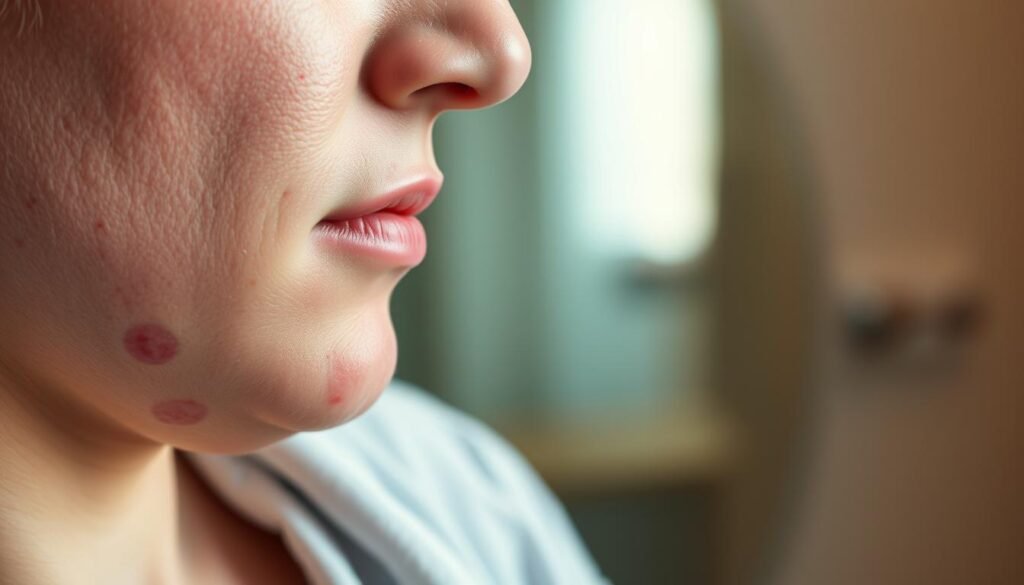
Over 50 million Americans fight acne every year. But only 5% face cystic acne, the worst kind that can scar in just weeks if not treated. This serious skin issue creates big bumps under your skin’s surface. Spotting it early is key to stopping it.
Cystic acne happens when bacteria, dead skin, and extra oil get trapped deep in pores. Unlike regular pimples, these cysts form deep in your skin. They spread, causing big, sore bumps that feel like hard knots.
Knowing the early signs of severe acne can prevent long, painful breakouts and costly treatments. Catching cystic acne early means simple skincare changes and quick doctor visits can stop it. This way, it won’t take over your face, chest, or back.
Key Takeaways
- Cystic acne affects only 5% of acne sufferers but causes the most severe skin damage
- Early signs include deep, painful bumps that feel like hard knots under the skin
- This type of acne forms in the deepest skin layers, not just on the surface
- Untreated cystic acne can create permanent scars within weeks
- Quick medical intervention prevents severe acne from spreading to other areas
- Regular monitoring of skin changes helps catch cystic acne before it worsens
Understanding Cystic Acne: A Brief Overview
Cystic acne is a severe form of acne that forms deep in your skin. It’s different from regular pimples because it creates deep pockets of infection. This condition affects millions of Americans each year, impacting both looks and mood.
What is Cystic Acne?
Cystic acne happens when oil, dead skin, and bacteria get trapped deep in hair follicles. This creates large, soft, and fluid-filled lumps. These cysts are far below the skin’s surface, unlike whiteheads or blackheads.
Common Symptoms of Cystic Acne
Spotting cystic acne early can prevent scarring. Look out for:
- Large, red bumps over 5 millimeters
- Deep pain or tenderness
- Visible white or yellow pus
- Significant swelling
- Dark spots or scarring after healing
Distinguishing Characteristics
Cystic acne stands out due to its severity. Unlike hormonal acne, cystic lesions last for weeks or months without treatment. These boil-like formations often appear on the face, back, chest, shoulders, and behind the ears.
| Characteristic | Cystic Acne | Regular Acne |
|---|---|---|
| Depth | Deep under skin | Surface level |
| Size | 5mm or larger | 1-3mm typically |
| Duration | Weeks to months | Days to weeks |
| Pain Level | Severe | Mild to moderate |
How Cystic Acne Differs from Other Types
Not all breakouts are the same. Cystic acne is different because of its size, depth, and intensity. Knowing these differences helps find the right treatment for you. Let’s look at what makes cystic acne stand out from others.
Comparing Cystic Acne to Nodular Acne
Nodular and cystic acne are both severe, but they’re not the same. Nodular acne forms hard, painful bumps deep in the skin. These bumps are firm and don’t have a fluid-filled center like cysts do.
Cystic acne, on the other hand, creates soft, pus-filled lesions. These lesions feel squishy when pressed.
Both need professional help, but treatments differ. Dermatologists use different medicines for cysts and nodules.
Cystic Acne vs. Hormonal Acne
Adult acne often shows up as hormonal breakouts, mainly in women. These breakouts usually happen along the jawline and chin. Hormonal changes during certain times can cause these outbreaks.
Many cases of hormonal acne are actually cystic lesions. This makes them hard to treat.
Recognizing Microcysts vs. Cystic Acne
Microcysts are tiny, flesh-colored bumps just under the skin. They don’t usually hurt or cause much inflammation. Unlike cystic acne, they don’t grow big or cause pain.
Size is key here. Cystic lesions can get as big as marbles, while microcysts stay small and flat. The treatment for these two is very different.
Common Causes of Cystic Acne
Cystic acne forms deep in your skin when several factors combine. Knowing these causes helps you find what triggers your breakouts. This way, you can improve your acne skincare routine. Let’s look at the main reasons behind these painful, deep breakouts that affect many Americans.
Hormonal Fluctuations
Your hormones greatly affect cystic acne. Hormonal changes during puberty, pregnancy, and your menstrual cycle can lead to more oil. This extra oil, mixed with dead skin cells, blocks pores and invites bacteria.
Women often see breakouts before their periods, when estrogen falls and androgens rise. Birth control pills can either help or make things worse, depending on how you react. Stress also increases oil production, making oily skin more likely to get deep, painful cysts.
Dietary Factors
What you eat affects your skin. Foods high in sugar cause insulin spikes, leading to more oil and inflammation. Common culprits include:
- White bread, bagels, and refined pasta
- Sugary sodas and fruit juices
- Processed snacks and candy
- Dairy products, like skim milk
Genetic Predisposition
Family history plays a big role in cystic acne. If your parents or siblings had severe acne, you’re more likely to get it. Genetics affect your skin type, pore size, and how you react to hormonal imbalances. People with naturally oily skin have overactive glands that need special acne skincare care.
Recognizing Early Signs of Cystic Acne
Catching cystic acne early can greatly improve treatment success. Early detection lets you start treatments before cysts cause lasting damage. By watching for small changes, you can act quickly when treatments work best.
Changes in Skin Texture
Your skin’s texture changes before cysts appear. You might feel rough or bumpy areas. Pores clog with oil and dead skin, making your skin uneven.
These changes often happen on the jawline, chin, and cheeks. Gently touching your face can help spot these signs.
Identifying Painful Bumps
Deep, tender bumps under the skin mean cysts are coming. These bumps hurt even when touched lightly. They start as small, hard knots and grow bigger and more painful.
The pain often arrives before any visible redness appears on the surface.
Noticing Redness and Inflammation
Skin inflammation shows as warm, red patches that look swollen. These patches mark where cysts are forming deep in pores. The redness spreads as the cyst grows.
Acting early with the right treatments can stop inflammation from getting worse. It also reduces the chance of scarring.
When Cystic Acne Becomes Severe
Cystic acne can turn from occasional deep bumps into a widespread skin issue. It affects large areas of the face, chest, and back. Knowing when it becomes severe is key to getting the right treatment before damage is permanent. The shift from moderate to severe acne is gradual, so it’s important to watch for warning signs.
Signs of Severe Cystic Acne
Severe acne has clear signs that differ from milder forms. Look out for these key indicators:
- Multiple deep, painful cysts covering broad skin areas
- Lesions that persist for several months without healing
- Cysts measuring larger than 5 millimeters in diameter
- Widespread inflammation affecting entire regions of the face
- New cysts forming before existing ones heal
Potential Complications
Severe cystic acne can lead to lasting skin changes if not treated. Acne scarring happens when healing produces too much or too little collagen. This results in raised or pitted marks. Dark spots and red patches may also last long after cysts heal.
Bacterial infections are a serious risk, mainly when people try to drain cysts at home. These infections can spread and require antibiotic treatment.
Emotional Impact
The emotional effects of severe acne go beyond physical symptoms. People with cystic acne often have lower quality of life scores than those with other skin issues. They may feel anxious about their appearance and lose confidence.
This creates a cycle where stress leads to more breakouts, which worsens emotional distress. Getting professional help is important for both skin health and mental well-being during treatment.
The Importance of Early Detection
Catching cystic acne early can greatly improve your skin’s health and look. Early detection is your best defense against bad breakouts and complications. Spotting warning signs early lets you use gentler treatments that work faster and have fewer side effects.
Benefits of Recognizing Symptoms Early
Seeing cystic acne symptoms early has many benefits for your skin and health. Acne prevention begins with noticing small changes in your skin. Those who start early treatment often see better results in weeks, not months.
Early detection does more than just clear your skin. It also lowers stress and keeps your self-confidence up during treatment. Starting treatment early means using less harsh meds and recovering faster.
| Early Detection Benefits | Impact on Treatment |
|---|---|
| Reduced scarring risk | 70% less chance of permanent marks |
| Shorter treatment duration | 4-6 weeks vs 3-4 months |
| Milder medication needed | Topical treatments vs oral antibiotics |
| Lower treatment costs | 40% reduction in overall expenses |
How Early Intervention Can Help
Acting fast at the first signs of cystic acne stops it from spreading. Dermatologist consultation is more effective when done early, as doctors have more options for mild cases. Research shows 85% of patients on isotretinoin get clear skin in four to six months if they start early.
How to Monitor Your Skin Condition
Regular skin monitoring helps you understand your unique breakout patterns and identify what triggers your cystic acne. By keeping track of changes in your skin, you can work with your dermatologist to find the most effective acne treatment for your specific situation.
Keeping a Skin Journal
A skin journal is your personal record of daily skin changes. Write down where cysts appear on your face, jaw, or body. Note the size and pain level of each breakout using a simple 1-10 scale. Record what you ate that day, your stress levels, and any new products you tried.
Women should track their menstrual cycle dates as hormonal changes often trigger breakouts. Include details about your sleep quality and exercise routine. This information helps identify connections between lifestyle factors and your skin condition.
Tracking Breakouts and Patterns
Look for recurring breakout patterns in your journal entries. Many people notice cysts appearing in the same facial areas repeatedly. Some discover their acne worsens after eating dairy products or sugary foods.
Create a simple chart to track your progress:
- Mark calendar days when new cysts form
- Circle dates when existing breakouts heal
- Highlight particular stressful periods
- Note which treatments helped most
After several weeks of consistent skin monitoring, patterns become clear. You might notice breakouts always occur during finals week or after eating certain foods. This knowledge empowers you to prevent future cysts and speeds up finding the right acne treatment approach.
Effective Treatment Options
Finding the right treatment for cystic acne takes time and often professional help. Mild acne can be treated with basic skincare. But deep cysts need stronger methods. Luckily, there are several effective ways to clear your skin and prevent scars.
Over-the-Counter Solutions
Most cystic acne products from drugstores don’t reach deep cysts. Benzoyl peroxide and salicylic acid can help with surface bacteria and inflammation. But they’re not enough on their own. They work best when used with prescription medications.
Prescription Treatments
Dermatologists often prescribe stronger treatments for cystic acne. Isotretinoin, also known as Accutane, is very effective. It has an 85% success rate in six months. This vitamin A derivative reduces oil gland size and prevents clogged pores.
- Topical retinoids like Retin-A, Differin, and Tazorac to unplug follicles
- Oral antibiotics to reduce bacteria and calm inflammation
- Spironolactone (Aldactone) at 50-200mg daily for managing excess androgens
- Birth control pills for women to regulate hormones
Lifestyle Changes
Simple daily habits can help your medical treatments work better. Reduce stress with meditation or yoga to prevent breakouts. Avoid high-glycemic foods like white bread and sugary snacks. Always wash your face after exercising to remove sweat and bacteria. These changes help your treatments work better.
The Role of Dermatologists in Cystic Acne
Dealing with deep, painful cystic acne needs more than just skincare. Dermatologists have the skills and tools to handle these tough breakouts. They can spot the exact acne type and tailor a treatment plan just for you.
When to Consult a Dermatologist
If you have deep, painful bumps under your skin for over two weeks, see a dermatologist. Also, if your acne doesn’t get better with over-the-counter products, or if you’re worried about scarring. Getting help early can prevent lasting damage and help your skin heal faster.
What to Expect During Your Appointment
Your dermatologist will look at your skin and ask about your health, skincare, and lifestyle. They might suggest treatments like cortisone injections to reduce inflammation quickly. They could also prescribe stronger meds or suggest chemical peels or light therapy.
| Treatment Type | Time to See Results | Best For |
|---|---|---|
| Cortisone Injections | 24-48 hours | Individual large cysts |
| Chemical Peels | 2-4 weeks | Surface texture improvement |
| Photodynamic Therapy | 4-6 weeks | Resistant cystic acne |
| Laser Resurfacing | 6-8 weeks | Acne scarring |
General Skin Care Tips for Cystic Acne
Managing cystic acne needs a careful approach to skincare. It’s important to find a balance between being effective and gentle. Your daily routine is key in controlling breakouts and preventing more irritation.
The right mix of gentle cleansers and chosen products can greatly help your skin heal. This combination is essential for managing cystic acne.
Daily Skincare Routine Recommendations
Begin your evening routine with gentle cleansers. These should remove dirt and oil without drying out your skin. Brands like CeraVe and La Roche-Posay have products made for acne-prone skin.
Wash your face once daily in the evening. Avoid over-cleansing, as it can make your skin produce more oil.
Use warm compresses on painful cysts for 10-15 minutes to reduce swelling. This method helps draw out inflammation without harming your skin. After cleansing, apply an oil-free moisturizer to keep your skin hydrated.
Remember to use sunscreen daily, even if you’re on acne medications that make your skin more sensitive to the sun.
Best Products for Sensitive Skin
Always choose noncomedogenic products to avoid clogging pores. Neutrogena and Cetaphil offer makeup and skincare lines that are safe for cystic acne. Look for “oil-free” and “won’t clog pores” labels on any face products.
- Remove all makeup before sleeping using micellar water or gentle makeup removers
- Avoid harsh scrubs and exfoliants that can worsen inflammation
- Skip products containing salicylic acid or benzoyl peroxide unless prescribed
- Never pick or squeeze cysts, as this spreads bacteria and increases scarring risk
Conclusion: Taking Charge of Your Skin Health
Managing cystic acne is a long-term commitment. Most treatments take three to four months to show results. This might seem like a long wait, but knowing this helps set achievable goals.
Fortunately, cystic acne often improves with age, if you stick to your treatment plan. This is good news for your skin health journey.
Building Confidence through Awareness
Starting your journey means knowing what to look for. Catching cystic acne early is key to better skin health. Following your treatment plan helps prevent bigger breakouts later.
Working with a dermatologist is a big help. They provide personalized advice based on your needs. Remember, combining treatments often works better than one approach for tough cystic acne.
Resources for Further Support
The American Academy of Dermatology website helps you find dermatologists near you. They offer free materials on managing severe acne and various treatments. Online support groups connect you with others facing similar issues.
Local hospitals and medical centers also have dermatology departments. These resources make your journey to better skin easier and less lonely.
Your skin health journey is unique. Be patient with your progress and avoid picking at cysts. Each step you take brings you closer to healthier skin.