Did you know that handwashing frequency increased by over 300% in recent years? This has led to a big rise in dry, irritated skin. Many people now face painful fissures and dryness that makes daily activities hard.
Your body’s largest organ faces many challenges from weather, lifestyle, and aging. Winter air takes away protective oils. Repeated moisture contact also weakens skin barrier protection. These factors can cause signs like mild flaking to deep, uncomfortable splits.
This article will help you spot common signs of compromised skin. You’ll learn about factors that contribute to this and when home care might help. But, everyone’s situation is different.
Medical Disclaimer: This content is for information and education only. It’s not medical advice, diagnosis, or treatment. Skin conditions vary a lot between people. Always see a board-certified dermatologist or a qualified healthcare professional for the right assessment and treatment.
Key Takeaways
- Environmental factors like cold weather and frequent handwashing commonly trigger dry, split skin conditions
- Early recognition of visual symptoms helps prevent progression from mild dryness to painful fissures
- Repeated moisture exposure weakens natural protective barriers, making skin more vulnerable to damage
- Professional medical evaluation is essential for accurate diagnosis and personalized treatment plans
- Understanding contributing factors empowers better daily skincare decisions and preventive measures
Understanding Cracked Skin: An Overview
Your skin protects you from the world. But when it cracks, this shield is broken. Knowing the signs of cracked skin is key to stopping minor dryness from becoming painful fissures. This issue affects millions, causing anything from mild discomfort to severe splits that make daily tasks hard.
Dry skin feels tight and looks flaky. But cracked skin has visible breaks in the surface that hurt and can bleed.
The Nature of Skin Fissures
Cracked skin means fissures or small cuts on the skin’s surface. These splits happen when the skin gets too dry and loses moisture. Without enough water, the skin can’t stretch with movement.
Think of your skin like a rubber band. When it’s moist, it stretches well. But when it dries out, it breaks easily.
When cracks form, your skin’s protective barrier is lost. This barrier keeps moisture in and bacteria out. With cracks, your skin can’t keep this balance, leading to more dryness and damage.
Healing fissures needs more than just moisturizing. The depth of the crack affects how fast your skin heals and if you need professional help.
Recognizable Warning Signs
Cracked Skin on Hands and Feet shows clear signs early on. Spotting these symptoms lets you start treatment before it gets worse.
Physical appearance changes include:
- Dry, rough skin texture that feels uncomfortable to touch
- Visible cracks or fissures ranging from fine lines to deep splits
- Patches of red, dark brown, purple, or gray irritated skin
- Scaly and inflamed areas that may peel or flake
- Skin that feels tight or uncomfortable even after moisturizing
Sensory symptoms you might experience:
- Burning sensations in affected areas
- Persistent itching that worsens at night
- Itchy blisters that form around cracks
- Pain when moving hands or walking on affected feet
- Sensitivity to temperature changes or water exposure
Advanced warning signs requiring attention:
- Deep, painful cracks that limit movement
- Bleeding or weeping from fissures
- Crusts forming over damaged areas
- Pus or signs of infection
- Swelling around cracked regions
Unlike regular dry skin, cracked skin is more uncomfortable and shows clear signs. It ranges from mild dryness to severe fissures that bleed or show infection signs.
Early-stage cracked skin might just feel a bit rough and tight. But as it gets worse, you’ll see deeper splits that hurt during everyday tasks. The worst cases can bleed, increase infection risk, and cause a lot of pain, affecting your life quality.
Knowing these signs helps you know when to use home care and when to see a doctor. The sooner you spot cracked skin, the quicker you can start the right treatment and avoid further problems.
Causes of Cracked Skin on Hands and Feet
Many things can cause painful cracks on your hands and feet. Some come from your environment, while others are from your daily habits and body changes. Knowing what causes these problems helps you fix them instead of just treating the symptoms.
Your hands and feet face many challenges every day. They don’t have oil glands like other parts of your body. So, they dry out and crack easily when exposed to harsh conditions.
Cold Weather and Environmental Triggers
Winter is tough on your skin. Cold air and dry air take moisture away from your skin’s surface. When humidity drops below 30 percent, your skin can’t hold onto water well.
Heating systems inside make things worse. They dry out the air even more. This makes your hands and feet dry, no matter where you are.
Wind also makes your skin lose moisture. When you go outside on windy, cold days, the air takes water from your skin. People who work or travel outside a lot are more likely to get dry and cracked skin.
Cold, dry places make these problems worse. Places with harsh winters often see more cases of winter itch. This is the start of skin damage that can lead to cracks if not treated.
Daily Activities That Harm Your Skin
Your job and hobbies can hurt your skin. People who work in healthcare or food service wash their hands a lot. This removes the oils that protect your skin.
Jobs that involve chemicals are risky too. Solvents and cleaners can dissolve the oils on your skin. Even a little exposure can cause inflammation and dryness that leads to cracks.
Hot, humid weather is a problem too. Sweating and tight shoes trap moisture against your skin. This weakens your skin’s barrier and makes it prone to fungal infections and cracking.
Being active can also harm your skin. Athletes often wear shoes that don’t breathe well. Sweat, friction, and being in a closed space damage the skin on your feet.
Swimming often exposes your skin to chlorinated water. Pool chemicals remove the oils that protect your skin. Swimmers and pool-goers often get dry skin on their hands and feet, even when they moisturize.
Personal Care Mistakes
Your daily skincare routine might be hurting your skin without you knowing. Taking long, hot showers feels good but damages your skin’s barrier. Water over 98 degrees Fahrenheit dissolves oils faster than your body can replace them.
Washing your hands too much is a common mistake. Soap removes dirt and bacteria but also takes away beneficial oils. Using harsh cleansers too often can cause soap dermatitis.
The COVID-19 pandemic made handwashing more common. While it helps prevent illness, it also makes your skin dry. Many people got hand eczema and cracks for the first time because of the increased washing.
Not drying your hands completely after washing is a problem. Moisture evaporates quickly and pulls water from deeper layers of your skin. This makes your skin drier than before you washed.
Not putting on moisturizer right after washing misses a key time. Your skin absorbs products best in the first three minutes after bathing or handwashing. Waiting longer means missing the chance to lock in moisture and repair the barrier.
Age-Related Skin Changes
As you get older, your skin changes. Oil glands produce fewer protective lipids after age 40. This makes older skin more prone to dryness and cracking.
Older skin has a harder time keeping moisture. Natural moisturizing factors decrease over time. This leaves older adults more vulnerable to environmental stressors and dry skin treatment needs.
Interestingly, teenagers have fewer dryness issues than younger kids. Oil glands work better in teens, providing better protection. This is why cracked skin problems often improve during the teenage years before returning later in life.
Genetics play a big role in how quickly these changes happen. Some people keep their skin healthy well into their senior years. Others notice more dryness in their thirties or forties, depending on their genes and sun exposure.
The table below summarizes the main causes of cracked skin and their contributing factors:
| Cause Category | Specific Triggers | Primary Impact | Risk Level |
|---|---|---|---|
| Weather Conditions | Cold temperatures, low humidity, wind, indoor heating | Strips moisture from skin surface and reduces barrier function | High in winter months |
| Lifestyle Factors | Frequent handwashing, chemical exposure, swimming, sweaty footwear | Removes protective oils and weakens skin structure | High for certain occupations |
| Skincare Habits | Hot water, harsh soaps, over-washing, inadequate moisturizing | Disrupts natural barrier and prevents moisture retention | Moderate to high |
| Natural Aging | Decreased oil production, reduced natural moisturizing factors | Diminishes skin’s ability to maintain hydration | Increases with age |
Knowing these different causes helps you make better choices. Most people get cracked skin from a mix of factors, not just one. Fixing multiple problems at once works best for prevention and healing.
Recognizing Cracked Skin: Visual Indicators
Your hands and feet show clear warning signs when cracked skin develops. Knowing what to look for makes early detection possible. This awareness allows you to begin foot care remedies before the condition worsens and causes discomfort.
Early recognition means you can start treatment sooner. This prevents deeper fissures from forming. The sooner you spot these visual signs, the easier cracked heel repair becomes and the less likely you are to experience pain or bleeding.
What Cracked Skin Looks Like
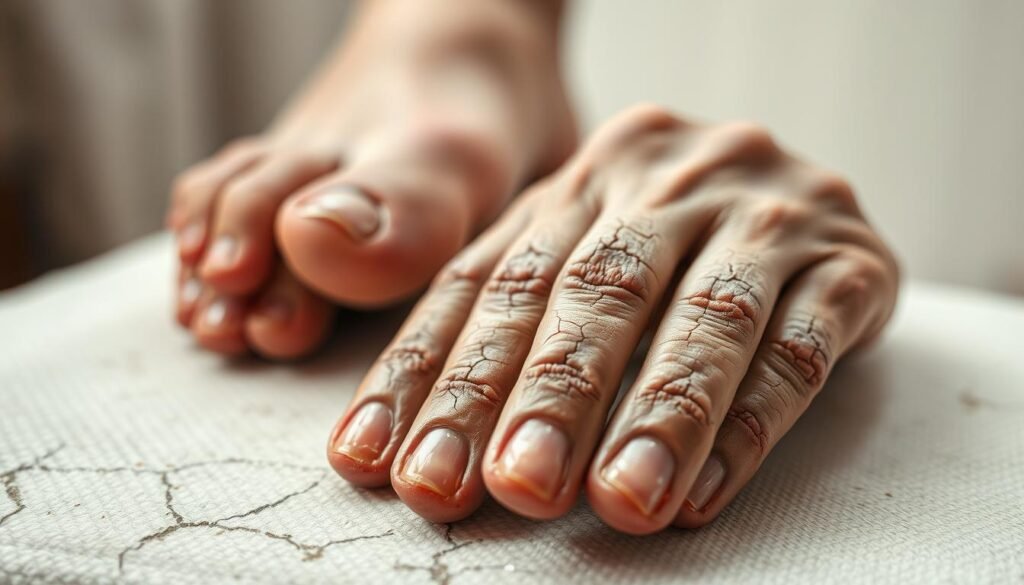
Cracked skin displays several distinctive features that set it apart from simple dryness. The most obvious sign is visible lines or fissures that appear on the skin surface. These cracks may start as fine, shallow splits that look like small crevices running across the skin.
As the condition progresses, these lines can deepen and extend into lower skin layers. Deep cracks often feel painful and may bleed when you move the affected area. Some fissures can reach far enough below the surface to expose raw tissue underneath.
Color changes around cracked areas provide another important visual clue. The appearance varies based on your natural skin tone. On lighter skin, you might notice redness or pink discoloration surrounding the cracks.
On darker skin tones, inflammation typically appears as dark brown, purple, or gray patches. Some areas may develop a grayish-white appearance where skin cells have died and begun flaking away.
Texture changes are equally telling. The skin around cracks often feels and looks rough to the touch. You might observe scaly patches that resemble fish scales or tree bark. Some areas develop a thick, leathery appearance where the skin has hardened in response to repeated stress or friction.
White or silvery flaking skin frequently surrounds cracked areas. This flaking represents dead skin cells accumulating on the surface. Despite regular moisturizing efforts, these patches remain visibly dry and may peel away in larger pieces.
Common Problem Spots
Certain locations on your hands and feet are more vulnerable to developing cracks. Knowing these high-risk areas helps you conduct thorough self-examinations.
On your feet, the heels bear most of your body weight and develop cracks more frequently than other areas. The pressure from standing and walking causes the skin on heels to thicken and eventually split. This is where cracked heel repair efforts typically focus.
Other foot areas prone to cracking include:
- The balls of your feet, specially under the big toe
- Along the edges where your feet meet the ground
- Around and on big toes, specially in people who wear tight shoes
- Areas where footwear creates constant friction
Medical professionals sometimes refer to cracks on the big toe area as tennis shoe dermatitis. Athletic shoes can aggravate this location. The combination of pressure, moisture, and friction in this spot makes it very susceptible.
On your hands, cracks develop where skin experiences the most movement and stress. Your fingertips endure constant use and exposure, making them prime locations for fissures. Thumb tips are specially vulnerable in individuals who engage in thumb sucking.
Additional hand areas that commonly show cracks include:
- Knuckles where skin stretches with every finger movement
- Palms and the creases of finger joints
- The webbing between fingers where washing and chemicals accumulate
- The backs of hands exposed to weather and environmental conditions
The worst hand cracks typically occur on fingers and thumbs where repeated motion and environmental exposure combine. These areas often show the deepest fissures and most persistent problems requiring consistent foot care remedies and hand treatment approaches.
Regular visual inspection of these vulnerable zones allows you to catch cracking early. Look for any of the visual indicators described above, paying special attention to changes in texture, color, or the appearance of even fine lines. Early detection gives you the best chance for quick, effective treatment.
Temporary vs. Chronic Cracked Skin
Many people get cracked skin that heals quickly with simple care. But, some face ongoing issues that point to deeper problems. Knowing the difference helps you decide if home care is enough or if you need a doctor’s help.
Most cracked skin is temporary and gets better with care. But, if it doesn’t improve, it might be a sign of a bigger issue.
Situational Skin Cracking That Heals
Temporary cracked skin often comes from specific situations. It usually gets better in a few days with the right moisturizers. It can start suddenly after being in harsh conditions or trying new activities.
It happens when you’re in the cold or wash your hands a lot. Healing fissures from these causes usually close in 1-2 weeks with good care. Some cracks can heal in just seven days with the right treatment.
Seasonal changes can also cause temporary issues. Your skin might crack in winter but heal in spring. Cracks from beach trips or gardening without gloves usually go away when you get back to normal.
Temporary cracked skin has clear signs:
- It’s linked to a specific cause or change
- It starts to get better in 3-5 days
- It heals when the cause is fixed
- It responds well to over-the-counter moisturizers
- It doesn’t have other symptoms like severe itching or oozing
Most people find that moisturizing and avoiding harsh conditions helps their skin heal. Healing takes time, but steady progress means you’re on the right path.
Indicators of Ongoing Skin Problems
Chronic cracked skin shows different signs that mean you need a doctor. It lasts more than two weeks, even with home care. It might get better for a bit but then comes back, making it hard to heal.
Look for signs that mean you need medical help. Persistence beyond two weeks means basic moisturizing might not be enough. If it gets worse over time, not better, it’s a sign of a deeper issue.
Chronic cases often come with other symptoms. You might itch a lot, have blisters, or ooze. Cracks that bleed or get infected show a weak skin barrier. These signs can mean conditions like eczema or psoriasis that need dermatitis solutions from a doctor.
Recurring cracks can be a clue to chronic conditions. If your skin heals but cracks again quickly, it might be a chronic issue. If it spreads or affects both hands and feet, it’s likely a bigger problem.
Chronic conditions can really affect your life. If cracked skin stops you from working or causes a lot of pain, you need a doctor. Doctors can offer dermatitis solutions and treatments that fix the problem, not just manage symptoms.
| Characteristic | Temporary Cracked Skin | Chronic Cracked Skin |
|---|---|---|
| Healing Timeline | Improves within 3-5 days, heals completely in 1-2 weeks | Persists beyond 2 weeks despite treatment |
| Response to Treatment | Shows steady improvement with basic moisturizing | Minimal improvement or recurring episodes after brief relief |
| Trigger Identification | Clear connection to weather, activity, or environmental factor | No obvious trigger or multiple unidentifiable causes |
| Additional Symptoms | Primarily dryness and cracking without complications | Severe itching, bleeding, oozing, blisters, or infection |
| Pattern | Single episode that resolves completely | Recurring cycles or progressive worsening over time |
Knowing the difference helps you take better care of your skin. Temporary issues usually get better with home care. But, chronic conditions need a doctor to find the cause and treat it properly.
Identifying Underlying Skin Conditions
Cracked skin can come from many things, like the environment. But some medical conditions can also cause similar symptoms. Knowing the signs of certain skin problems helps you know when to see a doctor. These conditions often show up with more than just cracking.
Learning about these conditions helps you make better choices for your skin. Below, we share information to help you tell the difference between dry skin and more serious skin issues.
Eczema and Dermatitis
Hand eczema is a common cause of severe cracking on hands. It’s different from regular dry skin because it doesn’t get better with just moisturizing. This condition makes the skin lose too much moisture, leading to painful cracks.
People with atopic dermatitis often get hand eczema. It’s more common in those with allergies or asthma in their family. Adults who had eczema as kids are more likely to get hand eczema later.
- Patches of red, dark brown, purple, or gray irritated skin
- Scaly and inflamed areas that itch intensely
- Burning sensations that worsen with water exposure
- Itchy blisters that may develop on fingers or palms
- Deep, painful cracks that don’t heal easily
- Bleeding or weeping skin in severe cases
- Crusting, pus formation, and significant discomfort
Contact dermatitis also causes cracking but is caused by irritants. It can be an allergic reaction to things like latex or nickel, or an irritant reaction from things like handwashing or cleaning products.
Finding the right dermatitis solutions means avoiding triggers. Things like temperature changes, sweating, stress, and allergens can make symptoms worse. Managing hand eczema is important for daily life.
Fungal Infections
Fungal infections cause cracking in a different way than inflammation. Athlete’s foot, or tinea pedis, is a common fungal problem. It’s caused by a fungus that thrives in warm, moist places like sweaty shoes.
These infections start between the toes where it’s moist. The skin becomes itchy, scaly, and cracks. Unlike eczema or dry skin, fungal infections spread through contact and need antifungal treatment.
Fungal infections look different from other causes of cracked skin. Look for these signs:
- Itching that intensifies after removing shoes
- White, soggy skin between toes
- Redness and scaling that spreads outward
- Cracking mainly in toe web spaces
- Possible odor from bacterial overgrowth
Fungal infections are infectious, unlike other skin problems. Without the right treatment, they can spread to other parts of the feet or even hands through contact.
Psoriasis
Psoriasis is an autoimmune condition where the immune system makes skin cells too fast. Instead of shedding normally, skin cells pile up, causing thick, scaly patches that can crack and bleed.
Psoriasis often shows up on the scalp, trunk, elbows, and knees but can also affect hands and feet. Palmoplantar psoriasis targets these areas, causing painful cracking. The thick patches are prone to splitting with movement.
Psoriasis symptoms on hands and feet include:
- Thick, raised patches covered with silvery scales
- Deep fissures that crack through the thickened skin
- Redness and inflammation around affected areas
- Possible nail changes including pitting or separation
- Pain that worsens with use of hands or feet
Psoriasis symptoms can flare up without warning. Stress, infections, certain medications, and weather changes can trigger outbreaks. Unlike temporary dry skin, psoriasis needs ongoing management with special treatments.
These descriptions are for educational purposes only and can’t replace a doctor’s evaluation. Skin conditions can look similar but need different treatments. If your cracked skin looks like these patterns, see a dermatologist for the right diagnosis and care.
Preventative Measures for Healthy Skin
Daily skin care routines create a shield that keeps moisture in and irritants out. Taking steps to protect your hands and feet can stop painful cracking before it starts. The key is to be consistent and know which protective measures fit your lifestyle.
Prevention is easier than treating cracks. Simple protective strategies can keep your skin healthy all year. These strategies are key during seasonal changes and harsh weather.
Building Effective Moisture Retention Habits
Timing is everything when applying moisturizer to your hands and feet. The three-minute rule is critical for locking in hydration. Apply moisturizer right after washing hands or bathing while your skin is slightly damp.
This method traps water molecules under the moisturizer’s layer. Your skin absorbs moisture best when it’s wet. Missing this window means losing hydration to evaporation.
How often you apply moisturizer is just as important as when. Problem areas might need attention every hour in dry periods. Don’t wait until you feel tightness or discomfort to reapply.
- Apply moisturizer within 3 minutes of water exposure
- Reapply throughout the day, specially to hands after washing
- Use heavier creams or ointments for better protection
- Pat or press moisturizer into skin instead of rubbing vigorously
- Apply thick layers before bedtime for overnight treatment
Winter skin problems worsen with indoor heating removing moisture. Increase moisturizing in cold months before cracks develop. This approach is better than treating after the fact.
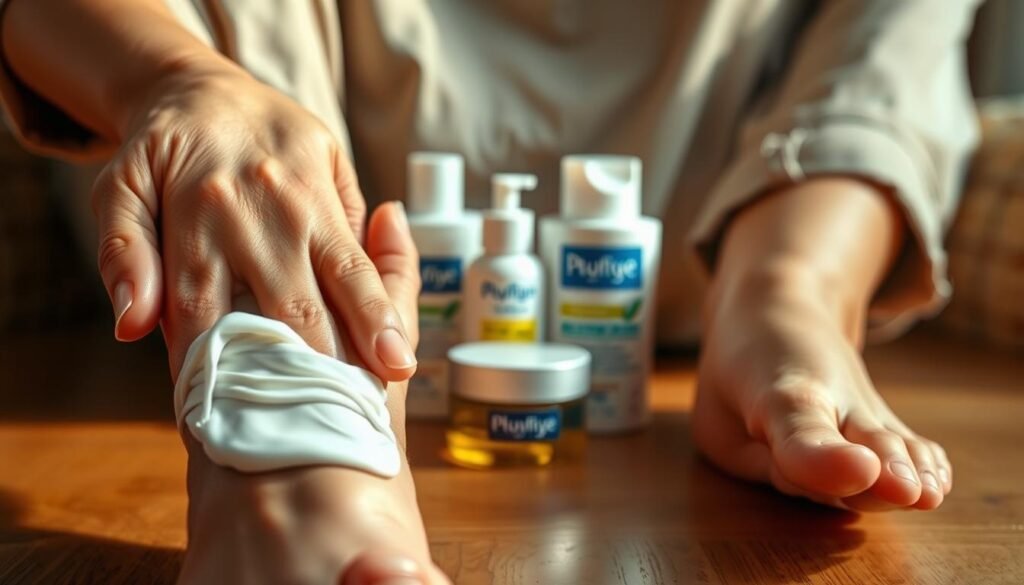
Wear cotton gloves or socks over moisturized hands or feet at night. This enhances product penetration and prevents bedding stains. The warmth helps ingredients absorb deeper into skin layers.
Using Physical Barriers for Protection
Your hands face many damaging situations daily. Wearing the right gloves creates a vital barrier. This habit prevents moisture loss and chemical exposure that weakens skin.
Different activities need different glove types for best protection. Waterproof gloves protect during dishwashing and cleaning. They prevent hot water and detergents from stripping away natural oils.
| Activity | Glove Type | Protection Benefit |
|---|---|---|
| Dishwashing and cleaning | Waterproof rubber with cotton liner | Blocks water and chemical exposure while preventing sweating |
| Winter outdoor activities | Insulated waterproof gloves | Shields against cold, wind, and moisture |
| Work with chemicals or degreasers | Heavy-duty protective gloves | Prevents harsh substance contact with skin |
| Overnight moisturizer treatment | Cotton gloves or socks | Enhances product absorption and prevents bedding stains |
Cotton glove liners under rubber gloves solve a common problem. They absorb sweat that irritates skin and causes damage. This approach provides protection without creating moisture issues.
Footwear choices greatly impact foot skin health. Choose shoes made from breathable materials for air circulation. Trapped moisture leads to skin breakdown and fungal growth.
Change socks immediately when they get damp from sweat or weather. Carry extra pairs for quick changes to prevent prolonged moisture contact. Alternating shoes daily allows for complete drying.
Going barefoot at home when safe lets feet breathe naturally. This practice helps skin dry completely and reduces moisture exposure from socks and shoes. Cotton or silk socks allow better air flow than synthetic ones.
Accessible Home Treatment Approaches
You don’t need expensive products to protect against winter skin problems. Petroleum jelly is an inexpensive occlusive barrier that seals moisture into skin. Apply it generously to affected areas before bed for intensive treatment.
This simple product has no fragrances or additives that might irritate sensitive skin. Its thick consistency creates a waterproof layer that prevents moisture evaporation. Many dermatologists recommend it as a first-line defense against cracking.
Vinegar soaks are another accessible remedy for cracked feet. Mix white vinegar with water to create an acetic acid solution. Soak feet for 10-15 minutes to help restore skin’s natural pH balance and soften thickened areas.
- Mix one part white vinegar with four parts warm water
- Soak feet for 10-15 minutes
- Pat dry gently with a soft towel
- Apply thick moisturizer immediately after soaking
- Repeat 2-3 times weekly for persistent problems
Running a humidifier adds moisture back into dry indoor air. This is key during heating season when furnaces remove humidity. Place humidifiers in bedrooms for overnight skin hydration support.
Drinking enough water supports skin moisture levels at the cellular level. Aim for eight glasses of water daily, increasing intake during hot weather or physical activity.
Lip care is important because lip skin lacks oil glands. Apply lip balm frequently—even hourly during severe dry conditions. Avoid licking your lips, as saliva evaporation worsens cracking and irritation.
Consistency turns these simple measures into powerful prevention tools. Start these techniques today, and your skin will thank you tomorrow. The effort you invest in prevention saves you from the pain and frustration of treating established cracks.
Skincare Products to Consider
When looking for products to heal cracked hands and feet, knowing what ingredients to look for is key. The right hand moisturizer can greatly improve your skin’s health. Not all products work well for damaged skin, so it’s important to choose the right ones.
Product labels can be confusing with unfamiliar names. Knowing which compounds repair skin barriers helps you make better choices. This way, you avoid relying on marketing or packaging alone.
Key Ingredients That Heal Damaged Skin
Effective moisturizing ingredients fall into three main categories. Humectants draw moisture into your skin, acting like magnets. The best humectants are hyaluronic acid, glycerin, and lactic acid.
These ingredients work best in humid environments. They need other products to seal in moisture and prevent it from evaporating.
Emollients smooth and soften the skin’s surface. Jojoba oil and shea butter are great emollients. They make skin feel better and support repair.
Occlusives create the most important barrier for severely cracked skin. They seal the surface and prevent moisture loss. Petroleum jelly, dimethicone, lanolin, and mineral oil are good occlusives for healing.
Creams and ointments are better than lotions for dry skin. They’re thicker and more occlusive, keeping moisture in better.
When choosing dry skin treatments, avoid products with fragrances, dyes, or alcohol. These can irritate and worsen cracks. Look for “fragrance-free” labels instead of “unscented.”
Effective Over-the-Counter Solutions
Petroleum jelly is a top choice for treating cracked skin. Vaseline, applied three times daily, creates a strong barrier. It’s affordable and effective for mild to moderate cracks.
For daily care, use large bottles of moisturizing cream like Eucerin. These creams retain moisture better than lotions. Apply after washing hands or bathing to keep skin hydrated.
For mild infections, use antibiotic ointment like Polysporin. Apply three times daily. Watch for signs of infection like redness, warmth, or oozing.
For itching, try 1% hydrocortisone cream like Cortaid. Use up to three times daily. It reduces inflammation and stops the itch-scratch cycle.
Liquid skin bandage products are great for deep cracks. They seal wounds with a flexible coating. Look for them at pharmacies without a prescription.
Apply liquid bandages in thin layers, letting each dry before adding the next. This creates a waterproof seal that moves with your skin. Reapply as needed.
Buy larger containers for home use and smaller tubes for on-the-go. This way, you always have moisturizer when you need it, without breaking the bank.
Focus on ingredient lists and product types, not brand names. While brands like Vaseline and Eucerin are good, many products have similar ingredients. The right formulation is more important than the brand.
When to Seek Professional Help
Many cases of cracked skin can be treated at home. But, some signs mean you need a doctor. Knowing these signs helps you take care of your health. Getting medical help early can stop small problems from getting worse.
Not every case of cracked skin needs a doctor. But, some symptoms mean you can’t just treat it yourself. Dermatologists are experts who can find the cause and help you.
Warning Signs Requiring Immediate Attention
Some symptoms need you to see a doctor right away. These signs are serious and should not be ignored. Quick medical care is important for your health and safety.
Seek immediate medical attention if you experience:
- Fever with spreading redness – This means you have a serious infection that needs fast treatment
- Severe pain – If pain stops you from sleeping or doing daily things, it’s a big problem
- Signs of infection – Look for pus, more redness, red streaks, or warmth spreading
- Persistent bleeding – If cracks keep bleeding a lot, you need a doctor
- Cracked red lips with fever lasting 5 days or more – This could be a serious issue
People with diabetes need to watch out for cracked skin. Any crack or sore on the feet is urgent. Diabetes makes healing slow and infections more likely, so taking care of your feet is key.
Contact Your Doctor Within 24 Hours
Some situations need you to see a doctor quickly but aren’t emergencies. These cases need a doctor’s check-up within a day. Early action can stop problems from getting worse.
- Clear signs of infection developing
- Bleeding from cracks that recurs frequently
- Cracks making it difficult to walk or interfere with mobility
- Foot ulcers for individuals with diabetes
Schedule an Appointment for These Concerns
Some issues can wait for a regular doctor’s visit. Call your doctor during office hours for these problems. Getting professional advice ensures you get the right treatment.
Reach out to your healthcare provider if:
- Cracks persist after two weeks of consistent home treatment
- Symptoms interfere with school, work, or sports activities
- Painful skin develops at mouth corners
- Cracks result from thumb or finger sucking habits
- The cause of peeling skin remains unclear
- Dry, itchy skin continues despite two weeks of moisturizing
- New symptoms like blistering, oozing, or crusting appear
Without proper treatment, problems can get worse. Hand eczema can get worse if not treated. It can lead to serious infections that need antibiotics.
Being exposed to allergens can make allergies worse. This makes future problems harder to handle. A doctor can find allergens you might not know about.
Making the Most of Your Appointment
Getting ready for your dermatologist visit helps a lot. Having the right information helps your doctor diagnose and treat you better. A few steps can make your visit more useful.
Before your appointment, gather this information:
- Symptom timeline – Note when cracking started and what makes it better or worse
- Treatment history – List all products and foot care remedies you’ve tried with their results
- Current medications – Include prescriptions, over-the-counter drugs, and supplements
- Potential triggers – Document new products, occupational exposures, or recent travel
- Visual documentation – Take photographs of affected areas at their worst if symptoms fluctuate
Bring any products you use on your skin. This helps your dermatologist find out what might be causing the problem. Write down your questions before you go so you don’t forget anything important.
Tell your doctor about your medical history. Past skin problems, allergies, and family history are important clues. This helps your doctor find the best treatment for you.
Seeing a doctor early can stop problems from getting worse. It also helps with the emotional impact of visible skin issues. Your dermatologist can find the cause and suggest the best treatment for you.
Treatment Options for Cracked Skin
Healing cracks and improving skin health depends on the right treatment. Treatments range from simple moisturizing for mild cases to prescription meds for serious issues. Knowing the right treatment helps you recover faster and avoid complications.
Fixing cracked heels and hands needs a step-by-step approach. Start with gentle care for recent or shallow cracks. Move to stronger treatments if needed. This careful approach protects your skin and fixes the damage.
Self-Care Methods for Daily Relief
Most shallow cracks heal in a week with home care. Keeping the area moisturized and protected is key. Apply petroleum jelly three times daily to lock in moisture and aid healing.
For mild infections, use antibiotic ointment three times a day. Cover with clean bandages to speed healing and prevent infection. Change bandages daily or when wet or dirty.
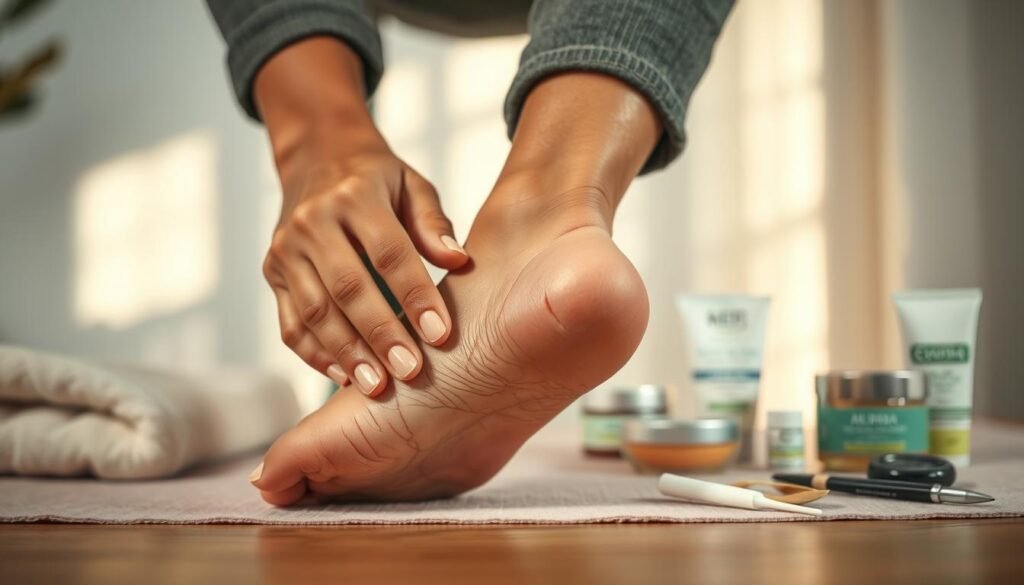
Deeper cracks need advanced treatments. Liquid skin bandage products create a waterproof seal. This helps heal fissures from the bottom up. The application process is critical for success:
- Clean the area well and let it dry before applying
- Apply two thin layers of liquid bandage, letting each dry before adding the next
- Add more layers as needed for full coverage
- Reapply when the seal starts to push up, showing healing
- Continue until the crack closes, usually in two weeks
Preventing new cracks is as important as treating them. Change wet or sweaty socks right away to avoid moisture damage. Avoid harsh soaps and bubble baths that strip away oils.
Moisturize within three minutes of bathing or showering when skin is damp. This helps absorb moisture. Wash hands with warm water and use soap sparingly to keep oils balanced.
Additional protective steps include:
- Wear gloves when washing dishes and in cold weather
- Keep baths and showers short, under 10 minutes
- Use gentle, fragrance-free cleansers that don’t irritate
- Apply thick moisturizers at night and cover with gloves or socks
Most shallow cracks heal in a week with consistent treatment. Deeper fissures take about two weeks with constant care. Keep up your treatment routine even after symptoms improve to ensure full recovery.
Medical Interventions for Persistent Cases
If home treatments don’t work after two weeks, see a doctor. Dermatologists will choose the right medication for your case. These treatments can help when over-the-counter options fail.
Topical corticosteroids reduce inflammation to help healing. Doctors choose the right strength based on the location and severity. Thicker skin can handle stronger formulas, while sensitive areas need gentler ones.
Topical calcineurin inhibitors like tacrolimus or pimecrolimus are non-steroidal alternatives. They work well for long-term management and sensitive skin. They reduce flare-ups and itching without steroid side effects.
Prescription moisturizers with urea or keratolytic agents soften hardened skin. These products penetrate deeper than regular moisturizers. They help remove dead skin and prepare for healing.
Antifungal meds are needed for fungal infections causing cracks. Topical creams treat surface infections, while oral meds are for deeper or widespread cases. Finish the treatment course even after symptoms improve to prevent recurrence.
Bacterial infections in deep cracks need antibiotics. Topical antibiotics treat surface infections, while oral antibiotics target deeper issues. Look for signs like increased redness, warmth, swelling, pus, or spreading infection that need antibiotic treatment.
Diabetes patients with cracking due to circulation issues should use diabetic-friendly compression socks. These improve blood flow to the feet, delivering oxygen and nutrients for repair. They also reduce swelling that can worsen cracking.
Eczema or psoriasis require specific treatments beyond moisturizing. Dermatologists may prescribe biologic medications for severe cases. These treatments target specific immune system components causing chronic inflammation.
Always follow your doctor’s instructions for treatment. Prescription treatments work best when used exactly as directed. Report any unexpected reactions or lack of improvement to ensure the best results.
Lifestyle Adjustments for Healthier Skin
Creams and ointments help with cracked skin, but lasting results come from within. Your daily habits, like what you eat, drink, and how you handle stress, are key. These habits work with any treatment to heal and prevent future cracks.
Changing your lifestyle doesn’t have to be hard. Small, steady changes can make a big difference in your skin’s health over time.
Nourishing Your Skin Through Diet and Hydration
What you eat affects your skin more than you might think. Drinking enough water keeps your skin moist from the inside. Most adults need 8-10 glasses of water a day, but it depends on your activity level and health.
Water helps your body get nutrients to your skin cells. If you don’t drink enough, your skin will show signs of dehydration first.
Some foods are good for your skin too. Essential fatty acids from fish, nuts, seeds, and avocados strengthen your skin’s barrier. These fats keep your skin soft and strong.
Vitamins are also important. Vitamin A helps your skin cells renew, vitamin C boosts collagen, and vitamin E protects against damage. Eating colorful fruits and veggies gives you these vitamins.
Minerals like zinc and selenium help your skin heal and fight off infections. Eating enough protein keeps your skin tissues strong. Foods high in omega-3 fatty acids reduce inflammation in your body, including your skin.
No diet can cure cracked skin, but bad diets can make it worse. Eating too little can harm your skin over time.
Some habits are bad for your skin. Drinking too much alcohol dehydrates you and takes away important nutrients. Smoking hurts your skin’s blood flow and damages collagen. Eating too much processed food means you’re not getting the nutrients your skin needs.
| Lifestyle Factor | Impact on Skin Health | Recommended Action |
|---|---|---|
| Water Intake | Maintains skin hydration and nutrient delivery | Drink 8-10 glasses daily; adjust based on activity level |
| Essential Fatty Acids | Strengthens lipid barrier and reduces inflammation | Include fish, nuts, seeds, and avocados in diet |
| Antioxidant Vitamins | Protects against damage and supports collagen | Eat colorful fruits and vegetables daily |
| Alcohol Consumption | Causes dehydration and nutrient depletion | Limit intake or avoid completely |
| Smoking | Impairs circulation and damages collagen | Quit smoking for complete health benefits |
Managing Stress for Better Skin Outcomes
Stress affects your skin more than you might think. It can make conditions like eczema and psoriasis worse. Stress makes your skin barrier weaker and slows healing.
Stress can also lead to bad habits that hurt your skin. People under stress might wash their hands too much or pick at their skin. These actions make stress’s effects on your skin worse.
Managing stress is key for both your mind and skin. Regular exercise lowers stress hormones and improves blood flow to your skin. Even simple activities like walking can help.
Getting enough sleep is also important. Most adults need 7-9 hours of sleep a night. Sleep helps your body repair tissues, including your skin.
Mindfulness practices like meditation or deep breathing can also help. These activities lower stress hormones and help you relax. Just a few minutes a day can make a big difference.
Other ways to manage stress include:
- Learning to say no and set boundaries
- Staying connected with friends and family
- Doing things you enjoy
- Setting realistic goals
- Seeing a mental health professional if stress is too much
Understanding how stress and skin problems are connected is key. Skin issues can make you feel stressed, and stress can make your skin problems worse. Working on both physical and emotional health is the best way to improve your skin.
Changing your lifestyle can’t fix severe skin problems alone, but it’s a big help. These habits prevent problems from coming back and make your skin stronger. Taking care of your overall health through what you eat, drink, and how you handle stress is the best way to keep your skin healthy.
Final Thoughts on Cracked Skin
Taking care of your skin is key. This article gives you tips to handle skin issues well.
Importance of Skin Health
Your hands and feet help you do everyday tasks. Healthy skin protects you from germs and damage. Cracked skin can let bacteria in, causing infections.
Diabetes makes foot skin problems worse. Catching issues early is vital to avoid mobility issues. Cracked skin can also hurt your self-esteem.
Staying Proactive with Your Care
Prevention is better than treatment. Clean your skin well and use hand moisturizer daily. Change your routine with the seasons.
Watch for signs like tightness or rough skin. Deal with them right away. Keep good products ready for use. Check your skin often to spot problems early.
This article helps you understand and manage skin issues. But, it’s not a substitute for a doctor’s advice. See a dermatologist for a plan that fits you.
Knowing about your skin and taking care of it is important. Start taking steps to keep your skin healthy today.