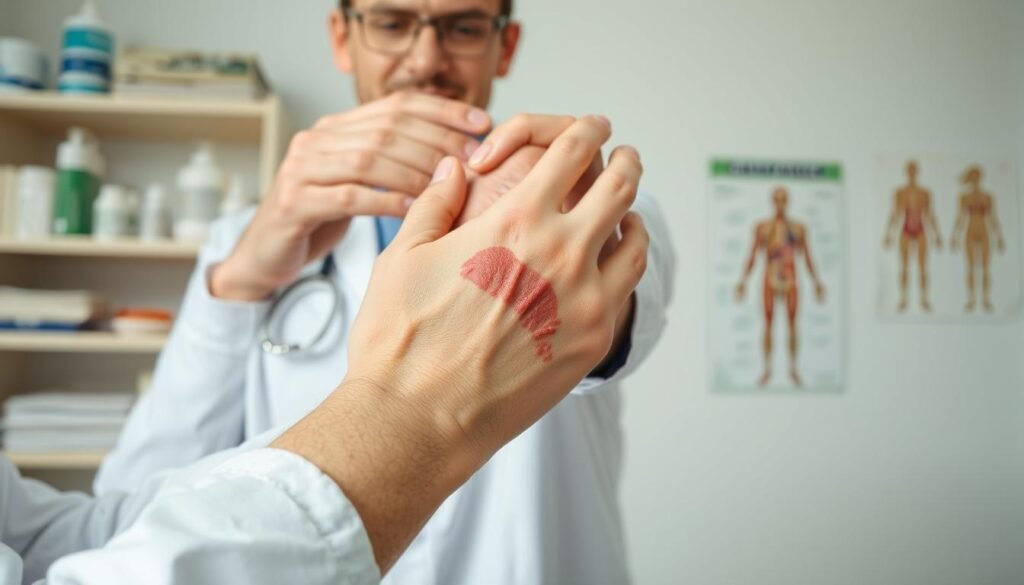
Did you know that more than 16 million American adults live with chronic skin issues? These problems cause constant itching and swelling. Many people spend months or years trying to figure out what’s wrong because so many skin problems look alike.
It can be hard to tell what’s going on with your skin. Small changes in how your skin looks or feels can happen slowly. What might start as just dry skin can get worse over time.
This guide will help you spot the visual cues and symptom patterns of adult eczema. Knowing the signs early can help you get treatment faster and live better. Paying attention to your skin is key to keeping it healthy.
Medical Disclaimer: This content is for information and education only. It’s not medical advice. Skin problems are different for everyone. Always see a board-certified dermatologist or a healthcare expert for a proper diagnosis and treatment plan.
Key Takeaways
- Adult skin conditions often share overlapping symptoms, making professional evaluation essential for accurate identification
- Changes in skin texture, appearance, and comfort levels typically develop gradually over time
- Early recognition of persistent itching, redness, and inflammation patterns can lead to more effective treatment
- Self-monitoring helps you track symptom progression and communicate better with healthcare providers
- Visual cues combined with behavioral indicators provide valuable clues about underlying skin health issues
- This guide serves as an educational starting point, not a replacement for dermatological consultation
Understanding Atopic Dermatitis
To spot atopic dermatitis, you must know what makes it different. This knowledge helps you tell it apart from temporary skin issues. Knowing the causes lets you act fast when symptoms show up.
The Medical Definition and Nature
Atopic dermatitis is a chronic inflammatory skin condition. It affects how your skin works and protects you. Doctors often call it eczema, but atopic dermatitis is a specific type.
Your skin is a shield against the world. But with atopic dermatitis, it doesn’t work right.
The condition has two main issues: immune system dysfunction and skin barrier damage. Your immune system reacts too much to certain things. Your skin also can’t keep moisture in or keep out irritants.
Unlike short-term rashes, atopic dermatitis is persistent and recurring. You might have clear skin followed by sudden outbreaks. This pattern sets it apart from one-time skin issues.
Atopic dermatitis often goes hand in hand with other allergies. Many people with this condition also have asthma, hay fever, or food allergies. Doctors call this group of conditions the “atopic triad” because they share similar immune system problems.
Why This Condition Develops
Atopic dermatitis is caused by many factors working together. No single thing causes it by itself.
Genetic predisposition is a big factor. If your family has eczema, asthma, or allergies, you’re more likely to get it. Scientists have found certain genes that affect skin barrier proteins like filaggrin.
Your immune system also plays a part by reacting too much to certain triggers. This reaction can damage healthy skin.
Environmental factors can make atopic dermatitis worse:
- Living in polluted areas
- Being exposed to harsh chemicals
- Being in dry climates
- Stress affecting your immune system
- Coming into contact with allergens or irritants
Adults can get atopic dermatitis for the first time, even if they never had it as kids. This adult-onset form can surprise people who never had skin issues before. Some adults may get it again after years of being symptom-free.
Some jobs are riskier for atopic dermatitis. Healthcare workers, hairdressers, cleaners, and food service employees are often exposed to irritating substances. This can trigger or make the condition worse.
Knowing the risks helps you see atopic dermatitis as a real medical condition with biological causes. It’s not just “sensitive skin.” It shows deeper problems with barrier function and immune regulation.
Climate also affects how bad symptoms are. Cold, dry winters dry out your skin, while hot, humid summers can cause sweating and irritation. Knowing this helps you take steps to prevent problems all year.
Recognizing Common Symptoms
Adults with atopic dermatitis often face a mix of symptoms. These signs can start small and grow over time. Knowing these symptoms helps you understand your skin better and when to see a doctor.
The Persistent Itch That Won’t Go Away
The main symptom of atopic dermatitis is intense, unrelenting itchiness. This itch is much worse than regular dry skin. It gets worse at night and can keep you awake.
Scratching might feel good for a moment, but it makes things worse. It damages your skin and makes the itch even stronger. This cycle can go on forever without help, causing a lot of discomfort.
This itch is different from the itch you get from dry air or mild allergies. It doesn’t go away with regular moisturizers. It keeps getting worse, and simple remedies don’t help for long.
Visible Redness and Inflammation
Atopic dermatitis causes distinctive red, inflamed patches on the body. These patches can be anywhere, but often appear on hands, wrists, and elbows. The redness can change in intensity.
In severe cases, these areas might feel warm, swell, or ooze fluid. The redness can look darker or purple on darker skin tones, making it harder to spot.
Extreme Dryness With Persistent Flaking
Adults with this condition have profound dryness that’s more than just seasonal dry skin. This dryness leads to flaking and a rough texture, even with moisturizing. Your skin may feel tight and dry all the time.
This dryness comes from a damaged skin barrier. Your skin can’t hold moisture, and irritants can get in easily. Areas that move a lot, like joints, get the driest.
The flaking gets worse in winter but doesn’t go away in humid seasons. Regular lotions don’t last long, showing that the problem is deeper than just dry skin.
Changes in Skin Texture
Chronic scratching and inflammation from atopic dermatitis change your skin’s look and feel. These changes happen slowly as the condition gets worse or stays the same. Knowing these signs helps you see when your skin needs more than just basic care.
Long-term atopic dermatitis causes noticeable changes in your skin. These changes show that your skin has faced a lot of damage and inflammation. Spotting these signs early helps you get the right care before things get worse.
Thickened and Leathery Appearance
Lichenification is a key sign of chronic atopic dermatitis in adults. It makes skin thicker and tougher from constant scratching. The affected areas feel different and look like tree bark.
These areas show deep skin lines that look like tree bark. They get more visible as the skin gets thicker. Common spots include the back of your neck, wrists, ankles, and knees where you scratch a lot.
The thickened patches often look darker than your normal skin. This is because of dark spots that appear after inflammation. When you touch these areas, they feel harder and less flexible than healthy skin.
Lichenification means your skin condition has lasted a long time. It’s your skin’s way of protecting itself from constant scratching. This change doesn’t happen quickly but builds up over time from repeated scratching.
Areas with Visible Scaling
Scaly patches are another sign of atopic dermatitis. These patches can have fine, powdery flakes or thicker scales. They look different from normal dry skin that can be fixed with moisturizer.
The scales can be silvery-white or reddish, depending on the inflammation. This happens because your skin sheds cells fast but can’t keep moisture in.
Fine scaling is seen in milder cases. These flakes are easy to dust off but come back quickly. Thicker scales are harder to remove and appear in more severe cases.
Scaly patches often show up in areas you scratch a lot. You might see them on your hands, arms, or legs. These areas feel rough and might crack or bleed if the scaling gets bad.
Knowing about these changes helps you tell atopic dermatitis from simple dryness or other skin issues. If your skin gets persistently thick or scaly and doesn’t get better with over-the-counter treatments, you need to see a dermatologist. These signs mean your condition needs more than just basic skincare.
Differences from Other Skin Conditions
Many skin conditions look similar to atopic dermatitis, making it hard to tell them apart. This confusion shows why seeing a doctor is key. They can spot the differences that help figure out what’s wrong.
It’s easy to get confused when skin looks red, itchy, and inflamed. But, doctors know how to tell them apart. They look closely at each case.
Atopic Dermatitis vs. Psoriasis
Psoriasis and atopic dermatitis both cause inflammation, but they look different. Psoriasis has thick, silvery plaques with lots of scale. These plaques stand out and have clear edges.
Atopic dermatitis has red patches with less scale. These patches are not as clear-cut and blend into the skin around them.
Where the skin gets affected also tells you what it is. Psoriasis often hits knees, elbows, and the scalp. Atopic dermatitis usually shows up in places like the inner elbows and behind knees.
| Feature | Atopic Dermatitis | Psoriasis |
|---|---|---|
| Border Definition | Poorly defined, gradual transition | Sharp, well-demarcated edges |
| Scale Appearance | Fine, minimal scaling | Thick, silvery scales |
| Common Locations | Flexural surfaces (inner joints) | Extensor surfaces (outer joints) |
| Texture | Less raised, softer patches | Thick, elevated plaques |
Contact Dermatitis Comparison
Contact dermatitis shows up in areas that touched something it doesn’t like. You might see linear streaks from plant exposure or shapes that match what you wore or used.
The edges of contact dermatitis are clearer than atopic dermatitis. It usually goes away once you stop touching the thing that caused it.
Atopic dermatitis spreads all over the body and keeps coming back. It doesn’t get better even if you avoid things that might irritate your skin.
- Contact dermatitis matches exposure patterns with clear boundaries
- Symptoms improve rapidly after trigger removal
- Usually appears suddenly after contact with new substances
- May affect only the area that touched the irritant
Distinguishing from Fungal Infections
Fungal infections like tinea can look like atopic dermatitis. But, they have some key differences. Fungal infections have sharper, circular borders with central clearing, making a ring shape.
They start on one side of the body and spread in a circle. This is different from atopic dermatitis.
Fungal infections get better with antifungal treatments in a few weeks. If your symptoms don’t get better, it might be a fungal infection. Doctors can do tests to find out for sure.
Because symptoms can be similar, trying to diagnose yourself is not reliable. A doctor’s check-up is the best way to know what’s wrong and how to treat it.
Age-Related Manifestations
Atopic dermatitis changes how it looks on your skin as you get older. Knowing these changes helps you find the right treatment. It’s important to understand how symptoms change with age to take better care of your skin.
Every age has its own challenges with atopic dermatitis. It doesn’t affect everyone the same way. Age is a big factor in how it shows up on your body.
Physical Presentation in Younger Demographics
Young adults face atopic dermatitis differently than older people. They might have had it as kids or get it for the first time as adults. Symptoms often show up in areas related to their lifestyle and daily activities.
Hands are a common spot for symptoms in young adults. People who wash hands a lot, like healthcare workers, are at higher risk. This is because of the harsh chemicals they use.
Common spots for symptoms in young adults include:
- Hands and fingers, between the fingers and on the palms
- Eyelids and the skin around the eyes
- Neck and chest area
- Inner elbows and behind the knees
- Wrists and ankles where clothes rub
Stress makes symptoms worse for young adults. School, work, and big life changes can cause big flare-ups. These can make the skin red, oozing, or weeping.
Young adults’ lifestyle adds to the problem. Bad sleep, diet, and moving to new places can make symptoms unpredictable. These factors mix with genetics to make the condition harder to manage.
Changes in Mature Adult Populations
People over fifty have atopic dermatitis that looks different. Older adults face challenges from aging skin. The condition often lasts longer and covers more of the body.
As we age, our skin gets drier. This makes symptoms worse. The skin makes less oil, leading to dryness and more severe symptoms.
In older adults, symptoms spread out more. The back, chest, and legs can get patches that weren’t a problem before. This is different from younger people.
Poor sleep is a big problem for older adults with atopic dermatitis. Itchy skin at night makes sleep even worse. This creates a cycle of poor sleep and worse symptoms.
Older skin faces more risks:
- Secondary bacterial infections from scratched areas
- Slower healing that makes symptoms last longer
- More risk of skin thinning from treatments
- Higher chance of scarring and permanent skin changes
Knowing how atopic dermatitis changes with age helps you manage it better. Whether you’re dealing with stress in your twenties or dryness in your fifties, recognizing these patterns is key to effective care.
Triggers to Be Aware Of
Knowing how your lifestyle affects your skin can help you understand atopic dermatitis better. Many adults find it hard to figure out why their skin gets worse without a clear reason. But, atopic dermatitis usually has specific causes.
Most times, flares come from certain triggers that affect your immune system. Finding out what these triggers are can help you tell if you have atopic dermatitis. Knowing your personal triggers is key to diagnosing the condition.
External Elements That Affect Your Skin
Environmental factors are the main causes of atopic dermatitis flares in adults. Weather conditions greatly affect your skin’s health. Low humidity in winter makes your skin dry and irritated.
Central heating makes things worse by taking away moisture from the air. Cold weather tightens blood vessels and lowers oil production. On the other hand, too much heat makes your skin sweat, which irritates it.
Seasonal allergens add to the problem. Pollen in spring and fall can trigger immune reactions. Mold spores, which thrive in damp places, can cause reactions all year.
Your surroundings are full of things that can irritate your skin. Dust mites live in bedding, furniture, and carpets. Pet dander gets airborne and settles on surfaces.
Cigarette smoke and air pollution contain chemicals that harm your skin. These environmental factors damage your skin’s protective layers and cause inflammation. Even being around secondhand smoke can be harmful.
Personal care products often cause atopic dermatitis symptoms. Harsh soaps remove natural oils that protect your skin. Detergents with strong surfactants leave residues on clothes and bedding.
Fragrances in products can contain dozens of allergens. Many people find their symptoms improve by using fragrance-free products. The fabrics you wear also play a big role.
Wool fibers irritate your skin through friction and lanolin. Synthetic materials trap heat and moisture. For some, their job exposes them to chemicals and solvents.
Healthcare workers, hairstylists, and food service employees wash their hands a lot. Mechanics and cleaners are exposed to solvents and chemicals. Recognizing patterns in your symptoms is key to identifying triggers.
Food and Nutrition Connections
How diet affects atopic dermatitis is a topic of debate among doctors. True food allergies cause symptoms in only a few adults. But, certain foods might make symptoms worse in some people.
Some adults notice their symptoms get worse after eating certain foods. Common culprits include dairy, eggs, nuts, wheat, soy, and shellfish. These effects vary from person to person.
Drinking alcohol can make itching worse by releasing histamine and widening blood vessels. Beer and wine have more histamine than spirits. Spicy foods can also make your skin flush and warm up.
Foods high in histamine can worsen symptoms. This includes aged cheeses, fermented products, and cured meats. Citrus fruits and tomatoes can also release histamine in some people.
Removing foods from your diet should only be done under a doctor’s guidance. Cutting out foods without a doctor’s advice can lead to nutritional problems and eating disorders. A dietitian can help design a safe elimination diet if needed.
Keeping a record of what you eat and how your symptoms change can help find connections. This information is very useful when talking to your doctor. Looking at patterns over time gives more reliable information than single incidents.
| Trigger Category | Common Examples | Identification Method | Management Strategy |
|---|---|---|---|
| Climate Conditions | Low humidity, extreme temperatures, seasonal changes | Track symptoms with weather patterns | Use humidifiers, adjust indoor temperature, moisturize frequently |
| Airborne Allergens | Pollen, mold, dust mites, pet dander, smoke | Note flares during specific seasons or locations | Reduce exposure, use air purifiers, wash bedding regularly |
| Personal Products | Fragranced soaps, detergents, lotions, cosmetics | Eliminate products one at a time | Switch to fragrance-free, hypoallergenic alternatives |
| Fabric Irritants | Wool, synthetic materials, rough textures | Monitor skin reaction to different clothing | Choose soft cotton fabrics, wash new clothes before wearing |
| Dietary Factors | Dairy, eggs, nuts, alcohol, spicy foods, high-histamine items | Keep food and symptom diary for 4-6 weeks | Work with healthcare provider on elimination protocol if needed |
Understanding your personal triggers helps you better manage your condition. No two individuals share identical trigger patterns, making personal observation essential. This knowledge helps differentiate atopic dermatitis from other conditions.
If your symptoms worsen after using scented products, this supports an atopic dermatitis diagnosis. If low humidity always triggers flares, this information guides both identification and management strategies. Combining environmental awareness with dietary mindfulness creates a complete approach to understanding your condition.
Self-Assessment Techniques
Self-assessment tools help you track patterns and gather evidence for diagnosing atopic dermatitis. By documenting your skin’s behavior before seeing a dermatologist, you create a detailed picture of your condition. This preparation turns general concerns into specific observations for healthcare providers.
Monitoring your skin systematically helps identify triggers and symptom patterns. These techniques require no medical training, just consistency and attention to detail. The information you collect becomes invaluable during professional consultations.
Examining Your Skin Carefully
Start your visual inspection in a well-lit room, preferably with natural daylight. Position yourself near a window or use bright overhead lighting to see your skin clearly. Poor lighting can hide important details that help identify atopic dermatitis.
Use a full-length mirror for accessible areas and a handheld mirror for hard-to-see locations like your back or scalp. Look for areas showing redness, discoloration, or unusual pigmentation changes. These color variations often signal active inflammation or previous flare sites.
Check your skin for specific characteristics that suggest atopic dermatitis:
- Dry or flaky patches that appear rough to the touch
- Thickened areas with a leathery texture from repeated scratching
- Scratch marks or excoriations indicating intense itching
- Symmetrical patterns affecting similar areas on both sides of your body
- Poorly defined borders where affected skin gradually blends into normal skin
Take clear photographs of affected areas from multiple angles. Use your smartphone camera with good lighting and get close enough to capture texture details. These images document your condition’s progression over weeks or months.
Photography serves two important purposes for managing atopic dermatitis. First, it creates a visual timeline showing how symptoms change with different treatments or seasons. Second, it provides reference images for dermatologist appointments, when symptoms fluctuate.
Pay attention to which body areas show symptoms. Atopic dermatitis typically affects flexural areas like elbow creases, behind knees, and neck folds in adults. Distribution patterns provide diagnostic clues that distinguish this condition from similar skin problems.
Recording Symptom Details
Keeping a symptom diary transforms scattered observations into organized data that reveals important patterns. Track your symptoms consistently for at least two to three weeks before your dermatologist appointment. This timeframe captures enough variation to identify meaningful trends.
Your diary should include essential information each time you notice symptoms:
- Date and time when symptoms appear or worsen
- Specific body areas affected during each episode
- Symptom intensity rated on a simple scale from 1 to 10
- Duration of flares from start to improvement
- Potential triggers like new products, foods, or stress events
- Treatments or products you used and their effectiveness
- Impact on daily activities, work, or sleep quality
Systematic tracking reveals patterns that memory alone cannot capture reliably. You might discover that your atopic dermatitis worsens with seasonal changes, certain foods, or specific stressors. These connections become clear when viewed across multiple entries.
Note environmental exposures that occur before flares begin. Did you switch laundry detergents, use a new moisturizer, or spend time in chlorinated water? Recording these details helps identify triggers specific to your condition.
Document how your skin responds to different treatments. Write down which moisturizers reduce dryness, which times of day symptoms feel worse, and what activities provide relief. This information guides both your self-care strategies and your dermatologist’s treatment recommendations.
The diary becomes valuable during medical consultations. Instead of relying on incomplete recollection, you present concrete data about symptom frequency, severity, and triggers. This evidence-based approach leads to more accurate diagnoses and personalized treatment plans.
Consider using a smartphone app or simple notebook to maintain your symptom log. Digital options often include reminder features that encourage consistent tracking. Choose whatever format you’ll actually use regularly.
Review your diary entries periodically to spot emerging patterns. Look for correlations between symptoms and specific activities, products, or environmental factors. These insights empower you to make informed decisions about avoiding triggers and managing your atopic dermatitis effectively.
Seeking Professional Help
Knowing when to see a dermatologist is key. They can help manage atopic dermatitis better than home care. This can prevent problems and get you the right treatment.
Many adults try to handle their skin issues on their own. But knowing when to ask for help is important for your health.
When to Consult a Dermatologist
There are times when you should see a dermatologist instead of treating yourself. Knowing these signs can help you get the right care.
Persistent symptoms are a big reason to see a dermatologist. If you itch for more than two weeks, even with over-the-counter treatments, it’s time to get professional help.
Make an appointment if you notice any of these:
- Skin changes that make it hard to sleep or do daily things
- Signs of infection like warmth, pain, pus, fever, or spreading redness
- Feeling sad or self-conscious because of your skin
- Symptoms that don’t get better with basic care after two to three weeks
- Not sure if your skin issue is atopic dermatitis or something else
- New skin changes without a history of eczema
- Symptoms getting worse even with self-care
Seeing a doctor early can help symptoms get better faster. Getting help quickly can stop problems that happen when skin issues are ignored for too long.
Don’t wait until your symptoms are really bad. Many people wait too long to see a doctor. This can make their condition worse when they could have felt better sooner.
Importance of Accurate Diagnosis
Seeing a dermatologist is very important. They have special training that you can’t get from online info or self-checks.
A dermatologist can tell the difference between similar-looking conditions. Getting the right diagnosis is key to avoiding treatments that can make things worse.
Going to a dermatologist has many benefits:
- They can tell if you have atopic dermatitis or something else
- They can do tests like patch tests or biopsies if needed
- They know about treatments you can’t get over-the-counter
- They can find other problems that need attention
- They can make a treatment plan just for you
The field of dermatology is always getting better with new treatments. Specialists keep up with these changes and can find the best treatment for you.
Using online info is good for learning, but it’s not a substitute for a doctor’s visit. A specialist can give you a detailed check-up that online resources can’t.
It’s easier than ever to find a good dermatologist. The American Academy of Dermatology has a directory to help you find one. Many doctors now offer online consultations, which is great for those who have trouble getting to the office.
Most insurance plans cover visits to the dermatologist if it’s necessary. Check with your insurance to see what you need to do before you go.
Treatment Options
After diagnosing atopic dermatitis, finding the right treatment is key. The treatment plan depends on how severe the condition is, where it is, and how well it responds to treatment. A dermatologist will create a plan that fits your needs.
There are many ways to treat atopic dermatitis, from creams to medicines taken by mouth. Knowing about these options helps you work with your doctor better. What works for one person might not work for another, so getting professional advice is important.
Topical Treatments
For most adults, topical treatments are the first step in managing atopic dermatitis. These are applied directly to the skin. They help reduce inflammation and repair the skin barrier.
Emollients and moisturizers are the base of every treatment plan. They should be applied often to keep the skin hydrated and repair it. Thick creams or ointments are better for very dry skin than lotions.
Topical corticosteroids come in different strengths for different needs. They reduce inflammation and help during flare-ups. Your doctor will choose the right strength for each area, as face skin needs gentler treatments than body skin.
Topical calcineurin inhibitors like tacrolimus and pimecrolimus are good alternatives to steroids. They are useful for sensitive areas like the face and eyelids. They target specific parts of the immune system without the side effects of long-term steroid use.
Newer topical agents have opened up more treatment options. PDE4 inhibitors like crisaborole and JAK inhibitors such as ruxolitinib target specific inflammatory pathways. These offer more choices when traditional treatments don’t work.
How well treatments work depends on how you apply them and how often. Your doctor will show you the right way to use them. Following these instructions closely helps get the most benefits and avoids side effects.
Oral Medications
For moderate-to-severe atopic dermatitis not helped by creams, systemic treatments are needed. These medicines work throughout the body, not just on the skin. A dermatologist will decide if oral treatment is right for you based on how severe your condition is and your overall health.
Oral corticosteroids help during severe flare-ups. But doctors use them carefully because of possible side effects with long-term use. They are a temporary solution, not a long-term fix.
Immunosuppressants like cyclosporine, methotrexate, or azathioprine are for severe, hard-to-treat cases. They change how the immune system works to reduce inflammation. Regular blood tests are needed to safely use these medicines for a long time.
Oral JAK inhibitors are newer targeted treatments that offer a lot of relief for severe atopic dermatitis. They block specific enzymes involved in inflammation. They have shown great results in clinical trials for adults with moderate-to-severe disease.
Antihistamines mainly help with nighttime itching to improve sleep. They don’t treat the inflammation but help with itching. Better sleep helps with overall health and healing.
Lifestyle Modifications
Non-medical approaches help manage atopic dermatitis and prevent flare-ups. These daily habits and changes in the environment reduce triggers and keep the skin healthy. Lifestyle changes work alongside medicines for better management.
- Develop a consistent skincare routine using fragrance-free, gentle products designed for sensitive skin
- Identify and avoid personal triggers through careful observation and symptom tracking
- Manage stress effectively through meditation, yoga, therapy, or other relaxation techniques
- Adjust bathing practices by using lukewarm water, limiting shower time to 10 minutes, and choosing mild cleansers
- Wear soft, breathable fabrics like cotton and avoid rough materials that irritate skin
- Maintain optimal home humidity levels between 30-50% using a humidifier during dry seasons
- Protect skin from extreme temperatures by dressing appropriately and avoiding sudden temperature changes
These changes help medical treatments work better and may reduce flare-ups. Small changes add up to make a big difference over time. Being consistent is more important than being perfect in establishing helpful routines.
This overview gives a general idea of treatments available. But choosing the right treatment needs a doctor’s evaluation. Your dermatologist will consider your condition’s severity, where it is, triggers, and overall health. Working with your healthcare provider ensures the best, personalized treatment for atopic dermatitis.
Living with Atopic Dermatitis
Getting a diagnosis of atopic dermatitis means starting to work with your skin. It’s a chronic condition that needs ongoing care. But with the right strategies, most adults can control their symptoms well.
Understanding how to handle flare-ups and daily care is key. This sets the stage for long-term skin health.
Seeing atopic dermatitis as a manageable condition is important. The goal is not perfection but consistency in your skin care. Building good habits takes time, but they become natural as you find what works for you.
Managing Flare-Ups
Flare-ups are when symptoms get worse and need quick action. Early intervention makes all the difference in stopping irritation before it gets bad. Spotting the first signs of itching or redness helps you act fast.
Having a plan with your dermatologist helps during flare-ups. This plan tells you which treatments to use more and when. Sticking to this plan helps lessen how bad and long flare-ups last.
Use anti-inflammatory treatments right away if symptoms worsen. Going from using moisturizer twice a day to three or four times helps your skin more. These small changes can stop flare-ups from getting worse.
Try to avoid things that might trigger flare-ups when you’re having one. Cool compresses offer immediate itch relief without medicine, which is great for sudden symptoms. Keeping your nails short and smooth helps avoid skin damage if you scratch.
Wearing cotton gloves at night can help if you scratch a lot while sleeping. This simple step can really help your skin heal. Many people find it very effective.
Talk to your healthcare providers about how often and how bad your flare-ups are. Keeping track of this helps your dermatologist adjust your treatment. Managing atopic dermatitis well means keeping flare-ups from happening too often.
Long-Term Skin Care Routine
Daily habits are key to managing atopic dermatitis well. Applying moisturizer twice a day right after bathing helps keep your skin moist. This keeps your skin barrier strong all day.
Using gentle, fragrance-free cleansers and products helps avoid irritation. Reading labels is important to avoid common triggers. Choosing the right products helps prevent problems before they start.
Using maintenance medications as directed helps keep symptoms under control. Following your dermatologist’s advice for ongoing treatment stops flare-ups before they start. This is better than just treating symptoms when they appear.
Regular check-ups with your dermatologist help keep an eye on how well your treatment is working. These visits are a chance to talk about new treatments and get advice. Working closely with your provider improves your results.
Making small changes at home can help your skin too. Using humidifiers in dry weather keeps the air moist. Choosing hypoallergenic bedding and clothes reduces irritation.
Managing stress is also important for adults with atopic dermatitis. Studies show stress can make symptoms worse. Adding relaxation techniques, exercise, or meditation can help control symptoms.
| Management Aspect | During Flare-Ups | Daily Maintenance | Expected Benefit |
|---|---|---|---|
| Moisturizer Application | 3-4 times daily, immediately when itching starts | Twice daily within 3 minutes after bathing | Strengthens skin barrier, reduces dryness |
| Medication Use | Intensified anti-inflammatory treatments as prescribed | Maintenance therapy following provider guidance | Controls inflammation, prevents escalation |
| Trigger Management | Strict avoidance of known irritants | Ongoing awareness and reasonable precautions | Minimizes symptom exacerbations |
| Skin Protection | Cool compresses, cotton gloves, short nails | Gentle products, appropriate clothing choices | Prevents damage from scratching or irritation |
Staying up-to-date with new treatments helps you make better choices. Medical research continues advancing, bringing new options for managing eczema. Talking to your dermatologist about these new options ensures you get the best care.
Learning about your skin over time is key to managing atopic dermatitis. Creating a plan that fits your specific needs is the most effective way. What works for one person might not work for another.
Most adults can control their symptoms with the right treatment and lifestyle changes. This lets them live a full life without being held back. With the right care and advice, atopic dermatitis doesn’t have to limit your activities or cause constant worry.
Conclusion
Understanding atopic dermatitis in adults starts with knowing the signs your skin shows. The guide has explained itching, inflammation, and texture changes. These clues help spot the condition early.
Taking Control of Your Skin Health
Being aware lets you seek the right care. Atopic dermatitis affects millions of adults and is a real medical issue. If you notice persistent itching, sleep issues, or emotional effects, talk to a doctor.
Board-certified dermatologists can tell atopic dermatitis apart from other conditions. They create treatment plans just for you. Bringing photos and symptom diaries to your appointment helps a lot.
Moving Forward with Confidence
If your symptoms match what’s described, book a dermatology appointment. New treatments and clinical trials are available. They target specific immune pathways.
Finding the right treatment might take time and adjustments. Stick to your skin care and treatment plans. Your dermatologist will help choose the best options for you.
This guide aims to help you talk to doctors better, not replace them. Taking that first step shows you care about your health and well-being.