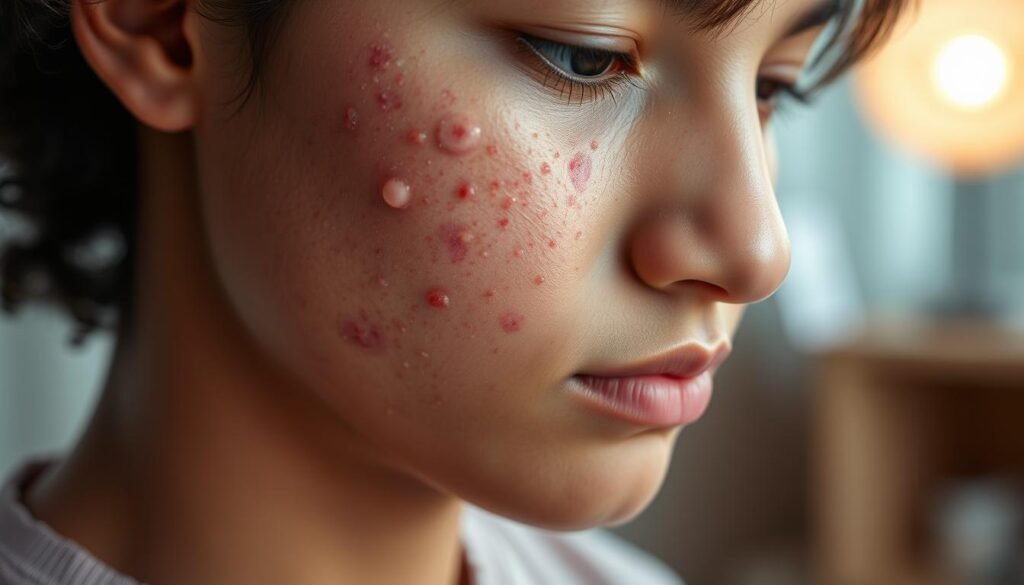
Nearly 85% of people between ages 12 and 24 get at least minor acne. It’s one of the most common skin problems in America. Many people keep getting acne even after they’re grown up, with some starting in their 30s and 40s.
Acne Vulgaris happens when hair follicles get blocked by oil and dead skin. Your face, forehead, chest, upper back, and shoulders are usually affected. The Mayo Clinic says there are effective treatments, but if not treated, it can last for years.
Spotting Acne Vulgaris early is key to successful treatment. Pimples take time to heal, and new ones often pop up as old ones disappear. Starting treatment early can prevent emotional issues and scarring.
The FDA has warned about some over-the-counter acne products. They can cause severe reactions like faintness, breathing problems, or swelling. Knowing what to watch out for helps you avoid these dangers and get the right treatment.
Key Takeaways
- Acne Vulgaris affects 85% of young adults and can appear at any age
- Hair follicles blocked by oil and dead skin cells cause this skin condition
- Common areas include face, chest, upper back, and shoulders
- Early treatment prevents scarring and emotional distress
- Some acne products can cause serious allergic reactions
- This inflammatory skin disorder requires consistent care and monitoring
Understanding Acne Vulgaris
Acne vulgaris is a common skin problem affecting millions in the U.S. It affects the skin’s oil glands and hair follicles. This leads to different types of blemishes on the face, chest, back, and shoulders. Knowing what causes these breakouts helps those with acne-prone skin manage their skin better.
What is Acne Vulgaris?
Acne vulgaris happens when hair follicles get clogged with oil and dead skin cells. The sebaceous glands, which make natural skin oil, are more active on the face, forehead, chest, upper back, and shoulders. When these glands make too much oil, it mixes with dead skin cells and blocks the follicle opening.
Depending on how the blockage forms, different types of lesions appear. Whiteheads form when the follicle wall bulges but stays closed. Blackheads occur when the clogged material pushes through to the skin surface and turns dark from air exposure. Deeper blockages can create painful cysts beneath the skin.
Causes of Acne Vulgaris
Four main factors contribute to acne:
| Factor | Description | Impact Level |
|---|---|---|
| Excess Oil Production | Sebaceous glands produce too much sebum | High |
| Clogged Follicles | Dead skin cells accumulate in pores | High |
| Bacteria Growth | Propionibacterium acnes multiplies in blocked pores | Medium |
| Inflammation | Body’s immune response to bacteria | Variable |
These factors together create the perfect storm for breakouts. Bacteria grow in the oxygen-free environment of clogged pores. This triggers inflammation, leading to red, swollen pimples.
Common Symptoms of Acne Vulgaris
Spotting acne vulgaris symptoms early is key to treating it right. Everyone’s skin reacts differently, depending on their skin type and how bad the acne is. Knowing these signs helps you tell acne vulgaris apart from other skin issues and find the right treatment.
Identifying the Typical Lesions
Acne vulgaris causes various blemishes on your skin. Comedones are the basic ones and come in two forms:
- Whiteheads (closed comedones) – small flesh-colored bumps with closed pores
- Blackheads (open comedones) – dark spots where pores remain open to air
As the inflammation grows, more types of lesions appear. Papules are small, red, tender bumps without pus. When these fill with pus, they turn into pustules, the common “pimple.” It’s important to seek treatment when these lesions start to multiply.
Distinguishing Between Different Types
Severe acne vulgaris leads to deeper, more painful blemishes. Nodules are large, solid lumps under the skin’s surface. They’re hard because they don’t have pus. Cystic lesions are the worst – painful, pus-filled lumps deep in hair follicles.
Knowing these differences helps you pick the right treatment. Mild cases might just need over-the-counter products. But nodular or cystic acne needs a doctor’s prescription to avoid scarring.
How Acne Vulgaris Differs from Other Skin Conditions
Getting the right diagnosis for your skin is key to finding the right treatment. Many skin problems look similar at first, but each needs its own approach. Knowing these differences helps you create a good acne skincare routine and avoid bad treatments.
Comparing with Rosacea
Rosacea and acne vulgaris both cause red bumps on the face. But rosacea mainly affects adults over 30, causing lasting redness on the cheeks, nose, and forehead. Unlike acne, rosacea doesn’t have blackheads or whiteheads. The bumps from rosacea feel warm and may show visible blood vessels under the skin.
Comparing with Folliculitis
Folliculitis looks like acne but is caused by bacterial or fungal infections in hair follicles. It often shows up where you shave or where clothes rub against your skin. Unlike acne, folliculitis bumps are itchy, not painful, and clear up fast with antibacterial treatments.
Comparing with Other Acne Types
Not all acne is the same. Acne mechanica is caused by skin friction and pressure, while acne cosmetica comes from clogged pores by products. Deep cystic acne creates painful nodules under the skin, unlike surface-level blackheads and whiteheads. Each type needs its own adjustments in your skincare routine for the best results.
Early Warning Signs of Acne Vulgaris
Catching acne early is key to better skin health. Your skin often gives early signs before breakouts show. Spotting these signs early helps you act fast, making it easier to prevent and manage acne.
Noticing Changes in Skin Texture
Your skin’s texture can reveal a lot about what’s happening inside. If your skin feels greasier, it might be a sign of too much oil. This usually happens on your forehead, nose, and chin.
Dead skin cells mixing with oil can make your skin feel rough or bumpy. Your pores might look bigger or more visible. This is because bacteria grow fast in oily skin, starting the inflammation that leads to acne.
Observing Breakouts in Specific Areas
Acne often shows up in the same places, making it easier to catch early. Common spots include:
- Face (mainly the T-zone)
- Upper back and shoulders
- Chest area
Hormonal changes often cause these breakouts. Teenagers see more oil during puberty, while adult women might get flares before their period. If you get severe acne as an adult, it could mean a health issue. Tracking where and when you get breakouts helps you find what triggers them, leading to better prevention.
The Role of Hormones in Acne Vulgaris
Hormones are key in Acne Vulgaris, making it tough to deal with. Your hormone levels affect how much oil your skin makes. This can lead to breakouts at various times in life.
Hormonal Triggers and Flare-Ups
Androgens are the main cause of hormonal acne. They make your sebaceous glands grow and produce more oil. Women often see their acne worsen a week before their period.
Several FDA-approved birth control pills can help manage this inflammatory skin disorder. Options like Ortho Tri-Cyclen, Yaz, Beyaz, and Estrostep balance hormone levels. For women with irregular periods due to excess androgens, spironolactone blocks hormone effects at the oil gland level.
How Hormones Affect Teenagers vs. Adults
Teenagers see a big increase in androgens during puberty. This is why Acne Vulgaris often starts then. Both boys and girls experience more oil production as they go through changes.
Adults face different hormonal challenges. Women in their 30s, 40s, and beyond may deal with acne for decades. Midlife hormonal changes can cause new breakouts, even in those who had clear skin as teens. Adult-onset acne needs different treatments than teenage acne.
Factors That Can Worsen Acne Vulgaris
Genetics and hormones are big players in acne. But, our daily choices can also make it worse. Knowing what triggers breakouts helps you control your skin.
From what you eat to your daily habits, small changes can help a lot. These changes can make a big difference in managing acne symptoms.
Lifestyle Choices Impacting Breakouts
Our daily activities can affect our skin more than we think. Things like cellphones, helmets, and tight clothes can block pores. Athletes often get breakouts where their sports gear touches their skin.
Even your backpack straps can cause shoulder acne. Stress also plays a role in acne. It doesn’t cause pimples directly but makes existing ones worse.
Stress makes your body release cortisol, which increases oil production. Some medications, like corticosteroids, testosterone, or lithium, can have similar effects.

Dietary Influences on Skin Health
Studies suggest that carbohydrate-rich foods might make acne worse. Foods like white bread, bagels, and chips can cause blood sugar spikes. This may lead to more inflammation.
Scientists are studying these links to find better ways to treat acne.
| Food Type | Impact on Skin | Better Alternatives |
|---|---|---|
| White bread | May increase breakouts | Whole grain bread |
| Potato chips | Can trigger inflammation | Nuts or seeds |
| Chocolate | Minimal effect | Dark chocolate (70% cacao) |
| Greasy foods | Little to no impact | Grilled options |
It’s important to clear up some acne myths. Dirty skin doesn’t cause pimples. Overwashing can actually irritate your skin.
Oil-free makeup labeled “noncomedogenic” is safe to use with your acne treatments.
Recognizing Patterns in Breakouts
Understanding when and why breakouts happen can change how you manage acne. By watching your skin, you’ll find patterns that show what causes flare-ups and what keeps your skin clear. This knowledge helps you on your journey to better skin.
Tracking Your Acne Cycle
Start watching your breakouts like a detective. Most pimples clear up in one to two weeks with good skincare. Breakouts often happen at the same times, like during your period or when you’re stressed.
Use a calendar or app to track your breakouts. Mark when new ones appear, rate their severity, and note any triggers. Everyone’s skin reacts differently to different things.
Documenting Skin Changes Over Time
Take weekly photos of your face in the same light to see small improvements. Remember, acne management takes time – treatments like retinoids may take three to four months to work. Keep notes on your products and any side effects.
Focus on areas where you get breakouts. Note if pimples show up on your forehead, cheeks, jawline, or chin. Different areas can mean different triggers, like hair products on your forehead or hormonal issues on your jawline.
The Importance of Skin Type in Diagnosis
Your skin type is key to managing acne-prone skin. Each skin type reacts differently to treatments. Knowing if you have oily, dry, or sensitive skin helps tailor your acne skincare routine.
Oily vs. Dry Skin and Acne Vulgaris
Oily skin produces more sebum, clogging pores and inviting acne bacteria. For oily skin, oil-free moisturizers are best. They hydrate without adding oils. Salicylic acid is great for oily skin as it breaks down dead skin cells.
Dry skin has its own set of problems. Harsh cleansers and scrubbing can damage it, leading to irritation and inflammation. A gentle skincare routine with hydrating ingredients is essential for dry skin.
How Sensitive Skin Reacts Differently
Sensitive skin needs extra care and gentler products. Use lower concentrations of benzoyl peroxide to avoid redness and peeling. Azelaic acid, from grains like barley and wheat, is antibacterial yet gentle.
Prescription retinoids like Differin or Retin-A should be applied carefully. Apply them to the whole affected area, not just spots, to avoid uneven reactions.
Seeking Professional Help
Trying to fight Acne Vulgaris alone can be tough, and store-bought products might not work. Getting help from a pro can change your skin for the better and stop scarring.
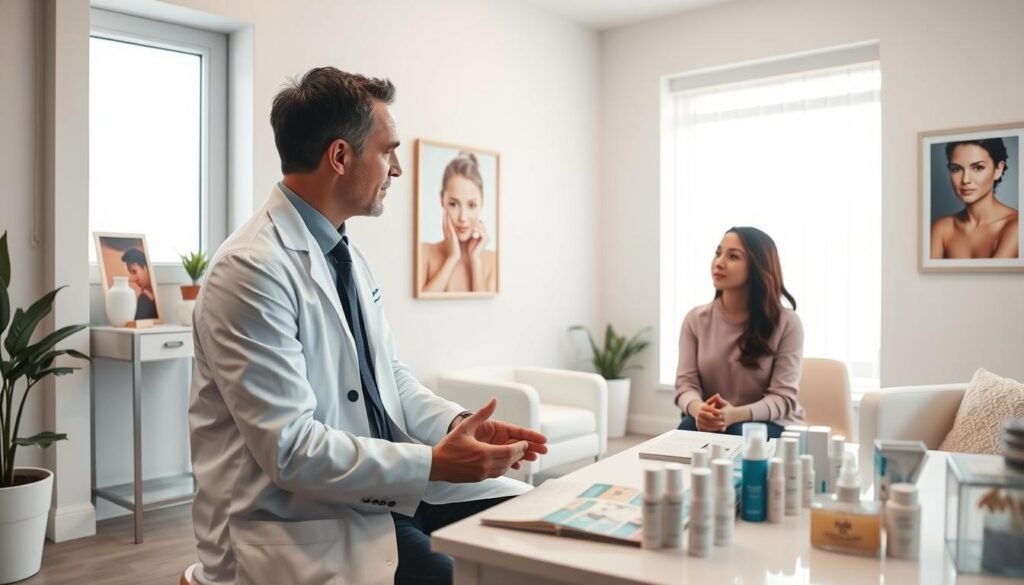
When to Consult a Dermatologist
If your skin doesn’t get better after 6-8 weeks, start with your doctor. They might give you stronger creams like clindamycin or erythromycin with benzoyl peroxide. For really tough cases, a dermatologist can offer more advanced treatments.
- Deep, painful cysts or nodules beneath the skin
- Scarring or dark spots from previous breakouts
- Acne affecting your self-esteem or daily activities
- Breakouts that spread to your chest, back, or shoulders
The Importance of an Accurate Diagnosis
A dermatologist can tell Acne Vulgaris apart from other skin issues. They’ll look at your skin, how bad it is, and your health history. Getting the right diagnosis saves time and money on bad treatments.
| Treatment Type | Best For | Typical Duration |
|---|---|---|
| Topical Antibiotics | Mild to moderate inflammatory acne | 8-12 weeks |
| Oral Antibiotics (Doxycycline, Minocycline) | Moderate to severe cases | 3-6 months |
| Isotretinoin (Accutane) | Severe cystic acne | 4-6 months |
| Chemical Peels | Surface-level acne and scarring | Multiple sessions |
Pregnant women need careful treatment because many options aren’t safe. Always tell your dermatologist if you’re pregnant or planning to get pregnant.
Conclusion: Prioritizing Skin Health
Getting your skin in top shape takes commitment and the right strategy for fighting acne. A daily skincare routine is key. Begin each day and night with a warm water face wash and a gentle cleanser. Always remove makeup at night and use oil-free moisturizers to avoid clogged pores.
After working out, wash your face immediately. This stops sweat and bacteria from causing acne.
Long-Term Management Strategies
Managing acne is more than just skincare. Avoid picking or squeezing pimples to prevent scarring and dark spots, which are worse for darker skin. Untreated acne can hurt your confidence in school, work, and social life.
Teenagers face extra challenges. Acne during these years can lower their self-esteem and affect their daily life.
Embracing a Holistic Approach to Care
The best results come from mixing medical treatments with lifestyle changes that fit your needs. Work with a dermatologist to find the right medications for your skin. Also, keep up healthy habits like regular exercise and managing stress.
Notice how certain foods affect your skin and adjust your diet. This all-around approach to acne management prevents long-term damage and keeps your skin healthy for years.