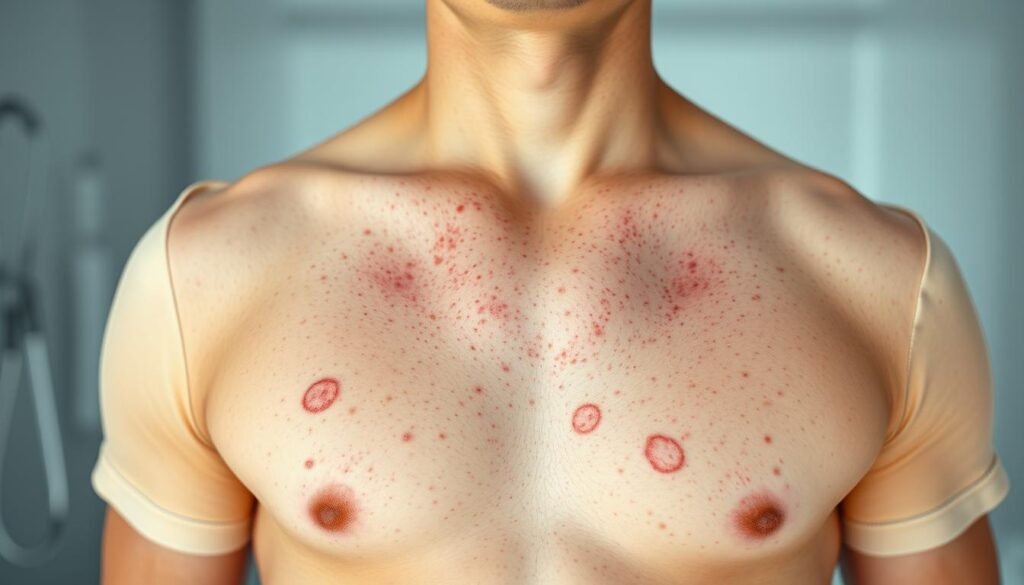
Nearly 50 million Americans deal with acne every year. But many don’t know that breakouts can happen on the chest and back too. This affects up to 60% of people who get acne on their face, causing both physical and emotional pain.
Body acne hits the chest, back, shoulders, neck, and buttocks just as hard as facial acne. Dr. Sandra Lee, known as Dr. Pimple Popper, says this is a top skincare issue. The skin on your back has more oil glands and is thicker, making it a common spot for stubborn breakouts.
Spotting body acne starts with knowing what to look for. Dead skin cells and extra oil clog pores, letting bacteria grow. This leads to red, swollen bumps that can be small whiteheads or painful cysts under the skin.
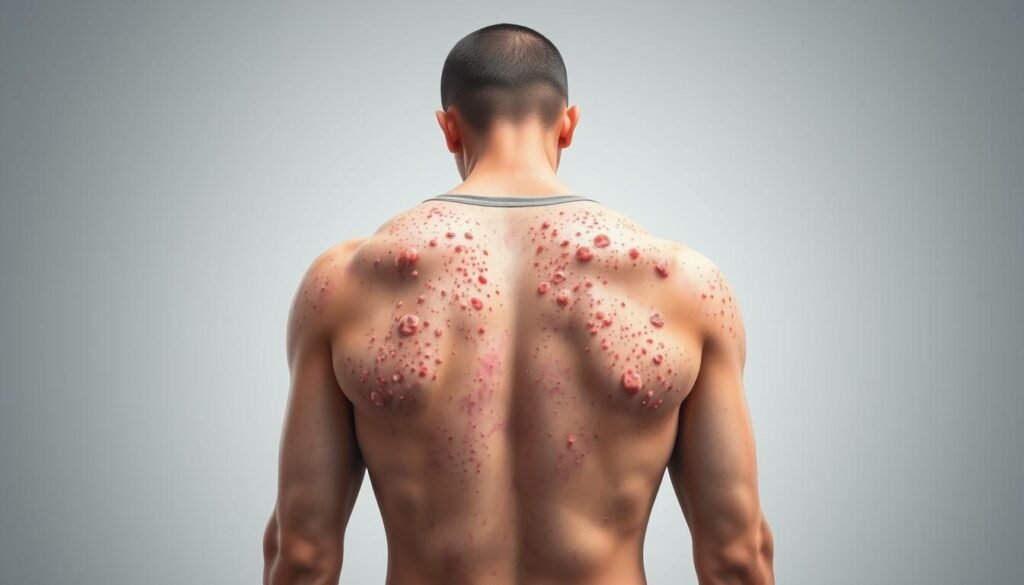
Spotting body acne symptoms needs careful watching. Back acne often goes unseen until it gets really bad. The thick skin on your back makes treatment tough, and it’s hard to keep these areas clean. Knowing the signs early helps you act before it gets worse.
Key Takeaways
- Body acne affects 60% of people with facial acne, appearing on chest, back, shoulders, neck, and buttocks
- Thicker skin on the back contains more oil glands, making it prone to severe breakouts
- Clogged pores from dead skin cells and oil create ideal conditions for bacterial growth
- Early identification of symptoms prevents acne from becoming severe and harder to treat
- Professional diagnosis from a board-certified dermatologist ensures accurate treatment
- Back acne often goes unnoticed due to location, requiring regular skin checks
Medical disclaimer: This content serves informational purposes only. Always consult a board-certified dermatologist for accurate diagnosis and personalized treatment recommendations.
Understanding Body Acne: An Introduction
Body acne is a common problem in the United States, causing breakouts beyond the face. It shows up on the upper body, where oil glands are most active. Knowing what causes these breakouts is key to better skin health.
What Is Body Acne?
Body acne happens when pores on your torso get blocked by dead skin and oil. This blockage lets Cutibacterium acnes bacteria grow, leading to inflammation and pimples. The chest and back are the most common places for this, but it can also occur on shoulders, neck, and upper arms.
Why It Occurs
Several things can lead to body acne. Your skin naturally produces oils, and some areas have more glands than others. The chest and back have a lot, making them prone to breakouts. Sweat, tight clothes, and hormonal changes also play a part in clogged pores and acne.
Common Misconceptions
Many think poor hygiene causes back acne, but it actually makes it worse. Overwashing removes protective oils. Another myth is that chocolate causes chest acne. While diet is important, no food directly causes breakouts. Body acne isn’t just for teens; adults get it too, due to stress, hormones, and the environment.
Recognizing the Symptoms
Learning to spot acne on your chest and back starts with knowing what to look for. Body acne comes in different forms, each with its own signs. Knowing these signs helps you treat chest and back acne right.
Types of Acne on the Body
Body acne shows up in several ways. Blackheads are small, dark spots from clogged pores. Whiteheads are small white bumps when pores close over. Papules are red bumps without a center, and pustules have pus with a white or yellow tip.
Visual Characteristics to Note
Each body part shows different patterns. Breakouts on the upper chest and neck often come from hair products or makeup. Lower neck and back acne can be caused by tight clothes or synthetic fabrics that trap sweat and bacteria.
How to Differentiate Between Types
Spotting the right acne type needs careful watching. Body acne is from clogged pores with oil and bacteria. Folliculitis looks similar but is from infected hair follicles. Heat rash causes tiny, itchy bumps that go away when you cool down.
| Condition | Appearance | Location | Key Features |
|---|---|---|---|
| Body Acne | Various sized bumps | Chest, back, shoulders | Persistent, may scar |
| Folliculitis | Small red bumps | Around hair follicles | Itchy, pus-filled |
| Heat Rash | Tiny clear bumps | Skin folds, chest | Disappears with cooling |
Common Causes of Chest and Back Acne
Understanding why you get acne on your chest and back is key to fighting it. Your body’s skin is different from your face. It has bigger pores and more oil glands, trapping bacteria and dead skin cells. Several things can lead to these tough breakouts on your torso.
Hormonal Changes
Your hormones are a big reason for chest and back acne. During puberty, your body makes more androgens, which increase oil in your skin. Women face special challenges with hormonal acne during their period, pregnancy, or when starting birth control pills like Yasmin or Ortho Tri-Cyclen.
These hormonal changes make your sebaceous glands work too hard. They produce too much oil, which mixes with dead skin cells and blocks pores. This is when Propionibacterium acnes bacteria grow and cause inflammation.
Sweat and Friction
Working out can make body acne worse. Sweat mixes with oil and bacteria on your skin. Tight clothes from brands like Nike or Lululemon can trap this mixture, blocking pores. Backpacks, sports equipment, and bra straps also cause friction, irritating your skin and making breakouts worse.
Skin Care Products
Your skincare routine might actually cause breakouts. Heavy moisturizers and body lotions with coconut oil or shea butter can clog pores. Even laundry detergent with fragrances and dyes can irritate sensitive skin and lead to chest and back acne.
Identifying Patterns in Body Acne
Understanding acne patterns helps you figure out what causes your breakouts. By tracking when and where acne shows up on your chest and back, you can find the right treatments. Your skin often follows patterns that show what’s causing the problems.
Trigger Identification
Breakouts often have a clear cause. New skincare products can clog pores quickly. Diet changes, like eating more sugar or dairy, can also lead to breakouts within a few days. Whey protein supplements are common culprits for gym-goers.
Too much of certain vitamins can also cause acne. High levels of vitamins B12, B2, and B6 can make your skin produce more oil. Medications like corticosteroids or lithium can have similar effects.
Seasonal Variations
Your skin changes with the seasons. Summer’s heat and humidity are perfect for bacteria. Winter’s dry air makes your skin produce more oil.
| Season | Common Triggers | Preventive Measures |
|---|---|---|
| Spring | Pollen, allergies | Gentle cleansing twice daily |
| Summer | Heat, sweat, sunscreen | Oil-free products, shower after sweating |
| Fall | Temperature changes | Moisturize regularly |
| Winter | Dry indoor air | Use humidifier, hydrating serums |
Lifestyle Factors
Your daily habits affect your skin. Wearing tight clothes traps sweat and causes breakouts. Not changing sheets regularly lets bacteria build up. Stress also makes your skin produce more oil.
How Body Acne Differs from Other Skin Conditions
It’s easy to get confused when you see bumps on your chest and back. Many think any red bump is acne, but it’s not always true. Knowing the differences is important for the right acne treatment for chest and back areas. Let’s look at the common conditions that look like body acne.
Folliculitis: A Common Confusion
Folliculitis happens when hair follicles get inflamed. This can be from bacteria, fungi, or irritation from tight clothes. Unlike body acne, which comes from clogged pores, folliculitis targets the hair follicle. Folliculitis bumps are usually the same size and have a white tip.
These bumps often itch more than acne and can spread fast. They can show up on your buttocks and thighs.
Heat Rash vs. Body Acne
Heat rash happens when sweat ducts get blocked. It shows up quickly after sweating and looks like tiny, clear blisters or red bumps. Body acne stays for weeks, but heat rash goes away in days when you cool down.
Differentiating skin conditions is easier when you see heat rash in skin folds. These are areas where clothes trap moisture.
Psoriasis and Its Symptoms
Psoriasis makes skin thick and scaly. The patches are red and feel rough. Body acne has single bumps, but psoriasis makes bigger patches.
Psoriasis often shows up on elbows, knees, and scalp. It rarely has pus-filled bumps like acne.
| Condition | Appearance | Location | Duration |
|---|---|---|---|
| Body Acne | Blackheads, whiteheads, cysts | Chest, back, shoulders | Weeks to months |
| Folliculitis | Small red bumps with white tips | Any hair-bearing area | Days to weeks |
| Heat Rash | Tiny clear or red bumps | Skin folds, covered areas | 2-3 days |
| Psoriasis | Silvery scales on red patches | Elbows, knees, scalp | Chronic condition |
When to Seek Professional Help
Many body acne cases can be treated at home. But, some situations need a dermatologist’s help. Knowing when to seek professional care can prevent scarring and improve results. Dermatologists often treat body acne, seeing it as a common issue.
Signs That Require Attention
Some signs mean it’s time to see a dermatologist. Look out for these:
- Deep, painful cysts that don’t heal after two weeks
- Dark spots or scarring from healed acne
- Widespread breakouts on your chest or back
- Acne not improving after three months of OTC treatments
- Feeling emotionally distressed or low about your skin
Importance of Accurate Diagnosis
What seems like acne might be something else. A dermatologist can tell you for sure. They can spot the difference between acne, folliculitis, fungal infections, or other skin issues. This helps avoid using treatments that won’t work.
Consulting a Dermatologist
Dermatologists create plans tailored to your skin. They know what works for you, not just anyone. They might use topical retinoids, oral meds, or in-office treatments. Regular check-ups help adjust your treatment as needed.
Effective Prevention Strategies
Preventing acne on your chest and back is easy with simple daily habits. Keeping your skin clean and healthy is key. Small changes can stop breakouts before they start. Let’s look at practical ways to protect your skin from irritation and clogged pores.
Daily Skin Care Routine
Shower habits are important for preventing chest and back acne. Clean off right after sweating. Bacteria and oils can clog pores quickly.
Use gentle, fragrance-free body washes like CeraVe or Cetaphil. They won’t harm your skin’s natural barrier.
Keep your hair back during workouts and while sleeping. Hair products can cause breakouts. Wash your pillowcases and sheets weekly with unscented detergents like All Free Clear. Avoid fabric softeners and dryer sheets—they can irritate sensitive skin.
Choosing the Right Clothing
Your clothes can affect your skin more than you think. Tight clothes trap sweat and bacteria. Wear loose-fitting cotton shirts and moisture-wicking fabrics from brands like Under Armour or Nike for workouts. These materials help your skin breathe and reduce friction.
Hydration and Diet Tips
Drink eight glasses of water daily to flush toxins and keep skin cells healthy. Limit dairy and sugary foods, as they can cause more acne. Choose omega-3 rich foods like salmon and walnuts to reduce inflammation naturally.
DIY Treatments for Body Acne
Dealing with stubborn breakouts doesn’t always mean expensive visits to the dermatologist. Many effective chest and back acne solutions are available at your local pharmacy or in your kitchen. The key is knowing which ingredients work best and how to use them safely for clearer skin.
Over-the-Counter Solutions
Pharmacy shelves have powerful home acne treatments that dermatologists often recommend. Look for body washes with salicylic acid or benzoyl peroxide. The SLMD Skincare Body Acne System combines these to fight bacteria and unclog pores. A glycolic acid body scrub used twice weekly helps remove dead skin cells that trap oil and cause breakouts.
For spot treatments, benzoyl peroxide creams work fast on individual pimples. Apply a thin layer directly to breakouts after cleansing. Switch from thick, oil-based moisturizers to lightweight, non-comedogenic lotions that won’t clog pores.
Home Remedies to Consider
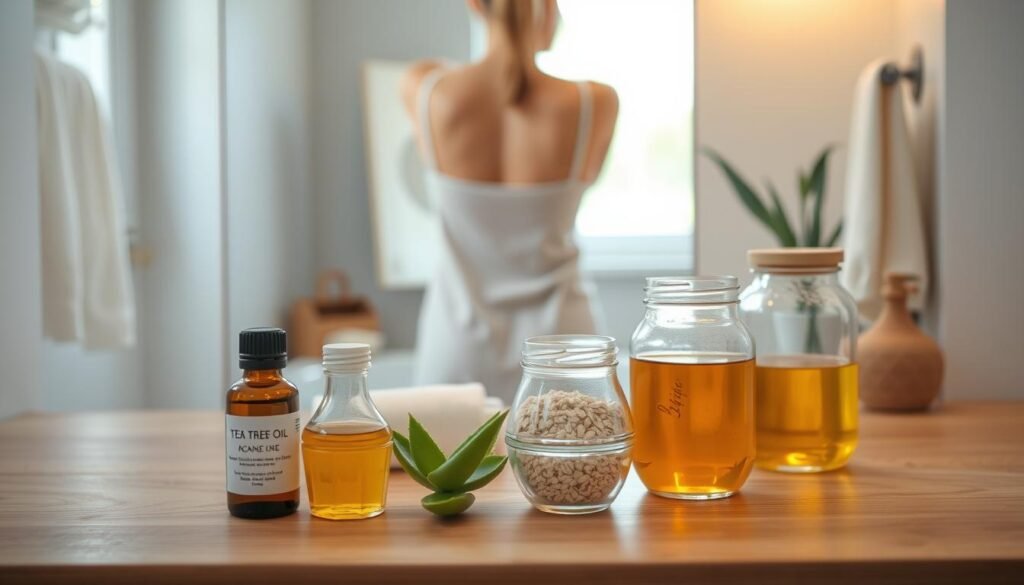
Simple home acne treatments can enhance your skincare routine. Tea tree oil diluted with water makes an effective antibacterial spray for problem areas. Apple cider vinegar mixed with equal parts water can help balance skin pH when used as a toner. Oatmeal baths soothe inflamed skin and reduce redness from existing breakouts.
Do’s and Don’ts of Treatment
Success with chest and back acne solutions depends on proper technique. Always apply antibacterial body soap after sweating or getting dirty. Pat skin dry gently instead of rubbing harshly with towels.
Never touch, pick, or pop pimples. Your hands carry oil and dirt that spread bacteria to healthy skin. Picking irritates delicate chest skin, which scars easily due to its thin texture. This habit worsens breakouts and leaves lasting marks that take months to fade.
Medical Treatments for Severe Cases
When home treatments don’t work, it’s time to see a dermatologist. They are experts in treating tough chest and back acne. They will look at your skin and make a plan just for you.
Prescription Medications
Doctors give different medicines for different types of acne. Oral antibiotics like doxycycline and minocycline fight bacteria and reduce swelling. Topical retinoids help skin cells turn over and prevent pores from clogging.
For acne caused by hormones, birth control pills or spironolactone can help control oil.
The Role of Professional Treatments
In-office treatments are strong and work fast. Chemical peels get rid of dead skin and clear pores. Professional extractions safely remove blackheads and whiteheads without scars.
Cortisone injections quickly shrink painful cysts in 24 to 48 hours.
Laser Therapy for Body Acne
Laser treatments kill bacteria and reduce oil glands. Blue light therapy kills Propionibacterium acnes bacteria right away. IPL (Intense Pulsed Light) reduces redness and makes skin smoother.
These treatments need several sessions but work well for chest and back acne.
| Treatment Type | Sessions Needed | Recovery Time |
|---|---|---|
| Blue Light Therapy | 8-12 sessions | No downtime |
| IPL Treatment | 4-6 sessions | 1-2 days |
| CO2 Laser | 1-3 sessions | 5-7 days |
Lifestyle Changes to Support Skin Health
Making smart lifestyle choices is key to controlling acne on chest and back. Small changes in your daily routine can greatly improve your skin. Managing stress, getting quality sleep, and more all contribute to healthier skin.
Stress Management Techniques
Stress makes your skin produce more oil, leading to clogged pores and breakouts. Try deep breathing exercises for five minutes each morning. Use apps like Headspace or Calm for yoga and meditation sessions that fit your schedule.
Journaling can also help process emotions and lower stress. This can reduce skin problems.
Exercise and Skin Health
Exercise boosts blood flow and clears toxins through sweat. But, tight workout clothes can trap moisture and cause acne. Wear loose cotton shirts instead of synthetic materials.
Shower within 30 minutes after working out to remove sweat and bacteria. Clean your yoga mat and gym equipment before use. Wash workout clothes after each session, including sports bras that sit tight against your chest.
How Sleep Affects Your Skin
Your skin repairs itself during sleep. Not getting enough sleep can disrupt this process and increase inflammation. *Poor sleep quality* also raises stress hormones that can cause breakouts.
Create a bedtime routine that starts an hour before sleep. Keep your bedroom cool and dark. Change pillowcases twice weekly to prevent bacteria buildup that can transfer to your chest and back while sleeping.
Maintaining Clear Skin Long-Term
Keeping your skin clear needs dedication and smart changes over time. Chest and back acne don’t happen overnight. It takes consistent effort to keep your skin healthy.
Building lasting habits is key to managing acne well.
Skincare Routine Checkpoints
Regular baths with gentle cleansers like CeraVe or Cetaphil keep pores clean. *Consistency matters* — keep up with your routine even when your skin looks good. Use products with salicylic acid or benzoyl peroxide for tough chest acne.
- Wash workout clothes after each gym session
- Change bed sheets weekly
- Use non-comedogenic moisturizers like Neutrogena Hydro Boost
- Clean phone screens and headphones daily
Regular Dermatologist Visits
See a dermatologist every 3-6 months for the best back acne control. They track your progress and adjust treatments as needed. They can also prescribe stronger meds if needed.
Adjusting Your Routine with Change
Your skin’s needs change with seasons, age, and lifestyle. Summer might need lighter products for chest acne. Winter needs richer moisturizers that won’t clog pores.
Keep track of what works in a journal. Note any breakout patterns to find triggers. Try new products slowly, one every two weeks. This makes managing acne long-term more predictable and successful.
Frequently Asked Questions about Body Acne
Body acne is a common issue for many, causing breakouts on the chest and back. Knowing what causes it helps you choose better skin care. Here, we’ll look at two main questions people have about body acne.
Can Diet Affect Body Acne?
Your diet has a big impact on body acne. Some foods can make breakouts worse. Skim milk and whey protein are often to blame because they raise hormone levels.
High glycemic foods like white bread and sugary drinks also play a role. They cause blood sugar spikes, leading to inflammation and more oil. Cutting out these foods can lead to clearer skin in just weeks. Simple changes, like choosing whole grains, can help reduce acne.
Is Body Acne Genetic?
Genetics do play a part in body acne, but they’re not everything. If your parents had acne-prone skin, you might be more likely to get it too. But, your skin type and daily habits also matter.
Each part of your body has different oil glands, which is why some people get acne on their back but not chest. You can change your skin care routine, what you wear, and your lifestyle to fight body acne, even if you’re genetically predisposed.