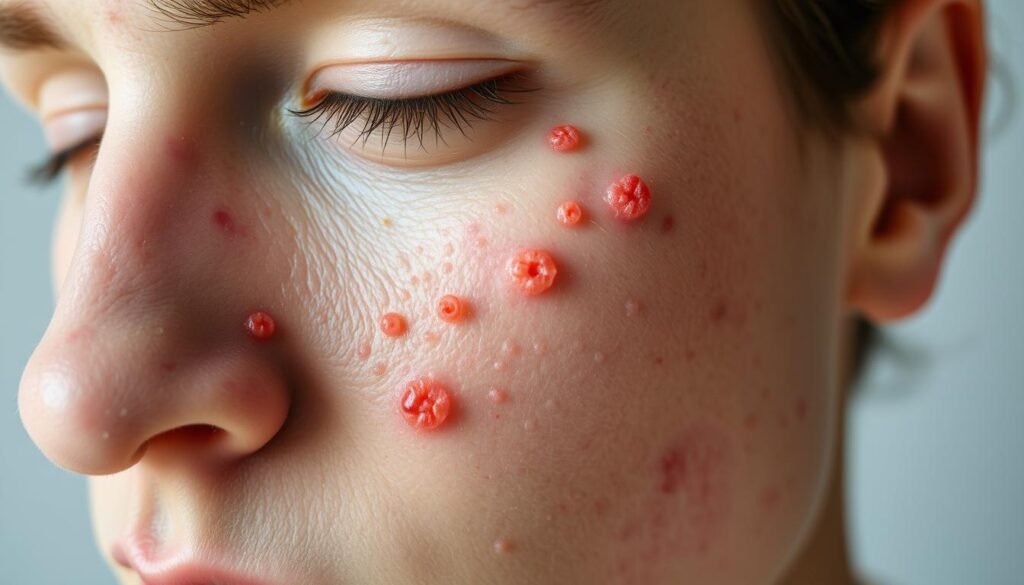
Did you know up to 56% of people with acne actually have a fungal infection? This means millions of Americans might be using the wrong treatments. They’re not helping their skin heal.
Many people face months of stubborn breakouts. They try popular treatments like Proactiv or Neutrogena but see no change. The problem is, when your acne is fungal, these common treatments won’t work. Fungal infections need special treatments to clear up.
Knowing how to spot fungal acne symptoms can save you a lot of trouble. These bumps are small, uniform, and often itch more than regular pimples. They usually pop up on your forehead, chest, and back, where sweat and oil get trapped.
Figuring out if your acne is fungal or bacterial is key to the right treatment. Bacterial acne does well with benzoyl peroxide and salicylic acid. But fungal infections need antifungal ingredients like ketoconazole or zinc pyrithione.
Key Takeaways
- Fungal acne appears as small, uniform bumps that often itch
- Traditional acne treatments won’t clear fungal infections
- Fungal breakouts commonly appear on the forehead, chest, and back
- Antifungal medications are needed to treat fungal acne effectively
- Professional diagnosis helps distinguish between bacterial and fungal causes
- Humid environments and tight clothing can trigger fungal breakouts
Understanding the Basics of Fungal Acne
Many people face stubborn bumps on their skin, not knowing it’s fungal acne. This condition happens when yeast grows too much on your skin. Knowing about it and what causes it helps in treating it right.
What Is Fungal Acne?
Fungal acne is caused by Malassezia yeast growing too much in hair follicles. This yeast is normal on everyone’s skin and usually doesn’t cause issues. But, when the skin’s balance is disrupted, the yeast can grow fast and cause infection, looking like acne.
Fungal acne is different from regular pimples. It shows up as small, uniform bumps that itch. These bumps often appear on the chest, back, and shoulders, where oil glands are most active.
Common Causes of Fungal Acne
Several things can lead to fungal acne:
- Hot and humid environments that create perfect conditions for yeast growth
- Antibiotics that kill helpful bacteria and let yeast take over
- Tight workout clothes that trap sweat and moisture against skin
- Oily skin that provides extra food for yeast
- Weakened immune systems from conditions like diabetes
- Damage to hair follicles from shaving or waxing
Teenagers, males in particular, are at higher risk due to more oil production. People on steroids or with autoimmune conditions like celiac disease may also see more outbreaks.
Recognizing the Symptoms of Fungal Acne
Spotting fungal acne early makes treatment easier and more effective. This condition shows up differently than regular breakouts. Knowing these signs helps you find the best way to clear your skin.
Key Signs to Look For
Fungal acne shows up as clusters of small, uniform bumps. These tiny red or pink spots often form patterns like a rash. They usually pop up in places where sweat gathers:
- Upper back and shoulders
- Chest area
- Forehead and hairline
- Neck and chin regions
One key sign is intense itching or burning. Regular acne doesn’t itch much. The bumps might have red rings and small amounts of pus, looking like whiteheads.
Distinguishing Between Fungal and Bacterial Acne
Bacterial acne looks different, with blackheads, large cysts, and various pustule sizes. Fungal breakouts are the same size and shape. Painful, burning bumps in sweaty spots usually mean fungal acne.
To treat fungal acne, you first need to identify it. While bacterial acne needs common acne meds, fungal infections need antifungal treatments. If your breakouts itch a lot and are all the same size, you likely have fungal acne that needs special care.
Fungal Acne vs. Other Skin Conditions
Knowing the difference between fungal acne and other skin issues is key to picking the right treatment. Many skin problems look alike but need different solutions. This saves time and avoids the frustration of using the wrong treatments.
Comparison with Traditional Acne
Fungal acne and regular acne share some traits but are different. Regular acne is caused by Cutibacterium acnes bacteria, while fungal acne is due to yeast. The way they look and how they react to treatment also differs.
| Feature | Fungal Acne | Traditional Acne |
|---|---|---|
| Cause | Malassezia yeast | Bacteria and clogged pores |
| Appearance | Uniform small bumps | Mixed sizes of pimples |
| Itchiness | Often itchy | Rarely itchy |
| Location | Chest, back, shoulders | Face, neck, back |
| Treatment Response | Antifungal products | Benzoyl peroxide, salicylic acid |
Identifying Other Similar Conditions
Several types of folliculitis can look like fungal acne. Bacterial folliculitis from Staphylococcus aureus causes red, pus-filled bumps. Hot tub folliculitis happens after exposure to contaminated water. Razor bumps come from ingrown hairs after shaving.
It’s common to have more than one condition at once. You might have both fungal and bacterial acne, needing different treatments. Correctly identifying your condition ensures the right treatment and faster recovery.
How to Diagnose Fungal Acne
Getting the right diagnosis is key when dealing with persistent breakouts. These might show your acne is fungal. Many try to figure it out themselves, but it’s important to know the difference. This requires careful observation and sometimes professional help.
Importance of Professional Evaluation
A dermatologist can tell if your acne is fungal with special tools. They’ll look at your medical history and examine your skin under special light. The Wood’s lamp shows Malassezia yeast colonies glowing yellow-green under ultraviolet light.
Your doctor might take skin scrapings for microscopic analysis. Or they might do a skin biopsy with special staining to find yeast cells.
Self-Assessment Tips
Before seeing a dermatologist, you can check for fungal acne symptoms at home. Look for these signs that suggest your breakouts might be fungal:
- Your acne doesn’t get better with benzoyl peroxide or salicylic acid
- Breakouts mainly happen on your chest, back, and shoulders
- The bumps are all the same size and appear in groups
- You feel itchy with your breakouts
- Flare-ups happen after sweating or in humid weather
| Assessment Method | What to Look For | Reliability |
|---|---|---|
| Visual Inspection | Small, uniform bumps in clusters | Moderate |
| Treatment Response | No improvement with antibacterial products | High |
| Location Pattern | Concentration in sweat-prone areas | Moderate |
| Symptom Tracking | Itching and irritation present | High |
Common Treatments for Fungal Acne
Finding the right treatment for fungal acne is different from regular pimples. It’s because fungal acne comes from yeast, not bacteria. Luckily, there are many treatments available, from over-the-counter options to prescription drugs.
Over-the-Counter Options
Many effective treatments don’t need a doctor’s prescription. Antifungal shampoos can be used as body washes. Selsun Blue, for example, has selenium sulfide to fight yeast. Head & Shoulders and other dandruff shampoos also work well.
Apply these products to the affected areas, let them sit for five minutes, then rinse well.
Tea tree oil is a natural antifungal. Mix a few drops with jojoba or coconut oil to avoid skin irritation. Some people see improvements in two weeks with regular use.
Prescription Treatments and Topical Solutions
For tough cases, you might need stronger treatments. Dermatologists often prescribe topical antifungals like ketoconazole cream or clotrimazole. These go deep into hair follicles where yeast grows.
Oral antifungals like fluconazole or itraconazole work from the inside. Doctors use these for severe cases, but they can upset your stomach or affect your liver. Photodynamic therapy is another option, using special medication and light to kill yeast.
Lifestyle Factors That Affect Fungal Acne
Your daily habits are key in managing fungal acne. Making simple changes can help control yeast growth on your skin. To treat fungal acne, know which lifestyle factors cause or prevent outbreaks.
Diet and Nutrition Considerations
What you eat affects your skin’s fight against yeast. Foods with lots of sugar and refined carbs feed yeast. Drinking beer and wine also makes symptoms worse by growing yeast in your body.
Start treating fungal acne in the kitchen. Eat whole foods, lean proteins, and veggies. Foods like yogurt and kimchi boost your skin’s balance. Avoid sugary snacks and processed foods to help your immune system fight yeast.

The Role of Stress in Skin Health
Stress weakens your immune system, making it harder to fight yeast. When stressed, your skin is more open to fungal acne. Manage stress with enough sleep to support your skin’s defenses.
Exercise helps reduce stress but shower right after. Sweat is perfect for yeast growth. Wear breathable clothes and change quickly to stop yeast on your skin.
Prevention Tips to Avoid Fungal Acne
Preventing fungal acne starts with knowing what causes it. Making smart choices in your daily routine is key. Small changes in skincare and clothing can make a big difference. The right strategies help control yeast growth and keep your skin healthy.
Best Practices for Skincare
Your skincare routine is vital in preventing fungal acne. Choose products that don’t feed yeast on your skin. Oil-free moisturizers and cleansers are best because heavy oils can trap moisture and help yeast grow.
Remember these skincare tips:
- Wash your face twice daily with a gentle cleanser
- Apply selenium sulfide shampoo to affected areas once a week
- Pat skin dry instead of rubbing after cleansing
- Take breaks from shaving or waxing if you notice irritation
- Use warm compresses for pain relief when needed
Clothing Choices and Their Impact
What you wear affects your skin’s health. Tight clothing traps heat and moisture, perfect for fungal acne. Choose breathable fabrics like cotton that let air circulate.
| Clothing Type | Good Choice | Poor Choice |
|---|---|---|
| Workout Gear | Moisture-wicking polyester | 100% cotton t-shirts |
| Daily Wear | Loose cotton blends | Tight synthetic fabrics |
| Swimwear | Quick-dry materials | Thick, slow-drying suits |
Change out of sweaty clothes right after working out. Wash workout gear and swimsuits between uses to stop bacteria and yeast buildup. These simple steps can protect your skin without costing a thing.
When to Seek Professional Help
Many cases of fungal acne can be treated at home. But, some need a doctor’s help. Knowing when to see a dermatologist is key to quick healing.
Warning Signs that Require Medical Attention
See a dermatologist if your acne doesn’t get better after three weeks of trying home remedies. Look out for these important signs:
- Rapid spreading of the rash to new areas
- Intense itching that disrupts daily activities
- Development of fever or chills
- Signs of secondary bacterial infection like pus or swelling
- Severe pain around affected areas
People with weak immune systems should see a doctor fast if they get fungal acne. This includes those with diabetes, HIV/AIDS, or on immunosuppressants.
Finding a Qualified Dermatologist
Begin by asking your primary care doctor for a dermatologist referral. The American Academy of Dermatology has an online directory to find specialists. Many dermatologists now offer online consultations for first visits.
| Search Method | Benefits | Average Wait Time |
|---|---|---|
| Primary Care Referral | Insurance coverage likely | 1-2 weeks |
| AAD Directory | Verified credentials | 2-3 weeks |
| Telemedicine Platforms | Quick access | 24-48 hours |
A good dermatologist can do tests to confirm the infection and give the right treatment. Getting help early stops problems and helps you heal faster.
Misconceptions About Fungal Acne
Many people struggle with breakouts because they don’t understand what causes them. When acne is fungal, common treatments often fail or make things worse. Learning the truth can save you time, money, and frustration in your skincare journey.
Debunking Common Myths
One common myth is that all acne treatments work the same. Products with benzoyl peroxide or salicylic acid fight bacterial acne but not fungal infections. Antibiotics can even make things worse by upsetting your skin’s natural balance, letting yeast grow.

Another myth is that fungal acne only hits oily skin or teens. Anyone can get it, no matter their age, skin type, or lifestyle. Athletes, office workers, and people of all ages can get fungal breakouts when yeast thrives.
Understanding Misdiagnoses
Misdiagnosis is common because many skin conditions look alike. Not every itchy breakout is fungal acne. Conditions like rosacea, perioral dermatitis, and allergic reactions can look similar.
Many people try the wrong treatments for months before getting the right diagnosis. This is why some never find relief, even with products called the best fungal acne products. Getting a professional evaluation is key for accurate diagnosis and effective treatment.
Conclusion: Taking Control of Your Skin Health
Getting the right diagnosis is just the start of your journey to clear skin. Treating fungal acne takes patience and consistency. Your skin needs time to heal and respond to treatment.
The key is sticking to your prescribed antifungal medications. Also, create a routine that prevents future breakouts.
Next Steps After Diagnosis
Once you know you’re dealing with fungal acne, follow your dermatologist’s treatment plan exactly. Use products like Nizoral shampoo or prescribed antifungal creams regularly. They need consistent application to work well.
Understanding fungal acne causes helps you avoid triggers. These include excessive sweating, humid environments, and tight synthetic clothing. Keep a diary to track what makes your skin better or worse.
Building a Skincare Routine That Works
Create a simple routine using gentle, oil-free products. These won’t feed the yeast on your skin. Brands like CeraVe and La Roche-Posay offer non-comedogenic options that work well with antifungal treatments.
Continue using antifungal body washes like Head & Shoulders or Selsun Blue even after your skin clears. This helps prevent recurrence. If your fungal acne keeps coming back, work with your dermatologist to adjust your treatment.
Sometimes, fungal and bacterial acne appear together. In these cases, a combination approach is needed for the best results.