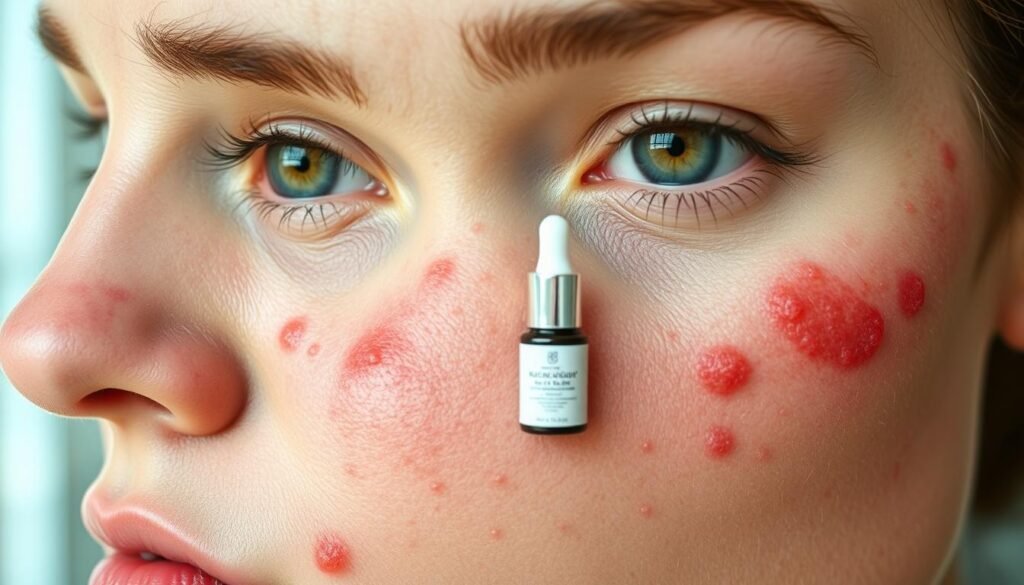
Over 50 million Americans deal with acne each year. But, up to 30% of these cases come from skincare products. This is surprising, as these products aim to improve skin health.
It’s not always easy to spot acne caused by skincare. Your favorite moisturizer or a new serum could be causing breakouts. Knowing the signs can make it easier to recognize.
Skincare products that cause breakouts often have unique patterns. While your skin might react to new products at first, lasting breakouts mean something’s wrong. Dr. Deanne Mraz Robinson explains that true purging happens when ingredients speed up skin renewal, bringing out trapped oil and debris in a few weeks.
The American Academy of Dermatology Association recommends a simple way to avoid bad reactions. Try new products on a small area for about a week. This can prevent widespread breakouts by identifying problem ingredients early.
Knowing the difference between normal skin adjustment and acne caused by products is key. Ignoring these signs can lead to scarring, hyperpigmentation, and long-term skin problems. These issues can take months to fix.
Key Takeaways
- Up to 30% of acne cases result from skincare products, not natural skin conditions
- Product-induced acne has specific patterns, unlike hormonal or bacterial breakouts
- Skin purging from active ingredients usually clears up in 4-6 weeks
- Patch testing new products for 7-10 days can prevent widespread breakouts
- Recognizing problem ingredients early prevents long-term skin damage and scarring
- Board-certified dermatologists can help tell apart different acne causes
Understanding Acne: The Basics
Before we explore how products can cause breakouts, let’s understand what acne is and why it happens. Knowing the different types of acne and what causes them can help you figure out if your skincare routine is to blame for those pesky blemishes.
What is Acne?
Acne is a common skin issue that happens when hair follicles get blocked by oil and dead skin. This blockage creates a perfect spot for bacteria to grow, causing inflammation and blemishes. Acne isn’t just for teens; it can hit anyone, even adults, if they use products with comedogenic ingredients.
Types of Acne
Not all pimples are the same. Knowing the different types helps you pick the right treatment:
- Whiteheads: Closed pores clogged with oil and dead skin
- Blackheads: Open pores filled with oxidized debris
- Papules: Small, red, tender bumps without visible pus
- Pustules: Inflamed bumps with white or yellow centers
- Cysts: Deep, painful lumps beneath the skin surface
- Microcomedones: Invisible pre-pimples that can develop into visible acne
Common Causes
Several things can lead to acne. Too much oil, hormonal changes, and bacteria growth are big culprits. Products with comedogenic ingredients, like certain oils and heavy moisturizers, can clog pores. Retinoids, exfoliating acids, and chemical peels might make things worse at first by pushing existing clogs to the surface.
How Skincare Products Can Trigger Acne
Many people get breakouts from new skincare products. This is called cosmetic acne. It happens when certain ingredients in products irritate the skin or block pores. Knowing which ingredients might be causing problems helps you choose better products for clear skin.
Ingredients to Watch For
Some skincare ingredients can cause breakouts or irritation. The retinoid family, like retinol and tretinoin, can cause initial reactions. Exfoliating acids, such as salicylic acid and glycolic acid, can lead to temporary purging.
Products with sulfates, heavy oils, and certain preservatives can cause bumps that look like acne. But they are actually contact dermatitis.
Comedogenic vs. Non-Comedogenic
Products labeled non-comedogenic are made to avoid clogging pores. The comedogenic scale rates ingredients from 0 to 5. Coconut oil is a 4, while argan oil is a 0.
Choosing products with low comedogenic ratings can lower your risk of cosmetic acne.
| Ingredient | Comedogenic Rating | Risk Level |
|---|---|---|
| Coconut Oil | 4 | High |
| Shea Butter | 2 | Low-Moderate |
| Argan Oil | 0 | Very Low |
| Jojoba Oil | 2 | Low-Moderate |
The Role of Fragrances and Dyes
Artificial fragrances and synthetic dyes often cause skin irritation. They don’t help with skincare and can trigger allergic reactions or inflammation. Choosing fragrance-free products can help avoid unexpected breakouts and redness, which is good for sensitive skin.
Identifying Patterns in Your Acne
Tracking your breakout patterns can help figure out if your skincare routine is causing acne. By noting when, where, and how pimples show up, you can tell if it’s a product issue or just your skin’s natural cycle. Keeping a simple diary or taking photos can help document changes after trying new products.
Timing: When It Occurs
The timing of when breakouts happen is key to spotting product-induced acne. Breakouts that pop up within 24-72 hours after using a product usually mean an immediate reaction. Regular acne takes longer to form and heal, around 8-10 days.
Product-related breakouts show up faster and tend to cluster around when you apply products. If pimples always appear after your morning or evening routine, it’s a sign your products might be the problem.
Location on the Face and Body
Where you apply skincare items can lead to specific breakout patterns. Acne in only treated areas often means a product issue. Common trouble spots include the T-zone for moisturizers, jawline for cleansers, and cheeks for foundation or blush.
| Application Area | Common Reactive Products | Typical Breakout Pattern |
|---|---|---|
| Forehead | Hair products, sunscreen | Small bumps along hairline |
| Cheeks | Foundation, blush | Scattered whiteheads |
| Chin/Jawline | Heavy creams, cleansers | Deep cystic bumps |
Severity and Type
Product-induced acne looks different from natural breakouts. Purging causes small, uniform bumps that clear in 4-6 weeks. True reactions, on the other hand, lead to angry, inflamed pimples that get worse with time.
Surface-level whiteheads often mean clogged pores, while deep, painful cysts suggest severe irritation. If you see these, stop using the product right away.
Symptoms of Product-Induced Acne
When skincare products cause breakouts, your skin gives clear signs. Product-induced pimples look different from regular ones. It’s important to know these signs to avoid more problems.
Your skin might get irritated right after using a new product. Or, issues could show up slowly over days or weeks.
Redness and Inflammation
Signs of skin inflammation from bad products start with redness. This redness feels warm and looks unlike a typical pimple. Your face might feel tight, burn, or sting when you touch it.
Some people notice their skin gets flaky or peels, mainly around the nose and chin.
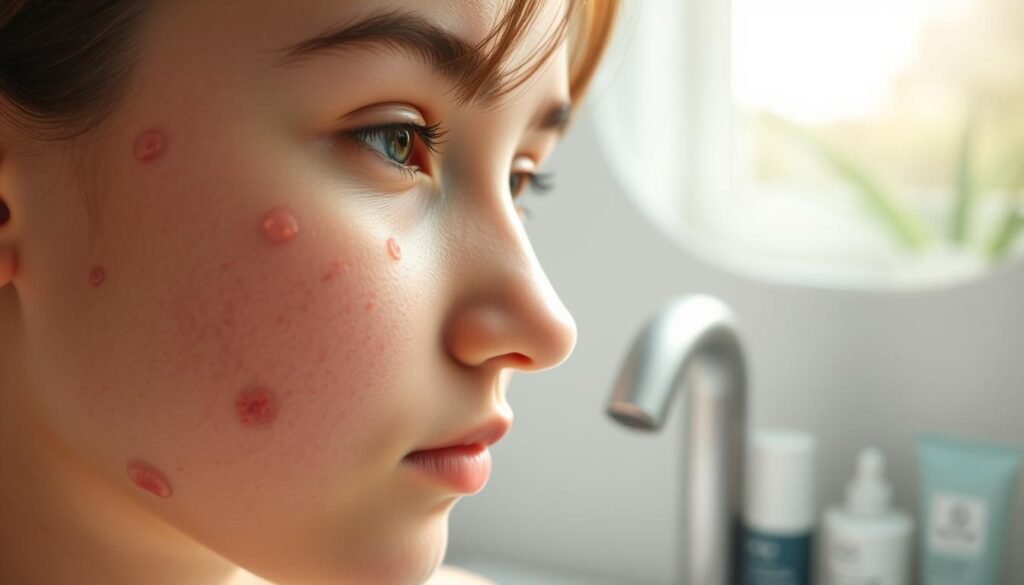
Cystic vs. Surface Bumps
Product reactions cause different kinds of breakouts. Surface-level whiteheads and small red bumps show up first. These bumps feel rough when you touch them.
Deep cystic acne is painful and creates hard lumps under the skin. These cysts take weeks to heal and can leave dark marks or scars.
Persistent Breakouts
Product-induced pimples don’t heal like regular pimples. They keep coming back in the same spots. New bumps appear every day, even as old ones heal.
Your usual treatments don’t work anymore. If breakouts get worse after three weeks, or if your skin cracks and feels raw, stop using it right away.
Differentiating Product-Related Acne from Other Conditions
When you see new bumps or irritation on your face, it’s key to know what’s causing it. Breakouts from products have signs that are different from other skin problems. Knowing these differences helps you figure out if you need to change your skincare or if it’s something else.
Distinguishing From Hormonal Acne
Hormonal acne usually shows up on the jawline and chin, often during your period. But, if you get bumps where you apply products, it’s likely a reaction to something you’re using. For example, if you get bumps on your cheeks or forehead after trying a new moisturizer, it’s probably a product issue, not hormones.
Also, timing is important. Hormonal breakouts follow a pattern, while product reactions happen quickly, within days or weeks of using something new.
Acne vs. Folliculitis
Folliculitis makes small red bumps around hair follicles, which might look like acne. These bumps can itch or burn, unlike regular acne. Product-related acne looks like whiteheads or blackheads, while folliculitis has tiny, uniform pustules. Folliculitis often happens in areas with thick hair, after using heavy creams or oils.
Contact Dermatitis Confusion
It’s important to know the difference between contact dermatitis and acne to avoid mistakes. Contact dermatitis causes red, scaly patches that burn. Acne has clear centers and doesn’t spread as much. Contact dermatitis spreads beyond where you applied it, causing widespread inflammation. True acne stays in oil-producing areas.
Look out for swelling and intense itching. These signs mean you’re having an allergic reaction and need to stop using the product right away.
Signs That Should Not Be Ignored
Your skin talks to you when something’s off. Beauty products clogging pores can lead to more than just acne. Spotting warning signs early can prevent serious skin damage. Some reactions need quick action, while others call for expert help.
Persistent Acne Despite Skincare Changes
If acne doesn’t clear up after six weeks of new products, your skin needs a break. This time lets your skin adjust to new routines. If acne persists, it might be a sign of deeper issues. A dermatologist can help figure out the best course of action.
Signs of Infection
Infected acne needs fast attention. Look out for these signs of bacterial invasion:
- Yellow or green pus in breakouts
- Increased pain and swelling
- Red streaks spreading from pimples
- Fever or feeling unwell
- Breakouts that feel hot to touch
Unusual Skin Reactions
Severe skin reactions mean stop using products right away. Never ignore burning sensations, cracking skin, or raw texture. These signs point to allergic reactions or chemical burns, not just acne.
| Reaction Type | Symptoms | Action Required |
|---|---|---|
| Mild Irritation | Slight redness, tingling | Monitor for 24-48 hours |
| Moderate Reaction | Multiple painful spots, persistent burning | Stop product use immediately |
| Emergency Signs | Facial swelling, difficulty breathing, hives | Call 911 or visit emergency room |
Evaluating Your Current Skincare Routine
Controlling your skin starts with knowing what you apply to it. If you’re dealing with breakouts, look at your skincare ingredients. The American Academy of Dermatology Association offers steps to find out which products are causing the problem.
Assessing Ingredients in Products
Begin by making a list of all your skincare products. Look for ingredients like retinoids, alpha hydroxy acids, and sulfates. These can irritate sensitive skin and cause breakouts. Use a simple system to track which products you use and when you get breakouts.
How to Patch Test
Patch testing is a safe way to avoid big reactions. Apply a small amount of product to your inner forearm or behind your ear. Wait 7-10 days before using it on your face. Watch for signs like redness, bumps, or itching at the test site.
| Test Area | Application Amount | Wait Period | Signs to Watch |
|---|---|---|---|
| Inner Forearm | Quarter-sized | 7-10 days | Redness, Itching |
| Behind Ear | Pea-sized | 7-10 days | Bumps, Swelling |
| Jawline | Dime-sized | 5-7 days | Breakouts, Dryness |
When to Reconsider a Product
If breakouts get worse after two weeks, stop using the product. Also, if you have immediate reactions like burning or hives, stop right away. Keep your routine simple while testing new products: use a gentle cleanser, basic moisturizer, and SPF 30 sunscreen.
Recommendations for Switching Products
When your skincare routine causes breakouts, switching products wisely can help. Making big changes too fast can upset your skin and make acne worse. It’s better to slowly replace products with comedogenic ingredients with gentler ones. This lets your skin adjust and heal.
Gradual Introductions
The “ease in” method helps avoid irritation when changing products. Start with retinoids twice a week in the first week. Then, increase to three times a week in the second week. Slowly move to daily use.
For exfoliating acids like glycolic or lactic acid, start with weekly use. Never use them more than three times a week. Chemical peels should be used no more than once a month.
If your skin gets red or irritated, cut back on how often you use these products. Try lower-strength formulas or add soothing moisturizers for sensitive skin. This gradual method helps your skin adjust while dealing with acne.

Suggested Alternatives
| Replace This | With This Alternative | Benefits |
|---|---|---|
| Coconut Oil | Jojoba Oil | Mimics natural sebum, won’t clog pores |
| Heavy Cream Moisturizers | Gel-Based Hydrators | Lightweight, absorbs quickly |
| Alcohol-Based Toners | Witch Hazel or Rose Water | Calms inflammation naturally |
| Physical Scrubs | BHA/AHA Solutions | Gentle chemical exfoliation |
Importance of Pure Ingredients
Choosing products with fewer ingredients can lower the chance of reactions. Opt for products with known good ingredients like niacinamide, zinc, or tea tree oil. These alternatives are gentle and won’t overwhelm your skin. Stay away from products with lots of synthetic fragrances, dyes, or preservatives, as they can cause inflammation.
When to Consult a Dermatologist
Persistent skin problems can be frustrating and confusing. While many minor breakouts resolve with proper skincare adjustments, some situations need professional help. Knowing when to seek help can prevent long-term skin damage and help you get clearer skin faster.
Signs That You Need Professional Help
Several signs suggest it’s time to see a dermatologist. If your breakouts last more than six weeks, despite changing products, you need expert advice. Look out for severe skin irritation from products that causes redness, burning, or peeling.
Deep, painful cysts that leave scars also need medical attention. Mental health impacts are important too. If acne affects your self-esteem or social life, professionals can offer both medical and emotional support.
Unusual symptoms like fever, spreading rashes, or yellow discharge signal possible infections needing immediate care.
What to Expect During Your Appointment
Your dermatologist will examine your skin under bright light and may use magnification tools. They’ll ask about your current routine, diet, and stress levels. Bring a list of all products you use, including makeup and supplements.
The doctor might recommend patch testing for allergies or prescribe treatments like tretinoin or antibiotics.
Importance of Ongoing Skin Evaluation
Regular check-ups help track progress and adjust treatments. Board-certified dermatologists can tell the difference between product reactions and conditions like rosacea or perioral dermatitis. They monitor prescription medications for side effects and effectiveness.
Professional treatments like HydraFacial might complement your home routine, though timing matters when skin is sensitive.
Aftercare for Acne-Prone Skin
After getting cosmetic acne, your skin needs gentle care and patience. It must heal from product breakouts. A good aftercare routine helps your skin get back to normal faster.
Use the right products and follow soothing techniques to avoid irritation. This way, you can prevent more breakouts.
Tips for Soothing Irritation
Don’t touch, pick, or scrub your skin when it’s irritated. These actions can make things worse. Instead, use a cool compress for five minutes to reduce redness.
Pat your face dry with a soft towel, not by rubbing. This helps avoid more irritation.
Use fragrance-free, alcohol-free toners like Thayers Witch Hazel or La Roche-Posay Thermal Spring Water. These products help reduce inflammation without causing more irritation. Apply a lightweight, calming moisturizer with ceramides or centella asiatica twice a day.
Recommended Non-Comedogenic Products
Choose non-comedogenic products to avoid clogging pores while your skin heals. These products are made to not cause cosmetic acne:
| Product Type | Recommended Brand | Key Ingredient |
|---|---|---|
| Cleanser | CeraVe Foaming Cleanser | Niacinamide |
| Moisturizer | Neutrogena Hydro Boost | Hyaluronic Acid |
| Sunscreen | EltaMD UV Clear SPF 46 | Zinc Oxide |
Daily Habits for Better Skin
Simple daily habits help your skin recover. Change pillowcases every three days to stop bacteria buildup. Clean makeup brushes weekly with gentle soap. Keep your hands away from your face all day.
Remember that healing takes time. Most acne treatments need 6-12 weeks to work. Stick to your routine and track your progress with weekly photos. Always use sunscreen during the day if you’re using retinoids or acids to protect your skin.
The Importance of Hydration and Nutrition
Your skin needs care from the inside and outside to stay healthy. When you have acne, drinking enough water is key. What you eat and drink affects your skin’s health and balance.
Hydrating Ingredients to Look For
Choosing the right ingredients can help with acne. Look for hyaluronic acid in your products. It brings moisture into your skin without clogging pores.
Glycerin does the same thing, drawing moisture from the air. Ceramides help keep your skin’s barrier strong, stopping water loss and irritation.
Niacinamide is great for acne-prone skin. It reduces inflammation and keeps your skin moist. Aloe vera gel is also good, providing hydration without feeling heavy.
Diet Choices That Support Clear Skin
What you eat affects your skin. Eat foods rich in omega-3s like salmon and walnuts. These reduce inflammation in your body, including your skin.
Also, eat lots of fruits and veggies. They have antioxidants that help repair your skin. Avoid dairy and foods with lots of sugar, as they can cause acne. Drink at least eight glasses of water a day to keep your skin healthy.
Lifestyle Changes for Acne Management
Small changes in your life can improve your skin. Wash your face twice a day with a gentle cleanser. Use a light, oil-free moisturizer, even if your skin feels oily.
Always wear broad-spectrum SPF 30 sunscreen in the morning. Getting enough sleep is also important. Your skin repairs itself while you sleep.
Try to manage stress through exercise, meditation, or yoga. Stress can make acne worse.
Summary and Conclusion
Understanding acne caused by skincare is key. It’s important to notice patterns and timing. Product-induced pimples are different from regular breakouts.
They show up soon after starting a new product. They often appear where you apply it. These pimples usually heal faster than regular acne, taking about 8 to 10 days.
Knowing these differences helps spot when products might be the issue.
Key Takeaways
Your skin needs time to adjust to new products. It takes about 28 days for a full skin cycle. Purging effects are usually worst during this time.
Everyone’s timeline is different, but being patient is important. After adjusting, many see clearer, healthier skin. Look for signs like breakouts in new areas or reactions right after applying products.
These signs indicate when to stop using a product that doesn’t work for you.
Emphasizing Skin Health
Knowing when to seek help is important for skin health. If breakouts persist or worsen, see a dermatologist. They can tell if it’s product-induced pimples or another issue.
Healthy skin is more than avoiding acne from skincare. It’s about finding the right balance of products, nutrition, and habits for your skin type. Your skin’s health depends on making informed choices and listening to it.