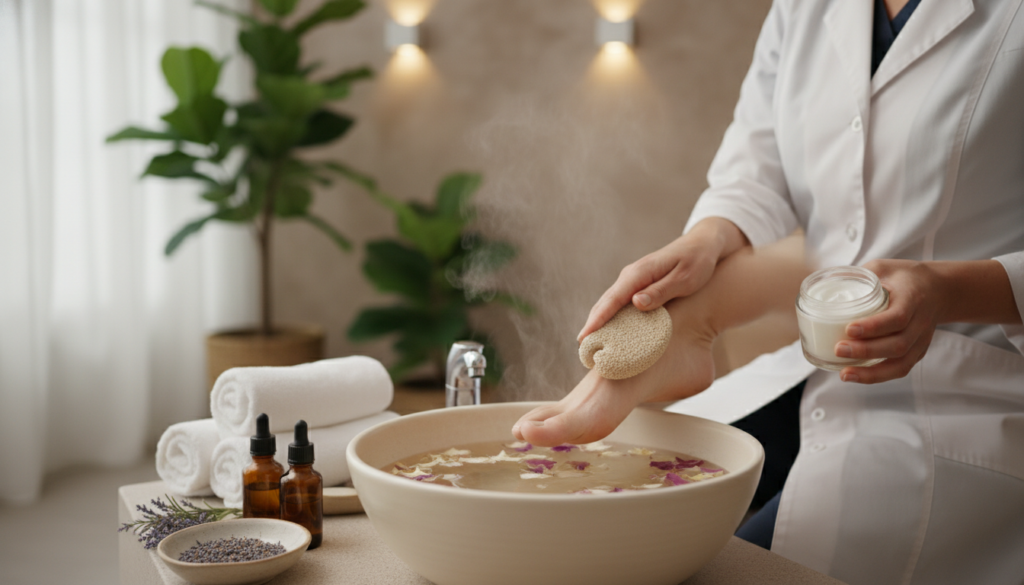
Did you know that nearly half of all adults in the United States will experience a bothersome foot condition this year? Many of these issues stem from simple, everyday friction and pressure.
Your skin is your body’s first line of defense. When an area experiences repeated rubbing or irritation, it reacts by building up thick, hardened layers. This is a natural protective response.
These thickened areas most often appear on the feet and hands. While generally harmless, they can become uncomfortable and unattractive. Understanding the cause is the first step toward effective management.
Corns and related skin conditions develop for specific reasons. Ill-fitting shoes are a primary culprit. Certain medical conditions also require special attention when dealing with foot health.
The good news is that with proper care, most people can prevent and manage these problems. This guide offers expert strategies for smoother, healthier skin.
Key Takeaways
- Corns and thickened skin develop as a natural defense against friction and pressure.
- These conditions most frequently affect the feet but can also appear on the hands.
- Ill-fitting footwear is the most common cause of foot-related issues.
- While often harmless, they can cause discomfort and affect appearance.
- Understanding the root cause is essential for both treatment and prevention.
- Simple, consistent care can effectively manage most cases.
- Individuals with certain medical conditions should seek professional guidance.
Understanding Calluses and Corns
When your skin experiences repeated pressure or friction, it responds by building up protective layers that can vary in appearance and location. These thickened skin areas serve as natural shields against irritation and injury.
What Are Calluses?
A callus develops as your body’s defense against constant rubbing. This thickened patch of skin typically feels hard and dry to the touch. It may appear yellowish or grayish in color.
These protective areas commonly form on weight-bearing parts of the feet, like heels and soles. They also appear on hands from repetitive activities. Unlike other conditions, calluses spread across broader surfaces.
Key Differences Between Calluses and Corns
While both corns and calluses involve thickened skin, they have distinct characteristics. Corns are smaller and more concentrated. They often develop where bones create pressure points.
Hard corns typically form on tops or sides of toes with a dense core. Soft corns may look like moist, whitish areas between toes. Understanding these differences helps identify the proper treatment approach for your specific condition.
Common Causes and Risk Factors
Several everyday factors contribute to the formation of protective skin layers on your feet and hands. Understanding these triggers helps you take preventive measures.
Friction, Pressure, and Ill-Fitting Shoes
Constant rubbing and pressure are the primary causes of thickened skin. Your body responds to this irritation by building protective layers.
Ill-fitting shoes create the most common source of foot problems. Tight or loose footwear causes constant movement and friction against your skin.
High heels and narrow toe boxes force toes into unnatural positions. This increases pressure on the balls of your feet and creates friction between toes.
Manual work and repetitive activities often cause similar issues on hands. Using tools or playing instruments creates ongoing rubbing that triggers the skin’s defense response.
| Risk Factor | Effect on Feet | Effect on Hands | Prevention Tip |
|---|---|---|---|
| Poorly Fitting Shoes | Constant rubbing on heels and toes | N/A | Measure feet regularly when buying shoes |
| High Heels | Pressure concentration on ball of foot | N/A | Limit wear time and choose lower heels |
| Repetitive Work | Possible from certain activities | Friction on palms and fingers | Use protective gloves when possible |
| Barefoot Walking | Direct skin contact with surfaces | N/A | Wear shoes or sandals outdoors |
Biomechanical issues like bunions can create abnormal pressure distribution. This makes some people more likely to develop corns and thickened skin areas.
Calluses Prevention and Home Treatment Techniques
Prevention is always better than cure when it comes to managing thickened skin on your feet and hands. Simple daily habits can stop problems before they start. This approach saves you time and discomfort in the long run.
Daily Skin Care and Moisturization
Consistent skin care forms your first line of defense. Wash your feet with soap and water every day. Dry them thoroughly, especially between toes.
Apply moisturizing cream while your skin is still slightly damp. This locks in hydration effectively. Regular moisturization prevents excessive dryness that can cause cracking.
Proper footwear eliminates the primary cause of foot issues. Well-fitting shoes with good support make a huge difference. They distribute pressure evenly across your feet.
Effective Home Remedies
Protective gear plays a crucial role in prevention. Wear gloves during activities like gardening or weightlifting. This prevents friction-related issues on your hands.
Consider using gel pads or cushioned insoles in your shoes. They redistribute pressure away from vulnerable areas. This simple addition can prevent many problems.
Establishing a quick daily routine takes minimal time but offers substantial benefits. Consistent care maintains healthy skin and prevents new issues from developing.
Home Treatment Solutions: Soaking and Exfoliation
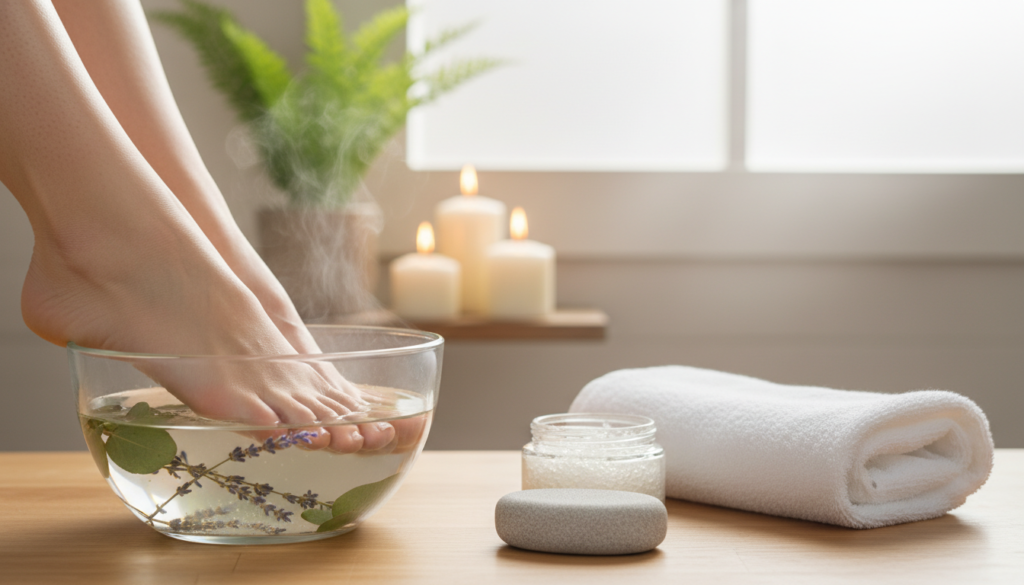
The most effective home treatments begin with softening the affected area. This foundational step makes subsequent actions safer and more productive.
Using Warm Water and Epsom Salts
Start by filling a basin with comfortable warm water. Soaking for about 10 minutes helps soften hardened skin significantly.
Adding a handful of Epsom salts can enhance this effect. These salts are recognized for their therapeutic properties. They help prepare the skin for gentle exfoliation.
Proper Use of a Pumice Stone
Always use a pumice stone on softened skin after soaking. This light, porous stone is designed for safe exfoliation.
Use gentle, circular motions to gradually reduce thickness. Never scrub aggressively, as this can damage healthy tissue. Consistent, gentle treatments over several days yield the best results.
Rinse the pumice thoroughly after each use and let it dry completely. This simple routine is a safe and cost-effective way to manage thickened skin on your foot or hands.
Natural Remedies and DIY Exfoliation Methods
For those seeking chemical-free solutions, homemade treatments can effectively soften hardened areas. Many people prefer natural ingredients over commercial products for their gentle approach.
These DIY options work well for sensitive skin types. They offer affordable alternatives to store-bought treatments.
Baking Soda Paste Preparation
Create a simple baking soda paste using common kitchen items. Mix two tablespoons of water with enough baking soda to form a thick paste. Add a few drops of lime juice to enhance the exfoliating effect.
Baking soda’s mild abrasive properties help break down dead skin cells. Its alkaline nature softens hardened areas when applied topically.
“Natural remedies provide gentle yet effective solutions for everyday skin concerns without harsh chemicals.”
Apply the paste generously to affected areas on feet or hands. Cover with socks, gloves, or gauze bandages overnight. This method works gradually but safely for most cases.
| Natural Remedy | Primary Benefit | Best For | Application Time |
|---|---|---|---|
| Baking Soda Paste | Gentle exfoliation | Sensitive skin | Overnight |
| Epsom Salt Soak | Skin softening | Initial treatment | 10-15 minutes |
| Lemon Juice Rub | Natural acidity | Mild cases | 30 minutes |
| Coconut Oil | Moisturizing | Dry skin | Daily use |
This natural approach is particularly suitable for people who react poorly to chemical exfoliants. The paste may also help with other skin conditions like minor irritations.
Combine this method with soaking and pumice stone exfoliation for enhanced results. Always discontinue use if irritation develops. Never apply to broken or infected skin.
Selecting the Right Tools: Pumice Stone, File, and More
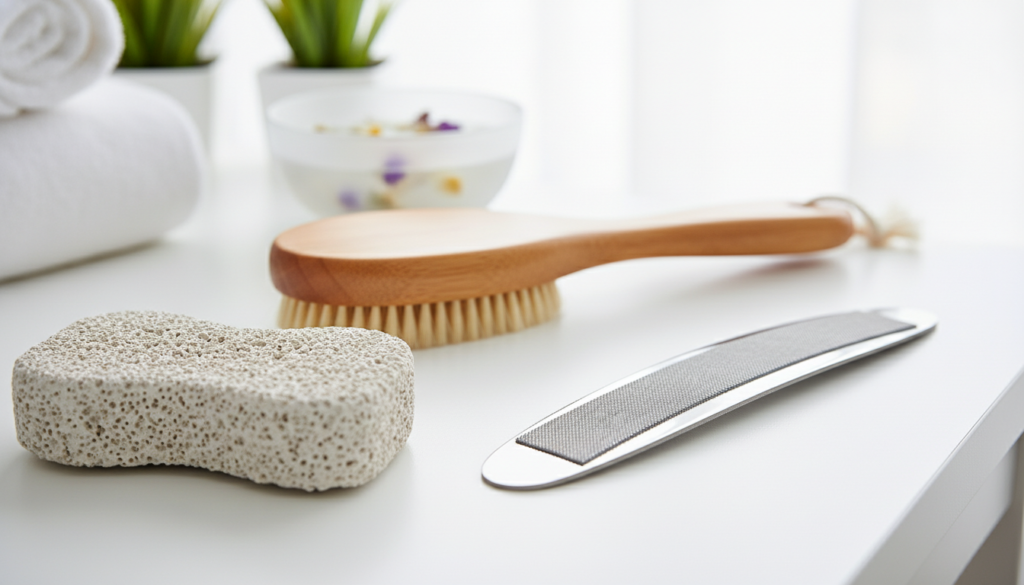
Choosing the proper tools makes all the difference in effective foot care. The market offers various exfoliation products designed for different needs and comfort levels.
Pumice stones provide gentle abrasion for gradual smoothing. Foot files with metal grates offer more aggressive removal. Electric callus removers deliver powered efficiency for stubborn areas.
Choosing and Using Exfoliation Tools Safely
Always begin by softening the skin in warm water. This crucial step minimizes irritation and makes exfoliation smoother. The bath or shower provides the perfect environment for this process.
Foot files typically feature ergonomic handles for comfortable grip. Their metal surfaces efficiently file down thickened skin. Many people find them convenient for regular maintenance.
Never attempt to cut calluses with sharp objects. Razors and scissors can cause serious injury and infection. This warning is especially critical for individuals with circulation issues.
Most pharmacies and online retailers stock these care products. Prices vary to suit different budgets. Always finish your routine with rich moisturizer to maintain soft skin.
People with diabetes or neuropathy should avoid self-treatment. They may not feel injuries and risk complications. Professional guidance ensures safety for these conditions.
Preventive Footwear and Protective Gear
Proper shoe selection and protective accessories form the foundation of effective foot care. The right choices can prevent many common issues before they start.
Tips for Choosing Well-Fitting Shoes
Selecting shoes that fit well is your most important preventive step. Look for about a half-inch space between your longest toe and the shoe end. Proper width prevents side pressure on your feet.
Choose breathable materials that accommodate your foot’s natural shape. Avoid narrow toe boxes and stiff materials. These can force your toes into uncomfortable positions.
Utilizing Protective Pads and Socks
Wear shoes with appropriate socks that fit smoothly without bunching. Moisture-wicking materials reduce friction and keep feet dry. This helps prevent both corns and calluses.
Use protective pads like moleskin or gel cushions inside your shoes. They redistribute pressure away from vulnerable spots. Keep toenails trimmed to prevent awkward toe positions.
Have your feet measured professionally every year. Foot size can change with age or weight fluctuations. Consistent proper fit ensures ongoing protection.
When to Consult a Doctor for Callus Treatment

Knowing when to transition from self-care to professional medical consultation can prevent complications and ensure proper treatment. While many thickened skin areas respond to home remedies, certain situations require a healthcare provider’s expertise.
The UK’s National Health Service recommends seeing a doctor if a corn or callus shows no improvement after three weeks of consistent home treatment. This timeframe indicates when professional intervention may be necessary.
Recognizing Signs of Infection
Watch for specific symptoms that signal infection. These include increasing redness that spreads beyond the affected area, warmth to the touch, swelling, or pus drainage.
Fever or worsening pain are additional red flags. Immediate medical attention is crucial when these infection signs appear to prevent serious health complications.
Managing Persistent Pain and Discomfort
Persistent or severe pain associated with a corn callus requires professional evaluation. This discomfort may indicate pressure on underlying nerves or developing infection.
Individuals with diabetes must consult their healthcare provider before any home treatment. Diabetes-related nerve damage and circulation problems significantly increase infection risk.
People with peripheral arterial disease or neuropathy should avoid self-treatment entirely. These conditions impair healing and sensation, making professional care essential for safe management.
Lifestyle Adjustments to Minimize Friction and Pressure
Building consistent routines into your daily life offers the most reliable protection against recurring skin issues. Sustainable habits that address root causes provide better long-term results than temporary fixes.
Maintaining Proper Hygiene and Routine Care
Establish a daily care routine for your feet and hands. Wash with soap and water, then dry thoroughly. Apply moisturizer while skin is still damp for best absorption.
Rotate your shoes regularly. This gives each pair time to dry completely. It also reduces repetitive pressure on the same areas of your foot.
People who stand or walk extensively should take regular breaks. Elevate legs when possible. Simple stretches improve circulation and reduce stress on vulnerable areas.
Use protective gloves during activities like weightlifting or manual labor. Build up skin tolerance gradually rather than exposing hands to sudden intense friction.
Maintain healthy body weight to reduce excess pressure on your feet. This decreases the likelihood of developing pressure-related calluses.
Inspect your feet regularly for early signs of thickening or irritation. Check between each toe and along the soles. Early detection allows preventive measures before significant issues develop.
Keep nails trimmed straight across and filed smooth. Proper nail care prevents abnormal pressure distribution. This reduces friction that can contribute to corns calluses development.
These adjustments require minimal time but yield significant health benefits. They contribute to overall foot and hand health throughout life.
Conclusion
Managing thickened skin effectively requires a blend of daily care and smart prevention. Understanding that friction and pressure are the root causes empowers you to make protective choices.
Simple home treatment methods like soaking and gentle exfoliation offer safe solutions for most people. These conditions often respond well to consistent care over time.
Remember that patience and routine are key. For persistent issues or specific health conditions, consulting a healthcare provider is essential.
With the right approach, you can maintain smooth, healthy skin on your foot, hands, and other areas. A healthcare provider can offer advanced treatment for stubborn corns and related issues.