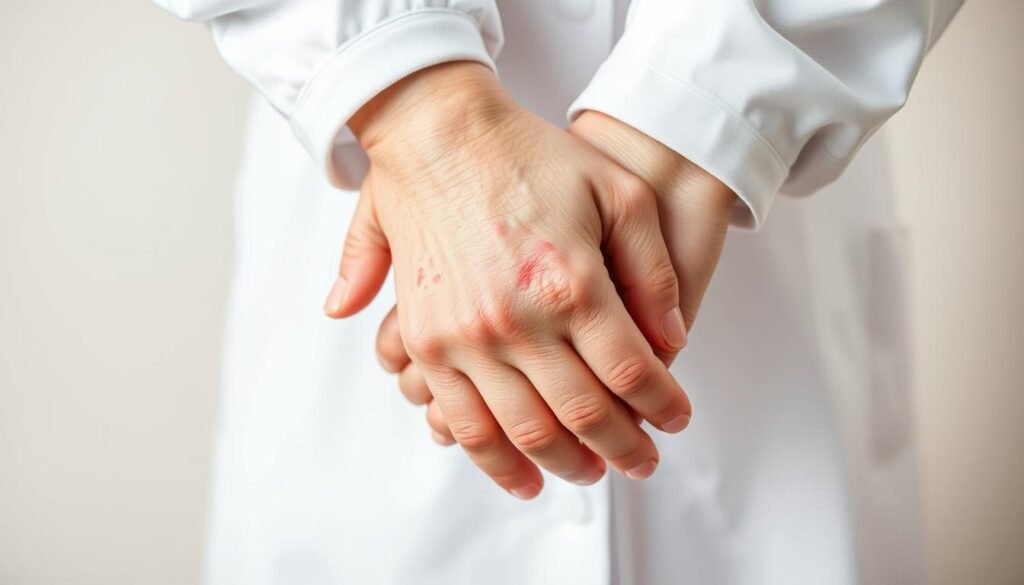
Studies show that up to 70% of healthcare workers get irritant contact dermatitis on their hands. This is because of all the washing and sanitizing they do. Now, many people face the same skin problems because of increased hygiene.
Different skin issues can look the same at first. You might notice redness, dryness, or discomfort that seems minor. But these signs can get worse over time and become harder to ignore.
This content is for informational and educational purposes only and does not constitute medical advice. Always talk to a board-certified dermatologist or a qualified healthcare professional for a proper diagnosis and treatment. Skin conditions are different for everyone, and getting a professional evaluation is key.
This guide will teach you about the common signs of this condition. You’ll learn about symptoms people usually notice, how it’s different from other issues, and when you should get professional advice. The info below will cover both quick relief and long-term ways to keep your skin healthy, even with lots of handwashing.
Key Takeaways
- Frequent handwashing can trigger irritant contact dermatitis, affecting up to 70% of people with intensive hygiene routines
- Early symptoms include dryness, redness, and texture changes that may worsen without proper intervention
- Many skin conditions share overlapping symptoms, making professional diagnosis essential for accurate treatment
- Board-certified dermatologists provide personalized evaluation and treatment plans based on individual skin needs
- Self-diagnosis has limitations and should never replace consultation with qualified healthcare professionals
- Understanding symptom patterns helps determine when to seek medical attention for persistent skin concerns
Understanding Hand Eczema: An Overview
Your hands have a protective skin layer that can get damaged by irritants. When this happens, inflammation starts, leading to the symptoms of hand eczema. Knowing what causes hand eczema helps you act early to prevent it from getting worse.
Recognizing hand eczema starts with knowing what makes your hands vulnerable. Many things can lead to this condition, from genetics to environmental factors. Finding out what triggers it early helps manage and prevent it better.
A Closer Look at This Common Condition
Hand eczema, also known as hand dermatitis, is an inflammatory skin condition affecting the hands. It happens when the skin’s protective layer gets damaged, letting moisture out and irritants in. This leads to a cycle of inflammation, dryness, and discomfort that can affect daily life.
The biology behind hand eczema involves your immune system and the environment. When the skin barrier weakens, your immune system fights off perceived threats by releasing inflammatory chemicals. These chemicals cause the redness, swelling, and itching of hand eczema.
About 10% of people will get hand eczema at some point in their lives. It can range from mild dryness and occasional itching to severe cracking, bleeding, and pain. Some people have brief episodes, while others face chronic symptoms that need ongoing care.
One important fact is that hand eczema is not contagious. You can’t spread it to others through touch. It’s caused by internal and external factors, not by infectious agents like bacteria or viruses.
What Triggers This Skin Problem
Hand eczema is caused by many factors, not just one. Knowing this helps explain why some people get it and others don’t, even with similar exposures. The causes of hand eczema fall into several categories that often overlap in real life.
Genetic predisposition plays a big role in who gets hand eczema. Some people are born with sensitive skin and a weakened skin barrier. If your family has eczema, asthma, or hay fever, you’re more likely to get hand dermatitis.
There are two main types of contact dermatitis that lead to hand eczema:
- Irritant contact dermatitis happens from repeated exposure to substances that damage the skin, like detergents, solvents, or acids
- Allergic contact dermatitis occurs when your immune system reacts to specific substances, such as nickel, fragrances, or preservatives
- Atopic dermatitis is an inherited form that often comes with other allergic conditions
- Occupational exposures affect people whose jobs involve frequent contact with water, chemicals, or irritating materials
Environmental factors also play a part in when and how severely symptoms appear. Cold weather, low humidity, and seasonal changes can trigger flare-ups or make symptoms worse. Indoor heating systems in winter months make things harder by reducing air moisture levels.
| Cause Category | Common Examples | How It Damages Skin | Risk Level |
|---|---|---|---|
| Chemical Irritants | Soaps, detergents, cleaning products, solvents | Strips natural oils and breaks down skin barrier | High |
| Allergens | Nickel, fragrances, rubber, preservatives | Triggers immune system inflammatory response | Moderate to High |
| Physical Factors | Friction, repeated wet-dry cycles, temperature extremes | Mechanically disrupts protective layer | Moderate |
| Genetic Factors | Family history of eczema, atopic conditions | Inherited weak barrier function | Variable |
How Cleanliness Practices Affect Your Hands
Frequent handwashing is a challenge for skin health, known as the “hygiene paradox.” While it protects against infections, it can also damage the skin barrier and trigger hand eczema. This dilemma is more relevant now due to increased handwashing guidelines.
Water, and hot water in particular, strips away the skin’s natural lipid layer. Each washing cycle removes beneficial oils that take time to replenish. Washing your hands many times a day means your skin never gets to restore its protective coating.
Soaps and hand sanitizers make things worse by breaking down oils and proteins in the skin. Antibacterial soaps are harsh because they contain chemicals that eliminate microorganisms but also harm healthy skin cells. Alcohol-based sanitizers evaporate quickly, pulling moisture from the skin.
The repeated wet-dry cycle causes mechanical stress on skin cells. Hands go from wet to dry throughout the day, expanding and contracting the skin. This weakens cellular connections and creates microscopic cracks where irritants can enter.
Healthcare workers, food service employees, and parents of young children face high risks because their jobs require frequent handwashing. Teachers, hairstylists, and cleaning professionals also have higher rates of hand dermatitis due to their jobs and hygiene needs.
The impact goes beyond physical damage to include disrupting the skin’s natural pH balance. Healthy skin has a slightly acidic surface that protects against harmful bacteria while supporting beneficial microorganisms. Frequent washing with alkaline soaps shifts this pH balance, compromising another layer of defense.
Understanding the link between hygiene practices and skin health helps find the right balance. Recognizing when increased washing leads to symptoms allows for protective measures while keeping cleanliness standards.
Common Symptoms of Hand Eczema
Hand eczema shows signs through changes in your skin’s look, feel, and sensation. These symptoms start small and grow over time. Many people first think it’s just dry skin from cold weather or washing hands a lot.
Spotting these signs early helps you act fast and get better sooner. The condition often hits certain spots on your hands more than others. Fingertips, knuckles, and palms are usually the first to show trouble.
Knowing what to look for helps you tell if it’s just dry skin or a serious skin problem. The symptoms fall into three main types that affect how your hands look, feel, and work.
Textural Changes That Signal Trouble
The first signs of hand eczema are small changes in skin feel. Your hands might feel like sandpaper, even after moisturizing. This roughness starts small and gets bigger over time.
As it gets worse, your skin may get thicker and tougher. This is called lichenification. It makes the affected areas look and feel different from healthy skin.
Scaling becomes more visible as dead skin builds up. These scales can be fine or big flakes that fall off all day. In severe cases, the skin cracks deeply, which can hurt and bleed.
Some people get small blisters called vesicles during flare-ups. These bumps make the skin uneven and may group together. When these blisters burst, the skin is open to infection and more irritation.
The most friction-prone areas show the biggest changes. Knuckles often get hit hard because of constant bending and rubbing against things.
Visual Color Changes Across Skin Tones
Hand eczema shows up in different colors, depending on your skin tone. For lighter skin, affected areas are red or pink because of inflammation. This redness can be all over or in patches, matching the most irritated spots.
For darker skin, the affected areas might turn darker brown, purple, or grayish. These color changes can be hard to spot at first but get clearer as time goes on.
Long-term hand eczema can leave lasting color changes in the skin. Hyperpigmentation makes affected areas darker than the rest of the skin, creating patches. On the other hand, hypopigmentation makes areas lighter, leading to a patchy look.
The color changes come from more blood flow to inflamed areas. Your body sends extra blood to fight what it sees as a threat. This leads to the redness or darkening seen in active eczema flare-ups.
Some areas may show different colors at the same time. You might see redness around a patch with darker color in the middle. These variations help show which areas are inflamed and which are healing or chronic.
Uncomfortable Sensations and Persistent Itching
Perhaps the most bothersome symptoms of hand eczema are the feelings that affect daily life. Itching, known medically as pruritus, can range from mild to very intense. It often gets worse at night or right after washing your hands.
The itch-scratch cycle is hard to break. Scratching feels good for a moment but damages the skin more. This damage leads to more inflammation, which causes more itching, and so on.
Besides itching, many people feel a burning sensation on affected skin. This feeling gets worse when water, soap, or other products touch the damaged areas. The burning can be mild warmth or sharp, stinging pain that makes washing your hands uncomfortable.
Deep cracks and fissures cause sharp pain, making it hard to move your hands or fingers. This pain is different from itching—it’s immediate and focused on specific points.
Tenderness shows up in areas with a lot of inflammation. Your hands may feel sore to the touch, making it hard to hold things or do tasks that put pressure on affected areas. This tenderness is your body’s way of saying the skin needs care.
Some people feel like their skin is tight, like it doesn’t fit right anymore. This feeling comes with the thickening and loss of elasticity that happens with chronic hand eczema. The skin can’t stretch comfortably with movement anymore.
These sensory symptoms usually develop slowly, not suddenly. What starts as occasional mild itching can turn into constant discomfort that affects work, sleep, and daily activities. Spotting these patterns early helps you get the right treatment before things get worse.
Distinguishing Hand Eczema from Other Skin Conditions
Many skin problems can look like hand eczema, making it hard to tell them apart. Hands are exposed to many things that can cause skin issues. Knowing the differences helps you get the right treatment.
It’s tough to tell hand eczema from other skin issues because they look similar. While knowing what to look for is good, seeing a doctor is key for the right treatment.
Conditions that Mimic Hand Eczema
Patchy, thick scales on the hands are a sign of psoriasis, not eczema. This condition often hits the backs of hands and nails, making clear patches. The scales are thicker than eczema’s.
Fungal infections, like tinea manuum, can also look like hand eczema. They usually hit one hand harder than the other. The infected area has a clear edge from healthy skin.
Contact dermatitis comes from touching allergens or irritants. It shows up in a pattern that matches what you touch. Symptoms appear quickly after touching the cause.
Dyshidrotic eczema causes small, itchy blisters on palms and finger sides. These blisters are deep and itchy, but they’re a type of eczema. They can merge and hurt a lot.
Scabies makes your skin itch a lot, worse at night. It has tiny tracks on the skin. Scabies is different because of its itching and tracks.
Importance of Accurate Diagnosis
Seeing a doctor is the first step to getting the right treatment. Each skin problem needs its own treatment. A doctor knows more than just what they see.
Getting the right diagnosis is the start of good skin care. Without it, even the best treatments won’t work.
Getting hand eczema wrong can lead to problems. You might use the wrong medicine, making things worse. This can make you uncomfortable and cause more issues.
Doctors can spot small differences in skin conditions. They look at your whole health history and what you do. Tests like skin scrapings or biopsies give clear answers when it’s hard to tell.
Wasting money on the wrong treatments is bad. It can also make you feel worse. Getting a correct diagnosis helps you get better care fast.
Visual Differences to Observe
How the condition spreads can tell you what it is. Hand eczema usually hits both hands the same. Fungal infections often favor one hand.
How clear the edges are can also help. Eczema’s edges are fuzzy. Psoriasis and fungal infections have clear edges.
Looking at scales can also help. Eczema has fine scales that are hard to see. Psoriasis has thick, silver scales that stand out. Learning to spot these differences helps.
Blister patterns are different for each condition. Dyshidrotic eczema has small blisters on fingers and palms. Other problems have blisters of different sizes and places. The pattern can help guess what it is.
While these clues are helpful, they’re not enough. Only a doctor can really tell what’s wrong. Use what you see to talk to your doctor, but don’t try to guess yourself.
The Stages of Hand Eczema
Knowing the stages of hand eczema helps you act fast. It starts with small signs that grow bigger. Spotting these signs early is key to treating it well.
Many ignore early signs, thinking they’re just dry skin. But ignoring them lets the problem get worse. Knowing what to look for helps you treat it when it’s easier.
Initial Warning Signs
The first signs of hand eczema are easy to miss. Your skin might feel dry after washing, even with moisturizer. This is a sign something’s off.
Itching that comes and goes is another early sign. It happens after washing hands or using harsh products. You might see a bit of redness, too.
Feeling tight after washing hands is another sign. It might not look bad to others, but you’ll know. These early hand eczema symptoms don’t usually stop you from doing things, so many don’t get help.
At this point, simple changes can help a lot. Your skin is mostly okay, and symptoms can be managed with better moisturizing and avoiding irritants. Spotting these signs early is important because early treatment is less intense.
Progressive Symptom Development
If you ignore early signs, hand eczema gets worse. Dryness gets worse, and scaling is harder to control. Redness spreads, and darkening can happen in darker skin tones.
Itching gets worse and doesn’t stop. It can mess with your work or sleep. Cracks start to show, mainly where your hands move.
Moderate hand eczema symptoms are more obvious. Your skin feels rougher and looks thicker. You might get blisters or small bumps.
Your hands become more sensitive. Even water or old products can hurt. This can make you feel self-conscious about showing your hands.
At this stage, you need stronger treatments. Over-the-counter stuff might help, but you need special products and to avoid irritants. This can affect your work and daily life.
Advanced Condition Presentation
Severe hand eczema is the toughest phase. It covers a lot of your hand and can be very painful. Deep cracks can bleed and take a long time to heal.
The skin gets thick and hard from scratching. This makes it hard to reverse. The itching is so bad it disrupts sleep and focus.
Severe hand eczema symptoms include oozing and weeping. Fluid from the skin can form crusts. This makes your skin more prone to infections.
Pain is a big problem at this stage. Simple tasks hurt your hands. The changes can also hurt your self-esteem.
At this point, you need doctor help. You might need stronger medicines or changes at work. This can help you manage the condition better.
| Stage | Primary Characteristics | Impact on Daily Life | Typical Treatment Approach |
|---|---|---|---|
| Early | Slight roughness, mild dryness, intermittent itching, minimal redness | Minimal disruption, symptoms easily dismissed | Enhanced moisturizing, irritant avoidance, protective measures |
| Moderate | Visible scaling, persistent itching, small cracks, increased sensitivity | Affects concentration and self-consciousness, requires daily management | Specialized products, consistent routine, possible OTC medicated treatments |
| Severe | Deep fissures, extensive thickening, weeping areas, intense pain and itching | Significantly limits hand function, disrupts sleep, causes psychological distress | Prescription medications, medical supervision, possible work accommodations |
Understanding these stages shows how hand eczema gets worse. But, it’s not set in stone. Early action can stop it from getting worse. Even severe cases can get better with the right treatment.
The key is to catch symptoms early and act fast. Each stage needs different treatments, but the effort increases as it gets worse. Spotting changes early gives you the best chance to manage it without disrupting your life too much.
The Role of Moisture in Hand Eczema
Knowing how water affects your skin is key to controlling hand eczema. Your skin needs a balance of water and oils to stay healthy. Too much dryness can lead to eczema symptoms.
Moisture levels and symptom severity are linked. Your skin’s outer layer protects you from harm. It needs enough moisture to do its job well.
Effect of Dryness on Symptoms
Dryness is a major hand eczema cause that makes symptoms worse. When your skin loses moisture, it can’t keep out irritants. This lets allergens and germs get in.
As your skin dries, it loses water faster. This creates a cycle of dryness that’s hard to stop. Each time, it gets worse.
Dry skin causes many problems:
- Itching gets worse as nerve endings get irritated
- Skin feels tight and stiff, making it hard to move your hands
- Flaking and scaling become more visible
- Small cracks can bleed or get infected
- Inflammation gets worse as your immune system reacts
Scratching makes things worse. It damages your skin more. This creates a cycle of dryness and itching.
Washing your hands a lot makes it dry. Washing removes good oils and moisture. Water can also dry out your skin if you don’t replace moisture.
As dryness gets worse, symptoms get more obvious. Your skin may feel rough and hard to heal. It may also change color as inflammation grows.
Importance of Hydration for Skin Health
Keeping your skin hydrated is key to preventing and treating hand eczema. Your skin needs water and a good lipid barrier to stay healthy. You can’t just focus on one without the other.
Many things help keep your skin hydrated. Amino acids, urea, and other compounds attract and hold water. They help keep your skin moist.
The lipid barrier is made of ceramides, cholesterol, and fatty acids. It keeps moisture in and out. When this barrier is damaged, your skin loses both moisture and protection.
Keeping your skin hydrated has many benefits:
- Cells repair better when they’re hydrated
- Inflammation goes down as the barrier gets stronger
- Itching and discomfort lessen
- The risk of severe eczema drops
- Skin becomes more resistant to irritants
Drinking enough water helps your skin overall. But, it’s not enough for your hands. They need special care because they can’t make as much moisture.
Using products that add and keep moisture is important. Humectants bring water in, and occlusives keep it there. Good hand eczema care needs both.
Understanding moisture management is key to treating hand eczema. Dermatologists always talk about hydration because it tackles the root causes. Proper moisture balance helps your skin heal and prevents future problems.
Triggers to Watch Out For
Many things can make hand eczema symptoms worse. Knowing what these are helps you take better care of your skin. This way, you can reduce flare-ups.
Hand eczema causes often work together. What bothers you in summer might be worse in winter. Managing many triggers at once is often more effective.
Environmental Factors
Your surroundings play a big role in hand eczema. Cold weather and low humidity dry out your skin, making it harder in winter. This dry air pulls moisture from your skin, damaging its protective barrier.
Indoor heating systems also dry out the air. This makes your skin lose moisture faster. Many people see their symptoms get worse when heating starts in fall.
Air conditioning has the same drying effect in warmer months. It removes moisture from the air, leaving your skin dry. Going from cold to hot air can stress your skin even more.
Environmental pollutants and airborne irritants can harm people with hand eczema more. These substances can get into your skin easily, causing inflammation. Places with more pollution can be harder to manage symptoms.
Sun exposure can have mixed effects on hand eczema. Some people get better with some sun, while others get worse. It’s important to protect your hands from sunburn, which always damages the skin.
Water quality is important too. Hard water can be more irritating than soft water. The minerals in hard water make soap less effective, requiring more product and longer washing times.
Occupational Hazards
Some jobs are riskier for hand eczema due to frequent handwashing and exposure. Healthcare workers, for example, wash their hands many times a day. This, along with alcohol-based sanitizers, can severely damage their skin.
Food service workers face many triggers. They wash their hands often, handle wet dishes, and wear gloves that trap moisture. Acidic foods like tomatoes and citrus add to the irritation.
Hairstylists and cosmetologists work with chemicals and wash their hands a lot. The chemicals and constant water exposure can lead to hand eczema. Many in this field develop symptoms early on.
Cleaning professionals are exposed to strong detergents daily. These products break down dirt but also the skin’s natural oils. This can lead to chronic hand eczema.
Mechanics work with solvents and oils that strip away skin protection. These chemicals cause direct damage with each use. The rough textures of parts and tools also allow irritants to penetrate deeper.
Construction workers handling cement face unique challenges. Wet cement is very alkaline, causing chemical burns and irritation. Even brief exposure can trigger significant flare-ups in susceptible individuals.
The concept of “wet work” describes jobs that require hands to be wet for more than two hours daily. Research shows a strong link between wet work and hand eczema. Many service jobs fall into this category, making it hard to avoid triggers without changing careers.
Recognizing work-related patterns in symptom timing is key. Improvement during vacations or weekends suggests occupational triggers. Keeping a symptom diary helps identify these connections.
Allergens and Irritants
Understanding the difference between allergens and irritants is important. Irritants cause direct chemical damage and affect most people if exposed enough. They are like universal enemies of the skin.
Allergens work differently by triggering immune system reactions. They only affect people who have become sensitized to specific substances. Your immune system remembers the allergen and reacts upon each exposure.
Common irritants include everyday products. Soaps and detergents, with harsh surfactants or high pH, strip away protective oils. These products can damage the skin barrier that keeps you healthy.
Alcohol-based hand sanitizers become irritating with repeated use. They dehydrate skin quickly. Using sanitizer many times a day without moisturizing can cause problems for sensitive skin.
Hot water feels soothing but worsens hand eczema symptoms. It strips away natural oils faster than cool or lukewarm water. Many people wash with hot water in cold weather, unknowingly making symptoms worse.
Fragrances and preservatives in hand soaps cause problems for many. These ingredients serve marketing and shelf-stability purposes but offer no cleaning benefits. Antibacterial agents like triclosan add another irritant without significant health benefits for most people.
Common allergens include preservatives in liquid soaps and personal care products. Methylisothiazolinone and formaldehyde-releasers are common culprits. These chemicals prevent bacterial growth but can sensitize your immune system over time.
Fragrances are a common contact allergen. Even “unscented” products may contain masking fragrances. The complexity of fragrance formulations makes identifying specific allergens challenging.
Certain plant-based ingredients, despite being “natural,” can be highly allergenic. Tea tree oil, lavender, and chamomile can cause reactions in susceptible individuals. Natural does not automatically mean hypoallergenic or safe for sensitive skin.
Latex in protective gloves can cause problems for some. The proteins in natural rubber latex trigger allergic reactions in sensitized individuals. Switching to nitrile or vinyl alternatives can solve this issue.
Products marketed as “gentle” or “sensitive skin” formulas may contain problematic ingredients. Marketing claims do not guarantee compatibility with your skin. Always read ingredient labels and patch test new products, regardless of packaging promises.
Allergic reactions typically develop after repeated exposures that sensitize your immune system. You might use a product without problems for months or years before suddenly reacting. This delayed onset often makes identifying the culprit difficult without professional patch testing.
The relationship between frequent handwashing and trigger exposure is key. Well-intentioned hygiene practices can inadvertently create or worsen hand eczema. Recognizing this connection empowers you to modify your approach while maintaining necessary cleanliness.
When to Seek Medical Advice
Hand eczema might not get better with over-the-counter products. Knowing when to see a doctor is key for your skin’s health. Some cases need expert help, and knowing the signs helps you act fast.
Don’t worry about seeing a doctor for hand eczema. Dermatologists are experts in skin issues like hand eczema. They can help you feel better faster and keep your skin healthy long-term.
Signs That Indicate a Need for Professional Help
Some signs mean you need to see a doctor. These signs help you avoid more problems and get better sooner.
Persistent symptoms that last more than two weeks need a doctor’s check-up. If your symptoms don’t get better or get worse, you might need more help than just self-care.
Look out for infection signs that need quick medical help:
- Increased warmth, swelling, or tenderness in affected areas
- Pus or yellow crusting on the skin surface
- Red streaks extending from the affected areas
- Fever accompanying hand symptoms
Severe symptoms that make daily life hard are another sign. If hand eczema affects your work, daily tasks, or sleep, you need professional help.
Deep cracks or fissures that won’t heal are a big concern. These can lead to infections and need special treatments.
Seeing a doctor is wise if symptoms spread or affect both hands. This could mean you need treatments that target the whole body.
Hand eczema’s emotional impact matters too. If it affects your self-esteem, mental health, or social life, getting professional help is key for healing.
Uncertainty about your diagnosis is a good reason to see a dermatologist. If your symptoms don’t fit typical hand eczema or treatments don’t work, a doctor can help figure it out.
For work-related hand issues, a doctor’s note might be needed for work changes or compensation claims. Early help ensures you get the support you need.
How a Dermatologist Can Assist
Dermatologists have the skills to help beyond what you can do on your own. They can tell hand eczema apart from other skin issues like psoriasis or fungal infections.
They use special tools for hand eczema diagnosis:
- Dermoscopy for magnified examination of skin structures
- Patch testing to identify specific allergic triggers
- Skin cultures when infection is suspected
- Skin biopsy in unclear or complex cases
Dermatologists can prescribe stronger treatments not available over the counter. This includes stronger creams and medications tailored for hand skin.
Prescription options might include creams for sensitive areas, barrier repair creams, or even light therapy for severe cases. They create a treatment plan just for you, based on your symptoms and lifestyle.
Dermatologists also refer you to other specialists when needed. This team approach helps tackle all aspects of your condition.
What to Expect During Your Consultation
Knowing what to expect at your appointment can make you feel more at ease. Dermatologists follow a structured process to understand your condition and develop a treatment plan.
The appointment starts with medical history intake. You’ll talk about when your symptoms started, what treatments you’ve tried, and your job and daily activities. Sharing family health history is important too, as it can help doctors understand your condition better.
During the physical examination, your dermatologist will carefully check your hands. They’ll look at the distribution of symptoms, the type of lesions, and signs of infection. They might also check other areas of your body to see if eczema is present there too.
Expect detailed questions about your daily routines:
- Handwashing frequency and products used
- Glove use and types of gloves worn
- Work exposures and job tasks involving hand contact
- Symptom patterns related to specific activities or times of day
After the examination, your dermatologist will explain their diagnosis. They’ll tell you why they think you have hand eczema and not something else. This helps you understand your condition better.
The treatment plan discussion will cover specific products, medications, and lifestyle changes. Your dermatologist will teach you how to care for your hands properly and avoid triggers.
Most dermatologists schedule follow-up appointments to check how treatment is working. This ongoing monitoring ensures your treatment stays effective as your condition changes.
Prepare for your consultation by documenting your symptoms with photos. List all products you use on your hands, including soaps, sanitizers, moisturizers, and work-related substances.
Remember what makes your symptoms better or worse. Prepare questions about diagnosis, treatment options, expected improvement timeline, and long-term outlook.
Seeking professional help is a proactive step towards managing hand eczema. Dermatologists provide care without judgment, focusing on your healing and comfort.
Home Remedies for Managing Symptoms
Managing hand eczema goes beyond doctor visits. You can use simple steps in your daily life. These steps, when used with doctor advice, can help a lot. Using the right moisturizers, natural treatments, and making lifestyle changes can help your skin heal.
Finding what works for you might take some time. Keep notes or photos of what helps and what doesn’t. This info is useful when talking to your doctor about your treatment plan.
The tips below are based on science and work well with doctor advice. They help your skin and keep your hands healthy.
Moisturizers that Help
Choosing the right moisturizer is key for hand eczema. Not all moisturizers are good for dry skin. Knowing about humectants, emollients, and occlusives helps you pick the best one.
Humectants pull moisture into your skin. Ingredients like glycerin and hyaluronic acid are good examples. They need to be used with other types to keep moisture in.
Emollients make your skin smooth by filling gaps between cells. Shea butter and dimethicone are examples. They make your skin feel better right away.
Occlusives lock in moisture by creating a barrier. Petrolatum and mineral oil are good examples. They’re very important for hands because they face a lot of moisture loss.
The best products mix all three types. Look for these features when shopping:
- Fragrance-free for sensitive skin
- Simple ingredient lists to avoid irritation
- Thick textures like ointments or creams
- Ceramides to fix your skin’s barrier
- Products recommended by doctors or have the National Eczema Association seal
How you apply moisturizer is as important as what you use. Apply it right after washing your hands when your skin is a bit damp. This helps keep moisture in better than applying to dry skin.
Use lots of moisturizer, not just a little. Reapply often, like after washing your hands. Try applying a thick layer at night with gloves to help it soak in.
| Moisturizer Type | Primary Benefit | Best Application Time | Texture Preference |
|---|---|---|---|
| Healing Ointments | Maximum moisture sealing for cracked areas | Nighttime with gloves | Very thick, greasy |
| Barrier Repair Creams | Restores skin barrier with ceramides | Morning and night | Rich but absorbs well |
| Daytime Hand Creams | Protection without excessive greasiness | After each handwashing | Absorbs quickly |
| Prescription Formulations | Targeted treatment for severe cases | As directed by dermatologist | Varies by product |
Use different products for different times of the day. A lighter formula is better for daytime. Use thicker products at night to treat your hands while you sleep.
Natural Treatments to Consider
Natural remedies can help with hand eczema, but be careful. Some natural things can irritate your skin. Always test new things on a small area first.
Colloidal oatmeal is good for soothing and calming your skin. You can soak your hands in it or use it as a compress. It’s usually safe and can really help with itching and irritation.
Coconut oil is a natural moisturizer with antibacterial properties. Apply it like any other moisturizer, focusing on the affected areas. But, some people might react to it.
Aloe vera gel is soothing and can help with inflammation. Choose pure aloe vera with few additives. Apply it thinly to calm your skin and reduce discomfort.
Sunflower seed oil might help improve your skin’s barrier. It has fatty acids that are good for your skin. Use it sparingly to see how your skin reacts.
Some natural remedies might not work for everyone. Apple cider vinegar is too harsh and can burn your skin. Essential oils can also cause allergic reactions.
Always test new products, natural or not, on a small area first. Natural remedies are best used along with proven treatments for more severe cases.
Lifestyle Changes for Better Skin Health
Making small changes in your daily life can help with hand eczema. These changes can reduce triggers and help your skin heal.
Change how you wash your hands to be gentler. Use lukewarm water and gentle, fragrance-free cleansers. Avoid scrubbing too hard.
Pat your hands dry with a soft towel instead of rubbing them. Apply moisturizer right after drying to keep moisture in.
Protective gloves can help when doing tasks that might irritate your hands. Look for vinyl or nitrile gloves instead of latex. Wear cotton liners under waterproof gloves to absorb sweat.
Make your home environment better for your skin. Use a humidifier in dry months and keep your home warm but not too hot. This helps keep moisture in.
Avoid blowing heat directly on your hands. This can dry out your skin and make eczema worse.
Staying hydrated and eating well helps your skin heal. Drink plenty of water and eat foods rich in healthy fats and vitamins. Stress can also make eczema worse, so find ways to manage it.
Keep track of what makes your eczema worse. A symptom diary can help you find patterns. This can help you avoid triggers.
Hand eczema can affect how you feel about yourself. Remember, most people don’t notice your hands as much as you think. Wearing rings or jewelry can help draw attention away.
Support groups and online communities can offer help and understanding. Talking to others who have hand eczema can be very helpful.
Finding what works for you takes time and patience. With the right routine and doctor advice, you can improve your comfort and skin health. These home remedies are most effective when used with professional help for more severe cases.
Preventative Measures Against Hand Eczema
Smart prevention strategies help keep your hands clean and safe from irritation. Good habits now can prevent hand dermatitis later. It’s easier to prevent than to treat a condition that disrupts your life.
Prevention works for everyone, whether you’ve never had hand eczema or are trying to avoid it coming back. These strategies protect your skin while keeping it clean. Being consistent with these practices creates lasting protection for your hands.
Best Practices for Hand Hygiene
Finding the right balance between cleanliness and skin protection starts with strategic handwashing. Wash your hands when it’s really necessary, like after using the restroom or before cooking. Don’t wash too much, as it can harm your skin.
The way you wash matters a lot. Use lukewarm water instead of hot, which takes away more natural oils. Use a small amount of gentle, fragrance-free cleanser and rub softly.
Twenty seconds of washing is enough for cleanliness. Longer times can damage your skin more. Rinse well to remove all cleanser, which can irritate your skin.
Drying your hands right is key. Gently pat them with a soft towel instead of rubbing hard. Avoid harsh paper towels to prevent more irritation.
The most important step is right after drying: apply moisturizer to damp skin. Make this a habit by keeping moisturizer at every sink. Carry a small tube with you so you’re always protected after washing.
Choosing the right soap is vital. Look for:
- Neutral to slightly acidic pH (4.5-5.5) that matches your skin’s natural balance
- Synthetic detergents (syndets) instead of traditional bar soaps
- Minimal ingredients to reduce reaction risk
- Formulations designed for sensitive or eczema-prone skin
Avoid soaps with sodium lauryl sulfate (SLS), synthetic fragrances, antibacterial agents like triclosan, and artificial dyes. Regular soap is enough for most situations.
Alcohol-based hand sanitizers can be an occasional alternative. They might be less damaging than water for some. But, they shouldn’t replace proper handwashing when needed.
Protective Gear and Gloves
Protective equipment shields your hands from irritants and moisture. Double-gloving is best: wear thin cotton or silk liners under waterproof gloves. This combo absorbs moisture and protects from irritants and glove materials.
Different gloves serve different purposes. Vinyl or nitrile gloves are best for wet work, while cotton gloves protect during dry tasks. Special gloves for sensitive skin may also be helpful.
Follow these guidelines for glove use:
- Ensure gloves are clean, dry, and undamaged before wearing
- Remove waterproof gloves every 15-20 minutes to let hands air briefly
- Turn reusable gloves inside out to dry between uses
- Replace gloves regularly as materials degrade
- Choose properly fitted gloves that aren’t too tight (causing friction) or too loose (allowing irritants to enter)
Some people develop allergies to glove materials themselves, making selection a trial-and-error process. If one type causes irritation, try a different material before giving up on gloves entirely.
When gloves aren’t practical, use barrier creams to protect your skin. These are best for specific exposures but don’t replace regular moisturizers.
Educating Yourself and Others
Knowing how to protect your hands is empowering. Learn about your specific triggers by paying attention to patterns between activities and symptoms. Keep a symptom diary to identify correlations that might not be immediately obvious.
If you suspect allergies contribute to your hand problems, discuss patch testing with a dermatologist. Identifying specific allergens helps you avoid them more effectively than general precautions alone.
Educate family members about your condition so they understand why certain accommodations may be necessary. They can support your prevention strategies by keeping gentle soap at shared sinks and not pressuring you to participate in activities involving harsh exposures. Family understanding creates a supportive home environment for maintaining skin health.
Workplace education is key for people in high-risk occupations. Inform your supervisor and occupational health department about hand eczema. You have the right to request reasonable accommodations such as:
- Access to gentle cleansers and appropriate moisturizers
- Adequate time for proper hand care during work hours
- Modified duties during severe flares when possible
- Appropriate protective equipment suited to your skin sensitivity
Educating coworkers prevents stigma and promotes supportive environments where hand dermatitis recognition leads to understanding. Some may benefit from learning these prevention strategies themselves.
Broader education efforts create systemic change that helps everyone at risk. Share information about hand eczema prevention in workplace wellness programs, schools for children who develop the condition, and community settings. Help others understand that repeated handwashing, while important for infection control, needs balancing with skin protection measures.
In some settings, occupational health regulations protect workers with skin conditions. Employers may be required to provide appropriate products and accommodate workers experiencing occupational hand eczema. Knowing your rights helps you advocate effectively for the protections you need.
Prevention requires ongoing attention, but it’s far easier than treating established disease. These proactive measures work for primary prevention if you’ve never had hand eczema and for secondary prevention if you want to avoid recurrence after treatment. Your commitment to these strategies protects your hands for the long term.
Long-Term Management Strategies
Managing hand eczema means creating habits that last for months and years. It’s not just about quick fixes. You need to keep up the care even when symptoms seem gone. The habits you build now will help you keep your hands healthy through all seasons and life changes.
Hand eczema treatment works best when it’s part of your daily routine. Being consistent is more important than how intense the treatment is. Many people find that regular, gentle care prevents severe symptoms that need stronger treatments.
Building Your Daily Skincare Foundation
A daily routine is key to managing hand eczema for the long term. It should be as automatic as brushing your teeth. The goal is to create habits that fit into your daily life without needing big changes.
Morning preparation sets the stage for your day. Use a good moisturizer on your hands in the morning. Choose one that works well for the day, even if you’re in a professional setting.
If your doctor has given you medication, apply it first, then moisturize. This helps the treatment work better and keeps your skin hydrated.
Throughout-the-day maintenance is the hardest but most important part. Moisturize right after washing your hands every time. This stops most irritation from handwashing.
Moisturize every two to three hours, even if you haven’t washed your hands. Dry air, air conditioning, and heaters take moisture from your skin. Keep a small moisturizer with you always, in your pocket, bag, car, and desk.
Wear gloves when doing wet work or exposing your hands to irritants. Take breaks from gloves to let your hands breathe and prevent moisture buildup.
Evening intensive care gives your skin a chance to repair during sleep. Wash your hands with a gentle cleanser, then apply any treatments your doctor recommended. Finish with thick, occlusive moisturizer.
Use heavy moisturizers at night that might be too greasy for the day. Try overnight cotton glove therapy, where you seal in thick moisturizer with soft gloves. This boosts absorption and repair.
Avoid washing your hands after moisturizing in the evening. Do all your chores and pet care before your evening hand care routine.
| Time of Day | Primary Actions | Product Type | Key Benefits |
|---|---|---|---|
| Morning | Apply prescription medication if prescribed, follow with moisturizer | Fast-absorbing daytime formula | Protects hands before daily activities begin |
| Throughout Day | Moisturize after every handwashing, reapply every 2-3 hours, use protective gloves | Portable, quick-absorbing moisturizer | Maintains skin barrier against constant environmental challenges |
| Evening | Final cleanse, apply prescriptions, thick moisturizer application, optional cotton gloves | Heavy occlusive moisturizer | Maximizes overnight repair and healing processes |
Being consistent is more important than you think. Sporadic care is less effective than regular, moderate care. Keeping up with routines even when symptoms seem better helps prevent flare-ups and keeps your skin healthy.
Common reasons for not being consistent include lack of time, forgetfulness, cost of products, and feeling embarrassed about using products. Overcome these by setting reminders, buying products in bulk, and seeing moisturizing as essential health care.
Routine adjustments are needed in different situations. During flares, follow your doctor’s advice to increase medication frequency. Avoid irritants more and simplify your skincare to only what works best for you.
Seasonal changes require adjustments to your care. Use thicker moisturizers in winter. Use humidifiers at home and work to keep moisture in. You might need prescription treatments seasonally, even if not all year.
Maintaining Professional Healthcare Relationships
Managing hand eczema long-term means having ongoing professional help. Your dermatologist is a key partner in managing your condition. They adjust your care as needed. Regular check-ups are usually every four to eight weeks after starting new treatments.
These visits let your doctor adjust your treatment plan based on how it’s working. You can talk about new symptoms or concerns before they get worse. This helps prevent undertreating your condition.
Even when your hand eczema seems better, keep seeing your doctor regularly. These visits catch early signs of a flare-up before it gets severe. This saves you from needing stronger treatments later.
Step-down therapy is important in treating hand eczema. As symptoms improve, you gradually reduce treatment intensity. For example, you might use less topical steroid while keeping up with moisturizing.
This change must be done carefully to avoid worsening symptoms. Your doctor will watch your progress and decide when to reduce medication strength or frequency.
Having a dermatologist who understands your hand eczema is very valuable. They learn your triggers, how you respond to treatments, and your condition’s unique aspects. This personalized knowledge helps them tailor your care as your needs change.
See your doctor for unplanned visits when needed. Contact them if symptoms suddenly get worse, despite following your treatment plan. Signs of infection need immediate attention, as do new or unusual symptoms.
Life changes may require adjusting your treatment. A new job, pregnancy, or major stress can affect your hand eczema. Tell your doctor about these changes right away.
Consider seeing other specialists for a complete care plan. Allergists can test for specific triggers. Occupational medicine doctors help with work-related issues. Mental health professionals support you if the condition affects your quality of life.
Developing Psychological and Practical Coping Approaches
Living with a chronic, visible condition has emotional challenges. It includes frustration with ongoing symptoms, feeling self-conscious about your hands, and stress about unpredictable symptoms. Anxiety about hand contact in social situations can lower your confidence.
The impact on your professional confidence is also significant. Visible hand conditions can make you hesitant in business or client-facing situations.
Psychological coping strategies help you stay emotionally well while managing your hand eczema. View the condition as a manageable chronic issue, not a personal failure. This mindset reduces shame and makes you more willing to care for your hands openly.
Connect with support groups where others understand your struggles. Online forums, social media groups, or in-person groups offer validation and practical tips from people facing similar challenges.
Practice stress management to prevent flares. Meditation, exercise, enough sleep, and other stress-reduction activities help your overall health and skin condition.
Seek mental health support if your condition affects your quality of life or self-esteem. Therapists can help you develop coping strategies and address any anxiety or depression related to your condition.
Practical coping strategies help you deal with the daily reality of visible symptoms. Develop explanations for your hand appearance that feel comfortable when asked. Simple statements like “I have sensitive skin” or “I’m managing a skin condition” usually satisfy curiosity without needing to explain more.
Practice polite ways to decline handshakes if they’re painful or uncomfortable. Saying you have sensitive skin or suggesting an elbow bump usually works. Most people understand and don’t judge.
Choose clothes with longer sleeves for coverage if you prefer. Focus on your overall appearance and confidence, not just your hands. Remember, you notice your symptoms more than others do.
Make adjustments to your activities to reduce the condition’s impact. Delegate tasks that involve harsh exposures, use voice-to-text technology if typing hurts, and find ways to continue enjoying hobbies despite hand limitations.
Acceptance doesn’t mean giving up on treating your hand eczema. It means reducing emotional distress about seeking perfect skin. Some symptoms may always be there, but accepting this reality while continuing to care for your skin improves your emotional state.
Managing hand eczema long-term is a marathon, not a sprint. It requires patience, consistency, and flexibility in your approaches. With the right strategies, most people can manage their hand eczema without it severely limiting their lives.
The routines you establish will become second nature over time. What once required effort will become as natural as any other self-care routine. This change from burden to habit is key to successful long-term management.
Conclusion: Staying Informed About Hand Eczema
Learning to spot hand eczema from frequent washing is just the start. This guide has given you tools to catch symptoms early and understand what causes them. You also know how to act when needed.
Building Your Knowledge Base
As new research comes out and you gain more experience, your understanding of skin conditions will grow. Keep up with trusted dermatology sources like the American Academy of Dermatology. Also, ask your doctor about the latest treatments during visits.
Your triggers and how to manage them might change over time. Listen to what your skin tells you as seasons, jobs, or life events change. Online patient communities are great for sharing experiences and tips on managing similar issues.
Protecting Your Hands Daily
Small, consistent steps can greatly improve hand health. Use gentle cleansers with lukewarm water when washing. Apply moisturizer right after washing your hands. Wear protective gloves when your hands are exposed to irritants.
Begin with one or two changes at a time. Even small efforts to recognize and respond to hand eczema symptoms help your skin more than doing nothing.
Spotting symptoms early and getting professional help usually leads to better results. Now, you have the knowledge to keep your hands clean while keeping them comfortable and healthy.