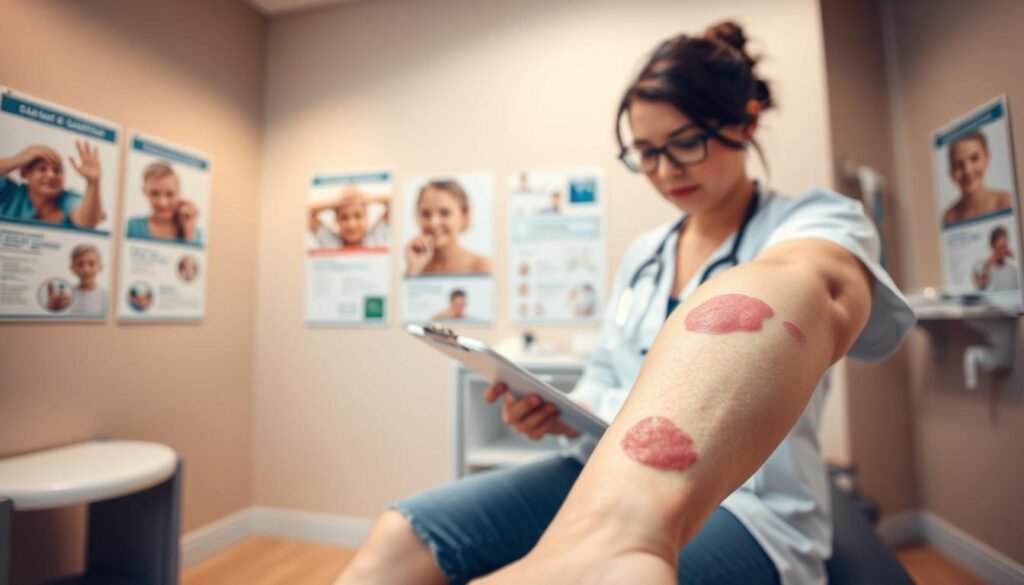
Did you know that nearly 1 in 4 Americans get a skin condition each year? They often seek medical help. These issues can start small but grow serious over time.
The skin is your biggest organ. It tells you what’s happening inside and outside. At first, changes might be small. But they can get more obvious as time goes on.
Some rashes get better with simple care. Others need a doctor’s help right away. The hard part is knowing which is which.
This guide will help you spot warning signs. We’ll talk about symptoms to watch for. We’ll also explain when to see a doctor for skin rashes that don’t go away or get worse. Knowing these signs can help you take care of your health.
You’ll learn about different skin changes and emergency signs. We’ll cover when to see a dermatologist. We’ll also talk about when home care is enough.
Medical Disclaimer: This content is for informational and educational purposes only. It’s not medical advice. Skin conditions are different for everyone. Always see a board-certified dermatologist or healthcare professional for a correct diagnosis and treatment.
Key Takeaways
- Skin changes affect millions of Americans every year. Many need a doctor’s check-up to avoid problems.
- Signs like fever, spreading rashes, or severe pain mean you should see a doctor right away.
- Spotting concerning symptoms early helps get the right treatment and better results.
- A board-certified dermatologist can give a correct diagnosis with an exam and tests.
- Knowing the difference between self-care and when to see a doctor keeps you healthy.
- Don’t ignore symptoms that get worse or don’t go away. They might mean a bigger health issue.
Understanding Different Types of Rashes
Different skin conditions show up as rashes, each with its own story. Many look similar, making them hard to tell apart. At first, changes in texture, color, or comfort might be small but grow over time.
Knowing about different rash types helps you act fast when your skin changes. Some rashes get better with simple care, while others need a doctor’s help right away. It’s important to know what makes each rash unique.
Common Types of Rashes
Contact dermatitis happens when your skin meets irritants or allergens. This could be from poison ivy, harsh soaps, or metals. The rash shows up where you touched it, with redness, swelling, and sometimes blisters. It might show up right away or take a few days.
Eczema, or atopic dermatitis, causes dry, itchy patches. These often pop up on the inner elbows, behind knees, and face. Scratching can make these areas thick and discolored. Eczema can flare up from stress, weather changes, or certain substances.
Heat rash happens when sweat ducts get blocked, trapping sweat under the skin. It shows up as small, red bumps on the chest, back, neck, and in skin folds. It feels prickly and uncomfortable, more so in hot, humid places.
Viral rashes come with infections like measles, chickenpox, and roseola. They spread over large areas and might have unique patterns. Measles starts on the face and moves down, while chickenpox has itchy blisters that crust over.
Bacterial infections like impetigo and cellulitis need medical help. Impetigo has honey-colored crusty sores, usually around the nose and mouth. Cellulitis is a red, swollen, warm area that spreads fast and feels tender.
Fungal infections include ringworm and candidiasis. Ringworm makes circular, red patches with clearer centers and raised borders. Candidiasis causes red, raw-looking patches in moist areas like skin folds, with satellite lesions nearby.
Drug reactions can cause many rash types, from mild pink spots to severe blistering. These may appear within hours or weeks after starting a new medicine. Any rash after starting a new drug should be checked by a doctor.
How Rashes Differ
Distribution patterns help tell rashes apart. Some stay in one place, while others spread all over. A rash only on areas touching jewelry is likely contact dermatitis, while a rash all over might be viral.
Morphology, or the look of individual lesions, is key. Flat spots are different from raised bumps, and smooth patches from scaly ones. These details help figure out what’s causing the rash. Fungal infections often have well-defined borders, while inflammatory conditions have blurry ones.
How fast symptoms appear and change is important. Rashes that show up quickly are often allergic reactions. Rashes that take days or weeks to develop suggest chronic conditions like eczema or psoriasis.
What’s happening around you and your health history also matters. New products, foods, or medicines can cause rashes. Knowing about past rashes helps spot patterns that point to specific conditions.
Importance of Accurate Identification
Getting the right diagnosis is key because different rashes need different treatments. Some rashes are contagious and need you to stay away from others. Spotting these early stops them from spreading in homes, schools, and workplaces.
Other rashes signal allergic reactions that need you to avoid certain things. Without knowing what’s causing it, you might keep getting skin damage. Tracking these patterns helps prevent future problems.
Some rashes are serious and can show signs of bigger health issues. Certain patterns are linked to autoimmune diseases, blood disorders, or serious infections. These need quick medical attention and treatment.
While knowing about rashes is helpful, some need urgent care. These include rashes that spread fast, touch mucous membranes, or come with fever, joint pain, or trouble breathing. What looks like a simple skin change could be a sign of many conditions, each needing its own treatment. Getting a professional evaluation ensures you get the right care for your situation.
Symptoms of Rashes
Noticing how a rash looks and feels is key. It tells you a lot about what’s happening. Knowing these signs helps you talk better with doctors and decide when to get help.
Changes in texture, color, or feeling may start small but grow. Watching these changes helps you see if the rash is getting better, staying the same, or getting worse. What symptoms you notice often depends on the cause and how your body reacts.
Color Variations and Their Significance
The color of a rash tells you a lot about what’s going on under the skin. Different colors mean different things, like inflammation or infection. Knowing these colors helps you understand how serious it is.
Red or pink rashes are very common. They mean the skin is inflamed or irritated. You see this color in allergic reactions, contact dermatitis, heat rash, and many viral infections.
Purple or dark red discolorations are a big warning sign. They mean there’s bleeding under the skin, which can be serious. This could be due to blood disorders, severe infections, or reactions to medication.
White or pale patches can mean a few things. Fungal infections often cause lighter skin areas. Vitiligo makes patches lose their color. Some inflammatory conditions also show up as white or pale.
Yellow or golden crusting usually means bacteria are involved. Staphylococcus aureus infections often look like honey-colored crusts. This helps doctors figure out the right treatment.
Brown or hyperpigmented areas often happen after a rash goes away. The skin may stay darker than before. Conditions like eczema can leave these marks that fade over time.
| Rash Color | Possible Indication | Common Causes | Urgency Level |
|---|---|---|---|
| Red or Pink | Inflammation and irritation | Allergies, infections, dermatitis | Monitor closely |
| Purple or Dark Red | Bleeding under skin | Blood disorders, severe infections | Seek immediate care |
| White or Pale | Fungal infection or pigmentation loss | Fungal conditions, vitiligo | Schedule appointment |
| Yellow or Golden | Bacterial infection | Staph or strep bacteria | See doctor promptly |
Surface Characteristics to Monitor
The texture of a rash is just as important as its color. Doctors use special terms to describe these features. Knowing these terms helps you talk about your rash more clearly.
Flat rashes called macules are colored but don’t stick out. They’re the same height as the skin around them. Viral infections and some drug reactions often look like this.
Raised bumps include papules and plaques. These bumps can tell doctors about different conditions. Insect bites, hives, and psoriasis often cause these bumps.
Fluid-filled lesions can be small or big. Clear fluid means conditions like chickenpox or herpes. Cloudy or bloody fluid means it’s more serious.
Pus-filled bumps called pustules have white or yellow stuff. Acne, folliculitis, and bacterial infections make these bumps. Pus means there’s an infection that needs treatment.
Textural variations also include:
- Rough, sandpaper-like surfaces suggesting keratosis or certain infections
- Smooth, shiny bumps indicating specific inflammatory conditions
- Hardened or thickened areas from chronic scratching or rubbing
- Soft, spongy patches that may indicate fluid accumulation
- Scales, crusts, or weeping areas providing additional diagnostic information
Physical Sensations and Discomfort
The feelings a rash causes can really affect your life. Severe rash symptoms often make it hard to do everyday things and sleep. These feelings help doctors guess what might be wrong.
Intense itching, or pruritus, is common in many skin problems. Eczema, contact dermatitis, scabies, and allergies often make you want to scratch a lot. How bad the itch is can tell doctors how serious the problem is.
Scratching a lot, and even more at night, can damage your skin and increase infection risk. The quiet of the night and changes in body temperature make itching worse.
Pain or tenderness means the rash is deeper than just itching. Infections like cellulitis hurt when touched. Shingles can cause nerve pain that feels burning.
Painful rashes need quick medical attention. This is more urgent than just itchy rashes. Doctors use this information to decide how fast to treat you.
Burning sensations can mean chemical exposure or certain inflammatory processes. Some medicines and nerve-related skin conditions can cause this feeling.
Writing down what you feel helps doctors understand your rash better. Tell them when symptoms started, how they’ve changed, and what makes them better or worse. Also, note if symptoms affect your sleep, work, or daily life.
Severe rash symptoms that need quick attention include fast-spreading color, sudden blisters, intense pain, or big areas of skin involved. These signs mean you can’t wait for a regular doctor’s visit.
Early Signs of Rashes Needing Attention
Many skin reactions go away on their own. But some signs mean you should see a doctor fast. Knowing these signs helps you act quickly to avoid bigger problems. Look at how long symptoms last, if the rash spreads, and other symptoms you have.
Noticing these signs helps you know when to see a doctor. This can stop bigger problems and get you the right treatment.
How Long Symptoms Last
The length of your rash is a clue. Most minor rashes get better in a few days to a week with simple care.
If your rash lasts more than two weeks without getting better, see a doctor. This means it might not go away on its own and could be serious.
Keep track of when your rash started and how it’s changed. Note if it started suddenly or slowly, and any changes over time. This helps doctors a lot.
Watch for rashes that seem to get better but then get worse again. This could mean a chronic condition or an infection that’s not fully gone. These patterns often need medical help to stop.
Even with good home care, some rashes keep getting worse. If your rash doesn’t get better with moisturizers, cool compresses, or over-the-counter remedies after a few days, see a doctor.
How the Rash Spreads
The way a rash spreads tells you a lot. Rashes that start in one place and spread to others might need medical help.
Rashes that spread quickly are very concerning. This could mean an allergic reaction, infection, or a serious condition. Quick spreading is different from most harmless rashes.
Some viral rashes follow a pattern, like chickenpox starting on the torso and spreading. But if a rash spreads in an unexpected way, it’s a sign to pay attention.
- Rashes extending from one limb to others without clear cause
- Skin changes moving from extremities toward the trunk
- Patches appearing simultaneously in multiple disconnected body areas
- Linear patterns suggesting infection spreading through lymphatic channels
Take photos of your rash every day if you can. This helps you and your doctor see how it’s changing. Look at where the rash is spreading, like near injuries or in skin folds.
Other Symptoms That Appear
Other symptoms with a rash are a big worry. They mean the problem is more than just skin. It could be an infection, a serious allergic reaction, or a bigger illness.
Fever above 101°F (38.3°C) with a rash means your body is fighting something. This is a sign to see a doctor, even more so in children or if the fever lasts over 24 hours.
Respiratory symptoms are a big deal. Trouble breathing, wheezing, or throat tightness could mean a severe allergic reaction. These symptoms can get worse fast and are emergencies.
Swelling in the face or throat is very serious. Even a little puffiness around the eyes or lips with a rash could be angioedema or anaphylaxis. If you see these signs, get emergency help right away.
| Symptom Category | Warning Signs | Urgency Level |
|---|---|---|
| Neurological | Severe headache, stiff neck, confusion, altered mental status | Seek immediate care |
| Circulatory | Dizziness, lightheadedness, rapid heartbeat, chest pressure | Urgent evaluation needed |
| Musculoskeletal | Joint pain, swelling, severe body aches, muscle weakness | Schedule prompt appointment |
| Systemic | Severe fatigue, chills, night sweats, swollen lymph nodes | Professional assessment advised |
| Digestive | Persistent nausea, vomiting, abdominal pain, diarrhea | Medical evaluation recommended |
Many symptoms together are a big worry. A rash with fever, joint pain, and fatigue could be serious conditions like Lyme disease or lupus. These need a doctor’s diagnosis and treatment.
Listen to your gut about how you feel. If you’re really sick or scared, seeing a doctor is a good idea. It’s better to be safe than sorry and can prevent serious problems.
When to Seek Medical Advice
Many rashes get better on their own, but some need medical help. Knowing when to seek help is key. Look for signs that your rash needs a doctor’s check-up.
It’s important to know when to see a doctor for a rash. Some rashes need a visit to your primary care doctor. Others need urgent care or the emergency room.
Here’s how to know when to get help. This guide helps you act fast when needed and avoid worry over small changes.
Symptoms That Don’t Improve
Rashes that don’t get better in a week need a doctor’s visit. Most minor rashes improve in three to five days with over-the-counter treatments. If your rash doesn’t get better or shows little change, see a doctor.
Rashes that really disrupt your life need a doctor’s look. If they affect your sleep, work, or daily activities, see a doctor. They can give stronger treatments than you can get on your own.
Watch if your rash gets better and then worse. This could mean you need a different treatment. New symptoms with an existing rash also mean you need a doctor’s advice.
Severe discomfort that doesn’t go away with usual remedies needs a doctor. Your doctor can give you stronger medicines and figure out what’s wrong. They can also give you a plan to manage your condition.
Signs of Infection
Infected rashes need quick medical help to avoid serious problems. Catching infection signs early helps you get care before it gets worse. Bacterial infections need antibiotics that only doctors can prescribe.
Here are signs your rash might be infected:
- Increasing warmth around the rash
- Redness or red streaks spreading from the rash
- Pus, yellow-green discharge, or fluid-filled blisters
- Growing pain or tenderness
- Swelling that gets worse or feels firm
- Fever after the rash starts
- Foul odor from the skin
These signs mean you might have a bacterial infection. Delaying care can lead to serious problems like cellulitis or abscesses. Quick medical help can prevent these issues.
If you see red streaks moving away from the rash, get help right away. This means the infection is spreading. Fever with rash symptoms also needs urgent care.
Involvement of Other Body Areas
Certain rash locations are more serious. Rashes near sensitive areas need immediate doctor’s attention. Here are situations that need urgent or emergency care:
Rashes near your eyes need quick attention. Rashes in your mouth or genital area also need fast evaluation. These areas are at higher risk for complications.
Large areas of blisters or swelling of lips, tongue, or throat are signs of a severe allergic reaction. Any trouble breathing with skin changes is an emergency.
Some people need quick medical help. Infants under three months with any rash should see a doctor fast. People with weak immune systems also need quick rash evaluation.
Consider these situations needing professional care:
- Rashes after tick bites or bug exposure
- Skin changes after starting new meds
- Rashes after being around someone sick
- Rashes during pregnancy
- Rashes in people with diabetes or poor blood flow
Knowing when to see a doctor is important. Mild symptoms usually allow for a scheduled visit. But, severe symptoms or signs of serious infection need emergency care.
If you’re unsure about your rash, call your doctor. They can help over the phone and guide you to the right care. Getting a doctor’s opinion gives you peace of mind and ensures you get the right treatment.
Diagnostic Procedures for Rashes
Understanding the diagnostic journey can ease anxiety when your doctor recommends additional testing for your rash. Medical professionals use several proven methods to identify exactly what’s causing your skin condition. These procedures range from simple visual inspections to more detailed laboratory analyses.
The diagnostic process follows a systematic approach that builds from basic observation to specialized testing. Your healthcare provider selects specific tests based on your rash characteristics, medical history, and initial findings. Most procedures provide quick answers, while others may take several days to yield complete results.
Visual Assessment and Medical History Review
Your doctor begins with a thorough physical examination of the affected skin areas. This initial assessment involves careful visual inspection and gentle touching of the rash to evaluate its texture and consistency. Healthcare providers examine the distribution pattern across your body to identify clues about the underlying cause.
Dermatologists often use dermoscopy, a specialized magnifying tool that reveals skin structures invisible to the naked eye. This handheld device allows providers to examine individual lesions in greater detail. The examination includes assessing the color variations, borders, arrangement, and overall appearance of the rash.
Your medical history plays a critical role in accurate diagnosis. Providers will ask detailed questions about several important factors:
- Timeline of symptom development and progression
- Recent exposures to new products, materials, or environments
- Current and recent medications, including over-the-counter products
- Previous skin conditions or similar episodes
- Family history of skin disorders or allergies
- Recent illnesses, infections, or travel to different regions
- Associated symptoms like fever, fatigue, or joint pain
For many common rashes with characteristic presentations, the physical examination alone provides sufficient information. Your doctor can often diagnose conditions like contact dermatitis, psoriasis, or eczema through visual assessment combined with your medical history. This approach allows for immediate treatment recommendations without additional testing.
Identifying Specific Allergens
Allergy testing becomes necessary when your provider suspects contact dermatitis or systemic allergic reactions. These tests help pinpoint specific substances triggering your skin reaction. Identifying exact allergens allows for targeted avoidance strategies and personalized treatment plans.
Patch testing represents the gold standard for diagnosing contact allergies. Medical professionals apply small amounts of potentially allergenic substances to your skin, typically on your back, under special adhesive patches. You wear these patches for 48 hours, then return for evaluation.
The provider checks for reactions at 48 and 96 hours after application. Positive reactions appear as redness, swelling, or small blisters at specific test sites. This method identifies delayed allergic reactions to substances like fragrances, preservatives, metals, and rubber compounds.
Skin prick testing offers quick results for immediate-type allergic reactions. Your provider places tiny drops of allergen extracts on your forearm or back, then gently pricks the skin surface. Results appear within 15 to 20 minutes, showing raised, itchy bumps at positive test sites.
Blood tests measuring specific IgE antibodies provide another diagnostic option. These tests identify allergies to foods, medications, or environmental triggers without direct skin exposure. Blood testing proves useful for patients taking antihistamines or those with severe skin conditions that prevent skin testing.
Advanced Laboratory Analysis
More invasive diagnostic procedures become necessary when the diagnosis remains unclear or serious conditions require confirmation. Skin biopsy involves removing a small tissue sample from the affected area for microscopic examination. A pathologist analyzes this sample to distinguish between inflammatory conditions, infections, and potentially concerning processes.
Healthcare providers select from different biopsy techniques based on your rash characteristics:
- Shave biopsy removes the top layers of skin using a small blade, ideal for raised lesions
- Punch biopsy extracts a cylindrical core of tissue, providing deeper skin samples
- Excisional biopsy removes the entire lesion along with surrounding tissue for complete analysis
Additional laboratory tests provide detailed diagnostic information. Bacterial, viral, or fungal cultures help identify infectious rash warning signs and guide appropriate antimicrobial treatment selection. Your provider collects samples from the rash surface or fluid-filled blisters for laboratory cultivation.
Blood tests check for systemic conditions, autoimmune markers, or evidence of infection. These tests reveal whether your rash stems from internal disease processes affecting multiple body systems. Results guide treatment decisions and help predict the condition’s likely progression.
Potassium hydroxide (KOH) preparation offers rapid fungal identification during your office visit. The provider scrapes scales from your rash, treats them with KOH solution, and examines them under a microscope. This quick test confirms fungal infections within minutes, allowing immediate treatment initiation.
Specialized tests address specific diagnostic questions. Tzanck smear helps identify certain viral infections by examining cells from blister bases. Immunofluorescence testing detects autoimmune blistering diseases by identifying specific antibody patterns in skin samples.
Most diagnostic procedures involve minimal discomfort and are well-tolerated by patients. Local anesthesia numbs the area for biopsies, making the process nearly painless. The valuable information these tests provide ensures accurate diagnosis, leading to more effective management of your skin condition.
At-Home Care for Mild Rashes
Managing mild skin rashes starts with knowing the right remedies and avoiding irritants. Many rashes can be treated at home with the right care. Knowing which products to use and how to use them is key to quick recovery.
Self-care works best for rashes that don’t spread fast, show no signs of infection, and cause mild discomfort. Before starting home treatment, clean the affected area gently with lukewarm water and pat it dry.
Moisturizers and Ointments
Choosing the right topical products can help a lot with itching and discomfort. Use fragrance-free, hypoallergenic moisturizers to restore your skin’s barrier and reduce dryness. These products trap moisture and protect against environmental irritants.
Petroleum jelly is great for very dry or cracked skin. Apply a thin layer after bathing while your skin is damp. It seals in moisture and helps your skin heal.
Colloidal oatmeal has natural anti-inflammatory and soothing benefits. You can find it in creams, lotions, and bath treatments. It’s good for itchy, irritated skin from allergic reactions or eczema.
Over-the-counter hydrocortisone cream in 0.5% to 1% strength can reduce inflammation and itching. Apply a thin layer twice daily to the affected area. But avoid using it on broken skin or for more than seven days without medical advice. It helps with allergic reaction rash care by reducing inflammation.
Calamine lotion cools itchy rashes like those from poison ivy or insect bites. The pink lotion dries on your skin and soothes irritation. Shake the bottle well before each use and apply gently with a cotton ball.
Antihistamine creams or oral antihistamines help control itching from allergic reactions. Oral options like diphenhydramine or cetirizine work throughout your body. Follow package directions carefully and be aware of possible drowsiness.
| Product Type | Best For | Application Method | Frequency |
|---|---|---|---|
| Fragrance-Free Moisturizer | Dry, sensitive skin | Apply to damp skin | 2-3 times daily |
| Hydrocortisone Cream | Inflammation and itching | Thin layer to affected area | Twice daily (max 7 days) |
| Colloidal Oatmeal | Irritated, itchy skin | Gentle massage into skin | As needed |
| Calamine Lotion | Poison ivy, insect bites | Dab with cotton ball | 3-4 times daily |
Always apply moisturizers and medicated creams with clean hands. Use thin layers to avoid clogging pores or causing reactions. Wait a few minutes between applying different products for better absorption.
Avoiding Irritants
Preventing worsening means avoiding triggers in your daily life. Harsh soaps and fragrant body washes can strip your skin of oils and worsen rashes. Use gentle, fragrance-free cleansers for sensitive skin.
Certain fabrics can irritate sensitive skin more than others. Wool and some synthetic materials can cause friction and trap heat. Choose soft, breathable cotton clothing for better air circulation and moisture control.
Extreme temperatures can worsen many rashes. Hot showers or baths may feel soothing but dry out your skin and increase itching. Use lukewarm water and limit bathing to 10-15 minutes.
Excessive washing can strip away protective oils your skin needs to heal. Reduce bathing frequency if you notice dryness. Pat your skin gently with a soft towel instead of rubbing vigorously.
Scratching can damage your skin and increase infection risk. Keep your fingernails short to minimize harm if you scratch during sleep. Consider wearing light cotton gloves at night if scratching is a problem.
For suspected contact dermatitis, review recent changes in your routine. Think about new products, jewelry, plants, or workplace exposures. Identifying the trigger helps avoid future reactions and speeds healing.
Common household irritants include laundry detergents, fabric softeners, cleaning products, and personal care items. Switch to hypoallergenic, fragrance-free versions. Rinse clothing thoroughly to remove all detergent residue before wearing.
When to Monitor
Knowing when to seek professional care is important. Watch your rash for signs of improvement within three to five days of starting home treatment. Look for reduced redness, decreased itching, or slower spreading.
Track changes in your rash’s appearance daily. Take photos with your phone to document progression objectively. This visual record helps notice subtle changes and provides valuable information for a healthcare provider.
Warning signs requiring immediate medical attention include worsening despite treatment, fever or chills, increasing pain, or fluid drainage from the rash. These symptoms suggest infection or a more serious condition that needs professional evaluation.
Pay attention to how the rash affects your daily activities. If discomfort prevents you from sleeping, working, or performing normal tasks, medical intervention may be needed. Your quality of life matters in treatment decisions.
Watch for signs of infection like increased warmth around the rash, swelling, pus formation, or red streaks. These symptoms indicate bacterial involvement requiring antibiotic treatment. Don’t delay seeking care if you notice these changes.
Consider whether new symptoms develop alongside the rash. Difficulty breathing, swelling of the face or throat, dizziness, or rapid heartbeat suggest a severe allergic reaction. Call 911 immediately if you experience these symptoms.
Set realistic expectations for healing time. Most mild rashes improve within one to two weeks with proper home care. If your rash persists beyond two weeks without improvement, schedule an appointment with your healthcare provider for evaluation.
Difference Between Allergic and Non-Allergic Rashes
Many skin conditions look similar, making them hard to tell apart. A red, itchy rash could be an allergic reaction or something else. It might be an infection, an inflammatory disorder, or irritation from chemicals.
Knowing what causes your rash is key to the right treatment. Allergic and non-allergic rashes have different causes. This affects how doctors treat them.
Identifying Allergic Reactions
Allergic rashes happen when your immune system reacts to something it thinks is harmful. This reaction creates patterns and timing that help spot allergic causes.
Allergic contact dermatitis shows up 24-48 hours after skin contact with an allergen. The rash looks like whatever touched your skin. This could be poison ivy, jewelry, or belt buckles.
Hives are immediate allergic reactions. They look like raised, itchy welts. These welts can move and usually last less than 24 hours. They often come from food allergies, medications, or insect stings.
Drug-related allergic reactions can cause widespread rashes. These rashes show up 7-14 days after starting a new drug. The exact timing depends on the drug and how you react to it.
Signs that suggest an allergic cause include:
- Intense itching as the main symptom
- A clear link to a specific substance
- Quick improvement when the allergen is removed
- Coming back with the same trigger
- Matching the rash to where you touched the allergen
Finding the specific allergen helps with allergic reaction rash care. This is done by avoiding it. Sometimes, taking antihistamines before exposure can prevent reactions.
Possible Causes of Non-Allergic Rashes
Not all rashes are allergic. Many non-immunologic mechanisms cause skin reactions that look like allergies but need different treatments.
Infectious causes are a big group of non-allergic rashes. Viral rashes like measles and roseola have unique patterns. Bacterial infections like scarlet fever and impetigo directly affect the skin. Fungal infections like ringworm and candidiasis thrive in warm, moist areas. Parasitic infestations like scabies burrow into skin layers.
Inflammatory conditions come from genetics, immune issues, and environment. Psoriasis creates thick, scaly plaques. Eczema can have both allergic and non-allergic triggers. Seborrheic dermatitis affects oil-rich areas like the scalp and face.
Irritant contact dermatitis is different because it’s caused by direct chemical damage, not an immune response. Strong soaps, solvents, or acids cause immediate burning or stinging. This happens on first contact without sensitization.
Other non-allergic causes include:
- Heat rash from blocked sweat ducts in hot, humid weather
- Photosensitivity reactions from sunlight and medications
- Autoimmune conditions like lupus affecting skin and organs
- Hormonal changes during pregnancy or menstrual cycles
- Stress-related flares of existing skin conditions
Non-allergic infectious rashes often come with systemic symptoms. You might feel fever, body aches, fatigue, and respiratory symptoms. These rashes follow patterns and timelines specific to the causative organism.
Many infectious rashes are contagious. They spread through direct contact or respiratory droplets. Allergic rashes are not contagious.
Knowing if a rash is allergic or not is key to treatment. Allergic rashes respond well to antihistamines, corticosteroids, and avoiding the allergen. Non-allergic rashes might need specific treatments for the pathogen or managing underlying conditions.
Accurate diagnosis is more important than assuming all rashes are allergic. Proper allergic reaction rash care starts with knowing the true cause. Doctors use history, physical exams, and sometimes lab tests to figure out what’s causing your rash.
Skin Irritations vs. Rashes
Not every red mark or skin change is a rash. Knowing the difference can save you time and worry. Many skin conditions look similar, making them hard to tell apart without careful observation. Learning to spot true rashes helps you choose the right treatment and know when to see a doctor.
Understanding the difference between irritation and rash is key. Each needs a different approach. Some skin changes need simple barrier protection, while others require medical help for underlying causes.
Understanding Skin Irritation
Skin irritation is your body’s reaction to external damage. Unlike rashes, it doesn’t involve internal processes or immune reactions. It happens when substances or forces harm your skin barrier.
Irritant contact dermatitis occurs when harsh substances damage your skin. Things like strong soaps, detergents, acids, and solvents can break down your skin’s outer layer. This type of irritation causes immediate damage, unlike allergic reactions.
Friction from everyday activities can also cause irritation. Tight clothes, ill-fitting shoes, or repetitive motions can lead to chafing and inflammation. This mechanical damage shows as redness, tenderness, or blistering in areas of repeated rubbing.
Environmental factors play a big role in skin irritation too. Wind, cold temperatures, and sun exposure can cause redness, dryness, or peeling. Winter weather can make your skin dry, leading to mistaken diagnoses.
Key signs of irritation include:
- Symptoms appear at sites of direct contact with irritants
- Changes develop soon after exposure to the trigger
- Improvement occurs relatively quickly once you remove the irritant
- Skin barrier repair resolves symptoms without anti-inflammatory medications
Managing irritation focuses on protection and repair. Identifying and avoiding irritants, using gentle cleansers, and applying barrier creams usually solve these issues.
Conditions That May Mimic Rashes
Many skin changes look like rashes but are different. Knowing these differences helps avoid wrong treatments. This can delay getting the right diagnosis.
Purpura and petechiae create small purple or red spots that don’t fade when pressed. This helps tell them apart from inflammatory rashes. These spots are from bleeding under the skin and may indicate serious issues that need urgent medical attention.
Livedo reticularis shows a lacy, net-like purple discoloration. It’s caused by blood vessel changes, not surface inflammation. This helps differentiate it from true rashes.
Conditions with severe rash symptoms like non-blanching purple lesions, rapid swelling, or extensive skin changes need immediate medical evaluation. They may indicate serious conditions.
Telangiectasias are visible dilated blood vessels that look like fine red lines on the skin. People often mistake them for rashes. They represent structural changes in small blood vessels, not inflammation.
Keratosis pilaris causes small, rough bumps on the upper arms, thighs, or cheeks. These bumps are from keratin plugs blocking hair follicles, not inflammation or infection. They feel rough but usually don’t itch or hurt.
Xerosis, or severe dry skin, may look red and irritated but is really about barrier dysfunction. It improves a lot with proper moisturization, unlike inflammatory rashes.
Understanding these differences helps identify conditions accurately:
| Condition | Key Features | Distribution Pattern | Action Needed |
|---|---|---|---|
| Purpura/Petechiae | Non-blanching purple spots | Variable, may be widespread | Urgent medical evaluation |
| Keratosis Pilaris | Rough bumps, no inflammation | Upper arms, thighs | Moisturization, gentle exfoliation |
| Angioedema | Deep swelling, no surface changes | Face, lips, throat possible | Immediate care if breathing affected |
| Drug Photosensitivity | Changes only in sun-exposed areas | Face, arms, neck | Review medications with doctor |
Angioedema causes swelling in deeper skin layers without surface redness or texture changes. It can affect the face, lips, tongue, or throat. If breathing is hard, you need immediate care.
Drug-induced photosensitivity creates skin changes only in sun-exposed areas. This pattern helps identify medication reactions.
By understanding these differences, you can give better information to healthcare providers. This knowledge helps avoid wrong treatments and ensures you get the right care for your condition.
The Role of Dermatologists
Dermatologists are key when skin issues are hard to figure out or treat. They have special training in skin, hair, and nail problems. Knowing when to see a specialist can prevent problems and give you peace of mind.
Dermatologists are a vital resource for anyone with ongoing or worrying skin issues. Their training lets them spot small differences between similar conditions. This skill is very useful when initial treatments don’t work or when symptoms suggest a bigger problem.
Why Specialist Evaluation Matters
Dermatologists have unique skills that set them apart from regular doctors. They go through four years of medical school and three years of internal medicine or pediatric residency. Then, they spend three more years learning about dermatology.
This deep education helps them diagnose and treat thousands of skin conditions. They can spot rare diseases, early signs of skin cancer, and other illnesses that show up in the skin. When a rash needs more than basic care, their knowledge is essential.
Dermatologists use advanced tools that general doctors don’t have. They do dermoscopy exams that show details invisible to the eye. This helps them tell if a condition is harmless or dangerous.
They create treatment plans based on accurate diagnoses, not just trying things out. They have access to special medicines and treatments for skin problems. For complex or persistent rashes, seeing a dermatologist often gives clear answers when other treatments fail.
Seeing a specialist is key when symptoms last more than two weeks, even with home treatments. Dermatologists can figure out if a rash is due to infection, allergy, autoimmune disease, or something else. Getting help early can stop long-term discomfort and complications.
Finding the Right Specialist
Finding a good dermatologist takes some thought. First, check if they are board-certified by the American Board of Dermatology. This shows they’ve met high standards.
Your primary care doctor can suggest trusted specialists. But, many plans let you see a dermatologist on your own. Make sure to check your plan before you go to avoid unexpected costs.
Think about these things when picking a dermatologist:
- Credentials and training from good schools
- What others say about them, but be careful of reviews
- If they take your insurance and what it covers
- Where their office is and how easy it is to get an appointment
- If they specialize in your condition
- If they offer telemedicine for easy follow-ups
Some dermatologists focus on kids, cosmetic treatments, or specific conditions like eczema or psoriasis. If you need special care, find a doctor who knows about your condition. Their focus can really help your treatment work better.
How fast you can get an appointment matters if you have a rash that needs urgent attention. Ask about wait times for new patients and if they can see you quickly for urgent cases. Some offices can see you the same or next day for serious issues.
| Selection Criteria | Why It Matters | How to Verify |
|---|---|---|
| Board Certification | Shows they’re really good at what they do | American Board of Dermatology website |
| Insurance Participation | Helps you avoid big bills | Contact insurance provider or office directly |
| Patient Reviews | Shows how others feel about their care | Healthcare review websites and medical directories |
| Specialized Expertise | Means they know about your specific problem | Practice website or phone consultation |
Preparing Questions for Your Appointment
Getting the most from your dermatologist visit means being prepared and asking the right questions. This is even more important when you’re not sure if your rash needs more than just basic care.
Here are some key questions to ask your dermatologist:
- What is my specific diagnosis and what caused this condition?
- What treatment options are available and what are the benefits and risks of each?
- How long should I expect before seeing improvement?
- What signs would indicate the condition is worsening or treatment isn’t working?
- Are there lifestyle modifications or dietary changes that would help?
- Is this condition likely to recur and how can I prevent it?
- Do I need follow-up appointments and how frequently?
- Should I avoid any specific activities, products, or environmental factors?
Bring any photos that show how your rash has changed. These pictures can show changes that aren’t visible during your visit.
Make a list of all the medicines, supplements, and vitamins you take. Many skin problems come from how medicines interact or side effects. Giving your dermatologist this info helps them avoid giving you treatments that might not work well together.
Keep track of when your symptoms get worse or better and any activities or things you’ve been exposed to. This helps figure out if you’re having an allergic reaction, contact dermatitis, or if something in your environment is causing your problem.
Don’t be shy about asking about genetic or family implications if your condition might affect relatives. Knowing if your family is at risk can help with early detection and prevention. Some skin conditions run in families and need screening for close relatives.
Getting professional dermatological care for rashes that won’t go away or are concerning is key. Dermatologists offer the specialized knowledge needed for accurate diagnosis and effective treatment. Their training and experience are essential for managing skin health well.
Prevention Tips for Common Rashes
Keeping your skin healthy is key to avoiding many rash problems. While no single method can stop all rashes, good habits can lower your risk. Focus on keeping your skin’s natural barrier strong, avoiding irritants, and protecting it from the environment.
Preventing rashes is easier than treating them. Simple steps can shield your skin from harmful substances. Knowing what causes your skin issues and avoiding those triggers can keep your skin healthy for life.
Establishing Effective Daily Skin Care
Your daily routine is the first line of defense against rashes. Healthy skin barriers resist irritants and allergens that could cause reactions. Everyone’s skin is different, but some basic steps apply to all.
Start with gentle, fragrance-free cleansers that don’t strip your skin of oils. Use lukewarm water instead of hot to protect your skin. Limit full-body washing to once a day unless you’re in a dirty job or exercise a lot.
Moisturizing at the right time is important. Apply it within three minutes of bathing to lock in moisture. This is great for those prone to eczema or dry skin.
- Choose products labeled “hypoallergenic” and “fragrance-free” to minimize irritation risk
- Select “non-comedogenic” moisturizers that won’t clog pores
- Drink adequate water throughout the day for internal hydration
- Pat skin dry gently instead of rubbing vigorously with towels
- Replace harsh soaps with mild cleansers designed for sensitive skin
Consistency is more important than expensive products. Regular, gentle care helps keep your skin’s barrier strong. If you have sensitive skin, test new products on a small area first.
Identifying and Avoiding Personal Triggers
Everyone reacts differently to different things. Personalized prevention based on your specific triggers is the best way to avoid rashes. By paying attention to how your skin reacts, you can find what to avoid.
Keep a diary to track when rashes happen and what you were doing. Note products, foods, places, and activities. Patterns will show up in a few weeks.
Contact allergens need special care. Once you find what triggers your skin, avoid it:
- Read product labels carefully before purchasing cosmetics, soaps, or lotions
- Choose nickel-free jewelry and belt buckles if you have nickel sensitivity
- Apply barrier creams before unavoidable exposures to known irritants
- Wear protective gloves during household cleaning or work-related chemical handling
- Wash exposed skin promptly with mild soap after contact with possible allergens
Many people are allergic to plants like poison ivy. Learn to recognize these plants. Wear long sleeves and pants when hiking or working in areas where these plants grow.
It’s hard to avoid all allergens in real life. Knowing how to minimize exposure and respond quickly when contact occurs can lessen the reaction. Washing skin within 10 minutes of poison ivy contact can prevent or lessen the rash.
Protecting Your Skin From Sun Damage
UV radiation increases skin cancer risk and can trigger or worsen rash conditions. People with conditions like lupus or rosacea must protect their skin from the sun. Even without these conditions, protecting your skin from UV rays is important.
Comprehensive sun protection involves several strategies. No single method provides complete protection against UV damage, so combining approaches is best.
| Protection Method | How to Apply | Effectiveness |
|---|---|---|
| Broad-spectrum SPF 30+ sunscreen | Apply 15-30 minutes before sun exposure; reapply every 2 hours | Blocks 97% of UVB rays when used correctly |
| Protective clothing | Wear wide-brimmed hats, long sleeves, and pants in tightly-woven fabrics | Physical barrier provides consistent protection |
| Shade seeking | Stay indoors or under cover during peak hours (10 AM – 4 PM) | Reduces UV exposure by up to 75% |
| UV-protective sunglasses | Choose glasses that block 99-100% of UVA and UVB rays | Protects delicate eye area skin |
Some medications make your skin more sensitive to the sun. Antibiotics, diuretics, NSAIDs, and blood pressure medications can increase sun damage risk. If you’re on medication, ask your pharmacist if it makes your skin more sensitive to the sun.
Apply sunscreen to all exposed skin, not just your face. Many people forget to protect their ears, neck, hands, and feet. Reapply after swimming or sweating a lot, even if the label says “water resistant.” No sunscreen stays effective for more than two hours without reapplication.
These prevention strategies can greatly reduce your risk but can’t guarantee complete protection. Always watch for signs of dangerous skin rashes, even when following all recommended practices. Some conditions may develop despite your best efforts, and catching them early is key to effective treatment.
By following healthy daily habits, identifying and avoiding personal triggers, and protecting against environmental damage, you can build a strong defense against common rashes. Prevention is easier and less uncomfortable than treating established skin problems, making it a worthwhile investment in your health.
Conclusion: When in Doubt, Seek Help
Knowing when a rash needs medical help is key to staying healthy. Your skin is a big clue to your overall health. It’s important to watch for signs that mean you should see a doctor.
Key Points to Remember
Rashes can be mild or serious. If a rash spreads fast, makes it hard to breathe, or causes a lot of pain, get help right away. Also, if it lasts more than two weeks, see a doctor.
Some groups need extra care. Kids and babies can get sick fast if they have a rash. If your child looks or feels off, trust your gut and get them checked.
Keeping your skin healthy can help prevent rashes. Use sunscreen and avoid things that make your skin break out. For mild rashes, try using moisturizers and gentle cleaners at home.
Taking Action for Your Skin Health
Getting medical advice is smart, not too much. Doctors like to check rashes early to treat them best. Now, you can even talk to a dermatologist online.
This article is just for learning, not to replace doctor’s advice. Only a real doctor can give you the right help. If you’re not sure about a rash, it’s always best to see a professional.