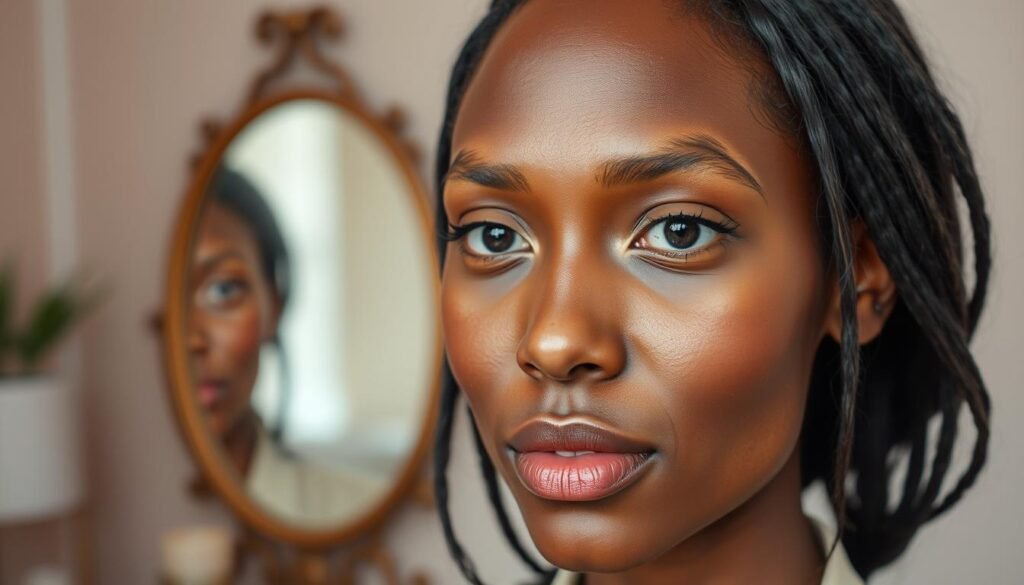
By their mid-30s, up to 50% of adults see Skin discoloration. This is before they notice fine lines. Spotting an Uneven complexion is a key step in good skin care.
Spotting uneven skin tone begins with contrast. Look for darker or redder spots compared to the rest of your skin. Signs include Dark spots from the sun, melasma patches, and Hyperpigmentation after acne.
Redness and a dull, rough texture also hint at changes. Uneven Skin Tone is common. No face is just one color. The goal is to notice when patches or texture changes stand out.
Pay attention during seasonal changes, after sun exposure, or in polluted areas. Medications and hormones can also affect color differences.
This guide will help you spot early signs and understand triggers. It covers daily routines and professional options. Remember, it’s educational, not medical advice. Always consult a licensed dermatologist before making changes.
Key Takeaways
- Uneven complexion often shows as Dark spots, melasma, or post-acne Hyperpigmentation.
- Look for contrast in Skin pigmentation, plus texture changes like rough or dull areas.
- Sun exposure and pollution are major drivers of Skin discoloration you can track over time.
- Seasonal shifts, hormones, and some medications can make Uneven Skin Tone more visible.
- Early recognition guides smarter care choices at home and with a dermatologist.
- This information is educational; seek professional advice for diagnosis or treatment.
Understanding Uneven Skin Tone
Uneven skin color happens when parts of your face or body look different from the rest. This can include darker, lighter, or redder spots. Things like UV light, pollution, and certain medications can cause these changes.
Figuring out why your skin looks uneven is key to fixing it. If you’re not sure, get regular check-ups. An annual exam is a good idea. For more info, check out this resource: Total-Body Skin Cancer Exams.
Definition of Uneven Skin Tone
Uneven skin tone means some areas look different from others. This can be due to sun damage, hormones, or irritation. These factors can change how your skin looks and feels.
Not all dark spots are the same. Using the wrong product can make things worse. It’s important to find the right treatment for your specific issue.
Types of Uneven Skin Tone
Hyperpigmentation is when melanin builds up. Sunspots, or solar lentigines, come from too much sun. Melasma is brown, tan, or gray patches that can happen during pregnancy or with birth control.
Post-inflammatory hyperpigmentation is dark spots after acne or skin irritation. Redness can come from rosacea or broken blood vessels. Texture issues are often due to dry skin or aging.
| Type | Typical Look | Main Triggers | Notes for Skin tone correction |
|---|---|---|---|
| Sunspots (Solar Lentigines) | Flat brown spots on face, hands, shoulders | Chronic UV exposure, photoaging | Daily SPF; target excess Skin pigmentation with antioxidants and retinoids |
| Melasma | Brown/tan/gray patches on cheeks, forehead, upper lip | Hormonal shifts, heat, sun | Strict sun protection; gentle fading agents to avoid rebound Uneven skin color |
| Post-inflammatory hyperpigmentation | Spots after acne or irritation | Inflammation, picking, friction | Soothe first; then gradual brighteners to reduce Skin color unevenness |
| Redness/Broken Capillaries | Persistent flush or visible vessels | Rosacea, weather, alcohol, heat | Barrier care and trigger control; avoid harsh scrubs that worsen Uneven skin color |
| Texture-Driven Unevenness | Rough, flaky, or dull areas | Dryness, buildup of dead cells, aging | Hydration and gentle exfoliation to smooth for better Skin tone correction |
Common Symptoms of Uneven Skin Tone
Changes often appear slowly, then seem obvious in bright light. Look for color shifts, small marks, and texture that feels rougher than usual. These signs can cluster on the forehead, cheeks, and nose where the sun hits most.
Visible Patches or Discoloration
Skin discoloration may show as blotches that range from tan to gray-brown. Dark spots can stem from melasma tied to hormones, while Sun spots are linked to photoaging. After a breakout or scrape, Hyperpigmentation can linger where the skin healed.
Some people notice redness and fine vessels near the nose or cheeks, adding to contrast. Shapes vary—speckles, smudges, or larger patches—and tend to stand out on sun-exposed areas. Acne scars may look darker than nearby skin, making them more noticeable after UV exposure.
Sensitivity and Texture Changes
Uneven skin texture often feels bumpy or sand-like from dead skin buildup. Dry zones can look dull or ashen, and tight skin may sting after cleansing. As cell turnover slows with age, buildup increases and rough spots become more obvious.
Past injuries can leave raised or indented marks with altered color and feel. Acne scars may produce both texture dips and pigment shifts, creating mixed patterns. Gentle care helps reduce friction and the chance of new marks forming.
Triggers of Uneven Skin Tone
An uneven complexion doesn’t happen overnight. It often comes from Seasonal skin changes and small shifts in Daily habits skin. Knowing these triggers helps with gentle Skin tone correction and reduces Photoaging over time.
Seasonal Changes and Their Impact
In spring and summer, UV rays are stronger. This boosts melanin, making sunspots darker and melasma worse. It’s a big reason for Photoaging and uneven skin.
Fall and winter air is drier, pulling moisture from the skin. This makes skin look ashen, rough, and patchy. Seasonal changes also mean pollution shifts, and particles can darken spots if not cleaned well.
Daily Habits That Contribute
Not using sunscreen is a top cause of hyperpigmentation and Photoaging. Skipping or reapplying sunscreen late leaves gaps. Over-exfoliation with strong acids or scrubs can also cause dark marks.
Not cleaning skin well lets pollution stay, causing dullness and uneven skin. Skipping moisturizer makes dryness and patchiness worse. Some medicines can make skin more sensitive to the sun or cause discoloration.
Eating too much processed food can raise blood sugar and hormones. This makes skin more reactive. Tracking Daily habits skin helps tailor Skin tone correction to your routine, whether it’s UV, pollution, product misuse, or lifestyle patterns.
| Trigger | How It Alters Tone | Real-World Example | Targeted Response |
|---|---|---|---|
| Stronger UV in warm months | Increases melanin, deepens spots, speeds Photoaging | Outdoor runs at noon in July | Broad-spectrum SPF 30+, reapply every 2 hours, hat and sunglasses |
| Dry, cold air | Dehydration reveals flakes and uneven complexion | Office heating and winter wind | Ceramide moisturizer, humidifier, gentle cream cleanser |
| Pollution particles | Surface buildup dulls tone and darkens spots | Rush-hour exposure on city streets | Double cleanse at night; antioxidant serum with vitamin C or niacinamide |
| Over-exfoliation | Barrier damage and post-inflammatory marks | Daily strong acid peel pads | Reduce frequency; add buffer nights; barrier repair with squalane |
| Medication sensitivity | Heightened pigment or bruising | Photosensitizing antibiotics | Strict sun protection; confirm risks with prescribing physician |
| Processed, high-glycemic diet | Hormonal swings amplify reactivity | Frequent sugary snacks | Balance meals with fiber, protein, and healthy fats |
Environmental Factors Affecting Skin
City air and harsh sun change how our skin looks and acts. They create free radicals, slow down repair, and cause uneven skin color and texture changes. Simple steps like smart cleansing and using SPF can make a big difference in how we look.
Pollution and Its Effects
Car exhaust, smoke, and dust stick to our skin and get into pores. This leads to oxidative stress and weak inflammation, causing Pollution skin damage. Over time, our skin may look dull and patchy, with more visible skin discoloration.
Cleaning our skin at night helps remove these particles before they cause harm. Look for products with activated charcoal or micellar formulas to trap dirt without stripping our skin. Regular cleansing reduces free radicals and helps maintain an even skin tone.
Watch for new spots or changes in moles. A guide on mole size, color, and borders at melanoma signs and mole changes helps us know when to seek medical advice. Early detection is key for our skin’s long-term health.
Sun Exposure and Skin Damage
UV light is the main cause of skin tone changes. It pushes melanocytes to produce more pigment, leading to tanning and, later, skin discoloration and uneven skin color. This is the core of Sun exposure and skin damage.
Using broad-spectrum SPF 30 or higher protects against UVA and UVB. Daily use reduces free radicals and slows down signs of photoaging like sunspots and fine lines. Many prefer SPF 50 moisturizers from brands like La Roche-Posay, CeraVe, or Neutrogena for constant protection.
Early UV exposure, even in childhood, can lead to spots later on. Use sunscreen, hats, polarized sunglasses, and seek shade in the midday to prevent melasma and post-acne marks caused by Sun exposure and skin damage.
- Daily defense: Reapply SPF every two hours outdoors; use a nickel-sized amount for the face.
- After-sun care: Soothe with aloe, niacinamide, and antioxidants to counter free radicals.
- Cleanup routine: Double cleanse on high-smog days to limit Pollution skin damage.
Situations Where Uneven Skin Tone Becomes More Noticeable
Changes in light, weather, and routine can make small flaws stand out. An uneven complexion may seem more noticeable when the air is dry or the sun is strong. Also, changes in schedule and stress can cause skin discoloration and uneven texture.
Transitioning Seasons
As days get longer, the sun’s rays get stronger, making spots more visible. Seasonal changes mean more UV, which darkens existing skin discoloration. In spring and summer, sweat and sunscreen mixing with pollution can dull the skin’s tone.
Fall and winter bring dry air and indoor heat. This dryness and flakes scatter light, making uneven skin texture more noticeable. If you skip cleansing, soot and smog can settle, making an uneven complexion stand out more.
- Quick help: use a micro-fine exfoliant, then apply vitamin C or niacinamide in the morning.
- Finish with a tinted mineral SPF from brands like La Roche-Posay or Colorescience.
Special Events and Occasions
Bright venues, flash photography, and HD video reveal every detail. Stress before big days can cut sleep and lead to missed sunscreen, making skin discoloration worse.
Keep routines steady the week before. Choose a gentle daily microfoliant and a fragrance-free brightening serum. Avoid aggressive peels close to the event to prevent redness that makes an uneven complexion and texture worse under lights.
- Prime with a silicone-free blur, then layer a sheer, buildable concealer.
- Set with a mineral powder that adds SPF for extra defense during daytime ceremonies.
The Role of Skincare in Managing Tone
Creating a thoughtful skincare routine can help even out your skin tone. It keeps your skin’s barrier calm. Use gentle steps to target brightening and protect against new spots.
Consistency matters: you’ll see results in 30 days, with deeper brightening in up to four months. Daily SPF helps keep your results from fading.

Effective Ingredients to Look For
- Vitamin C brightens and fades dark spots. Use it in serums every morning.
- Niacinamide balances tone, reduces redness, and evens out pigmentation without irritation.
- AHAs like glycolic acid clear dull skin for a brighter look; salicylic acid keeps pores clean.
- Retinol gently resurfaces skin over time, softening Uneven skin texture.
- Oligopeptides and zinc glycinate control melanin for targeted Skin tone correction.
- Kojic acid and mulberry lighten skin; use hydroquinone with caution for stubborn spots.
- Activated charcoal removes pollutants; glutathione adds antioxidants in some formulas.
Skincare Routines for Even Skin
Begin and end with a gentle cleanse, then moisturize to protect. Use broad-spectrum SPF 30+ daily. In sunny areas or for hyperpigmentation, use SPF 50.
- Morning: cleanse, Vitamin C serum, Niacinamide or lightweight hydrator, sunscreen.
- Evening: cleanse, AHAs or salicylic acid on alternate nights, then Retinol on non-exfoliation nights, finish with moisturizer.
Adjust your routine based on your skin type for smooth Skin tone correction:
- Dry: use water-in-oil creams with glycerin, urea, and lactic acid to soften Uneven skin texture.
- Oily: choose oil-in-water, non-comedogenic fluids and space AHAs or Retinol to avoid over-drying.
- Combination: richer care for dry zones, lighter gels for the T-zone; rotate actives to keep balance.
- Normal: light day lotion, slightly richer night cream, steady use of Vitamin C, Niacinamide, and gentle AHAs.
Keep exfoliation modest and patch test new actives. Small, regular steps with Retinol, AHAs, and sunscreen defend gains and support a more even look over time.
Professional Treatments for Uneven Skin Tone
When home care doesn’t work, professional help can speed up results. Dermatology clinics offer treatments that target hyperpigmentation and dark spots. They use advanced methods to improve skin texture.
Chemical Peels and Their Benefits
Chemical peels use acids to remove damaged skin layers. This process boosts cell turnover, making skin smoother and reducing dark spots.
At home, Dermalogica PowerBright Dark Spot Peel is a gentle option for surface issues. In-office peels may cause brief redness and flaking as the skin heals.
Tip: Use sunscreen and pigment-safe serums with peels to keep your skin tone even between treatments.
Laser Therapy Options
Laser therapy targets specific skin issues with precision. Laser Genesis stimulates collagen, reducing redness and uneven pigment. Excel V+ treats visible blood vessels to lessen flushing.
For deeper effects, fractionated CO2 lasers work below the surface to enhance collagen. Secret RF microneedling combines needles with radiofrequency for hyperpigmentation and scars. SkinVive microinjections use hyaluronic acid for hydration and a smoother look.
A dermatologist will choose the right laser therapy and schedule based on your skin. Combining lasers with chemical peels can give better results for dark spots.
| Treatment | Main Target | Ideal For | Notable Benefits | |
|---|---|---|---|---|
| Superficial Chemical Peels | Surface pigment and texture | Early hyperpigmentation, dull tone | 1–3 days of flaking | Brightens, smooths, supports even tone |
| Dermalogica PowerBright Dark Spot Peel | UV spots and post-blemish marks | At-home maintenance across skin tones | Minimal | Gentle exfoliation for dark spots between pro visits |
| Laser Genesis | Redness, texture, uneven tone | Mild discoloration and roughness | None to mild | Collagen stimulation, smoother look |
| Excel V+ | Vessels and persistent redness | Broken capillaries, flushing | Minimal | Targets vascular causes of discoloration |
| Fractionated CO2 | Deep skin resurfacing | Stubborn hyperpigmentation, etched texture | 5–10 days | Stronger collagen remodeling, clearer complexion |
| Secret RF Microneedling | Pigment and texture | Mixed-tone issues and scars | 1–3 days | Improves tone with limited downtime |
| SkinVive Microinjections | Hydration and smoothness | Fine lines and rough texture | Minimal | Water-binding glow that enhances evenness |
Lifestyle Changes to Promote Evenness
Small daily choices can make your skin look calmer and more balanced. Focus on what you eat, drink plenty of water, and protect your skin from the sun. These habits work together with your skincare routine.
Dietary Adjustments
Try to avoid white bread, chips, soda, and candy. They can cause blood sugar spikes that lead to skin issues. Instead, eat foods that help lighten your skin and fight off damage.
- Green tea offers polyphenols that help defend against stress on skin.
- Leafy greens supply vitamins B and E plus fiber to counter free radicals.
- Citrus, tomatoes, and other vitamin C–rich picks aid pigment repair.
- Watermelon, grapes, carrots, and tomatoes add lycopene for extra defense.
- Salmon and tuna bring omega-3s that help reduce dark patches.
Eat a variety of colorful foods. This simple habit boosts your skin’s health and keeps it glowing.
Hydration and Its Importance
Drink water all day to keep your skin hydrated and healthy. Also, eat foods rich in minerals to prevent dryness.
Use hyaluronic acid and barrier creams to smooth out rough spots. Don’t forget to apply sunscreen daily to protect your skin from darkening and new marks.
Being consistent with your food choices, water intake, and sun protection is key. It helps your routine achieve lasting balance.
DIY Remedies for Uneven Skin Tone
Small, steady habits can soften Skin discoloration over time. Start with Natural remedies uneven skin tone. Don’t forget to use sunscreen every day. Always patch test, go slow, and watch how your skin reacts.

Natural Ingredients for Treatment
Aloe vera gel is cool and light. It might calm redness and help even out your skin. Apply a thin layer in the morning and at night to dry areas.
Apple cider vinegar can be a mild toner. But, dilute it well because strong acids can sting and make your skin more sensitive to light. Always use SPF to protect your skin.
Lemon juice has citrus acids that can brighten. Dab a small amount on dark spots for up to 10 minutes, then rinse. Stay out of the sun after using it to avoid irritation.
Onion juice mixed with Apple cider vinegar is a classic at-home blend. Use equal parts, leave on for 10–15 minutes, then rinse. Stop if you feel burning or see redness.
Some people try a tiny amount of crushed garlic for stubborn spots, but it can be harsh. If you test it, keep contact time short and moisturize after with Aloe vera.
Simple Home Masks to Try
Home masks for dark spots work best when they’re gentle. Mix Aloe vera with brown sugar or a pinch of baking soda for a soft scrub. Aim for a non-sharp, creamy grit and massage for 30 seconds.
For a calming boost, blend Aloe vera with raw coconut oil. Smooth it on for 10 minutes, then wipe and rinse. This helps hydrate while easing the look of Skin discoloration.
Keep a simple schedule. Do at-home facials once or twice a week. Save stronger acids for spaced-out days. Support results with daily SPF to maintain tone and prevent new patches.
| Ingredient | Main Benefit | How to Use | Contact Time | Frequency | Notes |
|---|---|---|---|---|---|
| Aloe vera | Soothing, light brightening | Apply gel as a thin layer or mix in a gentle scrub | Leave-on or 30–60 seconds if scrubbing | Daily leave-on; scrub 1–2x/week | Great base for Natural remedies uneven skin tone |
| Apple cider vinegar | Mild exfoliation, tone refining | Dilute with water; swipe on clean skin | Up to 5 minutes, then rinse if sensitive | 2–3x/week | Use SPF; acids may increase photosensitivity |
| Lemon juice | Spot brightening | Dab on dark spots only | 5–10 minutes, then rinse | 1–2x/week | Avoid sun right after use |
| Onion juice + Apple cider vinegar | Targeted lightening | Equal parts; apply to spots | 10–15 minutes, rinse well | 1–2x/week | Patch test to reduce risk of irritation |
| Garlic (tiny amount) | Occasional spot treatment | Apply briefly to stubborn areas | 1–3 minutes, then remove | Once every 1–2 weeks | Can be harsh; follow with Aloe vera |
| Aloe vera + raw coconut oil | Hydration and comfort | Spread a thin mask layer | 10 minutes, then wipe and rinse | 1–2x/week | Supports Home masks for dark spots care |
Recognizing When to Seek Professional Help
Uneven skin color can be tough to tackle on your own. If your home care isn’t working or spots change fast, it’s time to see a dermatologist. A professional evaluation can help find serious issues and create a treatment plan.
Knowing when to seek help can also prevent treatments that might make things worse.
Signs That Indicate Serious Issues
See a dermatologist if a spot changes quickly in size, shape, or color. Look out for irregular borders, asymmetry, or bleeding. These signs could mean melanoma or other serious conditions.
If redness from visible vessels or rosacea keeps coming back, or if melasma or sunspots won’t go away, get help. Also, if medication side effects are causing uneven skin color, or if scars and texture are affecting your confidence, it’s time to see a dermatologist.
Consulting a Dermatologist: What to Expect
At your dermatologist visit, they’ll examine your skin for different types of pigmentation and redness. They’ll also look at texture, scarring, and what might be causing your skin issues. You’ll get a personalized plan that might include skincare products or treatments like chemical peels or laser therapy.
Your dermatologist will teach you how to protect your skin with the right SPF, exfoliation, and barrier support. You might start seeing changes in about 30 days. It takes several months to see a brighter, more even skin tone. Getting help early can prevent setbacks and protect your results.