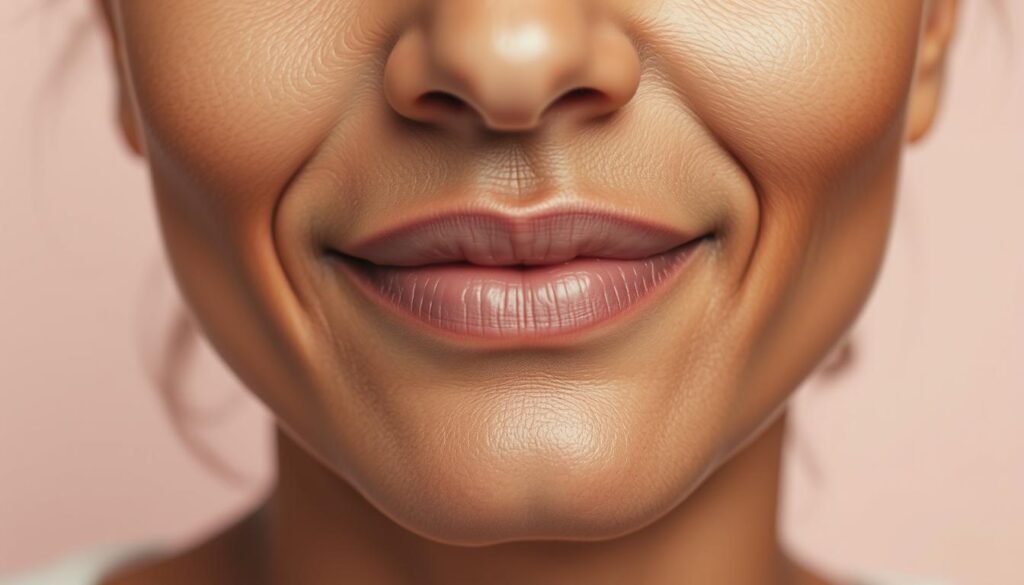
Up to 40% of visits to dermatologists are about uneven skin tone. Many of these cases are around the lip and chin. This guide will help you spot dark spots early, understand why they happen, and take action today.
Perioral hyperpigmentation shows up as faint shadows at the lip corners or a ring on the upper lip and chin. To spot dark spots, look for smudged borders in daylight. Also, notice if the color gets darker after sun, cold wind, or makeup.
There are many reasons for this issue. UV and visible light, hormonal changes, and some medicines can cause it. Even vitamin B12 or D deficiencies, certain diseases, and darker skin tones can play a part.
Acting early is key. Use daily broad-spectrum SPF, gentle cleansers, and targeted treatments to help. You can try vitamin C, azelaic acid, or retinoids at home. For more serious cases, see a dermatologist for chemical peels or laser treatments.
If dark spots spread quickly, itch, or come with other symptoms, get medical help. Not all cases need treatment, but it’s smart to check for underlying causes and create a safe plan.
Key Takeaways
- Perioral hyperpigmentation is common and often appears as subtle shadows near the lips and chin.
- Sunlight, hormones, medications, and skin irritation are leading triggers of Pigmentation Around the Mouth.
- Check your skin in natural light to learn how to recognize dark spots and track changes over time.
- Start with SPF, gentle care, and proven actives; consider mouth pigmentation treatment only when needed.
- People with darker skin tones may experience more noticeable darkening due to reactive melanin.
- See a dermatologist if discoloration is rapid, symptomatic, or linked with systemic health changes.
Understanding Pigmentation Around the Mouth
Changes in lip color can show up as faint shading or clear patches. These changes often come from the skin’s pigment system reacting to light, hormones, and irritation. Knowing what causes these changes helps you spot them early and choose the right care for your skin.
When shade deepens suddenly or lingers, it may signal melanin overproduction. This can be caused by sun, heat, or inflammation. Many people also notice dark spots near mouth after breakouts, waxing, or a new medication. Paying attention to timing, triggers, and family history can provide useful clues.
What is Hyperpigmentation?
Hyperpigmentation is a visible darkening caused by melanocytes making extra pigment. This process, called melanin overproduction, can create small freckles or larger patches. UV and visible light, hormones, and irritation from acne or dermatitis are frequent drivers.
Medications can also play a role. Classes linked to pigment change include tetracyclines, antimalarials, antineoplastics, psychoactive drugs, and amiodarone. Systemic issues—such as Addison’s disease, thyroid disorders, PCOS, and type 2 diabetes—can also influence the causes of pigmentation around mouth, leading to persistent dark spots near mouth in some people.
Different Types of Pigmentation
Melasma often appears as brown to gray-brown patches, including melasma around lips and the upper lip. It is more common in women, and can be triggered by pregnancy or hormone therapy. Men can also be affected. Visible light may worsen it; tinted sunscreens with iron oxide offer added protection.
Sun-induced spots, known as solar lentigines, result from cumulative exposure. They tend to cluster on areas that catch light and can add to dark spots near mouth in those with frequent outdoor time.
Post-inflammatory hyperpigmentation follows acne, burns, or dermatitis. These marks often fade over months, but they can persist longer in deeper skin tones due to melanin overproduction after inflammation. Rare genetic and systemic contributors—such as Peutz-Jeghers syndrome, Laugier-Hunziker syndrome, and porphyria cutanea tarda—may also influence the causes of pigmentation around mouth and the pattern of melasma around lips.
Common Symptoms of Pigmentation Issues
Changes near the mouth often start subtly. You might spot lip discoloration after a day in the sun or notice faint borders that look uneven in photos. Track timing, location, and whether the tone shifts with seasons to catch early perioral hyperpigmentation signs.
Discoloration and Dark Spots
The most common clue is dark patches around lips that range from light brown to gray‑brown. Some areas appear splotchy, much like melasma, and skin color changes near mouth can look sharper after summer sun.
Post‑inflammatory marks can follow acne, dermatitis, insect bites, or skin procedures. Drug reactions may show as darker macules on sun‑exposed skin. In rare systemic cases, the mucosa and borders around the lips can deepen in color.
- Note if lip discoloration is new or spreading.
- Check if over‑the‑counter care fails after several weeks.
- Watch for fatigue, weight loss, or other systemic symptoms.
Texture Changes in the Skin
Color shifts lead, but texture can change when irritation joins in. Retinoid overuse may cause dryness, flaking, and itch. Chronic lip licking can trigger redness and scaling that amplify perioral hyperpigmentation signs.
Areas with skin color changes near mouth can feel rough or tight after wind or cold. Gentle care helps reduce friction so dark patches around lips do not look more pronounced than the surrounding skin.
| Symptom Pattern | Typical Look | Common Triggers | What to Monitor |
|---|---|---|---|
| Sun‑accentuated patches | Brown to gray‑brown edges, sharper in summer | Midday UV, outdoor sports, driving | Seasonal flares, sunscreen response |
| Post‑inflammatory marks | Flat macules where acne or rash healed | Breakouts, dermatitis, procedures | Fading over months, new lesions nearby |
| Drug‑induced changes | Diffuse or spotty darkening on exposed skin | Photosensitizing medications | Timing with new prescriptions |
| Irritation‑linked texture | Dry, peeling rim with redness | Retinoids, lip licking, harsh scrubs | Sting, itch, scaling intensity |
| Mucosal involvement | Deeper tone on inner lip and borders | Systemic illness | Associated systemic symptoms |
Seasonal Changes and Their Impact
Changes in temperature, light, and humidity can highlight perioral color shifts. These changes often follow our habits, products, and sun exposure. Making a few adjustments can help maintain even tone around the mouth.

How Winter Affects Skin Pigmentation
Cold, dry air weakens the lip and perioral barrier, leading to faster irritation. Lip licking and wind burn can cause dermatitis, leaving marks like winter lip discoloration.
Using fragranced balms or certain toothpastes can irritate the skin further. When the skin heals, it may leave behind color marks. These marks become more noticeable against the pale light of winter.
Opt for simple, petrolatum-based balms and avoid mint or cinnamon. Choose a gentle fluoride toothpaste. Keep skin hydrated, use a humidifier, and apply ceramide moisturizer to prevent future spots.
Summer Sun Exposure and Pigmentation
Strong UV and visible light increase melanin, making dark spots around the mouth more noticeable. Many see an increase in summer hyperpigmentation, often due to missed SPF along the lip line and corners.
Melasma can get worse with visible light. Tinted sunscreens with iron oxides from EltaMD, La Roche-Posay, and Colorescience offer better coverage. Wear a wide-brim hat and seek shade during peak UV hours.
Regular skin checks are important. Consider a Total-Body Skin Cancer Exam. Reapply SPF 30+ every two hours to prevent damage from cumulative radiation.
Daily Habits That Influence Skin Appearance
Small, steady habits shape how the perioral area looks each day. Thoughtful sun care, a gentle skin-brightening routine, and smart nutrition can support an even tone. They help guide effective remedies for pigmentation around mouth without harsh steps.
Skincare Routines
Start each morning with broad-spectrum SPF 30 or higher. Mineral filters like zinc oxide and titanium dioxide guard against UV. Tinted formulas with iron oxide add defense against visible light. Reapply every two hours outdoors, cover the upper lip and corners, and pair with a wide-brimmed hat.
Build a skin-brightening routine with gentle steps. Use a mild chemical exfoliant, such as glycolic acid, a few times a week to smooth texture. Follow with a vitamin C serum to boost radiance and support skincare for dark spots near mouth.
At night, add a retinoid—retinol, adapalene, or tretinoin—starting low and slow to reduce dryness and peeling. Proven actives for tone include azelaic acid, kojic acid, and vitamin C; dermatologists may prescribe hydroquinone for persistent areas. Patch test possible irritants, and avoid unsupervised steroid lighteners or harsh bleaching products.
Be precise with application. Many people skip the border of the lips when using sunscreen and serums. Treat the entire perioral zone, including smile lines and the chin crease, to support targeted remedies for pigmentation around mouth.
Diet and Nutrition
Nutrition helps the skin repair itself. Address vitamin deficiencies and pigmentation by checking vitamin B12 and vitamin D levels with a clinician. Adequate protein and minerals like zinc aid barrier function and recovery after exfoliation.
Choose produce rich in antioxidants, lean proteins, whole grains, and healthy fats. Limit smoking, which is linked to uneven tone around the lips. Supplements should match lab results, not trends, so adjust intake under medical guidance while you maintain a consistent skin-brightening routine.
| Daily Habit | Why It Matters | How To Do It Right | Notes |
|---|---|---|---|
| SPF and Sun Avoidance | UV and visible light can deepen dark patches | Use SPF 30+ with zinc oxide; reapply every 2 hours; choose tinted sunscreen with iron oxide; wear a wide-brimmed hat | Cover the full perioral area and avoid midday sun |
| Gentle Exfoliation | Removes dull cells to reveal brighter skin | Use low-strength glycolic acid 2–3 nights per week | Pause if stinging persists; moisturize after |
| Brightening Serums | Targets uneven tone near the mouth | Apply vitamin C in the morning; add azelaic or kojic acid as tolerated | Patch test; avoid harsh bleaching and unsupervised steroids |
| Retinoids | Support cell turnover for smoother tone | Start 2–3 nights per week, then increase slowly | Expect mild dryness; buffer with moisturizer |
| Targeted Nutrition | Corrects internal factors tied to pigmentation | Check B12, vitamin D, and zinc; ensure enough protein | Manage smoking; tailor supplements with a clinician |
Environmental Factors Contributing to Pigmentation
Being outside can change how skin colors around the mouth. Sunlight, pollution, and harsh weather cause stubborn patches. Taking care and using shields helps keep skin tone even.
Think beyond UV alone. Studies show blue and visible light also affect skin color. So, daily shields need more than SPF. Light, non-irritating formulas help reduce flare-ups that can lead to marks.
Pollution and Skin Health
City air has soot, metals, and ozone that cling to the face. This weakens the barrier, causing redness and itching. Often, this leads to dark spots from environmental stressors.
Use a gentle cleanse at night to remove particles without stripping. Antioxidants from brands like SkinCeuticals, The Ordinary, and Paula’s Choice help neutralize free radicals. Use iron oxide–tinted sunscreen to protect melasma-prone areas.
- Cleanse once or twice daily with a non-foaming wash.
- Layer vitamin C or niacinamide to calm and defend.
- Choose fragrance-free products to lower sting and burn risk.
Climate Effects on Skin
Heat, sweat, and high UV raise melanin activity and can deepen spots around the mouth. Cold, dry air cracks the barrier, and lip licking in winter worsens climate and pigmentation patterns.
Opt for water-resistant sunscreen from EltaMD, La Roche-Posay, or Neutrogena during long outdoor stretches. Seek shade at midday and wear a brimmed hat. For visible light protection, choose iron oxide tints that blend with your tone.
- In summer: reapply SPF 30+ every two hours and after sweating.
- In winter: use occlusive balms to seal corners of the mouth.
- Avoid harsh scrubs; choose mild acids to limit environmental skin discoloration.
Small switches add up. Protective clothing, steady sunscreen use, and low-irritation skincare reduce triggers that fuel dark spots from environmental stressors.
Triggers for Pigmentation Around the Mouth
Small changes in hormones, products, or medications can cause color changes near the lips. These changes might lead to melasma around the lips, patches from hormonal pigmentation, or marks from irritation. Knowing what causes these changes helps in gentle care and making better choices.
Hormonal Changes
Hormonal shifts during pregnancy, birth control, and menopause can activate melanocytes. This can deepen the tone on the upper lip. Many notice melasma around the lips when estrogen and progesterone levels change. Thyroid disease and PCOS can also make shade changes last longer after sun exposure.
Some drugs can change skin color or make it more sensitive to the sun. Examples include doxycycline and minocycline, hydroxychloroquine, NSAIDs like ibuprofen and naproxen, and blood pressure agents such as telmisartan or captopril. Other drugs linked to hyperpigmentation include carbamazepine, lamotrigine, cyclophosphamide, ifosfamide, thiotepa, chlorpromazine, tricyclic antidepressants, amiodarone, simvastatin, allopurinol, and certain mucolytics.
Allergies and Reactions
Allergic and irritant reactions can leave a shadow after the redness fades. Contact dermatitis around the mouth often comes from lip balms, toothpaste flavors, sunscreen sticks, or long-wear lip color. Lip licker’s dermatitis dries the skin and may lead to post-inflammatory pigment.
Simple steps can lower risk: patch test new products, limit fragranced formulas, and keep the skin barrier supported with ceramides and petrolatum. If triggers are unclear, a clinician can review drugs linked to hyperpigmentation and adjust plans if needed.
| Trigger | Typical Signs | Common Examples | Supportive Actions |
|---|---|---|---|
| Hormonal shifts | Brown patches on upper lip; symmetric borders | Pregnancy, oral contraceptives, menopause, thyroid disease, PCOS | Sun avoidance at peak hours; mineral SPF 30+; discuss hormonal pigmentation risks with a clinician |
| Medications | Slate-brown or blue-gray areas; photosensitivity | Doxycycline, minocycline, hydroxychloroquine, telmisartan, captopril, carbamazepine, lamotrigine, amiodarone, simvastatin, allopurinol | Review for medication-induced hyperpigmentation; reinforce broad-spectrum SPF; consider alternatives when appropriate |
| Allergic/irritant exposure | Sting, dryness, rash followed by brown marks | Contact dermatitis around mouth from lip balms, flavored toothpaste, long-wear lipsticks, sunscreen sticks | Patch test new items; choose fragrance-free products; break lip-licking cycle with bland occlusive |
Key takeaway: Map your recent hormonal shifts, products, sun time, and prescriptions to pinpoint the driver of melasma around lips and address it at the source.
Situations Making Pigmentation More Noticeable
Changes in routine, travel, and time outdoors can affect skin around the lips and chin. Heat, sweat, and sun can make photoaging-related pigmentation more visible. Gentle care and steady habits help manage these changes.
Stress and Lifestyle Factors
Busy weeks often mean less sleep and skipped sunscreen. This mix can make dark spots near the mouth more noticeable, after long commutes or walks. People also notice patches after trying new scrubs or fragrances near the lips.
Research shows a link between stress and melasma. Daily stress can change hormones that drive pigment cells. Add frequent sun, tanning beds, or smoking, and discoloration can look deeper. Summer activities can make areas around the mouth appear darker by evening.
- Practical cues: reapply SPF 30+ by midday, choose mineral formulas from brands like EltaMD or La Roche-Posay, and avoid harsh scrubs around the mouth.
- After workouts, rinse sweat and use a bland moisturizer to reduce friction and flare-ups.
Aging and Skin Changes
With time, UV damage leads to age spots around the mouth and other exposed areas. Fine lines and dryness can make photoaging-related pigmentation look more defined. Cooler months may mask color, but spring and summer bring it back into focus.
Some cosmetic procedures can worsen tone if too strong for your skin type. Aggressive peels, dermabrasion, certain lasers, or cryotherapy may spark post-inflammatory darkening, more in darker skin tones. A patch test and conservative settings help protect results.
- Choose broad-spectrum SPF and a hat for daily errands, not just beach days.
- Ask your dermatologist about low-strength chemical peels or non-ablative lasers tailored to your tone.
Identifying Underlying Conditions
Not all darkening around the mouth comes from the sun or makeup. Sometimes, it’s due to changes in the body or local diseases. Finding out what causes lip discoloration early is key. It helps in choosing safe treatments and sets realistic expectations.
Track the timeline. Keep an eye on new spots after getting sick, starting new meds, or feeling stressed. Also, note symptoms like tiredness, weight changes, mouth sores, burning, or itching. These signs can help tell if it’s a skin problem or just a temporary mark.
Skin Disorders Linked to Pigmentation
Many conditions affect the lips, gums, and skin around the mouth. Lichen planus can cause spots that are violet or gray-brown and may hurt. Erythema dyschromicum perstans leads to ash-brown patches. Tinea or candidiasis might change color after getting inflamed. Impetigo can leave spots that fade as it heals.
Systemic issues also play a role. Addison’s disease can darken the gums and mouth corners. Conditions like Cushing syndrome, thyroid problems, polycystic ovary syndrome, type 2 diabetes, and hemochromatosis can affect melanin. Autoimmune lupus can leave lasting color changes.
Genetic syndromes can also cause early and lasting changes. Peutz-Jeghers and Laugier-Hunziker syndromes show mucosal macules. Porphyria cutanea tarda can change color with sun exposure. Treatments for HIV and cancer can also cause color changes.
| Condition | Typical Clues | Pattern Around Mouth | Next Clinical Step |
|---|---|---|---|
| Lichen planus | Oral soreness, lace-like white lines | Gray-brown macules on lips/mucosa | Dermatology or dental exam; topical corticosteroids |
| Erythema dyschromicum perstans | Slow-spreading ash-brown patches | Symmetric perioral darkening | Biopsy if uncertain; pigment-safe care |
| Fungal infection | Scale, itch, or oral thrush | Post-inflammatory discoloration | Microscopy or culture; antifungals |
| Addison’s disease | Fatigue, low blood pressure, salt craving | Mucosal and lip-edge darkening | Primary care or endocrinology; cortisol testing |
| Peutz-Jeghers syndrome | Family history, GI polyps | Small brown macules on lips and mouth | Genetics and GI referral; surveillance |
| Medication-related | New therapy (ART, chemo, PD-1 inhibitors) | Diffuse or mottled tone change | Review regimen; risk-benefit with prescriber |
When to Consult a Professional
Know when to see a dermatologist. Make an appointment if you notice new or spreading pigment, or if it doesn’t get better with gentle care. Also, seek help for pain, bleeding, crusting, or numbness. If you’re tired, losing weight, have fevers, or hormonal symptoms, get a medical check-up.
Experts can figure out what’s causing the skin changes and help find the root cause of lip discoloration. Your primary care doctor can check for endocrine or metabolic diseases, like Addison’s disease, thyroid issues, diabetes, and how meds might affect you. This info is for education; for a proper diagnosis or treatment, see a licensed doctor right away.
Prevention and Treatment Options
Getting clear skin around your lips starts with good daily habits. Make sure to protect your skin from the sun, use gentle products, and stick to a routine. If spots show up, a specific treatment plan can help even out your skin tone and keep it looking good.

Topical Treatments for Pigmentation
Start with a simple routine. Use a broad-spectrum sunscreen with zinc oxide or titanium dioxide every morning. Look for tinted formulas with iron oxide to protect against visible light. Reapply sunscreen every two hours when you’re outside, and after sweating or swimming.
For active care, pick topical treatments with ingredients that work. Vitamin C brightens and protects your skin. Retinoids help your skin cells turn over faster. Azelaic acid reduces dark spots and calms redness, while glycolic acid gently exfoliates.
Kojic acid is good for melasma and age spots. Prescription hydroquinone can fade stubborn spots, but only under a doctor’s watch. Start slow to avoid irritation, and avoid harsh bleaching agents or steroid creams without a doctor’s advice. For deeper issues, consider in-office treatments like peels or lasers, but always protect your skin from the sun afterward.
Results take time, so be patient. Marks from inflammation can take months to fade. Always check with your doctor before changing any medications, and only do so under their guidance.
Lifestyle Adjustments for Healthy Skin
Everyday choices can help with dark spots near your mouth. Wear wide-brimmed hats, avoid the sun between 10 a.m. and 2 p.m., and don’t use tanning beds. Reduce friction from masks or rough scrubs, avoid lip licking, and choose non-stinging skincare to prevent irritation.
Eat well to support your skin from the inside. Make sure you’re getting enough B12, vitamin D, zinc, and protein. If you’re sensitive, test new products first. People with celiac disease should avoid azelaic acid made from wheat. Quitting smoking can also help improve your skin’s tone.
With consistent sun protection and the right care, preventing dark spots around your mouth is achievable. Using targeted treatments and sticking to a treatment plan can keep your skin looking even and prevent future problems.
Conclusion: Maintaining Healthy Skin
Getting healthy skin around your mouth takes time and effort. It’s not about quick fixes. Start with daily habits to protect your skin from the sun and gentle skincare routines. Many dark spots are common and harmless. Managing them works best over time, not overnight.
Long-term Strategies for Pigmentation Prevention
Make protecting your skin from the sun a daily habit. Use sunscreen with SPF 30 or higher. Choose products with iron oxide to block light. Wear hats and seek shade when you can.
Keep your skincare routine consistent but gentle. Use vitamin C in the morning and retinoids at night if your skin can handle it. Use azelaic, glycolic, or kojic acids in small amounts. Avoid harsh scrubs to prevent more spots.
Change your skincare with the seasons. In summer, reapply sunscreen often and wear more coverage. In winter, protect your skin from wind and dryness. If spots change, talk to your doctor about medications, iron or B12 levels, and thyroid or insulin issues.
For better results, try chemical peels or lasers. But do this under the guidance of a dermatologist. Follow their aftercare advice and be patient.
Embracing Skin Diversity and Care
Skin comes in many tones, and most dark spots are just part of that. Accept and care for your skin’s diversity. Use safe, proven ways to manage hyperpigmentation. Progress is slow, but daily care tailored to you is key.
This article is for information only. It’s not a medical diagnosis. Always talk to a professional before changing your skincare or health routine.