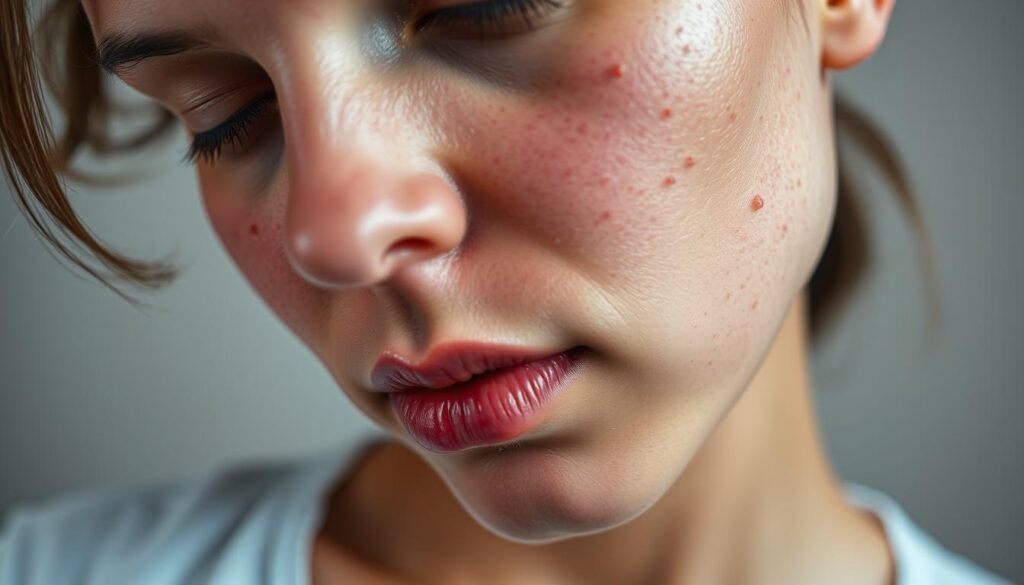
Nearly 85% of people between ages 12 and 24 get at least minor acne. Yet, many find it hard to spot comedonal acne. This shows how common these small bumps are, often mistaken for regular pores or other skin issues.
Knowing how to identify comedonal acne is key to picking the right treatment. These bumps form when pores get clogged with oil and dead skin cells. Unlike angry red pimples, this type of acne focuses on blackheads and whiteheads that make your skin feel rough and bumpy.
Spotting blackheads and whiteheads early is important for your skincare journey. Young teens often see these bumps first on their foreheads and chins. The good news is that comedonal acne is mild to moderate and can be treated well once you know what you’re dealing with.
Key Takeaways
- Comedonal acne appears as small, flesh-colored bumps, not red, inflamed pimples
- Blackheads and whiteheads are the two main types of comedones you’ll encounter
- This type of acne commonly shows up on the forehead and chin areas first
- Blocked pores filled with oil and dead skin cells cause these non-inflammatory bumps
- Most teenagers and young adults will experience some form of comedonal acne
- Early identification leads to better treatment choices and clearer skin
Understanding Comedonal Acne
Comedonal acne is the simplest form of acne. It happens when hair follicles get blocked. These small bumps on your skin form during comedone formation when oil and dead skin cells pile up in pores. Unlike other types of acne, comedonal acne doesn’t have bacteria or pus. This makes it less red and painful.
What Is Comedonal Acne?
A comedo forms when your skin’s natural oil mixes with dead skin cells. This mix creates a blockage in the follicle. This blockage stops normal skin shedding and leads to the bumps of comedonal acne. These bumps feel firm under your fingertips and rarely hurt or swell.
Types: Blackheads vs. Whiteheads
The two main types of closed comedones and open comedones look and form differently:
- Blackheads form when the pore stays open. This lets air in, causing the trapped material to darken.
- Whiteheads form when the pore closes. This traps the material under a thin layer of skin.
- Microcomedones are too small to see but can grow into visible acne.
- Solar comedones appear after years of sun exposure, usually on older adults’ cheeks.
Knowing these differences helps pick the right open comedone treatment for your skin. Each type reacts differently to skincare ingredients and treatments.
Common Symptoms of Comedonal Acne
Comedonal acne shows up as many small bumps, making skin feel uneven. These bumps are close to the skin’s surface and feel rough when touched. Knowing these signs helps find the best way to clear your skin.
Identifying Blackheads
Blackheads happen when pores get too much oil and dead skin. Their dark look comes from how light hits the clogged pore, not dirt. You’ll see open comedones most on the nose, forehead, and chin, where oil glands work hard.
Recognizing Whiteheads
Whiteheads stay closed at the skin’s surface, looking like small white or flesh-colored bumps. Oil and skin cells get trapped inside without air. These bumps feel firm and hard to remove without the right method.
Other Visible Signs
People with comedonal acne often notice:
- Rough skin texture in affected areas
- Small bumps that don’t hurt or get inflamed
- Both blackheads and whiteheads showing up
- Bumps mainly in the T-zone area
Finding comedones early makes treatment simpler. These spots are smaller than inflammatory acne like nodules or cysts. Most comedonal acne signs get better with regular skincare that targets clogged pores.
How Comedonal Acne Differs from Other Conditions
Understanding the differences between skin conditions is key to treating non-inflammatory acne. Many confuse comedonal acne with other skin issues. Knowing the differences helps you choose the right treatment for clearer skin.
Acne Vulgaris
Acne vulgaris is common acne that affects many Americans. It includes blackheads, whiteheads, and pimples on the face, chest, shoulders, and back. Comedones are non-inflamed bumps that feel rough but aren’t painful or red.
In contrast, inflammatory acne has papules, pustules, nodules, and cysts. These are painful and red.
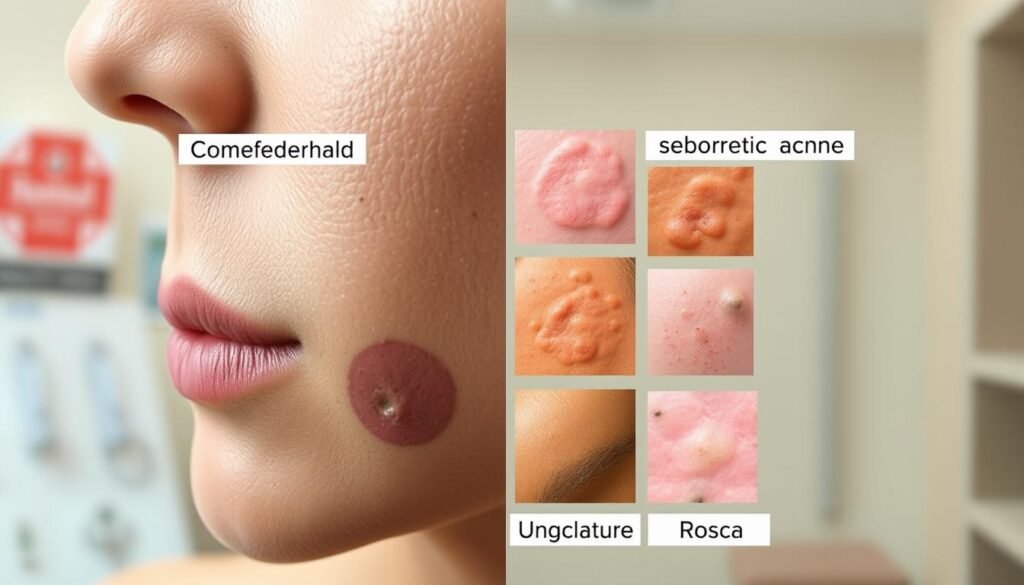
Rosacea
Rosacea is often mistaken for acne but needs different treatment. It causes facial redness, visible blood vessels, and bumps that look like pimples. Unlike comedonal acne, rosacea doesn’t produce blackheads or whiteheads.
It usually affects adults over 30 and gets worse with spicy foods, alcohol, or temperature changes.
Pores vs. Clogged Follicles
Normal pores let skin breathe and release oils. Clogged follicles create comedones when dead skin cells and sebum block these openings. An acne differential diagnosis checks if you have enlarged pores or actual blockages.
Factors Contributing to Comedonal Acne
Many things can cause blackheads and whiteheads on your skin. Knowing what acne triggers are important for clearer skin. From genetics to daily habits, each factor affects how pores react to changes.
Hormonal Changes
Hormonal shifts are a big reason for comedonal acne. Puberty, menstruation, or pregnancy can lead to more testosterone. This hormone makes oil glands work harder, causing more sebum and clogged pores.
Women often see more blackheads before their periods. This is because hormone levels change a lot during this time.
Genetics and Skin Type
Your family history affects your skin. If your parents had acne, you might too. Oily skin types are more likely to get clogged pores because they produce more sebum.
Even dry skin can get clogged pores. Dead cells can block follicles just like excess oil does.
Skin Care Products
Using the wrong products can lead to acne. Comedogenic products can clog pores. Look for “non-comedogenic” labels on moisturizers and makeup.
| Product Type | Safe Ingredients | Ingredients to Avoid |
|---|---|---|
| Moisturizers | Hyaluronic acid, Glycerin | Coconut oil, Lanolin |
| Foundations | Mineral powder, Zinc oxide | Isopropyl myristate, Acetylated lanolin |
| Sunscreens | Titanium dioxide, Niacinamide | Cocoa butter, Wheat germ oil |
Diagnosis: When to See a Dermatologist
While mild comedonal acne can be treated at home, some cases need a dermatologist consultation. Knowing when to get help is key to avoiding scarring and speeding up healing. A dermatologist offers treatments tailored to your skin type and acne severity.
Signs You Shouldn’t Ignore
Look out for these severe acne signs that mean it’s time to see a doctor:
- More than 30 total blemishes on your face
- Deep, painful nodules under the skin
- Acne spreading to your neck, chest, or back
- Dark spots or scarring from previous breakouts
- No improvement after 6-8 weeks of consistent over-the-counter treatment
Acne conglobata is a serious form, with interconnected nodules under the skin. It affects areas like the neck, chest, and arms. It needs quick medical attention to avoid serious scarring.
Importance of Professional Evaluation
A professional acne diagnosis offers benefits you can’t get by treating yourself. Dermatologists use special tools to closely examine your skin. They can tell if you have mild, moderate, or severe acne.
Your dermatologist will make a treatment plan just for you. They’ll consider your skin sensitivity, medical history, and lifestyle. Early diagnosis helps avoid complications and shortens treatment time.
Prevention Tips for Comedonal Acne
Understanding what causes comedonal breakouts is key. Making small changes to your daily habits can help a lot. The right steps keep pores open and skin balanced without irritation.
Skincare Routine Adjustments
Start with a gentle skincare routine. Clean your face twice a day with mild soap and lukewarm water. Avoid hot water, as it takes away natural oils.
Pat your face dry with a clean towel instead of rubbing. This helps prevent irritation. Stay away from harsh scrubs and rough exfoliation. They can harm your skin and make things worse.
Choose products that are labeled “non-comedogenic”. These are oil-free and won’t clog pores. Be careful with heavy oils, as they can block pores, even on your hairline and forehead.
Ingredients to Look For
Some ingredients are great for keeping pores open. Adapalene gel (Differin) is now available without a prescription. It helps stop new comedones from forming.
Salicylic acid gently removes dead skin cells that block pores. Benzoyl peroxide fights bacteria and keeps follicles clear.
Lifestyle Modifications
Your daily habits impact your skin’s health. Athletes should wear moisture-wicking fabrics under sports equipment and shower after exercising. Sweat and bacteria mix to clog pores.
Clean your phone screen often and avoid touching your face. These steps help keep your skin safe from bacteria and oil.
Treatment Options for Comedonal Acne
Finding the right acne treatment can really help clear blackheads and whiteheads. There are many options, from things you can buy at the store to stronger treatments from a doctor. What works best for you depends on your skin, how bad the acne is, and how long you’re willing to wait.
Over-the-Counter Solutions
There are many effective treatments you can buy without a doctor’s note. Benzoyl peroxide kills bacteria and dries out excess oil. Salicylic acid gets deep into pores to clear out blockages. Sulfur and resorcinol help break down blackheads and whiteheads.
These products usually start to work in four to eight weeks if you use them every day.
Prescription Treatments
If store-bought products don’t work, a dermatologist can prescribe stronger treatments. Retinoids like tretinoin and adapalene help skin cells turn over faster and prevent clogs. Antimicrobial creams fight bacteria and keep pores open.
Comedonal acne doesn’t usually need antibiotics or isotretinoin. But, if it’s really tough, a dermatologist can do a comedonal extraction in their office. This can give you quick relief.
Natural Remedies
Tea tree oil has antibacterial properties without harsh chemicals. Green tea extract can reduce inflammation when applied to the skin. Clay masks can pull out dirt and other stuff from clogged pores.
Always test natural ingredients on a small area of skin before using them all over to avoid any bad reactions.
| Treatment Type | Active Ingredients | Timeframe for Results |
|---|---|---|
| Over-the-Counter | Salicylic acid, Benzoyl peroxide | 4-8 weeks |
| Prescription | Tretinoin, Adapalene | 6-12 weeks |
| Natural | Tea tree oil, Clay | 8-10 weeks |
Myths About Comedonal Acne
Many people believe false things about blackheads and whiteheads. Knowing the truth can help you take better care of your skin. Let’s look at the most common myths and get the facts right.
Common Misconceptions
One big myth is about blackheads. People think they’re dark because of dirt. But, it’s not dirt. It’s because light reflects off the clogged hair follicle. Inside, there’s sebum and dead skin cells that turn dark when they meet air.
Another myth is that squeezing out comedones is good. But, it’s not. It pushes bacteria deeper and makes inflammation worse. You might get scars or dark spots that last longer than the blemish itself.
Debunking Skincare Myths
Not all acne treatments work for comedonal acne. Antibiotics help with red bumps and pustules, but not blackheads and whiteheads. This leads people to use the wrong treatments for months without seeing results.
Poor hygiene doesn’t cause comedonal acne. Your skin naturally produces oil, and clogged follicles happen even with good cleaning. Washing too much can irritate your skin and make it produce more oil, making things worse.
Prescription medications might seem to make acne worse at first. But, this is normal as your skin gets used to the treatment. Knowing this helps you keep using treatments long enough to see improvement.
The Role of Diet in Acne Management
What you eat might affect your skin more than you think. For years, people have wondered about the link between diet and acne. Now, research shows some foods can lead to more breakouts.
Knowing how food affects your skin can help you make better choices. This way, you can eat healthier and keep your skin clear.
Foods to Avoid
Some foods can make acne worse. High-glycemic foods, like white bread and sugary drinks, increase oil in pores. This includes:
- White bread and processed cereals
- Sugary drinks and candy
- Fast food items like french fries
- Dairy products, like skim milk
- Chocolate and sweet baked goods

These foods raise blood sugar quickly. This leads to hormones that increase oil. Reducing these foods can help prevent more breakouts.
Beneficial Nutrients
Some nutrients can help your skin. Omega-3s in salmon and walnuts reduce inflammation. Foods like pumpkin seeds and chickpeas are rich in zinc, which helps skin heal.
Antioxidants in colorful veggies fight damage to skin cells. Adding these nutrients to your diet can improve your skin.
Changing your diet won’t fix acne right away. But, eating right and using good skincare together works best. Eat whole foods, drink water, and see how your skin reacts to different foods.
Managing Expectations with Comedonal Acne
Clearing comedonal acne takes time and patience. Your skin needs several weeks to respond to new treatments. Mild comedonal acne often requires up to eight weeks before you see real improvement.
Setting proper treatment expectations helps you stay on track with your long-term acne management plan. Some people notice their skin looks worse during the first few weeks of treatment. This happens because medications bring deep comedones to the surface before clearing them.
Realistic Outcomes
Moderate to severe comedonal acne may need stronger treatments like oral antibiotics. Dermatologists often prescribe tetracycline, minocycline, doxycycline, or erythromycin to reduce bacteria and calm inflammation. These medications work from the inside out to clear your skin.
For stubborn cystic acne that doesn’t respond to other treatments, doctors might suggest isotretinoin. This powerful vitamin A medication requires monthly check-ups and blood tests to monitor your progress and health.
Maintenance Strategies
Once your skin clears, maintenance care becomes your priority. A daily routine with gentle cleansers and non-comedogenic moisturizers keeps pores clear. Choose products with salicylic acid or benzoyl peroxide to prevent new breakouts.
Your diet, stress levels, and sleep habits affect your skin’s health too. Regular exercise and drinking plenty of water support your long-term acne management goals. Remember that clear skin requires ongoing attention, not just a one-time fix.