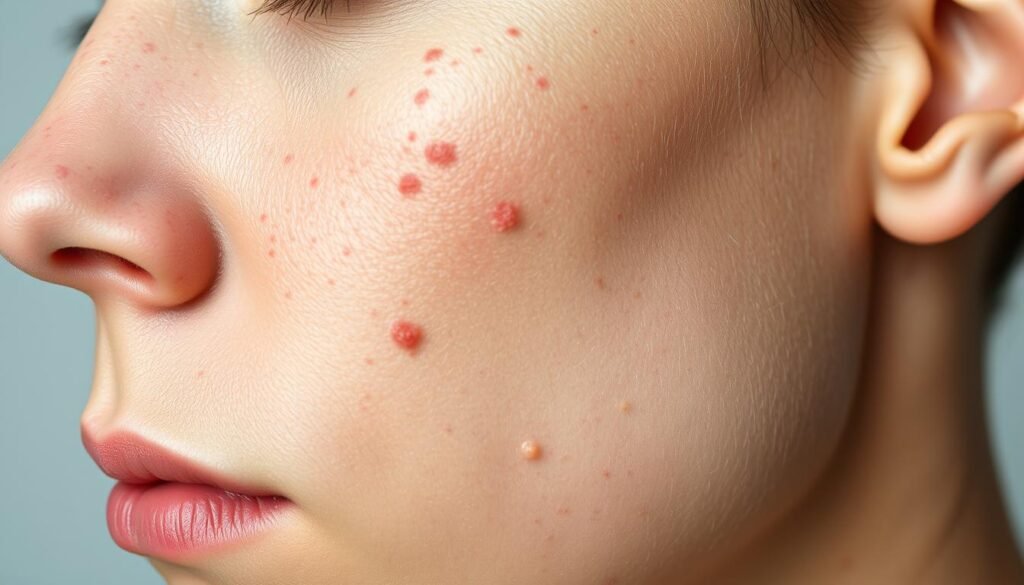
Nearly 85% of people worldwide will get acne at some point. Yet, only 40% know the difference between temporary marks and permanent scarring. This lack of knowledge leads millions to use the wrong treatments or miss the best time to prevent lasting damage.
Your skin tells a story through its texture and appearance. Learning to read these signs helps you understand what’s happening beneath the surface. Acne scars create distinct changes that go beyond simple color differences. Running your fingertips across your face reveals the truth – smooth areas with dark patches are usually temporary marks, while pitted skin or raised bumps signal actual scarring.
Many skin conditions share similar appearances, making proper identification tricky. Red spots might be fresh inflammation or old scars. Dark patches could be sun damage or post-acne marks. Understanding these differences changes everything about your treatment approach. The right diagnosis saves time, money, and prevents disappointment from using products that can’t deliver the results you want.
Recognizing patterns in your skin texture provides clues. Ice pick scars create deep, narrow indentations. Rolling scars form wave-like depressions across larger areas. Boxcar scars leave sharp-edged craters in the skin. Each type responds differently to treatments, making accurate identification your first step toward clearer skin.
Key Takeaways
- 85% of people experience acne, but less than half can identify true scarring versus temporary marks
- Touch tests reveal the difference – smooth discoloration means marks, while pitted skin indicates scars
- Three main scar types exist: ice pick (deep and narrow), rolling (wave-like), and boxcar (sharp-edged craters)
- Proper identification saves money by avoiding ineffective treatments for your specific condition
- Early recognition provides the best opportunity to prevent permanent skin texture changes
- Visual assessment alone isn’t enough – combining sight and touch gives accurate results
Understanding Acne Scars
Acne scars are permanent changes in your skin’s texture. They happen when breakouts damage deeper layers of your skin. Unlike temporary spots, scars need special treatments to heal.
Definition and Types of Acne Scars
There are two main types of acne scars: atrophic and hypertrophic. Atrophic scars are the most common. They look like indentations where tissue was lost during healing.
| Scar Type | Appearance | Common Location |
|---|---|---|
| Ice pick scars | Deep, narrow pits resembling puncture marks | Forehead, upper cheeks |
| Boxcar scars | Broad depressions with sharp edges | Lower cheeks, jawline |
| Rolling scars | Wave-like depressions creating uneven texture | Cheeks |
| Hypertrophic scars | Raised, firm bumps | Chest, back, shoulders |
How Acne Scars Form
Scarring starts when acne breaks down the pore wall. This spills infected material into the surrounding tissue, causing deeper damage. Your body tries to fix this by making collagen fibers.
Too little collagen leads to ice pick and boxcar scars. Too much collagen causes raised scars.
Common Myths About Acne Scars
Many people think dark spots are scars. But these spots fade over time. True scars change the skin’s texture and don’t go away without treatment.
Not everyone who gets acne gets scars. Early treatment can prevent most scars from forming.
Distinguishing Acne Scars from Other Skin Conditions
Not every mark from acne is a scar. Many confuse temporary color changes with permanent scarring. This can cause worry and wrong treatments. Knowing the difference helps you choose the right treatment for clear skin.
Differentiating Scars from Dark Spots
Dark spots from acne are flat and smooth. They happen when your skin makes more melanin after inflammation. True scars, on the other hand, change the skin’s texture and can be felt.
Dark spots usually fade in 4 to 8 weeks for lighter marks. But darker ones might take 3 to 6 months to fade naturally.
Recognizing Post-Inflammatory Erythema
Post-inflammatory erythema shows as red or purple marks on lighter skin. Unlike scars, these marks only affect the skin’s surface. The redness is from damaged capillaries, not collagen loss. They often heal on their own without treatment.
Understanding Hyperpigmentation
Hyperpigmentation is brown patches where acne was. Sun makes these patches darker and slows healing. A professional can tell if it’s temporary or needs advanced treatment.
| Condition | Texture | Color | Healing Time |
|---|---|---|---|
| Dark Spots | Smooth | Brown/Purple | 4-8 weeks |
| Post-Inflammatory Erythema | Smooth | Red/Pink | 3-6 months |
| True Acne Scars | Indented/Raised | Skin-colored | Permanent without treatment |
Signs of Acne Scars to Look For
Spotting acne scars needs a close look at your skin. Each scar has its own story of past breakouts and healing. Knowing these signs early can help decide if treatments like laser resurfacing or microdermabrasion are right for you.
Textural Changes in the Skin
Use your fingertips to feel what mirrors can’t show. Acne scars have unique textures that feel different from normal skin. Pitted scars make small depressions, while raised scars show excess tissue.
Some scars have wavy surfaces on your cheeks or forehead. Ice pick scars are deep and narrow, while boxcar scars are broad and rectangular. Rolling scars look like gentle waves. These changes are often more noticeable under certain lights. Treatments like microdermabrasion can help even out minor irregularities.
Color Variations of Scars
New scars are often pink or red because of inflammation. Older scars may turn white or lighter as pigment cells get damaged. Some scars can darken, which is more common in darker skin tones.
Depth and Size of Scars
Scars can be shallow or deep, needing different treatments. The location of a scar also matters. Thinner skin on the forehead can lead to narrow, deep scars, while thicker skin on the jaw forms broader ones.
Knowing how deep a scar is helps doctors choose the right treatment. They might suggest gentle microdermabrasion for surface scars or laser resurfacing for deeper ones.
The Importance of Pattern Recognition
Seeing patterns in acne scars helps guess how your skin will react to treatments. Everyone gets scars in their own way, based on their skin, age, and environment. Knowing these patterns helps pick the best treatment and sets clear recovery goals.
Common Patterns Among Different Skin Types
Scarring patterns vary with skin type. Oily skin tends to get deeper, pitted scars because of more oil. Dry skin gets shallower marks that don’t hurt the skin’s feel as much. Combination skin has a mix, with deeper scars in the T-zone.

Seasonal Variability in Acne Scarring
Weather changes how acne scars look and heal. In summer, more oil and sun darken scars. Winter’s dryness slows healing and makes skin texture stand out. Spring and fall can cause new breakouts and scars.
| Season | Effect on Scarring | Healing Time |
|---|---|---|
| Summer | Darker marks, increased oil | 4-6 weeks |
| Winter | Dry, flaky texture | 6-8 weeks |
| Spring/Fall | New breakouts | 5-7 weeks |
Impact of Age on Scar Appearance
Age affects how acne scars look and heal. Teenagers heal quickly but scar easily because of hormones. Adults heal slower but get better collagen. After 30, skin loses elasticity, making texture changes harder to fix without treatment.
When to Consult a Dermatologist
Dealing with acne scars can be tough, and home treatments might not work. Many try to handle their skin issues on their own. But, there are times when you really need a professional for better scar treatment and skin health.
Recognizing Worsening Conditions
Your skin can tell you when you need a doctor. If your pitted skin gets worse or new scars appear, it’s time to see a dermatologist. Look out for redness that spreads beyond the original acne spots. This could mean you need medical help for ongoing inflammation.
If your scars change texture and last more than three months, get a doctor’s opinion. Early treatment can stop further damage and help your scars heal better.
Importance of Professional Diagnosis
Dermatologists have skills that skincare products can’t match. They know how to tell different scars apart. This helps them make a treatment plan that really works.
A dermatologist looks at your skin type, medical history, and past treatments. They can suggest treatments like laser therapy or chemical peels that you can’t get over the counter.
Signs You Shouldn’t Ignore
There are warning signs that mean you need to see a dermatologist right away:
- Increasing pigmentation despite consistent sunscreen use
- Emotional distress affecting your daily life
- Pitted skin that worsens after six months of home treatment
- Pain or tenderness in scarred areas
- Signs of infection around existing scars
Effective Treatments for Acne Scars
Finding the right treatment for acne scars can feel overwhelming. There are many options, from simple products to advanced procedures. Each one has its own benefits, depending on your scar type, budget, and skin sensitivity.
Over-the-Counter Solutions
Begin with products that have proven ingredients. Vitamin C serums can brighten dark marks and boost collagen. Niacinamide reduces redness and evens skin tone without causing irritation. Alpha arbutin and kojic acid gently fade pigmentation over time.
These ingredients need daily use for 8-12 weeks to see results.
Professional Treatments and Procedures
Dermatologists offer powerful solutions for faster results. Laser resurfacing is a top choice, with fractional CO2 lasers targeting deep scars. Microdermabrasion gently exfoliates for mild scarring and texture issues.
Chemical peels remove damaged skin layers for a smoother texture. Subcision releases tethered tissue, while dermal fillers temporarily fill in depressed areas. Radiofrequency microneedling uses heat and controlled injury for deep collagen repair.
PRP (platelet-rich plasma) treatments speed up healing when used with microneedling.
Home Remedies Worth Trying
Natural ingredients can support professional treatments and keep results looking good. Honey masks have antibacterial properties and moisturize healing skin. Aloe vera gel soothes inflammation and may reduce scar appearance.
Regular exfoliation with gentle scrubs improves texture between professional sessions.
Preventing Acne Scars Before They Form
It’s easier to stop acne scars before they start than to treat them later. Managing breakouts well keeps your skin safe from lasting damage. The key is to mix good daily habits with gentle care to control inflammation.
Skincare Routines That Help
Begin each day with a gentle clean to remove dead skin cells. Use oil-free moisturizers from brands like CeraVe or Neutrogena to avoid clogged pores. Always apply broad-spectrum SPF 30 sunscreen to stop hyperpigmentation from getting worse.
Use salicylic acid products on small whiteheads and blackheads to stop them from getting worse. Benzoyl peroxide or adapalene in these products quickly reduce inflammation. This protects your skin from deep damage.
Lifestyle Adjustments for Clearer Skin
Exercise or meditation can help control hormonal breakouts, like those during your period. Change your pillowcases often to cut down on bacteria. Keep hair products away from your face to avoid clogging pores.
Avoiding Picking and Popping
Squeezing pimples can push bacteria deeper, causing more inflammation and scarring. Professional extraction by a dermatologist or esthetician safely removes blemishes without harming the skin around it. If you’re tempted to pick, use a hydrocolloid patch from brands like COSRX or Hero Cosmetics instead. These patches help draw out fluid and protect the area from further damage.
The Role of Skin Care Products
The right skincare products can greatly help with acne scars. Whether you have deep ice pick scars or wider boxcar scars, the right ingredients can improve your skin. Knowing what works for you saves time and money.
Ingredients to Look For
Some ingredients are known to improve scars. Retinoids help cells turn over faster, fading scars quicker. Vitamin C brightens skin and boosts collagen, great for ice pick scars. Niacinamide reduces inflammation and tackles stubborn pigmentation.
Alpha hydroxy acids (AHAs) gently remove dead skin cells, revealing smoother skin. Salicylic acid keeps pores clear, preventing new breakouts. For boxcar scars, using these ingredients together under a professional’s guidance is often the best approach.
How to Choose the Right Products
Your skin type affects which products work best. If you have oily or acne-prone skin, lightweight gels or serums are good. Dry or mature skin does better with richer creams. Start with one new product at a time to avoid irritation. Most people see improvements after 8-12 weeks of consistent use.
The Impact of Sun Protection
Daily sunscreen with SPF 30 or higher is essential for scar management. UV exposure darkens existing marks and slows healing for both ice pick and boxcar scars. Apply sunscreen every morning, even on cloudy days, to protect your skin and prevent hyperpigmentation from getting worse.
Emotional and Psychological Effects of Acne Scars
Acne scars do more than just harm your skin. They can deeply affect your emotional health and daily life. Many feel anxious about how they look, avoiding social events or feeling uneasy in bright lights. These feelings are common among those with similar skin issues.
Understanding the Psychological Impact
Studies by the American Academy of Dermatology reveal the emotional toll of facial scarring. Those with acne scars often feel less confident at work, in relationships, and in daily activities. The mirror becomes a source of stress, not just a tool for getting ready.
Building Self-Confidence with Treatment
Starting scar treatment is a step towards emotional healing. Every small improvement in your skin boosts your confidence. Patients who keep up with their treatment feel more positive about social interactions. This journey empowers you as you take charge of your skin health.
Resources for Mental Wellbeing
There’s support beyond the dermatologist’s office. Mental health experts focused on body image can offer helpful strategies while you undergo scar treatment.
| Resource Type | Benefits | Access |
|---|---|---|
| Online Support Groups | 24/7 community support | Reddit, Facebook groups |
| Therapy Sessions | Professional guidance | Psychology Today directory |
| Meditation Apps | Daily stress relief | Headspace, Calm |
Seeking help for acne scars’ emotional effects is a sign of strength, not weakness. Your mental health is just as important as your physical appearance.
FAQs About Acne Scars
Many people wonder about their acne scars and how to treat them. Knowing the difference between temporary marks and permanent scarring is key. Let’s look at the common questions about pitted skin and discoloration that dermatologists often get.
Common Questions Answered
People often ask if their marks are scars or just temporary spots. Post-inflammatory hyperpigmentation shows up as flat, dark spots that fade over time. True scars, on the other hand, change the skin’s texture and don’t go away without treatment.
Timing is another big concern. It’s best to start treatment after your acne has cleared. Your skin must be calm before you can treat scars. Starting too soon can make things worse and slow down healing.
Misunderstandings About Treatment Options
Many think topical creams can fix all scars. While they can lighten spots, they don’t work as well on deep scars. Chemical peels can help with both color and texture, but deeper scars need laser or microneedling.
HydraFacials are popular for scar treatment, but they mainly help with surface marks. Professional treatments are better for deep scars because they target specific issues.
How Long Will Scars Last?
True acne scars stay forever without treatment. But, many scars can fade a lot with the right treatment. Keeping your skin protected from the sun is key, as UV rays can make scars worse. Use daily SPF 30 or higher to help your scars heal and prevent them from getting darker.
Notable Trends in Acne Scar Treatment
The world of acne scar treatment is changing fast. New technologies and methods are being developed. About 80% of people between 11 and 30 get acne, leading to more research and innovation.
Today, treatments combine different approaches to tackle scars in new ways. This means patients get better results with less time off from work or daily activities.
Emerging Treatments to Watch
Platelet-rich plasma (PRP) and microneedling are big news in scar treatment. They help wounds heal faster and boost collagen production naturally. New laser treatments also promise faster recovery and better results.
These advancements are great for people with different types of scars. Most people have a mix of scar types, not just one.
Advances in Skin Research
Scientists have made big strides in treating darker skin tones safely. They’ve found that boosting collagen naturally gives better results than harsh treatments. Microdermabrasion is now gentler but more effective.
Dermal fillers also last longer and blend better with the skin. These changes help improve treatment outcomes for everyone.
Importance of Customized Treatment Plans
Every person’s scars are different, so treatments need to be tailored. Combining methods like laser resurfacing with dermal fillers or microdermabrasion works best. Customization is key for the best results in acne scar treatment today.
Resources for Further Learning
Looking for reliable info on acne scars and skin texture can really help your treatment. The right resources help you understand your options and connect with others. From medical websites to support communities, quality info empowers you to make smart choices.
Reputable Dermatology Websites
The American Academy of Dermatology offers trusted guidance on acne scars and treatment options. Their website features articles by board-certified dermatologists. They explain different scar types and healing methods.
The Journal of Clinical and Aesthetic Dermatology publishes research studies. These studies show which treatments work best. Bay Clinic Singapore provides detailed guides on scar removal techniques used worldwide. RS Abdi Waluyo makes it easy to book consultations online and learn about their specialized treatments.
Books on Acne and Skin Health
Medical researchers like Connolly, Fabbrocini, and Jfri have written books on skin texture changes after acne. Their advice is based on clinical studies and years of treating patients. Their work helps readers understand why scars form and which treatments show the best results.
Many libraries carry these books, making professional knowledge accessible to everyone.
Support Groups and Online Communities
Online forums bring together people dealing with acne scars to share their stories and treatment experiences. These communities offer emotional support when scar treatment feels overwhelming. Members discuss everything from daily skincare routines to results from professional procedures.
Reading about others’ journeys helps you feel less alone. It also teaches you practical tips for improving skin texture.