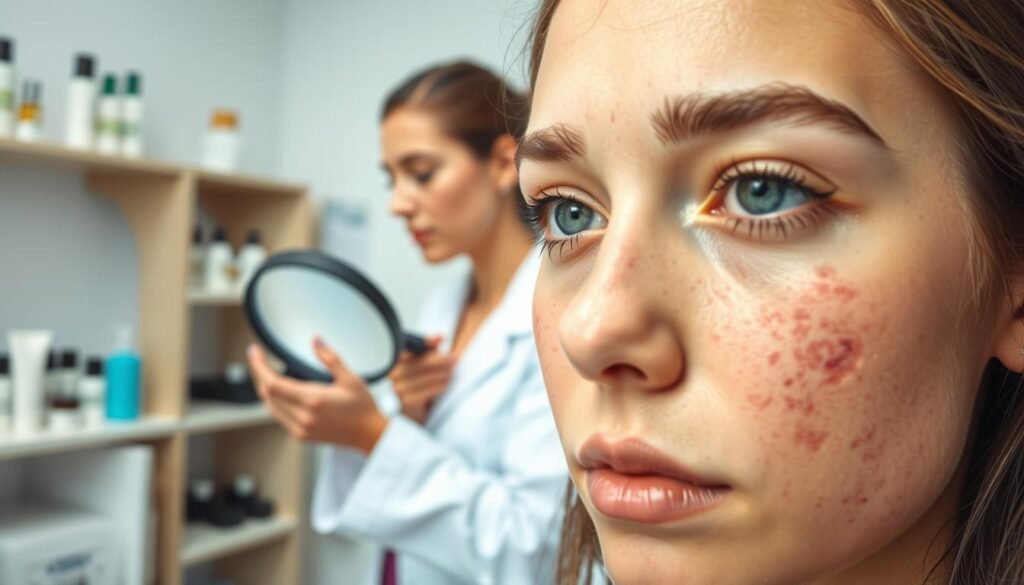
Nearly 85% of people between ages 12 and 24 get acne. Yet, only 40% get professional help when they should. This means millions suffer from preventable scarring and emotional pain.
Acne can hit anyone, from teens to adults in their forties and beyond. It’s hard to know when a breakout needs more than over-the-counter treatments. Many conditions look like acne, making it tough to spot serious issues.
Your skin has its own language. Learning to read these signs is key to knowing when you need a dermatologist. Dermatologists look for specific signs that show a breakout is more than just a normal acne.
Getting clear skin starts with understanding your skin’s issues. Not every pimple needs a doctor’s visit. But waiting too long can cause permanent damage. Knowing when to see a dermatologist can prevent lasting scars.
Key Takeaways
- Most acne cases occur between ages 12-24, but adult acne affects millions
- Professional dermatologic care prevents scarring and speeds healing time
- Certain patterns in skin problems indicate the need for medical treatment
- Board-certified dermatologists can distinguish acne from similar-looking conditions
- Early intervention stops minor breakouts from becoming major skin problems
- Understanding your skin’s signals helps you recognize acne severity levels
Understanding Acne: What It Is and Why It Happens
Acne is a common skin problem in the U.S., affecting nearly 50 million people every year. Knowing how acne forms and what triggers it can help you manage your skin. Everyone’s skin reacts differently to various factors, so it’s important to understand your skin type for effective treatment.
The Basics of Acne Formation
Acne starts when hair follicles get blocked. Our skin makes oil to stay moisturized. Dead skin cells usually wash away.
But, when there’s too much oil and dead cells, they block the follicle. Bacteria called Cutibacterium acnes grow in this blockage. This causes inflammation and red bumps.
Common Causes of Acne
Many things can cause acne:
- Hormonal changes during puberty, menstruation, or pregnancy
- Genetic factors passed down through families
- Certain medications like corticosteroids
- Heavy or greasy cosmetic products
- Environmental factors such as humidity and pollution
Knowing your skin type helps you figure out what triggers your acne. This can be oily, dry, combination, or sensitive skin.
Recognizing Different Types of Acne
It’s important to know the different types of acne. Whiteheads and blackheads are mild. Papules and pustules are moderate.
Severe cases include nodules and cysts that form deep under the skin. Each type needs a different treatment based on its severity and location.
Not All Breakouts Are Created Equally
Your skin has its own story, and not every bump is acne. Many confuse other skin issues with acne, leading to wrong treatments and frustration. Knowing the differences helps you choose the right skincare and when to see a doctor.
Differentiating Acne from Other Skin Conditions
Getting a correct acne diagnosis means knowing what makes acne unique. Acne shows up as blackheads, whiteheads, pustules, or cysts on the face, chest, and back. Distinguishing skin conditions needs careful observation of specific traits.
| Condition | Appearance | Location | Key Differences |
|---|---|---|---|
| Acne | Blackheads, whiteheads, red bumps | Face, chest, back | Contains pus, responds to benzoyl peroxide |
| Rosacea | Red patches, visible blood vessels | Cheeks, nose, forehead | No blackheads, triggered by heat or spicy foods |
| Folliculitis | Small red bumps around hair follicles | Anywhere with hair | Itchy, caused by bacteria or fungi |
| Perioral Dermatitis | Small bumps and redness | Around mouth and nose | Burning sensation, worsens with steroids |
Common Misconceptions About Acne
Many myths about acne can confuse proper breakout evaluation. Eating chocolate doesn’t directly cause acne, but dairy might in some. Poor hygiene isn’t the main cause – overwashing can irritate your skin. Acne can happen at any age due to hormonal changes or stress.
When to Be Concerned
Some signs mean you need a dermatologist. If breakouts last more than six to eight weeks after trying over-the-counter treatments, see a doctor. Deep, painful cysts that leave dark marks or scars need medical help. Also, watch for breakouts that spread fast, cause severe pain, or come with fever – these are signs of infection or a serious condition.
Recognizing the Symptoms of Acne
Understanding your skin is key to spotting different acne types. Acne symptoms go beyond simple pimples. They affect how you look and feel inside. Spotting these signs early helps you know when to see a doctor.
Typical Signs and Their Implications
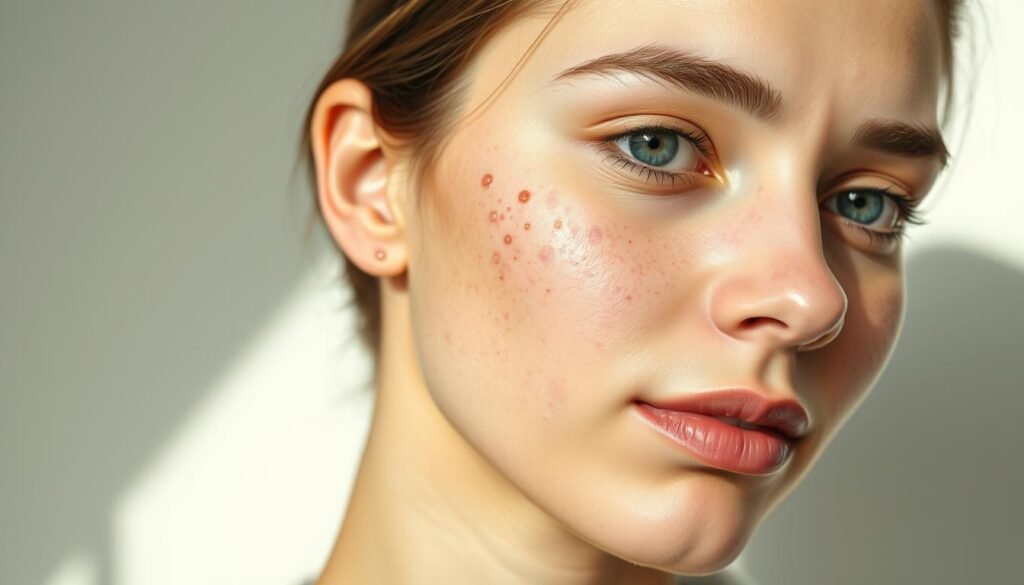
Acne shows up in many ways, each with its own signs. Whiteheads and blackheads are mild. Red, inflamed bumps mean moderate acne. Deep, painful cysts are severe and need quick help.
Where acne breaks out matters too. Jawline acne often means hormonal changes. Forehead acne might be from hair products or what you eat.
Patterns to Look for in Your Skin
Look for patterns in your skin. Do pimples show up before big events? This could mean stress is a trigger. Also, notice if breakouts get worse at certain times or after eating certain foods.
Keeping a skin diary helps. It lets you track your personal triggers. This guides your treatment choices.
Emotional Impact of Acne
Acne’s impact on confidence is huge. Many people avoid social events or spend hours hiding their skin with makeup. This stress can make acne worse.
“My acne made me cancel dates and avoid mirrors. Getting help changed everything—not just my skin, but my entire outlook on life.”
If acne messes with your daily life, relationships, or how you see yourself, get help. Dermatologists deal with both the physical and emotional sides of acne.
Key Differences Between Acne Types
Understanding acne starts with knowing it comes in different forms. Each type has its own look and feel. Knowing these differences helps you know when to see a doctor.
Comedonal Acne vs. Inflammatory Acne
Comedonal acne shows up as blackheads and whiteheads. They don’t have redness or swelling. You can feel them as small bumps on your face, chest, or back.
Inflammatory acne is red and swollen. It includes papules and pustules that are tender. This happens when bacteria grow in blocked pores, causing your body to react.
Cystic Acne Characteristics
Painful cysts form deep in your skin as soft lumps filled with pus. They feel tender even without touching. Cystic acne can leave dark spots or scars after healing.
Nodular Acne: What to Watch For
Nodules are hard, painful bumps deep in the skin. They don’t come to a head like regular pimples. Nodules can be up to an inch across and need prescription meds to heal.
Signs That Indicate a Need for Professional Care
Your skin sends clear signals when it needs expert attention. This Acne Identification Guide helps you know when home treatments aren’t enough. Some breakouts need a dermatologist’s help to prevent lasting damage and get clearer skin.
Persistent or Severe Acne Symptoms
Persistent breakouts that last more than six to eight weeks show you need professional help. Severe acne has deep, inflamed lesions on your face, chest, or back. These stubborn blemishes don’t respond to usual treatments like benzoyl peroxide or salicylic acid.
Painful or Itchy Breakouts
Pain means inflammation deep in your skin. Cystic and nodular acne create tender bumps that hurt even without touching. Itchy acne often means bacterial infection or allergic reactions that need medical check-up.
| Symptom Type | Warning Signs | Action Needed |
|---|---|---|
| Deep Pain | Throbbing under skin | See dermatologist within 2 weeks |
| Surface Burning | Stinging sensation | Schedule appointment soon |
| Constant Itching | Spreading redness | Seek immediate care |
Symptoms of Scarring and Hyperpigmentation
Scarring signs include indented marks, raised bumps, or dark spots that last months after breakouts heal. Early treatment prevents permanent texture changes. Dark marks from post-inflammatory hyperpigmentation need specific treatments to fade. Professional care tackles both active acne and existing damage at the same time.
The Role of Lifestyle in Acne Management
Your daily habits greatly affect how your skin reacts to acne treatments. Lifestyle factors like diet, stress, and skincare habits impact your skin’s health. Making smart changes can improve acne symptoms and prevent future breakouts.
Diet and Its Effect on Acne
What you eat has a big impact on your skin. Processed foods and dairy can cause breakouts in some. Eating fruits, vegetables, and whole grains helps keep your skin clear by reducing inflammation.
Foods rich in omega-3 fatty acids, like salmon and walnuts, are good for your skin. They help keep skin cells healthy.
Stress Management Techniques
Stress can make acne worse by increasing hormone production. Simple relaxation methods can help. Try deep breathing exercises for five minutes a day or take short walks during lunch.
Getting seven to nine hours of sleep each night helps your body repair your skin naturally.
Proper Skincare Routines
Effective skincare management starts with gentle cleansing twice a day. Use lukewarm water and pat your skin dry instead of rubbing. Choose non-comedogenic moisturizers that won’t clog pores.
Avoid touching your face throughout the day. This transfers bacteria and oils to your skin. Remember, being consistent is more important than using many products at once.
Professional Treatment Options for Acne
When home remedies and store-bought products don’t work, it’s time for professional help. Modern dermatology offers many treatments beyond basic skincare. Knowing what’s out there helps you choose the best for your skin.
Over-the-Counter vs. Prescription Treatments
For mild acne, products with benzoyl peroxide or salicylic acid are good. They clear pores and fight bacteria. But for tough acne, prescription treatments are stronger. Topical retinoids, antibiotics, and combos target deep acne.
A dermatologist will decide what’s best for you. They consider your skin type and how bad your acne is.
The Importance of Consulting a Dermatologist
Dermatologists are experts in fighting acne. They find the root cause of your breakouts, like hormonal issues or diet. They’ll examine your skin and talk about your health history.
They create a treatment plan just for you. It’s not a one-size-fits-all solution.
Potential Advanced Treatments
Today, there are advanced treatments for acne. Chemical peels get rid of dead skin and improve texture. Light therapy kills bacteria and reduces inflammation.
Microneedling helps with scars by boosting collagen. Laser treatments are precise for active acne and scars. Your dermatologist will suggest the best option for you.
The Power of Prevention
Understanding what causes skin problems is key to better skin health. By focusing on preventing breakouts, you help your skin stay clear and radiant. Early action is vital to avoid lasting marks and keep your skin smooth.
Identifying Triggers Before They Start
Start by paying attention to your skin’s patterns. Keep a diary of when breakouts happen and what led up to them. Did you try a new product or eat certain foods? Was there extra stress at work? These clues help you find what affects your skin.
Common triggers include dairy, high-glycemic foods, and touching your face often. Some react to makeup or skincare ingredients. Weather changes and hormonal shifts can also impact your skin.
Everyday Habits to Reduce Breakouts
Small daily choices can lead to big improvements in skin health. Wash your face twice a day with a gentle cleanser. Change your pillowcase often to avoid bacteria and oils. Clean your phone screen regularly, as it touches your face many times a day.
- Remove makeup before bed
- Drink plenty of water throughout the day
- Avoid picking or squeezing blemishes
- Use non-comedogenic products
Maintaining Healthy Skin
For long-term healthy skin, be consistent. Stick to a routine that suits your skin type. Use sunscreen daily to protect against damage that can worsen acne marks. Regular exercise improves circulation and helps clear pores through sweating – just remember to shower afterward. Getting enough sleep lets your skin repair itself naturally each night.
When to Seek Help: Finding a Qualified Dermatologist
Finding a dermatologist who understands your skin concerns is key. The right professional can turn frustrating breakouts into a manageable condition. Board-certified dermatologists can diagnose your acne and create a plan that works for your skin.
What to Look for in a Dermatologist
First, check if the dermatologist is board-certified by the American Board of Dermatology. This means they have specialized training in skin conditions. Zaladonis Dermatology Associates in Bethlehem, Pennsylvania, offers experienced care. You can book an appointment at (610) 868-3150.
Look for practices that treat patients of all ages. They should offer both medical and cosmetic approaches to acne management.
Questions to Ask During Your Consultation
Prepare questions about your acne type and treatment options. Ask about the timeline for improvement and possible side effects. Modern Dermatology Atlanta, with offices in Canton, Acworth, and Woodstock, Georgia, encourages open discussions at 770-250-7199.
Understanding costs and insurance coverage upfront is important. It helps you plan your treatment budget.
Understanding the Treatment Journey
Professional acne care takes time. Most treatments show gradual improvements over weeks or months. Your dermatologist will check your progress and adjust treatments as needed.
Many practices offer cosmetic procedures for active breakouts and scarring. A dermatologist who explains each step helps you stay committed. This leads to clearer, healthier skin.