
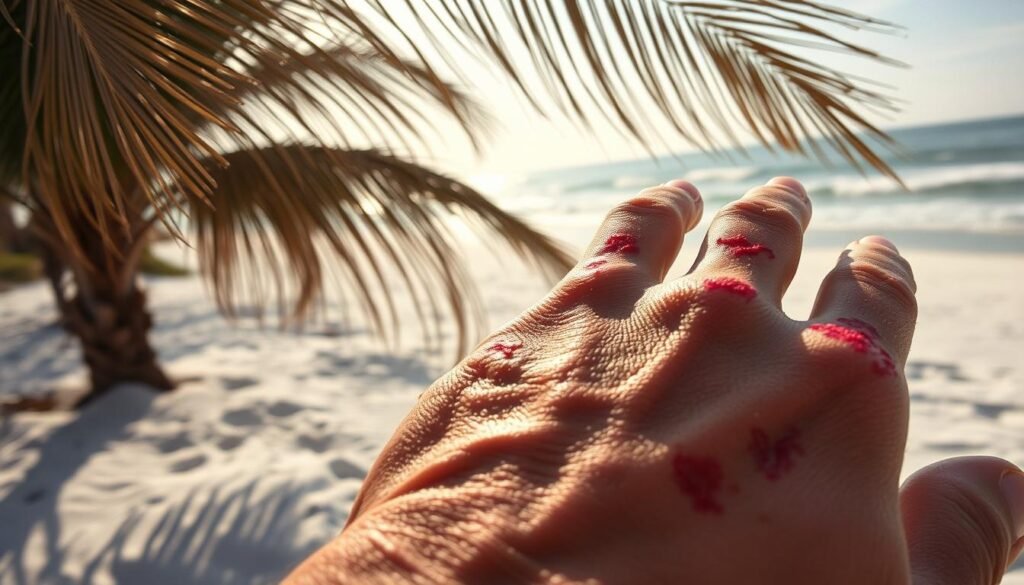
Up to 31 million Americans live with eczema, says the National Eczema Association. Flare-ups can get worse when humidity drops, even in Florida’s mild winter.
Cold snaps are short, but drier air and more time indoors pull moisture from the skin. This can make itch, tightness, and redness worse. This guide offers practical steps for Eczema During Florida’s Winter. It blends dermatology-backed routines with simple home habits.
Managing eczema in cold weather starts with daily care. Use fragrance-free emollients after short, lukewarm showers. Stay hydrated and choose smart fabric choices. We’ll also cover environmental tweaks, like using a humidifier at night, to keep your skin barrier strong. Expect clear, actionable winter eczema tips for Florida residents that fit real life.
Key Takeaways
- Florida’s winter dries skin due to lower humidity and increased indoor AC or heat.
- Apply a fragrance-free emollient right after a 10-minute lukewarm shower.
- Use a bedside humidifier at night to support the skin barrier.
- Choose breathable, non-irritating fabrics like cotton; avoid scratchy wool.
- Stay hydrated and monitor triggers to reduce flare-ups.
- Have gentle, dermatologist-recommended products ready for Eczema During Florida’s Winter.
- Small daily changes add up when managing eczema in cold weather.
Understanding Eczema and Its Triggers
Eczema, or atopic dermatitis, affects millions and often starts in early childhood. It is chronic and noncontagious, with dry, itchy patches that come and go. Managing Eczema During Florida’s Winter calls for clear basics and smart daily choices.
What is Eczema?
Eczema is an inflammatory skin condition marked by itch, redness, and a damaged skin barrier. Genetics play a role, and many cases begin in the first year of life. Because the barrier leaks moisture, skin dries out fast, which can set off eczema flare-ups in winter.
Hydration and gentle care help calm the cycle. When the air dries or temperatures shift, irritation rises, making winter eczema in Florida worse.
Common Triggers of Eczema
Everyday irritants can spark trouble. Wool, fragranced lotions, harsh soaps, and strong detergents strip oils from the skin. Hot water and quick moves from cool air to warm rooms also aggravate sensitive skin.
Allergens add to the load. Dust mites, pet dander, and certain foods may fuel flares, making things worse when the skin barrier is weak. During Eczema During Florida’s Winter, indoor heating or air conditioning can dry the air and prime the skin for a reaction.
For practical guidance tailored to local weather and home habits, see expert tips for Florida’s cooler months.
Seasonal Variations in Eczema
Cold, drier air and recirculated indoor air make moisture loss faster, which explains more eczema flare-ups in winter. Some people also feel worse on windy days or when a cold front drops humidity.
Winter eczema in Florida can be sneaky because days may start humid and end dry. Frequent indoor–outdoor shifts stress the skin barrier, so routines that restore moisture and reduce friction matter most during Eczema During Florida’s Winter.
The Impact of Florida’s Winter Climate
Cooler, drier air comes with each front, and we turn on the heat. This change affects how our skin holds and loses water. For many, winter eczema in Florida starts here, so we need to plan ahead.
Humidity Levels in Florida’s Winter
Florida’s winter is less humid than summer, even if it feels mild. The cold, dry air outside and our indoor heating pull moisture from our skin. This makes it more important to take care of our skin on windy days and at night.
Changes in moisture can make us itch. Using a humidifier in your bedroom can help keep the air steady while you sleep. Applying a ceramide-rich cream after washing helps keep moisture in. These steps help prevent eczema in Florida’s winter by reducing dryness at night.
Temperature Fluctuations and Skin Health
Quick changes, like going from cold air to a warm room, stress our skin. Avoid hot showers after being outside; use lukewarm water and keep it short. This helps lower water loss and supports our skin in cold weather.
Wear light coverings when it’s windy. Scarves, gloves, and hats block wind without making us too hot. These habits, along with regular routines, help lower the risk of eczema flare-ups in Florida’s winter.
| Winter Factor | Skin Effect | Practical Move | Benefit for Eczema |
|---|---|---|---|
| Lower Outdoor Humidity | Faster moisture loss | Apply ceramide cream within 3 minutes of cleansing | Helps with preventing eczema in Florida winter |
| Indoor HVAC Heating | Dry, recirculated air | Run a humidifier at night (40–50% RH) | Improves cold weather skincare for eczema |
| Cold Front Wind | Irritation on exposed areas | Use gloves, scarf, and a soft hat outdoors | Reduces triggers of winter eczema in Florida |
| Hot Showers After Chills | Barrier disruption | Lukewarm showers under 10 minutes | Supports preventing eczema in Florida winter |
Symptoms of Eczema to Watch For
Dry air and indoor heat can change how our skin acts. In Florida, these changes can make mild signs more obvious. This can lead to eczema flare-ups in winter.
Spotting early signs is key to managing eczema in cold weather. It helps prevent intense itching and broken skin.
Recognizing Eczema Outbreaks
Look out for a deep, persistent itch and patches of dry or scaly skin. Redness that gets worse with scratching is also a sign. Small bumps may form and can weep or crust if the skin breaks.
Where the skin shows irritation can give clues. Infants and young children often get it on their cheeks, chin, and elbows and knees. Older kids and adults see it on their hands, feet, wrists, and behind their knees.
Winter brings its own signs. Tight, cracked, or stinging skin after being in heated rooms or after hot showers is a clue. These signs often mean eczema flare-ups in winter. They call for a gentler routine to manage eczema in cold weather.
Different Types of Eczema
Atopic dermatitis is the most common type. It starts with itchiness and can come back. Contact dermatitis shows up where the skin meets an irritant or allergen, like nickel or fragrance.
Dyshidrotic eczema causes tiny, itchy blisters on the sides of the fingers and palms. Nummular eczema has coin-shaped plaques that can be very dry and itchy.
Some conditions can look similar. Seborrheic dermatitis, or cradle cap in infants, is not eczema but can happen at the same time. In dry months, not every rough patch is atopic dermatitis; it could just be dry skin. Accurate diagnosis is needed to tell them apart, which is important during eczema flare-ups in winter.
Early recognition and clear naming of the type can make managing eczema in cold weather more precise and more effective.
| Type | Key Signs | Common Locations | Winter Clues |
|---|---|---|---|
| Atopic Dermatitis | Intense itch, dry/scaly patches, redness; may weep when scratched | Infant face and extensor areas; flexures, hands, feet in older ages | Cracking after indoor heat; flares after hot showers |
| Contact Dermatitis | Rash where skin touches irritant or allergen; stinging or burn | Hands, wrists, neck, areas under jewelry or scented products | Worse with wool, fragrances, or frequent sanitizer use |
| Dyshidrotic Eczema | Tiny, itchy vesicles; later peeling | Sides of fingers, palms, soles | Triggered by sweat shifts and dry air |
| Nummular Eczema | Coin-shaped plaques; very dry and itchy | Arms, legs, torso | Appears after skin gets extra dry in low humidity |
Moisturizing Strategies for Winter Care
Cool mornings and indoor AC can dry out your skin fast during Eczema During Florida’s Winter. Keeping your skin hydrated is key to feeling comfortable. These dry skin remedies focus on repairing your skin’s barrier, using gentle formulas, and applying them when your skin needs it most.
Best Moisturizers for Eczema
For everyday relief, use oil-rich emollients that lock in moisture. Ointments like Vaseline Original Healing Jelly or Aquaphor Healing Ointment are great because they don’t irritate your skin. They’re also on the National Eczema Association’s accepted product list.
If you prefer a cream, look for fragrance-free and dye-free options. CeraVe Moisturizing Cream and Vanicream Moisturizing Cream are good choices because they’re gentle. For kids, ointments are better because they protect their sensitive skin from the cold, dry air.
Always have a small tube of moisturizer with you for quick touch-ups. Using it regularly helps reduce dry patches and supports other treatments. These strategies help keep your skin comfortable, no matter the weather.
How to Properly Apply Moisturizers
Moisturize within three minutes after bathing to keep moisture in. Pat your skin until it’s damp, then apply a thick layer everywhere. Reapply two to three times a day, and after washing your hands, to keep your skin protected.
When using prescription treatments, apply the medication first, wait a bit, then seal with a petrolatum-based ointment. Use gentle, downward strokes to avoid irritation. Applying small amounts often is better than one big coat, which is good for Eczema During Florida’s Winter.
| Product Type | Examples | Key Benefits | Best Use Case |
|---|---|---|---|
| Ointment (Petrolatum-Based) | Vaseline Original Healing Jelly; Aquaphor Healing Ointment | Strong occlusion; minimal sting; protects microcracks | Nighttime sealing; infants and children; post-bath layering |
| Cream (Fragrance‑Free) | CeraVe Moisturizing Cream; Vanicream Moisturizing Cream | Ceramides and emollients; fast comfort; non-greasy feel | Daytime wear; office or school; quick reapplication |
| Balm Stick/Travel Tube | Aquaphor Healing Ointment Stick; Vanicream Moisturizing Ointment (tube) | Targeted spot care; portable; mess‑reducing | After handwashing; gym or commute; dry knuckles |
| Add‑On Hydrator | CeraVe Hyaluronic Acid Serum (fragrance‑free) | Water-binding layer under occlusive; boosts plumpness | Apply on damp skin, then seal with ointment or cream |
Tip: Keep one moisturizer by the sink, one in your bag, and one beside your bed. This makes it easy to keep your skin moisturized all day.
Bathing Tips to Manage Eczema
Smart bath habits can calm flare-prone skin and support cold weather skincare for eczema. Short, warm soaks help the skin hold moisture, which is vital when managing eczema in cold weather. A few small changes make daily care more soothing and less drying.
Ideal Bathing Routine
Choose lukewarm water, not hot. Keep baths or showers to about 10 minutes. After coming in from the cold, wait a bit before washing so your skin avoids a rapid temperature shift.
Pat the skin dry with a soft towel and leave it slightly damp. Within three minutes, seal in moisture with a rich, fragrance-free cream or ointment. This step supports cold weather skincare for eczema and helps when managing eczema in cold weather.
Recommended Bath Products
Pick gentle, fragrance-free cleansers labeled non-soap or syndet. Avoid bar soaps with sulfates or strong deodorants, which can sting and strip oils. Brands that offer mild options include Cetaphil, Vanicream, CeraVe, and La Roche-Posay.
Skip bubble baths and foaming agents. For added comfort, consider colloidal oatmeal soaks that are safe for sensitive skin. These choices protect the barrier while supporting cold weather skincare for eczema and managing eczema in cold weather.
Choosing the Right Clothing
Layers are key in managing winter eczema in Florida. They keep you warm without trapping heat. Start with soft clothes next to your skin. Then, add light outerwear that you can take off if you get too warm.
Comfort matters more than trend. Avoid clothes with seams, tags, and tight cuffs. They can irritate your skin. Always wash new clothes before wearing to remove finishes and dyes that can cause irritation.

Fabrics to Avoid for Eczema
- Wool and rough knits: even “soft” merino can itch and trigger rubbing.
- Scratchy blends and certain synthetics: stiff fibers snag dry patches and raise friction.
- Heat-trapping athleisure: fabrics that hold sweat can worsen winter eczema in Florida.
- Unwashed new clothing and bedding: finishing agents and residues may provoke flares.
Eczema-Friendly Clothing Options
- Cotton and silk next to skin: breathable, smooth, and gentle for everyday wear.
- Light, moisture-wicking base layers: keep skin dry to support preventing eczema in Florida winter.
- Loose fits with flat seams: reduce rubbing at elbows, necklines, and waistbands.
- Layering strategy for mild days: cotton tee, then a soft hoodie or a light jacket, so you can vent heat fast.
- For infants: soft cotton onesies and mitts to limit scratching during naps.
Use scent-free detergents and skip fabric softeners. They leave residue. Air-dry or use low heat to keep fibers smooth. This helps with comfort during winter eczema in Florida.
Indoor Environment Adjustments
Florida’s winter can make indoor air very dry. Making small changes at home can protect your skin. By using dry skin remedies and simple habits, you can fight off eczema flare-ups.
Follow these tips to keep your skin moist and comfortable. Small actions every day can help with itchiness, scaling, and tightness. You don’t need to change your whole routine.
Humidifiers for Skin Health
A cool-mist humidifier adds moisture back into the air. It’s great for the bedroom to protect your skin while you sleep. This is a top choice for keeping your skin hydrated without touching it.
Make sure to clean the humidifier often to avoid mineral and mold buildup. Use distilled water to prevent white dust from irritating your skin and airways. Also, use fragrance-free bedding washes to keep irritants away.
For the best results, keep indoor humidity between 40–50%. This helps ease itchiness and makes creams like CeraVe Moisturizing Cream work better.
Temperature Control Strategies
Keep your rooms at a comfortable 68–72°F to avoid dry air. Avoid using hot space heaters or standing over vents. Gentle changes help prevent redness and sting.
Don’t take hot showers right away. Let your body warm up first, then use lukewarm water. These gradual changes help your skin stay calm and reduce flare-ups after showering.
Also, use zoning: keep bedrooms cooler and living areas slightly warmer. Keeping temperatures consistent helps keep your skin calm all day.
| Adjustment | Why It Helps | How to Implement | Pro Tip |
|---|---|---|---|
| Bedroom Humidifier | Replenishes moisture overnight to limit itch and tightness | Run a cool-mist unit 6–8 hours nightly at 40–50% humidity | Use distilled water and clean weekly to reduce irritants |
| Moderate Thermostat | Prevents hot, dry air that worsens scaling | Set 68–72°F and avoid direct heat sources | Close vents near seating to reduce localized drying |
| Gradual Warm-Up | Reduces sudden vasodilation that can trigger redness | Remove damp layers, wait 10–15 minutes before bathing | Switch to lukewarm water for hands and showers |
| Moisture Zoning | Keeps humidity and temperature steady where you spend time | Humidify bedrooms; maintain even airflow in living areas | Use a hygrometer to check room-by-room humidity |
| Allergen Control | Reduces airborne irritants that aggravate eczema | Run a HEPA purifier and wash bedding in fragrance-free detergent | Vacuum with a HEPA filter to limit dust mites |
Blend environment control with emollients and gentle cleansers to amplify results.
Nutrition’s Role in Eczema Management
What you eat can help your skin, which is key when fighting eczema in the cold. Eating right and using the right skincare for eczema in the cold can keep your skin healthy. Simple habits are best.
Foods to Include in Your Diet
Eat foods that are good for your gut. Yogurt with live cultures and fermented veggies like kimchi or sauerkraut are great. Also, add foods with prebiotic fibers like oats, bananas, onions, and garlic.
Choose foods rich in vitamin D to help with eczema. Salmon, sardines, egg yolks, and fortified milk or plant milks are good. Drink plenty of water, herbal tea, and broth to keep your skin moist.
- Daily picks: Greek yogurt with oats and berries
- Protein: Grilled salmon or canned sardines
- Sides: Steamed sweet potatoes and leafy greens
- Extras: A handful of walnuts or pumpkin seeds
Foods to Avoid for Eczema Relief
Some foods can make eczema worse. Common culprits are dairy, shellfish, or eggs. Keep track of how you react to different foods.
If you think a food allergy is causing problems, talk to your doctor. Kids with bad eczema might see a pediatric allergy specialist. Use these tips with your skincare routine for better results.
| Diet Element | Why It Matters | Examples | Tips for Cold Months |
|---|---|---|---|
| Probiotics | Support gut-skin balance | Yogurt with live cultures, kefir, sauerkraut | Add to breakfast bowls or warm grain dishes |
| Prebiotics | Feed beneficial bacteria | Oats, onions, garlic, bananas | Stir into soups and stews |
| Vitamin D Sources | Backs barrier repair | Salmon, sardines, egg yolks, fortified milk | Plan 2–3 fish meals weekly |
| Hydration | Helps retain skin moisture | Water, herbal tea, broth | Keep a warm drink bottle nearby |
| Possible Triggers | May worsen flares in some | Dairy, shellfish, eggs (varies by person) | Use a food-symptom log and consult a clinician |
Over-the-Counter Treatments
Dry air and changing temperatures can make eczema worse in winter, even in humid places like Florida. The best treatments for winter eczema start with simple, effective options. These calm itch, repair the skin barrier, and keep moisture in longer.
Start low, go slow is a good rule for most families. Use a gentle cleanser and a moisturizer rich in ointments. Add a mild anti-itch or anti-inflammatory product when needed.
Common Topical Treatments
Choose a fragrance-free cleanser that’s not soap, like Cetaphil Gentle Skin Cleanser or Vanicream Gentle Facial Cleanser. These clean without taking away oils, helping prevent eczema flare-ups.
Next, use an ointment-based moisturizer with petrolatum high on the list, like Aquaphor Healing Ointment or CeraVe Healing Ointment. These are trusted by the National Eczema Association. They help keep water in after bathing.
For hot, itchy spots, try 1% hydrocortisone ointment for a short time. Apply it thinly to red areas once or twice a day. Then, seal with a petrolatum moisturizer. For babies and young kids, use it for about a week unless a doctor says it’s okay for longer.
- Spot treat itch with pramoxine lotions like CeraVe Anti-Itch.
- Use colloidal oatmeal creams, such as Aveeno Eczema Therapy, to soothe and soften.
- Keep tubes and pumps by the sink and nightstand to support daily use.
When to Consider Prescription Options
If you need hydrocortisone more than a week each month, or if areas stay raw, painful, or crusted, it’s time to see a doctor. Persistent flare-ups in winter may need stronger treatments. This could include prescription corticosteroids, non-steroidal topicals, or phototherapy.
Widespread night itch or visible infection also means it’s time to see a doctor. They might add oral antihistamines for sleep or recommend non-steroidal anti-inflammatory options. These steps help control inflammation while you keep up a strong moisturizing routine.
Before making any changes, keep a record of triggers, products, and how you react. Bring photos and a list of your moisturizers and cleansers to your doctor’s visit. This way, your care plan will fit your daily habits and Florida’s seasonal changes.
Seeking Professional Help
Eczema During Florida’s Winter can be tricky. Warm days and dry air often mix, leading to flares. When home care doesn’t work, experts can help keep your skin safe. Here are some tips on when to see a specialist.
Dermatologist’s Role in Eczema Care
Dermatologists confirm your diagnosis and find what triggers your eczema. They create a treatment plan that fits your skin. In Spring Hill, Kratz Allergy & Asthma offers custom plans, including creams and light therapy.
In Sarasota, Sarasota Dermatology, led by Dr. Elizabeth Callahan, offers caring and effective treatments. They have over 15 years of experience in the community.
For kids with tough eczema, Johns Hopkins uses a team approach. They teach families skills like wet-wrap therapy. This helps control eczema during winter.
When to Schedule an Appointment
See a doctor if you need hydrocortisone for more than a week. If patches don’t get better or if you see signs of infection, get help. A doctor can rule out other skin problems and make a better plan for you.
Get in-person care during tough winter flares. Local experts can adjust your moisturizers and prescribe safe treatments. They might also suggest light therapy. These steps help you stay on top of your eczema.
| Clinical Need | What Specialists Provide | When It Helps Most | Benefit in Florida’s Winter |
|---|---|---|---|
| Accurate diagnosis | Exam, history, and differential to rule out psoriasis, contact dermatitis, and infection | New or changing rashes | Prevents missteps when humidity drops or indoor air dries out |
| Tailored prescriptions | Topical steroids, calcineurin inhibitors, crisaborole, or biologics when indicated | Persistent or moderate-to-severe flares | Targets flares linked to Eczema During Florida’s Winter without overusing OTC options |
| Phototherapy | Narrowband UVB under medical supervision | Widespread plaques or steroid-sparing plans | Useful when seasonal swings and heaters aggravate skin |
| Pediatric support | Team-based care and wet-wrap education for families | Child flares disrupting sleep or school | Transforms winter eczema tips for Florida residents into daily habits kids can follow |
| Trigger strategy | Personalized advice on bathing, fabrics, and humidification | Recurring winter patches | Reduces relapse cycles unique to Florida’s warm days and cool, dry nights |
Natural Remedies for Eczema
When the air gets drier, even in Florida, gentle care is key. To prevent eczema in Florida’s winter, stick to simple routines. These routines protect your skin and avoid irritation. The best dry skin remedies for Florida’s winter focus on moisture, mild cleansing, and smart layering.
Herbal Treatments to Consider
Plant-based products can be soothing, but watch out for fragrances or allergens. When preventing eczema in Florida’s winter, choose fragrance-free balms over herbal ones. Always test new creams on your inner arm for 48 hours.
Opt for barrier-focused products like petrolatum ointments from Aquaphor and Vaseline. Use gentle cleansers like Cetaphil or CeraVe. These dry skin remedies for Florida’s winter help keep moisture in after short, lukewarm baths.
- Wet wraps: Apply ointment, cover with damp then dry cotton layers for 2 hours to boost hydration.
- Humidification: A cool-mist humidifier supports the skin barrier overnight.
- Vitamin D support: Discuss levels with your clinician during shorter daylight months.
Essential Oils for Eczema Relief
Essential oils are scented and can irritate sensitive skin. For preventing eczema in Florida’s winter, avoid direct application and fragranced blends. If you want to try one, dilute it heavily in a neutral oil and patch-test first.
Keep things simple: apply a petrolatum-based ointment within three minutes after bathing. Wear soft cotton and use non-fragranced laundry detergents like Tide Free & Gentle. These dry skin remedies for Florida’s winter reduce flare risks while keeping care practical and safe.
Understanding Eczema in Children
Children often show signs of eczema early, with intense itching. Families notice dry, scaly patches that come and go, often during weather changes. Winter eczema in Florida is unique because indoor air can be dry, and outdoor air can be humid or cool.
Symptoms Specific to Pediatric Eczema
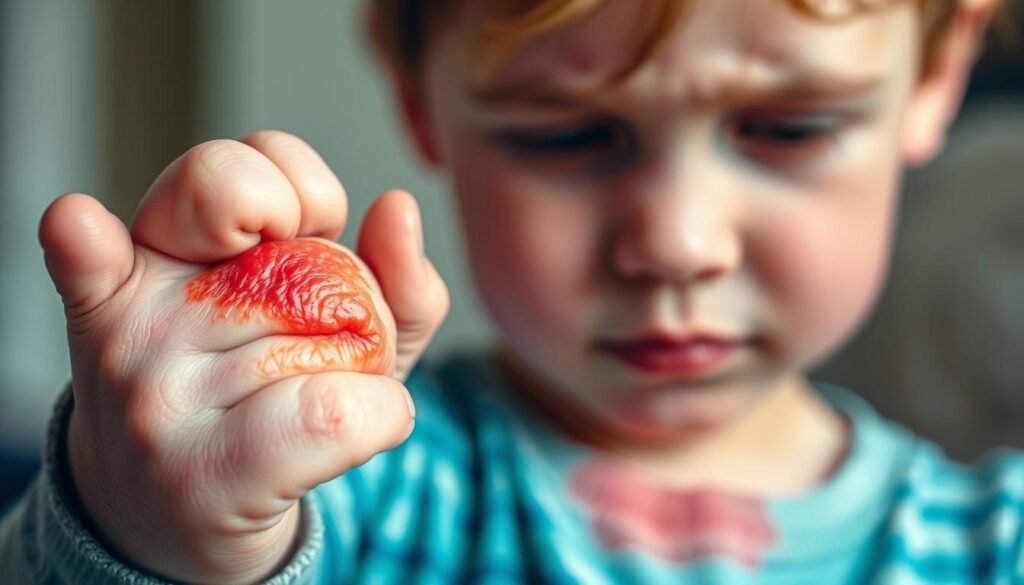
Signs include itchy, dry, and scaly skin with redness and swelling. Small bumps may leak fluid when scratched. In infants and toddlers, patches often appear on the cheeks, outer elbows, and knees.
The itch is key to diagnosis and affects sleep and mood. Some children outgrow symptoms by the teen years, while others continue to have flare-ups. A family history matters, as it increases the risk if a parent has eczema, allergies, or asthma.
Tips for Parents Managing Eczema
Keep skin moist with fragrance-free, petrolatum-based ointments like Aquaphor or Vaseline. Apply two to three times a day, after baths. Short, warm baths with gentle cleansers help seal in moisture.
Use cotton next to the skin and avoid wool. Mitts can protect infants from scratching. For mild flares, an over-the-counter hydrocortisone ointment can be used for up to a week. Trim nails often, dress kids in breathable layers, and prevent overheating to avoid flare-ups.
If symptoms persist, worsen, or look infected, contact a pediatric dermatologist. They can guide on next steps, including prescription care for winter eczema in Florida.
Mental Health and Eczema
Eczema is more than just skin issues. It can make you feel tired, disrupt sleep, and increase anxiety. In colder weather, managing eczema becomes a daily task. Small victories can greatly improve your mood.
Emotional Impact of Chronic Skin Conditions
Visible redness and itch can make you worry in public. Older kids and teens might shy away from friends or sports during a flare. Stress can make you scratch more, which makes the rash worse, creating a tough cycle to break.
Hospitals like Johns Hopkins use behavioral psychology and Child Life support. This helps families learn to handle daily challenges. For those in Florida, this approach is key when cold fronts and dry air make symptoms worse.
Coping Strategies for Stress Relief
Creating a calm routine can help lower itch and give you a sense of control. Try a regular moisturizing schedule after a short, warm bath. Choose soft clothes to reduce friction. Using a humidifier at night helps keep the air comfortable, which is important for managing eczema in cold weather.
- Practice urge control: keep nails short, use cold compresses, and swap scratching for a stress ball.
- Learn wet-wrap therapy to soothe intense itch and lock in moisture.
- Coordinate care: align dermatologist guidance with school or work needs to reduce daily pressure.
- Use brief breathing drills—inhale for four counts, exhale for six—to interrupt the itch-stress cycle.
Learning about eczema builds confidence. When families know what triggers it and how to handle it, they stick to their care plan better. This support is most important during the cooler months, making tips for managing eczema in Florida both useful and reassuring.
| Challenge | What Helps | Why It Works | When to Use |
|---|---|---|---|
| Nighttime itch and waking | Moisturize, wet wraps, room humidifier | Boosts barrier, reduces dryness, eases urge to scratch | Before bed and during cold, dry spells |
| Stress-triggered scratching | Breathing drills, cold compress, fidget tool | Replaces scratching and calms nervous system | At school, work, or in transit |
| Social discomfort during flares | Simple script for peers, soft clothing layers | Reduces friction and anxiety about questions | Events, sports, and group activities |
| Routine breakdown in winter | Daily checklist: gentle bath, emollient, humidity | Consistency lowers flare frequency and stress | Morning and evening, specially after cold fronts |
Creating a Personalized Eczema Management Plan
Having a clear plan helps you manage eczema better during Florida’s winter. Start with simple steps and keep them consistent. Focus on staying hydrated, using gentle products, and following routines that protect your skin.
This approach helps prevent eczema in Florida’s winter without relying too much on steroids.
Importance of Consistency
Make daily habits a must. Use oil-based, fragrance-free, or NEA-recommended emollients two to three times a day. Apply a petrolatum-based ointment after a short, lukewarm bath.
Avoid hot water and wear breathable layers like cotton or Tencel. Use a humidifier at night and drink water all day. Protective clothing and gentle cleansers help reduce itch and inflammation.
These steps help keep your skin barrier strong and reduce the need for strong medicines.
Tips for Tracking Symptoms and Progress
Log triggers like sudden humidity drops, cold fronts, and indoor HVAC exposure. Patch test new products and note any reactions. Track diet responses to common triggers like dairy, shellfish, or eggs.
Record vitamin D intake or sun exposure, and document hydrocortisone use. Seek medical advice if you use it more than once a week.
Track environmental controls like humidifier placement, room temperatures, and fabric choices. Note how they affect sleep and itch. For tailored care, work with local experts like Kratz Allergy & Asthma or Sarasota Dermatology with Dr. Elizabeth Callahan.
For children, consider multidisciplinary support from Johns Hopkins, including education and wet-wrap therapy. This kind of tracking sharpens your plan and strengthens preventing eczema in Florida winter across the season.
